Ten things I’ve learned in ten years as a working writer

I have been a working writer for ten years now. That means that I am actively producing content to sell it. Or, at least put it somewhere people might see and enjoy it.

Being a working writer is a weird job. You spend years practicing only to realize that you will never master it, you’ll just become a better apprentice. But there are certainly some things I’ve learned over the last decade. As I said yesterday, I hope I’ve learned something after ten years of working at it. So here are some hard-won pearls of wisdom. I hope they help you.

A yes to one thing is a no to something else

I have a too much gene. What, the person who decided to write a ton of extra content and host ten different giveaways in ten days does too much? I’m sure you’re surprised.

The problem is that I want to do everything. I want to submit to every magazine and enter every contest. I want to write so many novels and produce so many podcasts. So this is a lesson I have learned the hard way by trying to juggle too many projects at once.

If you decide to write one book, you don’t have time to write a different one. If you enter one contest, that means you have to turn down another. Everything you say yes to means there’s something you’re going to have to say no to.

There is just no other way around it. Our time is finite, our energy is too. So pick your projects carefully. Because when you pick something, it means you’re going to have to reject another thing.

You can push yourself only so hard

This one gets more true as I get older. Just as you only have so much time in a day, you also only have so much energy. You only have so many spoons, as the kids say. And yes, we all know that we can push through exhaustion and get things done. I at least was raised with this toxic work ethic. It doesn’t matter if you feel like it. It doesn’t matter if you feel sick, or if you’re in a funk, or if you did a whole lot yesterday and are still recovering. You have work to do, damn it.

Yeah, we all need to stop this. Especially when it comes to our creative projects.

Listen, I get that deadlines are a thing, but there is only so much you can push yourself before you burn out. I have pushed myself too hard for too long many times. And what happened wasn’t that I persevered and created great art. What happened was that I put out work that wasn’t as good as if I’d been well-rested. What happened was that I burned myself out and had to spend months recovering. What happened was that I got myself to the point where I hated the work, hated myself, hated everything. And that is not how I should feel about my writing. It’s sure as hell not how I want to feel about my life.

Most people do not give a damn that you are a writer

I tell people I’m a writer. Of course, I do. But the older I get, the less I tell people. Because most people, sadly, do not care. The average response I get when I tell someone I write books is, “Oh, that’s cool.” And then we move on.

Or worse, I’ll be informed that they self-published a poetry collection on CD twelve years ago, and that’s basically the same thing.

So if you think you’re going to wow someone with the fact that you’re a writer, I’m sorry to tell you that you’re not. Unless you’re Sarah J. Mass, most people do not care.

You have to love your writing the most

I have read Series of Unfortunate Events the whole way through at least five times. I have read Woven the whole way through ten times over. Many writers have read their work even more.

When you set out to write a book, you are committing to spending a lot of time with that book. Probably years, if it’s a series. Maybe years if it’s just one and you’re a slow writer. No shame there. And your passion needs to stick with you through every rewrite, line edit, revision and maybe even reading the damn thing for an audiobook. The only way that’s going to happen is if you are just wild about your story. I was, and still am, wild about Woven. I am wild about Station 86. I am wild about AA. And I have to be because I am going to spend more time with these stories than anyone else ever will.

Schedule writing time

The best piece of advice I can give anyone starting to write is to block out time to do so.

But, you might say, it’s writing. And writing is art! You can’t schedule art, man.

Well yes, you can. It might surprise you that I schedule my hobbies, too. Otherwise I’d never actually do them.

Writing is something that takes a lot of time. And if you have an already busy life, it’s easy to keep putting it off and putting it off until we’re putting you in a coffin. So if you want to write, the first thing you should do is get a planner. Mark out all the time you already have committed to things. Your day job, child care, appointments. Then take a good hard look at the time you have left. It doesn’t matter if you’ve got fifteen minutes every other Saturday, mark it out and commit to those fifteen minutes.

But I bet you have more time than that.

Writing friends are wonderful friends

I have many friends who I love. But writing friends are the best friends. Not just for networking. I find that kind of gross. But it’s amazing to have someone who understands the writing process. Who gets the joys and nightmares of the craft. Who’s read the same writing books and been irritated at the same NYT bestsellers that weren’t worth the paper they were printed on. Having writing friends to talk to about the craft and the business is a godsend.

Covers matter!

We judge books by their cover, it’s just a fact. We are visual creatures and pretty pictures get our attention. There’s nothing wrong with that. I have bought several books because the cover caught my eye.

So if you’re going to self-publish, invest in good cover art. Unless you are a graphic artist, don’t do it yourself. I’m in the process of relaunching all of my books with professional covers and let me tell you, I am so glad I am. They look so much better.

You can never predict what’s going to happen

This might also be life advice. Nothing is ever certain, and you just don’t have any way to predict how your career is going to turn out. I never thought my first completed book would sell, because everyone tells you your first book won’t ever sell. I never thought my publisher would drop me. I never thought I’d start writing for a horror review site. I sure as hell never thought I’d produce a podcast that I wrote.

While having a plan is lovely, it’s best to understand that this plan is never, ever set in stone. Things will change, and people will get sick. New people will come into your life and people you thought would always be there will leave. You might land your dream agent only to have them retire. You might sign with someone you aren’t sure of and then have them launch your career into space. You just never know.

Hold on tight and enjoy the ride.

Post more than you think you need to

This is on social media, specifically. And it’s something I’m still struggling with. Because I always feel like I’m bothering people. Especially when I post about my books. No one wants to be bombarded by ads on Instagram. People want to see my cats and dog, not my book covers.

But, that’s probably not true. If someone’s following you on social media, they probably do want to hear about your writing. I use Instagram to keep up with my favorite authors, and I want them to post about their books so I remember that they’re coming out.

So if you have a book you want to sell, let people on social media know about it. Repeatedly.

There is always another place to submit

If you’re a working writer, you’re going to get rejections. A lot of them. That’s just the way of things. There are only so many spots for stories, but there seems to be a never-ending stream of writers.

But here’s the thing. There are a ton of spots for stories. There are always new magazines, websites, podcasts, and publishing companies. And best of all, there are always new readers.

So every time you’re rejected, get your story back out there and submit it again. Write another story. Then write another one. Submit them over and over until they sell. That is the only way to break into this business, by writing and submitting over and over.

Don’t ever be afraid of rejection. It just means you’re out there doing the work.

Don’t forget to like this post and leave a comment to be entered into today’s giveaway. Today, one lucky reader is going to get a copy of Man in The Woods. I’ll post the winner here tomorrow.

See you then.

If you liked what you saw here today, please consider liking and sharing this post. Or you can support the site financially on Ko-fi.

Broken Patterns is available now for preorder! You can order it now on Amazon.

Where do you write?

With Nanowrimo right around the corner, I thought it might be nice to do a series getting back to some real bare-bone basics of living a writing life.

Then I realized I’m going to be doing a ton of Preptober content this month, and Banned Books Week is next week. Then of course there’s all the holiday content coming up. So while I’m still doing this series, it might be a little scattered.

But it will be here, damn it!

Today, I want to start with a question. Where do you write?

I’ve been blessed to always have a desk of my own. Even as a kid, I had a table in my bedroom. Today I have a whole office in our home, small as it is. I do work from home for my day job, so unfortunately it isn’t just a writing desk. But it is a desk of my own in a room of my own.

While this is a blessing, it’s not a necessity. I wrote books long before I had a whole office when my desk was crammed into a living room or my bedroom. I wrote books while I was working outside of my home. And even though I’ve always had a desk, I’ve written lots of my books while I wasn’t anywhere near it.

I’ve written in diners, laundromats, coffee shops, doctor’s waiting rooms, hospital rooms and libraries. I’ve written at bus stops, rest stops, haircut places, fast food joints. I’ve written in break rooms, under trees in the grass and on the couch in front of the TV. About the only place I don’t write (except maybe some journaling) is in bed because somewhere I heard it’s not good to work in bed because it trains your brain that this isn’t a place to rest.

Flexibility is crucial if you’re going to be a working writer. Unless you are very lucky, you are just not going to have the amount of quiet alone time in your home at your desk to put the number of words on the page that you want.

While it’s great, and necessary, to be flexible, it also doesn’t hurt to put some intention into your writing space. I have always tried to keep a physical space where I can (ideally) write in peace at home. But I’ve also kept a bag packed with things that allow me to create a writing space anywhere I am.

Crafting both of those things requires the same questions to be answered. And of course, your ideal writing space is going to look quite different than mine. So here are some practical considerations to help you create a place where writing is a pleasure.

Consider what you’re writing

Writing a blog post or review is different for me than writing a novel. Editing again is different. I almost never write posts in coffee shops because I’m so used to writing prose there.

How does a certain place make you feel? Does the library bring out your childish side? Do you feel more professional working at your desk? Do you think best at the kitchen table after everyone else is in bed?

If you’re unsure, try this exercise. Attempt a fifteen to twenty-minute freewriting session at several places you tend to write in.

How did you feel writing in each of these places? Does one place feel safer? Does another place feel like you ought to be doing your Math homework instead?

I can’t explain it, except that some places have certain vibes that lend themselves to certain activities. Maybe it’s the lighting. Maybe it’s the background sounds. Maybe it’s something in our past that makes us associate a place with a feeling.

Consider your tools

Different writing projects require different things of us. When I’m rough drafting, I just need my notebook and my outline. And a pen, of course. This is probably the easiest draft to take everywhere.

The second draft requires my laptop, the first draft, and several colored pens. Again, this can all be tossed into a bag and taken to most places.

Outlining is a whole other thing. This requires index cards, post-it notes, pens, markers, three virgin sacrifices and a mandrake root.

And coffee.

This isn’t an activity I would try anywhere but my house, because it’s such a mess and requires so much space.

The point is that you should consider what you’re going to need to accomplish a project. Do you need space, quiet, coffee? Is a good internet connection vital (when I write a review) or forbidden (when I’m writing prose?)

These are all things to consider when you’re planning where you’ll be writing. Even in your own home. Maybe your writing desk doesn’t have the space for a certain project. Maybe your place has internet dead spots. Maybe one spot in the house seems to invite tabby battles.

Think about it before, and you won’t have to think about it when you’re writing.

Consider your preferences

Everyone has likes and dislikes. And while we can’t always have everything we want, we can usually have some of it.

Consider what sort of chair you’d like. What sort of lighting do you like? Do you enjoy having a candle burning when you work? Are there certain reference books or things you like to have around for inspiration?

What kind of pens do you like? Do you prefer paper or PC? Maybe you’re an absolute weirdo perfectly valid person deserving of love who writes on their phone.

Do not let anyone tell you what you should like. Writing is, after all, art. You should choose the tools you use for your art all by yourself. And hopefully, you’re going to be spending a lot of time writing. You should be as comfortable as possible while you do that.

So that’s it. If you’re a new writer, I hope this post helps you create a space in your home and out to write. If you’ve been a writer for a while, I hope this post inspires you to update where you’re writing if it needs it.

Next week is the start of Preptober, so get excited for some extra content. Banned Books Week also begins next week. We’ll be seeing a lot of each other in the next month is what I’m trying to say.

See you then.

Preptober starts in just a few days! Jump over to Ko-fi and grab a copy of my preptober planner. Don’t forget, I’ll be posting additional posts all month to walk you through each Preptober page together.

Laziness doesn’t exist

Unpopular opinion, laziness doesn’t exist. Yeah, that thing you feel bad about all the time? The flat, dull emotion you feel that you try to beat out of yourself and teach your children to demonize? It’s not a real thing. 

Don’t believe me? Alright, let’s break it down. I’m willing to bet that when you feel like you’re being lazy, it’s one of four other scenarios that you aren’t going to solve by telling yourself to just stop, you know, being lazy.

I know this because I’ve done this myself. Especially in November. I’m trying to do so much in November every year it’s not funny. I’m finishing up all my projects for the year, and writing a novel, and prepping for the holidays. And I have had some days when I felt downright lazy. I don’t want to work or write or clean. Mostly what I want to do this time of year is craft, read and bake.

This is not laziness. And if you’re feeling the same way, it’s not laziness for you either. Here’s what it is instead. 

You’re doing too much

Who isn’t prone to letting their too much gene get the better of them this time of year? I mean, it feels very much like the only way the holidays are going to happen is if I make them happen by sheer force of will. 

But it’s not just this time of year. I have been trying desperately to slow down over the past year. But I’m a freelance writer and indie novelist. That is work. And since those two things don’t pay all the bills, I also have a day job. Sometimes it feels like I live in a constant state of being behind deadlines. Even though I’m the one who made all my damned deadlines!

But doing too much at once leads to just one thing, shutting down. Which to some looks like being lazy. Well of course I’m going to spend the evening watching Rick and Morty while playing Webkinz if I spent all day running from the second I got up. Of course, I’ll have all the motivation of a slug in the sun on my days off if I do nothing but hustle six days straight.

I’m not lazy, I’ve earned a break.

You’re overwhelmed

Okay, but what about if you haven’t done all that stuff? What about if you coasted by at work, left the dishes in the sink and all of your passion projects are collecting dust? What about if you accomplished nothing for the past day, week, month and you’re still sleeping late and eating take-out for dinner? That’s got to be laziness, right?

Or you have an executive disfunction and the sheer volume of things you need to do is too much to process. You’re looking at a list, either mental or on paper, and there’s just so much to do you don’t know where to start. Or you’re so overwhelmed at the scope of a project that you just can’t imagine getting it done. 

I’m not lazy, I’m overwhelmed. And there are things to do about that. I’ll do a whole post on overwhelm if you like. But there are a ton out there already. If that’s your issue, it’s not going to do you a bit of good to beat yourself up because you think you’re being lazy. 

You’re comfortable

Maybe it’s not the day-to-day list that is getting you down. Maybe it’s instead starting on a new project that you just can’t get behind. Maybe you need a new day job. Maybe you’ve always wanted to write a novel, or buy a storefront, or start painting. But you’re just too lazy to get started.

Yeah, or maybe you’re just comfortable. Maybe you don’t love your day job, but you’re worried a new one could be even worse. Maybe the thought of starting a creative venture is scary because it might fail. Maybe you just enjoy your downtime and don’t want to start anything new. 

Well, if you’re comfortable, do you want to step out of that zone? That comfort zone?

Maybe you do, maybe you don’t. But you’re not lazy. Not everyone’s got to push themselves to reach for the stars all the damned time. Maybe you’re happy just, you know, being happy. 

But if you’re not, then get used to not being comfortable. It’s worth it.

You don’t care, and that’s fine

Have you ever noticed that a lot of what you feel lazy over are things you didn’t give a damn about to start with? The things that you procrastinate on are often things that you just don’t care about. Things like decorating for the holidays, cooking dinner, volunteering at your kids’ school, cleaning out the garage. I’m sure you’ve got your list. I procrastinate when it comes to housekeeping.

Why? Because so long as my house doesn’t smell and I’ve got a spoon to stir my coffee I don’t care about what my house looks like. 

So I do the minimum, and I do it as fast as possible. I also blast music and sing along at the top of my lungs while I do it. This is great because it’s both fun for me and insufferable for the rest of my household. 

I’m not lazy because I don’t want to wash my windows or mop the floor. I just don’t care if these things get done. And that’s okay. It’s my life.

It’s your life. If you don’t care about something, don’t do it. Leave your energy for things you want to do. 

And don’t ever talk about being lazy again. It just does not exist. 

You can support Paper Beats World on Ko-fi.

My Review of Notion

So I’ve been using Notion for a couple of months now. I started using it after watching an Amanda Lee video on YouTube. She just made it seem so cool, I had to try it.

I have a bad habit of trying new software and apps, spending hours moving all my notes and info over to them, then dropping them like a hot coal a few days later. The reasons vary. It didn’t do what I thought it would. It’s redundant. It’s just one more bloody app to check in the morning. It’s not easy to use. Something new and shiny caught my eye. You get the idea.

But I’ve continued to use Notion for long enough now that I think I’m ready to share it with you. (Not a sponsored post.) 

So, if you don’t know what Notion is, it’s a note-taking app. Think of it as a virtual notebook. I tend to use it as a virtual bullet journal. You can keep to-do lists, pictures, documents. if you have a paid account, you can share access to all of those things.

I don’t work with a team, so I don’t have a paid account. And I have to say, I use it almost every day for both my personal and my writing life. 

Here’s what I use it for. 

Social media plans- Pretty self-explanatory. I keep a little chart of ideas for Tweets, pins, Instagram posts and the like. I hate sitting down to plan a day worth of social media and having no ideas. Why do I have all these pithy thoughts until I have my keyboard under my fingers?

Meal prep plans- Whatever makes my brain go blank when I’m trying to write social media does the same damned thing when I’m trying to figure out dinner. Even when I try to write a shopping list, I forget every meal I have ever made. So having a list of meals I make, or that I want to try, is a huge help.

Utility info- Another pretty self-explanatory thing. This is the information I need if I have to deal with any of my utilities.

Savings info- I know everyone suggests having separate savings accounts but I don’t have time for all that nonsense. So my savings account has just one chunk of money. Then I keep track of what money is for what on this Notions page.

Expense trackers- If you’re not tracking how much your bills usually are, you should be. 

Address book- Again, pretty simple. Nothing’s worse than fumbling for the vet’s number because Oliver swallowed something he ought to know not to.

Rolling to-do list- While my daily goals are in my bullet journal, I like to keep a rolling list of things I need to get to. This gets slowly moved to my bj as I can manage these tasks. Nothing gets forgotten, but I’m not looking at a list of things that no one could do in a day.

Contests- I have a bad habit of entering too many contests. I like to have a place to keep track of them. Due dates, word requirements, all the rules, links to pages. It’s super useful to have all of that in just one place.

Project pages- This is especially useful as I get into more forms of storytelling. As I work on AA and other podcasts, there’s just a huge amount of info to keep track of. And Notion is where it all goes. 

Blog post schedule- Finally, I keep track of all my blog posts for here and Haunted MTL. I keep notes, links, info, calendars. 

Now, you might be wondering if I still use a bullet journal. The answer is yes. I use Notion for long-term planning and things that need to stick around as I switch from book to book. My daily and weekly planning are more in the moment. Even my monthly goals to a degree. And of course, there’s also the memory capturing part of a bullet journal that I don’t want to convert to virtual just yet.

The big reason why I started using Notion is that I had things that either changed too often or not often enough. Things like my blog schedule, which might switch on a whim, are a pain to do then redo on paper all the time. Things like what recipes I like to make for dinner don’t change so often that they need refreshed every three to six months when I get a new BJ.

I do appreciate that I can pull Notion up on any device. My tablet has the app, of course. And I can pull up the website on any computer. I like that I can access all of my notes, for both home and writing life, no matter where I am. 

The fact that it’s cute doesn’t hurt. 

Have you tried Notion? Let us know in the comments below. 

You can support Paper Beats World on Ko-fi.

Why Star Trek Next Generation works

Welcome to week two of our why Star Trek works series. This week, we’re talking about Next Generation. 

Full disclosure, I have a soft spot for this series. It’s the one I watched with my grandmother when I was a little nerdling. So I might be biased when I say that this is the best Star Trek ever. But I also think I’m critical enough to judge the show honestly. After all, we’re harder on the things we love than anything else. 

Taking place 78 years after the original series, the show included a fancier more advanced Enterprise with an entirely new cast. The mission remained the same. To explore strange new worlds, to seek out new life and new civilizations. To boldly go where no one has gone before!

The show aired from September 28th, 1987 to May 23rd, 1994. Since then, there hasn’t been a time when reruns haven’t been available on tv somewhere. 

I’d like to say the popularity of the show was just because the characters were great. They were great, after all. But it goes so much deeper than that. 

To start, the show was intelligent. Not so much in the science, most of that was bullshit. It was the creative writing that had to be smart. The show was working within a world that had already been established by the original series. They could make some changes, blame them on advancements. But some things they were just stuck with. 

It would have been easier to just make it an extension of the original series. But they went past that and did it well. Picard is a different kind of captain than Kirk. Dr. Crusher is a world away from Bones. While the positions remained the same, the people who inhabited them were wildly different.

Another thing that stayed the same, aside from the mission, was the lesson of inclusion and equality. It’s one of the first times we see an enemy race become allies in the Klingons. While sometimes the relationship is strained, they aren’t volatile. Over and over we’ll see this trend. Even into Picard, where we see the Borg become friends. But we’ll talk about that later. 

One thing I appreciated about Next Generation is the willingness to pivot. When something wasn’t working, they tried to fix it. One great example is Wesley Crusher. His character was an irritating pain in the ass. Mouthy, smarmy. He thinks he’s smarter than everyone around him. Spoiler, he’s not.

Wesley got taken down a peg when he goes off to school and messes up, hard. He becomes a better person after that and a better character. This decision was made after a huge wave of fan hate directed at the kid.

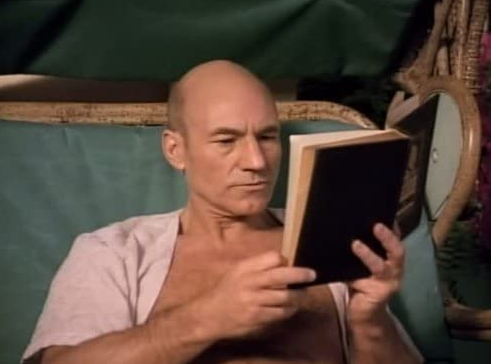
Brag in the comments if you know what he’s drinking.

(Will Wheaton, by the way, is the actor who played Wesley. He’s an adorable cat dad who makes me smile on Twitter all the time.) 

Finally, let’s talk about the comedy of the show. It wasn’t overall a laugh riot. It has some of the darker episodes of anything I’ve ever seen.

There are four lights. If you don’t get that, look it up. Then watch the episode and cry.

Somehow they manage to blend this with some really funny things. Like Data’s cat, Spot. Spot the cat hates everyone. No one can take care of this little monster. She put Riker in the medical ward. Even Worf is scared of this fluffy orange cat. Oh, and in case you don’t know, she doesn’t have a single spot on her. 

The whole crew would shred you if you hurt this cat.

Hilarious. 

There are so many lessons a writer can learn from Next Generation. I’m just going to give you a bullet list below.

-Don’t be afraid to be funny, even in a serious series.

-Let your characters be wrong sometimes.

-Think out your storylines in advance.

-At the same time, don’t be afraid to pivot. 

I hope you’re having as much fun with this series as I am. Next week we’ll be talking about Star Trek, Voyager. 

You can support Paper Beats World on Patreon.

You can also buy me a cup of coffee on Ko-fi.

A WordPress.com Website.

Up ↑