I wrote another book! (Shocker)

I’m coming to you today with a bonus post, and that usually means one of two things. Either I’m posting a new short story, or I’m telling you about a new book.

It’s the second one.

On September 14th, I’ll be launching a collection of Paper Beats World posts, lovingly re-edited and updated in a snazzy e-book form. It’s called Deciding To Start, a collection of essays to inspire new writers.

And guess what? The pre-order is already up and ready to go. Here’s your link, if you’d like to secure your e-copy now.

Deciding To Start contains some of the best blog posts from the first two years of writing Paper Beats World, updated with new information and new insights. It covers such topics as inspiration to start writing, advice on the tools you need to get started, how to be a writer while also being a full time human being, and inspiration to keep going.

This project was honestly an emotional one to work on, especially so close to my four year anniversary here on PBW. It’s amazing to look back at how far this little site has come, and how much has changed in all that time.

What a difference four years can make

Writing offensive humor in a not offensive way

I love irreverent humor. Blue humor, offensive jokes, grown-up cartoons, things like that. I’ve already done a review of Rick and Morty, for instance, and I stand by it being a smarter show than most people give it credit for. (I can’t say the same for some of my fellow fans. All I can say is I’m sorry.)

The problem is that when you write a character that embodies this sort of irreverent humor, they can become really awful characters. The Peter Griffin sort that really doesn’t have a personality aside from being offensive. No one likes those characters.

If you want to write something hugely inappropriate with really awful people as main characters, there are some things you should keep in mind, though. Shock value for the sake of it is rarely entertaining. So what keeps your offensive humor from being that? Here are a few things I would suggest.

Be funny

This is the first and probably most important rule about writing offensive humor. It has to be funny. You can’t tell a bad spousal abuse joke and expect people to be okay with that. Now if you tell a funny spousal abuse joke, or make a career out of it like Andrew Dice Clay, you’ll probably be remembered as a legend.

(A side note not. I couldn’t think where else to mention this, but after bringing up The Dice seems natural enough. Being an irreverent comedian works better when you’re not a horrible person. You don’t get to make racist jokes if you’re really a racist. You don’t get to make sexist jokes if you’re actually sexist. Don’t be a jerk and expect people to laugh at your jokes.)

Be smart

Offense comes better from a place of intelligence. If your character comes off as offensive and smart, that’s a fun character. If your character comes off as offensive and stupid, that’s not a fun character. At least not a fun protagonist.

That’s why characters like Rick from Rick and Morty House from House work well. They’re assholes, and hugely offensive. But they’re smart.

Have realistic characters

Another reason why characters like Housework is because their actions are realistic. Even if a lot of the rest of the show is not. (Sometimes, it is Lupus.) It’s the same as any other character. The world may be amazing. The powers the character possess might be completely unrealistic. But they still need to be people. A person who’s an asshole and treats people badly does so for a reason. Normally a really sad one, to be honest. A megalomaniacal character like Rick or House really doesn’t like who he is, so his drug addiction makes perfect sense, as does the way he treats his loved ones. You can see where the pain, where the anger is coming from. They’re not just mean to be mean. There’s a reason why the equation pain plus time equals comedy works.

Have endearing characters

If you’re writing a character that’s going to be really offensive, that can’t be all there is to them. They have to have some endearing features, or your reader is not going to have the patience for their hate, no matter how funny it is.

A good example of this Will McAvoy from Newsroom. He’s a vaguely racist ass who has driven away almost everyone who wanted to work with him. It’s only in the course of the show that we find out why he’s an ass. He lost the woman he loved, lost faith in his country, and in himself. He’s endearing because we understand these losses, and understand why he is the way he is. We also see times of bravery, times of compassion. We see that he’s a good man if a flawed one.

I don’t know that we can say Rick and House are good men. In fact, I’d say, Rick, in particular, is a weak man. He doesn’t care to change, or make the world better. He’s content to amuse himself and do things that he thinks might make him happy.

But it’s that constant need to focus on his own selfish desires that reveal his real pain. We can see that there is some goodness in him when he occasionally helps people for no selfish reason. But it seems that he almost regrets it afterward. It’s almost as though there’s a pain in his past that he never intends to feel again. I think we can all understand that.

In closing, don’t be afraid to write offensive humor. Just don’t let it turn into a poorly written character.

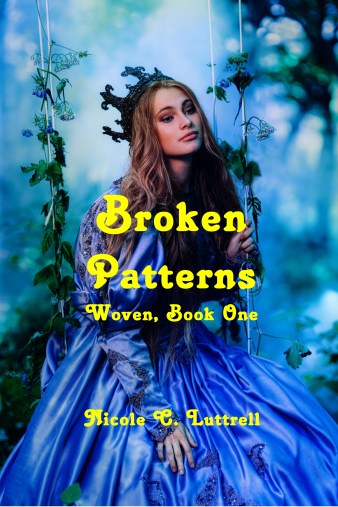
After years of war between Montelair and Septa, the two thrones are united by family. Victor’s nephew, Morgan, is sharing the throne with the last heir of the royal line, Jacob. He and Lenore decide to travel to Montelair with their newborn daughters to help broker peace.

But peace among their own people is harder to achieve. The city is tormented by a starting chains-001terrorist who calls himself The Tinker. He and his group of anarchists plant bombs through the city and call for the death of the new kings from every street corner.
Meanwhile, in Calistar, Sultiana and Devon are marching to war with Kussier. The ancient hatred between the two countries is sprung anew when Sultiana is declared heir to the Calistar throne.

Waiting at the border, though, is a much darker enemy. A force from legend threatens to consume both countries, and possibly the world.

Get it here now!

Science Fiction Sub-Genres, Part One

Last Friday, I told you I was going to talk about different science fiction subgenres. True to my word, I’ll be starting that today.

And by starting I mean that this will be a six-week long series that will give an overview of six sub-genres a week. Because there’s a lot of them.

Why are there so many science fiction sub-genres? Because they’re pretty different from each other, and everyone’s taste is different. It’s hard to say that a story about virtual reality belongs in the same category as a story about First Contact. While many of these sub-genres can be found blended together, it’s safe to say that any one of them is strong enough alone to tell a good story.

Alien invasion

Quite a popular genre for movies, the alien invasion genre is pretty self-explanatory. Aliens have invaded Earth, probably for nefarious purposes. Some examples of this subgenre are probably already in your mind, like Mars Attacks or Independence Day. (Obviously, the quality varies wildly.)

This is not one of my favorites. Generally, the alien race comes off as violent, selfish and often stupid. Now if someone could come up with an alien race that had a legitimate reason to attack, I’d get behind that.

Alt history

Probably one of my favorite science fiction subgenres, alt history is just what it sounds like. What would the world be like if Hitler had gotten into art school? What if Henry Ford had never been born? What if the allies had lost WWII? What if Columbus hadn’t found America? You get the idea.

I have a fascination with history, so of course, I love reading about what could have happened. There are a thousand little lynchpin moments in history. If one simple thing hadn’t happened, everything might have come out differently. It’s the butterfly effect.

How you might ask, does this qualify as science fiction? Wouldn’t this count as historical fiction? Well, maybe. But most alt-history stories include some science fiction element like time travel. That’s why it counts here.

The most recent example I can think of for this genre is Stephen King’s 11.22.63. I haven’t read it yet, but it is on my list.

Parallel universe

This genre is similar to alt history, at least it can be. Parallel universe stories are often a look at what might have happened if -blank-. But many of the stories tend to be more personal than worldwide. They don’t have to be, they just usually are. I’m thinking of an episode of Dr. Who, where Rose and Ten go to an alternate universe where her dad is still alive.

One of the best examples I can think of here is this old school show, Sliders. It’s not the best sci-fi show ever, but it’s pretty decent if you’re looking for something new to watch.

Apocalyptic/post-apocalyptic

This is another science fiction sub-genre that’s been used in movies frequently. It’s the end of the world, and it’s not going quietly. Mankind is dying, being destroyed, being eaten, killing each other horribly. This genre often puts its foot into the horror genre.

Often this genre centers around watching the survivors of the apocalypse try to put their lives in something that resembles order again.

Some good examples of this are The Stand or Mad Max.

AI

Pretty obvious that this one is a favorite of mine. AI, artificial intelligence, is a concept done best by Issac Asimov. It’s all over movies, tv, and books because it’s something that fascinates a lot of people. Everywhere from friendly AI in Rosie the Robot or K9, to the malicious Hal 9000, the thought of AI clearly has our imaginations captured.

And, we just recently started turning this science fiction into science fact! A partial AI named CIMON is heading to the space station soon. He’s going to be able to perform small tasks, talk to the astronauts, and keep them company. How cool is that! Or terrifying, depending on your opinion of AI.

I’ve already mentioned Asimov, who is pretty much the father of this sub-genre. Even if you’ve never read any of his books, you’ve seen his work in movies. Bicentennial Man and I Robot are just two of my personal favorites. And, of course, I wrote a novella called You Can’t Trust The AI. I might have mentioned.

Colonization

This is probably the most exciting sub-genre right now because it might soon be science fact! We’re already ready to send a group of people to Mars. We just won’t be able to get them back.

Colonization is a science fiction subgenre that’s about going to another planet and setting up camp. Obviously, the story ideas abound.

Ironically, one of my favorite stories in this genre is a dark one by Ray Bradbury called Mars is Heaven. A ship full of astronauts land on Mars, only to find everyone who they’ve ever loved who’s passed on there, waiting to greet them. I’ll let you read it to find out the ending.

I hope you’ve enjoyed part one of our science fiction sub-genre series. Part two will be up next Friday. See you then.

spookEnjoy twelve dark tales from the twisted mind of Nicole C. Luttrell. Meet a girl who has bad dreams, a boy who watches too much tv when alone at night, and a mysterious scratching coming from an old school desk. 

Get it here now!


Compairing Jurassic World and Incredibles II. Are they sexist?

Recently the husband and I did something we’ve been meaning to do for some time now. We signed up for a service called Movie Pass. (Note, this is not sponsored.) It’s cool, you can go see a movie a day for ten dollars a month.

We’ve been seeing a lot of movies.

One night, we’d intended to go see the long-awaited Incredibles 2. But then things happened and we were late to the theater. So, we saw Jurassic World, Fallen Kingdom.

The next morning, my mother in law asked me how the movie was. I started discussing the dinosaurs, the good special effects, the bad special effects. The strong suspension of disbelief that the movie requires to enjoy. Then I said, “There was definitely some sexism going on in the movie, but not enough that it was unwatchable.”

And she said, “Yeah, I’d heard about that.” A moment later, as I was discussing a scene where a character walked across a glass roof in sneakers in the rain, and how she should have slipped, she stopped. “How many movies did you see last night?” she asked.

Just one,” I said, “Jurassic World.”

Oh, I thought you were seeing Incredibles 2,” she replied.

Wait, so what’s this about Incredibles 2 being sexist?”

At the time I hadn’t seen the movie, of course, so I didn’t want to read anything that might cloud my opinion of the movie. But the accusation that it might be sexist worried me. Disney has its reputation, of course.

At this point, I’ve seen both films. And I’ve read some of the arguments for and against the supposed sexism in Incredibles 2. So I thought it would be fun to compare the two movies, based on their gender equality.

The sexism of Jurassic world

Before I go any further, I do want to say that Jurassic World, Fallen Kingdom was a fun movie to watch. If you’re a fan of the series, you’ll like it. I enjoyed watching it, despite the issues I had with it. It wasn’t so sexist that I felt the need to walk out of the theater in a huff.

But, Generally any movie that has the main character calling himself chivalrous because he doesn’t let his girlfriend drive the car is going to irritate me.

But I don’t love that the child character gravitated towards the female lead, not the male. Even though it was him that she saw interacting with baby dinosaurs earlier in the movie, and she didn’t know this woman from Eve.

But, it would be nice to see the female lead be a little less screamy.

But, they didn’t need to make the antagonist so boneheaded sexist. That’s not a good look.

The problem isn’t really that the movie is sexist. It’s that the characters are stereotypes. The sensitive ecologist. The strong male lead with a sensitive side. The feisty, spunky doctor. The cowardly computer tech. It’s lazy, just lazy. But let’s be fair, we’re not seeing these movies for the dazzling characters. We’re seeing it for the badass dinosaurs.

If you’re wondering, the movie did not disappoint! Blue was awesome!

The awesomeness of Incredibles 2

After I watched Incredibles 2, I was really confused by my mother in law’s insistent that there were rumors of sexism. It sure didn’t seem sexist to me.

Actually, it seemed pretty damn awesome and totally non-offensive. I’ll try to avoid spoilers as much as possible.

I loved that Elastagirl was the superhero that was chosen to be the ambassador, to show the world that supers were needed and should be made legal again. I love that it was because she had the fewest number of accidents. I love that Mr. Incredible was frustrated not because his wife was chosen, but because he wasn’t.

It has nothing to do with their gender! She’s chosen because she’s better, he’s mad because he wants to be out there! And yet he still stays home, and becomes a good dad. Sure, he’s exhausted. But what parent who’s used to co-parenting wouldn’t be? How many moms have worn themselves to the bone rather than accept some help? Bob is a great dad, and he proves that.

Neither character is portrayed as not being in their proper gender roles. Just not in the role in their family that they were accustomed to. Bob isn’t fumbling around, setting the kitchen on fire and forgetting to feed the baby. Helen isn’t crying all over, missing her family and unable to cope with the ‘working world’. They are excelling, not failing.

But that wasn’t the point of the movie, and that’s the big thing. It’s a part of their character arch, and it seems like a realistic one. These people seem like they could be real people, except for the super powers.

And that, I think, is the real difference between these two movies. It’s not that one is sexist and one is feminist. It’s that one has well written characters, and one doesn’t. Which I think is the main issue that most sexist movies have. It’s not malicious, it’s just bad character writing.

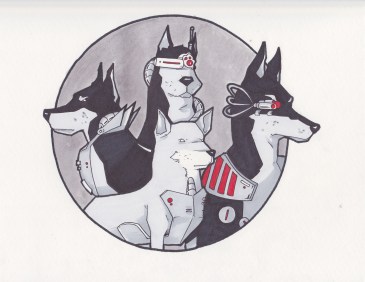
Sennett, Godfrey and the rest of Station 86 are trying to put their society back in order after scn_0047the Core attack. Then a mysterious ship from a dying station arrives, bringing artificially intelligent robotic, murderous dogs.
Godfrey, Mason and April must get to the hospital safely, while Sennett is trying to protect Marshal’s Joy and Howard. But the AI dogs are nothing compared to the terrors they left behind on their own station.

Read it now!


What is speculative fiction?

As most of you may know, I’m a speculative fiction writer. You’ve probably seen my tagline. It says that I write about dragons, ghosts and spaceships. Sometimes I write about the ghosts of dragons on spaceships.

As cute as that is, it’s not quite helpful if you really don’t know what speculative fiction is. So I thought I’d go over that today.

Basically, speculative fiction is any fiction that falls under Science Fiction, Fantasy and Horror. All of the good books, in other words. I’m going to be breaking apart each of those genres in more detail in the coming weeks. They all have so many different subgenres that it can get really confusing.

With that being the case, I assume I don’t need to go over in detail what Science Fiction, Fantasy, and Horror are. I assume you kind of already know the basics.

What I really want to talk about today is blending the genres. Because that’s really why I’m a speculative fiction author. While I do write the genres purely sometimes, I love to blend them together.

Horror and Fantasy

Sandwashed, which I’m working on right now, is a blend of Horror and Fantasy. I’m having so much fun with it!

These two genres blend together like milk and coffee. A fantasy story can so easily incorporate monsters, demons, and ghosts that terrify and overpower a hero no matter the magic they possess.

Here are some things to keep in mind if you’re blending these two genres.

  • Both Fantasy and Horror already have monsters. The main difference is this; in a horror story, the good guy doesn’t win. He might escape, but he doesn’t beat the monster. It’s always still there, lurking just out of sight. Waiting.
  • Horror stories are more gruesome than Fantasy. If you’re blending the genre, it’s a fine line to tread. I would say somewhere between Lord of the Rings and Saw.
  • The protagonists in a Horror story are usually morally pure people. If they’re not, they’re more likely to die. (Remembers the rules for a horror movie from Scream?)
  • Don’t be afraid to let your heroes be valiant, strong and brave. They’re heroes, they should be. But the point of the monster in the night is that it’s too much for your character. That’s why it’s terrifying, that there’s no being good enough or strong enough. It’s just escaping.
  • Even so, your world should still be fantastic. It shouldn’t be all about the scary. You’re still in a fantasy world, where magic and wonders should abound.

Fantasy and Science Fiction

This is kind of tricky. You’d think these two genres would be totally mutually exclusive. And to be honest, I haven’t yet blended Science Fiction and Fantasy.

But others have! Where do you think we get steampunk from?

Spoiler Alert for Protector of The Small, by Tamora Pierce

Tamora Pierce is the queen of this, by the way. Her books blend together magic and science flawlessly. The best example is Protector of The Small, in which the main character is protecting a fort full of civilians. They’re attacked by robotic monsters, powered by the souls of the dead. This is the perfect blend of futuristic technology and magic. Here are some tips if you want to tackle this genre blend.

  • There’s this great quote by Arthur C Clark that sums up this genre. “Any sufficiently advanced technology is indistinguishable from magic.” If you’re blending Science Fiction and Fantasy, take advantage of that.
  • Science Fiction should always have some basis in science, so I wouldn’t rely too much on magic and forget to have some science in there.
  • Don’t use magic as a blanket excuse for why your science doesn’t make sense! Your magic should always follow a set of rules for it to work by itself. The science should complement that. (The fun thing though, is that you get to make up your own rules. You just have to stick to them once you do that.)

Science Fiction and Horror

Obviously, this is the most common blend of genes on this list. Horror and Science Fiction blend together so well! Any alien movie where the alien is a bad guy is probably horror. Anything with an evil scientist who creates an evil invention is going to go into the realm of Horror. One of my books, Virus, is definitely a blend of Horror and Science Fiction.

Much of what I already said about Fantasy and Horror applies here. There are just a few more tips to remember about Science Fiction and Horror.

  • You want to remember that science can be the salvation or the damnation of a Horror Scifi book. It can also be both.
  • But don’t ever let the reader think that all will be well, just because there’s a super smart scientist on the good guy’s side. The point of Horror, again is that the monster seems un-killable. Think about the antagonists on Alien. They kept right on coming back.

I hope that you have fun blending genres. I certainly do. And if you write a speculative fiction story, please let us know!

Featured Image -- 5413When a station goes dark, Sennett is asked to join the last remaining IHP members to investigate. When they arrive, they find so much more than they expected. A terrifying virus is loose on the station, that they might never escape from.
Meanwhile, Station 86 is having its first free election. Godfrey hadn’t had any intention of being involved, until he isn’t given a choice.

In the meantime, April’s true identity as the first hybrid humanoid is no longer a secret. And there are those who can’t stand that there’s a half Earthian, half Khloe. There are those that will never rest until the little girl is dead. With Sennett trapped, stations away, Godfrey and Mason have to work together to keep April safe.

Read Virus today!


Writing gunshot wounds realistically. A guest post by Dan C. Chamberlain

Hey, guys. Today we have a guest post by Dan Chamberlain, about something I know little to nothing about; gun wounds. I hope you find it as educational a I did. 

Let’s talk about gun shot wounds, shall we?  So you want your fiction to be believable, but you don’t want it to be so graphic that it will turn your readership off. You want to strike that balance that gives the reader the shiver they’re looking for without having the gorge rise in the back of their throat. The devil is in the details.


Here are a few rules a writer should consider if they want their violent fiction to be both realistic and gritty:


#1. A handgun is not a construction crane. It cannot fire a projectile that will lift a human body – even a child’s – off the floor and fling it back against a wall or out a broken window.


#2. Entry wounds are generally (I’ll provide an example of when this is not true) the same basic size or diameter as the bullet. Given the elasticity of skin, often times the entry wound is considerably smaller than the diameter of the bullet.  One cannot look at the entry wound and surmise the caliber that made it, except in poorly written fiction or Hollywood scripts.


#3. The exit wound is generally (I’ll provide an example of when this is not true) larger in diameter – and often much more delightfully gruesome than the entry wound.


As for number one above, that old unbreakable law of physics that reasons for every action there is an equal and opposite reaction comes into play here. If a bullet imparts incredible force on a body, that same force must be imparted in the opposite direction as the bullet is leaving the barrel of the gun. Therefore, if we see a body picked up and flung against a wall due to the impact of a bullet, the shooter would be experiencing roughly the same force against their arm. Imagine the comedy there. Enough said.  Don’t make this mistake.


         Number two is a little more difficult. Unless we are shooting naked people in our books, bullets must first penetrate clothing before getting to the flesh. Depending on the article of clothing worn, a lot of things can happen to the bullet before it enters the body. We’ll talk about this momentarily.


Number three is my favorite topic because with the exception of number one, it is the most often abused in fiction. Bullet wounds are a study in themselves. A blog post can never do justice to the topic so I urge writers of fiction to do their research. This essay is merely to shed light on the topic so one’s fiction is more authentic and doesn’t immediately mark the author as a fraud.


         High-powered rifle caliber bullets are capable of doing great internal and external damage. Some handguns are capable of delivering enough energy to cause similar damage as well, but normally, the handguns used in most fiction are not in that specialty category to replicate rifle energies. Our most popular contemporary handguns are the 9mm Parabellum, the .45 ACP (automatic Colt pistol), the .357 Magnum, the .38 Special, the .380 ACP and the .44 Magnum.


I won’t take each caliber and dissect the damage it can do as there are plenty of articles one can research on these rounds. I suggest you Google Ed Sanow and see what comes up. What I’ll do is approach the topic from the standpoint of someone who has witnessed bullet wounds from several of these rounds and attended the autopsies of the victims who suffered them.


Most bullets used today in defensive situations (I’m omitting war as the ammunition used in war is technically designed to be less damaging than that used in law enforcement or civilian applications) are designed to expand when contacting flesh and bone. This expansion is supposed to cause greater lethality and a more abrupt cessation of combat. At handgun velocities, many bullets perform as designed, but certain factors can come into play, which have an impact (pardon the pun) on what the wounds are going to look like. 

A bullet with a hollow nose – more appropriately called a “Hollow-Point,” is designed to expand like the petals of a flower. It can become clogged with cloth as it passes through various articles of clothing and fail to expand. I only mention this because it’s nice to know and knowing it, can make you seem like a more knowledgeable writer.


If you watch slow motion video of handguns firing, you will see a significant amount of expanding gas from the explosive forces propelling the bullet as it exits the barrel. I mentioned earlier about exceptions to the entry wound being the same size or smaller than the projectile. This is one of those cases. If your victim was executed with the muzzle of the gun placed against the skin of the head or body, these explosive forces can create an entry wound that is sensational! But there are always exceptions. It doesn’t always happen. Sometimes, the gases enter the body and dissipate inside without making the entry wound any larger than the diameter of the bullet. 

On contact wounds to the head, with say a .45ACP, or .380 ACP or other “low pressure” rounds, there will be an expansion that occurs under the skin between the skull and skin that causes a temporary bulging of the flesh. What you may see there is an imprint of the muzzle of the weapon surrounding the entry wound that may help you identify the weapon used. Keep this in mind if you want to play CSI at the scene. However, if the expanding gases just under the skin and against the skull cause tearing of the flesh, you will often see a “star” pattern of rips and tears, referred to a “Stellate” pattern. Google this and you will see photographs that illustrate it. These can be quite dramatic, or they can be very small, depending on the round used and its relative power.


The reason exit wounds are often described as gaping is largely due to a temporary wound cavity being created by the hydrostatic forces generated as the bullet passes through flesh. If the bullet has sufficient force as it exits, so that this temporary cavity is still being generated, it will manifest itself in a much larger wound than the diameter of the bullet would suggest. 

As in the case of entry wounds, of course, there are always exceptions. If there is a tight article of clothing holding the flesh in place at the point of exit, such as a heavy leather belt, a bra strap or some such item, the exit wound can often resemble the entry wound. In cases like that, an autopsy is the only 100% court-approved way to tell which directions the bullet was going when it entered and exited.

This is just touching on the topic. 


         Since this is an essay, and not a book, I’ll stop here. My primary concern is that a writer be authentic, and not rely on Hollywood for their knowledge of gun shot wounds. Nothing will turn a knowledgeable reader off more quickly, than to discover their new author is a fraud. I take pride in the many 5 Star reviews of my books by people who understand guns and gunshot wounds. Authenticity will always beat the other guys when it comes to sales.


Good luck, and good writing.


Daniel C. Chamberlain is a career Law Enforcement professional as a police officer, a Chief 51qmSE4djYL._UY250_of Police and a Special Agent with AFOSI. After retiring from Criminal Investigations, Dan embarked on a second career as a registered nurse. Dan has been a feature writer for national circulation magazines and is a bestselling author. His novels can be found on Amazon here.
4 or 5 minutes

I am super behind on my Marvel movie watching, let’s just get that out of the way. I’m trying to have more fun, though, and not focus so much on being productive all the time. So I’m doing what I always do when I need to make a change in my life. I use my bullet journal.

I’ve got this whole list of movies I want to watch in my bullet journal, and I’m trying to get to them one by one. That’s how we finally ended up watching Deadpool.

It was a great movie, I absolutely loved it. Please be aware, it’s hugely inappropriate. Like, I’ve never seen a movie so inappropriate. This is, in big bold letters, not a movie intended for children!

I will probably do a blog post eventually about doing vulgar, sex and violence well, but that’s for another day. What I want to talk today about is this one speech right near the end of the movie. This speech from Colossus is fairly well known at this point. I’ll paraphrase it here, but here’s a link to the full thing.

Being a hero isn’t a twenty-four hour, lifelong thing. Usually, it comes down to just the decisions you make in just four or five minutes.

This just struck me as so true! But it’s not, not really.

There will be moments in our lives when we are called upon to do heroic things. Some friends of mine and I had such an incident when I was at summer camp. A fellow camper passed out during a hike, and we had to two-person carry her out of the woods. I don’t say this to brag. There was another camper and two adult leaders with us. It was a team effort, but I was proud to be part of that team. I also don’t say this to brag, because I’m sure that you have a story like that. If you’re a police officer, doctor, firefighter or EMT you have stories like that every day.

But being a hero isn’t always about these big, life or death moments. Sometimes it’s just being a good person.

It’s not the decisions we make in those 4 or five minutes that show who we are. It’s our everyday decisions.

People who help out a stranger who’s short at the coffee shop.

People who help their neighbors take something heavy to their car.

People who pick up trash, even if it’s not theirs.

People who are patent with older people, and other people’s kids.

People who mow their neighbor’s grass, instead of calling the city when it gets too high.

People who don’t judge others about their parenting, housework, yard work, day jobs, hobbies, or really any other lifestyle choice that doesn’t harm anyone else.

While this is important to keep in mind for your everyday life, it’s also important to remember when you’re writing a character.

It’s likely that your main character will have many huge moments where they’ll have to be brave on a grand scale. Their lives will be in danger, and they must risk themselves to save others. That comes up in almost every book.

What we as writers should remember, is that while these moments are defining, they aren’t the only ones. How a character acts towards her fellow man every day will often show more of who they are, and what sort of hero they are than any heroic four or five minutes.

Seven pieces of short and flash fiction, showcasing the days of seven very different people. cropped-daysand-other-stories.jpgYou will find a busy librarian, a lonely man with a guitar and a woman who finds a dream crashing in her brain.
Get it here now.

Setting up a character to fail

Have you ever been watching a show or reading a book, when something terrible happens to a character? And you just can’t stop laughing?

This usually because this character has been set up to suffer and you know that it’s coming. You even want it to happen. It can be a bad guy, but more often it’s a good guy who’s experiencing a momentary fit of assholery. It’s a lot of fun to read, and a lot of fun to write. So we’re going to talk today about setting up a character to suffer.

Make them deserve it.

Suffering is the root of all humor. Usually, other people’s suffering, unless you’ve had time to heal. But suffering is always funnier when you don’t feel sympathetic for the person who’s suffering.

Make other characters warn them

Suffering is also funnier when the person who suffers is being oblivious. If you have a smarter character, this is the time they should try to warn the impending victim. Have someone tell them that something bad’s coming their way, but maybe not how it’s coming. Better to simply have someone in the know behave in a worried manner. Extra points if the impending victim is unpleasant to their would-be protector.

Make it not the main character’s fault

I’m assuming that you want your main character to be likable. Even if they’re an antihero, your reader should still like them.

A reader will like someone who does bad things to good people. But a reader will not like someone who picks on an easy target. And when you’re setting up someone to suffer, they’re a truly easy target.

Make it poetic justice

Setting up someone to suffer works best when the punishment makes sense. Poetic justice is almost always funny. Like the urban legend about the hunter who throws a stick of dynamite, only to have his dog retrieve it for him. Or the person who steals what they think is a shopping bag of gifts from an old woman on the bus, only to find it was a dead cat the lady was taking to the country to bury. A lot of urban legends deal with poetic justice, and for good reason. It’s funny and satisfying. We all love a good example of Karma, after all.

At least so long as it’s not biting us.

Why does this still work, even though its telegraphed?

Up until now, one thing has been pretty clear, setting up someone to suffer is usually not subtle. You can see it coming like a heavy lady in stretch pants. So, why, is it fun, when we know it’s happening?

Part of it is making sure that the person deserves it, as we discussed above. But the other part is that there is an element of surprise. We know that something bad is going to happen to this character. That’s not in question. The question is, how are they going to suffer? They’re going to get it in the neck, sure, but how?

Lending a spark of comedy in any story is useful. Setting up someone to suffer can help get a laugh out of any genre.

How your characters react to a crisis

Let’s say you and your friend both break your leg. It was a freak accident, you were hit by an ice cream truck. Anyway, that’s not the point. You and your best friend are both laid up.

I bet that you both have very different reactions to this.

Maybe one of you works outside the home and is in danger of losing their job. Maybe one of you has kids that need looking after, and it’s hard to do that. Maybe you were really active, and this hits you hard, but your buddy is cooler with hanging out on the couch for a couple days.

The point, of course, is that everyone reacts to bad situations differently. And if you’re writing for your characters, it’s important to keep this in mind.

How someone reacts to one of the many curveballs that life will throw at them depends on a thousand different factors. It’s important to remember that it has nothing to do with strength or weakness. Most of it has to do with perception.

Of course, if you’re writing about a cast of characters reacting to the same thing, it would be grossly unrealistic to have them react the exact same way. Here are some things to consider when crafting a character’s reaction to a crisis.

What was lost?

A crisis is rarely about the actual incident. It’s about the loses that it causes.

Let’s say, for example, that there’s a great fire in your story. Fires are a good example because they can happen anywhere. So, let’s say we have a fire wherever your characters are. What can your character lose?

Maybe one character is a tavern owner. She might lose everything. Maybe your character doesn’t live in town, but his lover does. Or maybe your character is a loner who hates everyone, but really needed to get new horseshoes from the blacksmith.

How important was that thing to your character?

Obviously, in the example above each thing lost had varying degrees of significance to the person who lost it.

Maybe the tavern owner inherited the place from a mother she hated, and she’s thrilled to be free of the place. Maybe the loner needed to get to a faraway kingdom to see his sick daughter, and now his horse is ill-equipped.

What else might they lose because of this accident?

One of the worst things about a crisis is that the effects ripple through our lives. It’s never just the crisis. A housefire means you’re homeless. It might mean for one person that they have to move in with a relative out of state. They have to leave behind their job and friends. It might mean for another that they have to get a crappy efficacy apartment. They’re forced to let go of their beloved pets. For even another, it might mean they’re sleeping under a bridge and they’ve lost everything. Every bad thing has ripples. Think about what those ripples might be for your characters.

How well can they recover?

As described in the example above, different people will have different abilities to cope with a crisis. Usually, that ability comes down to money, but that’s not the only factor. Family relations are important as well. But it might also come down to just how willing to adapt and change someone might be.

What can your character do, financially and emotionally, to recover from this crisis? Knowing that is going to go a long way toward understanding how they’ll react.

Someone with a decent fund stashed away and lots of mental flexibility, for instance, might bounce right back from losing their home in a fire. That’s because they have the means to make a new home somewhere else. Someone who was barely getting by as it was will be, of course, hit much harder.

How many times have they been hurt or lost something before?

No matter how strong someone is, we all have a breaking point. We can all only get up so many times before we just don’t have it in us anymore.

At the same time, if someone has never experienced a loss before, it can hit much harder. Understanding your character’s past, even if it’s not something that’s explicitly discussed in the book, is essential to crafting a realistic reaction to a crisis.

Do they have anyone depending on them?

Knowing that you’ve got someone depending on you makes a difference in a crisis. Not only are you dealing with your own losses, but you’ve got to take care of theirs as well.

Having someone else who depends on them might make your character stronger. It might make them freak out even more because they’re worried about this person who looks to them for support. It might also make them focus so much on this person they protect that they don’t care properly for themselves. Whatever their response, it’s not something to overlook.

Do they have someone else they can depend on?

Now, let’s flip that around, and look at the character who’s being looked after. The child, elderly parent, sick spouse. How do they feel, knowing that the person they depend on now has this burden on their shoulders? Do they trust the person whose care they’re under? Do they want to step up and take a more dominant role? If their caregiver has always been the strong one but is now breaking, is this the time that the dependent character is going to stand up?

It might be. Because that’s the thing about a crisis. It brings out the worst in people, sure. But it also brings out the best.

Dog tags and wedding rings

I’m not a big jewelry person. I like it well enough, I just don’t seem to enjoy wearing it. I have a few things. A tigers eye bracelet. A necklace with a sand timer. A few assorted stretchy bracelets. There are only three things that I wear every day. The first is a tiny yin-yang symbol, silver and about the size of a dime. This symbol means a lot to me. I think it’s the absolute truth of the universe that there is nothing bad without some good and nothing good without some bad. The second piece is my fit bit. It’s not jewelry, it’s a piece of technology. And I use it all the time. The final piece is my wedding ring. I’m sure I don’t need to tell you what this little band means to me.

These things mean a lot to me, and people who are used to seeing me every day recognize them. If I’m not wearing one of them, there’s probably a story behind why.

We can tell a lot about people based on these little accessories, these pieces of metal that we chose to attach to ourselves. In most societies, they require no explanation. A wedding band, a set of dog tags, a Star of David, a Cross. These all mean something basic about a person. They give us information and insight into who that person is.

The symbols don’t tell the whole story, of course. A set of dog tags means that the person has been in the service, or loved someone who did. It can’t tell you if they served honorably. A wedding ring means marriage, but it can’t tell you if it’s a happy marriage or not. A symbol of faith might represent one of the faithful. Or it’s just a family heirloom passed on from someone who the wearer loved.

As a writer, we can use these little symbols to show the reader our characters without telling them about them. A wedding ring, worn by a woman who is never seen with a husband raises questions. A set of dog tags worn by a man with scars on his face tells a story all by itself. A cross, scratched and dinged, hanging from the neck of a woman pointing a gun at your main character, certainly tells the reader that there’s something more to the person.

The trick is to use them carefully. You want these little symbols to tell only part of the story. You don’t want them to be a gateway into telling when you wanted to show. Here’s an example of what I mean.

Cody saw her looking at the set of dog tags, and tucked them under his shirt before she could see that they didn’t have his name.

That sets something up that you’re going to explain later. It’s a mystery to keep the reader guessing. You want to know whose name is on that dog tag, right? And why Cody is wearing them if they weren’t his?

You see how these tiny details can make a

A WordPress.com Website.

Up ↑