Dog tags and wedding rings

I’m not a big jewelry person. I like it well enough, I just don’t seem to enjoy wearing it. I have a few things. A tigers eye bracelet. A necklace with a sand timer. A few assorted stretchy bracelets. There are only three things that I wear every day. The first is a tiny yin-yang symbol, silver and about the size of a dime. This symbol means a lot to me. I think it’s the absolute truth of the universe that there is nothing bad without some good and nothing good without some bad. The second piece is my fit bit. It’s not jewelry, it’s a piece of technology. And I use it all the time. The final piece is my wedding ring. I’m sure I don’t need to tell you what this little band means to me.

These things mean a lot to me, and people who are used to seeing me every day recognize them. If I’m not wearing one of them, there’s probably a story behind why.

We can tell a lot about people based on these little accessories, these pieces of metal that we chose to attach to ourselves. In most societies, they require no explanation. A wedding band, a set of dog tags, a Star of David, a Cross. These all mean something basic about a person. They give us information and insight into who that person is.

The symbols don’t tell the whole story, of course. A set of dog tags means that the person has been in the service, or loved someone who did. It can’t tell you if they served honorably. A wedding ring means marriage, but it can’t tell you if it’s a happy marriage or not. A symbol of faith might represent one of the faithful. Or it’s just a family heirloom passed on from someone who the wearer loved.

As a writer, we can use these little symbols to show the reader our characters without telling them about them. A wedding ring, worn by a woman who is never seen with a husband raises questions. A set of dog tags worn by a man with scars on his face tells a story all by itself. A cross, scratched and dinged, hanging from the neck of a woman pointing a gun at your main character, certainly tells the reader that there’s something more to the person.

The trick is to use them carefully. You want these little symbols to tell only part of the story. You don’t want them to be a gateway into telling when you wanted to show. Here’s an example of what I mean.

Cody saw her looking at the set of dog tags, and tucked them under his shirt before she could see that they didn’t have his name.

That sets something up that you’re going to explain later. It’s a mystery to keep the reader guessing. You want to know whose name is on that dog tag, right? And why Cody is wearing them if they weren’t his?

You see how these tiny details can make a

A special anniversary

Today is a special day. It’s a special anniversary, at least for me. It’s the anniversary of the day that I started writing the story that originally became Woven.

I tell the story every year about how it was the story of Woven that helped me become a writer again. So I won’t go into that again.

I want to talk today instead about perseverance.

I’ve been writing Woven for four years now. In four years I’ve published two books in the series and written four. I’ve gone through all the ups and downs of publishing, and continue to do so. All along the way, I’ve never had faith in myself.

I never thought I would finish the rough draft for Broken Patterns.

I never thought I would finish the book once I started editing it.

I never thought I would find a publisher.

I never thought I’d sell a copy to anyone but my relatives.

But I kept writing anyway because I decided that writing was worth it, even if I never got published. Writing is still worth it, even though I’m still not making any money doing it. Making money has never been the point, after all.

It’s always been about the story. It’s still about the story, four books later. It will always be about the story.

Keep writing your stories, my friends. Keep trying, keep sending your stories out to agents and publishers. Keep writing, even if you don’t think it will go anywhere.

Because the story is always worth it.

Moving tips from someone who has moved too much.

I’ve moved a lot in my life. Like, a lot a lot. And I hate it every single damn time. I always lose things, and they’re always the things I like best. One time I got a whole box of DVDs stolen. I always hurt myself and it always takes up way more time than I think it should. And, of course, I’m a writer and avid reader. So, the majority of my house is full of books, notebooks and assorted bits of paper.

You never really realize how much paper weighs until you’re trying to move a house full of it.

As someone who’s moved as often as I have, I’ve naturally learned a lot about the process. And I always say that the easier the rest of your life is, the more time you can spend writing. So, allow me to share with you some moving tips that I’ve picked up along the way. Hopefully, if you’re forced to move at any point in your life, my hard-won lessons might help you.

Start packing before you find a place.

As soon as I realized I was going to be moving, I started packing. Obviously not things that I needed daily, or even things I thought I might need in the next two months. I started packing away things like my basement, and all my holiday decorations. I pack anything I could that I didn’t use in my day to day life before I even knew where I’d be unpacking it.

The reason for this is simple. There’s a lot more in your house than you realize, and it’s going to take more time than you realize to pack it all. So the sooner you get started the better. Especially since you don’t know how quickly you might have to move once you find a new place.

Don’t clean as you go.

I know, that doesn’t sound right. But here’s the thing. If you’re vacuuming and moping before you move all the boxes and furniture out, guess what? You’re going to have to vacuum and mop all over again. The same goes for washing walls and cleaning out the bathroom. It’s better to wait until everything is out of the old place and start cleaning then.

The FlyLady is always right.

Just as I was realizing I was going to have to move, the Flylady sent out an exceptionally well-timed email about moving. She suggested using her Crisis Cleaning method to pack your house. If you don’t know what her Crisis Cleaning method is, click here. Basically, you pick three rooms, work for 15 minutes in each room, then rest for 15 minutes. I did this almost the whole time I was packing and cleaning my old place. It really helped me not hate the whole process.

Schedule the movers as soon as possible.

I didn’t realize how quickly movers got booked before I tried to schedule them for the last week of June. I actually ended up having to delay my move another week because I couldn’t get anyone in time. So, as soon as you know when you’ll need the movers, book them.

There’s no better time for an audiobook or podcast.

There’s no getting around the fact that moving is boring! Straight up, I hate packing and cleaning. There were a few weeks when I was doing almost nothing but packing and cleaning. So I passed the time listening to podcasts and audiobooks. Music is great, don’t get me wrong. But it’s not as entertaining as a story.

Drink your water

I was moving during a heat wave. Like an actual, there was heat index warnings every damn day heat wave. So I was super careful to drink water all the time so I didn’t, you know, die.

No matter when you’re moving, though, you need to be drinking your water. Moving is usually more exercise than people are accustomed to getting unless you’re in the habit of working out for several hours a day on the regular. So, don’t neglect your water.

And don’t underestimate the restorative power of a good strong cup of tea.

Use small boxes

I have a lot of books, duh. And books are heavy, also duh. That’s why it’s so important to use small boxes when I’m moving. Boxes that are small enough to be light enough for me to carry without pulling a muscle. Yes, this does mean I might make more trips to the car or moving truck. But at least I won’t throw my back out. Because trust me, if that happens, you’re done moving. Whether you’re done or not, you’re done.

Be aware of your pets at all times

Even if your pets are super chill, they might not be while you’re moving. All the activity, all the commotion, all the strangers in the house on their territory, moving their stuff will mess with the most laid-back animal. (Because you know, it’s all their stuff, not yours.) A cat or dog might well take the opportunity to take off for a few days, expecting you to be there when they come back and things will be calmed down. And you might not be.

My dog and cat spent lots of time in the bathroom while I was moving. They weren’t happy with me, but at least they didn’t vanish.

Give yourself some grace.

When I realized that the movers weren’t going to be available until after my original move out date, I called my landlady and asked her for a few extra days. When the movers didn’t show up until six in the evening, I did it again. At both times, my landlady was totally cool with it.

I could have been totally anal and insisted upon getting everything done by the original date. I could have knocked myself out and worked around the clock to get out even faster if I wanted. I could have saved myself some money, too, and not hired movers.

But I didn’t do any of that, because I couldn’t afford to devote all of myself to this move. I have a book launching this month, on the 13th. I have another book I’m editing. I have a day job, and the desire to not throw my back out.

I gave myself the grace I needed, in other words, to get done what needed to be done in the healthiest way possible. Remember, moving is a huge job, stressful physically and emotionally. I left a whole different version of myself behind at my old house, and that was an emotionally taxing thing.

Even if you’re moving for the best of reasons, it’s emotional. So give yourself some grace.

So, what do you think? What’s the best moving tip you’ve ever heard? Are you moving any time soon? Let us know in the comments below.

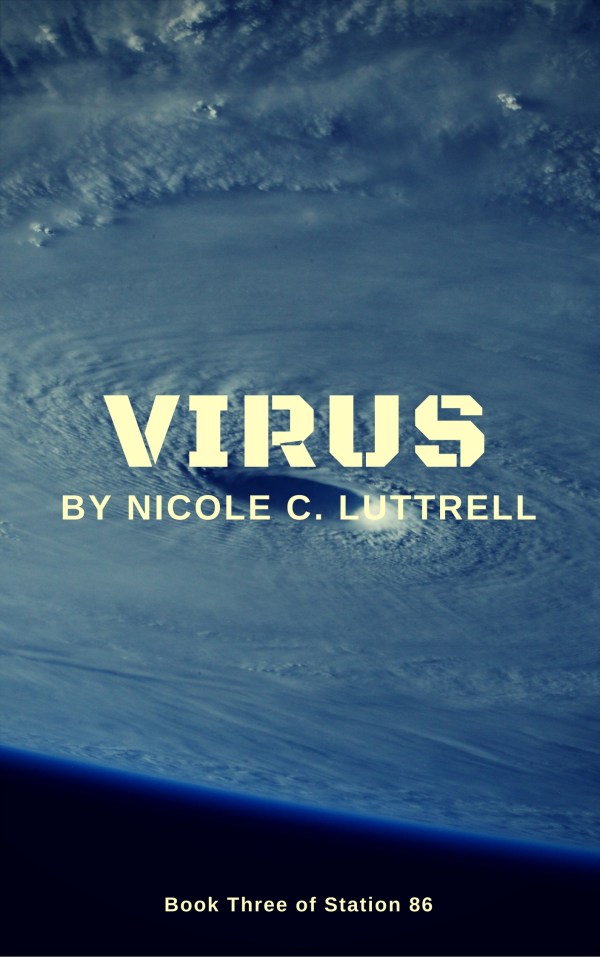
Virus launches today!

It’s the official launch day for Virus!

I feel like I’ve done a lot of launch days in the last few years, and they never stop being exciting.

We’re having a Facebook launch party tonight, in case you missed it. Here’s a link to the party.

And, just in case you haven’t read them yet, here are links to the first three chapters of Virus. So if you just found me, this is what the fuss is about. Episode One is right here, and here’s Episode Two and Three.

Don’t forget, Seeming and You Can’t Trust The AI are both on sale for 99 cents for the week. This will be the last time they’ll be on sale until the holidays. So grab them now.

I’m so glad that you’ve come with me this far in Sennett and Godfrey’s story. There’s so much more to come.

Virus, Episode Three

Nicole Luttrell's avatarPaper Beats World

Episode One, Episode Two

Thursday, AC April 6

Sennett was laying upside down on her couch, feet propped up on the headrest and her head just brushing the floor. She was watching the news, trying to figure out how they could make station life seem so boring.

No one knew better than a police officer how many stories there were to tell on any given day. Where were the stories of muggings and people finding their life’s savings that had been hacked just in time? What was this crap about what tie Marshal Howard was wearing, or how many times he’d worn it before? Why did they spend so much time talking about one missing boy, when dozens more were missing, had been missing? Was it just because he was an adorable little boy that was easy to put in front of the cameras? And what the hell did…

View original post 2,586 more words

Virus, Episode Two

Nicole Luttrell's avatarPaper Beats World

Episode One

Wednesday, AC April 5

With the care of a man holding a newborn, Godfrey Anders slid a pan of duck into his oven. It was set at a low heat, intended to allow the duck to simmer in its own juices for hours.

He hadn’t been able to get a real duck. No one had been in contact with Earth for a while now. But he hoped the simulated one would taste almost as good.

Godfrey stood up from the oven, brushing his curly, dark hair out of his eyes. He rubbed his chin, feeling the stubble. He supposed it wouldn’t be a bad idea to shave before his wife, Ki, came home.

Before he did that, though, he wanted to get the horchee chopped up. A hard root vegetable from Toth, it was real. It did, however, take awhile to simmer before it was soft enough to…

View original post 2,521 more words

Virus, Episode One

Nicole Luttrell's avatarPaper Beats World

Tuesday, AC April 4

(AC stands for accepted calendar, the calendar that all Stations have chosen to use)

It’s been three months since we left our heroes, cleaning up Station 86 after the AI dog attack. The station of First Contact is shaken and its people are afraid.

Most of them expected that living on a space station, too far away from Earth for direct communication to be possible, was going to be dangerous. Perhaps they hadn’t expected the dangers, like terrorists and human error, would be so familiar.

The station had suffered a great loss of life. Many of those lost had been police officers, fighting to protect civilians. The station’s police training program had stepped up its recruiting efforts and hurried its program. Officers were promoted to detectives and replaced with new, hastily trained cadets. Commissioner Schultz said to them that, as she was green herself, they would…

View original post 3,431 more words

Picking apart Rocket Boys

Longtime followers of PBW know that I love a good memoir, especially if it’s a memoir about a female comedian. (See my reviews of Yes, Please, and Bossy Pants..)

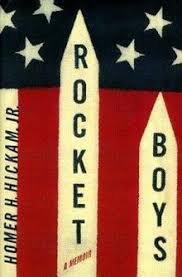
Once upon a time, I read a book called Rocket Boys. It’s the book that the movie October Sky’s was based on. It’s about a young man named Homer ‘Sonny’ Hickam, who grew up in a West Virginia coal mining town. He wanted to build rockets and work with Werner Von Braun at Nasa. While he never got to meet Von Braun, he did get to work for Nasa, which is the most amazing thing ever. It’s a sad fact, but an unavoidable one, that kids in coal and steel towns don’t always reach their goals. Actually, that’s not true. Kids all over the world usually don’t reach their goals. That’s why it’s such an enduring thing to crave the stories of those who did.

Rocket Boys is inspiring not only because it’s about kids achieving their dreams. It’s also inspiring because it’s about space. Space travel is a consistent universal dream that seems to be shared by the whole world. I think that if you took a member of one of the few remaining tribes untouched by the outside world, taught them to communicate with us and were able to keep them alive against our germs that they’re not immune to, and you told them that mankind had reached the moon, it would answer a deep, unacknowledged need that he didn’t even know he had. Then, we could introduce him to cold brew coffee and really mess with his worldview.

The point is that there is something about space that draws all of our eyes upward. And it should. Space is a great unknown, and we should never lose our fascination with the unknown.

Space made no bigger mark on a generation than the one that was coming of age when Sputnik launched, rocket boys 2the baby boomers. That generation looked to the sky and wanted so desperately to make it to the moon. I have an inherent fascination with the generations that came before my own. I think I’m trying to fill a hole in my history. While I have many stories of my family, I have heard little to nothing about what the greater world around them was like before I came along. Part of it is my fault. I don’t talk to my family much, and when I was a child I was never interested in hearing those sorts of stories. I never thought to ask. But I never thought to ask partly because great world events weren’t discussed much in my family. It just wasn’t something we talked about.
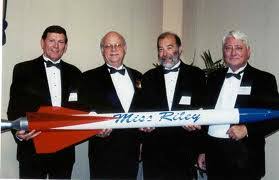
Reading Rocket Boys, and the following books show a reader the world through the eyes of a young man. A young man growing up in a town that doesn’t know it’s in its last years. The people of Coalwood are realists. They’re miners, wives of miners, sons, and daughters of miners. The men go off to the mine, the women keep the house, and the children go to school. The daughters know they’ll probably become teachers, nurses or wives. The sons, well the sons know they’re going to either become football players, soldiers, or miners. There isn’t a lot of high dreamers in Coalwood.

Homer ‘Sonny’ Hickam is the second son of a man who loves the mine. Homer all but lives at the mine. He’s taught himself advanced mathematics and physics so that he can do his job. He can’t stay away from the mine. Even though he has two sons.

He’s also the son of a woman who hates the mine, and everything about it. She loves her husband, but the mine comes between them constantly. They battle back and forth about the future of their sons, and their own future as well.

Among all of this, raised by two hard people in the middle of a hard town, Sonny started looking toward the moon. And he started building rockets.

While never clearly expressed in the book, Sonny has more in common with his father than either one of them would like to admit. Homer Sr. is a born leader and so is his son. So when Sonny starts building his rockets, he naturally attracts other young men around him. Together, he and his friends start building rockets and shooting them off. Naturally, in a company covered in coal dust, this is often an issue. Sonny fights with his school to teach him the math he needs. He fights for his parent’s permission to build the rockets. He fights for supplies to build them and a space to launch them. And, when the town sees how hard he’s fighting, the town starts fighting for him.

This book was important to me because I grew up in Western PA. It’s not the same as West Virginia, but rocket boys 3there are ties between the two places. Sonny grew up in a coal mining town, I grew up in a steel town. There’s an obvious connection there, and so I feel that there’s a connection between Sonny and me. He had his rockets, I have my stories. We both have the small towns that are more home to us than any one building. Places that will never leave us, even if we leave them. Even, in his case, if the town itself is gone.

If you haven’t read Rocket Boys, I highly advise you check it out. Don’t cheat and just watch the movie, spend some time reading the book. It’s well worth it.

Are you ready for Virus?

We’re getting close to the launch of Virus now, and I couldn’t be more excited! This is my second major launch of the year, and you’d think I’d be tired of this stuff. But I’m really not.

We have a lot of amazing stuff planned for this launch. All three Station 86 books will be available for 99 cents the whole week of the launch, from July 9th to the 15th. That means you’ll be able to have the whole series so far for less than three dollars.

Of course, we’ll also be celebrating on Facebook with a launch party on July 13th from 6:00 to 9:00. Here’s a list of the awesome writers who will be conducting takeovers.

6:00-Mercedes Prunty

6:30- Me

7:00- Shakyra Dunn

7:30- Richard H. Stephens

8:00- Derek Borne

8:30- Also me.

As always, I couldn’t do what I do without your continued support. I’m so thrilled that Virus has been so popular on the site. I can’t wait until all of you get a chance to read the extended ending.

Stay tuned.

The good works of bad men

Are you following me on Goodreads? If you’re not, you should be. If only because I bet you’ll be able to predict blog topics ahead of time.

For those of you not following me on Goodreads, I’ve been reading the memoirs of Homer Hickam. I started with Rocket Boys, which inspired the movie October Skies. Now I’m reading The Coalwood Way, book two.

Homer or ‘Sonny’ Hickam is a West Virginian boy who grew up as the son of a mine superintendent. He was a teenager when Sputnik was launched, and it affected him as much as it affected the rest of the country. He decided that he wanted to build rockets to go into space.

Sonny found a hero, as many of us do when we find our passion. He found Werner Von Braun, one of the scientists that sent us into space. One of the scientists that made it possible for one of my personal heroes, Buzz Aldrin, land on the moon.

Werner Von Braun was also a Nazi scientist, brought to America and given amnesty for his crimes as part of Operation Paper Clip along with many other Nazi scientists.

So, he’s a Nazi

But we might not have won the space race without him.

But he worked for Hitler.

But I have him to thank for inspiring America to reach for the stars.

Obviously, he’s a complex person, which brings me to today’s topic. We live every day with the good work of bad men.

Don’t believe me? Here’s another one you might know, but you might not. Do you know anyone who has to take insulin? With diabetes being the epidemic in America that it is, I bet you do. There’s a chance you yourself use insulin.

Did you know that insulin was invented by Nazi scientists? Did you know they horribly tortured people to create it?

I’m not saying this to defend Nazis. Since this has to be said these days, I really hate Nazis. They’re monsters in human form, and the horrors that they committed stagger the imagination. There is no forgiveness in my heart for these people.

But millions of lives have been saved as a direct result, and our whole country was inspired to reach for the stars, and that’s kind of a horrible legacy for two such great things!

This fact, that is inescapable, really bothers me. Do we value the good, no matter how we got it? Do we refuse to use the medical breakthroughs like insulin because of the blood on the hands of the men who created them? Do we spit on Buzz Aldrin’s feet because he rode in a rocket created by a Nazi scientist? (Don’t do that, he’s a great man and he also might punch you.) But, do we say that the ends justified the means, so it’s okay that these horrific things happened?

There’s no good and easy answer in this situation. I know that I’ve puzzled over it for years and I still don’t have a good answer. I honestly don’t think there is a good answer. It’s just an unrefutable fact that we all have to live with.

We live in a world where horrible men and women create good things.

Now, I didn’t tell you all that to make you feel bad. I sure as hell don’t think that anyone who needs insulin or is inspired by the space station should feel guilty about it. I told you this because it’s something we as writers need to understand about the world and the people who dwell within it.

There is no pure evil in this world, just like there is no pure good. These men were not doing what they did to be evil. In fact, Werner Von Braun never really wanted to work for the Nazis. He just wanted to work on rockets. He wanted to go into space and he worked with the people who could make that happen. I’m not saying he was a good man. He just wasn’t a pure evil one.

This is important to understand because if you want to write a realistic world, pure evil shouldn’t exist. If your antagonist is pure evil, you need a rewrite.

Because no one ever thinks they’re the bad guy. Everyone thinks what they’re doing is justified.

DaysAnd Other StoriesSeven pieces of short and flash fiction, showcasing the days of seven very different people. You will find a busy librarian, a lonely man with a guitar and a woman who finds a dream crashing in her brain.

Read it for free now.

A WordPress.com Website.

Up ↑