My favorite screen free activites

Have you heard of the new Gen Z trend called an Analog Bag? It’s adorable, though honestly a little extra. When I was a kid, it was just called a busy bag, and it was something parents made for their kids.

Which doesn’t mean I’m knocking it! I think this is actually a cute idea. I will say that you probably don’t need to buy anything new for your analog bag. I’m ninety percent sure you have an empty bag somewhere in your house.

I as well am trying to limit my screen time. If for no other reason than to preserve my poor eyes. My day job requires me to stare at a screen all day. Then my life’s purpose, writing, also needs lots of screen time. Toss in some recreational Instagram and Webkinz time, and I spend way more time than I should looking at little glowing boxes.

If you find yourself in a similar situation, you might be looking for new ways to get offline and away from screens for at least some of your day. You might, in short, be looking for things to put in your analog bag (that you already have, please don’t buy another bag!). So today, I’m sharing some of my favorite screen-free activities.

Junk journaling

I love junk journaling. My aunt taught me how to make a junk journal as a kid, and I’ve been experimenting with them off and on ever since. My favorite way to build one is to get a big second-hand book with a solid cover and just get crafty with it from there. My current junk journal is an old history book from a library book sale, covered in brown paper on which I doodle with gel pens.

It doesn’t have to be anything fancy. I’d actually suggest against going the fancy route. It’s just something fun and creative for you to do with all the little bits of things you come across that are too pretty or too sentimental to get rid of.

Puzzle books and papers

This isn’t sponsored by Sunday Club or anyone else. But I have been subscribed to Sunday Club for a few months now, and I’m really enjoying it. Simply put, it’s a collection of newspaper-like puzzles, printed on newsprint. Think sudoku or crosswords.

It’s just a fun little thing to do. I’ve even taken them to the bar and made it a group activity with my friends.

Crocheting and other string crafts

I’ve crocheted since I was a child. I still do. There’s literally a sweater I’m in the middle of crocheting on my desk right now. I also knit and cross-stitch. I kind of want to get into felting, though that seems like it’s going to take up a lot of money and space. But everything everyone makes online looks so cute, and I think stabbing something over and over until I like it would be really therapeutic.

Of course, this should be no surprise to anyone who has read my fantasy series, Woven. The whole series is about thread-based magic.

Witch crafts

I am a witch, and I absolutely put the ‘craft’ in witchcraft. I love making candles, tea blends, charms, spell jars, and even my own oracle deck. I’ve made rune ‘stones’ out of air-dry clay. I’ve made spell paper dolls. Really, anything that allows me to dig my hands in and create something feels like magic to me.

Gardening

The darling husband and I moved last year, and for the first time in a long while, we have a yard. I have been loving planting things. I put garlic in the Fall. And just last weekend, I put in four different kinds of tomatoes. There’s just something so pure about digging into the soil, weeding, and carefully caring for these delicate little plants as they grow stronger, all while blaring Delilah Bon.

I have this lovely idea of making my own capresi salad with homegrown tomatoes, basil, and handmade mozzarella cheese by the end of the summer. I’ll keep you updated on Instagram.

Reading, duh

I almost didn’t include this one, because it seemed so obvious. But yes, I love reading more than just about anything else in the world. I’ve shaped my entire life around reading and writing good stories, after all. And while I do read e-books, I just prefer a good physical book. I don’t have to worry about glare, won’t have my reading flow interrupted by a notification, and don’t have to watch my battery life. Plus, we just got a good-sized blow-up pool, and reading an ebook anywhere near that feels like just asking for trouble.

So now it’s your turn. What’s your favorite screen-free activity, aside from reading?

Also, I have a quick scheduling note. I won’t be posting next week, as I’ll be on vacation for the SFWA Nebula conference and my 40th birthday. See you back here on June 12th.

Paper Beats World is a labor of love. You can support us by liking this post, sharing it and commenting. You can also support us on Ko-fi.
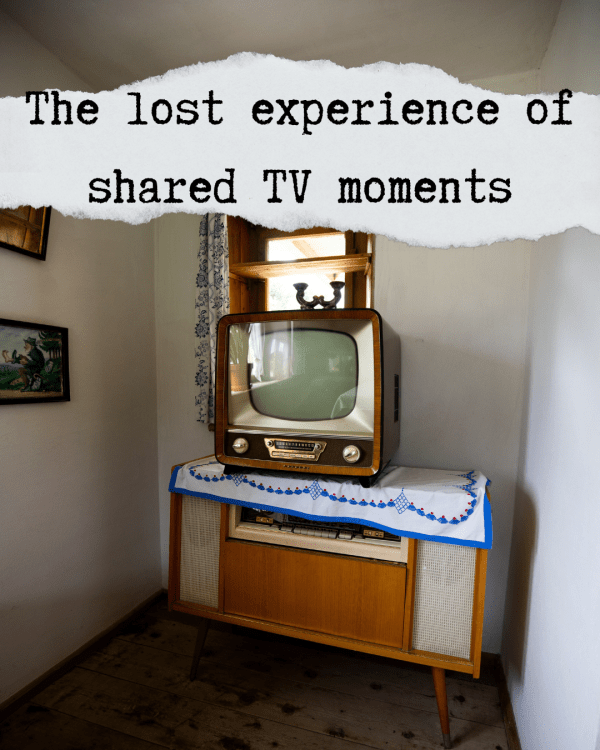
The lost experience of shared TV

On May 21st 2026, CBS aired the last episode of their historical late-night talk show, The Late Show. First hosted by David Letterman from 1993 until 2015, the show was taken over by Stephen Colbert from then until, well, last Thursday.

I didn’t watch this historical moment when it aired. I watched it on YouTube earlier today, because I generally stream TV shows the next day instead of watching them when they’re aired. I have work in the morning, after all. Most of us have work in the morning. About the only thing I watch live anymore is sporting events, because it’s impossible to avoid spoilers for something like that, and watching a game isn’t fun if you know who’s going to win.

(Congratulations, by the way, to the PWHL Victoire on winning their first Walter Cup.)

I know that I’m not alone in this. Most people my age and younger don’t watch anything live. And if you are younger than me, born after the time when live TV was the only option and cable was for rich people, that might be hard to comprehend. To watch anything, you had to be at home in front of your TV at a certain time. If you had to go to the bathroom or grab a snack, you had to do it during the commercial break. There was no rewinding or pausing. If you missed something, you missed it until that episode was rerun or you bought it on VHS or DVD. If someone else in the house wanted to watch a different program on a different channel at the same time, you had to either have two TVs or have a fight.

This change in how people watch television is one excuse CBS gave for cancelling The Late Show. It’s not financially viable anymore, they claim. As though somehow they make less money on streaming ad revenu as on cable ad revenue. Come on with that, CBS, who do you think you’re fooling? We all know why you did this, you wretched cowards.

That being said, streaming television is a different experience from watching programs live. As writers, we owe it to ourselves to understand the shifting mediums in which people consume content and stories. First, let’s look at what we’re losing as live TV watching goes by the wayside.

Watching live TV requires us to be present. Not trying to do two things at once. Not scrolling social media. We had to be there when it was on.

There are issues with that, I know. And we’ll get to those in a moment. But it’s hard not to think back nostalgically about a time when, if we wanted to see our favorite show, we had to stop whatever else we were doing.

We had to stop.

Live TV events brought people together in a way that’s hard to explain if you haven’t experienced it. Yes, I remember where I was on September 11th. I remember where I was when I found out Trump was elected. But I also remember good things!

I remember watching the last episode of Friends with my mom, and 52.5 million other people. I remember watching the first Who Shot MR. Burns episode in May of 1995, and having to wait until September to find out. (Yes, I was watching The Simpsons at age nine. Weren’t you?)

This isn’t unique. Actually, the Friends finale audience is laughably small when compared to the number of people who watched the last episode of M.A.S.H in February of 1983. 121.6 million people tuned in for that. I bet if you ask someone who was around during that time, they’ll tell you about watching it.

These touchstone moments are significant. These are moments when massive amounts of people cared so much about a story, about a fictional world full of fictional characters that people poured their creativity and passion into creating, that they all had to see how it ended.

Imagine writing something that was that significant to that many people. And for those of you who hadn’t experienced this, imagine the significance of experiencing a story that so many other people are experiencing at the same time.

All that being said, I don’t want to be the old woman yelling at clouds here. I am more than aware that streaming content is the default now for a reason. As exciting as it is to experience television as a group, it’s far more accessible for far more people. Life is not so busy that we can’t take an hour to enjoy a good story. But that hour we can take is going to be a different hour for all of us. I can’t stay up until 11:00 to watch American Horror Story on a work night. I can’t plan dinner and chores around TV watching. And, if I might put my feminist hat on for a moment, there’s about half the population that doesn’t have the ability to just stop cooking, taking care of babies, and running a household to watch TV when it’s airing.

Life happens. People get sick, have to work late, get busy, get invited on dates, and go on vacations. Life doesn’t just stop, and in fairness, it shouldn’t. Personally, this is one reason why I consider books to be the superior way to consume stories. I might always have time to sit down and watch a show. But I can usually sneak in some reading time or listen to an audiobook.

Speaking of books, I actually love how advanced storytelling has become on television. I’ve always felt that people who look down on television as a storytelling medium are missing the point. Stories are stories. But, television shows that adhere to traditional airing time constraints run into problems. Stories had to fit neatly into twenty-two or forty-five minutes, give time for commercial breaks, and fit into specific season lengths. Shows had to add filler episodes, bottle episodes, and even clip shows. A great example of this is X-Files. You had ‘moster of the week’ episodes, and storyline episodes. And God help you if you missed a storyline episode. You’d better hope they re-run it, or that a friend was good at remembering details.

But with those constraints taken away, storytelling can fit into the size and space it needs. Consider shows like The Boys or Stranger Things. These shows were designed for streaming platforms. The episode lengths vary based on storytelling needs and not advertisers’ schedules. They also do away with filler episodes. Every episode is essential to the plot. And they can do that because it’s almost impossible to miss an episode.

So what’s the takeaway here? Are we losing more than we’re giving up? Well, as nostalgic as I am, I don’t know that we’re losing more than we’re gaining. I think the more ways we can share stories, the better. And while my nostalgic little Millennial heart might pine for a big TV show experience, I think the ability to fit stories into the little peaceful moments we have through our days is incredibly beneficial. Assuming that everyone can watch TV at the same time is assuming that we all have the same sorts of days. And that’s not true now, nor has it ever been. Streaming content evens out the game. Just because we can’t all play at the same time doesn’t mean we shouldn’t all get a chance to play.

But this is all just my opinion. I’d love to hear your thoughts on it. Is there a big TV moment you remember? Let us know in the comments.

Paper Beats World is a labor of love. You can support us by liking this post, sharing it and commenting. You can also support us on Ko-fi.

Why The Rainshadow Orphans Works

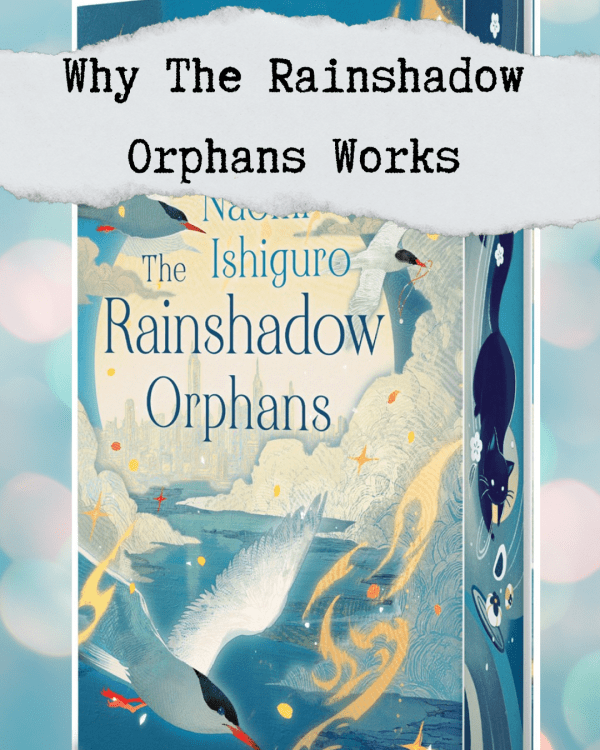
Written by Naomi Ishiguro and coming out on May 26th, Rainshadow Orphans was sent to me as an arc by the publisher. And honestly, I just speed read two really dark and disturbing horror novels. While they were fantastic, they were heavy! I for sure needed something light and fun. Thankfully, Rainshadow Orphans was there.

(If you want to read my reviews of these very dark books, check out Weird Wyrlds)

The story starts with Toshiko. She and her adopted siblings, Mei and Jun, live in Rainshadow City. Their goal is to seek revenge against the Lucky Crows, the gang that killed their Aunt Reiko. In the meantime, they want to steal enough from the elite of Rainshadow City to live a comfortable life that would otherwise be denied to them. But when Toshiko steals a dragon pearl from the Lucky Crows, she sets the whole city on its head.

This was an incredibly fun book to read that left me feeling lighter and craving bubble tea. So let’s break it down today and talk about why it works.

Excessively fun on purpose

Remember when you read young adult and children’s books, and they were fun? When the writer included characters or elements that were just for the fun of it? Why don’t adult writers do that more?

There are so many elements in Rainshadow Orphans that are just there for fun. Mochi, the family cat coming along on heists. Sun spirits who turn into squirrels to interact with the young prince Haru. And a machine that can make literally any kind of bubble tea you can imagine.

These are all fun elements. They bring levity to what could otherwise be a pretty dark story. I mean, this is a story about a corrupt city so bent on progress that the leaders don’t care about the lives of the people living there. That could be pretty messed up. It could also be the same shit we hear in the news every day. But adding joyful elements helps with the heaviness.

For such a chunky book, it’s a fast read

I mean, not that fast. This post is late, after all. But the pacing of the story goes fast. There’s always something happening. There’s not a lot of downtime. The characters are always off doing something dangerous, even if it’s just getting cake at a cafe.

Early in the book, it’s established that Toshiko and her family don’t really have a right to live in the city. They’re not citizens. So literally anytime they’re out in public, there’s an element of danger. Then, their faces are plastered all over the Lucky Crow’s most wanted list. This made the tension of the book sky high and thrilling. It makes you want to keep right on flipping pages.

All the characters are so endearing

I loved Toshiko from the start. I loved how much she, Mei, and Jun love each other. I especially loved Mei, with her cat, snacks, and full face of makeup, even when she’s not leaving the house.

I also loved Haru. He could have come off as a spoiled kid, but it’s made pretty clear pretty fast that his life is so lonely.

Every character in this book is endearing in their own way. You want to see everyone succeed, everyone be happy. Ishiguro manages this by showing not just each characters quirks, but how they interact with other people. How much they love other people, or seek to be loved by them.

This is something that shows each character’s real, well, character. How much they care about each other. How far they’ll go not just to protect each other, but to bring joy to each other.

Just when you think you know what’s going on

There were several moments early in the book where I was sure I knew the ending. Oh, I know what the robots are. Oh, these characters are going to fall in love. Oh, I know the plan for the city. And most of those times, I was right.

I found that out about two pages afterwards, because those weren’t the big reveals. They were small reveals that led us along a path to an ever more twisting tale. So if you start thinking you’re smarter than the author while reading this, hold up. I can promise you that Ishiguro knew exactly what she was doing. And she did it very well.

Rainshadow Orphans reminds us that even in the darkest times, we can thrive, not just survive. We can have our bubble tea and wintermelon cake, and stand up against all powerful regimes. We can see the magic in the world while fighting the darkness. It reminds us that yes, there are terrible and powerful people. There are fights to fight. But there are also grumpy cats, neighbors who help each other, and snacks. This is a lesson that we all need right now.

And thankfully, there’s more to come. Because Rainshadow Orphans was just book one in a trilogy. Personally, I can’t wait for the next one to come out, so I can travel again to Rainshadow City.

Paper Beats World is a labor of love. You can support us by liking this post, sharing it and commenting. You can also support us on Ko-fi.
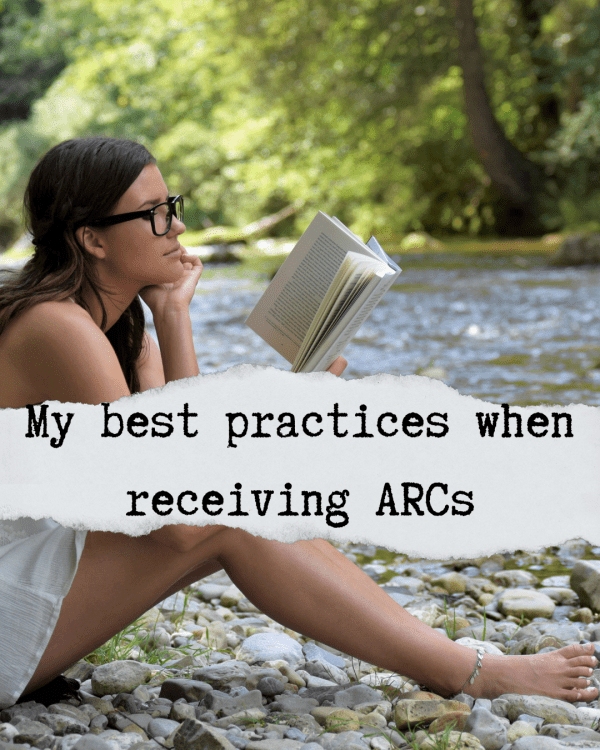
My best practices when receiving ARCs

Last week, we talked about submitting ARCs to potential advanced readers. As I said then, I’ve been getting a lot of these recently, and I wanted to share some tips for those of us sending ARCs. (This is something I’ll be doing myself soon. Stay tuned.)

Today, though, I want to talk about the other side of that equation. If you find yourself being offered ARCs, you may be a little unsure at first how to handle this. Personally, I always feel a little awkward getting ARCs. Like someone gave me a thoughtful gift and I didn’t give them anything.

So today, let’s talk about some practices I follow when I receive an ARC. Do you have to do these things? Of course not. Not unless you’re under some sort of contract. But as we are writers ourselves, these are things I’m sure any of us would appreciate.

Send a thank you letter

I think this is just good manners. But if you received an ARC, send a quick email thanking the person who sent it to you. Especially if it was a physical book. Not only is it polite, but it also lets the person who sent it know it was received.

Say no if you need to

There are going to be times when you just can’t take an ARC when it’s offered. We discussed some of these reasons last week. If you don’t have the time to read an ARC, that’s okay.

Or, if it just isn’t your thing, it’s okay to say that too. That doesn’t necessarily mean it’s a bad book. I don’t like matcha, even though everyone else seems to like it. Some people don’t like espresso, as strange as that is for me to believe. Sometimes good things just aren’t to your taste. And it’s best to be honest about that rather than commit to reading something you’re not going to enjoy.

Do your best to read the book in a timely manner

I try to read and review ARCs before their release date. Try being the key term here. I recieved an ARC that’s over six hundred pages that, due to some other time constraints and publishing schedules I just started reading on Monday. It releases on May 26th. I am doing my best!

(Side note, it’s called Rainshadow Orphans by Naomi Ishiguro. I’m about a hundred pages in so far, and it is very good! Come back for the review, hopefully, next Friday.)

This is part of why it’s important to say no if you need to. The reason people send out ARCs is to get people buzzed about the book before it comes out. So it always helps to get your reviews done sooner rather than later.

Share reviews in as many places as you can

I wrote full reviews for each ARC I’ve received so far here on PBW. But I also reviewed the books on Goodreads and Bookbub. Because, of course, not everyone’s going to read my review here.

If you can, try to leave reviews in as many places as you have access to. That gives the author the most reach and really helps them out.

(A side note about Amazon reviews! Sometimes Amazon gets touchy if you review something you didn’t buy through them. I’ve been actively locked out of writing reviews before. So proceed with caution there.)

Be honest

This final point is one I struggle with. Because I never want to say bad things about other writers in public. I always go back to the matcha and espresso analogy, and I don’t want to scare off readers who might like a book.

That being said, if I didn’t like something about a book, it doesn’t help anyone for me to be dishonest.

For starters, it hurts me because it erodes my credibility. If I’m telling you I was in love with a book I couldn’t even finish, you’re not going to believe me. And it would come through in my review, believe me.

It also doesn’t help the writer in the long run. Look, if someone reads one of my books and they don’t like it, that’s fine. I’d kind of like to know why they didn’t like it, because I’m always trying to get better. A working writer will always appreciate a review that gives the good and the bad. I just reviewed October Film Haunt on Weird Wyrlds, and it was a great book with one flaw that irritated me the whole time. That doesn’t mean I didn’t like the book. I highly suggest reading it.

Now, this final tip might be just a me thing. But if I really didn’t like a book, I’m probably just not going to review it at all. Honestly, I probably just won’t finish it. I have too many books I really want to read. I’m not in school anymore, I’m not going to spend time reading something I don’t enjoy. So if I really didn’t like a book, rather than giving a detailed list of why I didn’t like it, I just won’t review it.

Now it’s your turn. Do you get ARCs? What are your best practices for them? Let us know in the comments.

Paper Beats World is a labor of love. You can support us by liking this post, sharing it and commenting. You can also support us on Ko-fi.
My advice for submitting ARCs

Recently, I’ve been blessed to receive several ARCs from a few different publishing companies. I don’t know how I got on their list for advanced readers, but I’m not mad at it. I’ve gotten to read some fantastic books before they even come out. What reader doesn’t want that?

However, I have a confession. I’ve received requests for ARCs for years. Some of them I’ve accepted. But a lot of them I’ve either politely declined or simply ignored outright. That might seem cold of me, especially since I am myself an author and know how hard it is to pitch my book to people.

Pitching ARCs is a great way to get buzz going about your book before the release. It can get people talking, recommending and reviewing your book before it’s even available. It’s a super powerful marketing tool. One that I’ve never been able to get my shit together enough to actually use.

I’m working on it.

So today, I thought I’d share a little bit about why I’ll accept an ARC, why I’ll reject one, and why one can irritate me enough that I don’t even respond.

Start with a great story

The first book offered to me by Saga Press was Year of the Mer. And the way it was described in the email just hooked me. (Yes, pun intended) A dark retelling of Little Mermaid that’s all about political backstabbing and magic? Yes, please sign me up.

The email I got for this book was basically a query letter. It started out strong with the pitch, gave examples of similar books in the genre, and only after all that did we get into the accolades of the author. By the end of it, I couldn’t ask for the book fast enough.

When you’re sending out offers for ARCs, you should be writing a query letter. You should be putting your best foot forward and basically selling your book to the potential advanced reader.

Offer multiple versions if you can

Now, I know this is where a lot of us indie authors might struggle. But one big reason why I’ve been so thrilled to work with these recent publishers is that they offered to send me physical books.

I find physical books easier to read. And I’m trying to spend less time staring at screens. But that doesn’t mean that all advanced readers are going to want that. Some will want an e-version. And among those, some will want epub, some will want mobi, some will want pdf. It all depends on what sort of device they read on and their preferences.

Yes, I understand that this is going to be inaccessible for some indie authors like myself. It can be a hard ask. Getting copies of your book is expensive, even before we take shipping them into consideration. This is one reason I haven’t managed to actually send out ARCs yet.

And, of course, converting your book into multiple formats isn’t something everyone is comfortable with.

But if you can offer multiple versions of your book for ARCs, it’s a lot easier for advanced readers to say yes.

Be professional

When you’re pitching an ARC to a prospective advanced reader, it’s best to treat it like a submission. Put your best foot forward. Make sure you’re checking for spelling and grammar errors. Check the correct spelling of your recipient’s name and their pronouns. Make sure the person you’re sending your book to works with your genre.

If all of this seems like common sense to you, congratulations. You’re standing head and shoulders above some of the people who’ve sent me ARC requests.

When you send out ARCs, you’re asking someone to take a chance on you. Most of us don’t have a lot of extra time on our hands. We also have stacks of books we already want to read. You know, for fun? Every day I spend reading an ARC is a day I’m not reading The Caretaker. So please, show me that the book you’re asking me to read will be professional and edited.

It might not be personal

Now, I’m afraid I have some bad news. And if you’ve been a writer for more than five minutes, you already know what I’m going to say.

You can do everything right, and still hear no from advanced readers. And it’s almost certainly not personal.

I have had to reject ARCs that I wanted to read. And it’s for the awful grown-up reasons you probably already know.

I’ve already committed to too many books. I have launches coming out of new books I need to review for Weird Wyrlds. I have a deadline coming up, and I know I can’t commit to reading your book in a timely manner. Or, your book just doesn’t grab me, and I don’t want to damn it with faint praise. (Especially if it’s an indie book, I’d rather say no than give you a bad review.)

Writing is a business. But it’s the business of selling art, which is extremely subjective. My DNF book is someone else’s best book they read this year. So don’t take a rejection personally. Just send your book to someone else.

At some point in the next year, I’ll be sending out some ARCs of my own. So, I’m sure I’ll have more advice to give as I start on that journey. But for now, it’s your turn. Have you had any luck sending out ARCs? Let us know about it in the comments.

Paper Beats World is a labor of love. You can support us by liking this post, sharing it and commenting. You can also support us on Ko-fi.
A WordPress.com Website.

Up ↑