Why Scion Works

Is this post actually going to be on time? Oh my heavens, I don’t know who I am anymore!

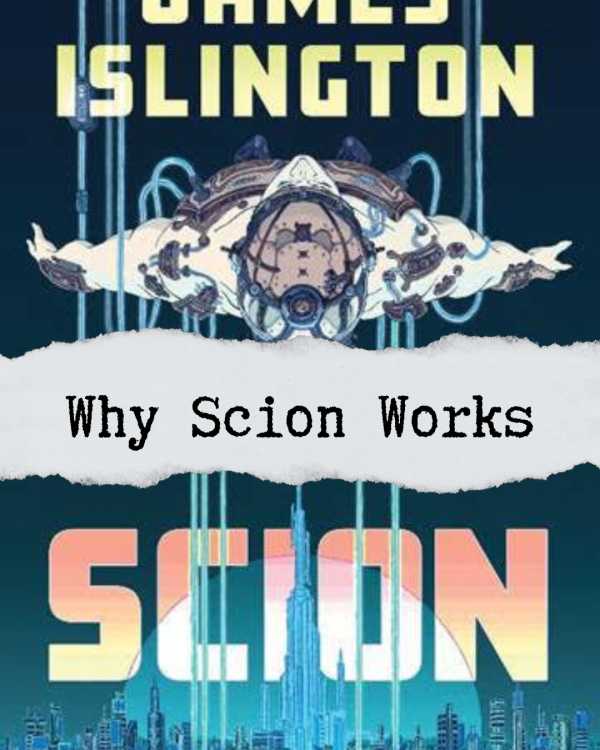
Launching on September first, Scion is the latest novel by James Islington. He’s probably best known for his Hierarchy series, and this is his first science fiction book. I received an ARC from Saga Press. And it was a fantastic read.

Our main character is an assassin named Azure. He lives in a dystopian future where people have discovered how to live forever. Of course, that comes at a premium cost. So, rather than outlawing the practice, the people vote to make it legal to assassinate ‘Lifers’.

The allure of crowdfunding the legal assassination of a wealthy asshole is almost enough to make this book not so dystopian after all.

Azure is one such legal assassin. He’s one of the best at what he does, thanks in part to his extensive body modifications. So he’s surprised when he’s assigned instead to protect someone from assassination. He soon learns the reason he was selected for this task. And it’s life-altering.

So let’s break down Scion today, and see why it works.

The first scene is a masterclass

A scene should accomplish something. Maybe it’s to move the story along, give important information, or show us something about a character. The best scenes do multiple things at once. And the first scene in Scion is a perfect example.

We start right in with Azure penetrating the defenses of a target’s magnificent home. He’s face to face with a bioengineered monster and fighting for his life.

This is a great way to get the reader’s attention. It also introduces the reader to some of the advanced tech in this world. On top of that, it introduces us to Azure, his remarkable abilities, and his delightfully sarcastic personality.

Well done, all around.

The world is vast

We only see so much of Azure’s world. In fact, it feels like we’re just looking through a keyhole into a limitless universe. You just can’t see everything there is to see.

There is so much wild technology. So much culture, music, food, drugs, and people! And we just don’t get a lot of details about any of it.

The detail we do get is astounding. It alludes to a deeper, more complex world.

I love when authors do this. It’s something I’m trying to learn. You don’t have to give all the details when you’re worldbuilding. I mean, you can if you want to. Some writers really love that sort of thing. But if you give just enough detail, the reader’s imagination will usually fill in the rest.

The main character was likable.

I liked Azure. He was bitingly sarcastic, professional, and weirdly respectful.

All of this was strange for an assassin. But then, assassinations are legal. So maybe that helps.

I love that he’s kind and respectful, even when murdering someone. I love how well he stands up for his boundaries. He clearly cares about the people in his life, even if distantly. And he always wants to do the right thing.

Even if he’s murdering people.

I think it’s important for a character to have a set of moral standards they adhere to. Even if they aren’t exactly ones we agree to. And Azure has those moral standards. They make sense for the world he lives in and his place in it.

Well done.

The ending!

Finally, I want to talk about the ending, without giving it away. Because it’s interesting.

At the end of the story, Azure is faced with a choice. I think that readers might disagree as to which choice he should make.

I know which choice I would make. But, well, it isn’t as simple as that, is it?

It’s an ending that leaves the reader with questions. But good ones. It also leaves this world open. If Islington chose to write more in this world, I think he easily could. I also think he should. I’d certainly read it.

Overall, Scion was a fast-paced story that invites readers to play along and fill in the blanks themselves. It’s witty and fun. I’d certainly recommend checking it out when it releases on September first.

As though we need another reason to count down the days to September.

Paper Beats World is a labor of love. You can support us by liking this post, sharing it and commenting. You can also support us on Ko-fi.

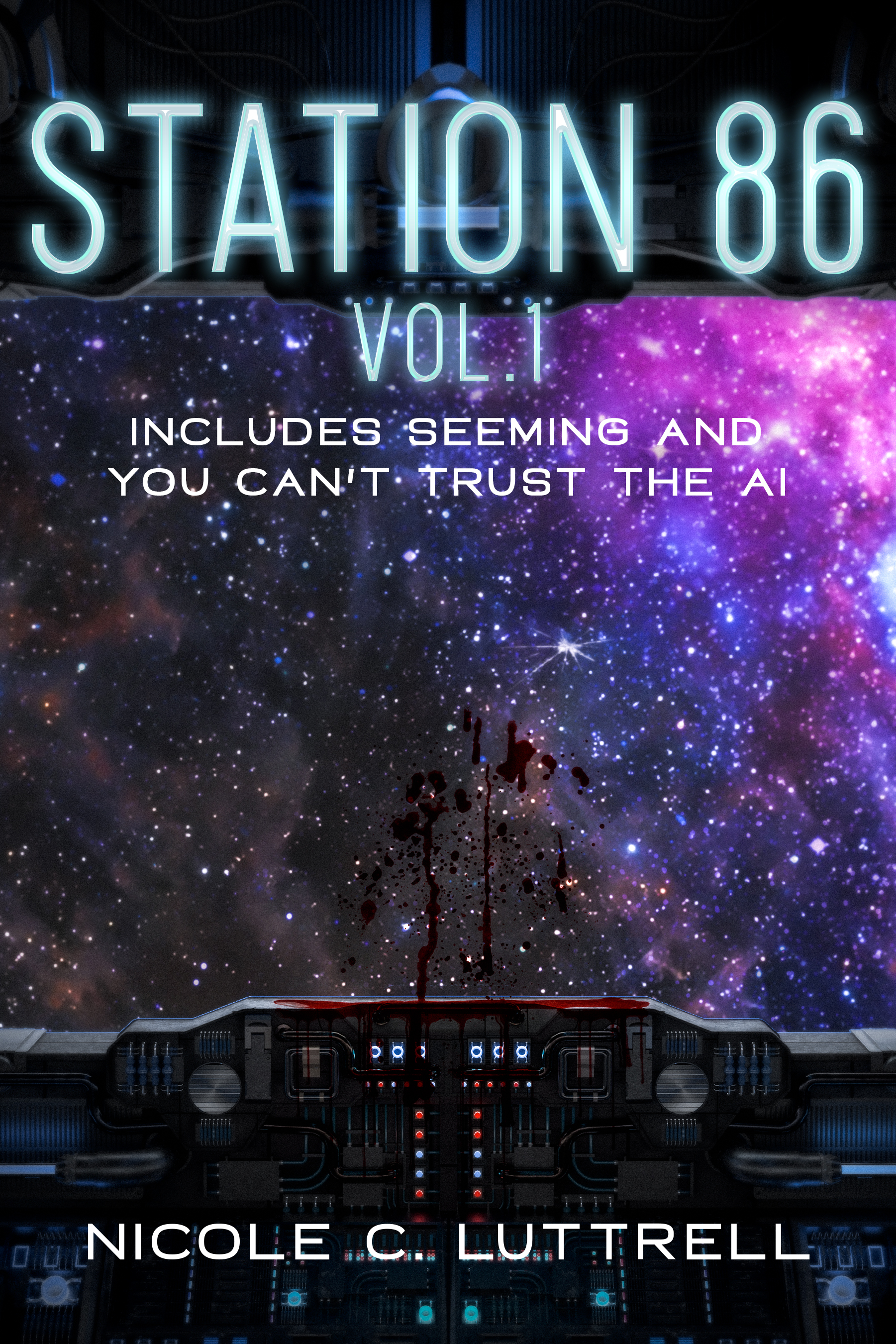
Station 86 Volume 1 is coming! You can get your very own copy on October Second.
The weight of a woman’s pen

“I’m a writer. I don’t cook and I don’t clean.” Dorothy West.

When I was a kid, my grandmother had a hysterectomy. I don’t mean when I was a teenager. I mean when I was a kid, like ten. And my mother sent me to stay with her for a week during my Summer vacation to take care of her. When my mother had a hysterectomy a few years later, I took care of her, too.

My writing has always come after caring for someone or something. I’ve written while potatoes boiled, at laundromats, while in doctors’ waiting rooms and on the public bus. I’ve gotten up early to sneak in writing before anyone would need me.

I have always had weight on my pen. Weight that many women probably find quite familiar.

This won’t be news to most of you, but women’s aspirations are often put on the back burner. We work our passions while babies nap, while water boils and meatloaves bake. We are often the default caregivers of children, parents, and in-laws. So if we are to write, we’ll do so once everything else is done.

This happens to me all the time. As you might know, my Darling Husband had a stroke about a year and a half ago. He is physically and mentally disabled. He needs care, some days more than others. So writing often comes in stolen moments. I barely wrote the first year after his stroke; I just didn’t have the time or energy.

Men don’t seem to have this problem. Or, I should say, men are less likely to have this problem. Lots of modern men are good at this. If you’re a man and you do an equal share of the housework, make your own doctor’s appointments, take equal care of your kids and elderly relatives, and pick up after your damned self without needing a list, that’s awesome. You’re a competent adult, and we love to see it. I’m kind of assuming that if you’re a man and you’re reading this, you are in fact one of these competent adults because I generally assume my readers are wonderful people and I love you all.

Let me tell you, though, that is not always the case.

One of the most galling things about the division of homecare is hearing some (not all) creative men talk about their partners. And, I hate to say it, but the first one that comes to mind is my man, my hero, Stephen King.

In his book, On Writing, he talks about his wife, Tabitha. And he obviously adores her. He makes it clear that he was only able to write while they had three little kids and they were both working because she was picking up the slack around the house. However, he points out that she had writing aspirations as well.

Well, fuck that! Tabitha King is an author. She’s been a published author since goddamned 1981 when her novel Small World came out. And I only found that out literally five minutes before writing this sentence because I looked it up! She’s published eight novels! On Writing came out in 2000, at which point Tabitha had already published seven of her books. And he sure didn’t mention that!

Stephen wrote novel after novel while working full time and doing a shit ton of coke. She wrote novel after novel while working, raising children, caring for a house, and dealing with her coke-addicted husband. Not to mention being incredibly supportive of his career. Put some respect on her damned name!

Over and over I hear men in the writing field talk about how much they depend on their spouses so they can write. I don’t often hear women say the same thing. Yes, some husbands fit that supporting role. But more often you hear men talk affectionately about how much their wives support them, without sparing a thought for how they can support their wives back.

Even so, the weight on the modern woman’s pen isn’t as heavy as it used to be. Consider Shirley Jackson, one of the greatest horror writers of all time. We all know the sort of marriage she had. Imagine what she might have done if her pen were a little lighter. If she’d had someone to cook dinner and look after the children. What might we have seen from other famous women writers? How many more amazing works would we have if women didn’t have this extra pressure on their time?

This needs to stop. This pressure needs to be removed. We need our pens to be lighter. But if that’s to happen, we women need to start having some real conversations with our partners, and with each other. In that spirit, I want to speak directly to my fellow women right now.

If your partner isn’t sharing in domestic labor, it might be time to have a real conversation with them. That’s going to look different for every couple. But it’s better than doing all the work and growing resentful that your own dreams are being buried under laundry and vacuuming.

We also need to stop posting these dumb, weaponized incompetent videos of men. It just encourages other women to put up with bad behavior because ‘all men are like that’. The fuck they are. My husband is half paralyzed, and he still helps out around the house to the best of his ability. My roommate is twenty-four, and he does equal parts of the housework.

Now, let’s also talk about how we talk to and about ourselves and each other. We do not have to have perfectly clean houses. We don’t have to make meals from scratch every night. We don’t have to have everyone over for holidays, cook, clean, and be perfect hostesses. We can ask for help from our families. We don’t have to take care of everyone. We shouldn’t expect perfection from ourselves. And if you have friends or family members who expect that perfection from you, maybe that’s not your problem. Maybe it’s time to respectfully tell your mom, sister-in-law, or judgy friend to go to hell.

This is something I’ve really struggled with. Especially since my husband’s stroke.

This is about to get real real here, so please be kind.

For the first few months after my husband’s stroke, I barely slept, let alone wrote. He needed almost constant care. He couldn’t sit up, couldn’t feed or clean himself. I didn’t leave the house for more than fifteen minutes for months. I was scared to take a shower with the door closed. I was terrified to leave him alone.

People offered to help. To sit with him. To run errands for me. And I would just say that I was fine. I had it covered. Because I did have the necessary things covered. He was clean, fed, and cared for. The house was put together.

But I wasn’t writing. Hell, I wasn’t reading. I could barely let him out of my sight.

Then, I did something drastic. A friend needed a roommate. I needed help. So we moved in together. I let other people stay with my husband. I let other people cook and clean. We’re talking about hiring a housekeeper. I stopped doing every single thing for my husband, and only stepped in when he actually needed help.

More than all of that, I’ve come to accept that the house might just be a mess. And that’s okay. It’s not a moral failing. Right now as I write this, there’s a massive pile of clothes that need to be folded and put away. There are dishes in my sink. The lawn needs mowed. I’ll get to it, or someone will. My writing comes first.

It’s time to take some weight off our pens and see what we can really do.

Paper Beats World is a labor of love. You can support us by liking this post, sharing it and commenting. You can also support us on Ko-fi.

Station 86 Volume 1 is coming! You can get your very own copy on October Second.
Station 86, the physical book!

Earlier this year, Grady Hendrix announced that he wasn’t coming out with a new book until 2027. As he usually graces us with a book a year, this bothered him. So, he published a novella under a pen name across the pond. That novella is called The Rednexorcist, published under the name Frank Sloane.

Yes, I ordered a copy. Yes, I’ll be reviewing it on Weird Wyrlds. (And by the way, I just reviewed Dead But Dreaming of Electric Sheep by Paul Tremblay. It’s a fun review, and a very fun book.)

I don’t have a novella to publish. I don’t have a novella written right now. And while I could write one, this would only delay the launch of the book I’m writing right now. And since I’m still working on the rough draft, I don’t really care to delay it any more.

Instead, I’m doing this. I’m launching Station 86 in physical form for the first time.

Now, I love a good physical book. My overly burdened bookshelves will tell you that. But Station 86 has always been, except for book five, a collection of novellas. So, of course I didn’t want to ask you all to buy a novella for physical book money. So, I’m putting them together. Seeming and You Can’t Trust The AI are coming out in Volume 1 on October second. Volume 2, which will include Virus and Station Central, will come out in February of 2027.

(Unrelated spoiler: that might not be the only release in 2027. Stay tuned.)

Eventually I hope to release an audiobook version as well. But I might need to get Kickstarter involved with that one, since I will not be using AI and will hire a voice actor.

I want to thank all of you for sticking around while I write new books. And while my posts have been super late. This year has been busy as hell, launching a new site and helping the Darling Husband recover from his stroke. But so far, it’s been a decent ride.

Stay tuned.

Why I’ll probably never run out of content

This month marks the twelfth anniversary of Paper Beats World. Don’t worry, this isn’t going to be some long emotional nostalgic post that I cry while I write. That’ll be later this month. Today, I want to acknowledge something that is kind of my super power. It’s something I aspired to as a child, and I think I’ve achieved it.

I have yet to run out of content for this blog. And honestly, I don’t think I ever will. I also don’t think I’ll ever run out of ideas for books or short stories. I have rarely, if ever, looked at a blank page for long.

Did you ever read the mystery series The Cat Who by Lillian Jackson Braun? The main character, Jim Qwilleran, was a journalist. He prided himself on being able to write 1,000 words about anything. Reading these books as a kid (yes, I did have a weird childhood), I decided that’s something I wanted to be able to do, too.

More than that, though, I have a crippling fear of running out of things to say. But it turns out this isn’t a superpower anymore than writing is. It’s a skill, and it can be learned.

So here are the things I do to make sure I never run out of ideas. Some of them are actionable; you can start doing them today. Some are a bit more philosophical. Try one of them, try any of them, try all of them. See what ideas you come up with.

I write everything down

I’m one of those people who always has a notebook with me. And I write things down. Things that I notice, that are interesting or infuriating. Thoughts I have while reading, or riding the bus. I never assume I’m going to remember, because I can promise you I won’t.

My notes are never pretty. They are not usually very interesting. They probably wouldn’t make sense to anyone but me. But they often lead to observations that are later made into stories or blog posts.

I freewrite

Yes, I’m banging this drum again. Freewriting is the number one best thing you can do for your writing. It’s often in these unstructured times when I come up with some of my best ideas. Sometimes it’s a fix for a problem in my current novel. Sometimes it’s a brand new story idea or some revelation I want to explore more in a post. Sometimes it’s some deep emotional realization, but that’s another post for another time. The point is that there are often good things to be gained from letting your brain off the leash.

I hang out with people older and younger than me

My roommate is a Gen Z person. He helps me keep an eye on what younger generations are up to these days. I also talk to a lot of older people in my day job.

This is a gift. Different generations see the world through entirely different eyes. I learn things from people both older and younger than me all the time. And this leads me to realizations and lessons I’d have missed if I was only hanging out with people my own age.

For a while, I struggled learning things from people younger than me. I had a bit of a chip on my shoulder. I think that came from not feeling as though I’d established myself yet. I didn’t feel like I’d shown the world what I could do. Now that I’m 40, and consider myself to have at least a little bit of success, I’ve humbled my damn self a lot. And that’s only benefited me.

I keep up with the news

To a point. If I didn’t put some barriers on how much and how often I pay attention to world affairs, I might have taken a bath with a toaster by this point. But I do pay attention.

The state of the world makes me angry. It makes me scared. And it gives me things to write about.

Art imitates life. If you’re an artist, it’s your job to capture part of the world you live in and explain it in your art. There will be history books later that will give us facts and figures (and death counts). We are here to tell later generations what it was like to live these days. What it’s like to wake up, go to work, go grocery shopping, do the laundry and wash the dishes while ICE agents are kidnapping people and our ‘president’ is stealing everything not nailed down and picking fights with other countries like a drunk after happy hour.

I consume things that cause a spark in me

I watch a lot of YouTube. A lot of writing content, of course, and horror content. I love me a good three-hour-long deep dive into urban legends. But I also watch things that just catch my interest. I like watching Answers With Joe, for instance. I like Mickey Adkins, a therapist. I also like this woman who’s a mortician. And I’ve been following the manager of a legal brothel on Instagram for forever.

Interesting things are interesting. And a writer can be inspired by another shiny thing that catches our eye. We’re kind of like cats. Or people with undiagnosed ADHD.

I love learning about new things. Useless things that I will never have to know, but are fascinating. These all feed into my writing. And, frankly, my overall enjoyment of life.

I live

I am forty years old, and I have seen things. I have done things. I have experienced good and bad days. I go on trips, go to the doctor, cook food, and sing along to music in my kitchen. I watch good TV, listen to new music, and investigate new hobbies. I have endured horrors. I have lost people who were my entire world. I have met new people who stole away my heart. And I am always eager to experience something new. Preferably good ones, but we can’t always be so lucky.

Writers cannot write in a vacuum. Many of us fantasize about quitting our jobs and going on writing retreats. I’m tempted to say that if I didn’t have quite such a full life, I might write more. These posts might be on time more often, and I might publish more than one book a year.

But I don’t think I would. I think that if I shut off that valve of living, it would strangle the creative valve. Writing doesn’t come from just pure imagination. It comes from experiencing life. All the great, glorious, and gory moments together. Every tear I shed has worked its way onto the page. Every love, every laugh. My work is an amalgamation of things that scare and delight me. If we’re honest, I think we’re all like that.

So that’s it. That’s how I’ve yet to run out of content, and probably never will. Now, it’s your turn. What do you do to come up with ideas? Let us know in the comments.

Paper Beats World is a labor of love. You can support us by liking this post, sharing it and commenting. You can also support us on Ko-fi.

A WordPress.com Website.

Up ↑