Books are books

Books are my favorite thing. I guess that isn’t a huge reveal. I love books. I love reading them, writing them.

Smelling them.

I love having a physical book to read, then display on a shelf like a trophy. Honestly, right now my favorite thing is swinging in my hammock and reading my way through my Summer reading list.

Recently, someone on Instagram said that they love cat people. Because cat people don’t just love their cat to death. They love your cat to death. They love street cats to death. They love all cats to death. That’s how I feel about books, and avid readers. (And cats.) I love everyone who reads. I love all books. But, apparently, this isn’t a universal opinion. I’ve seen far too much infighting among my book peers about things that, honestly, shouldn’t be argued about. So today I want to let you know where I stand in the literary world. I don’t think anything I’m about to say is a hot take. But it’s the internet, after all. Let’s see what happens.

Ebooks are books

My preferred method for reading is a physical book. That being said, I have read e-books and will continue to do so. Sometimes it’s easier. Sometimes the book isn’t available in print yet. Sometimes I don’t want to take several books on vacation. Sometimes the book came out, I forgot to preorder it, and I have to read it right now. Either way is valid. It’s still a book, on screen or on paper. It’s just like preferring mint toothpaste to cinnamon. Your teeth still get clean.

Audiobooks are books

This is another thing I am shocked I have to argue. Listening to an audiobook is still reading a book. I don’t know about you, but I want to read a lot of books. And I have shit to do that requires my hands. So if I can listen to a Grady Hendrix book while doing the dishes, weeding, or formatting a damned paperback, then I’d like to do so.

I’ve seen people putting down audiobook readers online. And it’s got to stop. We don’t all have the time to read as much as we want. Some of us (hi) are reading for work as well as recreation, and we need to get through some pages. And there are people with disabilities for whom physical reading is a challenge. There should be no barriers to enjoying a good story.

Comic books are books

I have always had a rather advanced vocabulary. This started when I read Calvin and Hobbs as a child. This led me to fall in love with comic strips. And I still love them. Snoopy, Cathy, Garfield, Girls With SlingShots, Squid Row. Comics were one of my first passions.

I do not understand why people will look down on comics as being cheap kids’ entertainment. They’re a great introduction to the fact that, hey, reading is supposed to be fun. There are heavy graphic novels, like Maus. There are fantastic adventures, like Bone or Wonderland. These are good stories. They promote literacy and a passion for reading. Also, they’re just fun.

Nonfiction and fiction are books

I read fiction and nonfiction. I do not understand people who read only one or the other. What, you don’t want to learn something? You don’t want to experience a good story? And even if you have a particular preference, why would you enforce that on everyone else?

Honestly, if you find that you read a lot of one or the other, I would encourage you to branch out a bit. My reading list has been really fiction-heavy this year. I need to fit some nonfiction in.

Genre books are books, and so are literary books

This one’s similar to the last two, if we’re being honest.

If you’ve read On Writing, then you know that Stephen King was once asked by a teacher why he wanted to write trash. By trash, she meant a ‘novelized’ version of a movie he’d seen. The answer didn’t come to him then, and he says there’s still a little part of him ashamed of it.

Genre fiction tends to be frowned upon by literary snobs. At the same time, literary fiction tends to be frowned upon by people like me, who believe in telling an entertaining story that damned well goes somewhere.

I kid. Actually, I enjoy writing some literary short pieces, just playing around with words. Evoking emotion, creating art. It’s fun.

But if you don’t think that genre writing can feel like literary writing, you’re not reading the right kind of books.

Books I don’t like are still books

There are lots of people in this world who enjoy some truly terrible books. Just awful. And there’s just no accounting for taste. I have DNF’d books that got glowing five-star reviews. I’ve devoured books that others couldn’t stomach. Honestly, there are whole genres I can’t stand. For instance, I’ll never be a romance girlie. But that doesn’t mean I’m going to talk shit about the romance girlies. Those are still books, and they still give people joy.

So here’s the main point. Books are books. It doesn’t matter how someone is reading. Reading is always worth it. It’s always a good choice.

Live and let read, everyone.

Why Not With A Bang Works

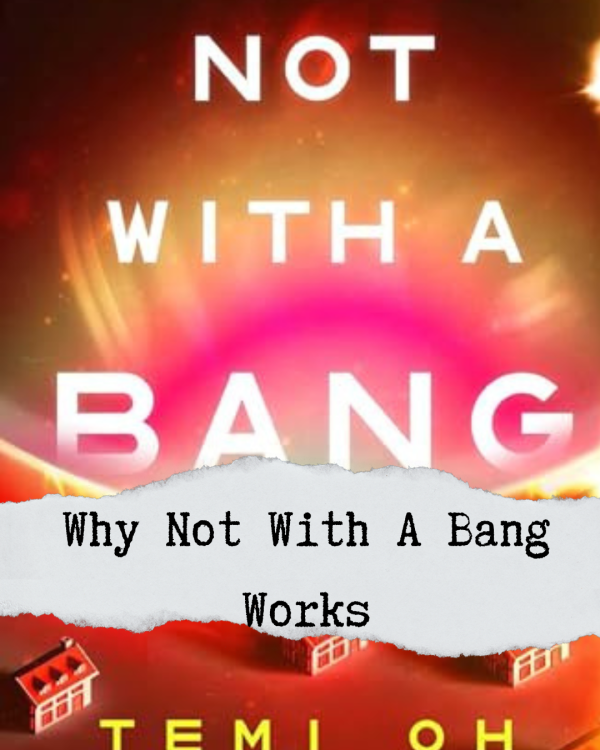
I received an arc of Temi Oh’s Not With A Bang, which released on Tuesday of this week. Normally I try to get my arc reviews out before the book comes out, but life being what it is, we’re here now.

I promise, this book is worth the wait.

Not With A Bang is about the Minton family. They seem to be a fairly typical family, though nothing like any family I’ve ever met. The main character, Briar, is the second oldest of four daughters. She dislikes her family, for all the typical reasons. Her mom seems to like her the least. Her dad lost his job and is spiraling. Her oldest sister is getting married to a very well-off man. Basically, everyone is wrapped up in their own personal dramas.

Then, the Event happens.

The family is separated in three locations. They’re all trying to survive. They’re all trying to get home.

They’re all trying to find each other.

This book had me in tears. So let’s break it down today and talk about why it works.

The first thing I loved about this book is that it’s very British. And it really highlighted why America kind of sucks right now. Marcus, the father of the family, lost his job as a police officer for something that no American cop would do today. He was publicly shamed and felt bad for his actions.

What a world!

I was also really impressed with the Event. The big, world-ending thing. It was unique, and not at all what I was expecting. It also seemed like something fairly simple, until you consider the implications.

I won’t ruin it for you, because it was a terrific surprise. I was, at first, sure that this couldn’t be The Event. Until I really thought about it.

Honestly, that can be said of the whole book. Because while I did guess some things, most of what happened I was just not expecting. At no point did I know where this story was going. It was just one rather shocking event after another.

And I think the real reason this is true is that all of the characters acted like, well, humans.

I think sometimes in the sci-fi genre, we writers write the world as we want it to be. We write people who are brave, passionate, selfless. We write the people we wish we knew. The people we wish we were.

The Mintons are not those people. They’re selfish. They’re messy. One parent is having an affair. One is losing their mind. One character has an incredibly toxic relationship with their best friend.

And yet, when it comes time, each Minton rises to the occasion. They do incredible, selfless, messy, and magical things. Things that I think we all hope that we could rise to.

All in all, I only have one real complaint. And this might just be a personal issue for me. The book wasn’t funny.

And no, I don’t expect a messy and beautiful family story at the end of the world to be a laugh riot. But there aren’t any funny moments. There aren’t any quick one-liners.

Comedy adds levity to the darkest times. There’s a reason why gallows humor is popular. It’s a coping mechanism. A good sense of humor can brighten even our darkest days.

But maybe that was the point. Maybe there isn’t an escape from this end of the world. Maybe we’re just meant to feel the weight.

Not With A Bang is out now. I highly suggest giving it a read. It’s scary, touching, and honest. I loved it, and I think you will too.

Paper Beats World is a labor of love. You can support us by liking this post, sharing it and commenting. You can also support us on Ko-fi.

The best books of 2026 so far

It’s July, and the year is half over. The days already grow shorter, the nights (slightly) colder. So it’s a good time to stop, take a beat, and see where we are for 2026.

Because it’s been a hell of a year already, hasn’t it?

2026 has brought with it some surprises. Most of which have been bad, but a few have been good. One thing I didn’t plan for was the influx of new (to me) writers that I would discover. People who were not on my radar or my insta buy list before this year, but are working their way there now.

A lot of my reading this year has been horror. You can read my reviews of many of these books over on Weird Wyrlds. But, for the first time, a book of poetry snuck its way into the top ten.

So let’s get into it. Here are the top ten books I’ve read so far in 2026, rated from 10 to one. As always, I’m not going to go into a ton of detail, because I’ve already reviewed all of these books.

The Fox and The Devil by Kiersten White

This was the sapphic vampire murder mystery love story I didn’t know I needed. But my goodness, reading this book while sipping red wine was one of the highlights of my year.

Rainshadow Orphans by Naomi Ishiguro

This was such a cute book. Okay, it was a cute book about political uprising, dark magic, gruesome murders, and class warfare. But it also had bubble tea, cats, and sun spirits. So, overall a super cute read. Even better, it’s the start of a trilogy. So please join me in waiting for the next one.

The End of the World As We Know It by misc authors

Have you ever read The Stand by Stephen King and thought, man, this book could easily have been 800 pages longer? No, just me? Well, for the first time, King opened up one of his worlds for other authors to play in. This book is a collection of stories in the world of The Stand by some fantastic writers. Go check it out. And avoid the Walking Dude.

Can You Sign My Tentacle by Brandon O’Brien

I heard one of O’Brien’s poems read by the man himself at a Nebula conference. And it was fantastic. I’d never read a whole book of speculative poetry before. But now, I’m hooked.

Year of The Mur by L.D. Lewis

For someone like me who loved The Little Mermaid as a child and now realizes how dumb Ariel was as an adult, this book was fantastic. And, again, it’s the first of two.

The Caretaker by Marcus Kliewer

Imagine being broke. Well, chances are you don’t really have to imagine that. But imagine being offered a house-sitting gig for the weekend for an exorbitant amount of money. But it comes with weird rules.

This book is a textbook example of actual obsessive-compulsive disorder. To say it was unsettling is an understatement.

The October Film Haunt by Michael Wehunt

The past always catches up with us. Part slasher thriller, part paranormal mind fuck, this book had me looking over my damned shoulder.

The Republic of Memory by Mahmud El Sayed

This is a fantastic political story, told from various points of view as a generational ship has to ask whether their living citizens are more important than those in cryostasis. The question is complicated, and so is the book.

I know a place by Nat Cassidy

This was a collection of short stories. And every one was better than the last. One, Laughlines, has stuck with me the most. Ugh, the visuals in that one. It will haunt you in the best way possible.

The Reformatory by Tananarive Due

This is the best book I’ve read all year by far. It’s the kind of book that you read and then have to sit with. I mean, I was bawling.

This is a historical fiction about a twelve-year-old Black boy who’s sent to a reform school after kicking the son of a wealthy landowner. He soon finds out that the school is haunted by boys who never left. The ghosts are fiction. The abuse described in the book is accurate.

Read this one in the Summer heat. It’s a whole experience.

Alright, now it’s your turn. What are the best books you’ve read so far this year? Let us know in the comments.

Paper Beats World is a labor of love. You can support us by liking this post, sharing it and commenting. You can also support us on Ko-fi.

Who’s on my Insta-Buy list?

Do you have an Insta Buy list? This is to say, a list of authors whose books you buy without even reading the description.

Am I on your list?

All joking aside, I think we all have those writers we just can’t get enough of. The favorites, who can write no wrong book in our eyes. So today, I thought it would be fun to share with you the authors on my Insta Buy list.

Now, I’m not picky. I love a good story, and am easily smitten. So I really only have two rules for adding someone to my list. I have to have read and loved at least two of their books. Preferably, not two books in a series, but either two separate books or two separate series. So, for example, I love Suzanne Collins. But she isn’t on my list because I’ve never read anything from her other than Hunger Games. And the author has to still be alive and writing.

I also will not be counting books that are just at the start of the series, even though I’m patiently waiting (and checking monthly) for news about their latest books. Though they might be added to my list later.

I’ll be sharing the first book I read from each author, upcoming titles if they have any, and my favorite book to date. And as one final note, there are a few authors on this list who are not retired, but are certainly taking their sweet time getting out new content.

Grady Hendrix

The book that got me: How To Sell A Haunted House

My favorite book so far: The Southern Book Club’s Guide to Slaying Vampires.

Upcoming title(s): Hendrix has an unnamed book coming out in Summer 2027. But he is also publishing a novella called The Rednexorcist under a pen name (Frank Sloane, in July.)

Stephen King

The book that got me: Pet Semetary

My favorite book so far: Hearts in Atlantis

Upcoming title(s): Other Worlds Than These

Danielle Valentine

The book that got me: Delicate Condition

My favorite book so far: Two Sides to Every Murder

Upcoming title(s): Deadly Little Lessons

Sylvia Moreno-Garcia

The book that got me: Mexican Gothic

My favorite book so far: The Bewitching

Upcoming title(s): The Intrigue

Kirsten White

The book that got me: Hide

My favorite book so far: Mister Magic

Upcoming title(s): Hide, the graphic novel. Also, Wilde and Wicked. (Disclaimer! Ironically, I probably will give this one a pass as it’s a YA paranormal romance, and romance novels give me the ick. If you like them, check it out and let me know what you think.)

Paul Tremblay

The book that got me: Horror Movie

My favorite book so far: Also Horror Movie.

Upcoming title(s): Dead But Dreaming of Electric Sheep. Which should be in my grubby little hands by the end of the month.

Tamora Pierce

The book that got me: The Circle of Magic series

My favorite book so far: Terrier

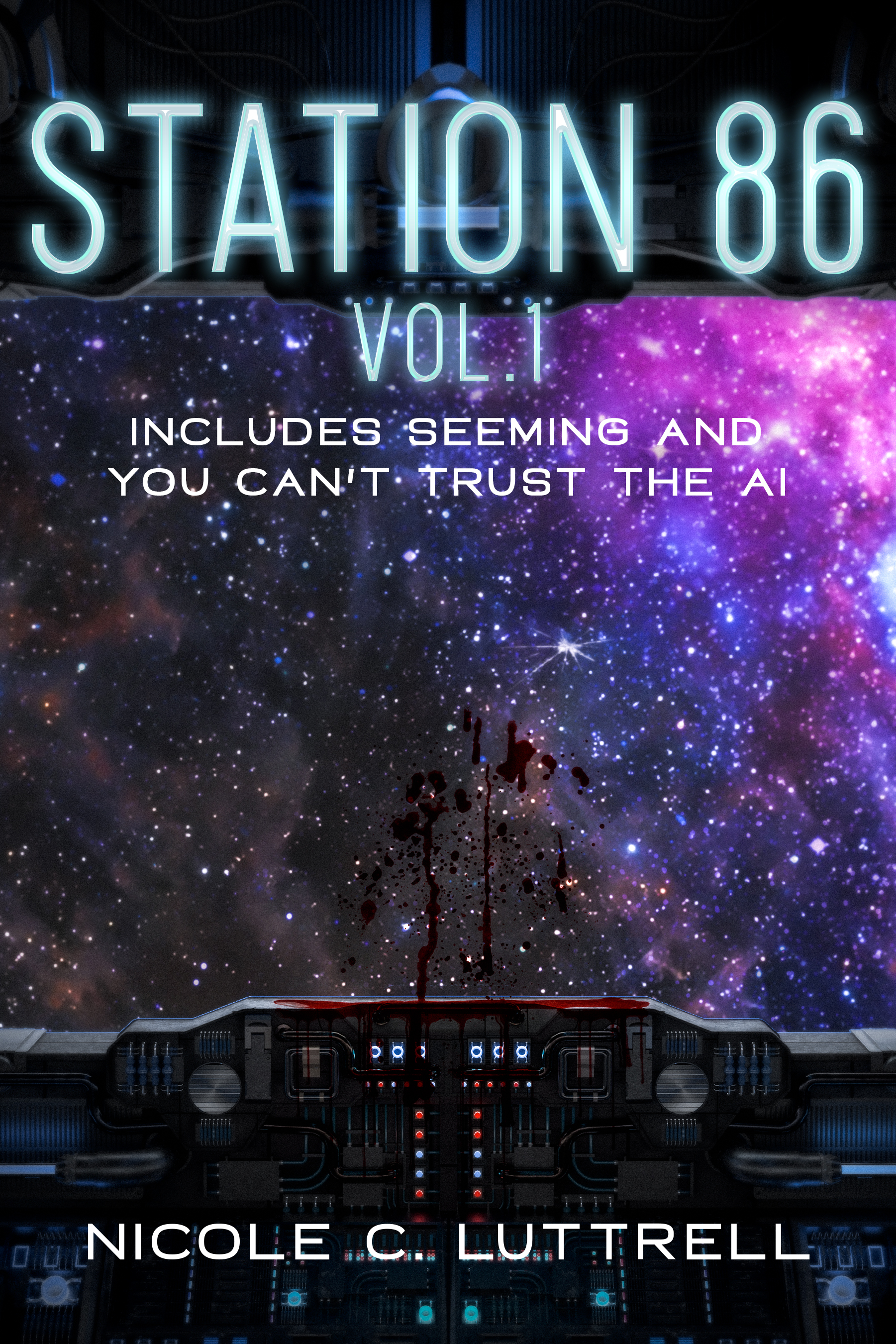
Upcoming title(s): The Exile’s Gift. (Which keeps getting pushed back. Book one, Tempest and Slaughter, came out in 2018. I promise, the last Station 86 book will not take over nine years. Yes, I know it’s already been two.)

Natalie Goldberg

The book that got me: Wild Mind

My favorite book so far: Thunder and Lightning

Upcoming title(s): None that I know of.

Marcus Kliewer

The book that got me:

My favorite book so far:

Upcoming title(s):

While I could leave things at that, I have to tell you that there are three authors who are probably joining this list. They are Nat Cassidy, Tananarive Due, and Tamika Thompson. All of these authors are new discoveries for me. So stay tuned for more about them.

Alright, now it’s your turn. Who’s on your Insta Buy list? Let me know in the comments.

Paper Beats World is a labor of love. You can support us by liking this post, sharing it and commenting. You can also support us on Ko-fi.

My 2026 Summer reading list

I am really trying so hard to get into Summer this year. I got a pool and a hammock. I made a Summer playlist. I’m making ribs and pasta salad for Litha. I’m really, honestly, super excited to experience the next 73 days.

Yes, I’m counting.

But alright, we’re here. It’s Summer. And since I can’t speed it up, I’m going to do what I do best.

Read. In as many places as possible.

So, of course, I’m starting the season out by sharing my reading list. Some of these are coming out this summer. Some are nostalgic re-reads. Some I just found out about during Nebula Con. All of them should help me enjoy the sunny season.

Dead But Dreaming of Electric Sheep By Paul Tremblay

I know, this one was on my Spring reading list. But that’s because I somehow didn’t realize it launched on June 30, not May 30th. And it still looks awesome! Digging into the morality of bodily autonomy in a dark science fiction novel? Of course, I want to read that.

The Intrigue By Sylvia Moreno-Garcia

I’ll be honest, I didn’t even read the description of this one before I pre-ordered it. That’s because Moreno-Garcia is on my Insta Buy list. And this one is about a Casanova thief who’s apparently going to run into some supernatural trouble. I can’t wait.

Also, I love that her books come out so regularly that they’re basically a Summer staple for me.

Deadly Little Lessons By Danielle Valentine

Another author you’ve probably heard me sing the praises of. I’ve yet to read a book of hers that isn’t fantastic.

This one is about a girl who ends up in a school where most of the students won’t survive the classes. So, fun!

The Reformatory By Tananarive Due

I found out about this book, and the next one on the list, during a Nebula Con panel about horror writing as resistance. I ordered these two books before the panel was even over.

The Reformatory is about a young boy named Robbie who’s put in a correctional facility for doing something that sounds like it needed to be done. Of course, the facility turns out to be terribly haunted.

The Curse of Hester Gardens By Tamika Thompson

The second book purchase, inspired by the panel, The Curse of Hester Gardens, is about a neighborhood haunted by gang violence, drugs, and the unquiet dead. It’s about a mother trying to protect her children, who may have made a terrible decision.

Fright Time Books by various authors

Alright, this one might sound strange. But Fright Time books were a big favorite of mine as a child. I recently did a whole nostalgic review of Shivers over at Weird Wyrlds, and thought it might be fun to do the same for Fright Time.

It’s also just a great reason to revisit some of my horror roots.

Not With A Bang By Temi Oh

This is an arc I’m expecting from Saga Press. It’s a fascinating-sounding book about the end of the world and how people respond to it. I am super excited to get my hands on it and tell you all about it.

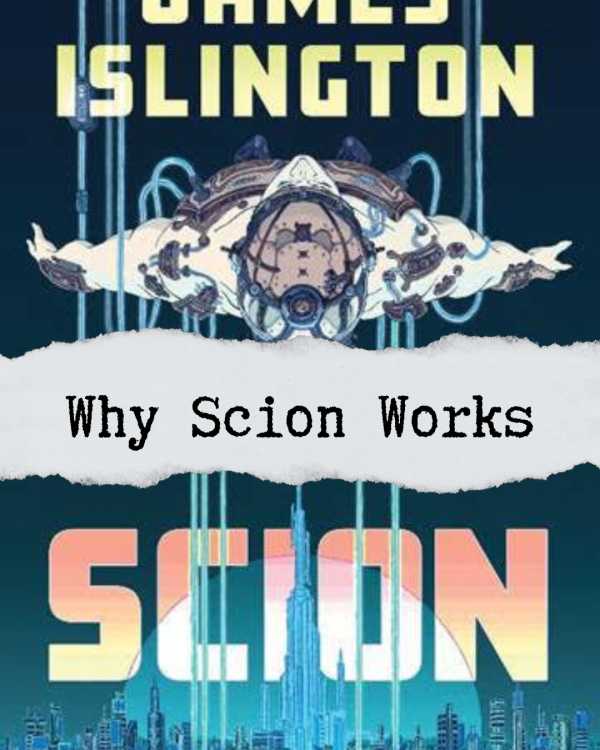
SCION By James Islington

Another Saga Press arc, this one is about an assassin who’s never had any qualms about their job, until this most recent one. And, of course, he lives in a world where the rich can literally live forever.

Small detail.

The Children By Melissa Albert

Funny story. This is a late addition to this list, because I literally learned about it while checking Goodreads for book information.

Thanks, Goodreads.

This book is about a woman and her brother who had their childhoods kind of ruined by their mom’s invasive storytelling. Now, there’s something dark and terrible haunting them. The cover doesn’t seem to reflect the horrors that the reviews promise.

I need like five more sets of eyes to read all the books I want to right now. But I also want to hear from you! What are you reading this Summer? Are you loving the Summer weather or counting the days to fall like me? Let me know in the comments.

Paper Beats World is a labor of love. You can support us by liking this post, sharing it and commenting. You can also support us on Ko-fi.

Why We Hexed the Moon works

Do you remember a few years ago, when some young witches on TikTok decided they were going to hex the moon? I remember mostly shaking my head at silly kids doing silly things because they were cooped up during Covid. Being a practicing witch myself and quite fond of the moon, I was mildly irritated. But in the end, I didn’t think the moon really cared that much.

Someone else remembered the moon hexing. That someone was Mollyhall Seeley. And rather than just shaking her head, she asked the question I think more of us should have asked.

What if the hex had actually worked?

We Hexed The Moon launched just a few days ago, on June 9th. I received an arc early from Saga Press. Unfortunately, Spring and Summer being what they are, I didn’t get to it when I meant to. But when I did get there, it was well worth the wait.

We Hexed the Moon is the story of four girls who have just graduated from high school. They’re looking down the barrel of the rest of their lives, and getting ready to go their separate ways come September. During a bored, hazy sleepover, they decide to hex the moon. Not for any reason except for something to do. And the Moon, well, she takes that personally. So she comes down to confront the girls.

Because that’s a normal thing to happen.

So today, let’s break down We Hexed The Moon, and see why it works.

Do you remember when your friends were the only family that mattered? When there were people in your life who were simply yours? Not related by blood, but related in every way that mattered?

Adults move away from that. We get married. We move away from our hometowns. We have kids. Life gets in the way. And suddenly we realize it’s been months or even years since we talked to the people who we used to see every day.

We Hexed The Moon is, before anything else, the story of four girls who are facing that down. Who love each other enough to not want to let go, but are realistic enough to realize they probably won’t have a choice. Hexing the moon is, to these girls, just another memory they’re trying to make together before life tears them apart. And if that isn’t relatable as Hell, I don’t know what is.

Of course, the real inciting incident of the story is when the Moon decides to come down to Earth and not go back. She appears, personified, in Jen’s bedroom.

And she’s funny as hell.

The Moon character is so bitingly sarcastic. She knows everything about everyone, because of course, everyone tells their secrets to the moon.

She also has a touching maternal streak for, honestly, everyone. We see this the most when she’s confronted with the dead body of a young woman who had a drug addiction. She reacts with such tenderness for this person; it’s heartbreaking.

One thing I was a bit unsure of about We Hexed The Moon was the utter lack of punctuation. No one’s dialogue is in parentheses. And sometimes this run-on story structure made it a bit hard to tell who the hell was talking.

However, it also felt more like a story someone was telling you, rather than a book you’re reading. Like you’re sitting in a booth at the diner with Jen, Maycie, Goldie, and Harding, just one of them for just as long as it takes you to finish the story. So while I don’t entirely love the lack of proper sentence structure, it makes sense. Much like Incidents Around The House, it’s hard to see the story being told any other way.

In the end, I feel like this is the sort of book that captures a specific moment. A place in time we all had our own version of. It’s the friends we all had, that we all knew we were going to lose, no matter how much we assured each other that we’d be friends forever, going on one last amazing adventure.

Paper Beats World is a labor of love. You can support us by liking this post, sharing it and commenting. You can also support us on Ko-fi.

Why The Rainshadow Orphans Works

Written by Naomi Ishiguro and coming out on May 26th, Rainshadow Orphans was sent to me as an arc by the publisher. And honestly, I just speed read two really dark and disturbing horror novels. While they were fantastic, they were heavy! I for sure needed something light and fun. Thankfully, Rainshadow Orphans was there.

(If you want to read my reviews of these very dark books, check out Weird Wyrlds)

The story starts with Toshiko. She and her adopted siblings, Mei and Jun, live in Rainshadow City. Their goal is to seek revenge against the Lucky Crows, the gang that killed their Aunt Reiko. In the meantime, they want to steal enough from the elite of Rainshadow City to live a comfortable life that would otherwise be denied to them. But when Toshiko steals a dragon pearl from the Lucky Crows, she sets the whole city on its head.

This was an incredibly fun book to read that left me feeling lighter and craving bubble tea. So let’s break it down today and talk about why it works.

Excessively fun on purpose

Remember when you read young adult and children’s books, and they were fun? When the writer included characters or elements that were just for the fun of it? Why don’t adult writers do that more?

There are so many elements in Rainshadow Orphans that are just there for fun. Mochi, the family cat coming along on heists. Sun spirits who turn into squirrels to interact with the young prince Haru. And a machine that can make literally any kind of bubble tea you can imagine.

These are all fun elements. They bring levity to what could otherwise be a pretty dark story. I mean, this is a story about a corrupt city so bent on progress that the leaders don’t care about the lives of the people living there. That could be pretty messed up. It could also be the same shit we hear in the news every day. But adding joyful elements helps with the heaviness.

For such a chunky book, it’s a fast read

I mean, not that fast. This post is late, after all. But the pacing of the story goes fast. There’s always something happening. There’s not a lot of downtime. The characters are always off doing something dangerous, even if it’s just getting cake at a cafe.

Early in the book, it’s established that Toshiko and her family don’t really have a right to live in the city. They’re not citizens. So literally anytime they’re out in public, there’s an element of danger. Then, their faces are plastered all over the Lucky Crow’s most wanted list. This made the tension of the book sky high and thrilling. It makes you want to keep right on flipping pages.

All the characters are so endearing

I loved Toshiko from the start. I loved how much she, Mei, and Jun love each other. I especially loved Mei, with her cat, snacks, and full face of makeup, even when she’s not leaving the house.

I also loved Haru. He could have come off as a spoiled kid, but it’s made pretty clear pretty fast that his life is so lonely.

Every character in this book is endearing in their own way. You want to see everyone succeed, everyone be happy. Ishiguro manages this by showing not just each characters quirks, but how they interact with other people. How much they love other people, or seek to be loved by them.

This is something that shows each character’s real, well, character. How much they care about each other. How far they’ll go not just to protect each other, but to bring joy to each other.

Just when you think you know what’s going on

There were several moments early in the book where I was sure I knew the ending. Oh, I know what the robots are. Oh, these characters are going to fall in love. Oh, I know the plan for the city. And most of those times, I was right.

I found that out about two pages afterwards, because those weren’t the big reveals. They were small reveals that led us along a path to an ever more twisting tale. So if you start thinking you’re smarter than the author while reading this, hold up. I can promise you that Ishiguro knew exactly what she was doing. And she did it very well.

Rainshadow Orphans reminds us that even in the darkest times, we can thrive, not just survive. We can have our bubble tea and wintermelon cake, and stand up against all powerful regimes. We can see the magic in the world while fighting the darkness. It reminds us that yes, there are terrible and powerful people. There are fights to fight. But there are also grumpy cats, neighbors who help each other, and snacks. This is a lesson that we all need right now.

And thankfully, there’s more to come. Because Rainshadow Orphans was just book one in a trilogy. Personally, I can’t wait for the next one to come out, so I can travel again to Rainshadow City.

Paper Beats World is a labor of love. You can support us by liking this post, sharing it and commenting. You can also support us on Ko-fi.

Why On Pins and Needles Works

Launching on April 7th, On Pins and Needles by Kamden Cornell is possibly the most thorough dive into magical poppetry I’ve ever read.

I received an arc of this book from the publisher, and I am very glad I did. It was a fascinating read. If you’ve ever wanted to know more about making poppets for witchcraft or magical work, it’s a great book.

So today, let’s talk about why it works. If you’re a witch like me, I hope you add it to your TBR. If you’re writing a nonfiction book, let’s break this one down and talk about why it works.

Thorough overview

The first thing I like about On Pins and Needles is how thorough it was. Not so much in one part of poppetry, but in the practice as a whole.

The book contained a brief history of the craft. Though honestly, several books could be written just on the history alone. It talked about the many different supplies that can be used, from stuffing to scissors. It talked about the creation, the magic, the intention, and all the many ways this sort of working can be used.

This really gave a wide picture of poppet work, rather than diving down into the weeds with one specific part. Which is why this is such a good place for beginners to start.

Non judgemental explination of some dark material

This part might get a little touchy. But that’s why we’re talking about it.

Poppet work can be used for all sorts of magic. Healing, luck, love, prosperity, protection. They are so much more than the ‘evil voodoo doll’ people not in the know tend to picture.

Boy howdy, is that a shitty and racist stereotype, by the way.

However, like any magic, poppetry can be used for baneful magic. Now, I’m not going to openly admit to or discuss cursing anyone on the internet. But you’ll get no judgment from me if you choose to do so. And, you’ll get no judgment from Cornell, either. Instead, what you’ll find is a frank and open discussion of how to make a poppet for curses or baneful work, and some safety tips along the way. That was especially nice to see.

I really appreciated the lack of judgment on a subject that tends to get the ‘light and love’ crowd up in arms.

Inspiration!

Another thing I loved about On Pins and Needles was the examples of amazing creativity that can go into poppet work. Because honestly, you can use just about anything to make a poppet.

This is where craft supply hoarders like me shine! Want to make a paper doll? Go for it. Have a bunch of scrap fabric lying around? Use it! Do you like carving? Carve a doll! Got a bunch of those gems from a forgotten diamond painting? Use them to make a face on your doll!

This book had me itching to make a doll. Or, like twenty. I kept putting the book down to write out ideas. And honestly, that’s my favorite sort of nonfiction book. The sort that has me inspired to dive into the subject myself, and leaves me with a ton of new knowledge to do that with.

Real-life understanding

Finally, I want to shine a light on Cornell’s work with dolls. They make it clear through this book that they have done the work. They’ve made dolls, researched the topic, and seen results from it.

First-hand knowledge is always the best source for nonfiction work. Especially when it’s more of a how-to sort of book. And it’s clear that this author had that in spades.

Overall, I learned so much from On Pins and Needles. It was entertaining, creative, and bursting with inspiration. If you’re interested in all in poppet work, I cannot recommend it enough.

Why Year of The Mer works

I received an ARC copy of Year of The Mer by L.D Lewis. And when I read the description, I was hooked almost at once. A dark retelling of The Little Mermaid that is bloody and saphic? Yes, please. The Little Mermaid was my favorite Disney movie growing up. And, you know, bloody horror is kind of my jam.

Now that I’ve read it, I can honestly say that it surpassed even my high expectations. I feel confident comparing it to the work of Tamora Pierce. If you’ve been around here for any length of time, you know the sort of compliment that is. And yes, we need to talk about why it works.

What happens after happily ever after?

We all love a good fairy tale. But often we’re left with so many questions. Because, of course, life doesn’t end at happily ever after.

In the Disney version of Ariel, she and Prince Eric get their happily ever after. However, their lives go on after that. And I don’t know how much you know about royal marriages, but they’re not just for love. A marriage in which someone is going to inherit a throne, and in which someone else is going to abdicate their throne, has impacts for other people besides the two exchanging vows.

Especially when one of those two people is a totally different species and is considered a deity by half the population. It’s gonna make shit weird.

The fallout from this situation is where our main character, Yemaya Blackgate, finds herself. She’s the granddaughter of Ariel (Spelled Arielle in the book) and Eric, though I don’t think he’s ever mentioned by name.

Yemi’s parents spent their lives leading their country, Ixia, in war. Many of her people blame these wars on Yemi’s mother’s mer ancestry. And she has no relationship with her mer family at all. Given all that, she’s filled with rage.

The royal people actually love each other

It’s easy to see why royalty often has a reputation for not loving their family members. However, I feel like the whole Knives Out approach to family is a bit played out. (Maybe I read too much Phillipa Gregory.) So it’s wonderful in this book to see royal family members who actually love each other. Yemi misses her father; she’s scared of losing her mother. Yemi and Nova, who are engaged, love each other. There is none of the ‘I am raising you to be royalty, so I’m not going to show you any affection’ sort of bullshit. Just people who genuinely love each other, warts and all.

The story wasn’t about being gay

Our two main characters, Yemi and Nova, are gay. They are in a gay relationship. That’s not what this story is about.

Almost all of the characters are also Black. That’s also not what this story is about.

Now, a story about being gay in this very straight world is a great thing. So is a story about being Black in societies that are very, very white. But people who are gay and Black have stories that are not about being those things.

I can’t speak for the Black community, as I am very, very white. But I am part of the LGBTQ+ community. And yeah, it’s sort of exhausting that every gay character’s story tends to be about them being gay.

This was honestly a breath of fresh air. The characters simply are gay. It’s not a crucial plot point. They can just be. Just exist.

Yemi

Finally, I am thrilled with the main character, Yemi. She feels dangerous.

Yemi loves the people she loves fiercely. She wants to be a good person. She wants to take care of her people.

But she also wants to lead. Not because she thinks she is the best person for the role, but because she feels the throne is hers. That this is something that has been taken from her when a coup takes place.

This is a dangerous sort of person. Someone who believes they’re owed obedience, power, and respect. All of this means that Yemi is the protagonist, but not necessarily the good guy.

Which, of course, made her an incredibly fun character to read.

Overall, there was only one thing I didn’t like about reading Year of The Mer. It ended on a hell of a cliffhanger. And, since I read the book before it even came out, I have no idea when book two will be released!

Year of The Mer launches on April 7th. I highly suggest you preorder it right now. Then you can join me in waiting (in)patiently for the sequel.

Why Fluid Condensers sort of works

Launching on March 31st, Fluid Condensers is a nonfiction debut work from author Aerik Arkadian. It’s about a form of magic that is perhaps overlooked, but one that practitioners might realize they’re using on a regular basis.

I received an ARC copy from the publisher, Crossed Crow Books. What follows will be an honest review of what I liked about this book and what I didn’t. If you’re a witch like me, maybe you’ll want to check it out. If you’re a writer like me, you might learn something about writing a nonfiction book that people can’t put down.

(As an aside for my witchy followers, the forward for this book is from Christopher Penczak. He wrote one of my favorite witchcraft books, called City Magick. If you’re a witch like me who prefers city lights to a cabin in the woods, that book’s a must-read.)

The information is clear and understandable

Let’s start with the basics. The first reason to read a nonfiction book is usually to learn something. So the main goal for a nonfiction writer is to teach. To instruct. And in that sense, Fluid Condensers did a great job. It was incredibly informative about the topic at hand.

The topic, by the way, is the process of collecting and storing energy in a concoction that includes gold in some form. It’s alchemy, for those who don’t know.

Now, I am not an alchemist. So, this was a branch of magic I knew little to nothing about. But the information in this book was easy to understand. It was easy to follow, even from a novice’s perspective.

I learned things that I didn’t know, as a practicing witch of many years

And on this topic, I am, in fact, a novice. Even though I’ve been a practicing witch for years now, there are so many things I don’t know. Especially about the more alchemical aspects of magic making.

And this, in and of itself, is great. As I get older, it’s more and more rare to find something I know nothing about, literally.

This is something that, if you want to write a nonfiction book, you should strive for. Which I know can be difficult. There’s nothing new under the sun. But finding a niche topic that you’re knowledgeable about is a great thing. Not just for you, but for your readers as well.

We all want to learn something new.

This might not be the sort of book for you

All that being said, I didn’t love this book.

That’s largely on me. Witchcraft is a large tent, with so many different people interested in so many different branches and disciplines. And we all have our own fascinations.

I’m not, as I mentioned, an alchemist. I’m more of a ‘talks to trees, has tea with her ancestors, draws sigils on everything, lights too many candles, and makes friends with the Hat Man’ sort of witch. This is not that sort of witchcraft. It’s the sort that might be seen as more chemistry than charms. And that is some people’s catnip. Just not mine. So if you’re considering reading this book, keep that in mind.

This is also a good thing to remember for writers. Some people, even with the best of intentions, are not going to like your book. And it’s not necessarily because of anything you’ve done wrong. I could write the most fascinating book about the history of zombie fiction in Western PA, and if you aren’t interested in zombies, you aren’t going to give a shit about my book. Don’t take it personally.

It was rather dull

That being said, this wasn’t the most riveting book I’ve ever read. It was actually rather dull.

This, unfortunately, is on the part of the writer. This was not a provocatively written book. There was nothing in the word usage or topic that really caught my attention. It wasn’t overly engaging.

The writing was charming, don’t get me wrong. But, um, not at first. The writing at first was actually quite dry and dull.

And that’s a shame! Because as you get further into the book, Arkadian’s charm shines through. He is clearly a huge nerd. He is fascinated by the process of alchemy. He goes to music festivals and feels inspired to make alchemical concoctions that grab the amazing feelings that sort of events inspire.

Where was that inspired writing in the first few chapters? Why did this intro need to be so static, so devoid of personality?

Look, lots of people find alchemy boring. As far as magic is concerned, it’s rather a dull topic. What sells a nonfiction book about a less-than-riveting topic is the personality of the person who feels passionate about it. So a writer needs to sell us that personality right out of the gate. On the very first page, I need to know why this writer is so passionate about this specific topic.

The organization was poor, and that led to a rough read

That brings me to the biggest issue I had with this book. The organization was not great.

There are some interesting chapters in this book. I, personally, was fascinated by the history of gold. That was the part of the book that I ate up. It should have been earlier in the book. I would have been more invested.

A nonfiction book is not an obligatory read. We’re not in school anymore; nothing should feel like required reading. And, as people, we are first and foremost interested in people. So starting with the personality of the author is a good way to hook a reader. Then, explaining why the topic at hand is important to the author.

For instance, if I were writing a book about zombies in Western PA, I would start by explaining my love of George Romero. I would explain that he and I share a passion for Pittsburgh, even though neither of us was born here. This ties me emotionally to the subject at hand.

There was no sort of emotional connection in this book. And perhaps it’s just me, but that sort of connection hooks me. It makes everything else come alive.

So, in short, if you’re writing nonfiction, put more of yourself into the book. If by chance the author reads this, please don’t give up. Write more, write personally.

And if you’re interested in alchemy, check out Fluid Condensers. You’ll certainly learn a lot.

mjnnnnnnnnnnnnnnnnnnLaunching on March 31st, Fluid Condensers is a nonfiction debut work from author Aerik Arkadian. It’s about a form of magic that is perhaps overlooked, but one that practitioners might realize they’re using on a regular basis.

I received an ARC copy from the publisher, Crossed Crow Books. What follows will be an honest review of what I liked about this book and what I didn’t. If you’re a witch like me, maybe you’ll want to check it out. If you’re a writer like me, you might learn something about writing a nonfiction book that people can’t put down.

(As an aside for my witchy followers, the forward for this book is from Christopher Penczak. He wrote one of my favorite witchcraft books, called City Magick. If you’re a witch like me who prefers city lights to a cabin in the woods, that book’s a must-read.)

The information is clear and understandable

Let’s start with the basics. The first reason to read a nonfiction book is usually to learn something. So the main goal for a nonfiction writer is to teach. To instruct. And in that sense, Fluid Condensers did a great job. It was incredibly informative about the topic at hand.

The topic, by the way, is the process of collecting and storing energy in a concoction that includes gold in some form. It’s alchemy, for those who don’t know.

Now, I am not an alchemist. So, this was a branch of magic I knew little to nothing about. But the information in this book was easy to understand. It was easy to follow, even from a novice’s perspective.

I learned things that I didn’t know, as a practicing witch of many years

And on this topic, I am, in fact, a novice. Even though I’ve been a practicing witch for years now, there are so many things I don’t know. Especially about the more alchemical aspects of magic making.

And this, in and of itself, is great. As I get older, it’s more and more rare to find something I know nothing about, literally.

This is something that, if you want to write a nonfiction book, you should strive for. Which I know can be difficult. There’s nothing new under the sun. But finding a niche topic that you’re knowledgeable about is a great thing. Not just for you, but for your readers as well.

We all want to learn something new.

This might not be the sort of book for you

All that being said, I didn’t love this book.

That’s largely on me. Witchcraft is a large tent, with so many different people interested in so many different branches and disciplines. And we all have our own fascinations.

I’m not, as I mentioned, an alchemist. I’m more of a ‘talks to trees, has tea with her ancestors, draws sigils on everything, lights too many candles, and makes friends with the Hat Man’ sort of witch. This is not that sort of witchcraft. It’s the sort that might be seen as more chemistry than charms. And that is some people’s catnip. Just not mine. So if you’re considering reading this book, keep that in mind.

This is also a good thing to remember for writers. Some people, even with the best of intentions, are not going to like your book. And it’s not necessarily because of anything you’ve done wrong. I could write the most fascinating book about the history of zombie fiction in Western PA, and if you aren’t interested in zombies, you aren’t going to give a shit about my book. Don’t take it personally.

It was rather dull

That being said, this wasn’t the most riveting book I’ve ever read. It was actually rather dull.

This, unfortunately, is on the part of the writer. This was not a provocatively written book. There was nothing in the word usage or topic that really caught my attention. It wasn’t overly engaging.

The writing was charming, don’t get me wrong. But, um, not at first. The writing at first was actually quite dry and dull.

And that’s a shame! Because as you get further into the book, Arkadian’s charm shines through. He is clearly a huge nerd. He is fascinated by the process of alchemy. He goes to music festivals and feels inspired to make alchemical concoctions that grab the amazing feelings that sort of events inspire.

Where was that inspired writing in the first few chapters? Why did this intro need to be so static, so devoid of personality?

Look, lots of people find alchemy boring. As far as magic is concerned, it’s rather a dull topic. What sells a nonfiction book about a less-than-riveting topic is the personality of the person who feels passionate about it. So a writer needs to sell us that personality right out of the gate. On the very first page, I need to know why this writer is so passionate about this specific topic.

The organization was poor, and that led to a rough read

That brings me to the biggest issue I had with this book. The organization was not great.

There are some interesting chapters in this book. I, personally, was fascinated by the history of gold. That was the part of the book that I ate up. It should have been earlier in the book. I would have been more invested.

A nonfiction book is not an obligatory read. We’re not in school anymore; nothing should feel like required reading. And, as people, we are first and foremost interested in people. So starting with the personality of the author is a good way to hook a reader. Then, explaining why the topic at hand is important to the author.

For instance, if I were writing a book about zombies in Western PA, I would start by explaining my love of George Romero. I would explain that he and I share a passion for Pittsburgh, even though neither of us was born here. This ties me emotionally to the subject at hand.

There was no sort of emotional connection in this book. And perhaps it’s just me, but that sort of connection hooks me. It makes everything else come alive.

So, in short, if you’re writing nonfiction, put more of yourself into the book. If by chance the author reads this, please don’t give up. Write more, write personally.

And if you’re interested in alchemy, check out Fluid Condensers. You’ll certainly learn a lot.

I launched a new website! If you like horror in all forms, check out Weird Wyrlds.

A WordPress.com Website.

Up ↑