Why House of Quiet Works

Released in September of this year, House of Quiet is the latest novel by Kiersten White. This is the same author who brought us Mister Magic, Lucy Undying, The Dark Decent of Elizabeth Frankenstein, and Hide. Which is to say, the author of some of the best books I’ve read in the past few years.

House of Quiet is about a young woman named Birdie. She’s spent the last several years trying to find her little sister Magpie, who vanished after undergoing the mysterious Procedure. Birdie poses as a maid to get into the mysterious house of quiet. But what she finds there is a group of children who need to be rescued.

Today, we’re going to break it down and see why it works. Because there’s a lot that can be learned from this wonderfully dark, sweet tale.

Just jump in

The story starts in the middle of things. It starts with a mysterious woman wandering around the House of Quiet with a candle, bemoaning how loud it was.

We then jump to Birdie, heading to the house of quiet, thinking of all of the shady things she had to do to get there.

As we follow along, we only get an idea of the world she lives in and what she’s doing. We know that she’s grown up in crippling poverty. We know that she’s never speaking to her parents again. And that’s about it.

But that’s okay, because we’re going up to the house. We’re meeting the other new maids. We’re being drugged with tea. There is stuff going on, and there will be time to explain later. The important thing is that we’re not slowing down the start of our story. We are jumping right in.

Don’t over-explain

I spent a lot of this book trying to figure out what in the hell was going on. I wanted to know what happened to Magpie. I wanted to know what the procedure was. I wanted to know what had happened to Birdie’s friends. I wanted to know why Minnow was acting so strange.

And never once was any of this simply out and out explained.

No, the story was moving too fast for that sort of thing.

This was infuriating, but in a good way. Because everything is answered, eventually. It’s just that we have to piece things together as we go. Or, we find out as the characters do.

House of Quiet brought the ‘show don’t tell’ rule almost to its breaking point, but not quite. At no point did I feel so lost I thought I’d never catch up. But it wasn’t until near the end that I really felt like I knew what was happening.

This is a hard line to walk, giving just enough information for the reader to barely understand. But, I think the easiest way to do this is to have faith in your reader. Don’t feel like you’ve got to spell everything out for them. Leave some spaces for them to fill in the blanks themselves.

Anything can be used to world build

One of the most charming things about House of Quiet was the naming structure of the characters. People raised in poverty have animal names like Minnow, Magpie, and Birdie. People from the upper class have names like River or Forest.

This is a super quick and efficient way to give us information about a character with the fewest words possible. We know the character’s name, and we know what class the character is from. And in a book that is all about class warfare, that’s vital information.

This is a great example of using every element you can to world-build. Names, clothes, jewelry. Think about how all of these things impact our real world. And yes, you should be using any of these to show your world, rather than telling us about it.

Now, all this being said, this book wasn’t perfect. My biggest complaint, I think, is the relationship between the characters. They were, in my opinion, a little too sweet. They came together too quickly. They were too kind to each other. But, of course, this is a book for young adults. So maybe that’s why.

This was not enough to ruin the story for me. House of Quiet was a fun, heartwarming tale, and I enjoyed it greatly. If you haven’t read it yet, do it today.

Paper Beats World is a labor of love. If you love what I do here, please consider liking and sharing this post and leaving a comment. You can also support me financially on Ko-fi.

And while you’re there, you can pick up a copy of my Novel Planner.

Writing a novel is a journey! Here is your roadmap.
The Novel Planner takes you through four weeks of planning to help you successfully write a novel. Includes twelve pages to plan your time, your team and your life.
Also included are some useful pages to keep track of your wip, like a map page and an injury tracking chart.

Why I love haunted houses

This is the speech I gave at my local library this past week. I’m still working on this week’s post, so please en

Hello. My name is Nicole Luttrell. I’m a local speculative fiction writer. That means I write about ghosts, dragons and spaceships. Sometimes I write about the ghosts of dragons on spaceships. 

I want to start by thanking Dianne and everyone here at the Butler Library for hosting this talk. And frankly, for being here and doing the job they do. Being a librarian has never been easy, but it seems to get harder all the time. 

I’ve written a fantasy series called Woven, which I have copies of today, about a prince who weaves visions and a princess who spins light. I also write a science fiction series called Sation 86. It’s about murder, politics and possibly the end of mankind on the station of First Contact. I have a QR code here so you can get the first book in that series free. 

But what I love writing most is horror. 

This month is my time to shine, yes. 

I became a writer for the same reason most people do. I love stories. I love reading. And that love has been well fed within these very walls for most of my life. One day it occured to me that someone had to write books the same way someone had to build cars or wait tables. Someone had to do it, so why couldn’t that be me? So I came to the library, and I found the section upstairs with the books about writing books. And there I found a copy of the Writer’s Market. 

If you’re not a writer yourself, or even if you’re just a writer who started submitting work after the internet was in everyone’s homes and pockets, you might not know about this book. It’s like a phonebook for the publishing world. Magazines, publishing companies and literary agents are all listed. Itwas a thing of beauty. An expensive thing of beauty that had to be replaced every year. But it made me feel like a real writer to use it. 

The Writer’s Market isn’t updated anymore because, again, internet. And while I certainly wouldn’t use it anymore, I’ll forever be grateful to it for helping me see that writing is a career as well as art. 

But it’s almost Halloween, and today, I want to talk about something scarrier than the publishing industry and a teenage girl’s flounderings through it. If there is anything scarrier than that. 

I wrote a book called Quiet Apocalypse. It’s about a witch named Sadie. She’s enjoying her quiet life as a school nurse, living in a cozy apartment with her dog Sage. 

Yes, Sage makes it.

Then a tree falls on her apartment building, and it lets something loose. Something bloody and dark. 

Allow me now to read the introduction. 

 The end of the world started on a dark winter night.

 Trees circled the apartment building at 437 Oakmont. They weren’t old trees, nor were they tall. Yet to look at them, one would think them ancient. They were twisted and gnarled. Every gust of wind found them, even when no other tree moved. The cold of winter clung in their branches, no matter the weather. Passersby didn’t like to dawdle along the sidewalk. The trees made them feel unwelcome. Children especially felt this, but of course, children always feel these things most keenly. 

 But we weren’t talking about children. We’ll come back to them. For now, we’re discussing the trees. 

 They’d been groaning and moaning for most of their lives. Sometimes you couldn’t hear them unless you were listening carefully. Other times the inhabitants of the apartment had to turn their TVs up to drown the trees out. But on one dark night in February, the sounds were unrelenting. There was a winter storm. The wind was hellacious, cutting through the town like a vengeful spirit. It took out hanging signs for stores on Main Street, brought down the old pine next to the library, and crashed Mr. Wallback’s patio table into his sliding glass window. Ashley Homestead regretted leaving her potted pine tree out for the night. It was thrown against the house from the back porch with such force that the pot shattered. 

Leslie Richard’s trampoline, covered over with a tarp for the season, was lifted and thrown into the yard of his next-door neighbor. 

 The wind rattled windows, pushed its way through cracks in the walls and around doors. Heaters couldn’t keep up with the sharp, blistering cold. The families in the apartment building were kept awake by it, huddled under blankets to keep warm.

The storm built up steam as it headed for Oakmont. It was as though those trees in a circle were its target, and it meant to have them. The storm came to a head at almost four in the morning. One of the trees, exhausted from a night’s battle, couldn’t hold on any longer. It came down, crashing into the roof and jutting sharp, dark branches into the attic apartment.

The wind died away almost at once. Gentle snow replaced it, covering the ice. The next morning this would cause several accidents. 

The trees that remained continued to scream, as though mourning their fallen brother.

I wrote Quiet Apocalypse for two reasons. First, I was starting to feel more comfortable as a witch. I wanted to write a character who was also a witch. A real world witch, not a magical creature one. 

Secondly, and what I really came here to talk about, I wanted to write a haunted house story. Haunted house stories have always been my favorite sort of story. The House Next Door, The Haunting of Hill House, The Amittyville Horror. These are the sort of books that keep me turning pages and rethinking every creak and groan in my own house. 

I’m not alone in my love of haunted houses. They’re a mainstay of the horror genre for a reason. We all want to think that our homes are our safe havens from the world. That our front door acts as a barrier to the bad things. The dark things.

So the thought of something lurking in the dark and dripping corners of our homes is viceral. But it’s also realistic. I would argue that haunted houses are the most realistic horror genre. 

Bad things happen in our homes. House fires from wires we didn’t even know were frayed. Carbon monoxide leaks. Storms large and powerful enough to rip and tear buildings apart. 

When was the last time you checked your smoke alarms? 

Quiet Apocalypse starts with a very mundane and realistic disaster. One that almost takes Sadie’s life before the story even starts. Allow me to read a passage.

 Sadie sat in the doorway of her ruined apartment. Her eyes were itchy, there were rivets of tears dried to her face. She had cried herself out the night before. Now she only wanted a shower and a good long rest. But, as a tree had crashed through the roof of her apartment, neither of those things could happen. 

 She knew she ought to be grateful. She’d been in the kitchen with Sage, her creamy colored lab mix when the tree came down. Branches seared through the exterior wall, crashing through her living room and bedroom. One had pierced right through her bed. It was still there, jammed right in the center of the quilt. If Sadie’d been asleep, she wouldn’t have survived. All she’d lost were things. She should be thankful for that. 

 When she was done mourning her things she would be. Her mother had made her that quilt. The crystals on the altar in her living room were all buried in the rubble. Her whole living room was a loss. What wasn’t destroyed in the crash or buried under the roof was damaged by the snow that had flooded in. 

And her books! Her family had given her irreplaceable books. Thank the Green Man Himself that her grandmother’s grimoire was at Aunt Helen’s place. But Sadie had her mother’s grimoire. And now it was destroyed. 

 She looked at the cardboard box that contained everything she now owned. There was her teapot, gray with a design of cherry blossoms. The cups that matched it had shaken loose from their shelf and shattered. 

There was her grimoire, a battered old sketchbook with a red cover. A french press, some herbs. A truly astounding assortment of tea. A handful of crystals and candles had been on her kitchen windowsill. Sage’s food and water bowl. That was all she had. 

 They were just things. Things that didn’t mean anything aside from everything. Ties to family members lost. Tools for her magical work and her mundane life. Decades of learning were destroyed in no time. 

A haunted house story can be seen as an alligory for accidents and natural disasters that threaten our families. But the ones that scare us the most, and stay with us the longest, are usually about family traumas and abuse. 

Amityville Horror is about a family tortured by dark entities until the father nearly kills everyone. But it’s also about dark financial worries. It’s about a man feeling like he failed as a provider and taking it out on his family. 

Poulterguist is about a house opening a portal to a horrific and hungry dimension. But it’s also about Suburban Sprawl and guilt. 

Quiet Apocalypse is about a demon trying to break free and cause the apocalypse. But it’s also about the fear of dying alone. Of having no one to leave behind a legacy for. 

I’ve been in a haunted house. And I bet you have too. If you’re fortunate enough to not have lived in one, you’ve visited one. It was the friend’s house where things got quiet when their mom came home from work. Or one that got way too loud. Maybe it was a family home after a funeral. 

Maybe it was just a place that didn’t feel right. It seems safe, but it doesn’t feel safe. Your instincts are screaming at you to run. To get the hell out of there despite no apparent danger. 

In my experience, it’s best to listen to those instincts. 

So we understand why cultures all over the world come back over and over to the haunted house story. But I want to go a step further and suggest that women in particular are drawn to reading and writing haunted house stories. We, along with children, tend to be the main characters and main victims of haunted house stories. 

It’s Eleanore who senses something wrong and eventually goes mad in Hill House. 

It’s Diana Freeling who insists to her husband that something’s wrong in the house, only to be dismissed until their daughter is sucked into the television. 

It’s Col Kennedy who has to convince her husband that there is something very wrong with the beautiful new house next door.

I think this is the case for a number of reasons. First, women historically spend more time at home than their spouses. Or, we at least spend more time caring for our homes and the people in them. So if the kids are talking to invisible playmates, we’re more likely to notice. If there’s blood dripping out of the ceiling, we’re probably the ones cleaning it up thinking it’s rust stains. 

At first. 

If our loved one is suddenly spending an uncomfortable amount of time with their axe collection or singing in a language we don’t recognize, we’ll probably be the ones to point it out. 

In addition to this, haunted house stories are cathartic to women. Consider how often in a horror movie the main character starts out trying like hell to convince someone, usually her partner, that something is wrong. Blood’s coming out of the faucets, there’s a spot in the back yard that’s never warm, bottles are popping and spilling with no one in the room. But no one is listening! No one else seems to see it all happen. It’s almost like they’re looking away at just the wrong time on purpose. Only to calmly and condecendingly explain the shape and color of the trees while missing the forest entirely. 

What else does that sound like to you? Maybe like trying to explain medical symptoms to your partner, or doctor? 

You just need to lose weight.

It’s the house settling.

You’re just getting older.

You didn’t hear a child screaming, it was just these old pipes. 

You’re overreacting.

You’re being histerical. 

Finally, I think women are most often main characters in haunted house stories because home is a place of guilt for us. We feel more responsible for our homes because we’re taught that we’re responsible. At least, I was. So if something is wrong with our house, it’s our fault. 

The dishes aren’t done. It doesn’t matter if we dirtied them, it’s still our fault. The laundry’s piling up, our fault. An ancient demom is cracking through the basement floor, our fault. 

Of course, as society changes so do the stories we tell. A great modern haunted house story is How To Sell A Haunted House by Grady Hendrix. The main character is acutally the one who needs convinced that something is wrong, and it’s her younger brother who does the convincing.

That book, by the way, is a great example of siblings being raised by the same people but very different parents. 

All of that being said, haunted house stories appeal to everyone. There isn’t a culture in the world that doesn’t have haunted house stories. The Himuro Mansion in Japan. The Wolfsegg Castle in Germany. Every community, neighborhood and village has a haunted house. I’m willing to bet our cave dwelling ancestors had certain caves they didn’t want to go into because they were jsut too creepy.

Finally, I would argue that haunted houses are more frightening than other supernatural elements because they are so incredibly intimate. If houses are alive, and as a witch I believe they are, they know us. They see us at our best and our worst. They see us in moments that we manage to hide from everyone else. And so if your home wanted to scare you, wanted to harm you, they’d know just how to do it. 

This is something that Sadie learns in Quiet Apocalypse. Allow me to read one final passage. 

 “Do you know where my mommy is?” the child asked. 

“I don’t know,” Sadie said. “What’s your name?” 

 The child didn’t respond. She just shook her head.

 “Where am I?” 

 Sadie swirled around. There was a little boy, standing in the middle of the main room. He looked terrified. 

 “Oh, it’s okay,” Sadie said. “Here, come over here. I’ll try to help you. I mean, I’m not really good with spirits, but I can-.” 

 “Mommy? Where am I, why can’t I see you?” 

 Another child was coming out of the bathroom. Then another. Suddenly there were two sitting on the futon, and three more standing in the middle of the room. They were all covered in blood. In their hair, on their shoes, on their clothes. It dripped onto the floor, smearing from their feet and dropping from toys or blankets they clutched.

 Sadie spun, looking around at all of the children. There were so many of them, and every moment there were more. Sage stood next to her, gasping out sharp, panicked barks. 

 “Sage, stop barking,” Sadie said. She whirled around again. “Please, calm down. I can help you, but I, I need a minute to think about what to do.” 

 They crowded towards her, reaching out with bloody hands. Crying out for her, reaching for her and pulling at her clothes. “Help, help us,” they cried. 

 “I’ll help you, I will,” Sadie said, but the children were pulling her down. 

 “Help us. You have to help us!” 

 Sadie couldn’t answer. She could barely breathe, drowning in the sea of bloody hands and crying screaming faces. She couldn’t see Sage anymore, couldn’t see anything. There were only the children, clawing at her. Killing her. 

Sadie is a school nurse. As I’m sure you can imagine, that carries an emotional burden. 

Now, unfortunately I don’t have any personal really good haunted house stories to share with you. Most of my experiences are subtle. I saw a shadowy figure out of the corner of my eye. I felt someone staring at me when there wasn’t anyone there. I found myself in a terrible mood, or unable to control my anxiety in certain parts of a house. This is all scary to live with but not overly interesting. And since you’ve all been listening to me ramble for a while now, it’s your turn. Tell us about your haunted house story in the comments below. 
Discussing Long Quiet Highway

Published in 1993, Long Quiet Highway is the fifth book by Natalie Goldberg. Just in case you don’t know, she is the iconic writing teacher and author of Writing Down The Bones, among other amazing books about writing. This one, though, is not technically a book about writing. It’s a memoir. But, like all of her work, it sent me right to my notebook.

So today, let’s talk about Long Quiet Highway. How it’s different from her other books, and what I learned from it.

Long Quiet Highway starts with the story of Natalie as a child. Her parents were immigrants. She grew up in New York before they moved to the suburbs.

Natalie describes her childhood as being cloistered. Dull. To me, it feels cloying. Safe, fun, and full of little pleasures. Her parents clearly loved her and supported her. But there was little art in her life. There was little to wake her up, to make her feel alive.

This is used as an introduction to a teacher who woke her up. That encouraged her to listen to the rain. To experience it.

As an adult, Natalie taught high school. Or, maybe middle school. I’m honestly not sure which, and I don’t think it matters. While she was teaching the same bland curriculum she herself had learned, she felt lost and dull. Asleep. That’s when she decided to quit her job and join a Zen commune.

Because I guess that’s a thing you can do?!

For years, Natalie learned meditation and Zen from several teachers. Until she met one that changed her life, Katagiri Roshi.

He’s changed mine as well. But we’ll get to that.

The focus on the subject is solid

Through the book, it can feel like the story sort of rambles. One minute, Natalie’s talking about a train ride she took with a friend. The next she’s talking about learning Zen. Then we’re at a diner ordering a soda.

It’s only when we step back and look at the story as a whole that it makes sense. That we realize that every step was going in the right direction, we just couldn’t see the end of the path yet.

This was a fantastic way of memoir writing. Rather than going in strict chronological order, we skip around. It allows us to become completely immersed in the true subject of the story without even realizing it.

Even when she’s not talking about writing, she’s always talking about writing

I mentioned earlier that Long Quiet Highway is not a book about writing. It is about Natalie’s life. But here’s the thing. Natalie’s life is about writing. She writes passionately. She teaches writing. She exudes writing. This woman writes like the rest of us check social media. So when she talks about her life, she is talking about her writing.

In this way, much can be learned about the habit of writing from this book. Write when you’re happy. Write when you’re sad. Write when you don’t think you can possibly get yourself up off the ground. Fuck it, write from the ground, then. Write when you feel inspired and when you feel dull. Write when you’d much rather be eating chocolate.

Just keep your hand moving.

This is the best advice I’ve ever gotten about writing. Don’t worry about it being good, at least not at first. A lot of your first draft is going to be shit, no matter how many books you’ve written and how many you will write. Trust me, I speak from experience. I have published 12 books, and my rough drafts are still terrible. Hell, my second drafts are also bad. It’s only by the third draft that the story becomes anything I might consider letting someone else see.

And that’s okay. The purpose of a first draft is simply to exist. So if you’re still trying to complete your first piece, but you’re worried it isn’t good enough, it is. Just keep your hand moving.

Her work makes me want to live

I’ve mentioned before that reading Natalie Goldberg always makes me want to write more. More than that, it makes me want to live more. To do more things and to do them deeply.

Never before have I experienced a person who so deeply experiences every part of their life. She talks in such detail about going to get a croissant. Of riding the train.

Goldberg’s work makes me want to sit outside and feel the sun. To write about the rain, the people arguing in the parking lot outside of my window, and the cupcake I bought at a festival.

She also makes me want to travel. To go out and explore the world. To take a long trip alone or just a different route home.

The legacy of a teacher

Finally, I want to talk about how teachers can touch the lives of people they will never meet.

I am not a Buddhist. I am not a Zen student. I practice meditation, but more in a witchy way than a Zen way. And I certainly never met the famous teacher Katagiri Roshi.

And yet he has touched my life in a profound way. Because Natalie Goldberg was his student. And she wouldn’t have written Writing Down The Bones if it hadn’t been for his teachings.

Because of this, Goldberg was able to touch my life. I have learned so much from her work, and I continue to do so. Someday I want to actually work with her, attend one of her workshops. But for now, I have her words, and am one of the many students she’s inspired.

And Natalie is only one of Katagiri’s students. His kind, supportive teachings have touched countless lives.

I highly recommend reading Long Quiet Highway. As well as any of Natalie’s books. If you want to be a writer, or get into mediation, or just experience life more, this book will help you do that.

It will help you wake up.

Paper Beats World is a labor of love. If you love what I do here, please consider liking and sharing this post and leaving a comment. You can also support me financially on Ko-fi.

Spooky season is coming, and it’s time for some creepy reads. Check out my horror novel Quiet Apocalypse, about a witch trapped in her apartment during a dark winter storm with a demon devoted to ending the world.

Or check out my horror short, The Man In The Woods. A man tries desperately to protect his granddaughter from the mysterious man in the woods. But his fear only grows when a new housing complex is built too close to the woods.

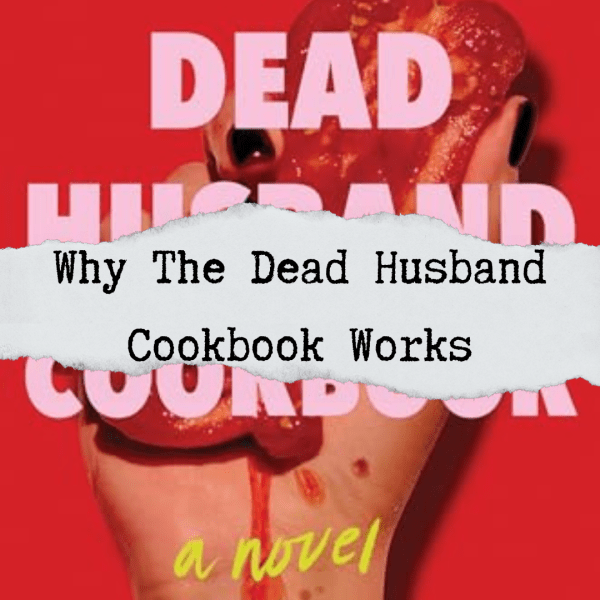
Why The Dead Husband Cookbook Works

I will do my best to avoid food puns in this post. But I might not be able to help it. Sometimes they’re just too tasty.

See, we’re starting already.

Released on the fifth of this month, The Dead Husband Cookbook is the latest novel from Danielle Valentine. If you’re just joining us, she’s written three novels so far that I’ve absolutely devoured.

Wow, two so far.

The Dead Husband Cookbook is about two women. One, Thea, an editor who’s hanging onto her career by a thread. She committed the ultimate sin of, gasp, revealing an author she was working for to be a predator. But she’s given a chance to redeem herself when a celebrity chef, Maria Capello, asks for her specifically to edit her brand new memoir. The memoir, which might, after years of speculation, put to rest the rumors of how her husband died.

So let’s break it down, like a good recipe. Let’s talk about what went into The Dead Husband Cookbook and why it works.

I loved the recipes

Through the book, we’re treated to some of Maria’s recipes. Now, I’m not as deeply into cooking as I am some other things, but I do enjoy it. I like a simple recipe full of things I can recognize and easily get at Walmart. I like making a recipe with the tools already in my kitchen.

I have managed to not buy an immersion blender for thirty-nine years, and I’d like to keep it that way.

All of these recipes are like that. Well, maybe not the one for duck. I’ve never seen duck at a grocery store here in Western PA. But then, I’ve never looked for one.

I got the e-book version of this book, just to make sure I can hang onto the recipes and try them. This made me feel immersed in the story. I, like Thea, will try my hand at making Maria Capello’s meatballs. Mine probably won’t taste the same either.

But it’s these little details that make reading a book not a passive experience. You get to become part of the story in a small way. That’s fun.

This feels like a book within a book

I am always a sucker for stories with additional documents in them. Journal entries, a VHS someone found tucked behind the guest room dresser, old medical records. And in this case, a manuscript that Thea is editing. As a reader, it breaks up the flow of the story in a good way. We feel like we have as well found something illicit. Something we’re not supposed to read or see, but now we’ve got our hands on it.

As a writer, this is also fun. It’s a way to experiment with different writing styles and formats. Even with different voices, as the pov of found content is different from our main characters. This leaves you open to all sorts of fun experimentation. And if the writer’s having fun, the reader will too. And Valentine was having fun when she was writing Maria.

Maria is creepy as hell, but not for the normal reasons

I loved the character, Maria. As someone who’s spent way too much time in medical waiting rooms, I’m familiar with the celebrity chefs she’s based on. The Pioneer Woman, Martha Stewart, The Barefoot Contessa, Rachel Ray. They all give off this air of near perfection. Like Maria, they appear smiling, joyful, endlessly energetic and endlessly working to feed others. I am a rabid feminist and I still sort of want to be that. I want to be the woman who saunters into a gorgeous, well-lit kitchen and throws together a fabulous meal without getting a single stain on my expensive blouse.

But I think we all know that these women are performing. They’re acting. And under that character, they’re real people. People with a whole range of human emotions and access to many sharp knives.

Maria isn’t scary in the way the killers from Never Flinch or Mexican Gothic are. She’s more like President Snow. She has the power, the money, and the know-how to destroy anyone she wants. She also has the will to do so. And she’ll sleep well that night.

Thea is very relatable

Unlike Maria, Thea is a relatable character. She’s struggling in a very Millennial way, trying to care for her family and her mother. She doesn’t know how to talk about what she needs to other people. She doesn’t know how to stand up to anyone at the start of the book.

But she’ll stand up for other people.

I also loved how much of a mom Thea is. Early in the book, she notes that Maria’s granddaughter has impeccable table manners. She’s not impressed, she’s concerned. That kid sat at the table and ate with a fork without spilling or interrupting seven times with incomprehensible questions? Nope, doesn’t pass the vibe check.

I also loved her constant irritation at having no internet connection. Look, I can’t do my work without the internet either. I have three tabs open just to write this post. She’s not irritated because she can’t scroll through Instagram before bed. She needs to be in communication with the people who depend on her and do research, damn it! Let the woman access Zoom.

The tension is thick

I was nervous as soon as Thea stepped into Maria’s house. It felt like she was stepping into a killing bottle. A well-appointed one, an expensive one, but a killing bottle nonetheless.

It started when they took her phone. Then her keys. Then she couldn’t get out through the Wi-Fi.

I don’t think we realize sometimes how accustomed we’ve come to being able to communicate with others. We can casually chat with people all over the world. I haven’t seen my best friend face-to-face since December. We talk all day long.

As soon as Thea arrives, though, she can’t contact anyone. Not just anyone. She can’t communicate with her boss, who is looking for an excuse to fire her. She can’t communicate with her team, who are waiting to make crucial publishing decisions on a short deadline. She can’t communicate with her husband and daughter.

Setting aside the horror part of this horror story, that is an anxious situation. Not being able to reach people who might need us, who usually do need us, is stressful.

As always, horror works best when it’s grounded in reality. Most of us will not be trapped in a killer chef’s house. All of us have felt stressed out because someone might need us, and can’t reach us. So when that layer of physical danger is layered over this emotion that we are familiar with, it feels so much more real.

I adored The Dead Husband Cookbook. Aside from everything else, it was a grown-up horror. It was a scary story that felt real to adult experiences. It relied on real fears and anger that real adults feel. All in all, it’s another hit from an author who hasn’t missed yet.

So now I want to hear from you. Did you read The Dead Husband Cookbook? Let us know what you think in the comments. And if there’s a book you want me to pick apart to see why it works, let me know that as well.

Paper Beats World is a labor of love. If you love what I do here, please consider liking and sharing this post and leaving a comment. You can also support me financially on Ko-fi.

Spooky season is coming, and it’s time for some creepy reads. Check out my horror novel Quiet Apocalypse, about a witch trapped in her apartment during a dark winter storm with a demon devoted to ending the world.

Or check out my horror short, The Man In The Woods. A man tries desperately to protect his granddaughter from the mysterious man in the woods. But his fear only grows when a new housing complex is built too close to the woods.

Why The Bewitching Works

Released on July 15th, The Bewitching is the latest book from Sylvia Moreno-Garcia. If you don’t know who that is, where have you been?

It’s the story of three women battling dark entities and evil workings. A story that spans decades and miles to tie Mexican witchcraft with New England witchcraft. It’s about blood, greed, and power.

In this book, we meet Alba, a restless young woman who wants to escape her family’s farm with her dashing uncle. We also meet her great-granddaughter, Minerva, a college student suffering from burnout while working on her thesis. Finally, and my personal favorite, we meet Beatrice Tremblay, a young writer in love with her college roommate who mysteriously vanishes one cold, dark winter night.

I loved every second of it. So let’s take the story apart and talk about why The Bewitching works.

Every time I talk about Moreno-Garcia, I have to talk about her settings. When reading one of her stories, you can feel the places her characters live in. In Alba’s parts, we walk on a family-run Mexican farm, plucking chickens and sewing patches on rowdy children’s clothes. When we’re with Beatrice, we can feel the constrained and manicured lives of female college students during the Great Depression. Minerva’s parts feel like a campus town in the summer. All but abandoned.

We see this and feel this because each character feels these things. It’s in the small bits of internal monologue. An itchy collar on a dress. Meeting your dance date in the lobby of your dorm. The trees rustling, the sunlight turned green coming through their leaves.

It’s the smallest details, told matter-of-factly, that make this possible. The characters talk about what they’re experiencing with their senses as though we must know what that feels like. And we do.

A major theme in Moreno-Garcia’s books is romance. Love stories. In Bewitching, the theme is more about lost love. More than that, losing the opportunity for love. The almost romance that will never be. That sort of thing.

This is something I think most of us have felt. The unrequited crush. The relationship was just never timed right. Or the love that was taken from us by the tragedy of one sort or another.

This makes the pain of the characters relatable. And it’s something I don’t think we see enough of in fiction.

There are plenty of meet-cutes. (Bleh). Plenty of slow burn, will they won’t they sort of stories. Even plenty of loves taken too soon. But they got to the love part first.

Losing someone who was never really yours is a different sort of pain. It’s strange, still trying to shift through feelings that were never fully grown. Strange to explain to people why you feel how you feel. Because it’s not the loss of a life or a loved one. It’s the loss of what could have been, and now never will. This is something that is explored in heartbreaking detail in this book.

Finally, I have to talk about the witchcraft in The Bewitching. Because, just in case you didn’t know, I’m a practitioner. There’s a lit spell candle on my desk as I write this.

Much like in Silver Nitrate, another book by the same author, the witchcraft in this book makes sense. I loved the practitioners in Alba’s village, selling protections and trinkets. It feels real. I loved Ginny’s automatic writing being used to contact her mother. I loved the cryptic warnings and tarot cards. And I especially loved the explicit explanation of intent in this book. Because I can tell you from experience, intent is the most important thing in witchcraft. No spell works without it. But I have worked magic with nothing but my intent and words on a page. Candles, crystals and herbs are all well and good. Iron and bowls of blessed water are lovely. But nothing matters more than intent.

I’ve mentioned before that Sylvia Moreno-Garcia is either a practitioner or did all the right research. Either way, the witchcraft in The Bewitching gets this witch’s seal of approval.

If you haven’t read The Bewitching yet, go do it. If you have read it and loved it as much as I did, you have great taste. I recommend reading Lucy Undying by Kiersten White, Mexican Gothic by Sylvia Moreno-Garcia, The Hacienda by Isabel Canas, or Quiet Apocalypse by me. Each one has a witchy or historical vibe that will certainly keep you up at night.

Now I want to hear from you. Did you read The Bewitching? If so, what did you think of it? Let us know in the comments. And if there’s a book or movie you want me to pick apart to see why it works, let me know that as well.

Paper Beats World is a labor of love. If you love what I do here, please consider liking and sharing this post and leaving a comment. You can also support me financially on Ko-fi.

Spooky season is coming, and it’s time for some creepy reads. Check out my horror novel Quiet Apocalypse, about a witch trapped in her apartment during a dark winter storm with a demon devoted to ending the world.

Or check out my horror short, The Man In The Woods. A man tries desperately to protect his granddaughter from the mysterious man in the woods. But his fear only grows when a new housing complex is built too close to the woods.

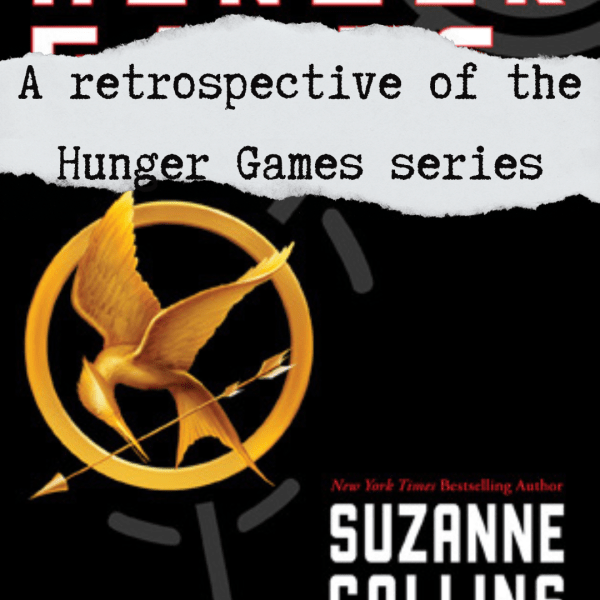
A retrospective on the Hunger Games series

“If a book will be too difficult for grown-ups, then you write it for children,” 

Madeleine L’Engle

Hello, my name is Nicole. I’m thirty-nine years old, and I love young adult fiction. No, I don’t think we need a support group for this. Unless we all support each other in telling people who judge us to mind their own damn business.

One of my favorite series is Hunger Games. It’s been getting a lot of talk recently, with the release of the latest prequel, Sunrise on The Reaping. The good news is that the book was terrific. The bad news is that Suzanne Collins has said publically that this will likely be the last Hunger Games book.

However, I think that we’ll still be talking about this series for a very long time. While its popularity will likely wax and wane, this is the sort of story that stands the test of time. 

Inspired by the new book launch, I recently reread the series. And I have some thoughts, both as a writer and as a person living through the prolog of a distopian novel. 

So I know we’ve talked about several of the books by themselves. But today, I want to pull out and look at the series as a whole. Maybe we can learn something about writing a series that will stand the test of time. Maybe we can also learn something about dealing with our political situation. 

There are so many questions remaining

At this point I’ve read the whole series twice, except for Sunrise. And I still have so many questions. If anything, I have more questions after the reread. What happened to Lucy Gray? Is the Tigress that shelter’s Katness Snow’s cousin? If so, why does she now hate him so much?!

A great story doesn’t do all the heavy lifting from us. It leaves things open to interpretation, and argument. It allows fans to feel like we’re a part of the story. It also builds a community. A fandom. 

Speaking of which. What do you think happened to Lucy Gray? Let me know in the comments. I personally think she ran off and found a covey in the forest. 

The characters are complicated

There are several characters in Hunger Games that are wonderful people.

Katness is not one of those people. Neither is Haymich. And I don’t even think I need to discuss what sort of person Snow is. 

But, maybe I do? Because he’s not always a monster. Sometimes he’s kind. Sometimes he’s compassionate. He’s brave even, in some ways. 

That’s probably the best thing about this series. The main characters are morally gray. They do some bad things. And some good. These are characters that I think we can all see ourselves in, for better or worse. I think it’s the worse part that’s the bigger hook, actually. 

For me, Katness has a lot of the flaws I see in myself. She’s selfish. She uses people. She refuses to consider that other people might care about her. And she clearly doesn’t ever trust another human soul.

These are parts of myself that I don’t like. And so, I don’t like Katness. But I’ll also never forget her.

It asks something of us

I don’t think it’s any surprise to anyone that we are living through some dark times. Honestly, I lack the energy and time to list all the things wrong with our society right now. 

In the Hunger Games series, Katness is raised in a very dark world. She hates this world, but she accepts it. Her aim is never to overthrow the Capital. It’s just to make sure her sister survives. And while Peeta is happy to fight, he probably never would have if he hadn’t been backed into a corner where it was his only option.

Haymich wants to fight in Sunrise on The Reaping. So does Lenore Dove. They fight. They do not go quietly. They battle with everything they have, as little as it is. 

They paint their posters.

Hunger Games asks us to consider our actions in the America of right now. Are we painting our posters? Are we making good trouble? Or are we just enjoying the bread and circus?

We should strive to be Haymich and Lenore Dove, so that later generations don’t have to be Katness and Peeta. Sing the protest songs. Vote. Send physical mail to representitives. Protect your neighbors and show up for your community. 

Speaking of showing up for your community. I know a lot of people are struggling right now. But if you can, please consider donating to The Trevor Project. Their federal funding ended on July 17th, and they do crucial work to support LGBTQ+ youth.

Another charity that means a lot to me is the Brigid Alliance. They help people travel to access abortion care. 

Please do what you can, when you can, while you can. Don’t let the sun rise on another facist regime. 

Oh, I guess that got a little political. It’s almost like art is crucial in dark times. Go write something rebellious today. 

Why Never Flinch Works

I recently finished reading Stephen King’s latest novel, Never Flinch. And it was a fun book. I mean, most of King’s books are fun. But this one was especially so.

Never Flinch is about a serial killer, a religious bigot, a political activist and a soul singer. And about how all of these people come together in a gloriously bloody mess.

Now, I will say that I think the ending was a bit anticlimactic. I think the end game could have been a little cooler. I don’t want to ruin it for you, but you’ll know what I’m talking about if you’ve read it. However, it wasn’t bad enough that it ruined the journey for me.

Today, let’s talk about why Never Flinch worked. Let’s pick it apart and see exactly why it was a great, light Summer read.

The story gave away a lot, only to have more secrets to reveal

Never Flinch is, like most of the Holly books, not a horror novel. It’s a crime novel. Yes, there’s a touch of supernatural right at the end. But for the most part, this book was firmly planted in reality.

In most crime and mystery novels, the fun is largely derived from figuring out ‘who dunnit’. I think we’re all trying to recapture the childhood joy of reading Nancy Drew and Hardy Boys, feeling quite clever when we figure out who the bad guy is along with the teenage sleuths.

So when the book opens up with a chapter from the pov of the killer, you might think this takes away a bit of the fun. But it doesn’t. Mostly because we know him by the name Trig, but we’re told early on that this isn’t his legal name. So while we know him, we don’t know his public persona. He might walk past our main characters, even have full-on conversations with them, and we’d never know.

This does happen several times, by the way.

Lots of real-world horrors baked in here

While I love a good haunting story, there’s something great about real-world horrors. Horror is, I think, smarter than critics give it credit for. Through horror, we often talk about the things that really scare us. Not the ghosts and eldritch monsters. But the real things that keep us up at night.

Never Flinch is great at this. This book talks about guilt. About the weight a false conviction can have, and how that can impact so many people. It also talks about the fear of standing up for what you believe in and the price you have to pay to do that.

We see Trig, eaten up by the death of a man who should never be in jail. We see Corrie, putting her life on the line to support Kate and spread the message of feminine power. (Hell yes, by the way. Get me a Kate McKay Woman Power shirt!) We see Kate willingly risk her life to keep spreading this good work. And we see, in a darker turn, siblings Chris and Chrissy sacrifice their lives to shut her up.

All of these are real things we are really scared of. My favorite example is Holly. Holly faces her fears in this book. She steps out of her comfort zone over and over. She is not the sort of person you’d expect to be a bodyguard. She is learning that she can do hard things. She steps out of her comfort zone, and she is still not smoking.

Holly’s my hero.

I like the way King writes women.

This brings me to my next point. I love the way King writes women in this book.

The short reason for this is that he writes them like real people. Our two main characters are women. The majority of characters are women. And never once does anyone ‘breast boobily down the stairs’.

King writes women like people. What an amazing thing. Not one of them is perfect. There are no scream queens. They do dumb, selfish things. But they also do amazing and brave things. They do dumb things, too. And great things. They are messy, ego-driven, protective, kind, cruel. They are, in short, actual people.

Well done.

One of the antagonists is sympathetic

While I certainly don’t agree with Trig or his motivations, I do feel sympathy for him. He saw something wrong, very wrong, happen. He felt guilty. And he wanted to do something to balance the scales. He wanted people to learn from this.

He was wrong and messed up. He reminded me of a meme currently going around Instagram. You’ve probably seen it. A video starts ‘Probably needed therapy, did (insert thing) instead’. The thing might be making jewelry, or adopting cats, or starting a farm. In Trig’s case, he probably needed therapy and started killing innocent people instead.

But he’s so broken. He’s so scared and sad and ill. It’s impossible not to feel a little bad for him.

We’ve had so much time to know Holly

Finally, I want to talk about Holly. Because I love her. And we’ve had so much time to get to know her.

She was introduced in the Mr. Mercedes series, scared of everything, and a hot mess. We saw her blossom in The Outsider. Then, in If It Bleeds. Finally, she got her starring role in Holly. And now she’s back.

I hope King keeps writing about Holly. It’s so nice to see a main character be a middle-aged woman with severe anxiety issues.

Gee, wonder why I like that.

In short, Never Flinch isn’t going to be my favorite book of all time. It isn’t even my favorite King book. But it’s a fun book. It’s funny, dark, and inspiring. And we as writers can certainly learn a lot about writing through reading it.

Do you have a book or movie you want me to talk about? Did you read Never Flinch and have thoughts? Let us know in the comments.

Paper Beats World is a labor of love. If you love what we do here, you can support us by liking and sharing this post. You can also support us financially on Ko-fi.

Falling From Grace is going wide! Click here to see all the places to get it.

The best books I’ve read in 2025, so far

It’s Summer, it’s July. As you’re reading this it’s the Fourth of July which I am not celebrating. I’m just coincidentally making ribs and watching fireworks today.

Hopefully, I’m also catching up on my reading. Because according to Goodreads, I am eight books behind where I should be to reach my goal for the year.

Boo.

This is even more of a tragedy because the books I have read this year have been great. Today, I’m sharing my roundup of the top ten best books I’ve read this year. Some came out this year, some didn’t. But all are books I read for the first time in 2025. And of course, we’re starting with number ten and working our way up.

Inspiring Creativity Through Magic by Astrea Taylor

I did a whole review of this book. It was a wonderful overview for both creatives and magical practitioners. If you’re a witch or a creative, this book is certainly worth a read.

Who Holds The Devil by Michael Dittman

This was such a fun book to read. I also reviewed it here.

The characters were delightful, and the story was eerie. And, it’s set in my hometown. Fun all around.

Everything is Tuberculosis by John Green

I’m going to do a full review of this book soon. It’s a great example of writing compelling nonfiction. More on this to come.

Incidents Around The House by Josh Malerman

As a horror fan, I loved how creepy this was. The story was immersive, touching, and infuriating in the best way possible.

As a writer, I loved the formatting and style choices. It was a bold move, writing the whole thing without proper punctuation. But it paid off.

Witchcraft for Wayward Girls by Grady Hendrix

Everything Hendrix writes is amazing. This one was no different. I can feel the discomfort of the main characters. I can feel the fear and the fury. Even reading this in my living room in winter, I felt the humid Florida Summer on every page.

Never Flinch by Stephen King

Every Holly book just keeps getting better. I’ll be talking about this book in more detail next week. But in short, Holly is hired as a bodyguard by a feminist icon who’s being hunted by a religious zealot. Meanwhile, Detective Izzy is hunting a serial killer who’s murdering innocent people to drive those he considers to be truly guilty mad. I love it.

Horrorstor by Grady Hendrix

I was on a Hendrix kick earlier this year. And I listened to Horrorstor while keeping house and doing far too many things that required my hands and eyes.

If you get a chance, listen to this one as an audiobook. It was a fantastic time.

Also, if you’ve ever felt something deeply disturbing lurking beneath the fake plastic of a big box store, you’ll love this story.

Sunrise on The Reaping by Suzanne Collins

I talked about this book. Everyone talked about this book. Bookstagram wouldn’t shut the hell up about this book. And frankly, I understand why. It was amazing. I had to read the whole series again with this new insight into Haymich’s game. And it was exactly what the series needed to fit everything together.

I just wish there were more books to come. But Collins has said she doesn’t plan to write anymore in this world. Which is a shame, because I can think of several novels I’d love to see off the top of my head.

The House of My Mother by Shari Franke

Let me warn you now. I do not suggest reading this book unless you’re in a good place mentally.

I imagine most people know about Ruby Franke and the horrific abuse her children suffered at her hands. Shari is the oldest of these children. She is also her sibling’s champion.

This book is Shari’s story in her own words. And it is heartbreaking. But also incredibly inspiring.

We Used To Live Here by Marcus Kliewer

Finally, We Used To Live Here was easily my favorite book of the year. The story, which is about a young couple who buys a house only to have a very unwanted visit in the middle of the night, is terrifying. It messes with you. It makes you rethink everything you think. And it makes you start counting the windows in your home.

I love a book that makes me start wondering if I’m losing my mind. Well done.

So now it’s your turn. What are the best books you’ve read so far? Let me know in the comments.

Paper Beats World is a labor of love. If you love what we do here, you can support us by liking and sharing this post. You can also support us financially on Ko-fi.

The whole Woven trilogy is now available wide! Click here to get it now at your preferred retailer.

Why Incidents Around The House Works

Released in June of last year, Incidents Around The House is an interesting book. It’s a fantastic example of a modern horror novel, and I read it in a matter of days. If I’d had nothing else pulling at my attention, I’d likely have read it in a matter of hours.

Incidents Around The House is a story of a girl named Bela and her family. It is told from Bela’s point of view, in a stream-of-consciousness manner that ignores silly things like grammar, paragraphs, and sentence structure. It is simply the story told from the point of view of a little girl, exactly as she would tell it. And while that was off-putting at first, it wasn’t long before I couldn’t have cared less.

That being said, I would consider this to be an interesting and experimental choice. And one that could have backfired terribly. But it didn’t. Instead, Incidents Around The House was one of my favorite books of the year so far. So let’s break it down and see why it works.

There was no need to convince anyone that bad things were happening

Often at the start of a horror novel, especially a haunted house novel, a lot of time is wasted. Our main character has to convince themself, and possibly others around them, that yes something deeply ominous and dangerous is in fact happening.

In this book, there was none of this. Bela, our main character, knows that something is wrong. And she doesn’t waste any time trying to explain this to her parents. She’d rather her parents not know about ‘Other Mommy’. So we’re able to skip a lot of the tedious, “Why won’t anyone believe me?” nonsense and get right to the “There’s literally something hunting our child,” part of the story.

There’s a great lesson for writers in this. You can skip the tedious parts of a story. You can skip the bits we’ve all seen before. You can skip the boring bits. Because if they’re boring to you, they’re boring to the reader.

Now, is your story going to be nonstop action all the time? Of course not. You’ll build ambiance and character. You need time to set the scene. But you can do this in interesting ways. Certainly, Incidents Around The House does this, introducing Bela and her parents over breakfast while Other Mommy looms in the background.

The sense of despair is great

Throughout the story, Bela and her family turn to one person after another for help with the Other Mommy. Over and over they’re betrayed, turned away and abandoned.

We can feel the frustration in the parents, even though they aren’t the main characters. Even better, we can feel the confusion and helplessness of poor little Bela. She’s realizing, maybe for the first time in her young life that not only do her parents not have everything under control, but most adults don’t either.

This leads to an isolating, choking sort of feeling. One that we feel right along with poor Bela and her parents. It’s horrifying, and quite well done.

This is something I struggle with, personally. Taking away all options from a character. Giving a character hell. But that’s what leads us to a riveting story. It’s certainly what drives me to finish a story. Not just a desire to know what happens, but a need to know how in the hell the characters get themselves out of this mess.

The story played on justifiable fears

Often when writers write children, outside of children’s literature, the characters don’t feel like children. They feel like little adults.

I am astounded by how much Bela feels like a child. And this truly increases the horror of the story. Because this is not a child-friendly story. This is a story that deals with some adult situations. Situations that I wouldn’t want any child to have to experience.

And that is, of course, the point. It is scary to imagine a child going through things their adults can’t protect them from. This allows the story to be ‘real world’ scary instead of just fictionally scary.

Horror always works best when it’s an allegory to something we’re actually afraid of. Most of us don’t fear a demon coming out of our child’s closet to get them. We are scared of them being in danger and not knowing how to help them.

The experimental art form didn’t get in the way of the story

Sometimes when a story’s told in an unusual way, it feels forced. It feels like there was more interest from the writer in experimenting with this new form than in telling the actual story.

And this particular format was a hard sell for me. I don’t want to say I’m a grammar snob, but I am. So if this story hadn’t grabbed me so quickly, so completely, I would have been too uncomfortable with the unstructured structure.

But the story came first. The format fits well with the story being told and allows Bela to truly be center stage.

All in all, Incidents Around The House was a masterclass in creeping horror. It inspired me to try some out-of-the-box formatting with my work. And it certainly inspired some uneasy moments.

As a matter of housekeeping, I will not be posting anything next week because I will be at Nebula Con and it’s my birthday. But we’ll be back with our regularly scheduled post on June 13th.

Paper Beats World is a labor of love. If you love what we do here, you can support us by liking and sharing this post. You can also support us financially on Ko-fi.

Starting Chains is now available everywhere! Click here to see the full list.

The End of Haunted MTL

The publishing world is ever changing. What was a thriving online market yesterday could well be bankrupt tomorrow. A publishing company that was an unquestioned pillar can crumble. A beloved author can seemingly go out of her way to destroy her reputation.

And a beloved horror review site can shutter.

Sadly, Haunted MTL is no more. And, I might as well rip this band-aid off now, there will not be another season of AA.

I might write the story in book form, if anyone is interested. I was certainly going somewhere with the story.

I started working for Haunted MTL in 2019. I’d already published several novels by this time, but this was something different. This was an actual writing job.

I loved my time writing for Haunted MTL. I met so many amazing writers and made friends with several. There is nothing better than writing friends. I got to see horror movies that I might never have seen. Some I wish had never assaulted my eyeballs, like Antichrist. Some I loved very much, like Silent Night and Pooka. I conducted live tweet events during American Horror Story and Dexter, and got to talk to fellow fans all around the world.

Being a critic was a fantastic experience. If you want to be a good writer, one important exercise is to dissect a piece of work that you have strong opinions about, good or bad, and consider why it either works or doesn’t work. As a critic, that was exactly what I did twice a week. And I even got paid for it.

I was also invited to participate in several charity anthologies, which is always great. We conducted storytelling events through the years, writing short stories together. Including several years of Christmas and holiday horrors.

We did podcasts. We did events. We once read A Christmas Carol together and posted it. It was a laugh.

It was too good, maybe, to last.

I will miss Haunted MTL. I will miss the sense of writing camaraderie. Of being on staff. Of being part of a team.

But even as I mourn, I know it’s time to move on. As I said at the top, the publishing world is ever changing. And so even as this spooky door closes, another will open.

If you find yourself in this sort of situation, I’m so sorry. But remember, setbacks like this don’t necessarily reflect on you. Sometimes projects don’t work. We are artists, and art is subjective. Sometimes we’re going to do our level best and still not succeed. All there is for us then is to dust ourselves off, have a little cry, and write another story.

Then another, and another.

Paper Beats World is a labor of love. If you love what we do here, you can support us by liking or sharing this post. You can also support us financially on Ko-fi.

Starting Chains is going wide! Check out all the places it will be available here.

A WordPress.com Website.

Up ↑