Some thoughts on Tradwives

Have you ever been so obsessed with one topic that you just cannot shut up about it? Like to the point where all of your friends and family, and even your therapist are sick of you talking about it, even though they agree with you?

That’s where I am right now with tradwives.

On the off chance you don’t know what a tradwife is, let me give you a description with as little of my personal bias as I can. A tradwife is a woman who believes in and practices traditional gender roles.

To be clear, I am not talking about homemakers. I am not talking about people who enjoy home crafts, cooking, cleaning, or domestic tasks. I enjoy these things myself. I think most of us enjoy home crafting to some degree, no matter our gender.

And to be clear, I don’t care if a woman chooses to be a tradwife. If she and her family can afford for her to stay home, that’s her life. None of my business. That’s the whole point of feminism, after all. She chose to stay home, I chose to have a career and neither one of us can choose our medical care in several states.

Wait, that last one doesn’t sound right. We’ll circle back to that.

No, what I’m mostly upset about are tradwife influencers. People like Mrs. Midwest, Girl Defined, and Paul and Morgan.

I have a complicated relationship with traditional gender roles. For those of you who don’t know, I was raised in The Church of Jesus Christ of Latter-Day Saints. I wrote all about it here. I was a tradwife for years.

And I mean that in the literal sense. I believed that my place was in the home taking care of my family. I was also a pro-life conservative Mormon woman who thought I was straight and had a lot of guilt over my love of playing cards. I had a lot of guilt over a lot of things.

Maybe that’s why I put up with my first partner being mentally, physically, and sexually abusive. I thought that I deserved it because I was dumb enough to have a baby with him.

And obviously, I’m not the only woman who went through that. Hell, my mom went through it. My aunt went through it. My grandmother went through it twice.

I just do not believe that a relationship is healthy when both people don’t see each other as equal. I have lived it. I’ve seen other women live it. I’ve frequently seen women say that God calls us to be Christian wives even if our husbands are not doing their part. Even if a man is beating us, cheating on us, or abusing us, God wants us to try to make it work.

I call bullshit on that.

I crawled out of that. It was hard. I’m still healing from that. And now, I’m watching all these young women run right into the trap I escaped. Worse, they’re trying to drag other women along with them.

Now, I’m going to generalize a bit with this next part. I am not saying that all tradwives are like this. I am saying that the vast majority of tradwife influencers are like this. And again, that’s who I’m mad at.

Tradwife influencers are against every single thing that I’ve built my life around. They sure wouldn’t be working a full-time job like I do. They never seem to be big readers, so I’m guessing they’re not really into sci-fi or speculative fiction. At least, the high-profile ones I see on social media aren’t ever reading anything but the KJV Bible. They seem to be pretty sure that positive affirmations are too close to witchcraft to be trusted, so my tarot-reading self would be an affront to them. They are anti-choice, anti-birth control. Many of them are super racist and xenophobic, too. And I assume I don’t need to tell you what they think of the LGBTQ+ community.

Most of these influencers don’t even have pets.

And yet, there are two things that I do have in common with most tradwife influencers. I am married to a man and I am a Christian.

This brings me to the first reason why I am so angry at tradwives. They have taken the two things in my life that give me the most support and peace, and they’ve turned them into nightmares.

My husband and I have been married for nine years now. Our relationship is a comfort to me. I have a best friend who lives with me, and who will share the burdens that life puts on us. Having a steady long-term relationship should be part of your support system. Your partner should truly be your partner, and they should make your life easier. They should make your life better.

Likewise, I get a lot of comfort from my faith. I understand that this isn’t for everyone, and that’s fine. I know plenty of other people who have deconstructed who do not want a relationship with any religion and that is more than valid. The point is, that my faith makes my life better. My partner makes my life better.

So here is the thing that tradwives do that bothers me the most. They have taken two things that are very good for me in my personal life, and they’ve twisted them. They say first that everyone has to have those things, it’s non-negotiable. Then they say that these things shouldn’t make you happy. Your partner doesn’t have to make you happy. Your relationship with your deity shouldn’t make you happy. If you’re expecting that sort of relationship with your spouse or with God, you’re wrong for that. In the world of a tradwife, you as the wife are there to support your husband, he is not there to support you outside of financially. Your faith isn’t supposed to lead you to good things or a better understanding of yourself and the world you live in.

I reject that. I reject the thought that God doesn’t want me to be happy. I reject the notion that I am meant to be a helpmate to my husband and not expect that same help and support in return. I frankly reject anything that isn’t a net positive in my life. I reject that not just for myself, but for the next generation.

And here is the point that I want to get to. So many of these tradwife influencers are younger than me. These are younger millennials and Zoomers who were happy crying and dancing in the streets when Roe V. Wade was overturned.

So, what the hell happened here?

I am not going to claim that I’ve been leading the charge for female empowerment. I had to fight for my liberation, but I didn’t have anything to do with societal liberation.

But I think that we, as elder Millennials and Gen X, let go of something. We inherited a world that didn’t have as many barriers for women as those before us. There are still some, but not as many. I was born into a world where I could have an abortion, have a credit card, own property, have a bank account, and get a no-fault divorce. My mother was not. Any woman born before 1974 was not.

I feel like we got distracted. We didn’t get lazy, that’s not fair. But we got distracted trying to survive and we forgot about these battles. Maybe because just providing for our families has gotten so hard. Maybe because we’ve seen so much violence in our lifetimes. Maybe it’s hard to worry about whether or not we’re still treated as equals when there’s another school shooting every week and it feels like WWIII is gonna break out if one more country bats an eyelash weird. Maybe it’s because we thought we had our rights on lock, so we could keep moving forward.

Whatever the reason, we dropped the ball. And we’ve got to pick it back up again.

Now, I’m not telling you to go off on these tradwives on social. What I’m suggesting is that we don’t engage with them at all. Don’t give them attention. Understand that anyone can be a homemaker, but nobody has to be. And if you know a young woman who’s going down this road, check in on her with compassion. Don’t judge, but do give her the support she needs. And vote for politicians who will fight for gender equality. Write to your politicians, call them, and attend protests. Don’t believe that we are safe because the rise of the tradwives means that we are not.

These constricting, dehumanizing rules don’t belong in the world our mothers and grandmothers fought to give us, and they don’t belong in the world we’re giving our daughters.

In conclusion, let me leave you with this. I’m a Christian, but I’m also a witch. As such, I like the Wicca rede. As it harms none, do what you will. If tradwives weren’t harming anyone, I would not be upset about what they’re doing. But the way they prop up and romanticize these dangerous, self-hating ways of life is hurting people. And we have got to be loud enough denouncing it to drown them out.

If you want to learn more about this phenomenon, please check out Fundie Fridays on Youtube. It’s a great place to learn about dangerous fundamentalism.

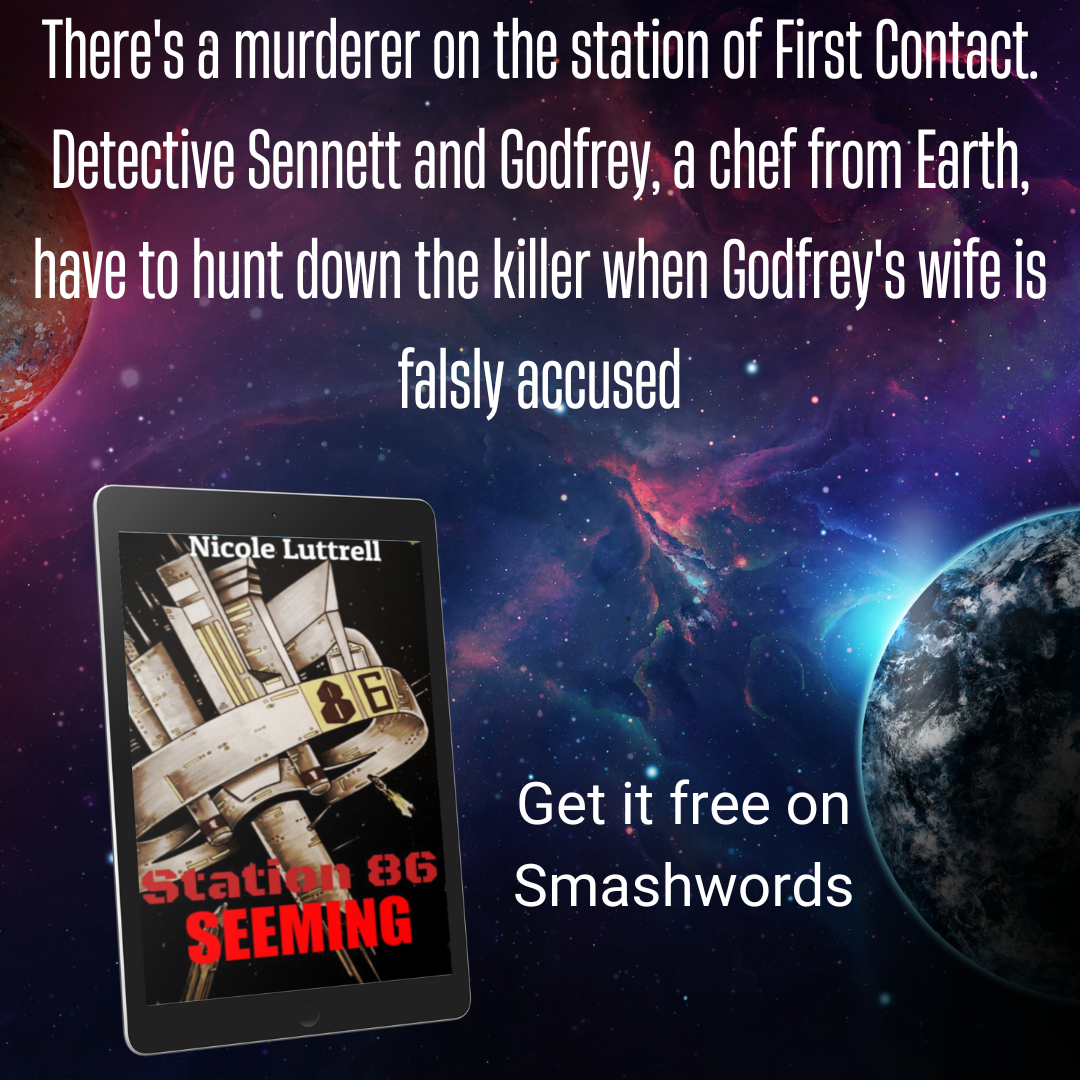
Don’t forget, Nova starts on February 5th. And you can get book one of Station 86 for free right now on Smashwords.

Paper Beats World is a labor of love. If you want to support what we do, you can do so on Ko-fi.
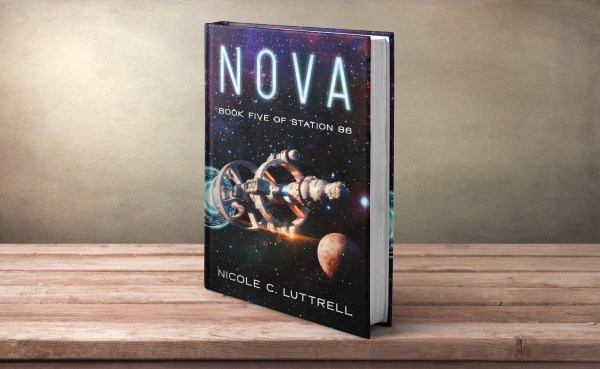
Cover reveal for Nova

I just wanted to pop on here real quick today, because I’m too excited to wait. I just received the cover for Nova, book five of Station 86.

Don’t forget, the story begins on February 5th, with new episodes coming out on Monday, Wednesday and Friday. Hope you’re having a great weekend.

You can get book one now for free on Smashwords.

How my day job makes me a better writer

I am a writer. I am a professional writer. Most of you already know this, assuming this isn’t the first post of mine you’ve read. I have been a professional writer for a good long time at this point, ever since I started submitting to agents for my first novel, Broken Patterns. I’m a novelist, podcast author, blogger, and critic.

I also have a full-time job that has nothing at all to do with my writing, because writing just does not pay all of my bills.

Hell, it doesn’t pay most of my bills.

So yes, I still work a day job. And while I hope someday to leave that day job, it’s going to be a while. In the meantime, I’m trying to be thankful for what having a day job does for my writing. Because even though I would love to write full-time, having a steady day job does have some benefits to a creative life.

I have to focus

The first thing I want to talk about is the small windows of time in which I have to write. I generally have an hour in the morning, a few hours Sunday afternoon, and one whole day a week to write. In many ways, this sucks.

But in other ways, having less time to write forces me to be more intentional about my projects and what I’m doing about them. When I only have an hour to write, I need to sit down and actually write. There’s some pressure behind the pen.

I have time

Conversely, having a day job also means I have more time to develop my career. Because I don’t need my writing to make money to, you know, eat, I can focus on projects and creative works that will pay out in the long run.

The sad truth is that writing a novel unless you’re already famous, is probably not going to make you any money in the short term. But it might make you money in the long term.

Might.

Creating a successful writing career takes time. You work your way up through short stories. You write and publish books and short stories to build a backlog. You create a platform of people who trust you to put out good content regularly, whatever regular might look like.

All of this takes time. You can write as fast as you want, and work as much as you want, and it’s still going to take time to build a writing career. It’s nice to not have to eat like a college student while you’re building that.

I can write what I want to write

Listen, I get that speculative fiction is not a huge money-maker. If I were writing to feed my family, that would be a serious concern. I might consider selling feet pics. I might consider selling James’s feet pics.

I might consider writing romance novels disguised as fantasy because that shit sells like chocolate on February 12th. But I don’t want to write that. I want to write about ghosts, dragons, and space stations. I sure as hell wouldn’t be publishing my entire new science fiction novel right here on Paper Beats World before I publish it anywhere else. But because I don’t need writing money to live, I can do that. And I am, starting on February 5th.

I have the freedom to write experimental things. To write things that I enjoy. I hope you like them too.

I don’t seek out sponsorships

Lots of blogs and podcasts have sponsorships. YouTube content certainly does. My podcast, AA, does. But this site doesn’t. I’m not writing sponsored posts, or creating sponsored content. Because I don’t have to.

For many creators, making sponsored content can take as much time or more than they’re spending on their actual creative work. It in effect takes the role of a day job, working to build a brand and company for someone else dependent on outside requirements and deadlines. As far as I’m concerned, seeking out sponsorships is the same as having a day job, just without the medical insurance.

This isn’t to disparage sponsorships! Like I said, I do one for AA. My favorite YouTube channel, Watcher, does them all the time. I have a friend who does them for her content. But because I have a full-time job, I don’t have to do that. And I’m really glad I don’t.

I don’t have to take on freelance work

Another thing I don’t have to do is write freelance content. I used to do this, and honestly, I hated it.

Freelance work is hard. It takes time and creative effort. It takes so much time.

There was a time when I needed that work because I was struggling to make ends meet with my day job. And I was thankful for the little extra I could make with it. But I’ve learned over the years that I only have a certain amount of writing energy every day. And if I use it up writing ad copy for a company I don’t care about, I’m not going to have any for the writing I want to do. So if I was writing freelance work, it might quickly become the only writing I was doing.

I’m constantly inspired by new stories

Finally, I want to talk a little bit about the work itself. I’m not going to give many details about what I do, because I work hard to keep my writing and work life separate. But one thing I can tell you is that I talk to people all day every day. And like in any job where you work with people, sometimes they tell me their stories.

No, most people don’t just start unraveling a yarn of their lives unprompted. Though at least one time a man spent 45 minutes telling me about his experiences in Vietnam and finished this by telling me he felt like he was supposed to tell me these stories. I didn’t ask for them. I was shocked by them. But I’m so thankful for the privilege of having heard them.

I learn their stories as they tell me about what kind of day they’re having. How it snowed, and it made them think of a storm when they were kids. How their kids are driving them nuts. Or they just got back from a funeral. Or how they just lost their job or got a new one, or their daughter had a baby. All of these wonderful, worrying, scary, sad, happy stories that people just tell you when you seem willing to listen.

That feeds my soul. But it also feeds my creativity. I talk to people who see the world in a completely different way than I do. I learn new things and gain a new perspective. Granted, some days I learn new ways to be irritated by people. But I also learn compassion and patience.

Anything that makes you a more well-rounded person is going to make you a better artist. The more sides of the world you can see, the more you can write from.

All of this is not to say that I don’t want to write full-time. It’s certainly not to say that writers don’t need and deserve to get paid for their writing. Creative work is work. Emotional work is work. I’d love to quit my day job and write full-time, so I’m not literally working two jobs.

But the truth is that creative work isn’t paying enough to keep me alive right now. And that’s the reality for most writers, sadly. So if we have to work while we create our careers, we can at least lean into the positives.

Nova will start on February 5th. But if you need to start at the beginning, you can get Seeming for free on Smashwords right now.

Paper Beats World is a labor of love. If you love what we do here, please consider supporting me on Ko-fi.

Writing when you work from home

It’s snowing where I am as I write this. Not just snow, but a messy sleety wet slop that is freezing when it hits the road. There is nothing I want to do less than leave my home. Thankfully, I work from home.

While many people have transitioned back to offices, lots of us are still working from home. And it is a blessing.

Before we go forward, please let me be clear that this is a blessing and I am not complaining about it. That being said, working from home isn’t without its challenges. Especially when you, like me, already work a creative job from home.

Working from home when you also have a creative hustle has its own challenges. For one thing, there’s only so much time one should spend staring at the same four walls. For another, it’s just hard to spend more time in our creative space when it’s also now our workspace. Listen, I like my day job and there are still some days where I don’t want to step away from my desk so much as set it on fire and run screaming from it. And then I’m expected to spend more time at that same desk?!

I’m a big fan of basically tricking my brain to get it to do what I need. And I’m also a big fan of, you know, doing the thing I love no matter what. So here’s what I do to juggle both working and writing from home.

Have a specific start and end time

This is a piece of information that’s been around for WFH folks forever. But frankly, it bears repeating because this is harder when you’re creating from home.

Have a specific start and end time for your day job. This is easy when we’re working at the office, because you clock out and head home, not to see your work PC until next you clock in.

If you’re working from home, your PC is there with you. Waiting. Judging.

When I’m doing things around the house, making dinner, or watering plants, I can ignore the PC with ease. But when I sit down back at the desk, back where I was performing a specific action all day, I start to think about things that happened at work.

Did this person respond to my email? Did that guy do the thing I needed him to do? Did I take care of my part of that other thing?

This sucks. But it’s important to stick to your intentions. You were at work already. You have a specific amount of time that you and your boss agreed to. There is no reason to jump on there at any other time.

Physical boundaries

Of course, this is easier said than done. When you’re computer is right there, it’s harder to just say no.

And I get it. I’m lucky to have any devoted space in my home for working, it’s a small place. So my desk is the place where I work from home and do all of my writing. Same little desk, same squeaky chair, same Peanuts calendar. And I’m not going to move my work pc every time I want to write.

So what I do instead is to place a scarf over the whole PC when I’m not at work. I turn it off, and I cover it with a nice maroon scarf. Out of sight, out of mind.

Tricking your senses

Getting my work PC out of sight is just one way I trick my senses into thinking this is a different workspace. I’m careful to keep certain practices separate.

When I’m working the day job, I listen to jazz music. I don’t light candles or incense. I’m generally drinking water or coffee.

When I’m writing, I like to listen to either nature sounds or work with me videos. I almost always have something nice smelling lit. I also tend to prefer tea while I’m writing. It’s all about creating the right kind of vibe. When I’m doing day job work, I want to feel alert and not stressed out. When I’m writing, I want to feel creative and soft.

Get out of the house when you can

Finally, I try to write outside of the house when I can. Not all the time, frankly I write too much to do it all the time. But I like to go to a coffee shop or the library and get some work done. Especially when I’m feeling like I’m in a slump, or the four walls of my office are getting to me.

Writing outside of the house has all kinds of benefits. Especially when you’re spending 40+ hours a week in your usual writing spot.

If you can’t leave the house, which might be the case for me as I’m looking down a snowstorm this weekend, try to switch up where you write. While I don’t suggest writing in bed, maybe there’s somewhere else in your home you can write from. I’ll often write reviews on my couch, for instance, my laptop balanced on a lap desk.

Now, if you feel like a lot of this advice sounds the same, you’re right. These are all examples of what boils down to the same advice.

Make your creating time as separate from your work time as possible. Because the last thing you want when you’re writing is to feel like you’re at work.

Nova will start on February 5th. But if you need to start at the beginning, you can get Seeming for free on Smashwords right now.

Paper Beats World is a labor of love. If you love what we do here, please consider supporting me on Ko-fi.

An overdue announcement (Yes, it’s a new book)

I’ve become the thing I’ve most hated. I’ve become that writer who leaves horrid long stretches between their books. I know how you feel, believe me. Tamora Pierce published Tempest and Slaughter in 2018, and there’s no sequel in sight.

Look, we can’t all be Brandon Sanderson, as much as we might want to be.

But that’s done now. The wait is nearly over.

Nova, the fifth book of Station 86, is launching right here on February 5th.

And I understand that the wait has been quite long. Literally, it’s been five years. Things are going to be a bit different this time around. Previous Station 86 books have, first off, been much shorter than this one. None of them before have reached novel length, and Nova exceeds it, clocking in at just under 70,000 words. So instead of posting one episode a week, I’ll be posting three. One on Monday, another on Wednesday, and a third on Friday.

You’re also going to meet a character that, if you only read what’s on the website, you haven’t had the chance to yet. His name is Michael, Godfrey’s father. He’s a survivor of the Hollow Suits on Earth, and he’s been collecting lost children to protect them. This time around, his story became too integral to what was going on aboard Station 86 to leave him to his own devices.

And besides that, I like Michael. I didn’t really mean to make a hero out of him. But here we are.

There is no secret episode this time around. It’s all going to be published here, one chapter at a time, from February 5th to April 17th. And the reason for that is simple. You deserve it.

You, who’ve been reading Station 86 since Seeming launched in 2016. You, who found the series or this blog somewhere along the way and decided to stick around. And even you if this is the very first time you’ve been here. You all deserve a full, complete, good story about a group of people trying to survive against impossible odds. Because while we aren’t facing hollow suits of armor intent upon killing us, we are all trying to survive against what seems like impossible odds.

Finally, I’ll be offering a limited number of beta copies of Nova. And I mean a very few. Because you are all my beta readers. Nova will be available here in its entirety for two weeks after its finale to make sure everyone gets a chance to read it who wants to. If you like it, I’d love it if you’d share it with your friends. It would mean the world to me.

Just in case this is your first time here, or you’ve never heard me talk about this series before, here are links to the whole series on Smashwords. And to help you get into the world quicker, book one is free.

Seeming

You Can’t Trust The AI

Virus

Station Central

The many uses of subplots

So, you want to write a book. You have a vision for a story, and it’s wonderful. You have a beginning, a middle, and an end.

But, what about subplots?

A subplot, just in case this is all very new to you, is a story within your story that is not directly part of your main plotline. Today, we’re going to be using the novel Southern Book Club’s Guide to Slaying Vampires by Grady Hendrix as an example because I’m tired of using Harry Potter and everyone should read Slaying Vampires.

So, as an example, in Slaying Vampires the main story is about a vampire that moves to a suburban town and starts feeding on people. One of the subplots is the main character, Patricia, struggling with her relationships with her husband and children.

Subplots have the power to make or break your book. And it’s almost impossible to write a novel without some subplots. So let’s talk today about how subplots can make your story better.

Subplots work best when they have something to do with the main story. Even when they don’t seem to at first. Especially when they don’t seem to at first. For instance, in Slaying Vampires, there’s a subplot regarding Patricia’s mother-in-law coming to live with them. While that might not seem like it has anything to do with a vampire attack, it sure as hell has a lot to do with the story by the end of it.

Foreshadowing

One of my favorite ways to use a subplot is for foreshadowing. We can do this by adding subtle (or not-so-subtle) hints that appear to have nothing to do with the main plot.

For example, let’s consider Patricia’s mother-in-law. She is suffering from advanced stages of dementia. So when she first sees our vampire, she calls him by another name. This is pretty common behavior for someone with dementia. Which makes this subplot a strong and useful one.

When they provide character development.

Early in Slaying Vampires, Patricia’s husband gives her a pair of earrings. And these earrings have a whole journey on their own.

This story starts when Patricia is worried her book club friends will think she’s showing off, wearing big diamonds to their meeting. Then, one of them is bitten off her head and swallowed by someone infected by the vampire.

Bitten off and swallowed.

When Patricia starts to cry, telling her husband that she’s sorry she lost his expensive gift, this asshole loving husband starts laughing at her. He tells her that those earrings were costume jewelry, and he got them from one of his patients. His therapist patients.

This little story tells us something about Patricia. It tells us that she’s desperately worried about what her friends think of her. It also tells us that she’s uncomfortable with how much money her family makes and that she tends to think that everything is her fault.

What we learn about her husband is that he doesn’t put much care into giving his wife meaningful gifts and that he doesn’t consider it his responsibility to care for her when she’s emotionally distraught. You know, because somebody bit her ear off. It also tells us that he doesn’t care much for the ethics that go along with his profession, since therapists aren’t supposed to accept gifts from their clients.

That’s a lot of lifting for a three-part subplot.

When they balance out the main story.

Some stories are heavy. They’re full of dark content, upsetting themes, and serious subject matter.

That is important work that we undertake as artists. But sometimes, it’s a lot.

For our sake and the readers, we need to lighten the story up a little.

Southern Vampires is of course, about a vampire. It’s also about austerity, and how far people will go to get it. It’s about race inequality. It’s about financial abuse (and physical abuse) in gender-normative relationships.

To balance that out, we need some funny in the story. We need some heartwarming moments in the story. And so we have Patricia’s son as a subplot, with a fascination with nazis. ( Not as good guys. They aren’t from that part of the south.)

We also have the subplot, possibly the most important one of the book, of the creation of the book club itself. We see scene after scene of the women talking about their books, their families, their struggles, and their successes. We see their polite friendships grow into strong sisterhoods, without which their eventual success over the vampire would be impossible. But before it gets too far, these scenes help to lighten what is at its core a very dark story.

Do not add subplots just to add subplots.

Finally, I’d like to leave you with this important suggestion. Subplots only work if they factor in, in some way, with the main storyline. This is why most romantic subplots annoy me because they could be removed from the book and leave no plot holes.

That is a good test for your subplots. If you remove them from the story, what kind of impact will that have on the story as a whole? If not, maybe this is a subplot that should be left out altogether.

That’s all I have to say about subplots for the day, but it’s not all for the day as a whole. Check back in about fifteen minutes, I have a great announcement.

Paper Beats World is a labor of love. If you love what we do, please consider supporting me on Ko-fi.

A WordPress.com Website.

Up ↑