
If you’ve been following along with my reviews on Haunted MTL, then you know I’ve been obsessed with the podcast Dolores Roach. After watching the first season of the show on Amazon over the summer, I was so excited to dig into the podcast.
And I was hooked for every single episode. Until the very last. And that last episode was horrible enough that I will never recommend this podcast to anybody I care about.
There are countless examples of great stories that end up with terrible endings. Firefly, Dollhouse, Eurika, Dexter. Podcast examples include Lime Town, The Black Tapes, and now Dolores Roach. Even books don’t always get it right, like in The Daughter of Dr. Moreau or even the last book in the Dexter series.
How did that one franchise manage to burn me three times?
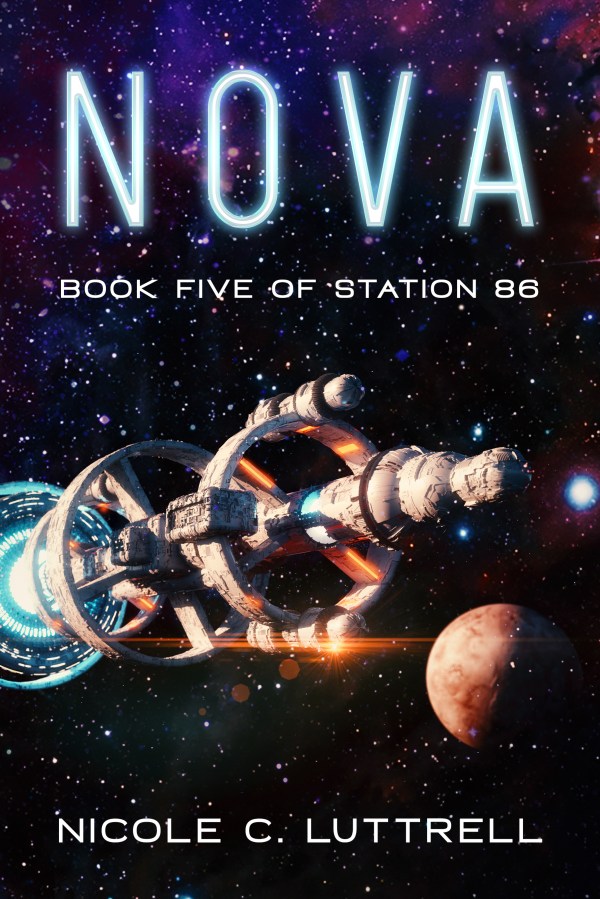
The point is that endings are hard. Especially when you’re writing a series. And I get it. Nova, the Station 86 book I’m in the middle of publishing, was never supposed to exist. That story was a series of flashbacks in the final book, which I wrote and decided wasn’t a fitting ending for a series I’ve been working on since 2016.
So I threw the whole thing out, wrote a whole-ass extra book, and am now rewriting the final Station 86 book. Because that’s how important that ending is.
Hopefully, you won’t have to throw away a whole completed manuscript, but it’s important to get these endings right. That is if you ever want someone to read anything you’ve written ever again.
Having experienced so many bad endings in so many formats, I have at least experienced what not to do. So that’s what I’m going to share with you today. Hopefully, it will help you stick your landing and deliver an ending that doesn’t make someone want to throw their tablet at the wall.
Remember genre expectations
While you can certainly write whatever your heart desires, genre fans have certain expectations. And if those expectations aren’t met, a genre fan is going to be frustrated. Many of these expectations do have to do with the ending.
Horror fans expect a twist ending. Romance fans want a happy ever after. Science fiction fans want some sort of hope for the future. If you don’t deliver on these expectations, you’re going to deny a reader what they’re expecting.
Now, there are examples of great works doing exactly the opposite of this. Holly didn’t have what I’d call a twist ending. But that was written by Stephen King. Carrie had a twist ending. The Stand had a twist ending. The Green Mile had a twist ending. So even Stephen King didn’t get away with not adhering to genre expectations until he was the Stephen King who’d already written a ton of best sellers.
I am not even at the Carrie part of my career. So my horror had better have a twist at the end, my adventure fantasy had better have a happy ever after and my science fiction had better have a hopeful ending.
Answer all the questions you set up
A good story works because it has you asking questions. What happens next? Will Dexter ever be caught? Who killed Laura Palmer? Why are people dying alone in their homes on Station 86? What happened to the sugar bowl?
You should be giving your reader those questions. But you should also be answering those questions. And while many of them will be a slow burn, you should have all of your questions answered by the end of the story.
Some of the questions might have ambiguous answers. Some might have answers the reader has to consider. But if this is it, the big finale, you should be answering all of your questions.
Give satisfaction
We all know there are moments in a story that give us deep feelings of satisfaction. The love interests finally kiss. The asshole character gets punched in the face. The gun on the mantle goes off, the chandelier comes crashing down on stage.
Your ending should have several of these juicy, satisfying scenes. All the final ones to wrap up all your subplots. Your reader should be whispering ‘yes’ or ‘finally’!
Remember, delayed satisfaction is great. But you do eventually have to get to the satisfaction part!
Don’t rush things
I’m going to admit something that’s going to be bad news for fans of AA. The next season is going to be a while. Like, probably another year or two. There are many reasons for this, most of them being that making a podcast is hard and time-consuming and aside from my wonderful actors, I am doing the whole project myself.
But the big issue holding AA up right now is that I’m just not sure where the story is going. And I don’t want to rush it.
Serenity, the internationally despised Firefly movie, felt like a rushed project. The last episode of Dolores Roach felt rushed.
Yes, sometimes this means that a story is going to take longer to get out. Like Stranger Things, for example. There is time between those seasons. And while I don’t think anyone is thrilled with that, I also think everyone would be way more angry if the story was rushed. If Lime Town suddenly came out with a season three, I would listen to it. And if the ending didn’t feel rushed, if it was a satisfying ending that answered all my questions and scratched all the itches left by the first two seasons, then I’d consider it worth the wait.
So please, take your time.
Make sure you end your story
That brings me to my final suggestion. If you are writing a story, if at all possible, please finish it!
Yes, I understand that sometimes cliffhangers happen. If you’re writing for TV, you might not have the chance to write the final season you want, because the show might get canceled. Podcasts and traditionally published books have that same concern.
I don’t feel like Dolores Roach had that same concern. If I’m wrong, I’d love for someone to tell me.
Firefly had that concern. I feel like they could have addressed it better. George R.R. Martin could publish his next shitty dragon porn book at any time, but he hasn’t.
Writing a series takes dedication. It takes commitment. It takes time, sometimes a decade’s worth of time. Seriously, by the time the last Station 86 book comes out, I will have been with this series and these characters for a decade of my life. And the first four aren’t even fully novels.
I’m not saying this to scare you away from writing a series if that’s what’s in your heart to do. I am saying this because it’s something I wish I’d understood when I started writing a series. Especially before I started writing two series at the same time, then decided to add in a podcast series for good measure. Writing a series takes time, and it takes away your time to start other projects. So if you’re starting a series, please do so with a passion that is going to carry you through a significant amount of time.
Also, please have an ending planned.
This is one thing I did right from the start. With Woven, Station 86, and AA, I knew the ending before I started writing. I don’t know the whole path, but I do know where I’m heading.
And I get that some of you might be pantsers. Probably not a lot, though, as I’ve been fairly clear this is not a safe space for pantsers. Write an outline, thank me later. But even if you are going to pants your way through your entire novel or series, please at least know what your ending is going to be! That way you’re not staring down the end of your story with no idea what it looks like. Or worse, having no idea when or where it should end at all.
In conclusion, you’re going to put a lot of time into your story. And your fans are going to put a lot of time into consuming it. Don’t cheat them or yourself out of the satisfying ending that you all deserve.
Paper Beats World is a labor of love. If you love what we do here, please consider supporting us on Ko-fi.




 Paper Beats World
Recent Comments