Writing when you work from home

It’s snowing where I am as I write this. Not just snow, but a messy sleety wet slop that is freezing when it hits the road. There is nothing I want to do less than leave my home. Thankfully, I work from home.

While many people have transitioned back to offices, lots of us are still working from home. And it is a blessing.

Before we go forward, please let me be clear that this is a blessing and I am not complaining about it. That being said, working from home isn’t without its challenges. Especially when you, like me, already work a creative job from home.

Working from home when you also have a creative hustle has its own challenges. For one thing, there’s only so much time one should spend staring at the same four walls. For another, it’s just hard to spend more time in our creative space when it’s also now our workspace. Listen, I like my day job and there are still some days where I don’t want to step away from my desk so much as set it on fire and run screaming from it. And then I’m expected to spend more time at that same desk?!

I’m a big fan of basically tricking my brain to get it to do what I need. And I’m also a big fan of, you know, doing the thing I love no matter what. So here’s what I do to juggle both working and writing from home.

Have a specific start and end time

This is a piece of information that’s been around for WFH folks forever. But frankly, it bears repeating because this is harder when you’re creating from home.

Have a specific start and end time for your day job. This is easy when we’re working at the office, because you clock out and head home, not to see your work PC until next you clock in.

If you’re working from home, your PC is there with you. Waiting. Judging.

When I’m doing things around the house, making dinner, or watering plants, I can ignore the PC with ease. But when I sit down back at the desk, back where I was performing a specific action all day, I start to think about things that happened at work.

Did this person respond to my email? Did that guy do the thing I needed him to do? Did I take care of my part of that other thing?

This sucks. But it’s important to stick to your intentions. You were at work already. You have a specific amount of time that you and your boss agreed to. There is no reason to jump on there at any other time.

Physical boundaries

Of course, this is easier said than done. When you’re computer is right there, it’s harder to just say no.

And I get it. I’m lucky to have any devoted space in my home for working, it’s a small place. So my desk is the place where I work from home and do all of my writing. Same little desk, same squeaky chair, same Peanuts calendar. And I’m not going to move my work pc every time I want to write.

So what I do instead is to place a scarf over the whole PC when I’m not at work. I turn it off, and I cover it with a nice maroon scarf. Out of sight, out of mind.

Tricking your senses

Getting my work PC out of sight is just one way I trick my senses into thinking this is a different workspace. I’m careful to keep certain practices separate.

When I’m working the day job, I listen to jazz music. I don’t light candles or incense. I’m generally drinking water or coffee.

When I’m writing, I like to listen to either nature sounds or work with me videos. I almost always have something nice smelling lit. I also tend to prefer tea while I’m writing. It’s all about creating the right kind of vibe. When I’m doing day job work, I want to feel alert and not stressed out. When I’m writing, I want to feel creative and soft.

Get out of the house when you can

Finally, I try to write outside of the house when I can. Not all the time, frankly I write too much to do it all the time. But I like to go to a coffee shop or the library and get some work done. Especially when I’m feeling like I’m in a slump, or the four walls of my office are getting to me.

Writing outside of the house has all kinds of benefits. Especially when you’re spending 40+ hours a week in your usual writing spot.

If you can’t leave the house, which might be the case for me as I’m looking down a snowstorm this weekend, try to switch up where you write. While I don’t suggest writing in bed, maybe there’s somewhere else in your home you can write from. I’ll often write reviews on my couch, for instance, my laptop balanced on a lap desk.

Now, if you feel like a lot of this advice sounds the same, you’re right. These are all examples of what boils down to the same advice.

Make your creating time as separate from your work time as possible. Because the last thing you want when you’re writing is to feel like you’re at work.

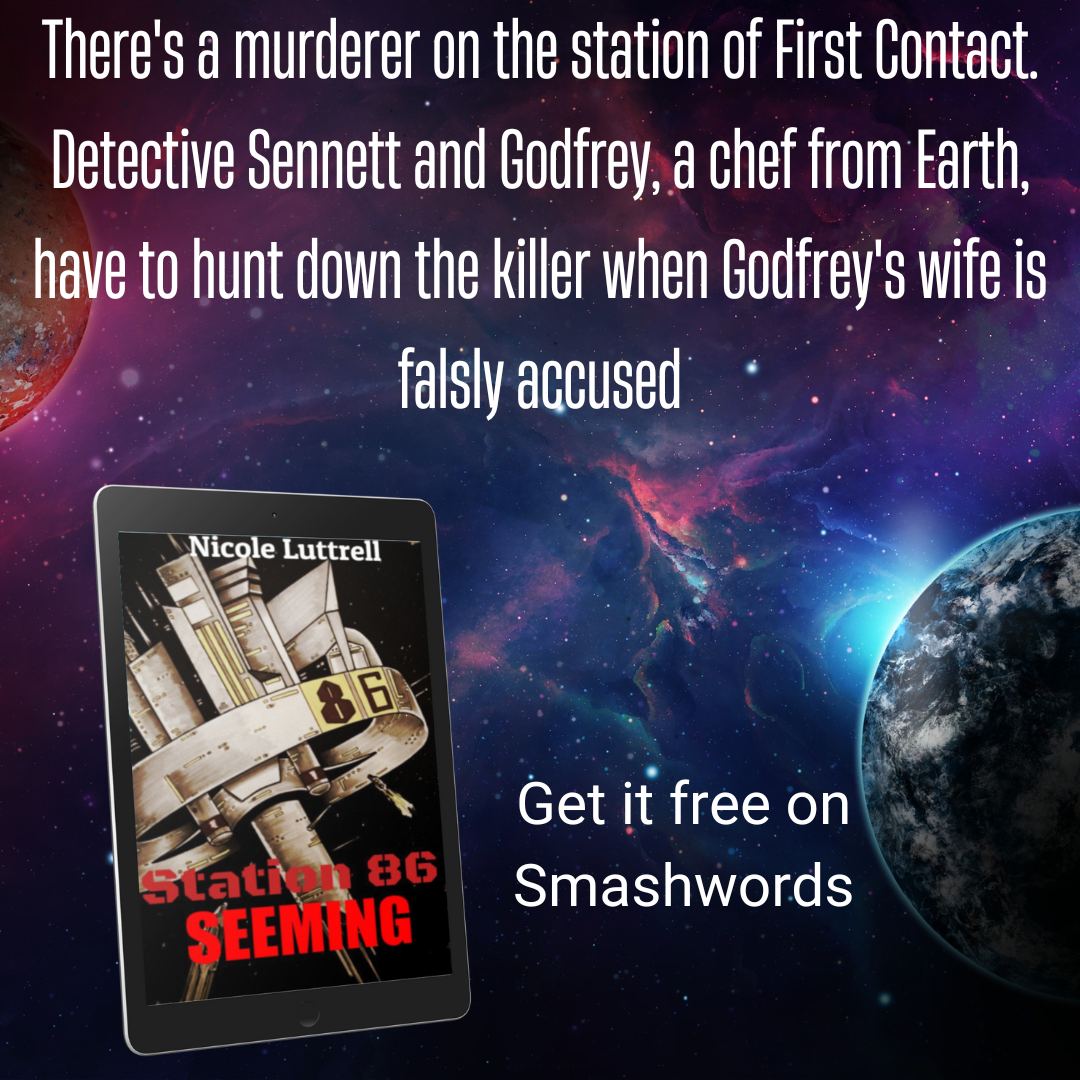
Nova will start on February 5th. But if you need to start at the beginning, you can get Seeming for free on Smashwords right now.

Paper Beats World is a labor of love. If you love what we do here, please consider supporting me on Ko-fi.

I don’t just watch tv. Tips for writing reviews, part 1

If you love what we do here, please consider supporting us on Ko-fi.

As some of you may know, I write reviews for a site called Haunted MTL. And yes, being a critic has always been a dream of mine. I think it’s probably a dream a lot of people have. I won’t lie, it’s pretty awesome. I get free books and foreign screeners. And I get to do my favorite thing, talk about fiction work that I love. 

That being said, it’s not always easy. I’ve turned a relaxing activity into work. Because a lot more goes into writing a review and cultivating a career around reviews, than one might assume. So today I thought I’d talk about how I do it. How I write reviews, the work that goes into them, and how I manage my critical career.

It starts with a fresh watch or read

When I review something, I like to read or watch it myself and get my first impressions down before I let the opinions of others pollute my own. I’ll watch the content with a notebook in hand, making notes about scenes or actors as I go. This scene went on too long, this was gross in a good way, and this was gross in a bad way. That sort of thing.

Research

Once I’ve consumed the content, I’ll go into research mode. Who was in this piece? What else have they done that my readers might have seen? What Easter Eggs were hidden in the content? What references might a casual viewer have missed? These are all things to consider in writing an entertaining and informative review. 

This is not, of course, the main focus of the review. So it’s best not to get lost in the research too much. But it’s fun, especially for nerds like me. 

Making stylistic choices

In any form of writing, you’re going to make some stylistic choices. Some of those will depend on genre, others on your personal preference. For instance, I write for an audience of horror fans. So I tend to write using more adult language and about adult subjects. For instance, I don’t think I’ve ever used the word boobies here on PBW. It comes up often on Haunted. 

The important thing here is to pick a style and stick with it. Yes, your style is going to change over time, but you want to avoid any dramatic switches.

Conveying information about the content, without giving too much away.

Spoilers suck. I will never get over having the death of Rita ruined for me in Dexter. And if you as a critic are spoiling the endings of things all over the place, you’re not going to be a popular critic. So you’ll have to learn how to tell part of the story, without telling it all. 

The way I do this is by focusing more on my opinion of the story, rather than explaining what happened. 

Now, there are some situations where it’s really hard to avoid. For instance, when I wrote a review of The Mist. A big reason why I hated that movie was the twist ending. But I didn’t want to give the ending away in case anyone still wanted to see that piece of shit film after reading my review. (The book was way better.) So, I had to sort of dance around it. I let on that the ending was different than in the book. I called it intentionally mean, and unsatisfying. And I mentioned at the start of the review that it might be spoiler-esq. It’s tricky, I’m not going to lie. But it’s vital. 

Knowing why something works or doesn’t work.

What’s the difference between a critical review and asking a buddy if they liked a movie? While your buddy might tell you a movie sucked, a critic will tell you why from a professional standpoint it sucked.

Many critics are professionally trained in film school, or deeply involved in content creation like myself. The reason is that it’s not enough to say that something is good or bad. Why was it good? Why was it bad? 

I do this in part here, with my Why It Works series. But while that series is aimed at teaching you how to write better, a review is aimed at telling a fan exactly why I wanted to pitch my remote at the screen in disgust. 

This is something that is best learned by watching a lot and reading a lot, then considering why you liked or didn’t like what you consumed. Was that film really hard to see because the lighting was bad? Was the dialog realistic? Were the characters likable? It requires an understanding of good writing and good film work that you only develop over time and practice.

But there are worst ways to spend your time.

Watching and reviewing bad content

Speaking of worse ways to spend your time, I want to end off with this. Sometimes I have to review stuff that is just terrible. And I have to watch the whole thing, to explain to other people exactly how terrible it was.

Several times, this has meant I have had to watch a movie that I pray no one ever knows I watched. There was one whose title I will not mention that emotionally scarred me. Sometimes it means I have to finish a tv series that I would have given up on long before the end.

There is an upside, though. Bad content is often really fun to review because you can use some of your most colorful languages. I despised the ending of Chilling Adventures of Sabrina and enjoyed explaining in detail how lazy and damaging it was. It made me feel like watching the ending hadn’t been a complete waste of time.

There’s a lot more to be said about writing reviews, but as we’re nearing a thousand words here I’m going to stop for now and continue next week. But I want to hear from you. Do you enjoy reviews? Who is your favorite go-to critic? Have you ever dreamed of being a critic? Let us know in the comments. 

Smashwords

My horror heroes, Wes Craven

When I think of Wes Craven’s films, I’m struck with a flood of memories. Nightmare on Elm Street is the first horror movie I remember watching, with a babysitter who probably shouldn’t have let me watch it. I was little, curled up on our old couch in our trailer in the dark, eyes big as the moon and glued to the gore. 

Nightmare on Elm Street

I remember watching Scream at a sleepover, complete with pizza and sodas and a gaggle of girls. Everyone else was a little off the pizza after the first scene. 

I was not.

Wes Craven created some of my favorite slasher movies of all time. Nightmare on Elm Street, Scream, The Last House on The Left. All of them leave people sick to their stomachs in the very best way possible. 

And can I also just mention that this guy won the name lottery? His actual birth name is Wesley Craven. I always thought that was a stage name. How lucky do you get?

Craven always allows the main characters to be the heroes. And his main characters are very often teenage girls. There’s no boyfriend, father, or parent jumping in to save them. It’s Nancy or Sydney saving everyone else’s ass, even after no one wanted to listen to them. They never once came across as scream queens. They also didn’t suffer from what I call the Alice Problem. By that, I mean Alice from Resident Evil. She had no personality, could have been anyone. I can’t think of a single thing about her that would distinguish her from Jill Valentine.

Scream poster

There’s none of that with Craven’s leading characters. They are their own people. 

I’ve never watched a Wes Craven film and not had a good time. In addition to being wonderfully bloody, they’re often funny. Especially the Scream movies. I love a good laugh to go along with the gore. I love that his movies aren’t afraid of being silly. They’re never taking themselves too seriously. 

I have no problem with fiction that has a message. Some of my favorite books and movies are all about that. Pleasantville, Dogma, Jacob the Liar. These are great films. But not everything has to have a message. Sometimes a piece of art can just be there to be enjoyed. And I love that Craven does that.

Finally, Craven figured out how to avoid one of the biggest issues with the horror genre. Almost everything has been done. Most viewers are genre-savvy. So, to surprise an audience, you’ve got to embrace the meta.

And Craven has made a habit of doing just that. The Scream series is a great example, giving us film after film full of in-jokes designed for horror fans. Even better is my favorite horror film, Wes Craven’s New Nightmare.

In this film, the actors from Nightmare on Elm Street are attacked by Freddy. Even Robert Englund, the actor who played Freddy himself. This was a ton of fun for a super fan like me. 

So, what have I learned from Wes Craven? And what can you, as a writer learn from him?

-Understand that your fans are probably genre-savvy, and have fun with that

-Have fun with your art in general. Don’t be afraid to go big.

-Give your main character a real personality. 

Don’t miss the other posts in this series, where we talked about Stephen King, George Romero, and R. L. Stine

Check This Out- All Indie Writers

Alright, so I spent a minute and a half on this site, and signed up for the newsletter.  Then I realized that if I was going to explore the site and get a post written on the site, I’d better set a timer or I was going to get lost in the archives.

All Indie Writers is all about being a self publishing, freelance or independent writer.  Since that’s something I’m hoping to move closer and closer towards (the ten year goal is to be a full time writer with no day job.) this site is my new favorite thing.

The first post that really grabbed my attention was A Simple To Do List Tweak.  I won’t ruin it for you, but it did give me a new idea about how I write blogs for this site.

There’s also a podcast!  This has been my new favorite way to learn things, because I can listen to them on my 20 minute walk to and from the day job, or while I’m cleaning, or knitting, or doing anything that would prevent me from holding a book, or looking at a screen.  (If Brandon Sanderson ever reads this, I’ve listened to your podcast in the bath tub.  Sorry.)

It really is a one stop website with job postings, advice columns, a blog, and forums for deep discussion about the craft and the job.

Definitely check out All Indie Writers today.  I know I’ll be taking some time to explore it in depth.

Markets- Pseudo Pod

Awhile ago I posted about a site called Escape Pod. This is a sister website, Pseudo Pod, that’s all about horror. I am a huge fan of scary, macabre, and anything creepy and crawly. So, I love this one.

Genre- Horror.

Word count- they want either flash fiction of around 500 to 1,000, or longer pieces from 2,000 to 6,000 words.

Sub Date- Any time.

Wait time- two months

Payout- $100.00 a story, either length.

A WordPress.com Website.

Up ↑