Being the boss of your own life

I’m turning 32 next month. I know, it’s kind of crazy. I don’t know how I feel about it, to be honest.

Sometime next month, I’ll probably do a list of things I’ve learned in my 32 years. It’s sure to be long, and rather weepy.

But I wanted to share with you today the biggest, most important thing I’ve learned in my 32 years.

You have got to be the boss of your own life.

It’s just that simple, and just that hard. If you’re a legal adult, whatever age that is where you live, you are totally responsible for your life.

When I first turned eighteen and moved out on my own, I was so not the boss of my own life. I let my mom pick out my first apartment. I listened to her when it came to raising my infant daughter. I let my ex walk all over me, and tell me how we were going to live our lives. I did what I was raised to do, and taught to do. I kept a home and took care of my daughter.

That all stopped when I realized something profound: I knew better than them, and I was still listening to them! They were running their own lives poorly, and I was letting them run mine, too. I stopped listening to them, then, and started listening to myself.

Over the years, I’ve realized that being the boss of my own life means so much more than just standing up for myself. It’s also about taking care of myself, the people who depend on me, and my future.

Taking care of yourself

Just in case this is the first PBW post you’ve ever read, I stand by one policy before any other. Fill your own cup first. Way too often, I see people who look after others neglect themselves. I’m someone with mild depression, in a home with a husband and child with serious depression. Sometimes I feel selfish when I say I’m feeling depressed because they’re way worse.

That’s dumb. Just because they’re worse doesn’t mean I’m not bad. It’s like having a cold when everyone else in the house is down with the flu. I sometimes need to remember that I can get worse.

Even if you’re not dealing with emotional issues, you still need to take care of yourself first.

Now, maybe that’s not you. Maybe you’re one of those people who are being taken care of. I’ve known full adults who don’t make their own doctor’s appointments, for instance. Really, that’s not acceptable. If you’re living on your own, you should be doing all of the following things.

  • Paying your bills. Or, at least participating in making a budget with your partner.
  • Making your doctor’s appointments.
  • Cooking your own meals, or at least take turns with someone you live with to cook meals.
  • Sew a seam, and sew a button on.
  • Shop for clothing that is comfortable, fits you well and is a good color for you.

Even if you have a partner that does some of these things for you, you need to learn to do them for yourself. Because there’s no guarantee they’ll be there forever. And you don’t want to be the forty-three-year-old eating macaroni and cheese and microwaved hot dogs because you never learned how to cook.

Taking care of your surroundings

Taking care of my home is something I’ve struggled with a lot over the years. I never really learned how to take care of my home until recently. I talk about the FlyLady all the time, and it’s for a good reason. The biggest lesson I learned from her was that my home is my own, and I don’t have to keep it to my mother’s standards.

I have my level of clean, and it’s okay. I’m happy to keep my home to my level of clean, which is comfortable for me and my family.

My husband and I have also learned to make minor repairs around the house. If we don’t know how to do something, we learn how to do it. I’m not saying we can rewire a house. But we did replace all the pipes under our sink.

Knowing how to do small repairs means we’re more comfortable owning our own home. It means that if something breaks now, while we’re renters, we can take ownership of the situation. Rather than having to call our landlady and asking her to please have someone come by, when it’s convenient, we can call and tell her there was an issue, and we fixed it. That’s a far better conversation to have on both sides.

Taking care of our surroundings has also meant having a real and honest conversation about owning a home. Most American’s consider homeownership to be a worthy goal for everyone. A piece of property can be something worthwhile. Something you can pass down to your kids. And renting is like throwing money away, right?

Wrong. Sometimes it makes more sense to buy a house than rent. Sometimes it really doesn’t. We’re still, honestly, on the fence. It can be financially draining if you’re not careful. I’m not a financial advisor, so I can’t go into too much detail responsibly. What I can say is make the decision based on what’s best for your family and lifestyle. Don’t buy a house because you think that’s what people are supposed to do.

Taking care of your future

That brings us nicely into our next topic. As soon as you’re on your own, you need to be thinking about your own future.

I know that for some of my readers my age or younger, retirement seems like a lifetime away. And you’re right, it is. But a lifetime isn’t as long as you think it is.

I advise using the Dave Ramsey baby steps. Get your emergency fund, your debt paid down, and make sure you’re never in a situation where you have to depend on others to take care of you in your old age.

Of course, it’ll be a lot easier to save for the future if you know what you really want from your life. I mean, what you really want?

Personally, I want to quit my day job after my kid moves out of the house. I want to write full time, supporting myself and my husband. We want to buy an RV, live in it, and travel everywhere. That’s my life’s goal. I’m not there yet. But as the boss of my own life, I’m going to get there.

Finally, if you’re going to be the boss of your own life, you need to get comfortable asking questions. I learned quickly that no one is going to show up with the answers to everything you’re wondering. No one was going to teach me how to self-publish my book if I didn’t go out and ask the question.

We aren’t taught everything we need to know in school, and our parents don’t always get around to it. But there’s never been a better time to learn things. Ask Google, check Wikipedia, watch a YouTube video. Learn about whatever it is you need to know. Because knowing what you’re doing, and not having to rely on someone else to do things for you, is what gives you the real power to be the boss of your life.

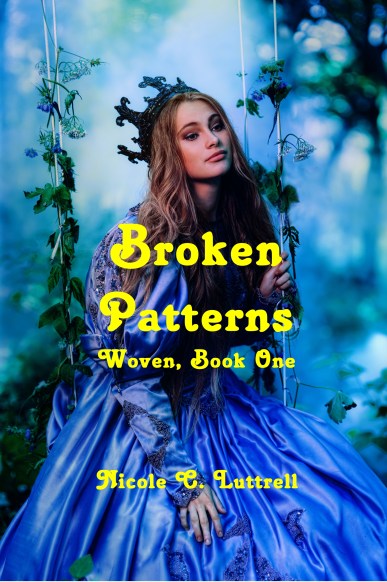
broken-patterns-001In Devon’s world, magical work is as common as turning a pot or fletching an arrow. What isn’t common is a man with thread magic. When Devon finds that he is a seer, weaving prophetic tapestries, his family tries to keep it a secret.

But the family can’t hide Devon’s visions after he predicts a devastating plague in the dragon lands of Coveline. He travels there to help the dragon queen save her people.

Meanwhile, Devon’s sister Lenore joins the Church of Singular Light. As Lenore learns to serve, and falls in love with her city, she discovers a dark underbelly to the church.

Lenore fights for her city, and Devon rushes to find a cure to the plague, while an unseen enemy raises an army to destroy Septa from within. Click here to get it now.

 

Pricing your books without selling yourself short or gouging people

If you’re an indie writer, you are totally responsible for every single thing involved in creating your book. From the creation to editing, to the cover, to the pricing.

Ah yes, the pricing. That, um, well it’s a touchy subject. On the one hand, lots of people are hurting for cash, and it can feel like shit to price a book too high. On the other hand, we writers need to eat. Then, of course, the question becomes how high can a book be priced before people think you’re money grubbing? How cheap can it be priced before people think you’re desperate?

Well, I’m here today to help you price your work so that your fans can afford it, and you still get paid. We’re going to go through a step by step guide to figuring out how your books should be priced.

A lot of things go into the price of a book or e-book. The genre will have an impact, as well as the length. I always start by checking out online stores. I’ll start with Amazon because it’s the place my book will most likely be sold. I’ll search for the top ten best selling novels or novellas in my genre, and track them. From there, I have a baseline of what people are willing to pay for a book of that length in that genre.

From those numbers, I come up with an average price. I may or may not use that price, but it’s good to have an average.

Now, I really take a look at this data, and I get realistic. I ask myself the following question.

  • Would I be able to buy this book?
  • Would I have been able to afford it when I was a broke ass single mom?
  • What did I pay for the last book I bought? Generally, I don’t think someone should pay more for my book than they pay for the most recent Neil Gaiman book.

So, let’s break this down into a simple math problem.

Average of top ten books in your genre and length + realism = price of your book.

Now that we’ve talked about your book’s basic price, let’s talk about special pricing.

I only give books promotional prices when there’s a good reason to. When I’m doing an event, when a new book is coming out, or during Black Friday and Cyber Monday. Promotional prices are supposed to do two things. It should make it easier for people to give your work a try. It should also give fans who might be strapped for cash a chance to grab your book for less money than normal.

Finally, under what circumstances should your book be free? I have two times when I make a book free.

One, when I already have two or so books out, and a third book is coming out. I will make the first book free for a few days, to give people a chance to start off from scratch.

Two, when I’ve written a book that I intended to be free. I have two short story collections that I put together to promote myself. They’re a good place to start, for people who have never read me.

What do you think about book pricing? Do you think we pay too much for books?

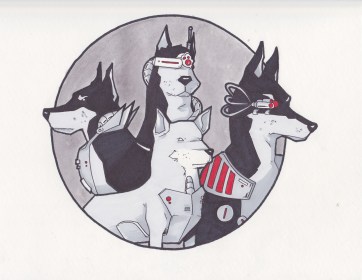
Sennett, Godfrey and the rest of Station 86 are trying to put their society back in order after the Core attack. Then a mysterious ship from a dying station arrives, bringing artificially scn_0047intelligent robotic, murderous dogs.

Godfrey, Mason and April must get to the hospital safely, while Sennett is trying to protect Marshal’s Joy and Howard. But the AI dogs are nothing compared to the terrors they left behind on their own station.

Get it here now.

Starting Chains is now available!

Hey, guys. I’m posting a little early this week, because I am just so excited!

Starting Chains, book 2 of Woven is now available!

After years of war between Montelair and Septa, the two thrones are united by family. Victor’s nephew, Morgan, is sharing the throne with the last heir of the royal line, Jacob. He and Lenore decide to travel to starting chains-001Montelair with their newborn daughters to help broker peace.

But peace among their own people is harder to achieve. The city is tormented by a terrorist who calls himself The Tinker. He and his group of anarchists plant bombs through the city and call for the death of the new kings from every street corner.

Meanwhile in Calistar, Sultiana and Devon are marching to war with Kussier. The ancient hatred between the two countries is sprung anew when Sultiana is declared heir to the Calistar throne.

Waiting at the border, though, is a much darker enemy. A force from legend threatens to consume both countries, and possibly the world.

Get it here now!

Tilling the soil of your mind

Recently I wrote a blog post about Kitchen Nightmares, that ended up bearing a lot more material than I thought it would. Honestly, I thought that was going to be one post. It spanned into two and gave me ideas for two more blog posts. This is post one of two.

Sometimes writing works like that. A lot of times, actually. When you constantly ask your brain to create, it’ll start doing it on its own.

It’s never a bad idea to help it along, though. And this is where the reality of being a writer sets in. The physical and mental act of writing is not all you must do to be a writer. You must do things, every day, to till the soil of your mind so that it’s ready when you plant a seed.

I’m not suggesting that you go away from the world and live as a monk. Though there are days I’ve considered it. These are seven things I do all the time to encourage my mind to create new stories.

YouTube videos, and other media

Otherwise known as learning about the world around you. I watch YouTube videos about random stuff all the time. Matt Santoro is one of my favorites, which I’m sure you’ve noticed if you follow me on social media.

These videos have inspired many a scene in my work. Usually horror scenes. I learn a lot about strange historical facts, creepy ghost stories, frightening unsolved mysteries, and lots of other things.

I also watch tv, read magazines and listen to podcasts about random stuff. Anything I can find to learn new fascinating facts. Or, not actual facts per se, since I don’t really believe in ghosts. But it all goes into my brain as sort of a compost pile.

Freewriting or sketching and dream journals

Much of what I write every day is not meant for anyone but me. I free write, of course, and I journal. I’ve mentioned this several times. I also keep a dream journal and do sketches. Now, here’s what I mean by sketches. I might sit somewhere in public and write a backstory for the old man sitting next to me waiting for the doctor. I might write a poem, or jot down my thoughts about the line of people waiting to participate in a public lunch outside of a church.

Getting out of your routine

I like routines. They make some of the more boring parts of my life run on autopilot. I stick to the routines suggested by the Flylady, and my house is a lot cleaner for it.

That said, routines can be death to creativity. If you do the same thing every day, your brain’s not going to work as hard. You need your brain to keep active and frisky to come up with creative new stories.

I highly suggest investigating your neighborhood. I live in this tiny little town, and I still manage to find things to do. We have a local theater, a tiny museum for Asian art, and all sorts of Summer events downtown.

Even if you can’t do any of that, there are still new things you can do. Eat at a new restaurant, read something in a genre you don’t normally read. Try a weird lipstick color! (I started wearing gray lipstick recently. I quite like it, actually.)

Vacations and breaks

Soil gets tired after awhile. Perhaps you’ve heard of crop rotation, the practice of switching out what’s planted in a field so that the ground can give and take different nutrients.

We need to do the same to our brains. Go on vacation when you can, even if it’s just to a neighboring city. My family and I actually vacationed in Pittsburgh a few years ago. 10/10, would do that again because a week wasn’t long enough to do everything we wanted to do.

If you can’t take a whole vacation, I definitely suggest taking at least a day to either have a little adventure or do the exact opposite and goof off. Go to the local thing you always say you’re going to do but never actually do. Or, sleep in and then go get brunch. Even better, try to fit in one of each of these days a month.

Honestly, I suggest these things to everyone. Too often we live our lives working and taking care of our homes. But we aren’t here to just survive. We should love our lives.

Retreats

I talk often about writing as a business. It’s easy to forget that while selling my stories is a business, creating them is not. Writers are artists, and none of us started this as a viable career move. We sometimes need time to just focus on the writing.

If you can, book yourself on a writing retreat. I’ve never gotten the chance to do this myself, but I have taken a day to focus solely on my writing alone. I was working on a rough draft at the time. I headed downtown alone, going first to a coffee shop and then to the library. I had lunch at my favorite little diner, writing while I ate. It was a whole day where I did exactly what I always want to do, write. While I can’t do this often, I recommend doing it when you can.

Reading everything

Finally, I suggest that you read everything you can. I spend a lot of time online reading everything from news sites to entertainment sites. I read most genres. I love reading, so this hardly a difficult thing. I’m imminently suspicious of a writer who isn’t obsessed with reading.

So what do you think? What do you do to till the soil of your mind? Let us know in the comments below.

Psst! Want a free book? Click here to get a free copy of Days and Other Stories right now!

Seven pieces of short and flash fiction, showcasing the days of seven very different people. You will find a busy librarian, a lonely man with a guitar and a woman who finds a dream crashing in her brain. DaysAnd Other Stories

The cons of writing a continuing series

On Monday, we talked about why I love writing a series. I should love it, I’ve written four Woven novels and four Station 86 novellas. I also write short stories about both.

Yeah, but everything in this world needs balance. Nothing is all good or all bad. So, here are four reasons why writing a series can really blow.

You can start to repeat yourself.

When you’re writing about a cast of characters for a certain amount of time, you can find yourself falling into a routine. Much like a couple that’s been married since time out of mind, you know your characters so well that nothing they do can surprise you anymore. Or, you’ve already thrown everything you can think of at this character, and now you’re out of ideas.

That’s when it’s time to shake things up. Someone needs to change, or something different needs to happen. Someone dies, get’s a new job, does something exceedingly stupid and becomes the villain. Something in the core dynamic of the series needs to change, or you’re just writing the same book over and over.

You’ve established a world with rules that you have to follow.

My husband has this really bad habit now that Broken Patterns and Starting Chains are done. He’ll read through a draft of a future book with me, and start saying things like, “I don’t like what you named this character. I think it’s too similar to the name you gave this other character. Why don’t you change it?” (Example, Lenore, and Lorna. Or Morgan and Monroe.)

Well, gee, that’s a swell idea. I wish you hadn’t mentioned it after I published two books with the characters having those names because I’m sure as hell stuck with them now!

Once something’s published, you’re stuck with it. It is a fact in that series. And while some authors get away with retconning certain facts, it’s hard to do so without alienating your readers or coming off as amateurish. We’re not writing comic books here, people. We can’t just bring someone back to life.

Worse, for me at least, is that you have to keep track of the rules you’ve put in place. Characters features, locations, settings. These things have to stay the same, or an explanation as to why they didn’t is in order. This, at least, is helped by keeping a story bible from day one. Every time you write a new character, add them to the bible. What do they look like, what do they do? Add in anything you can think of that you’re going to need to keep track of for that character. Otherwise, you’ll be grabbing your own books off the shelf and flipping through for references.

Getting bored is almost unavoidable.

Here’s a sad fact of life. Nothing is exciting and wonderful forever. Even the best of things get boring after a time. I’ve finally managed to overplay Hamilton, for instance.

Writing the same world, the same characters, the same story for too long can get boring. No matter how exciting the story, it’s not fun to write about just it.

That’s one of the reasons why I write a novel and novella series. I switch from one project to another in between drafts to take a step away from those worlds. Right now, I’m working on Station Central, the fourth book in Station 86. When I finish that draft, I’ll go back to Sandwashed, the first in a new collection in the Woven extended universe. It’s totally different, and it will feel fresh to me.

Oh, and that’s another thing that’s helped in Woven. I wrote three books about Lenore, Devon, Sultiana, and Victor. Now, I’m switching gears and writing about a new cast that is quite different from them. It’s the same world, and it’s moving the core series story along. But it’s also a new cast, a new point of view, and new incites into the world I’ve created. The bonus here is that not only is that fun for me, it’s fun for the readers.

You will get more attached to characters, and it can be hard to do what must be done.

This is one that I really struggled with while writing Missing Stitches, the third Woven novel. It’s the end of the series, which meant it was time for some people to die. Some people who I’d been writing about for years now. Literally, years.

It was hard. It’s one thing to kill off someone who’s just been in one book. But to make that call to take away someone with a family and connections to the world is something not to be taken lightly.

I mean, I still did it. But it was an emotional process.

It can be hard to know when to quit.

Now, I have a series outline for both Station 86 and Woven. There’s an honest end of the story for both that I am working towards. I have lots of book ideas for both, and I keep careful track of ideas as they come to me.

Even so, I recently went through my book idea list for Woven and realized that there were some that just didn’t fit. Or, at least could probably be novellas not novels.

Writing a series can become comfortable. So comfortable that a writer doesn’t know when it’s time to move on. This is how cheap-ass sequels happen the movie world, and how tv shows jump the shark. I never want that to happen to me. I’ve got a final book planned out for Woven, set in present time. That’s going to be the end of it all. (Psst, I’m saying it now because I don’t want anyone to accuse me of milking the series when I get there. Spread the word.)

You see this not knowing when to quit issue most often in series that don’t have a solid storyline through them. Things like cozy mysteries like The Cat Who. I loved that series until every book started to feel the same. It wasn’t as engaging anymore.

Don’t let this happen to you.

What do you think? Are you writing a series? Can you think of a series that should have ended a long time ago? Let us know in the comments below.

The pros of writing a continuing series

Writing a series is far different than writing a standalone book, and must be approached as such. I should know. I write not one, but to different series, because I’m an idiot who takes on way more than is sensible for one person. Before that, I wrote a couple standalone books. None of them ended up well, but they were practice novels. Everyone should write at least one practice book that doesn’t go anywhere before they write their actual good material. For me, my practice book was a crime drama about a woman whose husband is accused of abusing and killing a young man. I plan to rewrite it someday, despite being completely different than the genre I write now.

I love writing series for many reasons. Having tried it both ways, there are perks to writing a series, no matter what genre you’re writing in.

Established characters

I write character-driven novels, and so obviously creating characters is a long process. I want my characters to be real people with real flaws and virtues. So, if I can create a character I’m happy with, I’d like them to stick around awhile. Like, at least two books, please.

Starting out a book with a cast of characters that have already been fleshed out and established is a huge step up. I don’t have to spend a lot of time showing who my characters are because they have already shown who they are. I can now show who they are turning into. That’s always a lot more fun.

Ongoing storylines

I’ve already written a whole story about these characters, complete with plotlines that may or may not have been finished in book one. I can continue those storylines in book two. After all, there really is no happy ever after. Live goes on, and there’s always another challenge to face.

Established world

In fantasy and science fiction, a lot of time and attention goes into world building. What kind of money is used, what sort of politics are in play here. What sort of creatures roam the countryside.

When I’m writing a sequel, I’ve already done all of that! Even better, I can safely assume that most of the people reading book two and beyond have read the others first. So, I don’t have to go into as much detail as I did the first time around. I’m currently writing the fourth Station 86 book (It’s called Station Central. Look for it to come out in maybe December, I’m not sure yet.) I can skip a lot of world building and get right into the story. This saves me and the reader time.

Characters become plot bunnies

One thing I do when I’m starting a new Station 86 or Woven book is look at my list of characters and see who’s still alive. Every character that is still alive has potential to provide plotlines in future books. Because the best secondary characters are complete, well-rounded people who have their own lives apart from their relationships to the main character. And that makes them plot bunnies! And as their plots hop along, they bounce off the main storyline and make more plot bunnies! There’s no such thing as writer’s block, it’s great.

Building a fan base

Raise your hand if you’ve ever been obsessed with a series. I have personally had several book releases highlighted in hearts around it on my planner over the years. I waited in front of the bookstore to get a copy of the last Harry Potter book, and literally walked out of the store reading it. I did the same thing for the last Series of Unfortunate Events. I pre-ordered the most recent Tamora Pierce book months in advance.

I don’t do the same thing for books that aren’t part of a series, even if I love the author in question. Because I know that the books may or may not be something I want to read, and I want to know more about it.

If you’ve got readers who read and loved book one of your series, they’re going to eagerly await book two. And for every good book you put out, you get a snowball effect. Some people prefer to wait to see if a series will continue before they get invested. So, when there’s a book two, people are more willing to grab book one. When there’s a book three, it’s even better.

I don’t have to say goodbye

I’m an emotional person, I get attached to things. And when I wrote Woven, I got really attached to writing for Lenore, Devon, Victor, and Sultiana. So, when I finished the series, I didn’t want to let the characters go.

That’s why I started writing a follow-up series right away. Even though I wasn’t writing for the same characters anymore, I was still in the same world. I could include cameos of the characters with this new cast.

It’s even better with Station 86 because I’ve stuck with Godfrey and Sennett for four books now. I don’t have to say goodbye to them and go through that emotional hangover. I can just keep writing about them until the story is over. If you read Virus, you should know that the story is far from over.

There is no good in this world without some bad. Everything has a downside, and writing a continuing series is no exceptions. I’ll explore these in part two of this series on Friday. (See what I did there?)

Do you write a series? What do you think the best thing about writing a series is? Let us know in the comments below.

Are you subscribed to the PBW Update? Here’s why you should be. You’ll get an extra post from me about writing or publishing. You’ll get a round up of the most recent PBW posts. You’ll learn about a new indie writer in every issue. And, you’ll be the first to learn about promotional offers and events for Station 86 and Woven. PBW Update issues come out every other Monday.
Click here to sign up.

2cd7169d-feb1-47e4-965e-72cb38658351

Let me tell you a story about adopting my cat

Here’s a picture of my cat, Harper.

I love this cat, let me tell you. I couldn’t have a cat for a long time when I lived in an awful apartment building run by a sadistic hell beast wrapped in cheap synthetic clothes. She didn’t allow pets. Not even hamsters.

When I finally managed to move out of that pit of despair and hatred, I insisted upon adopting a cat as quickly as possible. As quickly as possible ended up being awhile.

First, I had to scratch up the $100 adoption fee. Then, I had to go through the truly long list of requirements my local Humane Society has for pet adoptions.

  • My husband and I had to fill out a survey about how we intended to care for and raise our cat. This included questions about how we would discipline her, what sort of food we intended to feed her, and what situations would cause us to abandon her. We had to promise to bring her back to the Humane Society if we couldn’t care for her.
  • We also had to provide personal references. And they actually called my references! I’ve gotten jobs where they didn’t call my references.
  • Everyone who lived with us had to go meet Harper twice. My husband and the kids met her once, and we all went the second time. The second time had to be a certain period of days after the first time. We had to go back a third time because I had only met her once. And when I say everyone in the house had to meet her, I mean everyone. If we had owned another cat or dog, they would have had to come meet her as well.

When we first had to go through this whole mess, I was not thrilled. It was a huge pain in the ass and a lot of time out of our schedule to adopt a cat. But over time, I’ve had the opportunity to speak with a lot of the people who work at the Humane Society, and they’ve explained to me why they have such strict policies regarding pet adoption.

Like the fact that they had cats and dogs returned to them all the time because they weren’t compatible with another pet in the house.

Or the number of pets who were brought back because someone changed their minds, and didn’t really have the time to devote to a dog.

Or the times they’ve called people’s references and were told horror stories about the person.

Or the number of people who visited with the animals once and never came back.

Or my least favorite reason, as told by a volunteer who I won’t name for her protection. “We were literally turning away animals we knew because we just didn’t have room for them to come back.”

What it comes down to is this; the Humane Society saw a situation in which innocent animals were suffering. And so, they had to take drastic steps to keep these animals safe. So that’s what they did. While it is a pain in the ass for a responsible pet owner like me, I get it. Not everyone is a responsible pet owner.

Now, let me tell you what you must do to buy a gun in Pennsylvania.

  • Walk into a gun show.
  • Have money.

Now, I’m fully aware that the laws are different if you want to buy a gun from a licensed dealer. You must fill out a form and do a full background check. That is, if you are buying a gun from a reputable dealer, not if you’re buying from a gun show. There is also no waiting period for a long gun or handgun in PA, no matter where you buy it.

So, what I’m wondering is this. The Humane Society saw that animals were suffering and put common sense if not fully convenient policies in place to protect them. And it worked. Why can’t we have similar policies in place to protect our school kids from gun violence?

Are you subscribed to the PBW Update? Here’s why you should be. You’ll get an extra post from me about writing or publishing. You’ll get a round up of the most recent PBW posts. You’ll learn about a new indie writer in every issue. And, you’ll be the first to learn about promotional offers and events for Station 86 and Woven. PBW Update issues come out every other Monday.
Click here to sign up.

2cd7169d-feb1-47e4-965e-72cb38658351

Participating in an online convention, from a two year veteran

As many of you know, I participated in the B2BCycon for the second year in a row. It was a blast, as it always is. If you’ve never heard of a cycon, it’s like a normal convention. Authors have a chance to show off books, offer discounts and codes, and meet readers. While you don’t get the joy of seeing people in homemade costumes, you also don’t have to spend hundreds of dollars, put on pants or handle ‘con funk’. It’s a good time.

It’s also a good idea for an indie writer to get their name out in an online con. It’s not as much of a financial investment, for one thing.

Having attended two years in a row, I’d like to share with you some of the things I’ve done to make my participation worth my time and effort.

Have a place to guide people to.

If you’re participating in a con, you’re going to have lots of new eyes on your books. There’s a good chance that they’re going to want to find out more about you. If someone wants to know more about me, I direct them here to PBW. So, I wanted to make sure that it was ready for new visitors. Before the con, I do a little site audit. I make sure all my links are working, and that my ‘buy my book’ page is updated and shiny. I post a blog post for the weekend that includes information and links to every place to find my work. And I make sure that all the posts that I’ve put up over the last two weeks are the best posts of the month.

Just because it’s online doesn’t mean you can’t have freebies.

If you go to a physical con, you expect to get some freebies and goodies from the booths. That’s part of why we shelled out all that cash to attend the con in the first place. Meet celebrities and get free stuff.

An online con is no different. When I participated in the B2BCycon the first year, I did a lot of special things for con attendees. I created a free wallpaper and designed two new images for the Current and Foundation Parties for Station 86. I did a whole question and answer session on the Goodreads page. This year, I put every book I write on sale. One book was free, to attract new readers. I worked with my publisher to discount Broken Patterns. I posted some free chapters of Broken Patterns and Seeming on the con’s website. I did everything I could to get out all the e-goodies I could.

Help with the promotion as much as you can.

One of the reasons why online cons work is the amount of promotion all the participants do. I started posting early and often about the con, to get people excited. I took advantage of all the promotional materials the con provided, which included nifty graphics and videos. I talked it up in my newsletter (What, you’re not signed up for my newsletter? Click here.) I talked about it here. I made sure that if you’re a fan of me, you sure as hell knew that I was going to be at this con.

So, what do you think? Have you attended or participated in an online con? Please share your experience in the comments below!


Don’t talk down to kids

I was raised in a very conservative, old-school home. There was a lot of shame in my life, as a child, and no power over my own life. No matter what the situation or argument, I had three strikes against me from the start. I was a child, girl, and a bastard. (All of my cousins, and most of my church friends were born in wedlock.) This meant I was not to be taken seriously, ever. No wonder I had such self-esteem issues as a young adult. I was taught very early that I didn’t know what was good for me, and that I should just listen to the figures in authority like a good girl. When that person in authority was no longer my mother, it became my ex.

Obviously now, I’m a grown woman who has made a point of being the boss of my own damn life. I try not to do the same things to my children that were done to me. It’s hard sometimes because that’s what I was taught to treat children like. I was taught that respect was a thing I owed adults, rather than something that was earned. I teach my children that they owe people common courtesy, not respect.

These days, the world has dramatically shifted from when I was a child. We’ve gone from expecting children to respect adults to expecting adults to cater to children. I’m not big on that. I think that kids are a lot smarter than we’re giving them credit for.

As parents, I think we tend to talk down to our kids. We don’t tell them when the family is having money troubles, or when someone in the family is ill. Instead of teaching them how an adult handles hard times or explaining to them why you might have to say no to certain things, we make up excuses. We lie. We insult a child’s intelligence by not even lying well. We don’t let them watch the news, preferring to shield them from the terrors of the world. What we should do instead is explain hard situations to them at an age-appropriate level.

As writers, we need to be especially careful of this if we want to write for children or young adults. I write new adult fiction, and even that’s hard. I never think we should shy away from explaining difficult topics to kids and young adults, though. They can get it if we as the adults take the time to explain things in an age-appropriate way.

Look, kids want more than cuddly animals and glitter in a book. Young adults can handle more than a slash and dash adventure story. We can tell real stories with real people, and we shouldn’t be afraid to.

Finally, I want to talk about the young women and men who survived the Parkland Florida school shooting. They’ve been the powerhouse behind a movement for stronger gun control. They’re fighting a battle that many of us have been weary of for quite some time. And they deserve to be heard, even if you don’t agree with what they have to say.

Whether you’re a parent, children’s author, or just a citizen of the world, please stop underestimating our kids. They’re worth more.

Are you subscribed to the PBW Update? Here’s why you should be. You’ll get an extra post from me about writing or publishing. You’ll get a round up of the most recent PBW posts. You’ll learn about a new indie writer in every issue. And, you’ll be the first to learn about promotional offers and events for Station 86 and Woven. PBW Update issues come out every other Monday.
Click here to sign up.

2cd7169d-feb1-47e4-965e-72cb38658351

What I learned from Kitchen Nightmares, Part Two

On Friday, I started sharing with you the lessons I’ve learned from watching Gordon Ramsey’s Kitchen Nightmares. It turns out that I learned more than I realized, and the post spanned way out of control for a blog post. So here then is part two of what I learned from Kitchen Nightmares.

Part two focuses more on one of my favorite things; being a boss. I was once a manager of two different retail stores. I won’t name them because they were shitty places and I don’t want to admit to working for them. I did my best as a manager, and I came out of the other side a lot stronger. Now, I’m a mom, and I’m a boss in a whole different way. I’m also an indie writer, which means I’ve got to be the boss of my tiny small business in which I’m the only employee. Beyond all of that, I am the boss of my own life.

Here’s what Gordon Ramsey has taught me about being a boss.

Act like the boss

Some of the restaurants have people running them that are really great cooks, really nice imagespeople and they really want to be a great success in their field. But they’re not always the best boss. They’re not good at cracking the whip and making other people to put the honest work in. I used to be the manager of two different retail stores. I was young, and I had never been in charge of other adults before. I had to learn how to motivate people into doing a good job.

When people were doing what they should be doing, I was a great manager. I did everything I could do to reward the hard workers and make it a fun work environment.

When someone wasn’t doing what they should be doing, I didn’t know how to handle that. I couldn’t stand up for myself, and couldn’t make people who were unwilling to work pull their weight. So I did almost everything, leaning hard on my good workers. It wasn’t fair to me, and it sure wasn’t fair to my good employees. I wish I could go back there and apologize to those awesome men and women I worked with.

Now, you may never be in the position where you are the boss. But you are the boss of your writing, and you are the boss of your life. Act like it. If you contract with someone to do a job for you, like edit your work or create a cover for your book, expect them to do what they say they are going to do. Insist that they give you their best work. If you have a partner in your life, don’t be the one doing all the work. Insist on being the boss in your own life and in your writing.

When you are the boss, you have to be willing to do all the shit work.

Whenever Gordon finds a kitchen that needs a scrubbing, he rolls up his sleeves and works just like everyone else. He gets the managers and owners in there too, and everyone works.

This is something I’ve learned as a manager and as a parent. Now that my kids are teenagers, I consider keeping our home in order a group effort. We all work together, and I make sure that my kids see me working just as hard as them. It was the same rule when I managed a store. I mopped floors, stocked shelves, faced the store (go over a shelf and make sure it looks straight and beautiful) and helped customers.

Always be the person who sets a good example, whether you’re the boss or a team member.

Critique in private, congratulate in public

This is actually something that I think Gordon could learn. It’s something that I work on with my kids. If I have something to say to one of my kids about their behavior, I take them to the side. I don’t yell at one of my kids in front of her sister or in public. I certainly don’t rebuke my husband in front of the kids. No one needs to know someone else’s screw ups. Along the same line, if I have a problem with someone professionally, I will not make a public deal of it. I will not post on Facebook, I will not leave scathing comments. I’ll deal with it one on one. That’s why I don’t post about books I don’t like on PBW.

Then there’s the other side of that coin, and it’s one that Gordon does well. When someone does something good, he praises the people in front of everyone.

When my kids do something good, everyone knows it! If I like a product or a story, I promise you that I will tell you. You guys know my favorite pens, planner, coffee and authors for a reason. When I’m happy about something, I want everyone to know.

Put your health first

In one episode of Kitchen Nightmares, an owner had diabetes. In another, the patriarch of the family had a heart condition.

In both cases, the first thing Gordon did was to sit down and talk to them about their health and how they’ve been managing their health. Because that’s how you have to manage your life.

I will call off work, skip writing time, and order pizza instead of cooking dinner if I’m not feeling well. I make doctors appointments when I need them. I exercise and take my vitamins. I eat well. I drink water (lemon water. Trust me, it’s worth the time and a little extra money.) I meditate and do yoga. I make health a priority, and I teach my daughters to do the same.

If you’re not already doing the same, make that a priority now. Right now, today. When was the last time you saw your PCP? When was the last time you were at the dentist? (Side note, if you don’t have health insurance, that’s a problem. Please reach out to public assistance and get the help you need to afford health care. I get it if you can’t afford it, but please find a way. Please put the effort into yourself. Because if you don’t care for yourself, everyone who depends on you is going to suffer when they lose you.

Put out your best work. If it’s not your best, don’t send it out.

I love nothing more when watching this show than when Gordon picks up a dish and asks, “Are you happy about this? Are you proud to serve this?” Very often the answer is no, and look of embarrassment.

I think we know when we’re not doing our best. No, scratch that. I can’t speak for you, but I damn well know when I’m not doing my best. But sometimes we are just up against a deadline or feeling overworked. When that happens, we put out work that is less than our best.

Sometimes a half ass job is fine. Housecleaning doesn’t have to be perfect for instance, nor does yard work.

My writing is not housework! Neither is my day job. It’s not my dream, but it’s still something I take pride in.

And that’s the difference between the two. Anything you should take pride in, you should give your best to. You should put your best out there. Even if it’s just a blog post, it should be the best damn blog post you can put out there.

You know, of course, that I had a big mess up last year when I self-published Starting Chains. It was not my best effort, and I went into detail about that here.

Why do I keep bringing up this embarrassing thing I did? Because I want you all to learn from it. And, because I want to make sure I remember the lessons as well.

When I finally came to my senses about what level of screw up that book launch was, I pulled it. I pulled the paperback version before it even became a thing because it wasn’t my best effort. It certainly wasn’t what Starting Chains deserved. And I never want to put out any story or blog post that is anything less than my best.

Nothing is unfix-able if you’re willing to change.

Sometimes when Gordon walks into a restaurant, he looks like he wants to walk right the hell back out. The kitchen is deplorable, the food is vile, the whole thing is a shit fest. But not a bit of that stops him because those are all easily fixed issues.

What the real issue is, every single episode, is a severe attitude issue from an owner or manager. It’s never the food that’s the problem, it’s always the people. And while Gordon will scream about a kitchen being in shambles he’ll walk right the hell out if the owners aren’t willing to change.

Sad to say, we are often our own biggest roadblocks. Yeah, many of us have issues we’re fighting against. Poverty, illness, responsibilities, ignorance. We aren’t immune to this as writers. Sometimes I swear we’re more prone to it.

But there’s never a point in our lives when all is lost. We can always be redeemed, always make our lives better. We have to want to change, though, or it’s never going to happen.

I hope you’ve enjoyed this two-part post. I wish all of my guilty pleasures gave me so much inspiration.

A WordPress.com Website.

Up ↑