Why Sunrise on The Reaping Works

So I just finished reading Sunrise on The Reaping. And it emotionally wrecked me.

Yes, I know these books are written for teenagers. I don’t care, they’ve had me crying in public more than once.

I happened to be carrying the book with me as I was running errands. One of those errands was to return the book safely to the library from where it came. But in one shop, the man behind the counter said, “Oh, that’s that new Hunger Games book, right? I heard that was coming out.”

And I said, “Yes, I just finished it.”

“Is it any good?” he asked, “Or is it just a money grab?”

“Oh no,” I said, as though those two things were mutually exclusive. “It’s very good.”

I know the accusations get thrown around often when an author comes back to a popular series and adds more to the story. And sometimes it’s a valid argument. Sometimes it’s even a warning of elder abuse.

IYKYK.

But I honestly don’t think that Suzanne Collins wrote Reaping because she was running low on cash. And frankly, even if she did, I’m not mad at it. Because even if she wrote this book for money, it was still a damned good book. So today, let’s talk about why Sunrise on The Reaping was such a good prequel. Aside, of course, from the many reasons why this series is great to begin with. I was obsessed with re-reading the series after I finished Reaping, and I’m shocked by how good it is. How accurate it is. I’m sure I’ll talk more about that later, but for today, let’s just focus on Sunrise on The Reaping.

The story made sense with the rest of the series

The story of Haymich’s Hunger Games fits thematically with the rest of the series. It felt like the rest of the books if that makes sense.

Most good writers have a voice. They have certain ways of phrasing things, word preferences, and pacing that cannot and should not be taught. It’s something we writers develop over time.

And it’s something that changes over time. Take for instance Stephen King’s Castle Rock books versus his Holly books. They have a different feel, don’t they? Not entirely different, but enough that it’s noticeable. This is partially because they’re very different series that deal with different subject matter and different sorts of main characters. They were also written decades apart from each other, of course. And that’s the really tricky part. Writing voices change over time. While that’s to be expected and is in fact a good thing, it can also be difficult if you want to go back and add something to your series later.

But Reaping feels very much like the rest of the series. It feels like a similar vibe, a similar voice. And that’s not an easy thing to do.

This world feels like it is filled with stories

One of the great things about the world of Hunger Games is that it feels like it’s full of stories. Katniss has one story, and it feels like an ending. But it’s also an open ending. There are ways that the story can continue.

And there are certainly ways it can expand in the past. I mean, we have how many Hunger Games between Katniss’s and Lucy Gray’s? And what about the war that started all of this? What about the calamity that befell the world to give us Panem to start with? And we haven’t even learned that much about the other districts. I mean, I love District 12 because it’s basically where I live. But there are twelve other districts we could learn about. I’d read a book about a victor from each one, personally. I also wouldn’t mind a book about District 13 and how it fell.

I have no idea if we’re going to get any of those books. I don’t know if Collins plans to write anymore in this world. But I hope she does. We’ve barely scratched the surface of this world she’s created.

It was a well-written story that built on all of the other books

As I mentioned earlier, this story built well on the rest of the series.

We already knew there was a reason Haymich was a drunk. Now we have every tragic detail. We know what it must have cost him, year after year, to work with kids bound for the games. We understand more why he had such affection for Mags, and why he has such a mixed series of emotions around Trinket. Above all else, this is what compelled me to go back and read the rest of the series again.

But this book also adds to Snow’s story from Songbirds and Snakes. It also adds to Bettie’s story and Wiress’s. In short, it expanded the world in ways that built up, rather than ignoring, the work that had been done before.

It’s not the first prequel that was satisfying

Speaking of Songbirds and Snakes, as well as work already done, that was also a good book. Much of what I’ve said about Reaping can be said about that one as well.

Having one prequel that was already a joy made me far more excited to read this one. Because, to me at least, it proved that Collins was still eager to write in this world, and still had more stories to tell. It’s said that the first chapter of your book sells your book, while the last chapter sells the sequel. That was certainly the case here.

It was clearly a joy to write

Finally, this might just be writer bias. But because the book is so well written, I have to assume that it was fun to write. Collins was passionate about writing it.

Writing takes time, as you’re probably aware. Time that could be used to do just about anything else. To put in the time and effort it takes to write a good book, you need to care about what you’re writing. It needs to move you, to pull you back again and again. Your passion for the story has to be enough to get through the exhausting days. The days when everyone else has needed so much of you. You’ve gone to work, made one to three meals, and cleaned and cared for loved ones both flesh and furry. On the days when it feels like committing yourself to one more thing might break you, you need to feel passionate about your story to make it happen.

That’s why I think Reaping was written with love. You can feel that Collins had something to say. Something she needed to say.

I hope she has more to say. And I hope that if you haven’t yet read Sunrise on The Reaping you get a chance to soon.

If you want to support Paper Beats World, like and share this post. You can also support us financially on Ko-fi.

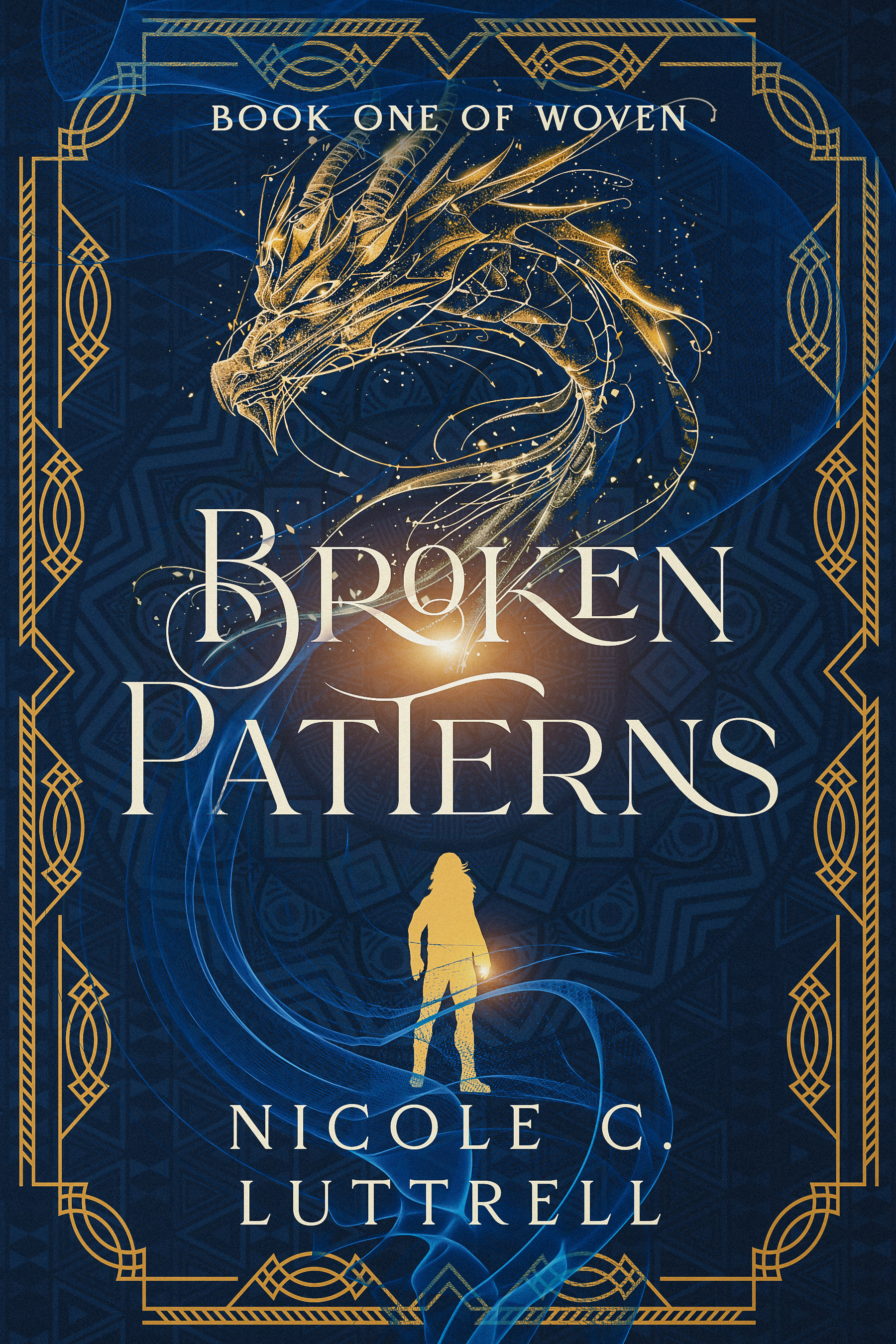
Broken Patterns is available right now everywhere for preorder. Click the link below to check it out.

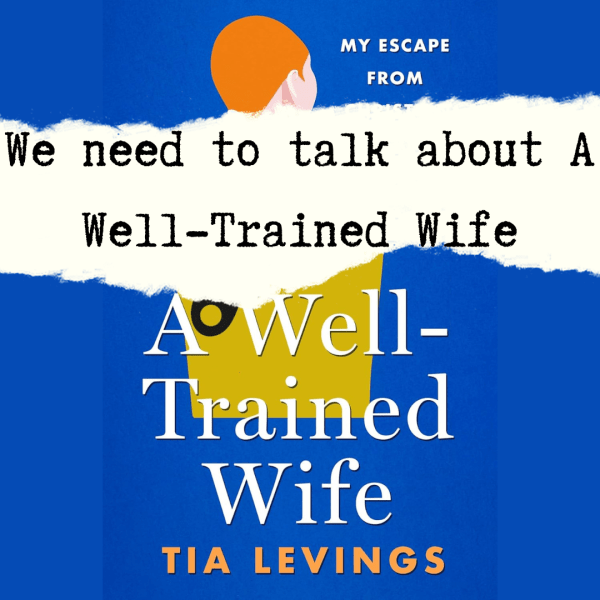
We need to talk about A Well-Trained Wife

Sorry, today’s post isn’t ten-themed. There will be more of that this week. But I just finished A Well Trained Wife by Tia Levings. And I need to talk about it.

Like, a lot.

For those who saw Happy, Shiny People on Amazon, Levings’s name might sound familiar. That documentary introduced me to her, as well as Fundy Fridays, one of my favorite YouTube channels. It also set off a very long journey into the anti-fundamentalist movement for me. A Well Trained Wife is part of that journey.

A gut punch part, but a part nonetheless.

I feel like I sat across from Tia over coffee and heard all of this. I delighted in her successes. I felt rage when people abused her. Honestly, after reading this book I kind of want to put her ex-husband’s name in a vinegar jar. The only thing stopping me is that I doubt Tia would be too happy with that.

This book talked about a lot of situations I have personal experience with. I was also in a physically abusive relationship. I was also raised in a high-control fundamentalist religion. I also escaped from both. Maybe that’s why I have such a strong reaction to this book. Maybe there are way too many of us who might feel that way.

And I have one more thing in common with Tia, which I’ll get to soon. In the meantime, I want to talk about why this book was so powerful, and why everyone should read it.

So many horrible, beautiful lines

When you read A Well Trained Wife, you might want to do so with a highlighter. Or at least the highlighter function on your tablet at the ready. Because there are so many lines that jump off the page and demand to be remembered. Of course, the best example of this is the tagline for the book.

Today it hit me when he hit me, blood shaking in my brain. Maybe there wasn’t a savior coming. Maybe it was up to me to save me.”

Damn Tia, I feel like I got hit after reading that line.

Her healing hasn’t been easy

I thought Tia’s story was going to end after she escaped from her ex-husband and divorced him. But the story went on. She talked, openly and honestly, about her healing process. How it wasn’t a straight line. There were setbacks, backtracking. She got into a relationship too early. She had to go to several therapists before she found one who helped her. She got sick and had to help heal herself. She had to rest. She wasn’t able to be the mother she wanted to be.

I think too often we end stories too soon. We don’t see the emotional fallout. The monster is defeated, the hero saves the day, and we assume everyone’s going to live happily ever after.

This is fine in fiction, to a point. But it’s not how real life works. When we experience trauma, we have to heal from that. We don’t just bounce back. Especially after years and years of trauma.

When I left an abusive situation, I was very much in that movie healing headspace. I left that ex, left my high control group church, and thought life would be all good. After all, I was free at last!

But it’s not that simple. Leaving is, first off, not always safe. It’s not always easy. Sometimes some factors mean you have to keep seeing your abuser and smiling like we’re all friends now. Shouldn’t we be able to laugh about the time he shoved me against the wall and grabbed my arm so hard he left bruises? Oh, was I not supposed to tell the new girlfriend that story? Oh well, here’s that box of T-shirts you left in the back of the closet. See you later!

Healing is healing. And healing from emotional trauma takes time. I am still healing from my experiences. And Tia is as well.

We don’t expect someone who survived a house fire to be out to brunch with a smile the next day. We shouldn’t expect it of people healing from trauma either. And I hope that I’m not the only one who feels seen reading this.

Her message is terrifying, and it’s one that I can echo

As I’ve already hinted, I have a lot of the same trauma as Tia. However, I do want to point out that I never experienced anything as horrific as she did. I grew up in a high-control church, surrounded by women who toed the gender expectation line and insisted that I do the same.

Levings says that she wrote this book because she wants to warn people about the rising of Fundamental values in our country. The Joshua Generation is rising. And those of us who escaped that life, those who still carry physical and emotional marks, are terrified of it. And we’ve got to sound the warning.

We cannot force gender expectations on people. Especially the children coming up. It kills kids. Men and women suffer under this umbrella of expectations that most if not all of us fall short of. That none of us should expect of ourselves.

Look, I don’t talk about my faith a lot here because it’s very personal, but I feel compelled to say this. Gender norms are defined by people, not God. God does not care if girls wear jeans or boys wear skirts. God wants us to thrive, and care for each other.

As the prophets Bill and Ted say, be excellent to each other. That’s all that matters.

Making someone feel shitty because they don’t fall in line with made-up owner manuals our genitals seem to come with is not being excellent to each other.

Writing saved her

Finally, as this is a writing blog, I’d like to bring our discussion back to writing.

A lot of things came into Tia saving herself. Her maternal need to protect her children. Her friendships woven across the country across the internet. Her bravery. Her kindness.

It was also her writing, though.

Her writing was an outlet while she was trapped. Her writing gave her an outside community that her husband couldn’t control. Her need to create gave her the strength to stand up for herself. It empowered her to seek God in a new home.

Writing saved her.

Writing saved me, too.

Your art can save you. It can give you freedom in a cage. Sanity in an insane world. Quiet in a storm. Or a safe place to be the storm yourself.

I highly encourage you to read A Well-Trained Wife. It is a hard read, but so very worth it.

Be who you are.

Cling to your art with bared claws.

Don’t forget, we’re still doing giveaways for the Paper Beats World anniversary series. Like this post and leave a comment for a chance to win You Can’t Trust the AI. See you tomorrow.

If you liked what you saw here today, please consider liking and sharing this post. Or you can support the site financially on Ko-fi.

Broken Patterns is available now for preorder! You can order it now on Amazon.

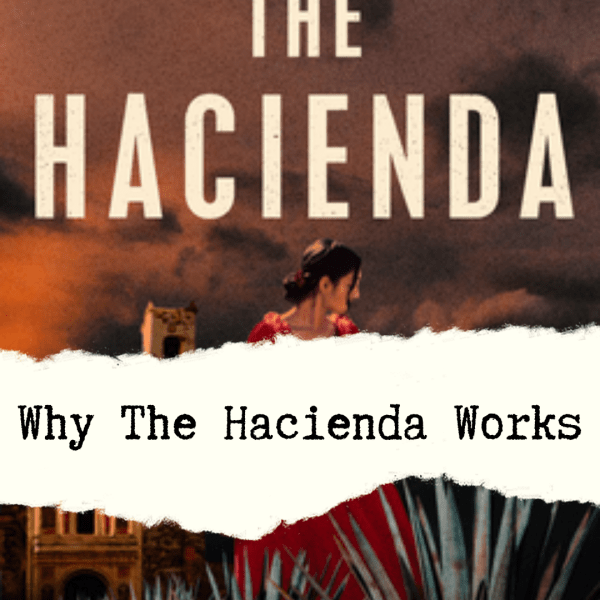
Why The Hacienda Works

Been a while since we’ve done a Why It Works, hasn’t it? Well, I’ve got a good one for you today.

Released in May of 2022 and written by Isabel Canas, The Hacienda first caught my eye for one simple reason. It was compared favorably to Mexican Gothic. And I loved Mexican Gothic.

And yes, they do have a similar vibe. A lot of good things I have to say about Mexican Gothic can also be said about The Haçienda and vice versa. With one big difference that I will get to shortly.

Of course, the fact that one of the characters is a Catholic priest and a witch didn’t hurt.

So let’s break down why The Hacienda works. Hopefully, we’ll learn something useful for our WIPs.

The characters. It’s always the characters

For me, it always is the characters. And Beatriz is a fantastic main character. She’s ballsy, she’s brave, she’s kind. But she also puts herself in shitty situations because she tries to make situations with bad people work. She refuses to stand up for herself before it’s too late because she’s afraid of losing this home she found for herself.

For me, Beatriz works as well because she’s taken what most of us might find a selfish action but done for reasonable reasons.

After her father is taken from their home and executed, she and her mother end up living with relatives who do not like them, but take them in out of familial guilt. They are not wanted, they are not loved, and this is not a home for them. Beatriz doesn’t live in a world where she can pull a Cher. She can’t become a rich man, she has to marry one. So she does, not for power or wealth. But for a thing we all want, a safe home where we can feel like we belong and are wanted.

Then there’s Padre Andres. And maybe I’m biased, being a Christian Witch, but I thought the Witch Priest concept was fantastic.

Andres is a person still trying to figure out how he fits into the world, but he knows what’s important to him. The Lord, and the people he’s been tasked from birth to protect as their healer and now their priest. He may be confused about a lot, but not about that.

The descriptions

Oh, the descriptions in this book were amazing. They were rich and lush. Reading this book, I could smell the hot air of the desert.

This was done in subtle ways. But the best thing that Canas does with this is to give us two main characters who see the Hacienda in very different ways. So we as readers can experience it in these different ways.

Beatriz comes to the Hacienda having never seen it before, but already in love with it as a concept. In this way, we can see the house, as she describes it. It doesn’t feel like an info dump when she walks through the house, because she is experiencing it for the first time. It makes sense that she would take note of the smells, the tiles, the furniture, or the lack thereof.

When Andres arrives, it’s equally logical that he would notice everything different from when he was a child in this house. He would notice darkness where there was once light.

This made all the descriptions make more sense, and also feel more meaningful.

The magic

Now, I’m a witch. But I’m a Western PA witch, not a Mexican one. So it was fascinating to see how magic is different there than it is here. And yet, the actions and rituals felt similar.

I would burn cedar, not copal. But I am familiar with writing sigils for protection, burning herbs to chase away something that feels dark, and lighting candles to keep out the shadows. The magic in The Hacienda felt both familiar and completely new to me, like a dish I’ve made a hundred times crafted by someone else who is accustomed to cooking with different spices.

So while the hauntings and magic in the book are, of course, fictional, they feel just real enough.

Just the right things left unsaid

Finally, this was I think the best thing about this book. And it’s the part that Mexican Gothic, fantastic as it was, didn’t quite manage.

This book leaves a lot unsaid. I don’t want to ruin the ending for you, but there are lots of questions with only implied answers.

But in the most wonderful way.

There is a lesson that visual artists learn early. That the spots left blank on a canvas are just as important as the ones you paint. Musicians learn this as well, and a properly timed moment of silence in a song can bring you to tears.

I don’t think that we as writers pay as much attention to that. I know that I tend to over-explain. In reviewing my work, I am sometimes reminded of episodes of Bojack when he tells a joke and then asks the audience if they got it. I’m working on not doing that, but it is a challenge.

In The Hacienda, that isn’t a struggle. We don’t get every answer, every detail, every story because we can consider them ourselves. And those questions had me thinking of this book long after I finished it.

Hell, I’m still thinking about it.

So if you haven’t read The Hacienda, read it. It was a dark, wonderful tale that I truly enjoyed. And if there’s a book, show or movie you’d like to see me break down to tell you why it works, let me know in the comments below.

Paper Beats World is a labor of love. If you love what we do, you can support us on Ko-fi.

Why The Daughter of Dr. Moreau only half worked

Spoiler warning: While I’m not going to directly spoil the ending of The Daughter of Dr. Moreau, I’m going to say some things that will make certain parts of the ending fairly clear. You’ve been warned. 

I feel dirty even writing this post. Because I’ve read other books by Silvia Moreno-Garcia and I loved them. You can check out my review of Mexican Gothic here, Velvet Was The Night here, or God of Jade and Shadow here. They were great books! 

The Daughter of Dr. Moreau was, at best, okay. 

Let’s discuss.

The book did have a lot to love. Moreno-Garcia has a knack for writing endings that aren’t the anticipated happy ending but are so much more satisfying than that ending would have been. And for sure, this ending fit that bill. 

I fell in love with our main character, Carlota, right away. Just like I always fall in love with the main characters. I devoured the lush description of the jungle, just like I always love the descriptions in Moreno-Garcia’s work. These are the reasons I kept reading. 

My problem with this book is simple. It tried to be two things and didn’t manage either.

The book is supposed to be a sci-fi thriller and a romance. All of Moreno-Garcia’s books have that romantic element. I don’t adore that, not being a huge romance fan, but it fits in so well normally that it’s hard to argue with it.

But the romance genre has certain expectations. One huge expectation is that the love interest is going to end up with the main character. That didn’t happen. Worse, there was a gross age difference between Carlota and the man in love with her. 

This wouldn’t have bothered me that much, since it’s unrequited love if so damn much of the book hadn’t been devoted to Carlota wanting to fall in love!

She does fall for and has a full-on relationship with another man named Eduardo Lizalde. A lot of the book centers around what a bad match this is, how everyone knows it’s a bad match, and how Carlota’s father wants this match to work because Eduardo is rich. How much this is all hurting Langdon, our other MC.

At this point, I’d like to remind you that they are surrounded by hybrid monsters. I do not give a damn if Langdon is drinking himself sick because he doesn’t want Carlota to be hurt by some callous rich boy. At least, I don’t care half so much as I do about the hybrids meeting up with the rebel leaders to overthrow the elite of the area and bring freedom to the land.

That’s the book I want to read! 

But the hybrids and their plight seem like little more than a backdrop. I know we were introduced to more hybrids, but we only really get to know one of them, Lupe. 

This wasn’t enough to make me lose interest in this author. The other books are strong enough to tell me this was a temporary issue. But The Daughter of Dr. Moreau isn’t one I’ll be re-reading anytime soon. 

To sum it up, here’s what you can learn from The Daughter of Dr. Moreau.

-Don’t go halfway in a story. 

-Understand your genre expectations, and either meet or subvert them. 

Paper Beats World is a labor of love. If you want to support us, you can do so on Ko-fi.

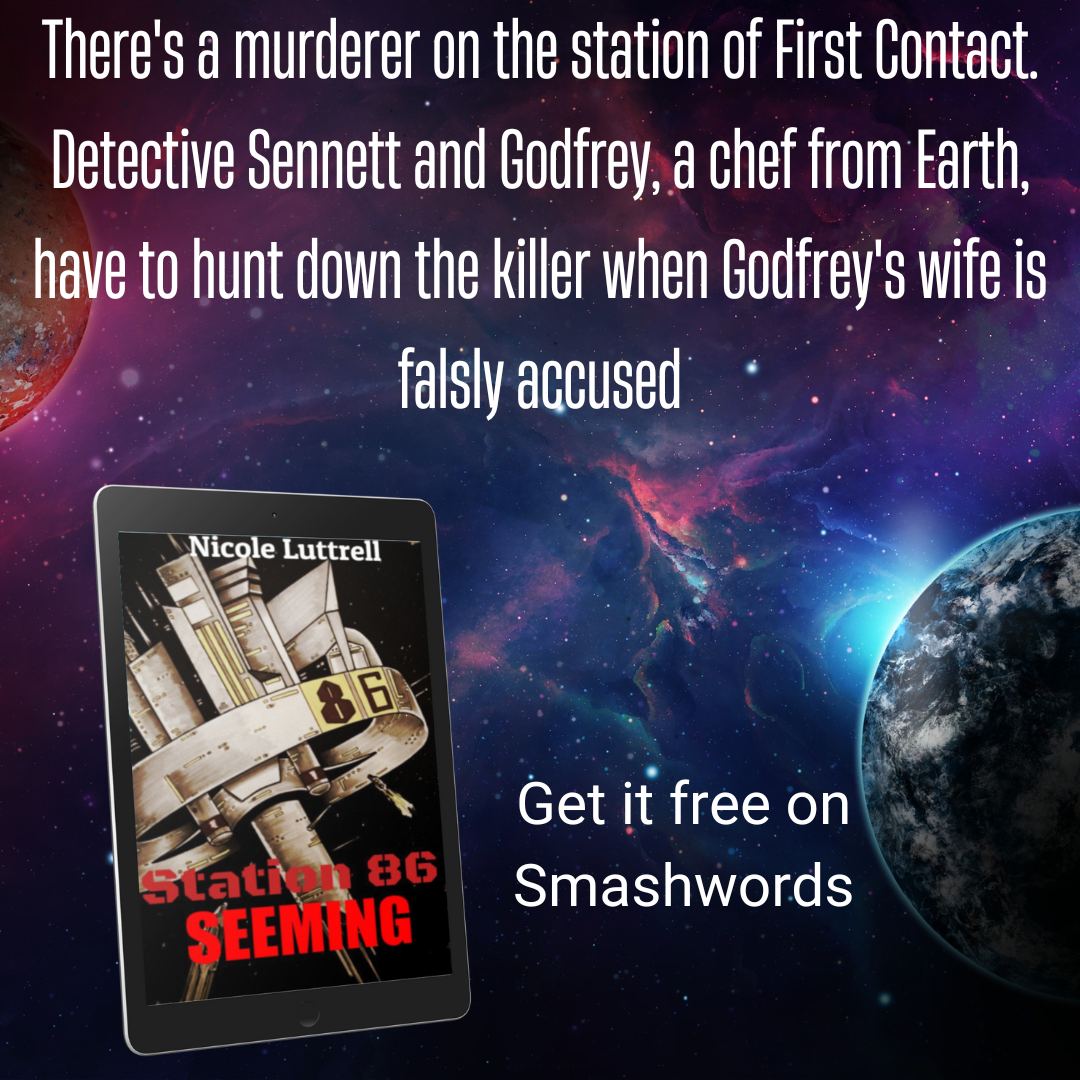
Smashwords link

Why This Is How You Lose The Time War Works

This book might as well have been titled This is How You Win All The Awards. In 2020, This Is How You Lose The Time War won the Hugo and Nebula award for best novella. I finished it in one day, laying in bed crying.

Needless to say, everyone should read this book. And every writer can learn something from it. 

Just in case you haven’t read it, the book is set up as letters between time travelers, on opposite sides of a war. Red and Blue are manipulating the future so that their side will have an advantage. Their letters to each other are at first mocking, then playful. Then, they become love letters scrawled out over trees and mountains. 

This is a story that took chances. I don’t read a lot of books that are just letters back and forth. This is an example of two authors (Amal El-Mohtar and Max Gladstone) knowing their craft well enough to do something like this. To write a whole novella in letter form, you have to understand what you’re doing. You don’t have dialog. You don’t have a third-party description. You have a limited point of view. With all of these restrictions, you’ve got to know how to use what you’ve got left. (This is something I’m learning as I write the second season of my audio drama, AA.)

This book is also an example of trusting the story enough to tell it the way it needed to be told. Not every story could be told in a letter format. Not every story could be told in a journal format, like so many of my favorite books from childhood. 

But some stories can. Some stories won’t work any other way.

Don’t be afraid of writing your story the way the story wants to be written. Be it a series of letters, or even tweets. If you have a story that isn’t working, this might be a great way to fix it.

Another thing that was striking about this book was its literary flow. The words are beautiful, they flow like a poem. And that’s something I wish more speculative fiction authors would embrace.

There’s still a disconnect between genre writers and literary writers. While one focuses on pure storytelling, the other wants the writing itself to be pleasurable. Both of those things can work together, but you’ve got to put the work in to make it happen. 

Now, a warning. The story should always come first. I’ve read some truly bad writing because of a damn good story. I’ve yet to sit through a boring story because the paragraphs were just so beautiful. 

Finally, This Is How You Lose The Time War was an achievement in co-writing. Each of the authors wrote for one of the characters. This worked wonderfully because it allowed both authors to bring their own voices and style to the story. In an episode of Writing Excuses, Amal El-Mohtar talked about writing in a gazebo with Gladstone, sending chapters back and forth to each other. This sounds like a blast. This is probably part of why the book was so fun to read. 

This could only be done because each writer trusted the other. They respected each other enough to follow along where the other one lead. Clearly, it worked out very well for them. 

To wrap things up, here is what you can learn from This is How You Lose The Time War. 

– Trust your craft enough to try something different.

-Trust your story to tell you what format it needs to be told in.

-Don’t be afraid of literary writing, even in speculative fiction.

-When you’re working with others, let both of your styles and voices shine. 

Want to support Paper Beats World? You can do so on Ko-fi

You can follow us on Twitter, Goodreads, Bookbub, Instagram, Amazon and Pinterest

.

Why The Travelling Cat Chronicles Works

Spoiler warning! I’m going to ruin the ending of this book for you. Proceed with caution.

The Travelling Cat Chronicles is not a speculative fiction novel. (By the way, that is the correct spelling of the title. It’s the UK version of travelling. My spellcheck is not happy with me right now.)

It is from the point of view of a cat. But it’s not a magical cat. It’s just a regular cat, traveling around Japan with his regular person. 

As someone who usually reads only speculative fiction, with the occasional dive into historical fiction, this was a step out of the norm. 

And I’m honestly glad I did. It was a great story. By the end of the book, I was crying on a public bus. Just, you know, as a warning.

The Travelling Cat Chronicles cover

As writers, we should never restrict ourselves to reading our genre. We should read as widely as we can. If a book catches your attention, read it. There’s always something we can learn from a story, no matter the genre.

One of the things that kept me turning the pages was the vivid descriptions of Japan. This is a country I’ve long been fascinated with. I loved hearing about Nana, the cat, and Satoru, his person, exploring the country. I was fascinated by the stories of Satoru’s childhood, his school tales, and descriptions of trips with friends. They had such rich detail. I loved every single second of it.

If your work takes place in a fantasy world, then it’s easy to talk up the details. But if you’ve got a story set somewhere real, it can seem less important. But it’s still just as crucial. Your hometown is probably boring to you because you see it all the time. But for someone who’s never visited, it’s fascinating. 

It didn’t take me long to realize that this story wasn’t going to have a happy ending. I’m willing to bet you can guess what happens. I guessed around page four. 

But that didn’t stop me from bursting out into tears when it was happening. Because by that time, I was connected to the characters. There’s only so much you can brace yourself. 

Your ending doesn’t have to be a shock for a reader to enjoy it. Yes, there should be questions. Yes, it’s better if someone can’t guess the ending by reading the blurb, which I’ve done on multiple occasions. But the main ending doesn’t have to be a huge surprise. 

I knew pretty soon that Satoru was going to die. (I did warn you that I was going to spoil the ending.) But I didn’t know what would become of Nana. And I desperately needed to know.

That I won’t ruin for you, by the way. Trust me, the book is worth reading to find out. 

I will tell you that the book has a happy ending. It wasn’t all syrup and perfection. It was great, though. Satoru doesn’t live, but he does touch the lives of the people he cares about for the better. He leaves the world a brighter place. And that’s a realistic happy ending. And a fully satisfying one at that. 

Some other good examples of this can be found in Pixar movies. This has been pointed out before, and by lots of fans. The toys in Toy Story go to a new home, so they’re not with Andy anymore but they’re still happy. Sully from Monster’s Inc doesn’t get to keep Bo, but he can visit her. There are lots of ways to have a happy ending. I love that we have so many that go beyond our expectations. 

To wrap it up, here’s what you can learn from the Travelling Cat Chronicles. 

  • Read outside of your genre. Read anything that sparks the slightest bit of interest.
  • The description of your story’s location can and should be a selling point. 
  • Your ending doesn’t have to be a shock to be satisfying.
  • You don’t have to have a traditional happy ending for it to be a happy ending.

You can follow me on Goodreads, Bookbub, Instagram, Twitter and Pinterest.

Paper Beats World is a labor of love. If you can, please consider supporting me on Ko-fi.

Why Practical Magic Works

As a witch, Practical Magic by Alice Hoffman is required reading. I’ve of course seen the movie countless times. But I only recently cracked into the novel.

It was a far different journey than the one I was expecting. I’m not the only person to mention this, but the movie is far different than the book. Normally when this happens, one or the other is more enjoyable. Most of the time, like with the Giver or Hunger Games, the book is better. On rare occasions, like with Forrest Gump, the movie is better. But in the case of Practical Magic, both are great. Just in very, very different ways.

First, let’s discuss what the two have in common. Both are about two women, sisters named Sally and Gillian Owens. After their parents die, they’re raised by their aunts. Gillian, the wild child, runs off as soon as she’s old enough. Sally finds a good man, has two baby girls and is widowed when the girls are still little. Then Gillian brings back trouble, in the form of an abusive boyfriend she accidentally poisoned. When a detective named Hallet arrives, Sally and Gillian try to hide their homicide. But soon Sally finds herself falling in love with him.

The movie, on the off chance you’re one of three women in the world who hasn’t seen it, is a feel-good film about sisterhood. The townswomen have hated the Owens family for generations. But in their time of need, they come together. 

The book isn’t that sort. Sally Owens, after being ostracized her entire life, decides to leave. This is after her husband died, and she spent a year in a depressive fog. 

The book is a bit more episodic. Yes, Gillian does bring her troubles and her abusive boyfriend to her big sister for help. But then the two bury him in the backyard and go about their lives.

Their lives revolve largely around raising Sally’s daughters. 

And this is where the book shines.

Sally and Gillian fight over how to live their lives and, by an extent, how to raise the children. Gillian undermines Sally’s parenting, and Sally in return blows up at her.

The girls bicker like teenagers, fall in love with boys, and are threatened by drunks. It all feels real. It all feels like the lives of girls all over the world right now.

The same can be said for Sally and Gillian. They’re both struggling with the fact that, despite The Aunt’s best intentions, they never felt wanted. Sally handled that by growing up to fast. Gillian handled it by not growing up at all. 

In the end, though, The Aunts prove that they love the sisters more than they ever realized. They come to their aid, after years of neglect by both girls, might I add. 

I know I keep saying this, but it all feels so real. And through it all, we see notes of magic that feel attainable. It feels, in short, practical. 

In short, here’s why Practical Magic works.

It’s honest. That’s it. The book talks honestly about depression. It talks honestly about a woman’s relationship with her parents, her sister, and her daughters. It talks honestly about romantic relationships, both good and bad. It talks about loss, and it doesn’t sugarcoat a damn thing. Sometimes Sally and Gillian are just fucking mean to each other. Sometimes they do stupid things. Sometimes Sally isn’t a good mother. Sometimes the girls are also fucking mean to each other. And I love that none of them are right all the time, none of them are wrong all the time. They are, only and entirely, family.

I loved this book, and I’ll be reading it again soon. I hope that if you haven’t read Practical Magic, you do soon. Because it works. 

Paper Beats World is a labor of love. If you’d like to support this blog, you can do so on Ko-fi.

You can follow me on Twitter, Instagram, Pinterest, Goodreads, Amazon and Bookbub.


Why Futurama Works

As I mentioned last week, Futurama is one of my favorite television shows of all time. I’ve watched it a hundred times. The darling husband and I quote the show almost daily. There are some episodes I can’t watch because they’re too emotionally damaging. There are some I could watch every day and not get sick of them. 

The Star Trek cast in Futurama

Futurama has won countless awards for writing. And it’s with good reason. Now, I know that some of you reading this right now will think I’m being far too generous to a silly cartoon. But I’ll submit to you that I’m not. And the massive fan base that Futurama still holds would agree with me. 

So, it’s time to get it up on the table, break it apart, and see why it works.

There are professionals on the writing staff.

Of course, the writers are professionals with years of creative experience. I would hope the same could be said of most content, but that’s probably idealistic. 

Futurama takes this several steps further, though. Among their writing team, you’ll find scientists, mathematicians, physicists. And if they don’t have a professional on staff, they go find one. 

While this is a fiction show, they want to make sure that the science they use is real. Which makes the rest of the story more believable. As one of their splash screens says, you can’t prove it won’t happen. 

The writers hid jokes and didn’t explain.

If you’re casually watching an episode of Futurama while scrolling Instagram, you’re going to miss background jokes. And a lot of them. That’s because the writers love throwing in hidden jokes and never explaining them. They even developed alien languages and hid messages in the background. They never released a key for these languages, either. 

This means that the show can work on two levels. If you just want to watch a silly show, it’s great for that. If you want to watch it on a whole other level with a ton of in-jokes, it’s great for that too. 

Awesome attention to detail.

In the first episode, the main character Fry is tossed into a cryogenic chamber and frozen. This starts the whole story. But, as you go through the series, more and more comes to light regarding that moment. And every time you learn something else, you can go back and watch the first episode again to see if there are signs visible. 

And they always are. 

The writers trust their audience to be smart. 

The writers can do all of these great things, because of one simple fact.

They believe that their audience is smart. They don’t talk down, they don’t over-explain. They put out smart content, and they trust us to get it. 

Futurama The Sting

It’s time for the wrap-up. What can we as writers learn from Futurama?

– Get the factual parts of your story accurate, and it will make the whole thing more believable. 

-Don’t be afraid to add details or background jokes without an explanation.

-Pay attention to detail, and keep everything cannon. 

-Trust your audience to be at least as smart as you are. 

Is there a show, movie or book you’d like me to take apart to see why it works? Let me know in the comments. 

Paper Beats World is a labor of love. If you want to support this site, you can do so on Ko-fi. 

Why Only Murders In The Building Works

A few months ago, everyone was talking about Only Murders in The Building. Even one of my favorite writing podcasts, Ditch Diggers, discussed it. It was for a time everybody’s favorite show.

And I’m part of Everybody. I watched every episode, and couldn’t wait for the next one. Honestly, with comedy writing legends like Steve Martin, Martin Short and Tina Fey involved, I’m not the least bit surprised. These are some of the best comedy writers in the business with years of experience. 

Steve Martin, Martin Short and Selena Gomez in The Building

So today it’s our topic for why it works. Let’s get it on the table, cut it apart, and see why it worked.

Motivated by the characters conflicting wants

Some stories are motivated by a situation. Some stories are about people coming together for a common goal. And some are about characters reacting to something in varying different ways, depending on what they want. 

The latter is a bit more complicated but far richer. 

Only Murder In The Building is about three people with parallel goals, not necessarily the same goal. You have Mabel, who wants to find out who killed Tim Kono. She has several reasons for this, that I don’t want to ruin for you on the off chance you haven’t seen it yet. Oliver wants to have a successful project to prove that he isn’t a failure. And Charles wants to prove that his career isn’t behind him. He isn’t a has-been. More than that, though, he wants to have people love him again. 

Oh, and both Oliver and Charles want to prove that they’re hip enough to have a millennial friend. 

All of these goals can line up, but won’t always. 

Relatable on multiple levels

I think we’ve all had friends who are only our friends because we share a common fandom. People we don’t have a single thing in common with beyond liking this piece of art. It’s a true-crime podcast that brings Mabel, Oliver and Charles together. And I think most of us love a little True Crime

But we’ve also all experienced that excitement when a new episode of something we love comes out. Many of us, unfortunately, know what it’s like to lose someone. We know what it’s like to be hurting for money, or missing someone we’d like to call but can’t.

So we might not know what it feels like to investigate a murder in an upscale apartment building. But we can still absolutely relate to these characters. 

Selena Gomez in Only Murders In The Building.

Twist upon twist upon twist

At any time while watching Only Murders in The Building if you think you know what’s happening, you’re wrong. There were so many twists and turns I barely knew which way was up. But at no time did I feel cheated. At no time did I feel like a twist came out of nowhere or didn’t make sense. 

I want to tread lightly here because I don’t want to ruin anything for you. But there’s more than one mystery to solve. 

This isn’t the sort of thing achieved in one draft. This is the sort of thing that takes rewrites upon rewrites to make sure that the twists are logical, but still hard to see coming. This is what can be achieved when you know your story back and forth. When you’re careful with your craft. When you’ve gone through the damned thing over and over. It takes planning and patience. 

Every episode left you with a question

When I was a kid I used to love reading Goosebumps. Every chapter ended with a cliffhanger. They weren’t, in hindsight, good cliffhangers. A common one was for the character to open a door and scream. On the first page of the next chapter, it was too often revealed that this was just a sibling or friend startling them. Cheap.

But it did give me a taste for that sort of thing. 

A much better way to handle an ending is to leave your audience with a question. And I mean something beyond the core question of the larger piece. In Only Murders in The Building, the main question is who killed Tim Kono. But in any given episode, you might have any other questions. 

Will the dog die?

Why is that strange ring there?

Why is that hoodie important?

Will this character lose their home?

None of these are cheap gimmicks. They’re real questions that stick with you for the whole week. Until it’s time for the next episode. 

To sum it up, here’s what we can learn from Only Murders in The Building.

-Make sure every character wants something. Bonus points if it’s something different from the other characters.

-Make your characters relatable in realistic ways, and we’ll be more likely to relate to them in unrealistic ways. 

-Plan out your twists and take your time.

-Give us a question, not a cliffhanger. 

What piece of content would you like to see me cover next? Let us know in the comments. 

Paper Beats World is a labor of love. If you want to support the site, you can buy me a cup of coffee on Ko-fi. 

Why Velvet Was The Night Works

Velvet Was The Night is the latest novel by Sylvia Moreno-Garcia. We’ve talked about several of her books in the past, including Mexican Gothic and God of Jade and Shadows. She has no trouble genre-hopping, going from horror to fantasy to political noir without missing a beat.

Through each genre hop, some things remain constant. Each book shows Mexico for the beautiful, complex, rich country that it is. And each book includes a love affair that melts my heart. 

Velvet Was The Night is that political Noir genre I was talking about. Set in the 1970s, it’s all about political uprisings and protests. And, about a young woman named Maite who accidentally gets caught up in all of this.

I loved every single page of this book. So let’s break it apart to see why it works. 

We see the story in this book from two points of view. One is Maite, a secretary who’s bored to death with her life. She has just one pleasure in her life, a series of romance comics.

The second pov character is Elvis. He’s a pseudo-government agent, tasked with shutting down protests in the city.

These two people show us entirely different views of the situation and the city itself. More than that, though, they know things the other doesn’t. They’re able to see the mystery from different angles, revealing secrets to the reader that one or the other character isn’t privy to. This means that this is one of those delightful mystery novels that you can play along with.

I’m not a fan of mysteries you can’t solve. Maybe that’s just a me thing.

So now, let’s talk about Maite. I didn’t like her at first. She seemed dull. Not interested in anything but her comics. She also didn’t like cats, which is a total turn-off.

Maite was also a thief. She stole little things from her neighbor’s apartments. It’s a weird thing to do, not gonna lie. At first, it seems like this is just a weird thing she does. And it makes sense. Maite is bored with her life. Bored people sometimes do dumb things to entertain themselves.

Eventually, though, we find out that this is a crucial plot device. If this petty theft trait of Maite’s hadn’t made sense right from the start, this would have felt cheap. Instead, it made total sense. 

Honestly, a lot of the enjoyment of this book came from Maite. She’s miserable, but it makes sense that she’s miserable. Her mother treats her like an afterthought. Her boss barely notices she’s there. She’s broke and has no friends. Everyone would be a little miserable. 

As you read the story, you can see exactly why she fell into the scary situations she found herself in. 

There are a lot of stories about bored young women ending up in fantastical, scary, dangerous situations. Most of them don’t seem plausible. But this one does. 

So, what can you as a writer learn from Velvet was The Night? 

Point of view switching is a great way to build suspense. 

Flawed characters work best when their flaws make sense.

It doesn’t work to put a random character in a random situation. How or why did they of all people end up there?

Is there a movie, tv-show or book you’d like me to break apart to see why it works? Let me know in the comments.

You can support Paper Beats World on Ko-fi.

A WordPress.com Website.

Up ↑