Why House of Quiet Works

Released in September of this year, House of Quiet is the latest novel by Kiersten White. This is the same author who brought us Mister Magic, Lucy Undying, The Dark Decent of Elizabeth Frankenstein, and Hide. Which is to say, the author of some of the best books I’ve read in the past few years.

House of Quiet is about a young woman named Birdie. She’s spent the last several years trying to find her little sister Magpie, who vanished after undergoing the mysterious Procedure. Birdie poses as a maid to get into the mysterious house of quiet. But what she finds there is a group of children who need to be rescued.

Today, we’re going to break it down and see why it works. Because there’s a lot that can be learned from this wonderfully dark, sweet tale.

Just jump in

The story starts in the middle of things. It starts with a mysterious woman wandering around the House of Quiet with a candle, bemoaning how loud it was.

We then jump to Birdie, heading to the house of quiet, thinking of all of the shady things she had to do to get there.

As we follow along, we only get an idea of the world she lives in and what she’s doing. We know that she’s grown up in crippling poverty. We know that she’s never speaking to her parents again. And that’s about it.

But that’s okay, because we’re going up to the house. We’re meeting the other new maids. We’re being drugged with tea. There is stuff going on, and there will be time to explain later. The important thing is that we’re not slowing down the start of our story. We are jumping right in.

Don’t over-explain

I spent a lot of this book trying to figure out what in the hell was going on. I wanted to know what happened to Magpie. I wanted to know what the procedure was. I wanted to know what had happened to Birdie’s friends. I wanted to know why Minnow was acting so strange.

And never once was any of this simply out and out explained.

No, the story was moving too fast for that sort of thing.

This was infuriating, but in a good way. Because everything is answered, eventually. It’s just that we have to piece things together as we go. Or, we find out as the characters do.

House of Quiet brought the ‘show don’t tell’ rule almost to its breaking point, but not quite. At no point did I feel so lost I thought I’d never catch up. But it wasn’t until near the end that I really felt like I knew what was happening.

This is a hard line to walk, giving just enough information for the reader to barely understand. But, I think the easiest way to do this is to have faith in your reader. Don’t feel like you’ve got to spell everything out for them. Leave some spaces for them to fill in the blanks themselves.

Anything can be used to world build

One of the most charming things about House of Quiet was the naming structure of the characters. People raised in poverty have animal names like Minnow, Magpie, and Birdie. People from the upper class have names like River or Forest.

This is a super quick and efficient way to give us information about a character with the fewest words possible. We know the character’s name, and we know what class the character is from. And in a book that is all about class warfare, that’s vital information.

This is a great example of using every element you can to world-build. Names, clothes, jewelry. Think about how all of these things impact our real world. And yes, you should be using any of these to show your world, rather than telling us about it.

Now, all this being said, this book wasn’t perfect. My biggest complaint, I think, is the relationship between the characters. They were, in my opinion, a little too sweet. They came together too quickly. They were too kind to each other. But, of course, this is a book for young adults. So maybe that’s why.

This was not enough to ruin the story for me. House of Quiet was a fun, heartwarming tale, and I enjoyed it greatly. If you haven’t read it yet, do it today.

Paper Beats World is a labor of love. If you love what I do here, please consider liking and sharing this post and leaving a comment. You can also support me financially on Ko-fi.

And while you’re there, you can pick up a copy of my Novel Planner.

Writing a novel is a journey! Here is your roadmap.
The Novel Planner takes you through four weeks of planning to help you successfully write a novel. Includes twelve pages to plan your time, your team and your life.
Also included are some useful pages to keep track of your wip, like a map page and an injury tracking chart.

Why I love haunted houses

This is the speech I gave at my local library this past week. I’m still working on this week’s post, so please en

Hello. My name is Nicole Luttrell. I’m a local speculative fiction writer. That means I write about ghosts, dragons and spaceships. Sometimes I write about the ghosts of dragons on spaceships. 

I want to start by thanking Dianne and everyone here at the Butler Library for hosting this talk. And frankly, for being here and doing the job they do. Being a librarian has never been easy, but it seems to get harder all the time. 

I’ve written a fantasy series called Woven, which I have copies of today, about a prince who weaves visions and a princess who spins light. I also write a science fiction series called Sation 86. It’s about murder, politics and possibly the end of mankind on the station of First Contact. I have a QR code here so you can get the first book in that series free. 

But what I love writing most is horror. 

This month is my time to shine, yes. 

I became a writer for the same reason most people do. I love stories. I love reading. And that love has been well fed within these very walls for most of my life. One day it occured to me that someone had to write books the same way someone had to build cars or wait tables. Someone had to do it, so why couldn’t that be me? So I came to the library, and I found the section upstairs with the books about writing books. And there I found a copy of the Writer’s Market. 

If you’re not a writer yourself, or even if you’re just a writer who started submitting work after the internet was in everyone’s homes and pockets, you might not know about this book. It’s like a phonebook for the publishing world. Magazines, publishing companies and literary agents are all listed. Itwas a thing of beauty. An expensive thing of beauty that had to be replaced every year. But it made me feel like a real writer to use it. 

The Writer’s Market isn’t updated anymore because, again, internet. And while I certainly wouldn’t use it anymore, I’ll forever be grateful to it for helping me see that writing is a career as well as art. 

But it’s almost Halloween, and today, I want to talk about something scarrier than the publishing industry and a teenage girl’s flounderings through it. If there is anything scarrier than that. 

I wrote a book called Quiet Apocalypse. It’s about a witch named Sadie. She’s enjoying her quiet life as a school nurse, living in a cozy apartment with her dog Sage. 

Yes, Sage makes it.

Then a tree falls on her apartment building, and it lets something loose. Something bloody and dark. 

Allow me now to read the introduction. 

 The end of the world started on a dark winter night.

 Trees circled the apartment building at 437 Oakmont. They weren’t old trees, nor were they tall. Yet to look at them, one would think them ancient. They were twisted and gnarled. Every gust of wind found them, even when no other tree moved. The cold of winter clung in their branches, no matter the weather. Passersby didn’t like to dawdle along the sidewalk. The trees made them feel unwelcome. Children especially felt this, but of course, children always feel these things most keenly. 

 But we weren’t talking about children. We’ll come back to them. For now, we’re discussing the trees. 

 They’d been groaning and moaning for most of their lives. Sometimes you couldn’t hear them unless you were listening carefully. Other times the inhabitants of the apartment had to turn their TVs up to drown the trees out. But on one dark night in February, the sounds were unrelenting. There was a winter storm. The wind was hellacious, cutting through the town like a vengeful spirit. It took out hanging signs for stores on Main Street, brought down the old pine next to the library, and crashed Mr. Wallback’s patio table into his sliding glass window. Ashley Homestead regretted leaving her potted pine tree out for the night. It was thrown against the house from the back porch with such force that the pot shattered. 

Leslie Richard’s trampoline, covered over with a tarp for the season, was lifted and thrown into the yard of his next-door neighbor. 

 The wind rattled windows, pushed its way through cracks in the walls and around doors. Heaters couldn’t keep up with the sharp, blistering cold. The families in the apartment building were kept awake by it, huddled under blankets to keep warm.

The storm built up steam as it headed for Oakmont. It was as though those trees in a circle were its target, and it meant to have them. The storm came to a head at almost four in the morning. One of the trees, exhausted from a night’s battle, couldn’t hold on any longer. It came down, crashing into the roof and jutting sharp, dark branches into the attic apartment.

The wind died away almost at once. Gentle snow replaced it, covering the ice. The next morning this would cause several accidents. 

The trees that remained continued to scream, as though mourning their fallen brother.

I wrote Quiet Apocalypse for two reasons. First, I was starting to feel more comfortable as a witch. I wanted to write a character who was also a witch. A real world witch, not a magical creature one. 

Secondly, and what I really came here to talk about, I wanted to write a haunted house story. Haunted house stories have always been my favorite sort of story. The House Next Door, The Haunting of Hill House, The Amittyville Horror. These are the sort of books that keep me turning pages and rethinking every creak and groan in my own house. 

I’m not alone in my love of haunted houses. They’re a mainstay of the horror genre for a reason. We all want to think that our homes are our safe havens from the world. That our front door acts as a barrier to the bad things. The dark things.

So the thought of something lurking in the dark and dripping corners of our homes is viceral. But it’s also realistic. I would argue that haunted houses are the most realistic horror genre. 

Bad things happen in our homes. House fires from wires we didn’t even know were frayed. Carbon monoxide leaks. Storms large and powerful enough to rip and tear buildings apart. 

When was the last time you checked your smoke alarms? 

Quiet Apocalypse starts with a very mundane and realistic disaster. One that almost takes Sadie’s life before the story even starts. Allow me to read a passage.

 Sadie sat in the doorway of her ruined apartment. Her eyes were itchy, there were rivets of tears dried to her face. She had cried herself out the night before. Now she only wanted a shower and a good long rest. But, as a tree had crashed through the roof of her apartment, neither of those things could happen. 

 She knew she ought to be grateful. She’d been in the kitchen with Sage, her creamy colored lab mix when the tree came down. Branches seared through the exterior wall, crashing through her living room and bedroom. One had pierced right through her bed. It was still there, jammed right in the center of the quilt. If Sadie’d been asleep, she wouldn’t have survived. All she’d lost were things. She should be thankful for that. 

 When she was done mourning her things she would be. Her mother had made her that quilt. The crystals on the altar in her living room were all buried in the rubble. Her whole living room was a loss. What wasn’t destroyed in the crash or buried under the roof was damaged by the snow that had flooded in. 

And her books! Her family had given her irreplaceable books. Thank the Green Man Himself that her grandmother’s grimoire was at Aunt Helen’s place. But Sadie had her mother’s grimoire. And now it was destroyed. 

 She looked at the cardboard box that contained everything she now owned. There was her teapot, gray with a design of cherry blossoms. The cups that matched it had shaken loose from their shelf and shattered. 

There was her grimoire, a battered old sketchbook with a red cover. A french press, some herbs. A truly astounding assortment of tea. A handful of crystals and candles had been on her kitchen windowsill. Sage’s food and water bowl. That was all she had. 

 They were just things. Things that didn’t mean anything aside from everything. Ties to family members lost. Tools for her magical work and her mundane life. Decades of learning were destroyed in no time. 

A haunted house story can be seen as an alligory for accidents and natural disasters that threaten our families. But the ones that scare us the most, and stay with us the longest, are usually about family traumas and abuse. 

Amityville Horror is about a family tortured by dark entities until the father nearly kills everyone. But it’s also about dark financial worries. It’s about a man feeling like he failed as a provider and taking it out on his family. 

Poulterguist is about a house opening a portal to a horrific and hungry dimension. But it’s also about Suburban Sprawl and guilt. 

Quiet Apocalypse is about a demon trying to break free and cause the apocalypse. But it’s also about the fear of dying alone. Of having no one to leave behind a legacy for. 

I’ve been in a haunted house. And I bet you have too. If you’re fortunate enough to not have lived in one, you’ve visited one. It was the friend’s house where things got quiet when their mom came home from work. Or one that got way too loud. Maybe it was a family home after a funeral. 

Maybe it was just a place that didn’t feel right. It seems safe, but it doesn’t feel safe. Your instincts are screaming at you to run. To get the hell out of there despite no apparent danger. 

In my experience, it’s best to listen to those instincts. 

So we understand why cultures all over the world come back over and over to the haunted house story. But I want to go a step further and suggest that women in particular are drawn to reading and writing haunted house stories. We, along with children, tend to be the main characters and main victims of haunted house stories. 

It’s Eleanore who senses something wrong and eventually goes mad in Hill House. 

It’s Diana Freeling who insists to her husband that something’s wrong in the house, only to be dismissed until their daughter is sucked into the television. 

It’s Col Kennedy who has to convince her husband that there is something very wrong with the beautiful new house next door.

I think this is the case for a number of reasons. First, women historically spend more time at home than their spouses. Or, we at least spend more time caring for our homes and the people in them. So if the kids are talking to invisible playmates, we’re more likely to notice. If there’s blood dripping out of the ceiling, we’re probably the ones cleaning it up thinking it’s rust stains. 

At first. 

If our loved one is suddenly spending an uncomfortable amount of time with their axe collection or singing in a language we don’t recognize, we’ll probably be the ones to point it out. 

In addition to this, haunted house stories are cathartic to women. Consider how often in a horror movie the main character starts out trying like hell to convince someone, usually her partner, that something is wrong. Blood’s coming out of the faucets, there’s a spot in the back yard that’s never warm, bottles are popping and spilling with no one in the room. But no one is listening! No one else seems to see it all happen. It’s almost like they’re looking away at just the wrong time on purpose. Only to calmly and condecendingly explain the shape and color of the trees while missing the forest entirely. 

What else does that sound like to you? Maybe like trying to explain medical symptoms to your partner, or doctor? 

You just need to lose weight.

It’s the house settling.

You’re just getting older.

You didn’t hear a child screaming, it was just these old pipes. 

You’re overreacting.

You’re being histerical. 

Finally, I think women are most often main characters in haunted house stories because home is a place of guilt for us. We feel more responsible for our homes because we’re taught that we’re responsible. At least, I was. So if something is wrong with our house, it’s our fault. 

The dishes aren’t done. It doesn’t matter if we dirtied them, it’s still our fault. The laundry’s piling up, our fault. An ancient demom is cracking through the basement floor, our fault. 

Of course, as society changes so do the stories we tell. A great modern haunted house story is How To Sell A Haunted House by Grady Hendrix. The main character is acutally the one who needs convinced that something is wrong, and it’s her younger brother who does the convincing.

That book, by the way, is a great example of siblings being raised by the same people but very different parents. 

All of that being said, haunted house stories appeal to everyone. There isn’t a culture in the world that doesn’t have haunted house stories. The Himuro Mansion in Japan. The Wolfsegg Castle in Germany. Every community, neighborhood and village has a haunted house. I’m willing to bet our cave dwelling ancestors had certain caves they didn’t want to go into because they were jsut too creepy.

Finally, I would argue that haunted houses are more frightening than other supernatural elements because they are so incredibly intimate. If houses are alive, and as a witch I believe they are, they know us. They see us at our best and our worst. They see us in moments that we manage to hide from everyone else. And so if your home wanted to scare you, wanted to harm you, they’d know just how to do it. 

This is something that Sadie learns in Quiet Apocalypse. Allow me to read one final passage. 

 “Do you know where my mommy is?” the child asked. 

“I don’t know,” Sadie said. “What’s your name?” 

 The child didn’t respond. She just shook her head.

 “Where am I?” 

 Sadie swirled around. There was a little boy, standing in the middle of the main room. He looked terrified. 

 “Oh, it’s okay,” Sadie said. “Here, come over here. I’ll try to help you. I mean, I’m not really good with spirits, but I can-.” 

 “Mommy? Where am I, why can’t I see you?” 

 Another child was coming out of the bathroom. Then another. Suddenly there were two sitting on the futon, and three more standing in the middle of the room. They were all covered in blood. In their hair, on their shoes, on their clothes. It dripped onto the floor, smearing from their feet and dropping from toys or blankets they clutched.

 Sadie spun, looking around at all of the children. There were so many of them, and every moment there were more. Sage stood next to her, gasping out sharp, panicked barks. 

 “Sage, stop barking,” Sadie said. She whirled around again. “Please, calm down. I can help you, but I, I need a minute to think about what to do.” 

 They crowded towards her, reaching out with bloody hands. Crying out for her, reaching for her and pulling at her clothes. “Help, help us,” they cried. 

 “I’ll help you, I will,” Sadie said, but the children were pulling her down. 

 “Help us. You have to help us!” 

 Sadie couldn’t answer. She could barely breathe, drowning in the sea of bloody hands and crying screaming faces. She couldn’t see Sage anymore, couldn’t see anything. There were only the children, clawing at her. Killing her. 

Sadie is a school nurse. As I’m sure you can imagine, that carries an emotional burden. 

Now, unfortunately I don’t have any personal really good haunted house stories to share with you. Most of my experiences are subtle. I saw a shadowy figure out of the corner of my eye. I felt someone staring at me when there wasn’t anyone there. I found myself in a terrible mood, or unable to control my anxiety in certain parts of a house. This is all scary to live with but not overly interesting. And since you’ve all been listening to me ramble for a while now, it’s your turn. Tell us about your haunted house story in the comments below. 

Why Incidents Around The House Works

Released in June of last year, Incidents Around The House is an interesting book. It’s a fantastic example of a modern horror novel, and I read it in a matter of days. If I’d had nothing else pulling at my attention, I’d likely have read it in a matter of hours.

Incidents Around The House is a story of a girl named Bela and her family. It is told from Bela’s point of view, in a stream-of-consciousness manner that ignores silly things like grammar, paragraphs, and sentence structure. It is simply the story told from the point of view of a little girl, exactly as she would tell it. And while that was off-putting at first, it wasn’t long before I couldn’t have cared less.

That being said, I would consider this to be an interesting and experimental choice. And one that could have backfired terribly. But it didn’t. Instead, Incidents Around The House was one of my favorite books of the year so far. So let’s break it down and see why it works.

There was no need to convince anyone that bad things were happening

Often at the start of a horror novel, especially a haunted house novel, a lot of time is wasted. Our main character has to convince themself, and possibly others around them, that yes something deeply ominous and dangerous is in fact happening.

In this book, there was none of this. Bela, our main character, knows that something is wrong. And she doesn’t waste any time trying to explain this to her parents. She’d rather her parents not know about ‘Other Mommy’. So we’re able to skip a lot of the tedious, “Why won’t anyone believe me?” nonsense and get right to the “There’s literally something hunting our child,” part of the story.

There’s a great lesson for writers in this. You can skip the tedious parts of a story. You can skip the bits we’ve all seen before. You can skip the boring bits. Because if they’re boring to you, they’re boring to the reader.

Now, is your story going to be nonstop action all the time? Of course not. You’ll build ambiance and character. You need time to set the scene. But you can do this in interesting ways. Certainly, Incidents Around The House does this, introducing Bela and her parents over breakfast while Other Mommy looms in the background.

The sense of despair is great

Throughout the story, Bela and her family turn to one person after another for help with the Other Mommy. Over and over they’re betrayed, turned away and abandoned.

We can feel the frustration in the parents, even though they aren’t the main characters. Even better, we can feel the confusion and helplessness of poor little Bela. She’s realizing, maybe for the first time in her young life that not only do her parents not have everything under control, but most adults don’t either.

This leads to an isolating, choking sort of feeling. One that we feel right along with poor Bela and her parents. It’s horrifying, and quite well done.

This is something I struggle with, personally. Taking away all options from a character. Giving a character hell. But that’s what leads us to a riveting story. It’s certainly what drives me to finish a story. Not just a desire to know what happens, but a need to know how in the hell the characters get themselves out of this mess.

The story played on justifiable fears

Often when writers write children, outside of children’s literature, the characters don’t feel like children. They feel like little adults.

I am astounded by how much Bela feels like a child. And this truly increases the horror of the story. Because this is not a child-friendly story. This is a story that deals with some adult situations. Situations that I wouldn’t want any child to have to experience.

And that is, of course, the point. It is scary to imagine a child going through things their adults can’t protect them from. This allows the story to be ‘real world’ scary instead of just fictionally scary.

Horror always works best when it’s an allegory to something we’re actually afraid of. Most of us don’t fear a demon coming out of our child’s closet to get them. We are scared of them being in danger and not knowing how to help them.

The experimental art form didn’t get in the way of the story

Sometimes when a story’s told in an unusual way, it feels forced. It feels like there was more interest from the writer in experimenting with this new form than in telling the actual story.

And this particular format was a hard sell for me. I don’t want to say I’m a grammar snob, but I am. So if this story hadn’t grabbed me so quickly, so completely, I would have been too uncomfortable with the unstructured structure.

But the story came first. The format fits well with the story being told and allows Bela to truly be center stage.

All in all, Incidents Around The House was a masterclass in creeping horror. It inspired me to try some out-of-the-box formatting with my work. And it certainly inspired some uneasy moments.

As a matter of housekeeping, I will not be posting anything next week because I will be at Nebula Con and it’s my birthday. But we’ll be back with our regularly scheduled post on June 13th.

Paper Beats World is a labor of love. If you love what we do here, you can support us by liking and sharing this post. You can also support us financially on Ko-fi.

Starting Chains is now available everywhere! Click here to see the full list.

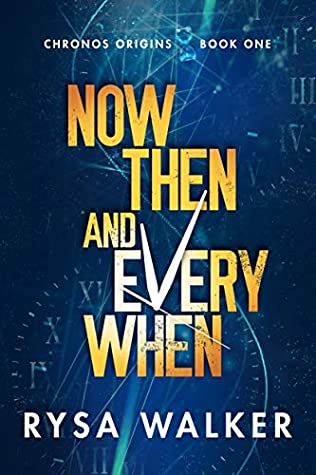
Why Now, Then and Every When works

I picked up this book because it was on sale and the cover looked cool. That was it. 

Unbeknownst to me, the darling husband was reading a list of great time traveling books and picked it up. He, being the more loving of the two of us, told me about the cool new book he found. 

I was still reading Salem’s Lot, so I said that was cool and we moved on.

Then he started reading it. Then, he started reading the trilogy that came before it. Then he couldn’t stop freaking pestering me about reading it. 

When I finally got around to it, I couldn’t put it down. So now, I’m going to pester all of you to read it. It was so good!

It’s about two characters, Madi and Tyson. Madi’s a college student staying in her great grandfather’s house when she finds a coin buried in the back yard. She finds out soon that she can use this coin to travel back in time. 

Meanwhile, years in the future, Tyson is a professional time traveler. He studies race relations at the time of Dr. King. He and his fellow historians travel back in time with some familiar coins.

All this would be fascinating enough. But then, a mysterious group of time travelers starts messing with the timeline.

Of course, I can’t just say it’s a good book and leave it at that. I have to break it down and see how it works. So let’s talk about that today. 

The varied timelines were blended well.

Like many of my books, Now Then and Everywhen is told from two pov characters, switching every chapter.

Of course, because this is a time travel book, both of these characters are in totally different times for most of the book. Even so, the story flows together seamlessly. The back and forth between the two intertwining storylines blend perfectly, stacking information slowly as we learn more about the world and the characters.

Lots of questions answered

If I’m eager to finish a book, it’s usually because I have questions. Questions I need the book to answer. What’s going on? Who’s messing around with the timeline? For what reason? How will they fix it? And for me to appreciate the ending of a book, they need to answer most of those questions. This one did and with satisfying answers.

But not all of them!

Much to my joy, this is the first book in a trilogy. So, of course, some of our questions are left unanswered. As they should be. As the saying goes, the first chapter should sell the book. The last chapter should sell the next book. That’s exactly what this book does.

History well portrayed.

I have a lot of love for History. And I like to see it portrayed right. This book deals with The Beatles and Dr. King. And it never forgets for a second that these were real people. They have family and friends still alive. They should be treated like real people, not characters. This is done very well. 

Sudden but inevitable betrayal

It’s so rare that a story can take me by surprise. But much of this book I did not see coming. There are moments of betrayal, of characters revealing their true selves. They surprised me, I didn’t see them coming. But, and this is important, they made sense for the character! 

It’s really easy to surprise a reader if you don’t care about the story making any damned sense. If your secondary character is suddenly revealed to be the villain and you haven’t set that up, then it feels like a lie. It feels out of place because of course, it is out of place. Worse, it’s a cheat. But these revelations made sense.

Can’t wait for the next one

The first chapter of a book sells the book. The last chapter sells the next book. And for sure, the last chapter did its job in Now, Then and Everywhen. 

The end of the book includes a shoot out at a Beatles concert, someone running into their great grandmother and a cryptic little kid. It also paved the way for the story to continue. 

I’m looking forward to seeing where this journey takes me.

Falling From Grace eBookPreorder Falling From Grace and be entered to win a free signed copy of Broken Patterns. Click here for details.

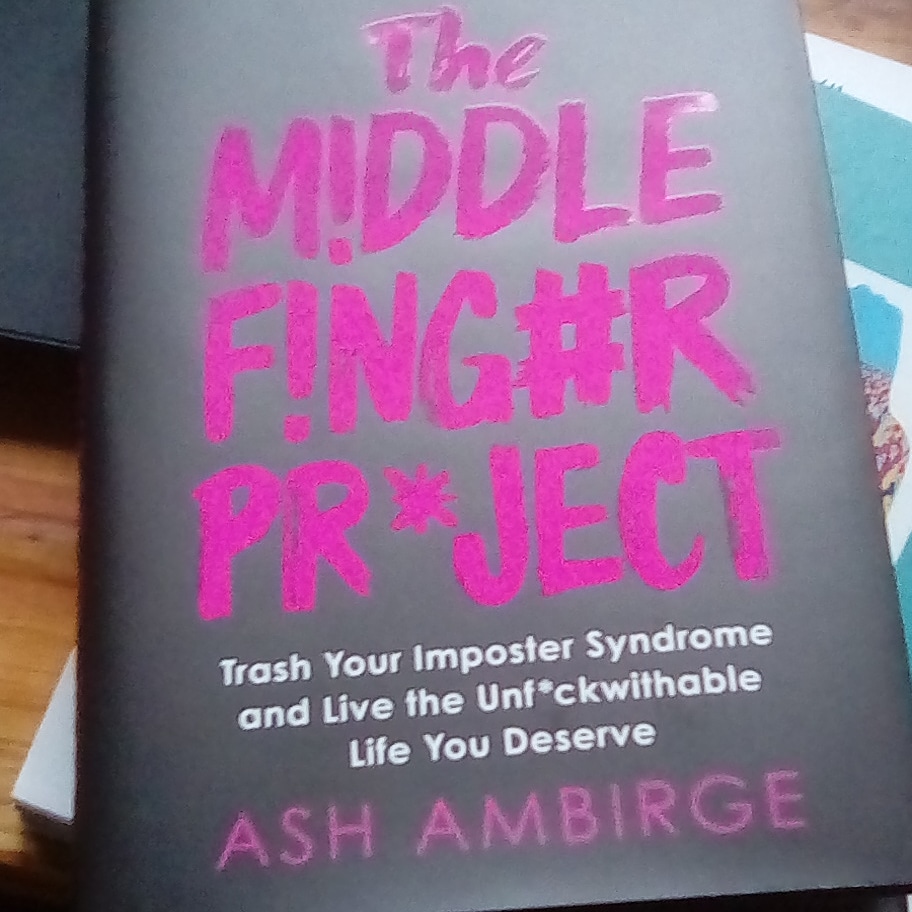
The Middle Finger Project, the book, launches today!

And I already got my copy! It’s sitting on my desk quietly waiting for me to finish the book I’m reading now. I’m going to really have to focus on actually getting things done with this book sitting here. I cannot wait to crack into it.

IMG_20200211_111524_724Honestly, if you’ve been around PBW for any amount of time, you’re fully aware that Ash Ambridge is basically my Beyonce. Which isn’t to say she’s a musician that a lot of people fawn over. No, I mean in terms of inspiration. Her blog, also called The Middle Finger Project, inspires me with every post. And if you want to live, actually live, then she should be inspiring you.

I’m also pretty sure she’s my soul sister. She grew up in a trailer in PA, just like me. She’s a classy professional who really likes the word fuck, just like me. And she’s not about apologizing for any part of her life. I’m working on that.

What follows is some awesome experts and information from the woman herself. If you haven’t already gotten your hands on a copy of this book, go do it right now. Or read this, and understand better why everyone needs this book.

Then go get it.

Animals Who May or May Not Want to Pee On This Book

The rhino. (Seems like a total alpha male.)

Turtles. (Yawn.)

T-Rex. (Shitty reading arms.)

Any type of mollusk. (Jealous of my name.)

The Common Molly. (For obvious reasons.)


What the F*cking Thing Is About

  • Girl grows up in a trailer park in rural AmericaAmbirge
  • Mom = social anxiety, doesn’t leave house
  • Dad dies when girl is 14
  • Mom dies when girl is 21
  • Girl leaves small town. Goes to big city. Tries hard to fit in with people who paid real money for “nude” as a nail color.
  • Becomes disillusioned to discover nobody actually knows what they’re doing and the rules were made up by a guy named Ted who ate a cheeseburger for lunch and has a dog named Wedgie.
  • Leaves job. Rebels. Sleeps in car in Kmart parking lot.
  • $26 left. Lots of chicken nuggets.
  • Hears radio announcer. New music album available for pre-order. Suddenly realizes that value comes in many forms—not just in all of material things she never had—and art is worth paying for. And? It doesn’t have to be *finished yet* in order to be exchanged for future value.
  • Takes hidden talent—writing—and uses it to create an all-new job for herself.
  • Earns first $2,000 from backseat of car.
  • Uses it to kick start new life.
  • Makes first $103,000 that year, and then goes on to earn several million dollars from her art.
  • Learns lots of lessons along the way, like: You must be brave enough to cause problems. And: Sometimes you’ve got to be a bitch about money. And: Every good idea is offensive to someone. And: Selling yourself requires you to insist on your own brilliance. And: We must learn to become mothers to ourselves.
  • I NEED TORN DOWN SOULS TO READ THIS. I need them to see that they can do so much more than they think. And not just them, but anyone who feels like an imposter every single day of their life. Anyone who doesn’t know what else to do. Anyone confused about their career. Anyone who doesn’t have passions anymore. Anyone who feels like they’ve lost themselves. And anyone who is still really just an innocent babe inside, trying to find their way.


A WordPress.com Website.

Up ↑