Writing when someone you love is ill, part two

Last week we started talking about balancing a writing career when you have a partner with a chronic illness. If you haven’t read that one, I’d suggest starting there.

If you’ve never experienced living with someone with a chronic illness, it can be a struggle. There’s a lot to balance. And it takes a significant toll emotionally. But it’s something that plenty of people deal with every day. And if you want to have a creative career while caring for someone with a chronic illness, you can do it. You should do it. You deserve to do it. And today, we’re going to take another look at how I do it.

Decide how much or how little you want to share about this journey

Part of being a creative content creator in 2024 is having an online presence. And at least some of that online presence is probably going to be about your real life.

Mostly this consists of fun, happy things. We share content about our pets, our homes, and our writing process. We show pictures of our coffee and book signing. One author I follow shares videos of her cat using talk buttons. Another shows food pics. I like to show my tarot decks and library hauls. And, of course, pictures of my cats and dog.

Another author I follow shares info about her books and YouTube videos. She shares pictures of her adorable dog. And sometimes, she talks about her husband’s chronic illness.

It makes me feel like I’m not alone. And I love her for that. It is because of her that I decided to write this post. Her name is Jenna Moreci. She writes fantasy romance.

I bet that a lot of people I follow are also living with chronic illness. Or they have a partner who has a chronic illness. They never talk about it. Jenna doesn’t talk about it much. I don’t talk about it much either.

We don’t owe that part of ourselves to the internet. We don’t owe any part of ourselves to the internet.

When it comes to your family, how much or how little you share online is up to you and your family. Please don’t ever feel pressured to share more than you want. But if you want to share, that’s okay too.

Accept help when you can

It’s easy to feel like we’ve got to do everything ourselves. Society sure as hell tells us we should. We see people who are working full time, with immaculate homes and homemade meals.

I’m sorry, but that just isn’t real life. And when your partner has a chronic illness, you’ve got a lot of pressure on you.

It’s not just that you’re dealing with their illness and whatever demands that makes on your time and energy. It’s also that the care of the home and family will fall all on you more often than it would if your partner was able-bodied. Housework is work.

If you have a support system, let them help you. Let someone grab your groceries for you. Let a sibling take your partner to a doctor’s appointment if you don’t have time.

The darling husband and I don’t have a lot of family. For a long time, I felt like I had to take care of him, the house and the pets by myself. Over time, I’ve realized that this is unsustainable. So I started having our groceries delivered. We order in when we need to. And I lean on my friends for emotional support. I tell them when I’m struggling. I tell them when I’m scared. And that’s sometimes all that I need, just someone to listen to how hard this day was.

Ask for help when you need it. Accept help when it’s offered. You do not need to do everything by yourself.

Take care of you

I know that taking care of yourself takes time. And time is the thing you probably have the least of. But you have got to care for yourself.

Make doctor’s appointments, even if you’re sick to death of doctors. Get rest, even when you have a million things to do. Take care of yourself, eat good food, drink water, and take your meds if you’ve been prescribed meds.

We have to keep ourselves healthy or we won’t be able to care for our partner. So take good care of yourself.

Art can save us in our darkest hours.

So why would you still want to write when your partner has a chronic illness? With all the other demands on your time, why still put this extra burden on yourself?

I can’t answer that for you. But I can tell you why I still do it.

Art has saved my sanity. While parts of the writing game feel burdensome, the act of writing never has. Whether I’m writing a blog post, a review, a chapter of my novel or a short story, writing is always great. Creating is always great. Through writing, I can have a voice that I might otherwise be denied. It allows me to process my emotions. It allows me to face my demons on the page. It allows me to breathe. I do not think I would have survived the last ten years without my writing.

That’s all I can think of for now, advice-wise. If I think of other things I might do a follow-up. But now I want to hear what you think. Do you have a partner who has a chronic illness? Do you have a chronic illness that you manage while writing? Let us know in the comments.

Paper Beats World is a labor of love. If you love what we do here, please like and share this post. You can also support us financially on Ko-fi.

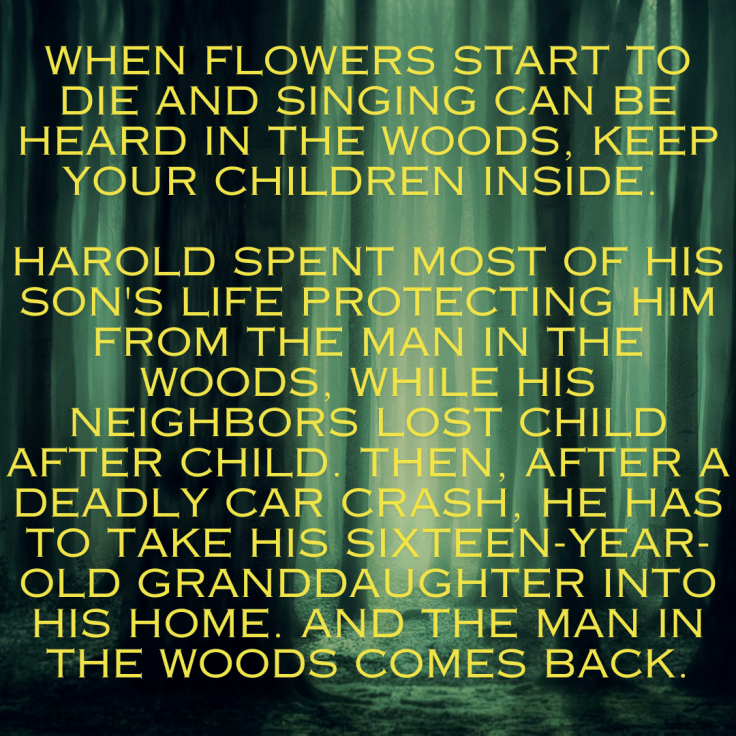
Man in The Woods is now available on Smashwords and almost everywhere!
Writing when someone you love is ill

I didn’t mean for this post to be late today, but it does kind of fit into the theme.

My husband has several chronic illnesses. I don’t want to go into details because that’s not my story to tell. Suffice it to say that caring for his health is a full-time job for him and a part-time job for me.

If you’ll recall, I also have a full-time job, as well as trying my damndest to have a writing career.

Having a partner with chronic illness is a journey. It’s difficult to watch someone you love suffer. It’s terrifying to come close to losing them. It’s hard to make plans for the day, let alone the future when you just have no way of knowing how their health is going to be from day to day. Some days he’s fine, some days he can’t get out of bed. Some days he goes to the hospital.

There are countless books and blogs about living with a partner with a chronic illness. That’s not what I’m here today to talk about, that’s way out of my lane. What I do want to talk about is maintaining a creative career while caring for a loved one with a chronic illness. Because it’s what I’ve been doing for almost ten years now.

You do not have to keep writing for an audience

Let’s just get this out of the way first. If you don’t want to keep writing for anyone but yourself. I don’t care if you are in the middle of a series. I don’t care if people are waiting with bated breath on the cliffhanger of a lifetime. I don’t care if you’re Stephen King. If Tabitha King suddenly took a nose dive health wise I would light a candle for her and expect to never see another King book.

The people you love will always be more important than any success you might find in this world. If you don’t have the physical or mental bandwidth to create for days, weeks, or even years at a time, that is okay. You don’t owe your art to anyone. Everything else in this post is for people who want to keep going.

Don’t feel guilty

That being said, you do not need to feel guilty if you want to keep writing. My writing career has gotten me through some very dark moments. Having work that I was passionate about has given me something to focus on when I felt useless. It gives me something that is for me. And we all deserve something that is for us. We all need something that is for us.

Be realistic about how much you can take on.

I might seem like the worst person to talk about this. I’m working on a sci-fi series, a podcast series, multiple short stories, writing for this blog, and writing reviews on Haunted MTL. And yes, sometimes that is too much. That’s why this post came out in the afternoon instead of in the morning.

But let’s be fair, there’s always more I could be doing. Things I’d like to do. I’d like to create audiobooks. I’d like to write a serialized story on Wattpad. I’d like to make a true crime podcast series, enter more contests, write more short stories, do more micro-fiction on social media. I want to do so much more than I realistically can do.

Here’s what I suggest. Make a list of everything you want to do. All the projects you would love to work on. Take your time.

Then, list all of your projects from the ones you most want to do to the least.

I keep a whole list on Notion at all times. Sometimes projects drop off the list, and sometimes more get added. But I’m always putting my energy on the top priorities of that list. So if I can only get one thing done, it’s at least the most important thing.

Learn to write in strange places

I am so blessed to have an office in my home. I use it to work from home and write my stories and I love it. It’s bursting with light, colors, art and books. I have ample desk space, a comfortable chair and a place for all my pens.

I don’t always get to write there, though. I have gotten very good at writing in waiting rooms and hospitals. I have written in a notebook balanced on my knees in an uncomfortable plastic chair. I have written on my laptop, sitting on an emergency room couch and trying not to think of what sort of fluids that couch might contain. I’ve written in cafeterias, on patios, with bad cups of coffee and the same Lipton tea every hospital seems to have.

Because of this, I’ve always kept a writer’s bag. I can do an updated post about this if you’d like. I don’t go anywhere without a notebook and pen. Even if I don’t know I’m going to be stuck somewhere for a time and might as well do some writing, I might suddenly get stuck somewhere and be inspired to write a little short fiction.

Be flexible

This one sort of goes along with the last piece of advice.

When you’re dealing with a chronic illness, things cannot always go to plan. This is true for most of us anyway. Washing machines break. People call off at work so you have to go cover for them. The power goes out. The internet goes out. People with chronic illness and their families aren’t immune to these things. We just have that extra hurdle of health to consider. I might be right on pace to meet a deadline, or get a blog post out in time, and suddenly get waylaid because a health concern took precedence.

This is why it’s important to under-promise when it comes to deadlines. Whether you’re working with a publisher or just setting a deadline of your own. If you think something’s going to take a week, plan for two. Trust me, no one is ever angry that you beat a deadline.

You have to be ready for your day to not look how you expected it to look, and roll with it. Trust me, I hate this. This is not where I thrive. I thrive when everything happens exactly how my Google calendar says it’s supposed to happen. I am mentally prepared for that, I have supplies and snacks for that. But we don’t always get to live the day we planned for. We have to live the day we have.

I have a lot more to say about this topic, but we’re running long as it is and this post is late as it is. So I’ll be doing part two next week. See you then.

Paper Beats World is a labor of love. If you love what we do here, please like and share this post. You can also support us financially on Ko-fi.

Man in The Woods is now available on Smashwords and almost everywhere!

A WordPress.com Website.

Up ↑