In case we haven’t met

2026 is upon us. Whether we’re ready for it or not. And it seems like as good a time as any to introduce myself. Or, reintroduce myself.

My name is Nicole Luttrell. I’m thirty-nine, and I live in Western PA. I write speculative fiction. I tend to inject at least a little horror into everything I write.

I’ve written two series. One is a fantasy series called Woven, about a boy who weaves visions and a girl who spins light. The second one is called Station 86. It’s about a police officer and a chef living on the space station of First Contact. I’ve also written a standalone horror novel, called Quiet Apocalypse.

Here on Paper Beats World, we talk about stories. We talk about writing them and keeping yourself healthy enough to do so. We talk about reading them and watching them. We talk a little bit about the business of writing. Something I want to do more of this year is talk about money management, because writers don’t make a lot of it, and we’ve got to make it count.

I like to take books I read and shows I watch, break them down, and talk about why they work. I talk about books about writing and tools for writers. I post here once a week, usually on Fridays.

Of course, as writers, we have to experience the world. Otherwise, what the hell are we writing about, and who the hell are we writing for? So from time to time I’ll talk about politics, religion, and world events. So you’re not caught off guard, I am, in fact, a bleeding heart feminist liberal who uses pronouns (She/her). I stand strongly against AI writing ‘art’. I defend banned books, trans people, immigrants, and drag queens. I am fiercely pro-choice. I am also bisexual and a Christian Witch.

I have a husband who’s disabled after a stroke, a dog named Oliver, and a cat named James. I also have a full-time job. It should be no surprise at all that I’m a big fan of coffee.

And wine.

My goal here is the same as it’s always been. To entertain you and teach you to fit a fulfilling writing practice into your life.

Now, for those of you who have been around for a while, I have bad news and good news.

The good news is that we have another year of writing, reading, and complaining about politics together to look forward to. I’m going to be refreshing the site to make it a little more personal and on brand. And I’m going to be posting new poetry or microfiction on Instagram most days.

The bad news is that I will not be publishing a new book this year. And it’s because I’ve been trying to write the book that I know some of you are waiting for, the finale of Station 86.

No lie, I have written two full rough drafts that were just terrible. They didn’t work at all. And this is the finale, you guys. It’s got to be what you deserve. What the story deserves.

So, this year I’m taking some time away from the project. There’s no sense in my beating myself bloody over something that clearly isn’t ready to exist yet. I’m working on a new-ish novel before I dive back into the Station 86 world.

That doesn’t mean, of course, that there will be nothing new from me. I have some fantastic ideas for the year. And I hope, whether this is your first visit or you’re an old friend, that you enjoy the journey with me.

If you love what we do here and want to support Paper Beats World, please like and share this post. You can also support us financially on Ko-fi.

Want to start of the year with a free book? Check out Seeming, book one of Station 86.

Your writing should look like your writing

I’m writing the third draft of a new project. I can’t tell you what it is yet, only that it’s a dark fantasy piece dedicated to Hekate.

As I’ve been working on this book, the same thought keeps coming up over and over. As I flesh out scenes. As I rewrite dialogue. As I sketch out brainstorming notes.

I keep thinking, “This isn’t the right way to do this. No one writes like this. This isn’t how it’s supposed to be done.”

I’m doing my best to quiet this thought. Because it’s getting in the way of what could be some of the best damned writing I’ve ever done.

Each writer has a specific voice. A certain feel to their work that is distinct, no matter the genre they write. King’s books feel the same from Danse Macabre all the way to Never Flinch. Kiersten White’s work feels the same no matter if she’s writing fantasy or horror. And a lot of the reasons why they feel so different are stylistic choices that, frankly, I might not have made. You might not have made them. I certainly don’t write with such gory detail as King, for instance. We have wildly different word choices, and I don’t feel the need to set every story I write in Main.

Your personal voice comes from five different elements. The first is your word choice.

Words. Writing nerds like us obsess over words. Word choice can change a scene from cozy to chilling. It can make a story inspiring or terrifying. Consider the difference between these two sentences.

“Sharon sauntered towards the door and slid it open.”

“Sharon stalked to the door and ripped it open.”

Both examples include Sharon opening a door. The first one feels sexy. The second is vaguely threatening.

In both, she might just eat the person on the other side alive.

Word choice is about the voice of your story. Dialog is the voice of your characters, and the second element of your writing voice. It helps build setting, build character. And it tells something about you as well.

Are you the sort of writer who does a lot of exposition in dialogue? Do you use it to give away clues? Do you tell us who your character is?

Characters in general are a big part of a writer’s voice. King, for example, used to write a lot about drunk men who were bad fathers. Then he wrote a lot of men trying to get and stay sober. And far too many of them are named Bill.

I tend to write characters who are irritated all the time. Who have a strong hand on their tempers, until they don’t. Sylvia Moreno-Garcia writes characters who are terrifyingly single-minded.

Then, there are descriptions. This is a place where your voice can truly come out. And a place where prose writers can indulge in a little poetry.

How you describe something shows us your voice. How long it takes you to describe something also does that.

Some writers I could mention could spend a little less time describing things if I’m being honest.

You might be wordy. You might write tight. All of this is part of your voice.

Finally, where you set your stories is a huge part of your voice.

I tend to write about communities big enough that you don’t know everyone, but not so big that you can get through Walmart without seeing a high school acquaintance you’d rather not. I probably do this because I’ve always lived in that sort of place. So that is how I understand the world to be. Even when I’m writing about spaceships with ghost dragons, this theme comes up.

Some people write about small southern towns. Some people write about dark, gothic places. Some people write about the Pacific Northwest like it’s the eeriest place in the world. Which I take personally, as a person who lives in the foothills of the Appalachian mountains.

Here’s the thing about your writer’s voice. It’s the most important thing to remember. You can recognize your voice. You can, and should, study other writers’ voices. But you really shouldn’t try to force your voice.

Who you are is going to come through in your writing. Where you live, how you were raised, who did the raising. How you see the world. It’s all going to come out, one way or another, in your work.

And that’s a good thing! That’s the whole point of art. Entertaining stories don’t stick with us as much as ones that make us feel something. And we make readers feel something when we share how we uniquely experience the world.

We don’t have to do that by writing memoirs or opinion pieces. We can write about whatever we want to. Werewolves, hockey players, dragon hunters. No matter what you choose to write, you should shine through. And you should never, ever feel like you need to copy another writer’s voice. First of all, you won’t be able to. And second of all, we need as many unique voices in the world as we can.

Paper Beats World is a labor of love. If you love what I do here, please consider liking and sharing this post and leaving a comment. You can also support me financially on Ko-fi.

Spooky season is coming, and it’s time for some creepy reads. Check out my horror novel Quiet Apocalypse, about a witch trapped in her apartment during a dark winter storm with a demon devoted to ending the world.

Or check out my horror short, The Man In The Woods. A man tries desperately to protect his granddaughter from the mysterious man in the woods. But his fear only grows when a new housing complex is built too close to the woods.

My thoughts after Pathfinders Writing Collective’s March Madness

I got an email on Monday that maybe you got too. It was from the Nanowrimo organization, explaining that they are shutting down.

I have mixed feelings about this. I posted months ago about why I was stepping away from Nanowrimo. But it’s an organization that inspired millions of writers over the years. It gave me the inspiration and courage to write my first published novel.

This one. Available now on Amazon and going wide as of April 25th.

And yet, I also feel we are seeing the writing community’s response to AI writing. We will not support any organization that gives quarter and comfort to AI platforms that steal our work and produce flat and soulless stories flooding our markets.

There is one part of the letter that I agree with, though. Interim executive director Kilby Blades said, “Many alternatives to NaNoWriMo popped up this year, and people did find each other.”

And this is true. We found each other. And this past month I participated in a writing challenge that does just this. The Pathfinding Writers Collective March Madness event. And it was a fantastic experience. Even though my team lost. If we’re being fair, I personally lost twice.

Let me explain.

My personal goal for the month was to write for 31 hours in March. One hour a day. And that sounds easy until we remember that I’m caring for a husband who had a hemorrhagic stroke. He needs an incredible amount of hands-on care. So there were a lot of days where an hour of writing was a delightful daydream.

But this was still an incredible success for me. Let me explain.

I still wrote more than I had been writing

As mentioned, this is a busy season of my life. And for much of February my writing took a back seat. Hell, it wasn’t even in the back seat. It wasn’t in the trunk. It was in the attached trailer behind the damn car. Most days I couldn’t even think of looking at my writing.

But in March, I wrote twenty days out of thirty-one. I made the time. I tried to write an hour, but sometimes made only 15 minutes. Sometimes I only made 10. But that’s still more than what I had been doing. I didn’t make a ton of progress, but I made more than the month before.

There was this incentive, you know. This desire to make sure I had some numbers to put on the board, even if it was a small number. Because any number, any number at all, was better than zero.

I kind of love time-based writing goals

Writing goals work for me. I like having numbers to work towards. For most of my writing career, my goals were word-count based. But I’m realizing that this sort of goal isn’t conducive to actual writing. It doesn’t take into consideration all of the work that goes into writing that isn’t putting words on the page. I was ignoring the time I spent researching, freewriting, outlining and planning. Those are all vital parts of writing that need time and space. They need to not be rushed.

I also find that my writing goes faster when I devote that time, unrushed, to the brainstorming process. It’s as if by giving my mind time to mull over the story without a keyboard under my fingers, it has more space to breathe and is already written when I am ready to write.

Having a community is awesome

We’ve talked about this before, so I’m not going to devote much time to this. But that doesn’t mean it isn’t important!

It is, if I’m being honest, the most important part of challenges like this. It’s what made Nanowrimo so special.

Writing is solitary. Its deadlines are often self-imposed. I have no boss asking me for updates. I have no co-workers to bounce ideas off of. I have no external pressure to create. Which is both a blessing and a curse.

For one thing, it’s lonely. For another, it makes it so much easier to push off tasks I don’t want to do because, after all, there are no repercussions.

But when I have a team of people I’m working with, there is some good pressure. When I don’t want to let my team down, I’m inspired to get my ass in my chair and write. On days when I might not have written at all, I wrote. On days I needed inspiration, I had the rest of my team. And that made all the difference.

I didn’t take as much advantage of the challenge as I wanted to. I could have done more. I could have attended more writing sprints. I could have chatted more and made more friends. But for where I am, I think I did the best I could. And I saw so many writers reach so much farther than they thought they could. I saw this wonderful community of writers cheering each other on, supporting each other, and inspiring each other. I don’t want to give out names that aren’t mine to give, but one writer in my group wrote through 249 hours in one month. Girl, how?!

But whether we wrote almost 250 hours or thirteen hours, we all came together to reach a goal. We all made progress on our stories. And we need stories now more than ever.

So the question is, will I be participating in more Pathfinder Writing Collective events? Absolutely. I cannot wait.

Paper Beats World is a labor of love. If you want to support us, you can do so by liking and sharing this post. You can also support us financially on Ko-fi.

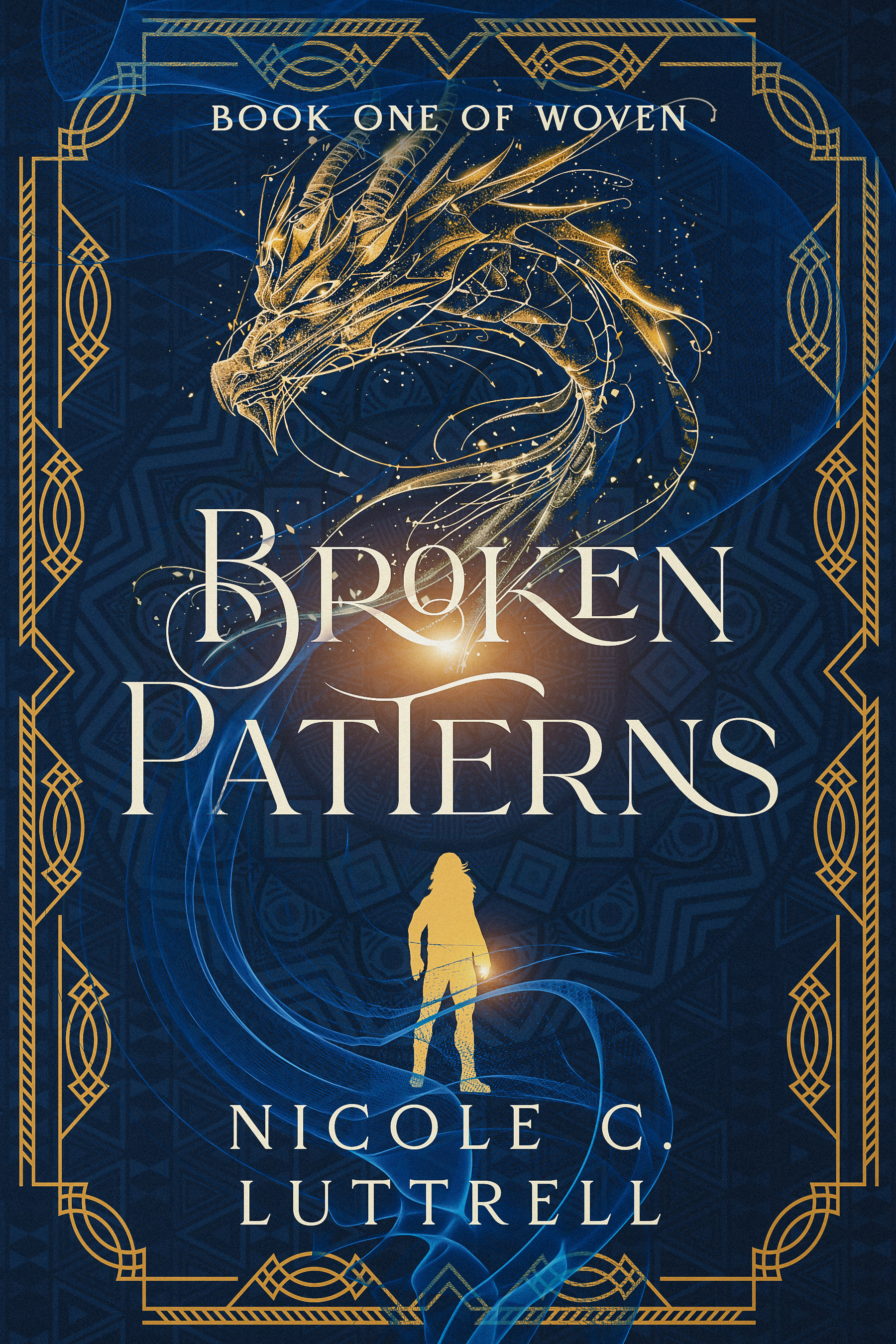
Broken Patterns is going wide! You can preorder it now everywhere.

My thoughts on the Nanowrimo controversy

Before we begin, I just want to state that everything I’m going to say today is my opinion and my opinion alone. It does not represent any organizations I belong to or write for.

I don’t want to write this. It irritates me that I feel like I have to.

I’m heartsick that I feel like I have to.

In case you’ve missed the news, the NaNoWriMo organization, apropos of nothing, decided to put out a statement that has everyone in the writing community hot under the collar.

Including me.

Now, they’ve since updated this statement. But I think it’s important to share the original one to see why everyone is so upset. Here is a link.

So, if you read this and you don’t understand why everyone’s so up in arms, let me explain. Nanowrimo is not encouraging people to use AI tools to write their novels. They are simply not opposed to this.

Now, let me tell you why I’m furious.

In April of last year, I wrote about the fears of AI writing and how I thought it would hurt the writing community. Specifically, I was worried less about creative writing and more technical writing, like mass-produced blog posts and pithy product descriptions. That was before I found out that the AI generators have been scraping the internet and stealing any work published online.

At this point, it’s safe to say that the primary AI chatbots have my books. They have every post I’ve ever written here. And if you publish your work online, they have yours too. Visual art is taken as well, of course. The online artists were the first ones to sound the alarm.

That is not fucking okay. Artists like us work for years. We practice our work, finding our individual voices and honing our crafts. It isn’t easy, what we do. It takes talent, yes, but it also takes a shit ton of work. I am infuriated that the people who control these chatbots and AI tools feel entitled to the work that we pour into our art. They don’t have the right.

I know that legal protections are coming. At this time I’m unsure how much good it will do. But I am looking into ways to be a part of that.

I am sad to say that the Nanowrimo organization is not. And based on their updated statement, they have no intention to. Their response to the well-deserved fury and vitriol online was to remain as wishy-washy as they were to start with. Though at least they apologized for calling all of us abalist and classist.

It would have been one thing if they’d come out and said that some AI tools are beneficial for writers. I don’t know what those tools might be, but I am open to there being some tools that help people. I am not myself disabled and my mental illnesses don’t impact my writing. At least not in such a way that would be helped by any AI tool I’ve ever heard of.

But that isn’t what they did. They did not say that they were supportive of tools that help people with disabilities. They didn’t list examples of AI tools that help people with disabilities. They instead gave blanket approval to tools that steal our creative work and allow people to take it whenever they please and call it their own. And I cannot abide that. So for the first time in a decade, I will not be participating in Nanowrimo. I deleted my account. I’ll be removing my Preptober planner from my Ko-fi shop, and restructuring it as a novel planner instead. I hope that the board at Nanowrimo reverse their decision. But I’m not holding my breath.

In the end, I am not going to judge anyone, personally or privately, who continues to participate. Nanowrimo is still a great inspiration, especially for young and new writers.

But I cannot in good faith associate myself with any organization that does not fiercely defend writers and artists from the creative cannibalism that is generative AI. So for now, as much as it pains me, I’m stepping away.

Ten ways to fill your creative cup

I write most days. Not every day, because I live in a capitalist society and I have to have a job. But I try to get some writing in most days.

I don’t do writer’s block. This isn’t to say I’ve never looked at the blank page and been stuck. Because of course that happens. That happens all the time. But I don’t like the term writer’s block. It makes it sound like a large, unmovable brick in your path. That is pretty daunting. I prefer thinking of it as an empty cup. And you can fill a cup.

What do we fill our cups with? Well, I tend to fill mine with things that take a little effort, but not much. Coffee and tea, mostly. You have to do a little more than just pouring something from one container to another, but not a lot.

That is how I want you to think of the advice in this post. These suggestions will take a little effort, but not much. But, like a cup of warm coffee or tea, you will feel filled in more ways than one.

Freewrite

Of course, this is where we always start. Freewriting has always been the first line of defense against an empty creative cup. Sit down, set a timer for five, ten, fifteen minutes, and just start writing. They don’t have to be good. They don’t have to have punctuation or good spelling. Hell, they don’t even have to be in order. They just have to exist

Read people who inspire you

Many writers inspire me. Natalie Goldberg and Maya Angelou come to mind first. So when I’m feeling creatively drained, I read some of my favorite works from them. It always encourages me to get back to the page quicker.

Find a random picture online

This is something I’ve done as a group game, and as a way to unstick my creativity. Jump on a website like Pixabay, and check out some random pictures. Or if you’re trying to write a certain genre, look up a keyword from that. Look up ghosts, dragons, haunted castles. Whatever you want. Then write a story about the pictures that come up.

Grab a writing prompt

Similar to the last bit of advice, find a writing prompt.

I used to think this was cheating. Was I really writing my own work if I wasn’t coming up with my own ideas? But honestly, I’ve written some of my best work from a prompt. And trust me when I say, it’s still your story. You can give a group of writers a prompt, and every one of them will write a completely different, unique story. So go get one and get writing.

Do a writing exercise

A writing exercise is different than a writing prompt. A writing prompt is an idea for a story. An exercise is a little less structured.

What does blue make you think of?

What are five things you wish you didn’t remember from your childhood?

How many ways can you write the same information?

Write the same scene from three characters pov.

These are little things that stretch our writing muscles and make us look at the world differently. This is never bad.

Give yourself a goal that is aside from finishing a project

Sometimes if you sit down and try to write a thousand words, that can feel oppressive. And if your goal is to write a whole novel, that can feel like a goal that is never going to happen. So these goals, while good in theory, can get in the way of actually getting writing done.

So try to give yourself a more unique goal. Write until a sand timer runs out. Put on a song and write until the end of it. Or write just this one scene, however long or short that scene is.

Rewrite something

Sometimes I find that my cup is empty because something is wrong with the story I’ve been writing. I’ve messed something up somewhere, and what I’m trying to write now doesn’t feel right. The cure for that is to go back and rewrite whatever isn’t working. Maybe it’s the scene before. Maybe it’s further back.

A warning, though. Sometimes this is the whole damn project that needs to be rewritten. This happened to me recently with my latest Station 86 book, and I had to throw out over fifty thousand words. While this was necessary, it also sucked ass.

Read over what you’ve read already

Sometimes you just need to get back into the groove of your story. So try reading the scene or chapter that came right before the one you’re working on. Maybe you forgot something that can turn into a serious plot bunny.

Write a list of things that absolutely won’t happen. Why won’t they happen?

If you aren’t sure what is going to happen next in your story, try making a list of what you are sure won’t happen. This helps get your brain moving in a way that doesn’t have a lot of pressure behind it.

A funny thing happens every time I do this, though. As I’m writing things I’m sure won’t happen, I start to wonder why they won’t happen. Wouldn’t it be cool if this happened? Wouldn’t it mess things up for the characters if that happened?

It’s your story, after all. Anything can happen.

Plan a writing date with a friend

Peer pressure! Grab a writing friend, and make a plan for a creativity date. Plan to go somewhere, or even get together over Zoom. When you see someone else hacking away, you’ll feel inspired to do it yourself.

If you don’t have any writing friends, there are a ton of virtual writing events online. You can find a bunch on YouTube, both live and prerecorded. There’s a big, wide community of writers out there. And we’re ready to write with you.

So now it’s your turn. What is your favorite way to fill your creative cup? Let us know in the comments.

And don’t forget, we are still doing a giveaway a day for Paper Beats World’s Tenth Anniversary. Like this post and leave a comment for a chance to win a free copy of Nova.

See you tomorrow.

If you liked what you saw here today, please consider liking and sharing this post. Or you can support the site financially on Ko-fi.

Broken Patterns is available now for preorder! You can order it now on Amazon.

10 things I’ve learned about blogging in 10 years

I’ve been writing Paper Beats World for ten years now. And it’s impossible to do anything for ten years without getting better at it. At least, I hope so. I’m always learning new things, trying new styles and doing what I can to make Paper Beats World a fun place to be on the internet.

So, today I want to share with you the top ten things I’ve learned about blogging after doing it for ten years. If you have your own blog, or you’re thinking of starting one, I hope some of this advice helps you.

People like hearing about how you screwed up

I messed up a book launch and wrote about it. That post got so many likes and views. My publisher dropped me, and my site traffic went up.

Posts where I talk about what’s going right don’t do have as well as the posts about when I’ve truly stepped in it. I don’t love that, but here we are.

I tell you this not to suggest you write a blog full of doom and tragedy. Rather, I want to encourage you to share your setbacks along with your wins. Instagram might be a highlight reel of your life, but your blog shouldn’t be.

The posts you don’t expect to do well take off

I try my best with every post. But of course, some come out better than others. Some I’m just more proud of, and some do better traffic-wise.

Those two things don’t always match up. They usually don’t. Posts like my series about using tarot for storytelling, which I spent so much time researching and writing, do fine. But posts about writing dark poetry, which I enjoyed writing but didn’t think anyone was going to care about, become literally the most popular post on the site of all time.

There is no telling what’s going to go viral and what’s going to end up forgotten. So you might as well just put out what you want to put out and hope for the best.

You never know what is going to be a huge drive for your blog

Do you know what I do that brings the most people to Paper Beats World? I post about them on Pinterest. That draws more traffic than anything else. It upped my traffic so much that the year I started doing it, I doubled my views from the year before.

While I don’t believe in using social media I don’t like just because it will get traffic (There’s a reason I’m not on Facebook or Twitter) I do think you should try some things out. You might like the site more than you think at first. And you might find an audience ready and eager for what you have to offer.

Quality over quantity

When Paper Beats World started, I was writing three posts a week. It was exhausting. When I stopped, I had more time to focus on what I was posting. And my views went up. Because rather than blasting out posts, I was carefully putting out good work. Or, at least better work. One good post is always better than three meh ones.

Every time I change the style of the site, views take a hit

Occasionally I like to change up the style of the site. Use a different theme, change the font. And every time I do it, numbers drop. I’m not sure why, but the math maths.

Maybe it’s because people inherently dislike change. Maybe because the site looks different they can’t find their way around. Or maybe I make too many changes too fast and regular visitors find it unrecognizable. And I wish I could ask, but I assume the people who leave don’t come back. If you’re someone who left the site for a while after a style change but is back now, please let me know why in the comments. I am genuinely curious.

Don’t judge your numbers by last month, but last year

When I look at my stats for the month, I will sometimes be depressed if one month isn’t as good as the one before. But of course, that doesn’t make a lot of sense. People are spending more time online during certain parts of the year. When it’s nicer out, people want to touch grass, not their laptops.

My outlook got a lot better when I started comparing my numbers each month to that same month the year before. It also gave me a better sense of trends over time.

Pictures matter so much

I didn’t care much about my pictures when I started the site. I was writing, after all, not doing visual art. But when I wanted to post my work on social media, a graphic was needed. And it improved the overall feel of my site dramatically when I started taking that seriously. Rather than just throwing any old thing up if it kind of made sense.

Now I use a structured type of image, to convey the feeling of the post while still looking somewhat uniform. I hope most of you can spot one of my posts in your feed at once, based on the ripped paper title.

SEO makes no damn sense, but it works

I hate SEO. I hate it with every fiber of my being. I hate that if I use a header at the beginning of a new paragraph instead of just bolding it, more people find the page.

While some things about SEO make sense, some do not. Adding graphics helps your SEO. Writing longer posts. Linking to other sites. All of those things make your site more attractive to search engines. I wish I didn’t have to take any of that into consideration, but I do. And it’s, damn it, helped the traffic.

Every post is a new challenge, no matter how many you’ve written

You would think, after writing over a thousand posts for Paper Beats World, I’d have this down. But every time I sit down to write a blog post, it feels like I’ve never written one before.

When you think about it, though, this makes sense. No matter how many books I write, every one feels like the first. Every short story, every poem. Every time I commit words to the page, it feels like I have never done this before. It further feels like I cannot possibly do it again. Whatever muse I had has left me alone, and I am a dry old sock of a writer now with nothing clever to say.

Of course, that isn’t true. But it never gets less intimidating, the blank page. It never gets easier, you just get stronger.

Content has no expiration date

The most popular post so far this year is Three Creepy Podcasts I’ve Been Loving. I wrote that in September of 2019. That is a pre-covid post, and it has more popularity than anything I’ve written so far this year.

I should probably write an updated version of that.

The point is that you shouldn’t feel down if you write a post and it doesn’t get a lot of traction right away. There’s every chance that it’ll spark and go viral later.

Words are not milk to go bad. Words are not rocks to be washed away by the sea. Words are the sea, changing and returning over and over again. We still tell the story of Beowulf. We still read Shakespeare. We still read Rosemary’s Baby. It should be no surprise that blog posts written years ago will still get some attention.

Now, I’d love to hear from you. Let us know in the comments the best lessons you’ve learned about blogging. And don’t forget, everyone who likes this post and leaves a comment will be entered into today’s giveaway. Today, I’m giving away a copy of my Preptober Planner. I’ll announce the winner in tomorrow’s post.

Best of luck, and I’ll see you tomorrow.

If you liked what you saw here today, please consider liking and sharing this post. Or you can support the site financially on Ko-fi.

Broken Patterns is available now for preorder! You can order it now on Amazon.

Why aren’t you writing?

Writing for most of us starts as a passion. It’s something we love, something that brings joy to our lives. I started writing stories as a child, scribbling down my imagination play.

These days, writing is still a passion. It’s still something I get very excited about. Time spent writing is still fulfilling, still fun. It’s still the best way I know to get my feelings out, entertain myself, and get the demons out of my head.

So why, then, do I feel like I don’t want to write?

Not all the time, of course. Most of the time I want to write so much that I actively forgo other activities to write. I used to play video games, for instance. Used to. Writing and reading are the best ways I can think to spend my time.

And yet there are still times when I want to do literally anything other than write. If you’re a writer, I bet you feel the same way sometimes.

This isn’t ideal. Anything that makes you want to avoid the thing you love most of the world is not great. But to avoid the desire to avoid your writing sessions, we need to figure out why you don’t want to write. And to help you with that, I have five questions for you to ask yourself.

Do you not like your current project?

Sometimes we don’t like our projects. Usually, this happens in the middle of a rough draft for me, and for a lot of other writers. The story feels boring here. It feels like starting at point A was a ball, and getting to point C will be fantastic. But point B is shitty and we feel shitty writing it.

When you feel like this, you want to consider what you’re writing. Is it dull? If so, then maybe you should change it up. Make it more exciting. Because I’m sure we all know as readers that books bog down in the middle. But there’s no reason to accept this as a matter of course. Middles of books can be great fun to read and write. And this will help a lot if you find that you don’t want to write what you’re writing right now.

Remember, if you’re not having fun writing, the reader isn’t going to have fun reading.

Have you made writing into a chore?

When you write for a (alleged) living, it’s easy to feel resentful towards your work. I have a real problem with this. I have this innate hatred of anything I’m supposed to do. This often seems like a kiss of death for things that I love. If I adore a show, there’s no way to ruin that love faster than to decide to review it.

Which isn’t to say I don’t love reviewing things. It’s just that as soon as it turns from something I do for fun and something I do because I have a deadline I’m irritated by it.

But if I let that dumb rebellious you can’t tell me what to do attitude win, I would never do the thing I love most in this world. I would never write work I’m proud of and share it with all of you.

We all have an inner child, but we also all have an inner teenager who wants to slam our bedroom door and play loud music while our parents try to reason with us. The problem is that, in most cases, our parents were right and we should have listened. The other problem is that now that we’re adults and working for ourselves for the most part, we have to be the parents to our inner teens. And the best way I’ve found to do this is bribery.

Bribe yourself to get started. Promise yourself a new book, a trip to your favorite coffee shop, or your favorite bag of chips if you’ll just sit down and get started on the project. I’m sure you’ll find, like I do, that once you get your ass in the seat you don’t need that reward anymore. The writing is always rewarding after we get over that rebellious hump.

Are you tired?

These next two questions might sound the same at first, but they’re quite different. Being tired is a shorter-term malady.

Which isn’t to say it shouldn’t be respected. Maybe you’re tired today. Maybe yesterday you wrote a whole bunch. Or maybe you didn’t get a lot of sleep last night. Maybe you had a few days that asked more of you than you had to give and now you need to rest.

Never put your health in jeopardy to get words on the page. If you need to rest, then rest. The work will be there when you get back.

Are you burned out?

Burnout isn’t the same as being tired. It’s like the difference between a cold and a flu. Burnout is going to take much longer to recuperate from and will take more serious treatment.

I wrote a whole series about writing burnout a few years ago, that you can check out starting here.

The first thing to remember when feeling burned out is that it is morally neutral. You are not lazy. You are not failing. You have been doing too much for too long and in our society that’s almost unavoidable.

Being burned out might require more time away from your desk than you like. I know I hate it. I feel like I’m falling behind while everyone else is running ahead of me. And it sucks.

But you’ve got to give yourself grace.

There are going to be things you cannot put down. You have to do your day job. If you have contractual obligations, you have to meet them or ask for an extension. You have to care for your family, your pets, and yourself. Not in that order. If your writing isn’t the sort of thing that you’re working on a deadline for, then put it aside for a while.

It will be there when you get back. And so will your readers.

Are there more important things you need to be doing?

Finally, I come to the worst question. Because it involves adulting, and it’s the reason why this post is so late. I didn’t have time to write it this week when I usually do. I had obligations at my day job, then I had to go to a doctor’s appointment. Then I had to go get blood work done because of the doctor’s appointment. Then I had to run errands for Easter on Sunday. Then I had to fight with my bank over something. I woke up with the will and desire to spend an hour at my desk working on my current rough draft. What I didn’t have was the time.

I had to be a grownup yesterday. Today, I have to be a grown-up again write contractually obligated work, and clean my house. I have to be an adult, even though I want to write my story.

Sometimes your creative writing is going to have to take a back seat. Sometimes there are other priorities that you just cannot ignore. You have to take care of yourself. You have to mind the business that pays you. You have to care for your family and your living space.

The important thing here is to separate what needs to be done, what probably should be done but can wait for another day, and what doesn’t need to be done at all or could be delegated to someone else. I would never skip writing to dust, sweep, wash the windows, or vacuum. I might have to skip writing to do dishes or wash clothes. It’s about what needs to be done, and what doesn’t.

So that’s it. Now, I want to hear from you. What do you think is the best question to ask yourself when you’re not writing? Let us know in the comments.

Paper Beats World is a labor of love. If you love what we do here, please consider supporting us by liking and sharing this post. You can also support us financially on Ko-fi.

A WordPress.com Website.

Up ↑