Why Never Flinch Works

I recently finished reading Stephen King’s latest novel, Never Flinch. And it was a fun book. I mean, most of King’s books are fun. But this one was especially so.

Never Flinch is about a serial killer, a religious bigot, a political activist and a soul singer. And about how all of these people come together in a gloriously bloody mess.

Now, I will say that I think the ending was a bit anticlimactic. I think the end game could have been a little cooler. I don’t want to ruin it for you, but you’ll know what I’m talking about if you’ve read it. However, it wasn’t bad enough that it ruined the journey for me.

Today, let’s talk about why Never Flinch worked. Let’s pick it apart and see exactly why it was a great, light Summer read.

The story gave away a lot, only to have more secrets to reveal

Never Flinch is, like most of the Holly books, not a horror novel. It’s a crime novel. Yes, there’s a touch of supernatural right at the end. But for the most part, this book was firmly planted in reality.

In most crime and mystery novels, the fun is largely derived from figuring out ‘who dunnit’. I think we’re all trying to recapture the childhood joy of reading Nancy Drew and Hardy Boys, feeling quite clever when we figure out who the bad guy is along with the teenage sleuths.

So when the book opens up with a chapter from the pov of the killer, you might think this takes away a bit of the fun. But it doesn’t. Mostly because we know him by the name Trig, but we’re told early on that this isn’t his legal name. So while we know him, we don’t know his public persona. He might walk past our main characters, even have full-on conversations with them, and we’d never know.

This does happen several times, by the way.

Lots of real-world horrors baked in here

While I love a good haunting story, there’s something great about real-world horrors. Horror is, I think, smarter than critics give it credit for. Through horror, we often talk about the things that really scare us. Not the ghosts and eldritch monsters. But the real things that keep us up at night.

Never Flinch is great at this. This book talks about guilt. About the weight a false conviction can have, and how that can impact so many people. It also talks about the fear of standing up for what you believe in and the price you have to pay to do that.

We see Trig, eaten up by the death of a man who should never be in jail. We see Corrie, putting her life on the line to support Kate and spread the message of feminine power. (Hell yes, by the way. Get me a Kate McKay Woman Power shirt!) We see Kate willingly risk her life to keep spreading this good work. And we see, in a darker turn, siblings Chris and Chrissy sacrifice their lives to shut her up.

All of these are real things we are really scared of. My favorite example is Holly. Holly faces her fears in this book. She steps out of her comfort zone over and over. She is not the sort of person you’d expect to be a bodyguard. She is learning that she can do hard things. She steps out of her comfort zone, and she is still not smoking.

Holly’s my hero.

I like the way King writes women.

This brings me to my next point. I love the way King writes women in this book.

The short reason for this is that he writes them like real people. Our two main characters are women. The majority of characters are women. And never once does anyone ‘breast boobily down the stairs’.

King writes women like people. What an amazing thing. Not one of them is perfect. There are no scream queens. They do dumb, selfish things. But they also do amazing and brave things. They do dumb things, too. And great things. They are messy, ego-driven, protective, kind, cruel. They are, in short, actual people.

Well done.

One of the antagonists is sympathetic

While I certainly don’t agree with Trig or his motivations, I do feel sympathy for him. He saw something wrong, very wrong, happen. He felt guilty. And he wanted to do something to balance the scales. He wanted people to learn from this.

He was wrong and messed up. He reminded me of a meme currently going around Instagram. You’ve probably seen it. A video starts ‘Probably needed therapy, did (insert thing) instead’. The thing might be making jewelry, or adopting cats, or starting a farm. In Trig’s case, he probably needed therapy and started killing innocent people instead.

But he’s so broken. He’s so scared and sad and ill. It’s impossible not to feel a little bad for him.

We’ve had so much time to know Holly

Finally, I want to talk about Holly. Because I love her. And we’ve had so much time to get to know her.

She was introduced in the Mr. Mercedes series, scared of everything, and a hot mess. We saw her blossom in The Outsider. Then, in If It Bleeds. Finally, she got her starring role in Holly. And now she’s back.

I hope King keeps writing about Holly. It’s so nice to see a main character be a middle-aged woman with severe anxiety issues.

Gee, wonder why I like that.

In short, Never Flinch isn’t going to be my favorite book of all time. It isn’t even my favorite King book. But it’s a fun book. It’s funny, dark, and inspiring. And we as writers can certainly learn a lot about writing through reading it.

Do you have a book or movie you want me to talk about? Did you read Never Flinch and have thoughts? Let us know in the comments.

Paper Beats World is a labor of love. If you love what we do here, you can support us by liking and sharing this post. You can also support us financially on Ko-fi.

Falling From Grace is going wide! Click here to see all the places to get it.

The best writers in films

Last week, we talked about ten of the best fictional writers on television. Which of course got me thinking about some of my other favorite fictional writers. The writers portrayed on the big screen. Because of course, people love talking about what they’re passionate about. And what writers are passionate about, more often than not, is writing. 

Today, I’m bringing you the top seven best portrayals of writers in movies. Some of them are funny. Some are scary. And some made me bawl like a baby. But all of them are great examples of flawed people trying to do the same thing we’re trying to do; craft stories.

Secret Window

Starring Johnny Depp and based on a short story by Stephen King, Secret Window is the story of a writer named Mort Rainey looking for some peace to write his latest book. This quiet is destroyed by a man named Shooter, who insists that Rainey stole his short story. Rainey desperately tries to prove that he didn’t commit plagiarism, while Shooter stalks him through town.

I honestly think being accused of plagiarism is scarier than being accosted by some hayseed in a wide-brim hat. I adored this movie. And I thought the ending, unlike some of King’s other endings, was truly satisfying. 

Orange County 

Starring Colin Hanks and Jack Black, this is the hilarious story of a young writer named Shaun, desperate to escape his dysfunctional family. He goes through a series of hilarious hijinks with his brother and girlfriend, trying to get him into a writing program at Stanford. 

If you’ve never seen this movie, it’s a great time. And of course, it discusses the very real issue of whether or not to attend higher education. 

The Shining

Of course, I was going to be talking about this one. It’s not the first Stephen King story on this list, and it won’t be the last. It is, perhaps, the most famous. 

Do I even need to summarise this story? Jack and Wendy, and their son Danny, spend the winter at a hotel as caretakers. This is every writer’s dream, and Jack is a writer. He thinks he’ll spend the whole winter writing his novel while making some easy money.

Of course, that amount of quiet and isolation is often the last thing a writer needs. It’s also the last thing a struggling alcoholic needs, especially when his spirits are replaced by, well, spirits. 

Dead Poet’s Society

(Note. This movie deals with teen suicide.)

A good teacher can make all the difference in a young person’s life. Especially the life of a young artist. Such is the case with John Keating, played by Robin Williams. He inspires a group of teenage boys to not only read poetry but to care about it. To care about their own writing as well. Keating reminds them, and us, that a poem is not a dry dead thing. It is a moment in time, an emotion, a spark, captured in words on a page. 

It’s a passionate movie about living for what makes you feel alive. 

Moulin Rouge!

Yes, I do love this movie, and not ironically. Is it a good movie? No, not really. Is it a really fun movie with a wonderful soundtrack and a fun main character? Yes, yes it is. 

Christian is a writer looking for work. He wants to write a play for a dance club called the Moulin Rouge. Its star is a woman named Satine, who is dying of consumption. Through his writing, Christian makes her last days magical. Even as he struggles to protect her from the evil Duke. It’s full of music, wild characters, and absinthe. It is, I think what a lot of us thought the writing life would be like, full of drugs and interactions with wild artists. Spoiler, it’s actually full of coffee and editing manuscripts while turning down social invites because you’re on a deadline. 

Misery

This will be the last time I talk about Stephen King in this post, I swear. But you know I had to talk about Paul Sheldon, Annie Wilkes, and Misery. 

Starring James Caan and Kathy Bates, this is the terrifying tale of an obsessed fan who saves her favorite author from a car crash. All is going fine until she finds out he’s going to kill off her favorite character. Then, things get not fine real fast. 

On one hand, I love the thought of having someone obsessed with my writing. On the other hand, I hate the idea of having someone that obsessed. Either way, it’s a dark and gruesome tale, told well. 

Also, Kathy Bates is a queen. 

Finding Forrester

This is easily my favorite movie about writing of all time. It stars Rob Brown and Sean Connery. This is the tale of a reclusive writer who is, frankly, an asshole. Through a series of events, he starts mentoring a young writer named Jamal. 

A lot of topics are discussed here. Racism, of course. Poverty, and how it impacts the opportunities of young people. When it is and is not okay to approach a famous person. In the end, though, it’s a story about a friendship built on a common passion. A passion for writing. If you’ve never seen it, go watch it right now. It is incredible. 

Now, I want to hear what you think. What is your favorite movie about a writer? Let us know in the comments. 

Paper Beats World is free to read, but it’s not free to make. If you can, please consider supporting the site on Ko-fi. 

My Horror Heroes, Stephen King

I’m starting a mini-series today, covering some of my heroes in the horror genre. I’ve been a horror fan all my life, ever since the first time I watched Nightmare on Elm Street. Horror has always been my favorite form of entertainment. Bad horror, good horror, it rarely matters. I love zombies, haunted houses, Poltergeist. Give it all to me.

So I thought it would be fun to talk about some of my favorite horror creators of all time. I want to talk about why they’re amazing writers, creators and people in general.

Anyone who’s read this blog for any amount of time knows I love Stephen King. Even if I don’t love many of his endings. I’ve learned so much from him as a working writer, as a storyteller, as a creative person who has to exist in the real world. And I’m far from the only one inspired by him. He is, after all the reigning king of horror and has been for basically my entire life. Who else has that long of a career, honestly?

Cover of Stephen King's Bag of Bones

King knew he wanted to be a writer as a kid, something I relate to. In his book, On Writing, he tells stories of nailing rejection letters on his wall with a railroad spike. But since writing rarely pays the bills, at least at first, he got a teaching degree. Jokes on him, teaching usually doesn’t pay the bills either. 

But the part of him that wanted to teach never went away. It fairly does with those passionate about helping others learn. And so King has written several books about writing and the horror genre. I talked about On Writing extensively here. I also talked about his amazing book, Danse Macabre on Haunted MTL. It’s a formative education on the horror genre, and everyone with even a passing interest in horror should read it. 

King has always been generous with his knowledge. He wants to help people be better writers. And he enjoys talking about his favorite topics. He’s also very good at talking about his favorite topics, which makes sense. After all, he’s made a fortune telling stories.

Most people are fully aware that King suffered from substance abuse. He’s never shied away from that. He’s critical of himself for it and honest about how his addictions hurt his family. This bravery is something to be admired. I’m sure it opened him up to armchair therapists who want to label people who create horror as sick individuals. People like that will be quick to say that something must be wrong with him. People like that will be quick to say that about almost anyone, though.

But his honesty should inspire all of us to talk more openly about substance abuse. If it was easier to find help without judgment, more people would.

King makes it clear that he never needed drugs or alcohol to create. There are a lot of jokes in the creative world that the real geniuses are always tortured. That artists and writers are always drunks or drug addicts. I hate that suggestion. It’s an excuse for bad behavior, and an invitation for young creatives to experiment with things they should be staying far the hell away from. And King didn’t need that shit to write horror that scares the hell out of us. Neither does anyone else.

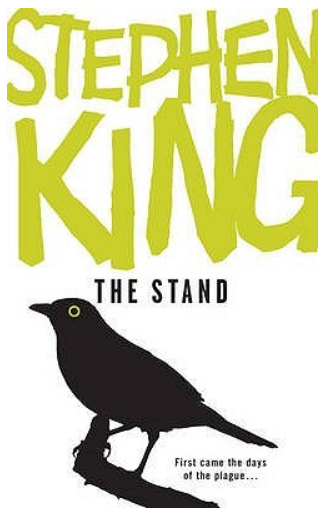
Cover of The Stand by Stephen King

King was able to get himself clean and stay clean largely because of his family. When reading On Writing, it’s clear that King is devoted to his wife, Tabitha. She is his partner in every sense of the word. I admire that. He’s fully aware that he wouldn’t have been able to create what he did without her.

On a personal note, I read On Writing for the first time when I was sixteen. I dreamed of having that sort of partner then. I’m blessed to have found that sort of partner. The kind who will tell me clearly when my writing sucks, and then tell me how awesome I am in the next breath. I am always grateful for that.

The point I’m trying to make here isn’t to get married. It’s the same point King makes, again, in On Writing. I can’t say it better than him, so I’ll just go ahead and quote him.

Art is a support system for life, not the other way around. 

I try to keep this in mind. When it feels like the words want to suck up my whole day. When I want nothing but the page staring back at me. When I feel like I’m behind on all my projects, and I want to start even more, and who needs to sleep anyway, I remember that good advice from my teacher. And I put the work away for a little while. I walk Oliver. I play chase the pen with Harper. I watch tv with the darling husband. I sing along with the music while I wash the dishes and I remember that I am more than the words I put on the page. I am a writer, but I am more.

The great thing about this lesson, putting your life before your art, is that it doesn’t mean you don’t create. King has published 64 novels, plus his short story collections, nonfiction works, and all the work he does adapting his books into tv shows and movies. The man is a creative machine. And it’s for one simple reason. He treats the writing as work. This is to say that he shows up every day at the blank page and writes. He does not wait for the muse to come to him. He sits down and starts writing. And eventually, the muse shows up.

King does not believe, and I do not believe, in writer’s block. If you’re a writer, you write. If you’re not writing, you need to figure out why you’re not. Or, you can do what King does and what I do. You sit down and write anyway, even if it’s shit writing. Even if it’s the worst thing you’ve ever written. Because the only way to get past writer’s block is to write.

Honestly, I don’t know that I’ll ever hit the 64 novel number. I have four, and four novellas, and one radio drama podcast. And I’m pretty sure you could stack all my work together and it wouldn’t match the page count of the extended version of The Stand. But I’m young, and I still have a full-time job. I’ll get there.

Turning now to the quality of King’s stories, I don’t think anyone can argue that they’re popular. And if you ask him, he’ll tell you that this comes from two things. Reading a lot and writing a lot. 

I think it’s a little more than that, of course. King has been a horror fan his whole life. He has lived the genre. He knows the classics. He knows what scares the hell out of people. And he uses it. This takes time, years really. But it’s the only way to get good at something.

TLDR, here are the lessons that any writer can learn from Stephen King

– Put your life before the work

-You don’t need drugs to create

-Writing is work, treat it as such

-Know your genre inside and out

Paper Beats World is a labor of love. You can support this website on Ko-fi.

A WordPress.com Website.

Up ↑