In case we haven’t met

2026 is upon us. Whether we’re ready for it or not. And it seems like as good a time as any to introduce myself. Or, reintroduce myself.

My name is Nicole Luttrell. I’m thirty-nine, and I live in Western PA. I write speculative fiction. I tend to inject at least a little horror into everything I write.

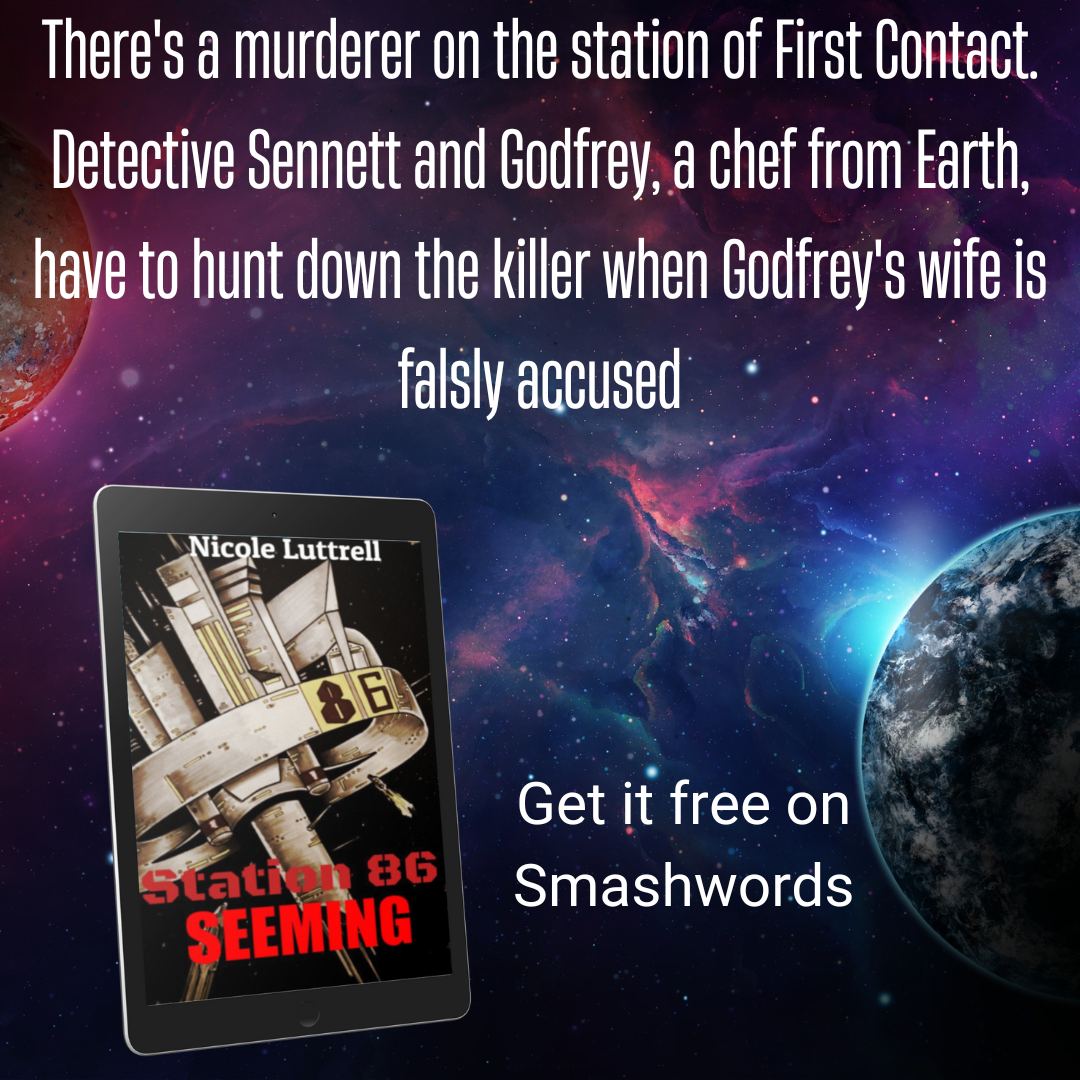
I’ve written two series. One is a fantasy series called Woven, about a boy who weaves visions and a girl who spins light. The second one is called Station 86. It’s about a police officer and a chef living on the space station of First Contact. I’ve also written a standalone horror novel, called Quiet Apocalypse.

Here on Paper Beats World, we talk about stories. We talk about writing them and keeping yourself healthy enough to do so. We talk about reading them and watching them. We talk a little bit about the business of writing. Something I want to do more of this year is talk about money management, because writers don’t make a lot of it, and we’ve got to make it count.

I like to take books I read and shows I watch, break them down, and talk about why they work. I talk about books about writing and tools for writers. I post here once a week, usually on Fridays.

Of course, as writers, we have to experience the world. Otherwise, what the hell are we writing about, and who the hell are we writing for? So from time to time I’ll talk about politics, religion, and world events. So you’re not caught off guard, I am, in fact, a bleeding heart feminist liberal who uses pronouns (She/her). I stand strongly against AI writing ‘art’. I defend banned books, trans people, immigrants, and drag queens. I am fiercely pro-choice. I am also bisexual and a Christian Witch.

I have a husband who’s disabled after a stroke, a dog named Oliver, and a cat named James. I also have a full-time job. It should be no surprise at all that I’m a big fan of coffee.

And wine.

My goal here is the same as it’s always been. To entertain you and teach you to fit a fulfilling writing practice into your life.

Now, for those of you who have been around for a while, I have bad news and good news.

The good news is that we have another year of writing, reading, and complaining about politics together to look forward to. I’m going to be refreshing the site to make it a little more personal and on brand. And I’m going to be posting new poetry or microfiction on Instagram most days.

The bad news is that I will not be publishing a new book this year. And it’s because I’ve been trying to write the book that I know some of you are waiting for, the finale of Station 86.

No lie, I have written two full rough drafts that were just terrible. They didn’t work at all. And this is the finale, you guys. It’s got to be what you deserve. What the story deserves.

So, this year I’m taking some time away from the project. There’s no sense in my beating myself bloody over something that clearly isn’t ready to exist yet. I’m working on a new-ish novel before I dive back into the Station 86 world.

That doesn’t mean, of course, that there will be nothing new from me. I have some fantastic ideas for the year. And I hope, whether this is your first visit or you’re an old friend, that you enjoy the journey with me.

If you love what we do here and want to support Paper Beats World, please like and share this post. You can also support us financially on Ko-fi.

Want to start of the year with a free book? Check out Seeming, book one of Station 86.

Do you care about me? A conversation about parasocial relationships

Do you like me? Do you really like me? Like, as a person?

I promise, this isn’t some desperate cry for attention. I’m not your ex or super needy friend texting you at 12:45 at night on a Thursday. Do you like me, Nicole, the person?

If you consider yourself a reasonably kind person, you might well want to answer yes. Of course you like me. You come here every week and read whatever writing or reading-related thing I’ve come up with between working and trying to keep my cat from eviscerating my roommates’ dog.

And yes, part of me wants you to like me. I am human. We all want to be seen and loved for who we are. But the other part of me, the larger part, doesn’t really give a damn. And if you’re a writer or content creator, you probably shouldn’t care if your fans like you, either.

That’s right, we’re talking about parasocial relationships today. And why they’re not only dangerous for everyone, but really don’t have any upsides.

Your readers can’t really know you

You can’t really like me as a person, because you don’t really know me as a person. You know the face I show to the internet.

This isn’t to say that I lie about the things I say online. I really am a writer, feral Christian, witch, progressive, horror fan who lives in Western PA and refers to Stephen King as dad. I really do love the books I praise and hate the books I berate.

But to know these things about me isn’t the same as knowing me. You can know a lot about a person online, and it’s not the same as having an actual relationship with them.

We know people in our real lives. People we’ve been able to have real-world back-and-forth conversations with. People who we’ve seen grow and change, and who have seen us do the same. Can this be done on the internet? Yes, of course. I have several good friends I’ve never met face-to-face. But it’s still a two-sided relationship with give and take.

Liking someone doesn’t always translate to liking their work

Even if you like a creator, that doesn’t mean that you like their creation. I love Cardi B as a person, but I don’t listen to any of her music. I like her politics, her sex positivity and the way she supports other female creators. But her music, while I can appreciate the quality and talent, isn’t for me.

Likewise, some people I am not fond of make some wonderful content. I don’t mean people I can’t justify supporting financially anymore. I mean people who are fine, just kind of dicks. Joss Whedon strikes me as a pompous ass. I’ll still watch almost anything he’s involved in.

Most people I’m a fan of, though, I don’t know a lot about. I know almost nothing about Sylvia Moreno Garcia, Grady Hendrix or Kirsten White. I’ll buy their books sight unseen. I don’t think liking them as people is a big part of that. It’s the fact that their books are fantastic.

Parasocial relationships are dangerous

I am very blessed. No one who’s ever been weird to me online has ever found me in real life. I’d love to keep it that way.

Other writers and content creators aren’t so lucky. One witch I follow on YouTube had someone trying to break into her home with a screwdriver. An Instagrammer had to move to another country because she was getting death threats and people were calling ICE on her.

Being online is scary. While the vast majority of people are perfectly kind and normal (And the comments you guys leave are so sweet!), it just takes one devoted crazy person to find a content creator and threaten their life.

This danger goes both ways. We’ve all heard horror stories of content creators taking advantage of their fans. Like Miranda Sings, for instance. The less said of her, the better.

That’s not why we’re here

We as writers and content creators aren’t here to make friends.

I don’t mean this in the mean, competitive way. I have certainly made friends in my writing journey. Other writers and creators are not my competition. And that is a blessing. But that isn’t why I started writing.

I started writing to tell stories. I started this blog to share my writing journey and hopefully help you with your journey. I’m assuming that you started writing to tell your stories.

No one needs to like us. They just have to like our stories.

So, do you like me? If so, that’s great. I’d probably like you too. But if you don’t, that’s alright. All I really want you to like is my writing.

Your writing should look like your writing

I’m writing the third draft of a new project. I can’t tell you what it is yet, only that it’s a dark fantasy piece dedicated to Hekate.

As I’ve been working on this book, the same thought keeps coming up over and over. As I flesh out scenes. As I rewrite dialogue. As I sketch out brainstorming notes.

I keep thinking, “This isn’t the right way to do this. No one writes like this. This isn’t how it’s supposed to be done.”

I’m doing my best to quiet this thought. Because it’s getting in the way of what could be some of the best damned writing I’ve ever done.

Each writer has a specific voice. A certain feel to their work that is distinct, no matter the genre they write. King’s books feel the same from Danse Macabre all the way to Never Flinch. Kiersten White’s work feels the same no matter if she’s writing fantasy or horror. And a lot of the reasons why they feel so different are stylistic choices that, frankly, I might not have made. You might not have made them. I certainly don’t write with such gory detail as King, for instance. We have wildly different word choices, and I don’t feel the need to set every story I write in Main.

Your personal voice comes from five different elements. The first is your word choice.

Words. Writing nerds like us obsess over words. Word choice can change a scene from cozy to chilling. It can make a story inspiring or terrifying. Consider the difference between these two sentences.

“Sharon sauntered towards the door and slid it open.”

“Sharon stalked to the door and ripped it open.”

Both examples include Sharon opening a door. The first one feels sexy. The second is vaguely threatening.

In both, she might just eat the person on the other side alive.

Word choice is about the voice of your story. Dialog is the voice of your characters, and the second element of your writing voice. It helps build setting, build character. And it tells something about you as well.

Are you the sort of writer who does a lot of exposition in dialogue? Do you use it to give away clues? Do you tell us who your character is?

Characters in general are a big part of a writer’s voice. King, for example, used to write a lot about drunk men who were bad fathers. Then he wrote a lot of men trying to get and stay sober. And far too many of them are named Bill.

I tend to write characters who are irritated all the time. Who have a strong hand on their tempers, until they don’t. Sylvia Moreno-Garcia writes characters who are terrifyingly single-minded.

Then, there are descriptions. This is a place where your voice can truly come out. And a place where prose writers can indulge in a little poetry.

How you describe something shows us your voice. How long it takes you to describe something also does that.

Some writers I could mention could spend a little less time describing things if I’m being honest.

You might be wordy. You might write tight. All of this is part of your voice.

Finally, where you set your stories is a huge part of your voice.

I tend to write about communities big enough that you don’t know everyone, but not so big that you can get through Walmart without seeing a high school acquaintance you’d rather not. I probably do this because I’ve always lived in that sort of place. So that is how I understand the world to be. Even when I’m writing about spaceships with ghost dragons, this theme comes up.

Some people write about small southern towns. Some people write about dark, gothic places. Some people write about the Pacific Northwest like it’s the eeriest place in the world. Which I take personally, as a person who lives in the foothills of the Appalachian mountains.

Here’s the thing about your writer’s voice. It’s the most important thing to remember. You can recognize your voice. You can, and should, study other writers’ voices. But you really shouldn’t try to force your voice.

Who you are is going to come through in your writing. Where you live, how you were raised, who did the raising. How you see the world. It’s all going to come out, one way or another, in your work.

And that’s a good thing! That’s the whole point of art. Entertaining stories don’t stick with us as much as ones that make us feel something. And we make readers feel something when we share how we uniquely experience the world.

We don’t have to do that by writing memoirs or opinion pieces. We can write about whatever we want to. Werewolves, hockey players, dragon hunters. No matter what you choose to write, you should shine through. And you should never, ever feel like you need to copy another writer’s voice. First of all, you won’t be able to. And second of all, we need as many unique voices in the world as we can.

Paper Beats World is a labor of love. If you love what I do here, please consider liking and sharing this post and leaving a comment. You can also support me financially on Ko-fi.

Spooky season is coming, and it’s time for some creepy reads. Check out my horror novel Quiet Apocalypse, about a witch trapped in her apartment during a dark winter storm with a demon devoted to ending the world.

Or check out my horror short, The Man In The Woods. A man tries desperately to protect his granddaughter from the mysterious man in the woods. But his fear only grows when a new housing complex is built too close to the woods.

Some thoughts on Jimmy Kimmel

I’m in the process of actively moving and close to a breaking point, stress-wise. So if today’s post doesn’t feel as polished as others, I ask you to bear with me.

I woke up today to the news that Jimmy Kimmel Live has been cancelled. And this is very scary. It comes after learning that Stephen Colbert’s show was cancelled. Kimmel’s end appears to be swifter. While Colbert will still be on the air until May, Kimmel’s show seems to be gone as of now.

I could be wrong. Please let me know in the comments.

I can only imagine that Seth Meyers is counting the days until his show is pulled.

Now, I’m not scared so much for Kimmel and Colbert themselves. They’re both wealthy men who will, I’m sure, bounce back from this just fine. Colbert just won an Emmy, for God’s sake. I’m sure they’ll find another platform.

What scares me is this. If this is what’s happening to the popular, visible, wealthy white men who are standing up to Trump, what is happening to the people like us? People with little blogs and little voices? How many of those voices have been silenced without us even noticing?

This is the eventuality that writers have been warning about for years. As news media is controlled by fewer and fewer companies, our access to it becomes easier to lose. It’s the same thing that happened as publishing companies began to buy each other up. This led to more gatekeepers, more control over what books were coming out, and worse treatment of writers. Because where were we going to go?

It’s been happening for decades, and now we’re truly seeing the results. We’re seeing how easy it is for one small, petty man to quiet voices he doesn’t like.

Let’s talk about Trump. And let’s talk about the staggering hypocrisy from the right.

See, the First Amendment is the first for a reason. I’m not sure why so many people today seem to want to hop right over that one and defend the second so quickly. But clearly that’s what’s happening.

“Congress shall make no law respecting an establishment of religion, or prohibiting the free exercise thereof; or abridging the freedom of speech, or of the press; or the right of the people peaceably to assemble, and to petition the Government for a redress of grievances”

But Nicole, you might say, no one’s taking away the First Amendment rights of late-night show hosts. They are perfectly free to say whatever they want. And that’s true. They’ll probably have very popular podcasts. Freedom of Speech doesn’t guarantee freedom of reach.

But you don’t have to remove Freedom of Speech if you can just silence everyone who disagrees with you. If you strangle every avenue they have to be heard. Sure, we can say whatever we want. But if no one can hear us, it doesn’t really matter.

I’d also like to point out that removing voices from large platforms corrodes the already shaky trust we have in our news media. It’s hard to know who to trust when the established voices aren’t established anymore. It’s also just easier to trust the word of someone who has a whole team of writers, fact checkers and editors behind them.

When someone on a late-night or news show tells you something, it isn’t just them talking. And this goes for everyone in the media. Rachel Maddow has a team of writers. And that helps us trust in what they’re saying more.

All this is being done intentionally so that we the people don’t know what’s happening. To let information and misinformation combine until we don’t know which way is up. And it’s working.

Fortunately, there are things we can do.

We can verify sources on social media before we share things. Don’t be part of the problem. Don’t share news unless it’s from a reputable source.

Of course, for that we need to know who the reputable sources are. I always trust the Associated Press, personally. I tend to trust late-night people, John Stewart, John Oliver, and Some More News.

Trust what you’re seeing with your own eyes. We can look around and see that climate change is impacting us. We can see that the economy is struggling. We can see prices going up and wages remaining stagnant. We can see police violence and racism on the rise. We can see women’s rights and LGBTQ+ rights being stripped away. Don’t let someone tell you that you’re not seeing what’s right in front of you.

More than anything, don’t allow yourself to be bogged down with despair. Don’t let fear cripple you. Take care of yourself, and take action. It’s the same advice I give every time I talk about politics. Vote. Go to protests if it’s safe for you to do so. Write politicians. Write physical mail and send it. Support your local libraries, local schools, and local food pantries.

After I’m moved, I’ll be doing a series about media literacy and disaster preparation. Until then, stay safe and stay informed.

The story remains

Please indulge me in a moment of nostalgia today. It’s a very special anniversary.

Eleven years ago today, I started writing Woven. After years of feeling stuck in my writing. Years of starting projects but never finishing. Years of shrugging and saying I was a writer, but never really writing. I took expensive bread from a coffee shop that isn’t there anymore to a park that still is. I fed the birds and prayed for a book idea that wouldn’t die before its first real breath.

A spell is just a prayer with extra steps. I believe this was the most successful spell I’ve ever cast.

Eleven years have passed. I have moved homes three times. (And am getting ready to move again, God help me.) The walls and roof that surround me have changed. The desk at which I sit, sipping copious cups of coffee and tea, has changed. I’ve written at a desk older than me, painted over countless times. I’ve written at coffee shops, laundromats, doctor’s offices, libraries and day jobs. I’ve written at a desk my husband made for me by hand. It’s actually the first piece of furniture I’ve ever owned that wasn’t second-hand, and that’s where I’m still writing right now.

The story has remained.

I’ve changed jobs then job titles. I’ve changed my last name.

My family has changed. It shrank, but then swelled again. I lost people I never thought I’d lose. Never thought I could survive losing.

I’ve found new people. A new family, a new place in the world to need others and be needed in.

The story has remained.

I’ve written other stories. Some published, some not. Some tucked away for ‘someday’. Every one of them owes their existence to Woven. Because if it wasn’t for the story about a boy who weaves visions and a girl who spins light, I never would have had the courage or knowledge to write anything else.

I stepped out of my twenties and into my thirties. Soon, I’ll move into my forties. My hair has started to show silver. My back hurts in fun new places.

And yet, this story remains.

I became a horror critic. Then the site folded. Woven was bought by a publisher and then dropped. I republished it. Then I published it wide, a thing I wouldn’t have been able to do if the publisher hadn’t dropped us.

The story, through it all, remains.

We’ve lived through a pandemic and at least two recessions. At least some of us have. We’ve seen wars start and start. And start. We’ve seen three presidents. Well, two presidents and one threat to our country.

The story, though, remains.

And at this point, I feel like I’m ending a long journey. With Falling From Grace going wide this Friday, I’ve done almost everything I can do with it until I can afford to make it an audiobook. (I’m working on it.) Unless I write another book in the same world, the story of Woven is at its inevitable end.

Except, of course, that there are new readers in the world every day. New people looking for new stories. And I don’t think that’s likely to change anytime soon.

So this story will remain. I’ll write others. I’ll share others. And we’ll all keep right on changing.

I am so glad you’re here to share the journey with me.

Falling From Grace is going wide on Friday!

The End of Haunted MTL

The publishing world is ever changing. What was a thriving online market yesterday could well be bankrupt tomorrow. A publishing company that was an unquestioned pillar can crumble. A beloved author can seemingly go out of her way to destroy her reputation.

And a beloved horror review site can shutter.

Sadly, Haunted MTL is no more. And, I might as well rip this band-aid off now, there will not be another season of AA.

I might write the story in book form, if anyone is interested. I was certainly going somewhere with the story.

I started working for Haunted MTL in 2019. I’d already published several novels by this time, but this was something different. This was an actual writing job.

I loved my time writing for Haunted MTL. I met so many amazing writers and made friends with several. There is nothing better than writing friends. I got to see horror movies that I might never have seen. Some I wish had never assaulted my eyeballs, like Antichrist. Some I loved very much, like Silent Night and Pooka. I conducted live tweet events during American Horror Story and Dexter, and got to talk to fellow fans all around the world.

Being a critic was a fantastic experience. If you want to be a good writer, one important exercise is to dissect a piece of work that you have strong opinions about, good or bad, and consider why it either works or doesn’t work. As a critic, that was exactly what I did twice a week. And I even got paid for it.

I was also invited to participate in several charity anthologies, which is always great. We conducted storytelling events through the years, writing short stories together. Including several years of Christmas and holiday horrors.

We did podcasts. We did events. We once read A Christmas Carol together and posted it. It was a laugh.

It was too good, maybe, to last.

I will miss Haunted MTL. I will miss the sense of writing camaraderie. Of being on staff. Of being part of a team.

But even as I mourn, I know it’s time to move on. As I said at the top, the publishing world is ever changing. And so even as this spooky door closes, another will open.

If you find yourself in this sort of situation, I’m so sorry. But remember, setbacks like this don’t necessarily reflect on you. Sometimes projects don’t work. We are artists, and art is subjective. Sometimes we’re going to do our level best and still not succeed. All there is for us then is to dust ourselves off, have a little cry, and write another story.

Then another, and another.

Paper Beats World is a labor of love. If you love what we do here, you can support us by liking or sharing this post. You can also support us financially on Ko-fi.

Starting Chains is going wide! Check out all the places it will be available here.

Why Sunrise on The Reaping Works

So I just finished reading Sunrise on The Reaping. And it emotionally wrecked me.

Yes, I know these books are written for teenagers. I don’t care, they’ve had me crying in public more than once.

I happened to be carrying the book with me as I was running errands. One of those errands was to return the book safely to the library from where it came. But in one shop, the man behind the counter said, “Oh, that’s that new Hunger Games book, right? I heard that was coming out.”

And I said, “Yes, I just finished it.”

“Is it any good?” he asked, “Or is it just a money grab?”

“Oh no,” I said, as though those two things were mutually exclusive. “It’s very good.”

I know the accusations get thrown around often when an author comes back to a popular series and adds more to the story. And sometimes it’s a valid argument. Sometimes it’s even a warning of elder abuse.

IYKYK.

But I honestly don’t think that Suzanne Collins wrote Reaping because she was running low on cash. And frankly, even if she did, I’m not mad at it. Because even if she wrote this book for money, it was still a damned good book. So today, let’s talk about why Sunrise on The Reaping was such a good prequel. Aside, of course, from the many reasons why this series is great to begin with. I was obsessed with re-reading the series after I finished Reaping, and I’m shocked by how good it is. How accurate it is. I’m sure I’ll talk more about that later, but for today, let’s just focus on Sunrise on The Reaping.

The story made sense with the rest of the series

The story of Haymich’s Hunger Games fits thematically with the rest of the series. It felt like the rest of the books if that makes sense.

Most good writers have a voice. They have certain ways of phrasing things, word preferences, and pacing that cannot and should not be taught. It’s something we writers develop over time.

And it’s something that changes over time. Take for instance Stephen King’s Castle Rock books versus his Holly books. They have a different feel, don’t they? Not entirely different, but enough that it’s noticeable. This is partially because they’re very different series that deal with different subject matter and different sorts of main characters. They were also written decades apart from each other, of course. And that’s the really tricky part. Writing voices change over time. While that’s to be expected and is in fact a good thing, it can also be difficult if you want to go back and add something to your series later.

But Reaping feels very much like the rest of the series. It feels like a similar vibe, a similar voice. And that’s not an easy thing to do.

This world feels like it is filled with stories

One of the great things about the world of Hunger Games is that it feels like it’s full of stories. Katniss has one story, and it feels like an ending. But it’s also an open ending. There are ways that the story can continue.

And there are certainly ways it can expand in the past. I mean, we have how many Hunger Games between Katniss’s and Lucy Gray’s? And what about the war that started all of this? What about the calamity that befell the world to give us Panem to start with? And we haven’t even learned that much about the other districts. I mean, I love District 12 because it’s basically where I live. But there are twelve other districts we could learn about. I’d read a book about a victor from each one, personally. I also wouldn’t mind a book about District 13 and how it fell.

I have no idea if we’re going to get any of those books. I don’t know if Collins plans to write anymore in this world. But I hope she does. We’ve barely scratched the surface of this world she’s created.

It was a well-written story that built on all of the other books

As I mentioned earlier, this story built well on the rest of the series.

We already knew there was a reason Haymich was a drunk. Now we have every tragic detail. We know what it must have cost him, year after year, to work with kids bound for the games. We understand more why he had such affection for Mags, and why he has such a mixed series of emotions around Trinket. Above all else, this is what compelled me to go back and read the rest of the series again.

But this book also adds to Snow’s story from Songbirds and Snakes. It also adds to Bettie’s story and Wiress’s. In short, it expanded the world in ways that built up, rather than ignoring, the work that had been done before.

It’s not the first prequel that was satisfying

Speaking of Songbirds and Snakes, as well as work already done, that was also a good book. Much of what I’ve said about Reaping can be said about that one as well.

Having one prequel that was already a joy made me far more excited to read this one. Because, to me at least, it proved that Collins was still eager to write in this world, and still had more stories to tell. It’s said that the first chapter of your book sells your book, while the last chapter sells the sequel. That was certainly the case here.

It was clearly a joy to write

Finally, this might just be writer bias. But because the book is so well written, I have to assume that it was fun to write. Collins was passionate about writing it.

Writing takes time, as you’re probably aware. Time that could be used to do just about anything else. To put in the time and effort it takes to write a good book, you need to care about what you’re writing. It needs to move you, to pull you back again and again. Your passion for the story has to be enough to get through the exhausting days. The days when everyone else has needed so much of you. You’ve gone to work, made one to three meals, and cleaned and cared for loved ones both flesh and furry. On the days when it feels like committing yourself to one more thing might break you, you need to feel passionate about your story to make it happen.

That’s why I think Reaping was written with love. You can feel that Collins had something to say. Something she needed to say.

I hope she has more to say. And I hope that if you haven’t yet read Sunrise on The Reaping you get a chance to soon.

If you want to support Paper Beats World, like and share this post. You can also support us financially on Ko-fi.

Broken Patterns is available right now everywhere for preorder. Click the link below to check it out.

My thoughts after Pathfinders Writing Collective’s March Madness

I got an email on Monday that maybe you got too. It was from the Nanowrimo organization, explaining that they are shutting down.

I have mixed feelings about this. I posted months ago about why I was stepping away from Nanowrimo. But it’s an organization that inspired millions of writers over the years. It gave me the inspiration and courage to write my first published novel.

This one. Available now on Amazon and going wide as of April 25th.

And yet, I also feel we are seeing the writing community’s response to AI writing. We will not support any organization that gives quarter and comfort to AI platforms that steal our work and produce flat and soulless stories flooding our markets.

There is one part of the letter that I agree with, though. Interim executive director Kilby Blades said, “Many alternatives to NaNoWriMo popped up this year, and people did find each other.”

And this is true. We found each other. And this past month I participated in a writing challenge that does just this. The Pathfinding Writers Collective March Madness event. And it was a fantastic experience. Even though my team lost. If we’re being fair, I personally lost twice.

Let me explain.

My personal goal for the month was to write for 31 hours in March. One hour a day. And that sounds easy until we remember that I’m caring for a husband who had a hemorrhagic stroke. He needs an incredible amount of hands-on care. So there were a lot of days where an hour of writing was a delightful daydream.

But this was still an incredible success for me. Let me explain.

I still wrote more than I had been writing

As mentioned, this is a busy season of my life. And for much of February my writing took a back seat. Hell, it wasn’t even in the back seat. It wasn’t in the trunk. It was in the attached trailer behind the damn car. Most days I couldn’t even think of looking at my writing.

But in March, I wrote twenty days out of thirty-one. I made the time. I tried to write an hour, but sometimes made only 15 minutes. Sometimes I only made 10. But that’s still more than what I had been doing. I didn’t make a ton of progress, but I made more than the month before.

There was this incentive, you know. This desire to make sure I had some numbers to put on the board, even if it was a small number. Because any number, any number at all, was better than zero.

I kind of love time-based writing goals

Writing goals work for me. I like having numbers to work towards. For most of my writing career, my goals were word-count based. But I’m realizing that this sort of goal isn’t conducive to actual writing. It doesn’t take into consideration all of the work that goes into writing that isn’t putting words on the page. I was ignoring the time I spent researching, freewriting, outlining and planning. Those are all vital parts of writing that need time and space. They need to not be rushed.

I also find that my writing goes faster when I devote that time, unrushed, to the brainstorming process. It’s as if by giving my mind time to mull over the story without a keyboard under my fingers, it has more space to breathe and is already written when I am ready to write.

Having a community is awesome

We’ve talked about this before, so I’m not going to devote much time to this. But that doesn’t mean it isn’t important!

It is, if I’m being honest, the most important part of challenges like this. It’s what made Nanowrimo so special.

Writing is solitary. Its deadlines are often self-imposed. I have no boss asking me for updates. I have no co-workers to bounce ideas off of. I have no external pressure to create. Which is both a blessing and a curse.

For one thing, it’s lonely. For another, it makes it so much easier to push off tasks I don’t want to do because, after all, there are no repercussions.

But when I have a team of people I’m working with, there is some good pressure. When I don’t want to let my team down, I’m inspired to get my ass in my chair and write. On days when I might not have written at all, I wrote. On days I needed inspiration, I had the rest of my team. And that made all the difference.

I didn’t take as much advantage of the challenge as I wanted to. I could have done more. I could have attended more writing sprints. I could have chatted more and made more friends. But for where I am, I think I did the best I could. And I saw so many writers reach so much farther than they thought they could. I saw this wonderful community of writers cheering each other on, supporting each other, and inspiring each other. I don’t want to give out names that aren’t mine to give, but one writer in my group wrote through 249 hours in one month. Girl, how?!

But whether we wrote almost 250 hours or thirteen hours, we all came together to reach a goal. We all made progress on our stories. And we need stories now more than ever.

So the question is, will I be participating in more Pathfinder Writing Collective events? Absolutely. I cannot wait.

Paper Beats World is a labor of love. If you want to support us, you can do so by liking and sharing this post. You can also support us financially on Ko-fi.

Broken Patterns is going wide! You can preorder it now everywhere.

To write a long novel

If a book is well written, I always find it too short.

-Jane Austen

Let’s hear it for the long novel. There is just something about a big, hefty book that feels delicious.

Of course, I am a fan of Stephen King. I’ve read The Stand no less than seven times. I loved Strange The Dreamer by Laini Taylor. And Phillipa Gregory isn’t exactly short-winded either. Then of course there’s the holy grail of my childhood fantasy reading, Mists of Avalon.

A long novel is what you write when you want to explore sweeping expansive descriptions. When you want your readers to see the jeweled beetle sitting on the windowsill. In short (rim shot) writing a long novel takes a much different skill set than a short one.

Rich descriptions

If a short novel is like a sketch, a long novel is a wall-sized oil painting. The details in long novels are rich.

Consider a long novel you’ve read. I bet you feel like you could step into some of the most iconic rooms. You might be able to see the bedspreads or picture the garden bench.

Not everyone loves this sort of description, but some fans eat it up. I personally think it’s a great place to flex a more literary style of writing. This is a great place to get symbolic and poetic.

Large cast

Wheel of Time, Game of Thrones, Harry Potter. All of these have massive casts that span far beyond the main character. And most of those characters are fully formed. They have likes, dislikes, families, desires. We can see how changes in the world will impact these different characters in different ways.

This is a fantastic way to expand the world. To show different points of view that might challenge your main characters.

And yes, large books often have more than one main character.

Having the space to explore your world from multiple points of view is one of the benefits of writing a long book. It’s not an easy task. It’s difficult to juggle a large cast with their varying details and desires. So you’ll probably want to start a book bible as soon as possible.

Worldbuilding

Writing a large novel gives you space to really explore the world. If you enjoy creating different countries and communities, this is ideal for you.

Especially if you’re incorporating a large cast, you can establish as many communities as your heart desires and the story will support.

However, here’s a word of warning. Don’t get so lost in building your world that you forget to tell your story. Because the most beautifully crafted world can only hold someone’s interest so far. Remember, the story comes first. Everything else is just a stage setting.

Subplots aplenty

In a long novel, there is space to tell many stories. There can be subplots. There can be side quests. There can be love stories between secondary characters.

And that kind of feels more real, doesn’t it? There’s rarely a time when your life is just revolving around one thing. Even at the height of my husband’s stroke recovery, we were still dealing with other things. It’s never just one thing, is it?

Take my book, Station 86. While the characters are dealing with the Hollow Suits, they’re also falling in and out of love. They’re working on their careers and businesses. They’re trying to keep peace and keep food on the table. They’re running for office. They are living complex, complicated, messy, wonderful, horrible, realistic lives.

In the end, a large novel is all about space. It’s having space to stretch out and make sweeping and grand stories that are an investment of time. But that’s not going to deter people if you’ve done you’re job right. In fact, it might well be a great selling point.

If you like what I do here, you can support this site on Ko-fi.

Stories Save Us

This is a speech I gave during the Stories We Share Event at the Butler Library event on December 27th. Several lovely people suggested that I publish it. So, here you are.

Hi there. My name is Nicole. I write stories about dragons, ghosts and spaceships. Sometimes I write about the ghosts of dragons on spaceships. And, like most people who are at least mildly funny, I have been through some hard life events.

Don’t worry, this isn’t all depressing, I promise.

I was raised by a mother with a lot of chronic health issues. This meant I spent more time in my childhood than I should have in waiting rooms, doctor’s offices, or just keeping myself occupied quietly so my mom could rest.

I passed the time by reading. Chronicles of Narnia, Goosebumps, Laura Ingells, Babysitter’s Club. These stories kept me company in dark places. I escaped into Secret Gardens and attic rooms enhabited by Little Princesses.

As an adult, I fell in love with and married a man who also has chronic health issues. Because of course, right? And again, books have come to my rescue. Stephen King, Philippa Gregory, Tamora Pierce, Kiersten White and Grady Hendrix keep me company through scary days.

Now I do more than read these stories, I write my own. And in the past few years, while almost everyone has fallen on hard times, it’s sometimes felt foolish to keep writing fiction. Indulgent, and insensitive even. A writer I’m very fond of named Matt Wallace, who wrote the Savage Rebellion series, said that marketing right now feels like standing outside of a burning building and yelling at the people coming out, “Hey, you wanna buy a book?”

But the answer is yes, yes I actually do want to buy a book and read it. I want stories.

Stories can save us. And they do this in two ways. The first is of course that they’re entertaining. It’s fun to read. And while you can’t run away from your problems, you can take a break from them. Maybe you need some time in Narnia, or a haunted house, or a world where sewing is magic. Because after we take that time, take that break in a book, we come out a little bit stronger. Maybe that gives us the clearer eyes we need to look for the helpers that Mr. Rodgers told us about. Maybe it even gives us the strength and courage to be the helpers.

Here’s the other thing that stories do for us. They tell us that we are not alone. Fear can make us feel like we’re the only ones suffering. That no one else understands the pain we’re going through. But that’s not true. We’ve all had those seasons in life where we’ve gotten a scary diagnosis, tried to leave a dangerous relationship, fought an addiction, moved far away from everything familiar, or worried about how we’re going to pay rent and get groceries, and keep the electric on. We’ve all said goodbye to people we never wanted to say goodbye to, or had something violent and terrible happen to us that we neither deserved or saw coming.

Neil Gaiman said this about writing Coraline. “Fairy tales are more than true: not because they tell us that dragons exist, but because they tell us that dragons can be beaten.” But we knew this before Gaiman. The author of Beowulf knew this and wrote about monsters and dragons that the great hero faced. These stories comforted and guided our first ancestors. They helped them cope, heal, and find the courage they needed.

We are not going to fight literal dragons. We aren’t going to face Voldemort, or a sentient haunted house, or a series of unfortunate events orchestrated by a school friend of our dead parents. But we are going to fight our own dragons. And a lot of the time we win, and live to see brighter days.

What worries me, is how many people can’t remember the last time they read something for pleasure. Most of us spend a lot more time doom-scrolling than resting our hearts in fiction. If that’s you, find a book you want to read today. We are standing in a library right now. Find a book to take home with you. Take half an hour, ten minutes, hell five minutes, and read a story you love. Maybe it’s something you read as a child, or maybe it’s a new book. Maybe it’s wildly out of your age range. Look, when I’m stressed I reach right for Beverly Cleary so I’m not going to judge.

Make the space for you to have joy, no matter how bad your day is going. Because we all need to remember that dragons can be beaten.

A WordPress.com Website.

Up ↑