Why House of Quiet Works

Released in September of this year, House of Quiet is the latest novel by Kiersten White. This is the same author who brought us Mister Magic, Lucy Undying, The Dark Decent of Elizabeth Frankenstein, and Hide. Which is to say, the author of some of the best books I’ve read in the past few years.

House of Quiet is about a young woman named Birdie. She’s spent the last several years trying to find her little sister Magpie, who vanished after undergoing the mysterious Procedure. Birdie poses as a maid to get into the mysterious house of quiet. But what she finds there is a group of children who need to be rescued.

Today, we’re going to break it down and see why it works. Because there’s a lot that can be learned from this wonderfully dark, sweet tale.

Just jump in

The story starts in the middle of things. It starts with a mysterious woman wandering around the House of Quiet with a candle, bemoaning how loud it was.

We then jump to Birdie, heading to the house of quiet, thinking of all of the shady things she had to do to get there.

As we follow along, we only get an idea of the world she lives in and what she’s doing. We know that she’s grown up in crippling poverty. We know that she’s never speaking to her parents again. And that’s about it.

But that’s okay, because we’re going up to the house. We’re meeting the other new maids. We’re being drugged with tea. There is stuff going on, and there will be time to explain later. The important thing is that we’re not slowing down the start of our story. We are jumping right in.

Don’t over-explain

I spent a lot of this book trying to figure out what in the hell was going on. I wanted to know what happened to Magpie. I wanted to know what the procedure was. I wanted to know what had happened to Birdie’s friends. I wanted to know why Minnow was acting so strange.

And never once was any of this simply out and out explained.

No, the story was moving too fast for that sort of thing.

This was infuriating, but in a good way. Because everything is answered, eventually. It’s just that we have to piece things together as we go. Or, we find out as the characters do.

House of Quiet brought the ‘show don’t tell’ rule almost to its breaking point, but not quite. At no point did I feel so lost I thought I’d never catch up. But it wasn’t until near the end that I really felt like I knew what was happening.

This is a hard line to walk, giving just enough information for the reader to barely understand. But, I think the easiest way to do this is to have faith in your reader. Don’t feel like you’ve got to spell everything out for them. Leave some spaces for them to fill in the blanks themselves.

Anything can be used to world build

One of the most charming things about House of Quiet was the naming structure of the characters. People raised in poverty have animal names like Minnow, Magpie, and Birdie. People from the upper class have names like River or Forest.

This is a super quick and efficient way to give us information about a character with the fewest words possible. We know the character’s name, and we know what class the character is from. And in a book that is all about class warfare, that’s vital information.

This is a great example of using every element you can to world-build. Names, clothes, jewelry. Think about how all of these things impact our real world. And yes, you should be using any of these to show your world, rather than telling us about it.

Now, all this being said, this book wasn’t perfect. My biggest complaint, I think, is the relationship between the characters. They were, in my opinion, a little too sweet. They came together too quickly. They were too kind to each other. But, of course, this is a book for young adults. So maybe that’s why.

This was not enough to ruin the story for me. House of Quiet was a fun, heartwarming tale, and I enjoyed it greatly. If you haven’t read it yet, do it today.

Paper Beats World is a labor of love. If you love what I do here, please consider liking and sharing this post and leaving a comment. You can also support me financially on Ko-fi.

And while you’re there, you can pick up a copy of my Novel Planner.

Writing a novel is a journey! Here is your roadmap.
The Novel Planner takes you through four weeks of planning to help you successfully write a novel. Includes twelve pages to plan your time, your team and your life.
Also included are some useful pages to keep track of your wip, like a map page and an injury tracking chart.

Your writing should look like your writing

I’m writing the third draft of a new project. I can’t tell you what it is yet, only that it’s a dark fantasy piece dedicated to Hekate.

As I’ve been working on this book, the same thought keeps coming up over and over. As I flesh out scenes. As I rewrite dialogue. As I sketch out brainstorming notes.

I keep thinking, “This isn’t the right way to do this. No one writes like this. This isn’t how it’s supposed to be done.”

I’m doing my best to quiet this thought. Because it’s getting in the way of what could be some of the best damned writing I’ve ever done.

Each writer has a specific voice. A certain feel to their work that is distinct, no matter the genre they write. King’s books feel the same from Danse Macabre all the way to Never Flinch. Kiersten White’s work feels the same no matter if she’s writing fantasy or horror. And a lot of the reasons why they feel so different are stylistic choices that, frankly, I might not have made. You might not have made them. I certainly don’t write with such gory detail as King, for instance. We have wildly different word choices, and I don’t feel the need to set every story I write in Main.

Your personal voice comes from five different elements. The first is your word choice.

Words. Writing nerds like us obsess over words. Word choice can change a scene from cozy to chilling. It can make a story inspiring or terrifying. Consider the difference between these two sentences.

“Sharon sauntered towards the door and slid it open.”

“Sharon stalked to the door and ripped it open.”

Both examples include Sharon opening a door. The first one feels sexy. The second is vaguely threatening.

In both, she might just eat the person on the other side alive.

Word choice is about the voice of your story. Dialog is the voice of your characters, and the second element of your writing voice. It helps build setting, build character. And it tells something about you as well.

Are you the sort of writer who does a lot of exposition in dialogue? Do you use it to give away clues? Do you tell us who your character is?

Characters in general are a big part of a writer’s voice. King, for example, used to write a lot about drunk men who were bad fathers. Then he wrote a lot of men trying to get and stay sober. And far too many of them are named Bill.

I tend to write characters who are irritated all the time. Who have a strong hand on their tempers, until they don’t. Sylvia Moreno-Garcia writes characters who are terrifyingly single-minded.

Then, there are descriptions. This is a place where your voice can truly come out. And a place where prose writers can indulge in a little poetry.

How you describe something shows us your voice. How long it takes you to describe something also does that.

Some writers I could mention could spend a little less time describing things if I’m being honest.

You might be wordy. You might write tight. All of this is part of your voice.

Finally, where you set your stories is a huge part of your voice.

I tend to write about communities big enough that you don’t know everyone, but not so big that you can get through Walmart without seeing a high school acquaintance you’d rather not. I probably do this because I’ve always lived in that sort of place. So that is how I understand the world to be. Even when I’m writing about spaceships with ghost dragons, this theme comes up.

Some people write about small southern towns. Some people write about dark, gothic places. Some people write about the Pacific Northwest like it’s the eeriest place in the world. Which I take personally, as a person who lives in the foothills of the Appalachian mountains.

Here’s the thing about your writer’s voice. It’s the most important thing to remember. You can recognize your voice. You can, and should, study other writers’ voices. But you really shouldn’t try to force your voice.

Who you are is going to come through in your writing. Where you live, how you were raised, who did the raising. How you see the world. It’s all going to come out, one way or another, in your work.

And that’s a good thing! That’s the whole point of art. Entertaining stories don’t stick with us as much as ones that make us feel something. And we make readers feel something when we share how we uniquely experience the world.

We don’t have to do that by writing memoirs or opinion pieces. We can write about whatever we want to. Werewolves, hockey players, dragon hunters. No matter what you choose to write, you should shine through. And you should never, ever feel like you need to copy another writer’s voice. First of all, you won’t be able to. And second of all, we need as many unique voices in the world as we can.

Paper Beats World is a labor of love. If you love what I do here, please consider liking and sharing this post and leaving a comment. You can also support me financially on Ko-fi.

Spooky season is coming, and it’s time for some creepy reads. Check out my horror novel Quiet Apocalypse, about a witch trapped in her apartment during a dark winter storm with a demon devoted to ending the world.

Or check out my horror short, The Man In The Woods. A man tries desperately to protect his granddaughter from the mysterious man in the woods. But his fear only grows when a new housing complex is built too close to the woods.

How to ruin your story

The first season of Amazon Prime’s Upload launched in 2020. And I was hooked from the start. It’s the story of a man named Nathan who is uploaded to a virtual afterlife after his death. He is, we’ll say, less than pleased with this.

The show was funny, thought-provoking, and touching. It had a lot to say about class disparity and how artificial our lives are becoming. And every season left us with a killer cliffhanger.

The last season was released in August of this year. And it was just, just terrible. It was a slap in the face of fans. And while I don’t think it’s the worst series ending ever, it was pretty damned close.

Of course, there is no great loss without some small gain. As writers, we can learn from bad writing as easily as good writing. And the last season of Upload is a perfect example of almost every single way you can screw up your ending and leave fans feeling ripped off and betrayed. So let’s see exactly how you ruin a series.

Spoiler alert! There is no way I can talk about this ending without spoilers. So if you haven’t seen the season yet and somehow still want to after that intro, you’ll probably want to do that before reading more. I will also be giving some spoilers for the show Shitt’s Creek. It will make sense when we get there.

Add in stupid, unrealistic storylines

Upload has always been about one thing above all. Class disparity. How far companies will go to make a buck off the backs of anyone.

Well, that seems to have been scrapped this season. Instead, we got a story about the AI guys becoming sentient and taking on lives of their own. And, for some reason, corporate espionage that led to Aleesha becoming a super spy. At least I think that’s what happened there. It’s actually kind of hard to follow, since they only had four episodes to introduce this concept, then bring it to a conclusion.

Scrap your main antagonists and replace them with much worse ones

For the first three seasons, the main antagonists of Upload were David Choak, played by the incomparable William B. Davis, and Oliver Kannerman, played by Barclay Hope. They were two grossly wealthy white men who killed people without qualms because the people in question were poor. Choak at least doesn’t seem like a bad guy at first. Then you learn more about him.

These were good antagonists. We wanted to see them fall. What ended up happening to them was not satisfying. It was not significant. Both antagonists were just sort of pushed aside to make room for the evil AI Guy. Who was, by the way, a boring and lazy antagonist.

I do not care that an AI assistant became sentient. I do not think it’s believable that evil AI Guy was going to destroy the world in some mysterious way. It wasn’t interesting, it wasn’t scary, it wasn’t compelling. And maybe it could have been if the storyline had been given time to grow or evolve. But it sure as hell didn’t have that time.

Drop a bunch of storylines and characters

I ended this series with a lot of questions. Maybe you’ve had some of the same questions.

What happened to Nora’s dad? Didn’t he have a fatal disease?

What happened with the Luds? Are they still trying to fight against modern tech? Did they just scatter?

What happened to Jamie? We know he’s dead, and that’s all we know.

What happened to Byron? Is he doing okay? Is he still pining after Nora?

Did anyone even care that Fran died? Justice for Fran!

And where the hell were Navaya’s parents this whole time?

Now, there are some stories that left us with good questions. Hunger Games is a good example. But bad questions are a death sentence. These are questions that should have been answered a while ago. And it feels like if the show had had more time, it would have answered these. But that’s not an excuse. This felt less like an ending and more like a bleeding wound of a story.

Give your main characters a bad ending that wasn’t deserved

Some stories don’t have happy endings. Some characters get bad deaths they don’t deserve. Some good relationships end.

Let’s use Shitt’s Creek as an example. Specifically, the relationship between Alexis and Ted.

They were so good together. They loved each other. But in the end, they loved each other enough to let each other go.

I cry every time I watch this. When Ted says, “Can’t say we didn’t try,” I just lose it.

This ending, sad as it was, made sense for Alexis. She had spent her entire life doing dumb shit for men. She was running all over the world, getting into dangerous situations, and ignoring her own identity for men who did not care for her.

She needed to choose herself. That was sad, but it made sense for her character.

Now, let’s talk about the ending between Nora and Nathan.

It was Goddamned mean.

Nathan’s personal arch was never about needing to let go of his mortal life. That was, for some reason, never a story arc for any of the characters. His arch was about making good changes in the world.

As far as main characters go, Nathan was a perfect foil for the antagonists. He was a good-looking white man. And while he didn’t have money, he had the talent and ability to make money. A lot of money. He could have been the next Choak or Kannerman. Hell, he might have married Ingrid and taken the Kannerman name.

If Nathan had died saving someone, that would have made sense. If he’d died like Luke did, that would have been a satisfying but sad ending. Instead, he’s only a victim. He dies because of senseless abuse.

Give up on everyone’s story arcs

This actually leads me to my last issue. Not a single character had a satisfying personal arc. Except maybe the AI Guy.

Dylan never got to grow up.

Luke was erased and never learned to love himself.

Ingrid got everything she thought she wanted, instead of learning that she can be a whole well well-rounded person without Nathan.

Aleesha achieved all the safety she deserved, then gave it up to become a corporate spy.

And Nora, our main character, really got shafted. She wanted to find someone to know her, but she had trouble letting people in. And she finally does. She trusts Nathan and loves him. And he dies senselessly.

There’s nothing there. Yes, I saw the ending. It’s bullshit. It’s not enough. Which honestly sums up my whole opinion about this final season.

In the end, the failure of this last season of Upload lies firmly with the writers. Yes, I am sure there was pressure from higher-ups. There always is. This was put out by Amazon, after all. But the writers could have done more.

The actors did a fantastic job. The effects were as good as ever. But the story is what we’re here for. And the story failed in every way possible. So learn from this, writers. Don’t make these same mistakes. Write better.

Paper Beats World is a labor of love. If you love what I do here, please consider liking and sharing this post and leaving a comment. You can also support me financially on Ko-fi.

Spooky season is coming, and it’s time for some creepy reads. Check out my horror novel Quiet Apocalypse, about a witch trapped in her apartment during a dark winter storm with a demon devoted to ending the world.

Or check out my horror short, The Man In The Woods. A man tries desperately to protect his granddaughter from the mysterious man in the woods. But his fear only grows when a new housing complex is built too close to the woods.

Discussing Long Quiet Highway

Published in 1993, Long Quiet Highway is the fifth book by Natalie Goldberg. Just in case you don’t know, she is the iconic writing teacher and author of Writing Down The Bones, among other amazing books about writing. This one, though, is not technically a book about writing. It’s a memoir. But, like all of her work, it sent me right to my notebook.

So today, let’s talk about Long Quiet Highway. How it’s different from her other books, and what I learned from it.

Long Quiet Highway starts with the story of Natalie as a child. Her parents were immigrants. She grew up in New York before they moved to the suburbs.

Natalie describes her childhood as being cloistered. Dull. To me, it feels cloying. Safe, fun, and full of little pleasures. Her parents clearly loved her and supported her. But there was little art in her life. There was little to wake her up, to make her feel alive.

This is used as an introduction to a teacher who woke her up. That encouraged her to listen to the rain. To experience it.

As an adult, Natalie taught high school. Or, maybe middle school. I’m honestly not sure which, and I don’t think it matters. While she was teaching the same bland curriculum she herself had learned, she felt lost and dull. Asleep. That’s when she decided to quit her job and join a Zen commune.

Because I guess that’s a thing you can do?!

For years, Natalie learned meditation and Zen from several teachers. Until she met one that changed her life, Katagiri Roshi.

He’s changed mine as well. But we’ll get to that.

The focus on the subject is solid

Through the book, it can feel like the story sort of rambles. One minute, Natalie’s talking about a train ride she took with a friend. The next she’s talking about learning Zen. Then we’re at a diner ordering a soda.

It’s only when we step back and look at the story as a whole that it makes sense. That we realize that every step was going in the right direction, we just couldn’t see the end of the path yet.

This was a fantastic way of memoir writing. Rather than going in strict chronological order, we skip around. It allows us to become completely immersed in the true subject of the story without even realizing it.

Even when she’s not talking about writing, she’s always talking about writing

I mentioned earlier that Long Quiet Highway is not a book about writing. It is about Natalie’s life. But here’s the thing. Natalie’s life is about writing. She writes passionately. She teaches writing. She exudes writing. This woman writes like the rest of us check social media. So when she talks about her life, she is talking about her writing.

In this way, much can be learned about the habit of writing from this book. Write when you’re happy. Write when you’re sad. Write when you don’t think you can possibly get yourself up off the ground. Fuck it, write from the ground, then. Write when you feel inspired and when you feel dull. Write when you’d much rather be eating chocolate.

Just keep your hand moving.

This is the best advice I’ve ever gotten about writing. Don’t worry about it being good, at least not at first. A lot of your first draft is going to be shit, no matter how many books you’ve written and how many you will write. Trust me, I speak from experience. I have published 12 books, and my rough drafts are still terrible. Hell, my second drafts are also bad. It’s only by the third draft that the story becomes anything I might consider letting someone else see.

And that’s okay. The purpose of a first draft is simply to exist. So if you’re still trying to complete your first piece, but you’re worried it isn’t good enough, it is. Just keep your hand moving.

Her work makes me want to live

I’ve mentioned before that reading Natalie Goldberg always makes me want to write more. More than that, it makes me want to live more. To do more things and to do them deeply.

Never before have I experienced a person who so deeply experiences every part of their life. She talks in such detail about going to get a croissant. Of riding the train.

Goldberg’s work makes me want to sit outside and feel the sun. To write about the rain, the people arguing in the parking lot outside of my window, and the cupcake I bought at a festival.

She also makes me want to travel. To go out and explore the world. To take a long trip alone or just a different route home.

The legacy of a teacher

Finally, I want to talk about how teachers can touch the lives of people they will never meet.

I am not a Buddhist. I am not a Zen student. I practice meditation, but more in a witchy way than a Zen way. And I certainly never met the famous teacher Katagiri Roshi.

And yet he has touched my life in a profound way. Because Natalie Goldberg was his student. And she wouldn’t have written Writing Down The Bones if it hadn’t been for his teachings.

Because of this, Goldberg was able to touch my life. I have learned so much from her work, and I continue to do so. Someday I want to actually work with her, attend one of her workshops. But for now, I have her words, and am one of the many students she’s inspired.

And Natalie is only one of Katagiri’s students. His kind, supportive teachings have touched countless lives.

I highly recommend reading Long Quiet Highway. As well as any of Natalie’s books. If you want to be a writer, or get into mediation, or just experience life more, this book will help you do that.

It will help you wake up.

Paper Beats World is a labor of love. If you love what I do here, please consider liking and sharing this post and leaving a comment. You can also support me financially on Ko-fi.

Spooky season is coming, and it’s time for some creepy reads. Check out my horror novel Quiet Apocalypse, about a witch trapped in her apartment during a dark winter storm with a demon devoted to ending the world.

Or check out my horror short, The Man In The Woods. A man tries desperately to protect his granddaughter from the mysterious man in the woods. But his fear only grows when a new housing complex is built too close to the woods.

I’m a Christian Witch. Here’s how it impacts my writing

Writers have a weird job. We sit down and make up things that never happened, then write them down on paper to entertain people. We might try to tell some truths about things along the way, but mostly we’re playing pretend on the page.

That’s a weird thing to do, when you think about it. Which is maybe why everyone wants to psychoanalyze writers. Especially horror writers, I’ve noticed. It’s almost like people think you’re weird if you make up stories about people getting brutally ripped apart by otherworldly creatures or psychos in masks.

What’s wrong with people?

However, it’s true that a writer’s life and beliefs will inevitably influence their writing. Of course it will. No matter what you do, your personality bleeds through on the page. What you love, what you hate. What you hope for and what you’re afraid of.

Now, I’m not saying that Paul Tremblay has murdered anyone. No more than I’ve ever battled a demon while trapped by an ice storm. But I am saying that my personal beliefs do make their way onto the page. Sometimes it’s on purpose, but sometimes it’s not.

Let’s discuss.

If you don’t already know, I am a Christian. But not in a red hat, everyone’s going to burn in hell except me, way. I’m a bit more classic Christian. Feed the poor, care for the sick, love your neighbor, and flip over tables if need be.

I’m also a witch. Yes, you can do both. No, it’s not common, but it happens.

I’ve been fascinated by witchcraft since I was a kid. Charmed, The Craft, Practical Magic. I especially loved Willow from Buffy. I loved that she gained all this amazing power just from studying! Willow wasn’t born into witchcraft. This isn’t a legacy or a superpower for her. She chose it, studied like hell, and became as powerful as the Slayer.

So it’s no wonder that, once I finally started exploring witchcraft, I wanted my characters to explore it as well. I even included some actual spells I actually wrote in Quiet Apocalypse. In this way, I grounded the story in a bit of reality.

Yes, I actually do mean realistic. Because as a witch, I do believe in ghosts. But I also believe that ghosts aren’t the only thing that can get into your home and mess your life up.

However, I don’t usually believe in the chain rattling, blood coming from the walls, apparition sort of ghosts. No, the spirits I’ve encountered are a bit darker. A bit more clever.

My witchcraft experiences have encouraged me to write more about that sort of haunting. It’s less dramatic, but feels more real. At least, to those of us unfortunate enough to experience it.

Finally, both witchcraft and Christianity have made me see my writing as a sacred thing. A gift that I can use to make the world a better place. Or, at least make my life better.

Writing can be shadow work. I used it that way in Quiet Apocalypse. Writing can be a manifestation. Writing can illicit emotions or make people see the world in a different way.

Writing can change the world. At the very least, it can brighten someone’s life. I don’t ever take that for granted.

Witchcraft and magic have touched all of my writing. Woven is largely about the difference between religion and faith, and standing out in a world that wants to force you to fit in. Quiet Apocalypse is about the darker sides of magic fighting the light. And the thing is, this isn’t something I plan or don’t plan. It happens in the rough draft, and I decide to go with it.

That, I think, is the real moral of today’s story. Let the things that move you into your writing. Let the things that shape you into your writing. I could have written this exact same post about living in a Western PA steel town. Or growing up in a single-parent, single-child household. Or being a horror fan. All of these things shape who I am. So, of course, they shape the art I make.

Who you are should shape the art you make. And the good news is that this isn’t something you have to learn. Just let it come out.

Paper Beats World is a labor of love. If you love what I do here, please consider liking and sharing this post and leaving a comment. You can also support me financially on Ko-fi.

Spooky season is coming, and it’s time for some creepy reads. Check out my horror novel Quiet Apocalypse, about a witch trapped in her apartment during a dark winter storm with a demon devoted to ending the world.

Or check out my horror short, The Man In The Woods. A man tries desperately to protect his granddaughter from the mysterious man in the woods. But his fear only grows when a new housing complex is built too close to the woods.

Why The Dead Husband Cookbook Works

I will do my best to avoid food puns in this post. But I might not be able to help it. Sometimes they’re just too tasty.

See, we’re starting already.

Released on the fifth of this month, The Dead Husband Cookbook is the latest novel from Danielle Valentine. If you’re just joining us, she’s written three novels so far that I’ve absolutely devoured.

Wow, two so far.

The Dead Husband Cookbook is about two women. One, Thea, an editor who’s hanging onto her career by a thread. She committed the ultimate sin of, gasp, revealing an author she was working for to be a predator. But she’s given a chance to redeem herself when a celebrity chef, Maria Capello, asks for her specifically to edit her brand new memoir. The memoir, which might, after years of speculation, put to rest the rumors of how her husband died.

So let’s break it down, like a good recipe. Let’s talk about what went into The Dead Husband Cookbook and why it works.

I loved the recipes

Through the book, we’re treated to some of Maria’s recipes. Now, I’m not as deeply into cooking as I am some other things, but I do enjoy it. I like a simple recipe full of things I can recognize and easily get at Walmart. I like making a recipe with the tools already in my kitchen.

I have managed to not buy an immersion blender for thirty-nine years, and I’d like to keep it that way.

All of these recipes are like that. Well, maybe not the one for duck. I’ve never seen duck at a grocery store here in Western PA. But then, I’ve never looked for one.

I got the e-book version of this book, just to make sure I can hang onto the recipes and try them. This made me feel immersed in the story. I, like Thea, will try my hand at making Maria Capello’s meatballs. Mine probably won’t taste the same either.

But it’s these little details that make reading a book not a passive experience. You get to become part of the story in a small way. That’s fun.

This feels like a book within a book

I am always a sucker for stories with additional documents in them. Journal entries, a VHS someone found tucked behind the guest room dresser, old medical records. And in this case, a manuscript that Thea is editing. As a reader, it breaks up the flow of the story in a good way. We feel like we have as well found something illicit. Something we’re not supposed to read or see, but now we’ve got our hands on it.

As a writer, this is also fun. It’s a way to experiment with different writing styles and formats. Even with different voices, as the pov of found content is different from our main characters. This leaves you open to all sorts of fun experimentation. And if the writer’s having fun, the reader will too. And Valentine was having fun when she was writing Maria.

Maria is creepy as hell, but not for the normal reasons

I loved the character, Maria. As someone who’s spent way too much time in medical waiting rooms, I’m familiar with the celebrity chefs she’s based on. The Pioneer Woman, Martha Stewart, The Barefoot Contessa, Rachel Ray. They all give off this air of near perfection. Like Maria, they appear smiling, joyful, endlessly energetic and endlessly working to feed others. I am a rabid feminist and I still sort of want to be that. I want to be the woman who saunters into a gorgeous, well-lit kitchen and throws together a fabulous meal without getting a single stain on my expensive blouse.

But I think we all know that these women are performing. They’re acting. And under that character, they’re real people. People with a whole range of human emotions and access to many sharp knives.

Maria isn’t scary in the way the killers from Never Flinch or Mexican Gothic are. She’s more like President Snow. She has the power, the money, and the know-how to destroy anyone she wants. She also has the will to do so. And she’ll sleep well that night.

Thea is very relatable

Unlike Maria, Thea is a relatable character. She’s struggling in a very Millennial way, trying to care for her family and her mother. She doesn’t know how to talk about what she needs to other people. She doesn’t know how to stand up to anyone at the start of the book.

But she’ll stand up for other people.

I also loved how much of a mom Thea is. Early in the book, she notes that Maria’s granddaughter has impeccable table manners. She’s not impressed, she’s concerned. That kid sat at the table and ate with a fork without spilling or interrupting seven times with incomprehensible questions? Nope, doesn’t pass the vibe check.

I also loved her constant irritation at having no internet connection. Look, I can’t do my work without the internet either. I have three tabs open just to write this post. She’s not irritated because she can’t scroll through Instagram before bed. She needs to be in communication with the people who depend on her and do research, damn it! Let the woman access Zoom.

The tension is thick

I was nervous as soon as Thea stepped into Maria’s house. It felt like she was stepping into a killing bottle. A well-appointed one, an expensive one, but a killing bottle nonetheless.

It started when they took her phone. Then her keys. Then she couldn’t get out through the Wi-Fi.

I don’t think we realize sometimes how accustomed we’ve come to being able to communicate with others. We can casually chat with people all over the world. I haven’t seen my best friend face-to-face since December. We talk all day long.

As soon as Thea arrives, though, she can’t contact anyone. Not just anyone. She can’t communicate with her boss, who is looking for an excuse to fire her. She can’t communicate with her team, who are waiting to make crucial publishing decisions on a short deadline. She can’t communicate with her husband and daughter.

Setting aside the horror part of this horror story, that is an anxious situation. Not being able to reach people who might need us, who usually do need us, is stressful.

As always, horror works best when it’s grounded in reality. Most of us will not be trapped in a killer chef’s house. All of us have felt stressed out because someone might need us, and can’t reach us. So when that layer of physical danger is layered over this emotion that we are familiar with, it feels so much more real.

I adored The Dead Husband Cookbook. Aside from everything else, it was a grown-up horror. It was a scary story that felt real to adult experiences. It relied on real fears and anger that real adults feel. All in all, it’s another hit from an author who hasn’t missed yet.

So now I want to hear from you. Did you read The Dead Husband Cookbook? Let us know what you think in the comments. And if there’s a book you want me to pick apart to see why it works, let me know that as well.

Paper Beats World is a labor of love. If you love what I do here, please consider liking and sharing this post and leaving a comment. You can also support me financially on Ko-fi.

Spooky season is coming, and it’s time for some creepy reads. Check out my horror novel Quiet Apocalypse, about a witch trapped in her apartment during a dark winter storm with a demon devoted to ending the world.

Or check out my horror short, The Man In The Woods. A man tries desperately to protect his granddaughter from the mysterious man in the woods. But his fear only grows when a new housing complex is built too close to the woods.

Why The Bewitching Works

Released on July 15th, The Bewitching is the latest book from Sylvia Moreno-Garcia. If you don’t know who that is, where have you been?

It’s the story of three women battling dark entities and evil workings. A story that spans decades and miles to tie Mexican witchcraft with New England witchcraft. It’s about blood, greed, and power.

In this book, we meet Alba, a restless young woman who wants to escape her family’s farm with her dashing uncle. We also meet her great-granddaughter, Minerva, a college student suffering from burnout while working on her thesis. Finally, and my personal favorite, we meet Beatrice Tremblay, a young writer in love with her college roommate who mysteriously vanishes one cold, dark winter night.

I loved every second of it. So let’s take the story apart and talk about why The Bewitching works.

Every time I talk about Moreno-Garcia, I have to talk about her settings. When reading one of her stories, you can feel the places her characters live in. In Alba’s parts, we walk on a family-run Mexican farm, plucking chickens and sewing patches on rowdy children’s clothes. When we’re with Beatrice, we can feel the constrained and manicured lives of female college students during the Great Depression. Minerva’s parts feel like a campus town in the summer. All but abandoned.

We see this and feel this because each character feels these things. It’s in the small bits of internal monologue. An itchy collar on a dress. Meeting your dance date in the lobby of your dorm. The trees rustling, the sunlight turned green coming through their leaves.

It’s the smallest details, told matter-of-factly, that make this possible. The characters talk about what they’re experiencing with their senses as though we must know what that feels like. And we do.

A major theme in Moreno-Garcia’s books is romance. Love stories. In Bewitching, the theme is more about lost love. More than that, losing the opportunity for love. The almost romance that will never be. That sort of thing.

This is something I think most of us have felt. The unrequited crush. The relationship was just never timed right. Or the love that was taken from us by the tragedy of one sort or another.

This makes the pain of the characters relatable. And it’s something I don’t think we see enough of in fiction.

There are plenty of meet-cutes. (Bleh). Plenty of slow burn, will they won’t they sort of stories. Even plenty of loves taken too soon. But they got to the love part first.

Losing someone who was never really yours is a different sort of pain. It’s strange, still trying to shift through feelings that were never fully grown. Strange to explain to people why you feel how you feel. Because it’s not the loss of a life or a loved one. It’s the loss of what could have been, and now never will. This is something that is explored in heartbreaking detail in this book.

Finally, I have to talk about the witchcraft in The Bewitching. Because, just in case you didn’t know, I’m a practitioner. There’s a lit spell candle on my desk as I write this.

Much like in Silver Nitrate, another book by the same author, the witchcraft in this book makes sense. I loved the practitioners in Alba’s village, selling protections and trinkets. It feels real. I loved Ginny’s automatic writing being used to contact her mother. I loved the cryptic warnings and tarot cards. And I especially loved the explicit explanation of intent in this book. Because I can tell you from experience, intent is the most important thing in witchcraft. No spell works without it. But I have worked magic with nothing but my intent and words on a page. Candles, crystals and herbs are all well and good. Iron and bowls of blessed water are lovely. But nothing matters more than intent.

I’ve mentioned before that Sylvia Moreno-Garcia is either a practitioner or did all the right research. Either way, the witchcraft in The Bewitching gets this witch’s seal of approval.

If you haven’t read The Bewitching yet, go do it. If you have read it and loved it as much as I did, you have great taste. I recommend reading Lucy Undying by Kiersten White, Mexican Gothic by Sylvia Moreno-Garcia, The Hacienda by Isabel Canas, or Quiet Apocalypse by me. Each one has a witchy or historical vibe that will certainly keep you up at night.

Now I want to hear from you. Did you read The Bewitching? If so, what did you think of it? Let us know in the comments. And if there’s a book or movie you want me to pick apart to see why it works, let me know that as well.

Paper Beats World is a labor of love. If you love what I do here, please consider liking and sharing this post and leaving a comment. You can also support me financially on Ko-fi.

Spooky season is coming, and it’s time for some creepy reads. Check out my horror novel Quiet Apocalypse, about a witch trapped in her apartment during a dark winter storm with a demon devoted to ending the world.

Or check out my horror short, The Man In The Woods. A man tries desperately to protect his granddaughter from the mysterious man in the woods. But his fear only grows when a new housing complex is built too close to the woods.

Some things are supposed to take time

I love a cup of coffee.

Yes, I am a cliche. I’m a writer and a Millennial woman. Of course my veins are full of espresso instead of red blood cells.

I make it each morning in a French press, one of the slowest and low-tech ways to possibly make coffee. I start with Cafe Bustelo grounds and a pinch of salt. (Listen to me. I said a pinch!) Then I put in a bit of cinnamon. I boil water in a kettle I’ve had for years, dressing and feeding the pets while I wait for it to sing. Then I pour the water into the press and give it four minutes to steep. The whole process takes an average of fifteen minutes.

It is the best coffee I’ve ever had. And it’s not the only thing I make that takes time. I make eight-hour roasts and garlic confit. While I have quite a strong relationship with my microwave, my favorite things take time.

Writing takes time. Writing books takes time. Sometimes, far more time than we, as writers, want it to. Publish or perish seems to be the name of the game, especially in the indie writing world. I feel like I’ve always got to have something new coming out. There’s a never-ending pressure.

Oh my God, it is such horrific pressure. When you make your passion your career, it’s a special kind of hell. One completely of our own making. Because it’s not just about creating anymore. It’s not just about writing anymore. It’s about building a backlog. About building a career.

This pressure has been killing me this year. Squeezing me until I can’t breathe, but I sure can be wracked with sobs. I published my latest novel in May of last year. And, I’m sorry to say, I will probably not be publishing anything until at least 2027.

That might be a miracle.

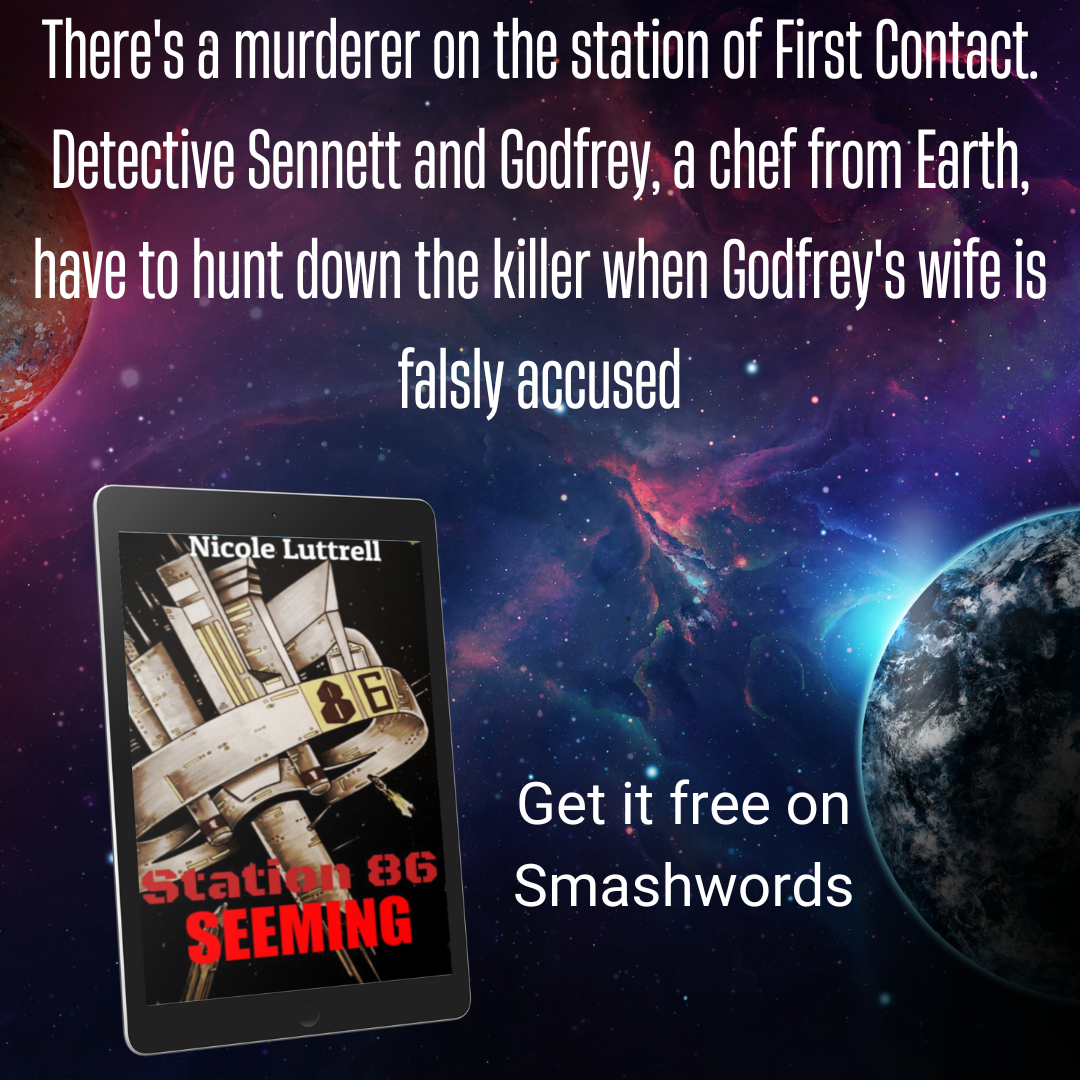
I’ve been writing. Not as much as I want to. But I’ve written two rough drafts for the final book in the Station 86 series.

I’ve written two rough drafts and thrown them out. Because they were just, just terrible.

Some things are supposed to take time.

Right now, I’m writing the third draft of a dark fantasy book. One that I hope to get an agent for, so I haven’t talked much about it. I have worked on this book for years now, in between drafts of Station 86 and AA. It is a passion project. I love it. I hope that someday soon you’ll get a chance to love it as well.

No one is waiting for this story. Well, the universe might be waiting for it. But I don’t have a handful of fans waiting for it. I do have a handful of fans waiting for the last Station 86 book.

I hope.

So when I work on the Station 86 book, the stress is there. The pressure is there. Time is ticking away, and every day means Station 86 fans might forget, give up, or simply move on.

This is the fear that’s been nipping at my heels. While I frankly have enough fear keeping me up at night. But for my sake, and the sake of my writing, I am trying to let go of this fear. It doesn’t serve me.

Writing takes time. Good writing takes time. And sometimes it takes walking away and taking a break to come back with the passion and creativity a project deserves.

I told you that to tell you this. If you’re a fan of Station 86, stick with me. This series is so very important to me, and I’m going to keep working on it until I give it the ending it deserves.

If you’re a writer who feels like you’re not moving fast enough, take heart. Good writing takes the time it takes. You’re not early or late.

And fans will wait. I know it’s hard to believe. To listen to faith over fear. But consider how long you’ve waited for the next book in a beloved series. Tamora Pierce published Tempest and Slaughter in 2018. The sequel is maybe coming out this year, but we don’t have a concrete release date yet. That hasn’t stopped me from checking monthly for updates.

I have a list of authors I check on upcoming releases for each month. That list includes Grady Hedrix, Stephen King, Danielle Valentine, Sylvia Moreno Garcia, Kirsten White, Paul Trembley,Tamora Pierce, Natalie Goldberg and Marcus Kliewer.

Some of those authors publish books yearly. Some don’t. I still check because their work is important to me. So if I’m willing to check for their work, why wouldn’t I think others might check for mine?

Why wouldn’t someone check for yours?

Like a good cup of coffee or a soul-nourishing roast, stories take time. Let yourself have the time you need. No matter how much time that is.

And yes, I promise that the last Station 86 book is coming.

Paper Beats World is a labor of love. If you love what we do here, you can support us by liking and sharing this post. You can also support us financially on Ko-fi.

Spooky season is coming, and Quiet Apocalypse is the cold, dark treat you need right now. Check it out here.

When is the best time to make plans?

It’s the end of July. August creeps up to us with soft feet, barely making a sound as Summer clings on. Fall starts to ever so slowly make herself known.

This time of year brings out the poet in me.

August brings with it back the back-to-school season. This is often a time used for making plans and goals by people whose lives revolve around a school schedule.

For someone like me, who only knows if school is in or out if the yellow buses are making their rounds, this isn’t a time of year I start doing a lot of planning or goal setting. I set goals at the start of the year, breaking them down and modifying them by quarter.

Then sometimes something happens that makes me throw the whole damn plan out and start over. More on that soon.

There are many schools of thought as to when the best time for goal setting is. And as someone who really, really likes her planners, I love this. I love just about any excuse to sit down at my desk with my calendar and bullet journal, and dream on paper about what I can accomplish in a given period. It’s magical. There is my dream, my goal out in front of me. Now let me lay myself mile markers. Let me prepare so that I can bring this dream to life.

So today, I thought it would be fun to take a look at some of the most popular times to set goals and make plans. Let’s look at the pros and cons of each. And we’ll end with what I think is the very best time for goal setting.

New Years

Let’s get the obvious one out of the way first. New Year’s Day, New Year’s Resolutions.

I love this one, personally. Generally, December 26th every year is spent in the pages of my brand new planner, making goals and plans for the year to come.

There’s a lot of social momentum in this. Many of us are surrounded by people who are also making goals for the year. And it’s inspiring to have everyone on this same page, the first blank page in a book of 365.

But there’s a downside to this. First off, most people who set New Year’s Resolutions don’t keep them. So if you’re following that crowd, it might well lead you right back where you were. And you don’t like it there. That’s why you were trying to leave it.

There’s also a lot of pressure at this time of year to make goals. Which isn’t always a good thing. It’s also not a great time of the year for things like seasonal depression. Or, I don’t know, taking up running if you live somewhere where it’s still snowing.

So if you love planning in January like I do, awesome! If not, it’s okay to hit snooze on the whole thing.

Spring

Funny story, the new year used to be thought of as a Spring activity. Which makes a lot of sense to me. The weather’s starting to warm up, lots of cute things are having cute babies. And my seasonal depression has started to melt into Original Flavor depression.

Spring can be a great time for goal setting. Not everyone is doing it, so you don’t feel all of that social pressure. And if your goals include things that require you to go outside of your house, that’s a much more pleasant experience.

Of course, if your goal is to spend more time writing or learning a new skill, Spring might be a fucking awful time for that. After all, what’s more miserable than trying to sit at your computer while the birds are chirping and the iced coffees are calling. So plan your planning accordingly.

The start of a new school year

If you’re a teacher, a student, or have a student living in your house, this is a great time of year to make goals. Your routine just got a lot more structured. Or, at least, the structure changed. You’ve got different responsibilities, and often a lot more of them.

Even if you don’t have anyone schoolbound in your life, the start of a new school year can be a fun time to plan. All the good stationery is out in the stores. And there’s a sense of something starting. Something changing.

Back to school is also really busy. And for some people, this might well be the worst time to start making goals. It’s awfully hard to find some quiet time to make plans when you’re figuring out schedules, making carpool agreements, and being guilted into volunteering for school activities. It might be better to have plans and goals in place before the madness starts, not while you’re already getting used to packing lunches and coordinating football practice again.

Quarterly

There’s an argument to be made that making plans for a whole year at a time is maybe not the best way to handle things. And the older I get, the more this makes sense to me. Things change. Things we don’t see coming just come right on anyway without our consent.

For instance, I didn’t know in January that I was going to be caring for a husband recovering from a stroke and moving my house.

Making plans for three months can be easier. While the unexpected might still knock you on your ass, it won’t mess up your year-long plans. Because you didn’t have any.

Quarterly goals are also smaller than yearly goals. At least they’d better be. And this can feel far more attainable. It’s much less intimidating to break down goals. Consider writing a book.

After all, that’s what we’re originally here to talk about.

Writing a book is a massive, intimidating goal. Most of us can’t write a book in a year. Especially when we have so many other obligations. So it’s easy to look at that massive goal, that massive task, and feel overwhelmed.

Kind of like looking at a house that needs packing and feeling overwhelmed.

But if we break down everything into what can be done in three months, that feels more manageable. I can’t write a book in three months. But I can write a rough draft. Or I can commit to writing every week for a certain amount of time.

Anything is easier if we break it down.

There’s only one real downside to this goal-setting method. You might find yourself forgetting the bigger picture. Seeing the trees and not the forest.

In short, you might start to think small.

Thinking small for a while is great. Especially if it helps you get started. But we shouldn’t be thinking small long-term. There are too many big, beautiful things that we can do. And we should give ourselves the space to do them.

Right now

This is the best time to make a goal. Today, right now. As soon as you’re done reading this.

Sit down and write down one big amazing thing you want to do. Now, write down the steps you need to do that thing. Then, start doing it.

It’s just that easy and just that hard.

You want to write a book? Make a plan, and start brainstorming today. You want to start your own company? Great! Make a plan today. You want to get healthy, adopt a dog, buy a house. Figure out what you have to do, step by step, and start doing it.

We all have things we want to do with our lives. And we don’t have to wait for the start of a year, a quarter, a month, or a new school year to start making our goals real. We can start right now, on a random Friday or Tuesday. Right now is perfect. Go get started.

So now it’s your turn. When do you do your best goal setting? Let us know in the comments.

Paper Beats World is a labor of love. If you love what we do here, you can support us by liking and sharing this post. You can also support us financially on Ko-fi.

Falling From Grace is going wide! Click here to see all the places to get it.

My thoughts on Nebula Con 2025

Last week I attended the 2025 Nebula conference virtually. And for something that only lasted two days, I am sure still recovering from it.

As always, I learned a lot. And while I was a little disappointed that there was only a day and a half of panels for online participants, it was still a worthwhile experience. And, for the first time, I moderated a panel!

Some of my recovery time might have been due to the social anxiety attack I had over that, but it was still fun.

Today I want to share with you some of the best lessons I learned this year. I never walk away from Nebula Con without learning something that uplifts me and helps me be a better writer. Hopefully, some of these lessons will help you as well.

Don’t take anything too seriously

Writing is a serious business that is populated by unserious people. Yes, working writers need to deal with dull and business-type things like marketing sales and pricing. Yes, to be a successful writer you have to treat the business side of things like a business. Like you have a product that you’re selling.

But you’re also making up stories about dragons, ghosts and spaceships. You’re still playing make-believe and putting it on paper. It should still be fun.

This is something that’s never forgotten at Nebula Con. If you’ve ever attended, then you know the running joke that we are, in fact, on a spaceship that we’re sharing with several fantastical creatures. For instance, space wombats.

It is a wonderful reminder that writing is supposed to be a little bit fun. Most of us started writing because we were voracious readers. Reading was the most fun thing we could think of doing. I spent a good part of my childhood, some might say too much, between the pages of one book or another. I was having fun. And I have fun when I’m writing. Even when it’s hard. It’s still supposed to be fun hard.

Writers are still some of the most fantastic people I’ve ever met

You know how sometimes you meet someone and you just click right away? That’s how I am with just about everyone I meet at Nebula Con. And I might be biased. Hell, I know I’m biased. But when you meet someone who speaks the same strange language you do, you feel like you’re a little bit more at home than you did before.

I was introduced to this queen

During the event, I attended a two-hour panel about career longevity. It was hosted by Becca Syme, author and career coach. And the things she said blew my mind.

Look, I’ve been around a bit. For someone to say something truly revolutionary for me is impressive. Because I’ve heard all the self-help and inspirational quotes before. Nothing’s been as motivational as her talk.

I don’t want to jack all her material, because you really should go check her out. I will only say that Loki comes into the conversation and it is life-changing. I now need to read all of her books and listen to all of her podcasts.

If you want to do something, go for it

Now, this is the main thing I wanted to talk about today.

I was invited to moderate a panel about cozy horror. To put it mildly, I was not prepared for this. I had never participated in a panel. Moderating the panel is like being the host. I was in charge of coming up with questions and controlling the flow of conversation. And most importantly, ensuring that we ended on time. All of this, and have my face on camera the whole time!

I don’t know if you’ve noticed, but I put out a lot of content that does not include my face.

So I was terrified. This was dramatically out of my comfort zone. But it was also something that sounded like a good experience.

It should be no surprise at all that it was, in fact, a great experience. The people on the panel were kind, funny and very talented writers. I had a fantastic time.

So if you have the opportunity, get out of your comfort zone. Do something you’re scared to do. Prepare for it, learn what you need, and do it. And if you don’t have the opportunity, make one.

Also, if you’ve never been to Nebula Con before, consider checking it out if you can. I, and the space wombats, will see you there.

If you like Paper Beats World and want to support us, you can do so by liking and this post and sharing it. You can also support us financially on Ko-fi.

Missing Stitches is going wide on June 27th! Check out all the places it will be available here.

A WordPress.com Website.

Up ↑