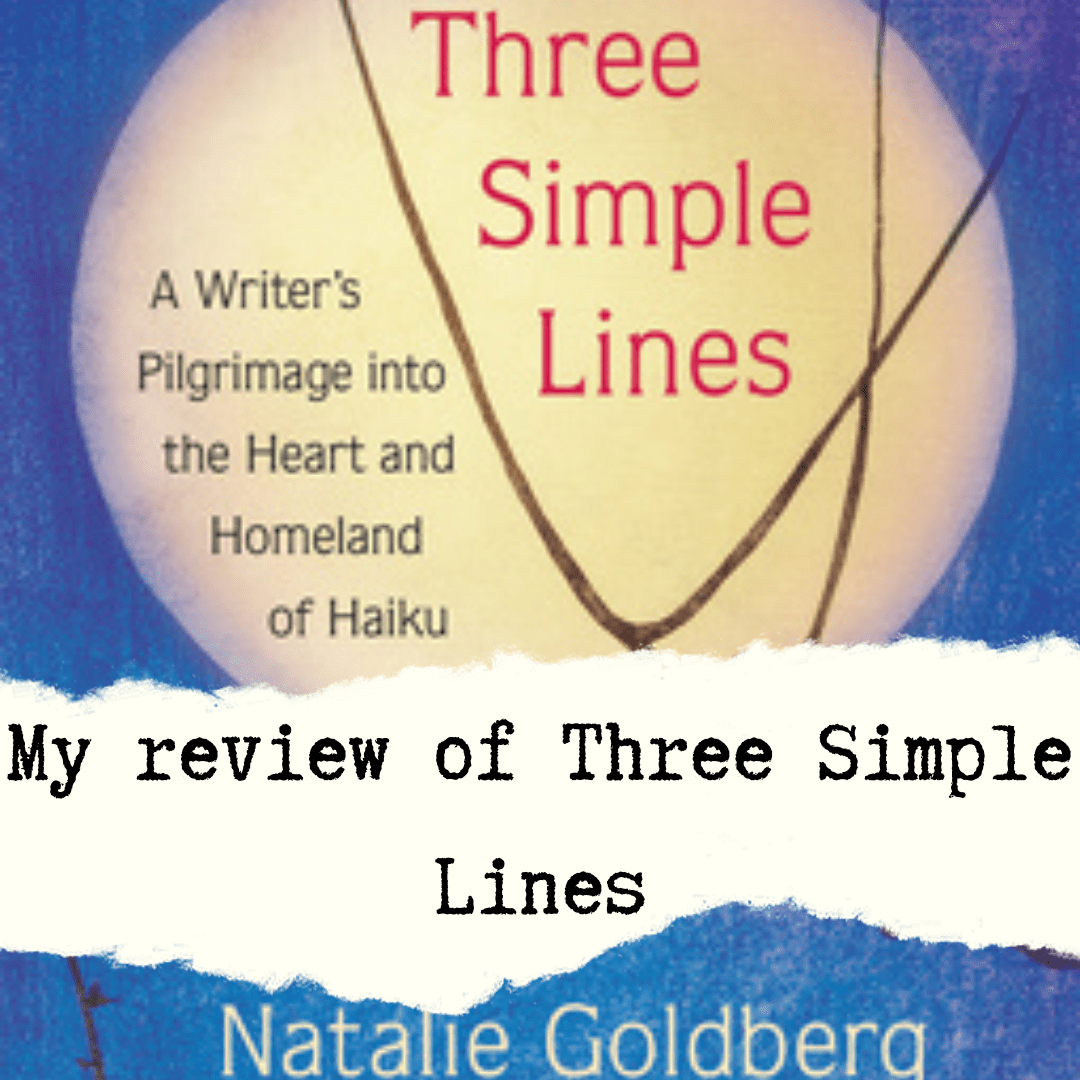
I have talked (a lot) about Natalie Goldberg and how much her work has taught me about writing. While she’s best known for Writing Down The Bones, she has many other books about writing, Zen, and how those things intersect.
Having read Writing Down The Bones, Thunder and Lighting and Wild Mind, I thought I knew what to expect from Three Simple Lines.
I was wrong.
Released in January of 2021, Three Simple Lines is a deep and reverent look at the art of haiku. To really explain this book, I think it’s best to start by describing what it is not.
It is not technically a writing manual. At least not in the same way Writing Down The Bones or Wild Mind were. This is not a collection of personal essays, followed by introspective writing advice and prompts. There are no exercises in this book.
Instead, Three Simple Lines chronicles two trips that Goldberg made to Japan to learn about two Haiku masters that inspired her work; Matsuo Basho and Yosa Buson.
Most of the book reads like a travelog. And honestly, with Goldberg’s deep and melodic writing style, I could read her description of a trip to the grocery store. So that alone was worth the price of admission. I loved her descriptions of exploring Japan. Especially the food.
This would have been an education by itself. If you want to write about travel, this is how to do it. I wanted nothing more than to hear everything about her trip.
But of course, that wasn’t all of it.
Learning how to write a haiku isn’t hard. You write three lines. They should add up to nineteen syllables. The standard belief is that the lines should be five syllables, then seven, then five. But most artists agree you can play a little fast and loose with that.
The soul of a haiku comes from the subject matter. A haiku should capture a moment in time, like a firefly in a bottle. Some people say that they should exclusively be about nature. But I’ve seen plenty that have moved me and had nothing to do with nature. The important thing is that it captures that moment and the feelings within that moment.
These descriptions seem simple, and they technically are. The difficult part is in the doing. This takes years and even lifetimes to master.
During Three Simple Lines, Goldberg talks about the lives of famous haiku masters. She also shares some of their most famous works. I am astounded by the slow pace of these artists. They seemed dedicated to their craft before all else.
This is especially astounding to my modern mind. I feel like I am so often focused on producing rather than creating.
Three Simple Lines is a blend of Goldberg’s story and the stories of these two haiku masters. If nothing else, this book will leave you inspired by the small, lovely craft of haiku.
And probably craving mochi.
If you love the story and want to support Paper Beats World, you can do so on Ko-fi.
Broken Patterns is now live! You can get it right now on Amazon.


 Paper Beats World
Leave a comment