Writing and magic seem to go hand in hand. When I started my witchcraft practice, I was shocked by how many witches were also writers.
Well, not just writers. Singers, painters, dancers, actors. Witches seem drawn to art.
That makes sense to me. Writing has always seemed to me a tangible form of magic. To be able to experience other worlds while lying on your couch. To be distracted in stressful times and invited to another place or time. To hear the thoughts and musings of people long dead, but still here in ink and paper. To write something, and have it read by people all over the world.
That’s magic.
Many books have been written about writing from a magic perspective. I’ve read a few. But, I’ve never really talked about them here. I don’t know why. Maybe it’s because the witch part of my life still feels like something very private. I’m slowly getting over that. I even posted a whole Modern Witch review series on Haunted MTL. So I think it’s time to introduce you to my favorite writing books for witches. Because if there’s one thing that’s universal, it’s that we all want to be better artists.
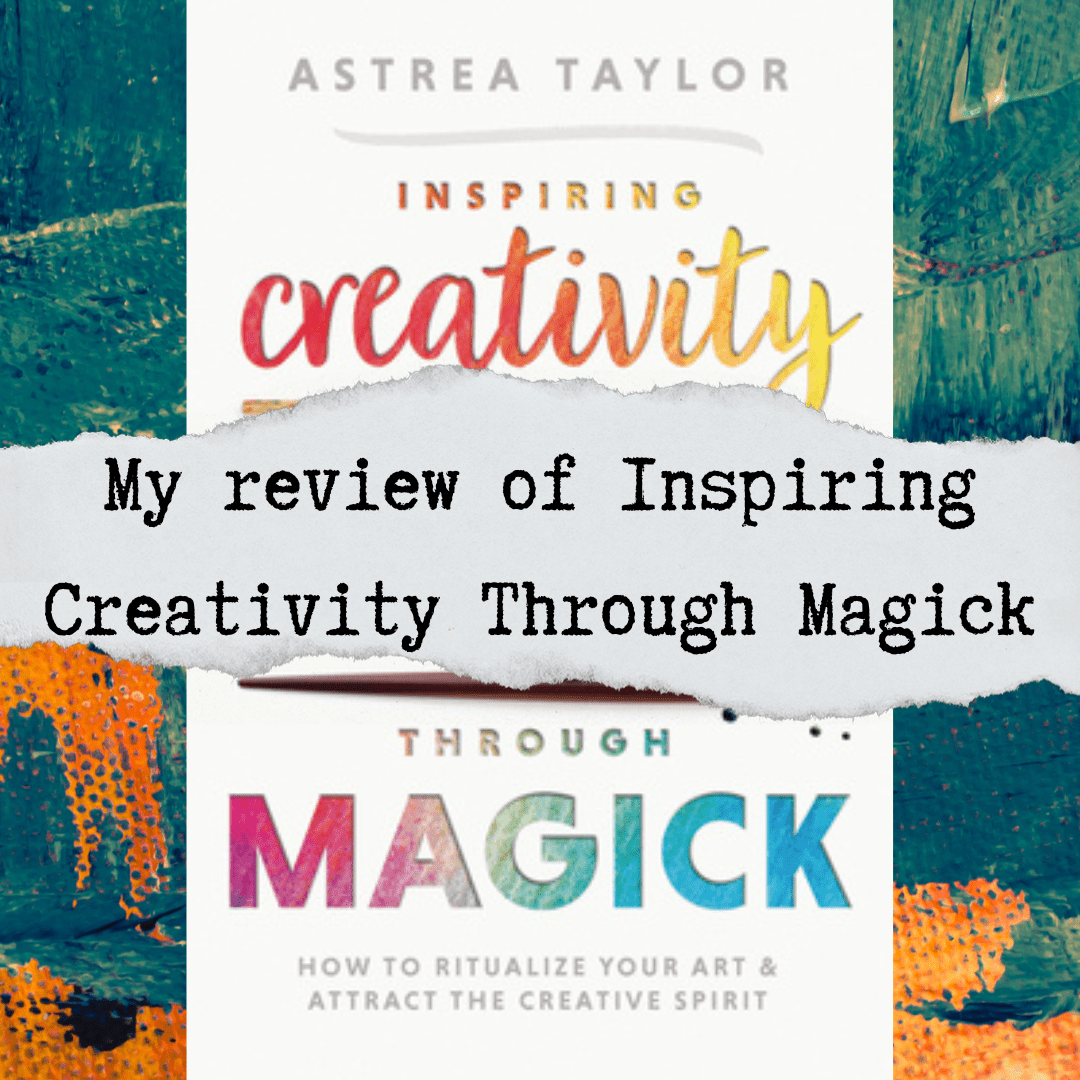
Today, we’re talking about Inspiring Creativity Through Magick, by Astrea Taylor.
Published in 2023, Inspiring Creativity Through Magick is a firsthand guide to creating a fulfilling ritual around your art. It walks the reader through each step of the creation process, from inspiration to the final product. And it is delightful.
The book starts with a conversation about creative spirits. Muses, and the like. This was great fun, and I actually learned about spirits I hadn’t heard of before.
The thing I appreciated most about this part was the discussion of the unnamed creative spirits that many artists say they’ve come in contact with. Taylor even mentions Stephen King talking about his muse in one of my favorite writing books of all time, On Writing. There he talks about his muse being a short man with a cigar that might show up and start working his magic if King puts the work in and all the conditions are right.
Taylor also talks about Big Magic, another book I’ve talked about here. This book also talks about feeling as though the artist is a partner in the act of creation. We are all capable of tapping into the creative flow of the universe and inviting spirits that want to help us bring our creations to life.
And we know this is true. Every artist has those moments when it doesn’t even feel like we’re on the same plane of existence anymore. When the words are coming or the paint is flying with no effort. When all the pieces fall together, or that subplot now makes sense and is exactly what the main story needed, or the character says just the right (or wrong) thing at just the perfect time. When you write a poem that just smacks you between the eyes because it’s so true, and you hadn’t even thought of those words before they were in front of you on the page, somehow coming out of your own hand.
Clearly, this was my favorite part of the book.
We then delve into the step-by-step process of creating a finished art piece. Not the technical details, of course. This book is for all artists, after all, and that would be a bit much. Instead, it explores the basic stages of creation. The inspiration phase. The first pass phase where we create our rough drafts and start telling ourselves our stories. The edits, and revisions. And of course, the eventual release of the work out into the world.
This is wonderful for many reasons. First, sometimes it’s hard to feel the creative magic in the later phases. Writing a rough draft is all creation. Making something from nothing. There are no rules, we’re just throwing words on the page and seeing what sticks. But editing? Revising? Grammar checking? That’s not creative.
It very much is. Honestly, I find that I’m far more creative in the second and third passes of my stories. It doesn’t feel as immense anymore. I have a better idea of what I’m trying to say, and how I utterly failed to say it the first time. So I can fix this bit here, and rewrite that part there. I know what doesn’t work, and now I can figure out what does work. And this is a process that is clearly explained in a far better way than I ever could in this book.
It’s also wonderful to have this breakdown of steps, especially as a beginner. Looking at a finished project, it’s impossible to see all the work that went into it. And if you’re starting at the other end, looking at a blank page, the thought of turning that blank page into a whole book is incredibly overwhelming.
Breaking this process down, step by step, is more manageable. And it’s something I still do. Today, I’m not writing a book. I’m just writing this scene or this chapter. I don’t need to worry about the edits or the rewrites. Or even the next chapter. All I need to worry about is writing this page right now.
One thing I will say is that Inspiring Creativity Through Magick does feel like a beginner book. If you’ve been creating art for a long time, it might feel redundant. I already knew the steps of creating, I didn’t need them drawn out for me. So there might be parts that a more experienced artist finds a bit boring.
Overall, though, this was a really useful book. I think every artist can take something useful and uplifting away from this book. Whether you’re a witch or not, it’s well worth a read.
If you want to support Paper Beats World, you can do so on Ko-fi


 Paper Beats World
Leave a comment