The four notebooks that control my life

It’s no surprise to anyone who follows me on Instagram that I’m a bit planner obsessed. I’ve talked before about my love of bullet journals, and Notion. Being highly organized is the only way I can keep up with all my projects and responsibilities, and still keep my plants, pets and darling husband alive. 

It’s been a while since I’ve done an updated walk through of the planners I use. At this point, there are four books that I consider essential. So I thought I’d go through them with you today. 

This is the system that works for me, and it works for me in part because I like planners. I like having all four of these. Honestly, you could probably get your system down to two books. And I will discuss how as well. But for me, this works too well to tinker with it. 

My planner

Let’s start with a good yearly planner. I personally use the Magic of I astrology planner because, well, I’m a witch. I like the planetary information is right there for me to see, and I love that the 12 Sabbats are included with the rest of the holidays. This isn’t a sponsored post, and I’m honestly not even trying to sell you on this specific planner.

The point is that this planner works for me and the way I live my life. There’s lots of space on each day for me to write out everything I need. The pages are thick and take everything but Sharpies without ghosting. And I like that there’s a menstrual cycle tracker built in. 

(As a side note for people who menstrate, you should not be using any sort of period tracker app if you live in America. That information can be accessed and used against you in a court of law. I don’t think I need to go into any more detail as to why.)

Here’s a list of the things I keep track of in my yearly planner.

My work schedule for my day job.

Contest and writing deadlines.

Birthdays and holidays, like a normal person.

Launch dates for tv shows, podcasts, books and other content I review.

Scheduling days off and self care events.

Doctor and vet appointments.

Finally, I write a list of gratitude into the remaining space each day. It’s part of my morning routine, and has been for some time. Starting out each day by reflecting on the good things that happened the day before has helped me through some truly dark times. 

Now some people can, and do, keep all of these things in their bullet journal. But I really like the ability to plan in detail for a full year. I also like the extra room for gratitude journaling. If I had to, I could put those in a bullet journal, though. It would likely mean I go through journals faster, but it could be done. 

My bullet journal

If I had to just have one planner, do away with all others, this would be the one. 

A lot has been said about bullet journaling, both here and on the internet in general. I’m a huge fan of this system. I like that it can be anything I need it to be. It’s held book notes, launch plans, cleaning schedules, plant care notes, holiday plans. Literally anything that can be organized can fit in a bullet journal. 

Personally, I keep the following pages in my bullet journal right now. 

Year at a glance calendar.

A reading log.

Grocery list.

Quarterly, monthly and daily to do lists.

Mood tracker

Habit tracker

Social media tracker

Monthly business tracker

My daily tarot pulls

Monthly memory pages

A list of shows and movies we want to watch

If you want to learn more about bullet journaling, honestly there’s no end to the resources you can find online. 

My sketchbook

This is something I used to keep in my bullet journal. But honestly, I had to move it to its own book. And every creative should have a sketchbook.

This is a book I use for outlining and planning creative content. I write notes on reviews, my morning pages, freewriting, outlining chapters, brainstorming, random thoughts, a haiku about that bird I saw. This is a notebook I reach for several times through my day, and it should be. Any sort of creative project I do starts in this sketchbook. As such, it’s a mess. But a good mess.

Every creative should have a sketchbook. And everybody’s sketchbook is going to look totally different. And that’s beautiful. 

My money bullet journal

This is a recent addition to my collection. Yes, I do keep an entire separate bullet journal for money. Because money is complicated and I’m learning. This isn’t something I’ve done in the past, and it’s not something I’m likely to do forever. But right now, as I’m learning more about money and trying to handle it better, I need this extra space. 

In my money bullet journal I keep the following pages.

My monthly budget

My debt payoff plan

My savings plan

A list of minor debts I need to pay off, aside from the big ones

A list of big ticket purchases I want to save for

A page for weekly money checkins

Yearly, quarterly and monthly money goals

A list of things I want to save for eventually

A page to celebrate money wins

A page to keep track of my bill due dates each month.

Notes from the financial books I’m reading

A net worth tracker by month

Finally, a holiday money tracker since I’m starting to make Christmas and Yule gifts this month. 

If you want me to do a full post about how and why I’m using a money bullet journal, let me know in the comments.

So that’s it for my notebooks. Now, it’s your turn. What notebooks and planners do you use? Are you partial to a pre-purchased planner, or a bullet journal fanatic? Let us know in the comments. 

Don’t forget, Season two of AA premiers next Tuesday the 15th with the first two episodes. And you can binge the whole first season now on Haunted MTL

And you can check out my Ko-fi shop for writing planners and exclusive short stories. 

Is my writing getting any better?

Writing is an art. For me, and I imagine for you if you’re reading this, writing is a passion. Writing is also how I pay (some of) the bills. And, like any passion/art/obsession, we want to be good at it. Hell, I want to be the best writer. I want to be a better writer now than I was a year ago, and an even better writer a year from now. But that leads me to a miserable question.

How do I tell if my writing is getting any better? For that matter, how do I tell if my writing is any good at all? 

Writing is subjective.

Writing is not like speaking a second language, baking bread or running. You cannot measure improvement in how many full sentences you can speak, the texture or flavor of the end product, or how far you can sprint before you run out of breath. Writing, like any art, is subjective. You can learn everything about the MICE quotient. You can understand the structure of the hero’s journey. You can read Save The Cat seventeen times over, and who’s to say you’re a better writer? And a fan base isn’t a good measurement. Some amazing writers are putting work out to an audience of zero, while some truly awful drek is hitting Amazon best seller lists. 

So if you’re doing all the things, how can you tell if you’re getting better? Well, again keep in mind that everything is subjective. But here are some ways you can spot improvement in your writing. 

How do you feel when you’re writing?

If you’ve been writing a while, you start to get a feel for when it’s good. When the words are coming alive on the page, instead of laying flat and dead. This is something that cannot be taught any other way but practice. In the words of Stephen King, you’ve got to read a lot and write a lot. 

Oh darn. 

Freewriting will help with this. You start to get familiar with the shape of your words outside of the structure of a story. It allows you to notice your word usage without judgement. Your sentence structure, naming habits, all the things that make up your style. Freewriting is how you figure out if that’s working.

How does your writing feel when you come back to it?

Anytime you write something, it’s best to let it sit for a time before editing or publishing.

Nothing should go out without some editing!

But the distance from the piece allows you to read it as though you didn’t write it. And this is a great time to consider how you’re doing. 

Over time, you learn where your weak points are. I’m bad at writing fight scenes, and physical descriptions. I also have this bad habit of writing dialog in one specific way that’s fine if I don’t overdo it. But I then, of course, overdo it. 

Over time, I find that I’m doing these things less and less. Instead I find new fun things to do that irritate me, but that’s part of growth! 

Reading your own writing as though it’s someone else’s will give you a better understanding of how you’re doing as a writer. 

What kind of feedback are you getting from your beta readers?

I want you to read that question very, very carefully. I did not ask you to consider the feedback of people on the internet. I did not ask you to consider the feedback of your favorite auntie. I want you to think about what your fellow working writers are telling you. 

And even then, keep in mind that art is subjective. 

All that being said, consider the feedback you’re getting. Are you getting the same comments every time? Or, are you getting new comments? 

This is how you know you’re growing as a writer. Not because your fellow writers say your work is perfect. But because you learn from the feedback and fix that part of your writing. 

Now, all of that being said, I do have one word of caution for you. Don’t worry too much about whether your writing is getting better. 

I’m not saying you shouldn’t try to get better. But don’t stress over it. If you’re reading and writing, you’re going to get better. In this way, writing is like learning a language, baking bread or running. If you commit to doing it, and you practice, you can’t help but get better. 

If you’d like to support Paper Beats World, you can do so on Ko-fi

AA season two is coming on August 15th. If you love aliens stuck on Earth, found families, and monsters that go bump in coffee shops, you can catch up on season one now on Haunted MTL.


When Morning Pages feel useless

You’ve heard, I’m sure, of morning pages. It’s a habit started, as far as I can tell, from a book called The Artist’s Way by Julia Cameron. I don’t know anything about this person or this book. But I do know that morning pages, the act of writing three freewriting pages right when you get up is a good habit to have. And it’s one that I’ve been working hard to develop. 

This isn’t to say it’s always easy. I’ve had a hell of a time getting this habit in place. See, I have this problem where if I don’t see a direct, tangible benefit to something, I don’t do it. So these three pages in the morning were a struggle for me because they didn’t give me a clear reward. If I write three pages of blog posts, I can then share them with you all. If I write three pages in a novel or short story, then I’m three pages closer to a finished document.

Hell, if I spend the same amount of time on dishes, I would then have clean dishes. 

Now, some of you might say that writing is its own reward. As a professional writer, I should just take the time to write for writing’s sake.

Okay, but that doesn’t help motivate me. It just makes me feel like I’m somehow failing as an artist. It also kind of ignores the fact that I’ve produced nine novels, two seasons of a horror/sci-fi podcast and nine years of writing advice content. Say what you will about me, but clearly, I enjoy writing. 

And I wouldn’t still be doing Morning Pages if they weren’t giving me something. I’ve written some lovely prose poetry during those times. I come across good blog post ideas or story breakthroughs. There are lots of mornings when I walk away from those pages with something good I can then share with the world.

And most mornings, that doesn’t happen at all. But there are still real, tangible reasons to come to the page every morning for Morning Pages. Even if all you write about is how bored you are or how pissed off you are at your manager at work. Here are my reasons. 

It still builds the habit

Yesterday all I wrote about during my morning pages was a weird dream I had. The day before I just bitched about money worries. But I still came to the page this morning. I still didn’t write anything clever or sharable. 

Seems like I could skip a day. But honestly, that’s a terrible idea. Because even if you’re not doing much of anything, you’re still building that habit. 

Every morning that you come to the page, you are training yourself to come there again. We’ve all heard that it takes 21 days to form a habit. I don’t know if it’s true or not. But I do know that every day you create that habit, you make it stronger. So show up to keep the habit going, because it’s going to make it easier as you go along. 

It gives you room to write garbage

You can use the Morning Pages to get your bad writing out. We all know there’s just a certain amount of bad writing we all need to do. If we can let these Morning Pages be that bad writing, then it’s out of your system. 

I’m lying, of course. You don’t have to write badly to get better. It’s just very possible that you’re going to write badly. And if you can let yourself do that, then you’ll eventually start writing well.

It gives you a space to do some shadow work

Shadow work is kind of a witchy thing, but don’t let it scare you. It’s just spicy therapy. Shadow work is facing the parts of yourself that you don’t like, and working through them. 

Most of the time, I do shadow work on purpose. I’ll get a piece of paper, light a candle and draw a circle for protection. This can also be seen as giving myself specific cues to let my brain know that now is when we are going to safely unpack big emotions. When I’m done writing about these things, I like to burn the paper to release the energy. If you like, this is a way to symbolically tell myself that now we are done exploring these emotions for now and I don’t have to carry them with me for the rest of my day. 

Sometimes, though, I wake up with something digging at me. Money worries, bad dream hangovers, fights. Or you know, just the fact that people are starving and dying of preventable illnesses and the whole world is literally on fire. 

Some mornings start bad, is what I’m saying.

When that happens, Morning Pages give me the chance to get all that anger or sadness out in sort of an unplanned shadow session. Once that pain and anger are out, the day becomes easier. Or at least, possible. The day becomes possible.

Your writing might surprise you

Finally, it’s important to keep in mind that you do not know what’s going to come out of your morning pages until you sit down and write them. Maybe this will be a boring morning when you write about the fly on the windowsill or how much you don’t want to go to work or how you’re worried that the washing machine is making that weird sound again. 

But maybe this morning you write a cool poem. Or you get an idea for a short story or blog post. Maybe you’ll figure out the solution to something that’s been bothering you about your WIP.

If you’re doing morning pages right, you’re not going to know what’s coming until it comes.

So please, if you’re not doing Morning Pages, consider them. And if you are but it feels pointless, keep going. I promise you, it’s not pointless. No writing is ever wasted. 

Paper Beats World is a labor of love. If you love what you see here, please consider checking out our Ko-fi shop.

And check out AA, season two. Coming August 15th on Haunted MTL. (Season one is available now.)

A writer’s home

Over the course of my adult life, I’ve built a writer’s house. Not on purpose, mind you. I spent years trying not to build one. Sweeping and organizing and worrying over dishes piling in the sink. I worried about the state of the carpet, the state of the bathtub. I was taught as a child, as a girl in a fundamentalist religion, that the home was an expression of myself. That if my home wasn’t clean, I was a failure. 

Fighting against yourself never works though. And now I’ve given up doing that, and I live in a writer’s home. 

A writer’s home will always be a little messy. There will always be a story to write, or read, and that takes precedence over dusting and organizing. The windows won’t sparkle. The floor will often be in need of sweeping, and sometimes it will get it. The keyword in a writer’s home is often spills. Books are spilling off shelves. Even the most modern among us can’t get go of our physical books, even if e-books are delightfully convenient things. Coffee and tea spills can be spotted on couches and counters. 

A writer’s home will often have some sort of craft supplies. While we express ourselves through our words, some things have to be worked out visually. I’ve never met a writer that wasn’t also a painter, or a scrapbooker. A knitter, a still life drawer, a bullet journal fanatic. Stickers, paintbrushes, and paper scraps usually fall out of drawers. They were organized when they went in, no one’s really sure how the current state came to be. Cameras, and all of their accessories, cover dresser tops. And of course, even if we write everything on our beloved computers, there are always pens and notebooks around. 

A writer’s home will also have some things one might not expect, and might be hard to explain. Decorative swords hanging on the walls, for instance. Posters and fan art from our favorite characters or worlds. Replicas of axes, phasers and wands. Tiny models of starships. Whole Lego worlds, built and put on display. Writers are often people who’ve held onto their inner child, and are fond of letting them out to play. 

A writer’s house is often full of music. We feel music, and some of us need it to get through our days. Music to keep us company while we do any drudgery sort of chore. Carefully crafted playlists for our all-important Writing Time. Above all else, a writer loves a song that tells a story. 

There are always good places to sit down, or lay down, in a writer’s home. When the best activity someone can think of is to rest somewhere comfortable with a book, and usually a snack, then there will be cushion-filled nooks in almost every room. Any room that it can be gotten away with. Pillows stacked on a windowsill. Sofas with blankets across the back shoved close to the window. Beds with plenty of pillows so that the writer can sit up in bed and read. And of course, a spot for writing with a comfortable desk chair. 

Then another spot, often a kitchen table, in case the desk is too much pressure that day. 

A writer’s home is usually shared. If not by a human companion, then by a furry one. Or a feathered or scaly one. Some loyal companion that’s always down for a nap in a sunny spot while the writer does what they do so often. Someone to remind us that it’s important to rest as well. Someone to insist that we do go outside sometimes, at least for a few minutes. Someone to remind us that the world outside our stories isn’t all coldness and sorrow. That sometimes it’s a wagging tale, a purring chest. 

A writer’s home isn’t one often seen by people outside of it. We’re sensitive creatures, and we know that our homes don’t live up to the standards of other people. So if you’re invited into a writer’s home, be kind. Be gentle. You’ll be rewarded with a comfortable place to rest, a good snack, and something lovely to read. 

Thanks for letting me be a little more lyrical than usual today. I love my home and wanted to offer it a pose poem out of gratitude. Sometimes I need to feel less informative and more artistic. After all, we’re all artists here, right? If you want to see more of this pose poetry, let me know. I never get tired of writing it. 

A bittersweet day

If you’ve been around this site for any amount of time, then you know what today is. Today is what I consider to be my writing anniversary. It’s the anniversary of the day I came up with Devon, the boy who weaves visions, and Woven was born.

Woven was my first series, four books in all. The first one, Broken Patterns, was released in 2016. The final book, Falling from Grace, came out in 2020.

Normally, this would be where I’d post a link to the books. But as you might recall, earlier this year my publishing company dropped all of my books. 

Part of me wanted to just not mark this day at all. It’s hard not to feel like shit about this. My series was published, and now it’s not. That’s six years of work, from the first character creation to the last book publication. And now it’s out of print. 

For now. Check back with me next year. 

But it also felt disingenuous to ignore this anniversary. It felt ungrateful, too. If you’ll recall, I prayed for this story. I prayed and cast an offering of bread to the birds in my little town square. I prayed that this story would work. And, it did. 

Woven launched my writing career. If it hadn’t been published, I might never have written Station 86. I certainly never would have written AA. Having that first series published did more for my confidence as a writer than anything else. 

A writing career is rarely going to be a straight line or an upward climb. There are going to be unexpected setbacks that have nothing to do with your talent or perseverance. If the last decade of my life has taught me anything, it’s that there’s no such thing as having something on lock. Take a look in the mirror. The person looking back at you is the one and only thing can you can control.

This is true in all walks of life. But even more so when your career is based on the tastes of other people. 

I know that sounds bleak. And yeah, it kind of is. Being a creative is hard. You can work as hard as you can, pour yourself into your work and it still sometimes won’t be enough. 

This is why it’s so important to remember why you’re writing. 

Do you know why you’re writing? Take some time and think about it. You’ll probably come up with several answers. Here are mine. 

I enjoy writing.

I want to share my writing with people.

I need to write to get my thoughts straight. 

The world is on fire, and I’m not a fighter. I’m not a politician or a doctor or a teacher. If I’m going to make any difference in this world, it’s going to be by writing. If I can write I can maybe change people’s minds or inspire them to act. If I can’t do that, I can at least chronicle what I’m seeing. And if I can’t do that, I can at least write a story that might comfort someone during a dark time. 

Does that mean I don’t want to build a writing career? Hell no. I want to write full-time. I want to hit the best sellers’ lists and win awards. I want to travel all around America in a van and sell my books at little indie bookstores. I want to do a travelogue on Instagram and post pictures of me and Oliver eating ice cream in every state except Florida. I want to be able to commit all of my time to writing stories and exploring this world. 

But if I can’t do that, I’m at least going to write every day and share my little stories. Because in the end, that’s why I write. That’s why I’ll always write. No matter what 

Hopefully by this time next year, Woven will be in publication again. But whether it is or not, I’ll be here. And I hope you’ll be here with me. 

Paper Beats World is a labor of love. If you can, please consider supporting us on Ko-fi.

Announcing Season Two of AA

You’ve been waiting for it. You might have seen me tease it on social media. And it’s finally here. 

Season two of AA is coming to Haunted MTL on August 15th. 

The community is still adjusting to the hesitant alliance with the Men in Grey. Just in time, as a new Avemvir named Kestrel has just arrived in Peach Springs.  

Her arrival heralds strange and unexplainable things. Sentient, malicious windstorms kill children in their backyards. Woods move across town on their own. A shadowy figure follows two girls home. And poisoned Halloween candy makes its way into an unsuspecting bowl. 

Stevie, Josey and Heather will need all the friends they can get. But the MIG aren’t what they let on to be. They aren’t even what their own agents believe them to be. 

Find out more in AA, season two. 

And if you missed season one, you can catch up right now on Haunted MTL

I’m thrilled to be able to (finally) bring another season of AA to you all. And I want to thank you for your patience. It takes a long time to produce a podcast like this. As well as a lot of patience and learning on the fly. I think the story is worth it. And I truly hope that you do too. 

The best books I’ve read in 2023 so far

July is halfway gone, which means several things. It means back-to-school sales are starting, my local convenience store put out its first bag of candy corn, and I should have had this post out two weeks ago.

But, that just means I’ve had a chance to read a few more books that have made it on my list of the top ten best books I’ve read so far this year. And I’ve read some pretty awesome books so far. 

As always, these are listed from ten to one. 

(You can always follow along with what I’m reading on Goodreads.)

 Equal Rites by Terry Pratchett

If you’ve never read anything by Pratchett, I don’t know how to describe this book to you. 

This is the story of a little girl who’s given the magic of a wizard. The trouble is that girls aren’t wizards in her world. So after the local witch does her best to teach the girl, she instead has to get her to the School of Unseen Arts. Of course, hilarity ensues. 

Light Magic for Dark Times by Lisa Marie Basile

Easily, this is my favorite witchcraft book. It dives deep into the hard topics. With spells for self-care, emotional healing, and facing our darkest and lightest selves, this book really has helped me through some hard times. 

Shut up and write the book by Jenna Moreci

I got an arc of this book and did a whole review right here. So I’m not going to go into too much detail. Suffice to say, it’s a great book for anyone who needs help navigating the writing and publishing world. In other words, all writers. 

Memoirs of a Geisha by Arthur Golden

This is not the first time I’ve read this book. And I’ll be the first to admit that it’s all sorts of problematic. But it’s also an absolutely gorgeous look at a part of the world I will likely never see. It’s just dripping with gorgeous details of kimono, architecture, art, culture and interpersonal relationships. It is, in short, just a gorgeous read.

Series of Unfortunate Events by Lemony Snicket

I’m just including the whole series here because you have to read them all if you’re going to read any of them. If I had to pick a favorite, it would be The End.

This series is fun, dark, twisted and surprisingly educational. 

How To Survive Your Murder by Danielle Valentine

I did a whole review on this book, including a long-winded explanation of why I read it in the first place, on Haunted MTL. So I would definitely suggest reading that if you’re a fan of American Horror Story. 

Deathless Divide by Justina Ireland

This is the sequel to a book coming up later in this list. But I wanted to include it because it honestly felt so different from the first one. This is a gunslinger Western but with zombies.

Again, I did a full review of this book on Haunted MTL.

Dread Nation by Justina Ireland

This is the book I was talking about a moment ago. And it was entrancing. If Deathless Divide is a Western with zombies, Dread Nation is a post-civil war period piece with zombies. And it was fantastic. Once again, see Haunted MTL for a full review

How to Sell A Haunted House by Grady Hendrix

This book has been all over Bookstagram, and for good reason. I read this book in one day. It was, in short, fantastic.

Unfortunately, I am planning to do a review on Haunted MTL, so I’m not able to say much. Look for that review next week. But until then, go read this book. 

Squid Row by Bridgett Spicer

Finally, we end not on a book, but on a comic book. Because I need comics in my life, and this is a good one. 

This is the content I turn to when I’m feeling creatively depleted. It’s a comic about an artist named Randi living in California. She’s broke, working retail and trying to make a name for herself as an artist. Her best friend Ryan is a writer, working as a waiter, trying to do the same. 

Together they drink coffee, make art and try to pay all their bills. All the while being menaced by a big orange cat named Twinkie. I freaking love this series. It reminds me that what I’m doing now, working a full-time job and trying to make it in the writing world, is the same thing countless others are doing. And even though the strip is over, you can still read the archives here

So that’s it. Of course, I always want to hear from you. What’s the best book you’ve read so far this year? Let us know in the comments below. 

(Oh, and stop by tomorrow, because I’m going to be making a huge announcement. See you then.)

Paper Beats World is a labor of love. If you love what we do here, please consider supporting me on Ko-fi. 

Check out all my books on Smashwords during their Summer Sale!

Storytelling with Tarot, Pt 4 The Tower to The World

We’ve come now to the last part of our tarot storytelling journey. And our Fool has been through a lot. And it’s going to get worse before it gets better, I’m afraid. But we’ll get through it together, don’t worry. 

(In case you missed them, here are links to parts one, two and three.)

The Tower

Let me start by saying that this is honestly my least favorite card in the whole tarot deck. And I don’t know how this happened, but the tower card in my deck has a stain at the bottom. Which just makes perfect sense.

The Tower represents the moment when everything goes wrong for our heroes. When everything comes tumbling down. It is the lowest point. 

This is when Scar is in charge of Pride Rock. This is when Obi-Wan Kenobi is killed. It is a dark night of the soul for your Fool. 

The Star

After every dark night of the soul, there’s a moment of hope. There is a light at the end of the tunnel. 

That’s the Star card. It’s not the happy ending, not yet. Not by a long shot. But it’s a sign that our story might have a happy ending after all. 

My favorite example of this is in an episode of Avatar the Last Airbender. Aang is furious that a forest has been destroyed. To cheer him up, Katara throws an acorn at him. She explains that the acorns will grow eventually into trees. The trees will grow back, and the animals will come home.

This is the Star card. It’s not the moment when the forest is renewed. It’s the acorn that will someday be a tree. 

The Moon 

The Moon is one of the more confusing cards, in my opinion. We see a dog and a wolf howling at the moon, while a lobster comes out of the water. 

Why the hell is there a lobster? Because lobsters represent an emotional knowing of things.

Let’s get back to the dog and the wolf, though. They’re freaking out because they know something is coming.

They don’t know how they know. They don’t know what’s coming. But they know something is coming.

This is the moment when our Fool just knows that something is coming for them. Call it a premonition. Call it an educated guess. Call it foreshadowing because of course you as the author know what’s coming for them already. But whatever it is, your Fool can feel it like a wolf feels an earthquake before it comes. 

The Sun

Now we come to the best part of the story. The part where our Fool wins the day. The sun has risen, and the journey is almost at its end. 

This is the moment when our Fool has defeated their foe or reached their destination. It’s Frodo and Sam destroying the One Ring. It’s Aang defeating the Fire Lord. It’s The World Turned Upside Down in Hamilton.

We won. 

This could also be called the climax of your story. But remember, the climax and the ending aren’t the same thing. We’re almost there, though.

Judgement

After the battle is over, there are consequences. Even for our most honest and well-meaning fool. All actions have consequences. 

Okay, that sounds terrible. And sometimes it is.

This is the moment when Mulan has to face the Emperor. It’s when you have to bury those lost in battle. It’s when the Blues Brothers have to go back to jail. 

But it’s not all bad. At least, it had better not be all bad or that would be a shitty ending to your story. This is the moment when your Fool is praised for saving whoever it is they saved. It’s when they get all the good things that are coming to them.

I like to think of a scene in American Gods. An elderly woman passes away, and the Egyptian God Anubis comes for her. He weighs her heart against the weight of a feather and judges her. After letting her sweat for a minute, he judges her well and takes her to a beautiful afterlife.

I’m not saying your Fool has to die. But their story is at its end, and it’s time for them to be judged. 

The World

Even if you did decide to kill your Fool, the world keeps spinning. And you probably have characters that still exist in your world. So, what is their life going to look like now? 

Where do we go from here? How has the journey changed the world, the people, the community? 

You don’t need to go on for pages and pages, of course. But the events in your story had an impact. We should see a little bit of what that impact is. 

To end this on a happy note, I’ll compare this to the very end of The Lion King. Simba and Nala watch proudly as Rafiki holds up their newborn child for the whole kingdom to see. We know nothing about the baby, or what kind of life they’re going to lead. But we know that the world is going to keep spinning. And there are more adventures to come. 

I hope you’ve enjoyed this tarot storytelling adventure. Please let me know in the comments if you have a favorite card, or if you’ll be trying this method of outlining for yourself.

Want to support what we do? Check out our store on Ko-fi.

Smashwords Summer Sale is on now! Check out the link and snag some of my books for half the price.

Storytelling with Tarot, Pt 3

We’re back with part three of storytelling with tarot cards. So far we’ve set the scene with our main character, our Fool. We’ve met other characters. Their lover, their Emperor, their Hermit. They’ve found their strength and their chariot. 

Our Fool is going to need those things because today we’re getting into some of the heavier cards. 

(By the way, if you missed part one or two, you can find them here. You can also find my long-winded disclaimer that this series is meant to teach storytelling, not tarot. I am not qualified to teach tarot.)

Justice

The Justice card always reminds me of Vulcans. If I were to make a Star Trek tarot deck, I’d put Tuvok on the Justice card. 

(Yes, I know there are Star Trek decks. No, I don’t know if Tuvok is included.) 

Justice is about getting what we deserve, based purely on facts with no emotional involvement. 

This is a great time in our Fool’s story if they’ve dotted all their I’s and crossed all their T’s. But what kind of story would that be? It’s far more likely that our Fool has, well, acted the fool in some way or another. Some way that is going to come back and bite them on their ass.

The best comparison I can think of this is the Beast in Beauty and the Beast. He was cruel to a helpless woman, and for that, all of his household was punished. He fucked around and everybody found out.

There was no emotion here. There was no compassion for Mrs. Potts, Lumiere, Cogsworth, or even little Chip. The witch didn’t consider those emotional considerations. She simply handed out Justice.

Where in your story will your Fool find Justice smacking them in the face? 

The Hanged Man

Through tarot, we find so many biblical symbols. The Hanged Man is a strong example. 

The Hanged Man stands for wisdom through suffering. Enlightenment through hardships. This is Gandalf the Grey dying and coming back as Gandalf the White. It’s Aslan dying on the Stone Table and coming back stronger. It’s Oden hanging from the Tree of Life. And, if you’re into Jesus like me, it’s His sacrifice on the cross and coming back as more than a man. 

American Gods by Neil Gaiman did this the best, I think. When Shadow spends all night tied to a tree and dies, only to come back stronger. Only to come back as a demigod himself. 

This is likely a moment later in your story. When your Fool has to go through something terribly hard to gain the strength to become the hero. 

Death

I learned most of what I know about tarot from a book called Kitchen Table Tarot by Melissa Cynova. As Death is so often a misunderstood card, I would like to quote Cynova regarding it. 

Death means change. Death means change. Death means change. Death means change. Death means change.”

The Death card means that change is coming whether we want it to or not. It’s the death of a friendship, a job, a circumstance. Maybe it’s a change for the good, maybe for the worse. Either way, there’s no stopping this change. 

Sometimes, in a story, it can mean death. Like when Dumbledore dies in Harry Potter. This changes the entire world that Harry lives in.

What happens in your Fool’s story that changes their whole lives?

Temperance

I love the Temperance card. It’s about peaceful balance. Not tragic, unfeeling balance like Thanos. But a simple, karmic balance. It’s getting out of the world what you put in. 

This is a moment in your Fool’s journey when something they’ve done is coming back to them. Usually something good. Maybe they helped someone out earlier in the story, and they show up with something needed now. Maybe they picked up some innocuous bottle earlier in the story, and it turns out to be Fai repellent when we’re being attacked by the Fai. 

I’d consider this a bit of luck, one way or another. It’s like in Stranger Things when Dustin falls in love with a girl who just happens to have the correct mathematical equation needed. 

The Devil

Alright, I know this is the card that gets people in a bit of a tizzy. But the Devil card is honestly misunderstood. 

It does not, in any way, mean anything about worshiping the Devil. 

The Devil card is temptation. It’s us humans doing ourselves in with our favored vices. And your Fool for sure has vices.

Maybe your Fool has a drinking problem. Or an anger problem. Maybe they’re the kind of dumbass who can’t stop telling on themselves. Maybe they can’t control their spending or their gambling. 

My favorite example of this comes from Hamilton. That’s right, you knew I had to reference that at some point. When Hamilton is stressed, he defaults to his vice. His vice happens to be Miss Maria Reynolds. 

We all self-sabotage. It makes sense that your Fool will do so too. 

That’s it for this time. I hope you’re having as much fun with this series as I am.

We’ve just got one more post to go. Let me know if there’s a care you think I got wrong or if you’ve got an alternate interpretation in the comments. And I’ll see you next week. 

Paper Beats World is a labor of love. If you love what we do, please consider supporting us on Ko-fi.

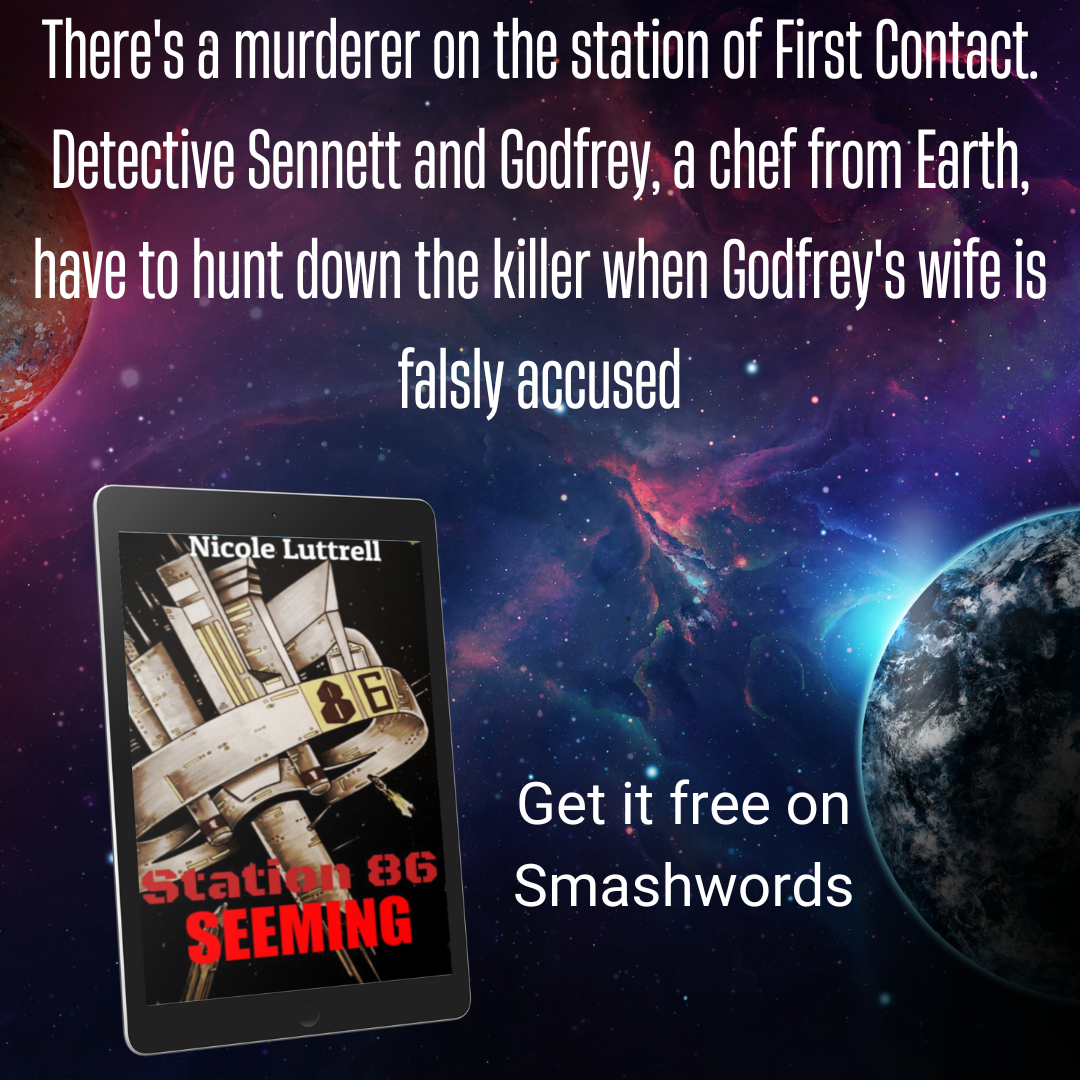
Get Seeming on Smashwords

Storytelling with Tarot Pt 2, The Lovers to Wheel of Fortune

If you missed last week’s episode, please check it out here. I went through a lengthy disclaimer that I don’t think anyone wants me to repeat.

The short version is this. Tarot cards tell a story. It’s the Heroe’s Journey told in playing cards, with The Fool as our hero. Being both a witch and writer, I like to use the Major Arcana cards of the tarot to outline my story. This is not a lesson on how to read tarot, but a lesson on how to use tarot as a tool to write a detailed outline in a fun way. 

One thing I don’t think I mentioned last week is this. This is not a list of plot points that we’re going to hit in order. This is a way to hit some important plot points, as well as discover important characters and relationships. Some stories will have all of these things, and some won’t. This is just a fun way to get you thinking about the details of your story. 

We’re talking about some of my favorite cards today, so let’s get started. 

The Lovers

Ah, the love interest. The character that makes your Fool’s heart skip a beat. The one who seems to light up the room when they come in.

The one that isn’t necessarily needed, in my opinion.

Look, I got five books into Station 86 before Sennett found a partner. 

But love can be a wonderful addition to a story, even if it’s added later. Love stories like Jack and Sally from Nightmare Before Christmas, or Chuck and Sara from Chuck. These sorts of warm, lovely relationships can be a breeding ground for plot bunnies. 

The Chariot

This is one of my favorite cards to pull because it’s so empowering. It’s all about having control of a situation.

In your Fool’s journey, this is when they realize that maybe they do have this under control. This is facing a challenge that is well suited to our Fool’s strengths. Like Klause Baudelaire in a library, this is the moment when your character has everything under control. 

Strength

This card is all about grace and success under pressure. It’s handling a battle, struggle, or uncomfortable family gathering with ease. Especially when this was something that would have once felled the Fool. 

This should be something difficult. Like when Mulan climbs the pole to fetch the arrow. She does so using her strength and intelligence, both of which she’s earned. This is the moment, maybe after our Fool has failed and become more determined to meet their goal, that we start to think they might really win this thing. 

Or at least not die. 

The Hermit

There are times when we all need to do something alone. Or at least, take some time alone to sort ourselves out. That’s the moment the hermit card represents. It’s a solitary time to grow. To be alone, but maybe not lonely. This is the time to grow, to learn. To like our own company. 

Maybe your character was cast out of their home or friendship circle. Maybe everyone they love was taken from them or walked away.

The best example I can think of this is going to show my age. But it’s the song Close Every Door from Joseph and the Technicolor Dream Coat. Joseph is tossed in jail, away from his doting parents and jealous brothers. And he takes that time to figure himself out. He comes out a better person than when he went in. 

Wheel of Fortune

Plot twist! 

Maybe our Fool is doing well. Then it’s time for them to face something way too powerful for them. Maybe our Fool’s been a sad sack so far, and they’re in desperate need of a win. Wherever we are now, it’s time for the tides to turn.

How many examples can I possibly reference here? Think of Cordelia in Angel, after her family loses all their money. Whatever moment your character’s world flips upside down, that’s the Wheel of Fortune. 

Another way to think about this is karma. What character in your story needs to get what’s coming to them? Either good or bad. There’s a great line from the first episode of Firefly that I always think about when I see this card.

Mal, the main character, looks at Badger, the underworld mob boss who just betrayed him. “The wheel never stops turning,” he says. Badger responds, “That only matters to the people on the rim.” 

We are all on the rim, Badger. And sometimes when that wheel turns, our characters are going to get chucked off. 

That’s it for this time. I’ll be back next week with the next five tarot cards. And I want to hear what you think. Have you tried using any of these tarot cards as outlining prompts so far? Let us know in the comments.

If you like Paper Beats World, please consider supporting us on Ko-fi.

A WordPress.com Website.

Up ↑