Food, a personal essay

I want to talk a little bit today about food. I’ve been trying to eat better, and so I’ve been putting a lot of thought into the way I look at food.

And, here’s the thing, I love food. I have never been a part of, nor do I understand the whole food is fuel crowd. When I write my daily gratitude list, I have to remind myself that I can’t always just list something wonderful I ate that day. I mean, some days sure but not every day. My whole day can be made better just by knowing that I have a roast in the crock pot or that I get to go out to dinner.

It doesn’t have to be good, fancy food to make me happy either. It can be an egg salad sandwich. It doesn’t have to be fattening food. I get excited when sugar snap peas come back in season. I really like tofu.

Food is symbolic and tied to social cues. I’m an American, so there are certain activities that just require certain foods. A hot dog and a baseball game. Potato salad and a summer picnic. A cold beer on a hot night. Ice cream and wine after a breakup.

Food is a comfort, maybe too much for some of us. When I’m cold or stressed I want a bowl of homemade chili. I love something rich and savory, like stuffed grape leaves. Olives are a go to when I’m stressed, especially garlic stuffed olives.

Food takes us back to our pasts, places, and people. A warm tomato reminds me of my great grandma. She had a little garden in her backyard, and she’d grow tomatoes. Then she’d slice them and put them on bread with mayonnaise and pepper. She also used to make stuffed cabbage and stuffed peppers. The smell of tomato sauce brings me right back to her kitchen.

My other great grandma would buy boxes of cordial cherries every year for Christmas. Every time I have a box I’m twelve again, sitting in her living room on Christmas day with all of my extended family that I didn’t see any other time.

When I first moved out on my own, I made the same recipes my mother had always made, because I didn’t know anything else to cook. Spaghetti was big in our house. Hunt’s sauce with browned ground beef, garlic, and onion powder. She’d also make roasts in the crock pot that made the whole house smell like the best home to be going to. And while she didn’t make a ton from scratch, she always made mashed potatoes from real potatoes.

Even as children, we recognize this as love. There’s a reason you like your parent’s cooking more than anyone else. A meal made at home is love set on the table and eaten with a spoon.

When I was thirteen, I decided I wanted to upgrade our Thanksgiving meal. I wanted to show some of that love I’d been getting back to my family. The stakes were high, we’re all women and secretly competitive with each other. So I started making sweet potatoes from scratch. I skinned sweet potatoes, cut them up in little squares which are a bitch to do, and boiled them. Then I baked them with honey, cinnamon, and marshmallows on top. This has been a Thanksgiving staple ever since.

My experiment with cranberries didn’t go so well. First of all, they’re freaking hard to make. No one told me they were going to pop! So I had them merrily boiling on the stove when I start hearing this popping sound over and over. I go running in, and there the little red suckers are jumping out of the damn pot!

And after that, no one ate them. Everyone wanted the canned cranberry sauce because that’s what we’d always had. Win some, lose some.

For most of my childhood, my grandma would make a chocolate cake with peanut butter icing for birthdays. I don’t know how she made this icing. I think it’s just peanut butter and a ton of powdered sugar. But now that she lives so far away, I haven’t had this cake in years. Some things, I suppose, are left in the past. I do miss it, though.

Another thing my family makes is potato candy. I have no idea if it’s tied to our heritage or not. We’re Hungarian, and we sure never made Haluski. I have no idea how to make it, but I seek it out at every single festival I can find in town. But anyway, potato candy. Easy enough, you just take mashed potatoes and add powdered sugar until it forms a dough like consistency. If you’re going to make this, be advised, mashed potatoes literally melt when mixed with powdered sugar.

Simple recipes are the best. Butter cookies that only take three ingredients are a great way to bring a little bit of hygge into an otherwise cold and depressing day. A cup of hot coffee and some avocado toast makes me feel better about the morning.

Finally, as much as food ties me to my family and my past, it’s also evolved with me. All the way to the point where I’ve actually written a recipe that I couldn’t find anywhere else. I’ve started getting really experimental with food, recently. I made scotch eggs without burning down the house. I’ve even started growing some of my own herbs.

Food is a meditation, a prayer, a need, a hug. Food is a success and a reward. Food is fun, and the best form of self-care I can think of. Pure, good food is what every single one of us deserves.

Food is love shared on a plate. To that end, I’d love to share this recipe with all of you.

Curry Chicken Quinoa.

Ingredients-

  • One chicken breast
  • One tablespoon canola or other vegetable oil.
  • One tablespoon chili oil
  • One cup Quinoa
  • Two cups chicken broth
  • One tablespoon curry
  • One teaspoon salt

Chop chicken breast into cubes.

Heat canola and chili oil in a high sided skillet. Add chicken and fry until cooked.

Carefully rinse the quinoa.

Add the chicken broth to the chicken. Then add the rinsed quinoa.

Add curry and salt

Boil for 15 to 20 minutes, stirring about every five minutes. The meal is ready when the liquid is all gone and the quinoa is fluffy and soft.

I’d love to talk about food with you. What’s the best memory you have of food from your childhood?

There’s a murderer on the station of First Contact. Detective Sennett and Godfrey, a chef ff9a8a_d364e70623f041a199d588b5124fcc3c-mv2from Earth, have to hunt down the killer when Godfrey’s wife is falsly accused.

Get it now for free.

An interview with Henry Anderson, author of Cape Misfortune

Hey, guys. Today I have an interview with author Henry Anderson. Please enjoy.

Tell us about your book.

The life of a sheriff’s deputy on a foggy Northwest Pacific coast is turned upside-down while investigating disappearances that may be supernatural in origin. It’s a fantasy adventure.

When did you realize that you were a writer?

I’ve always felt like a writer even during periods of my life when I wasn’t writing anything! I still have a story I wrote at the age of six my mother patiently typed for me. I wrote plays at university. Later I worked as a news reporter, so it’s always been part of my life. Having said all that, I didn’t feel like a writer-writer until my first book was published a couple of years ago.

Do you have any books coming out this year?

Cape Misfortune was released last week. I’m also writing a series of steampunk-inspired short stories which I hope to release as an anthology.


If readers are looking to connect with you, what’s the best way to do it?

My website henryandersonbooks.com has short stories, blogs and the latest news. I am also on Facebook, Twitter and Instagram.


What are you working on right now?

My next book. It’s in the very early stages so I’m researching, staring into the middle distance, and occasionally writing things in my notebook.


Tell us about submitting your book. What was that like for you?     

Sometimes submitting is like being on a desert island and throwing a message-in-Author Final 500 by 500a-bottle into the waves. You wait forlornly for a reply, with steadily diminishing hope. Other times, incredibly, a freak storm causes a bottle to float back! I’ve been lucky to find a publisher for my last two books.


What author would you say inspires you the most?

Laura Hillenbrand suffers from a disease called myalgic encephalomyelitis, as I do, but manages to write great books.

What was your first favourite book as a child?

The Weirdstone of Brisingamen by Alan Garner. It is an incredible fantasy that mixes real life, folklore and landscape. Douglas Adams’ “The Hitchhikers Guide to the Galaxy” was full of never-ending comedy and inventiveness.

What advice would you give yourself if you could go back to when you first started writing?

Try and write every day. Be prepared to cut things that don’t work.


What would you consider the best thing you’ve ever done for your writing career?

Being a news reporter taught me to be concise. Also, not to use long words when short ones will do.


What would you consider the most fulfilling moment you’ve experienced as a writer?

My first book being published. Also, talking to people who have read my book. That always feels slightly unreal, but good.


What books would you suggest to anyone who wants to write?

I found “Poetry in the Making: A Handbook for Writing and Teaching” by the British poet Ted Hughes useful on poetry and writing generally.


Station Central, Episode One

Prolog

Once upon a time, a company called Galitech launched a space station. They wanted to see if space habitation would be sustainable for everyday people. They also wanted to make money. So they created Station Central, the vacation destination in the stars.

It was far more successful than Galitech thought it would be. Millions of application were sent in to set up businesses. Everyone wanted to work there. Even the janitorial staff had more applicants than they could ever use. People wanted to live there. People who could afford it wanted to go there. A year before Station Central officially opened, there was already a five-year waiting list at every single hotel.

With its growing popularity came a desire to move out into space and away from the crowded plant.

Galitech was happy to oblige, but there were a few problems with their plan. The first hurdle was that the stations wouldn’t fall under any country’s jurisdiction. As such, there were no official laws. After much research and long boardroom conversations, a decision was made to give each station a council of twelve people who would govern. They created a set of laws that every station immigrant had to swear to. And they established a private army to help council members enforce the law if necessary.

The nations of Earth were less than comfortable with this arrangement. Somehow the thought of huge space stations full of people whose laws were being enforced by a private military concerned them.

To placate the nations, Galitech worked with them to establish the IHP, Interstellar Human Protection, to help keep order among the stations. Galitech created its army anyway but insisted that they were nothing more than private security.

The stations shared a unified money system, the same universal coin that had been used on Earth since 2087. They shared the laws agreed upon before they were launched. Each station had a council, a Galitech auditor and a team of IHP agents. Most stations created a police force. For the most part, it worked out.

There were some issues. Station 97 seemed to think child labor was alright until the IHP stepped in. And no one talked about Station 10, which was shut down without explanation. But for the most part, the stations were doing fine.

Then, the Hollow Suits attacked Earth. Hulking, walking battle armor suits, with nothing discernible behind opaque visors. They appeared on Earth without any demands and without warning. They didn’t seem to want anything, except to kill every human they could find. They were immune to electrical attacks, fire, and water. They couldn’t be starved, because no one could tell what they ate. No weapon on Earth could penetrate their armor. They couldn’t be spoken to, reasoned with, bribed, or distracted from their task. They were also aggressive against cats and dogs. No one could figure out why except perhaps to hurt us by killing our beloved pets.

Earth had no idea how to protect themselves from this attack There had been peace on Earth for a generation, most soldiers had never fired a weapon outside of training. The combined military forces of nations fell in months. The IHP hurried back to Earth, except for one team lead by Evelyn Greenwood.

The Galitech army was still waiting on Station 2. Waiting for an order to move out. There was just one person able to give that command, the Galitech CEO. She was dead on the floor of her board room, her eyes shoved into the back of her head. If the Earthians on the stations weren’t already the only ones left, they would be soon.

With the IHP gone, and Earth gone quiet, the stations looked to Station Central for leadership. There were the Hollow Suits to worry about, but there were also radical terrorists, murderers, and a thousand other things that could get out of hand on a space station.

The problem was, that was never what Station Central was intended to be. The leaders were vacation coordinators, not politicians.

But they still had to lead. No matter how distasteful the found what they felt had to be done to keep the stations safe.

Episode One

Godfrey

When we last left our heroes, they were once again recovering from disaster. Godfrey Anders had just stopped corrupt politician, Saul Mai, from stealing the election from Joy Wheatly. Part of Saul’s plot had involved allowing April, the daughter of Godfrey’s best friend Sennett, to be kidnapped by a genetic doctor named Cynthia Oswald. Both Saul and Dr. Oswald were shipped to Station 41, the prison station.

Unfortunately, in the midst of the most recent nightmare, Godfrey’s wife Ki decided that she needed to go to her home planet of Khloe to visit her family. In a message she left for him, she told him that she believed he was in love with Sennett, not her. Unable to stay in the home they built together anymore and worried about further attacks, Godfrey’s been crashing on Sennett’s couch ever since.

Sennett, meanwhile, has narrowly avoided death again. She saved Station 16, a disease research station, from a nanite that turned people into violent, rage monsters commonly called berserkers. She also managed to uncover the truth about the Hollow Suits and carried this information back Station 86. In the process, she was infected by the nanites. While she was given the cure, no one is sure how long it will last, or what the long term effects might be.

Godfrey was the first awake most mornings, due to his childhood on farm time. He woke, his blanket tangled around him. Soon, he knew, there would be four adults and one child vying for bathroom time. Wanting to take himself out of that equation he got up, taking a sweater and jeans with him.

In the bathroom, he shaved, then ran a comb through his mess of dark curls. His face, he thought, was looking haggard. The bags under his eyes were becoming more and more apparent. Sighing, he dabbed on a little concealer.

Just as he was starting to brush his teeth he heard a tiny knock on the door. “Hello?” April said. “I have to use the bathroom.”

“Hugug,” Godfrey called through a mouthful of toothpaste. He opened the door, admitting April and her AI dog, Bailey.

April was a striking child, with a mess of wild brown hair and bright pink skin that was her Khloe father’s legacy. Bailey had the body of a terrier, but with silky smooth metal skin. He wagged his tail when he saw Godfrey.

Godfrey headed for the kitchen, considering what he might make for breakfast. April had never had poached eggs before he’d moved in, and she seemed exceptionally pleased with them.

He went to the simulator, sighing. Before Earth had gone dark, he’d gotten regular shipments of fresh, real food, for his lunch booth. Now, he was regulated to simulating raw food and cooking it. But at least he could still do that, he reasoned.

Sennett’s adopted little brother, Mason stumbled into the kitchen just as Godfrey put a plate of eggs and sausage on the table. “You packed for Station Central?” he asked. “Sennett wants to leave right after April gets off school.”

“I know,” Mason replied. He was looking at the table screen while he picked up a sausage link and bit it in half. “I did it last night. I need to get over to the greenhouse and meet Jackie before we leave. And I’ll have to stop by my lab at school. One of the liver plants is stable enough to move, I think.”

Mason was twenty and looked every bit the college student he was. He was heavy, with dyed blond hair and enough tech to concern Godfrey most of the times. But even he had to admit, the young man was bright.

“You’re sure Jackie can be trusted in my greenhouse?” Godfrey asked, putting another plate on the table. “And with those organ growing plants?”

“Sure, she’s my assistant,” Mason shrugged. “You met her yourself, did your whole vetting thing before you agreed to let her around your precious plants. She’ll be fine.”

April and Bailey bounced in next. She was now dressed in a purple shirt and blue leggings. She settled into her chair, where Godfrey had just set a plate.

“Thank you, Mr. Godfrey,” she said, digging into her eggs.

“No problem, Little Bit,” he smiled. “Your mom up?”

“I’m here, but don’t make anything for me. I’m gonna just have klav,” Sennett said, walking briskly into the room. A tall woman with ebony skin, she had her thousands of braids pulled away from her face by a metal band. It was strange to see her dressed as she was, in a pair of jeans and a band t-shirt. She normally dressed in a suit, as a detective. Her brown eyes, flecked with gold, flashed across the faces at the table, before running a hand over her daughter’s head.

“I’ve got to head to the barracks and finish up some paperwork before we leave on vacation. And check in on Patty.”

“How is she doing as interim commissioner?” Godfrey asked.

“Hating every single second,” Sennett muttered. “But it’s just until Commissioner Schultz comes back from leave.”

The last person who came into the room was Liam. He was a pale man, thin but muscular. His goatee, which had been unruly in the past had been trimmed neatly now that he was living with Sennett. He wore a tight sweater over a pair of jeans that had a fade mark near the pocket in the shape of his missing holster.

“Here,” Godfrey said, holding out a plate for him.

“Thanks, Man,” Liam said. He carried it over to the simulator, making himself a cup of steaming black coffee. “You want one?”

“Sure,” Godfrey said, sitting down at the table with his own food.

Sennett, a cup of hot klav in her hand, sat down next to him. She started tapping on the table, pulling up morning news feeds. “I haven’t seen anything about the Hollow Suits yet. Guess that might be a good thing for us. Travel will probably be restricted after the news breaks.”

“Might not be able to get home, if that happens,” Godfrey said. He started scanning the feeds over her shoulder. “I talked to Marshal Joy the other day. She and Marshal Howard are working on some things to boost protection. She didn’t want to go into it though.”

“Of course not. The fewer people who know the details, the better,” Sennett said. She tapped on the table, taking over part of it to read her mail. “I guess the other stations can handle the Hollows how they want, there’s nothing we can do about it. But I think we stand a better chance if we’re talking to each other.”

She was beautiful in the morning, even while she was scanning over her email. Ki’s accusation before she’d left wouldn’t leave Godfrey’s mind in moments like this. She’d accused him of loving Sennett more than he loved her. Most of the time he didn’t think it could be true. But there were moments.

Suddenly, her face hardened. She shut her email with a swipe and took a sip of her drink.

“What’s wrong?” Liam asked, glancing over at her.

“Nothing,” Sennett said. “I just got an email from someone who shouldn’t be emailing me. April, go get your shoes and jacket, please.”

“Okay!” April said, scrambling away from the table.

“You excited for your last day of school, Little Bit?” Godfrey asked.

“Yes!” April said, and ran from the room.

Sennett turned back to the table. “I just got an email from Candace Campbell,” she said quietly, glancing at each of them in turn.

Godfrey sat back in his chair, whistling. “What did she say?” he asked.

“Someone needs to fill me in. Who’s Candace?” Liam asked.

“She’s the bitch who murdered my husband. Shot him in the back in the middle of the street.”

Sennett sat back in her chair. “She’s saying she needs to talk to me about something that she doesn’t want to say over mail.”

Mason propped his elbows on the table. “So, what if it’s about your birth parents?”

Sennett gave him a sharp look. “Why the hell would she want to talk to me about my birth parents, Mason?”

“Well,” he said carefully. “You said that Core person on Station 16 told you your parents were still alive and that they were looking for you. Candace was a member of the Core.”

She shuddered. It felt like the Core had been stalking her, ever since they’d shot her adopted mother’s ship out of the sky. They’d been the ones who’d set the berserker virus free on Station 16, which had infected Sennett.

“We don’t know that,” Sennett said.

“Actually, we do,” Mason said. “It’s in her file from the prison.”

“How do you know that?” Liam asked. “Prison records are supposed to be sealed except for to officials.”

When the others at the table looked at him, he shrugged. “I’m a criminal. It’s my business to know my rights.”

“I’m just saying, what if it’s about your birth parents?” Mason asked.

“Then I still don’t care to talk to her. Mom was the only parent I needed, Mason, especially if my birth parents are Core members.”

She got up, grabbing her mug of klav. “I’m taking April to school now. Everyone, please make sure you’re totally packed by the time I get home so we don’t have to wait.”

“I’ll keep after them,” Godfrey said, grinning.

“Thanks,” she said, turning towards the door. “Oh, and Liam. Patty’s going to meet us at the loading dock tonight.”

“What the hell for?” Liam sputtered.

Sennett turned back towards him. “What do you think? She signed off on you traveling. She needs to make sure you aren’t carrying anything illegal.”

Copyright © 2019 by Nicole C. Luttrell

All rights reserved. No part of this publication may be reproduced, distributed, or transmitted in any form or by any means, including photocopying, recording, or other electronic or mechanical methods, without the prior written permission of the publisher, except in the case of brief quotations embodied in critical reviews and certain other noncommercial uses permitted by copyright law

Want to find out what happens next faster? Sign up for the PBW Update and get the next episode on Monday!

Station 86 is shocked when a Khloe assassin begins killing members of the all powerful ff9a8a_d364e70623f041a199d588b5124fcc3c-mv2council. Officer Sennett Montgomery and Councilman Godfrey Anders swear to find the assassin after Godfrey’s wife is falsely accused. But the killer, and the council itself, are not what they seem. Neither, as it turns out, is Sennett’s daughter.

See how the story began, free to download now.


Poets who wrote prose

Oh, I totally forgot it was National Poetry Month!

How did I forget that? Oh yeah, I’m doing Camp Nanowrimo and my life is taken over by editing right now.

But it’s still Poetry Month, and I still want to talk about it. Poetry is a beautiful form of art, that I find completely unattainable. I’ve tried, Lord knows I have tried. I understand the forms, I study language. But in my heart, I am a prose writer. And I will always be a prose writer.

That doesn’t stop me from deeply appreciating poetry. And here’s the thing, poetry writers often cross over to prose. So today, I’d like to share with you some of my favorite poets who turned to prose.

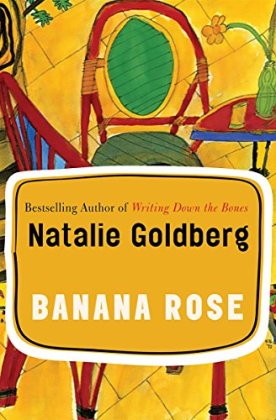
Natalie Goldberg

Goldberg is my favorite writing coach, a constant inspiration to live my most authentic life, and someone 51q395-fdxLI would dearly love to sit down and have coffee with someday. Only she probably wouldn’t drink coffee. She’d probably drink hot chocolate and have a delicious croissant along with it.
Goldberg has written honestly more books than I can list here. Many of them are poetry. Three of them are about writing, and I own all of them. But she’s written at least one novel, called Banana Rose.

Now, I haven’t read this yet. But it sounds fascinating. It’s about a Jewish woman who’s in love with a painter but can’t stop thinking about a girl back home. It’s about her faith, her love, her art, and her life.

It’s on my list, and if you loved Writing Down The Bones it should be on yours too.

Langston Hughes

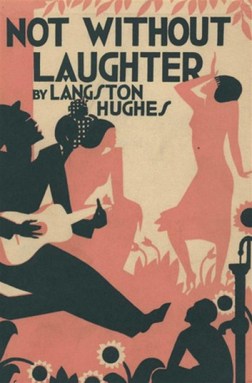
Hughes wrote some of the deepest, most magically realistic poems I’ve ever read. And his novel Not not-without-laughter-7Without Laughter. It’s about African American life in Kansas in the 1910s. Much like Goldberg’s novel, it’s not autobiographical on purpose.

On purpose.

As you can imagine from the subject matter, it’s not a laugh riot. But’s a deeply personal book, and an honest one.


Maya Angelou

GUEST_64dc88de-f5de-4c3a-9127-3cbc925b4990I think I’ve gushed about this book before, and I do not care in the slightest. I Know Why The Caged Bird Sings is one of my favorite books of all time. It didn’t feel like reading a book. It felt like sitting in front of Maya, listening to her telling me all about her life. And her life was amazing. From living with her grandmother in the south to becoming a single mom, she experienced so much, so many things that I will never experience. At the same time, it was so hard to read this book and not point out to everyone within earshot, “Listen, listen to this. This is me! It’s just exactly what I’ve thought or felt before. How could this woman, who lived in a completely different time, completely different part of the country, with a completely different family, have so many moments that echo with such truth for me?

Maybe there are some things that are universal. And maybe poets are better than the rest of us at pointing those universal truths out.

Even when they’re writing prose.

Don’t forget, Station Central, book four of Station 86 starts on Saturday. (Unless you’re signed up for the PBW Update. Then you already have the first two episodes.) Get book one for free, and enter the world of Station 86.

Station Central


Guest post by Taryn Dryfhout

Note: You all know I love Nanowrimo. I stand by that, I think it’s a powerful tool to get writers writing and seek out other writers in fellowship. But, here’s the thing. Not all writers are going to write like me. So, I’m proud to share with you this guest post today by an amazing writer named Taryn Dryfhout. Check out her site here.

This week marks the beginning of a month of novel writing madness as hundreds of thousands of people all over the globe begin Nanowrimo in an attempt to see themselves, and have others perceive them as writers by writing 50,000 words of what is possibly nothing but mindless dribble, over the next four weeks.

National Novel Writing Month or “NaNoWriMo” is a yearly, internet-based writing project that takes place from the 1st to the 30th November, when people sign up online, committing to themselves a goal of writing 50,000 words over the course of the month. The idea is that these words form a rough draft for a novel, which can then be edited and published when the challenge is up. Nanowrimo mania starts in October when participants sign up through the website, creating profiles and discussing the synopses for their novels.

Nano attempts to foster the craft of writing in an intense way, by having the participating writers work within an online community of people all working towards the same goal – not of quality or completion, but just putting words down on paper. Novels written during the program can be any genre, about any theme and in any language and the word count is validated through the site, where the writers can submit their work for automatic counting. According to the official rules, planning and note-taking is permitted at any time but no words written outside November can contribute towards word count.

Although 50,000 words is considered a low word count for a novel, the aim of the program is to aid participants in getting their creative juices flowing and getting a project underway. However, no publisher will accept a novel this length, making the effort redundant. With this being the case, Nanowrimo is nothing more than National Novel Starting Month, where one can produce half of a slapdash novel which will require months of work in order to shape into anything creditable. To stay on track with the program, one must write almost 1,700 words per day, with the focus being on attaining word count with no regard to quality. This is to encourage people to get writing, with the intention of editing the work later, outside of the project. While the idea of an online community, dispensing a healthy dose of peer pressure and a calendar deadline might be enough to push someone into attaining the set word count, the ‘quantity over quality’ philosophy encourages average work that may or may not be revised and edited at an unforeseen date, in the distant future. By producing a poor first draft of an unfinished novel, participants ‘win’ the challenge, and to make matter worse, the novel needn’t even have a storyline in order to win the program. One of the project’s mottos is “No Plot? No Problem!”, suggesting that participants should write, regardless of whether or not they have a solid story, or even any story at all to work with.

The madness was started in 1999 by a freelance writer who roped in 21 other people into the month-long commitment. The following year an official website was launched in the project’s honour and people from all over the world started signing up, until so many people were participating that some basic guidelines were established and over a decade later, there is more than 400,000 people participating.

From the last week of November until deadline, participants can submit their work through the project’s website for word count verification. Those who complete consider themselves to be ‘winners’, though no prizes are awarded for any efforts made. Anyone who manages to reach the 50,000 word count is considered a winner and receives a printable certificate which they can display at home or on the web. Though no measures are in place to prevent or identify cheating of any kind, it seems unlikely that anyone would bother, given that the only reward for ‘winning’ is a piece of paper and self-satisfaction.

The official Nano forums come alive in early October, with participants discussing their novels while they eagerly await the challenge ahead. The idea of it is great, in theory – a large, online community of writers, all working toward the same goal, swapping advice, ideas and support from the advanced novelist to the blossoming young writer. The vision for Nano is honourable, with the idea being that the art of writing is fostered within a safe community, accessible to anybody who has internet, at no cost, in a forum where one is not expected to be a professional. It also encourages a daily writing habit, which in turn is supposed to be the way in which the writer will produce their book, and consequently their writing career. However, in reality, the forums become a space where unpublished writers can spend more time discussing writing, than actually writing, and much like Christmas, the anticipation of Nano becomes more desirable than the hard work that is supposed to take place in November. Young people who aspire to be Stephen King or Danielle Steel join Nano in an effort to be seen as a writer because of their involvement in this worldwide movement, rather than being appreciated for their will to write, and their dedication to actually doing so. It’s fairly clear from the amount of hashtags like #NanoPrep and #FutureWriter, and ‘feel good’ quotes on Pinterest about Nano that the culture of this project is not producing as many quality writers as it is enthusiastic, naive ones.

As all writers, aspiring writers, publishers and agents know, writing is a small part of the process of producing a novel. While it may take only the month of November to pen the great American novel, it takes months of editing and revision in order to get it worthy of being submitted for publishing. Nano’s emphasis on simply putting pen to paper means that the work arising out of this project might simply account for a whole lot of crap writing rather than producing good, solid work which has the potential to go on and be considered for published. While the project can be useful for those who want to carve out time for themselves to write each day and push themselves to adopt a daily habit of working on their craft, it could also be a completely fruitless waste of a month, particularly one so close to Christmas. The amount of hurried, sloppy work that must come out of Nano every year is enough to make editors and book agents cringe in anticipation of the substandard manuscripts they will shortly receive.

Writers are known for their determined persistence of the craft, and their ability to overcome long term obstacles and creative blocks in order to produce something that is complete, and highly edited to a standard worthy of publishing. Nano fosters a process of writing a large amount of anything, simply in an effort to establish habits of intense writing, but concentrated writing alone, does not a good novel make. Good novels require time and powerful perseverance, two things which Nano cannot offer.

On the upside, around 100 novels have been produced out of Nano which made it through traditional publishing channels (i.e.: publishing houses and not the ever growing trend of self-publishing e-books). This includes Sara Gruen’s bestseller “Water for Elephants” which later became a film starring Reese Witherspoon and Robert Pattinson. Nanowrimo has also been responsible for inspiring countless online classes, discussion groups and workshops to enhance the craft of writing which can only be a positive thing, and one that will hopefully contribute to the overall standard of the work produced out of Nano over time, as participants become stronger writers.

Taryn is an experienced writer, teacher, English major and coffee
junkie who lives in Auckland with her husband and children.A Rory
Gilmore-inspired blue-stocking, Taryn is a serial student and now has
two diploma’s, a bachelor’s degree, a master’s degree, and is working
on her next post-grad diploma. Taryn regularly contributes to
magazines, newspapers and websites and has been an author, guest
writer, and editor for e-books and print books. She was recently
nominated for “Best Feature Writer” and “Best Columnist” at the ASPA
Awards and is a member of the NZ Society of Authors, and NZ Christian
Writers. When Taryn is not writing, studying, or with her kids, she
can be found reading books, buying books, or watching Gilmore Girls.


Good advice from unexpected places

I’m the first to admit I’m a critical person. I’m a judgy person. And there are some people that I look down on. I don’t mean people in my everyday life. I mean people who show up on Jerry Springer.

I also judge people who put themselves out there to be judged. Celebrities for instance. I will judge celebrities in a heartbeat.

But, like most other prejudices, they really do come from a place of ignorance. And the more we seek out knowledge, the fewer prejudices we can hold on to.

This all came up because I was listening to a podcast that had some questionable guests. Guests that I nearly skipped because I didn’t think that these women had anything to teach me. But, I figured, I’d try to be a little more openminded. Plus, I’m a completionism and I can’t stand to skip episodes of anything. So, I ended up listening to a podcast with the COO of Hooters. And let me tell you, this lady schooled me! She taught me so much about that company, and an entirely different view of women in the work force. She also gave me some advice I’ve been trying to put into practice that I’ll be getting to in a minute.

And she was just one of many people I didn’t think I was going to learn anything from. I’m glad I didn’t skip these podcasts, and I’ll be sharing the advice I learned with you today.

Advice from Kat Cole, the former Hooters COO.

Yeah, she is a classy, hardworking, badass woman who worked her way from Hooter waitress to COO of multiple companies. She was going all over the world opening up stores when she was in her early twenties. Did you know that Hooters sends more of their employees to college than any other company in America? I didn’t know that until I listened to her. Did you know that the vast majority of upper management at Hooters is female, because the company has a strong policy of promoting from within? Not so exploitative as I thought.

Now, here’s the thing that really bowled me over. She told a story about someone giving her grief at an opening about working for a company like Hooters as a woman. She said, “I always come to an argument with the assumption that I’m wrong. Because it’s a lot easier to walk that back.” (This is a paraphrase, by the way.)

This is brilliant! I started using that right away in disagreements and conversations. And it’s true! I’ve started saying things like, “Oh? Tell me about that. What do you think about this situation? Where do you think I went wrong?” And in practice it works wonderfully. It’s so much easier to say, “Wait, no, I’m right after all,” than to say, “Oh, wait, you’re totally right.” Especially for someone like me, who hates admitting I’m wrong.

Advice from Jillian Michaels

I’m not big into fitness. I’m more into emotional wellness that will over time limit the factors in our lives that cause us to be unhealthy. If I’ve found balance in my life I’m less likely to stress eat. If I’m not depressed, I’ll be more likely to go do active things.

Suffice to say I’m not Jillian Michaels’ target audience. But I used to work at a few health food stores, so I’ve come into contact with her philosophies often. I didn’t find myself approving of her methods, especially when it came to her over the top screaming on Biggest Loser.

But after listening to her talk logically about healthy living (and how she agrees with me that the keto diet is not healthy. It’s amazing how finding common ground makes you more open to listening to someone.) I have a totally different opinion of her.

I’m still not her target audience, but that’s kind of the point. Not everyone is going to be receptive to her intense method. Not everyone is going to be receptive to my method either. Michaels said something about the people on Biggest Loser that really stuck with me. She said that the people on that show were unhealthy, in a life-threatening way. And she had a few weeks, sometimes a few days, to try to make an impact on their lives that could save them. These weren’t people who had an extra fifty pounds, some back fat that bothered them, and no real weight related health problems. Basically, different people need different tactics in their lives. And desperate time call for different measures. (Not desperate measures. I hate that saying.)

Advice from Leah Remini

I don’t judge Leah Remini. I actually love her work to fight against Scientology. And so I picked up her book, Troublemaker, kind of expecting to read more about her fighting against the church.

And there was some of that in there. But that wasn’t the biggest part of the book. I learned a lot more about how she became the successful woman she is. I learned that she went on audition after audition until she got a job, and then she kind of blew it. I learned that she had a bunch of different non acting jobs that she was terrible at. I learned that she was on a ton of piolets that never made it, and a ton of shows that didn’t go past the first season.

And that’s comforting, because she’s a success story. But she failed a lot before she got to that success.

Just in case you’re wondering, I’m not exactly an Amazon best seller. My books are out there, and I’m proud of that. But I’m not making enough to pay my bills. Not even my Netflix bill most months. But that doesn’t mean I stop. That means I just keep right on writing books, and I hope that every one is better than the last. I keep trying new markets, new platforms. And I hope that you do the same, whether you’re writing or acting or whatever your dream is. Keep trying.

We all have our own strengths and weakness. No one is great at everything, and no one is ever done learning. I can safely say that every single person has something to teach you. So don’t shun these lessons, no matter where they come from.

Station 86 is shocked when a Khloe assassin begins killing members of the all powerful ff9a8a_d364e70623f041a199d588b5124fcc3c-mv2council. Officer Sennett Montgomery and Councilman Godfrey Anders swear to find the assassin after Godfrey’s wife is falsely accused. But the killer, and the council itself, are not what they seem. Neither, as it turns out, is Sennett’s daughter.
Get it here now, for free.

And don’t forget, Station Central starts on April 13th. Unless you’re signed up for the PBW Update, then it already started.

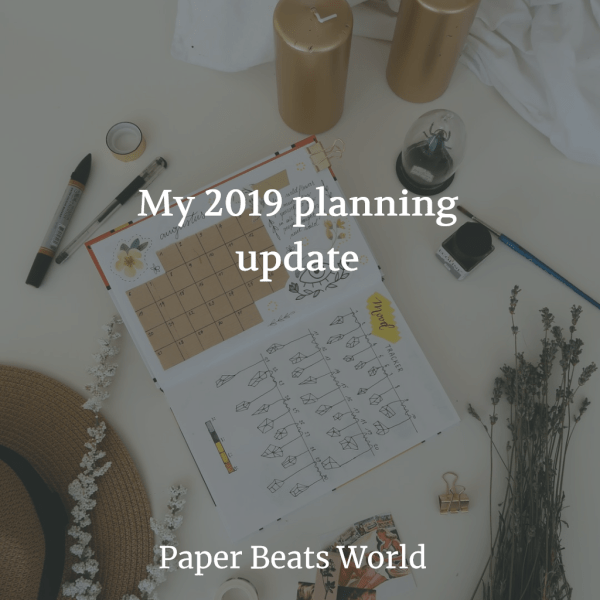
My updated 2019 planning update

So, I did my first quarter review on Monday. No surprise there, I’m a big fan of the review process. And in the past, I’ve written a lot about my quarterly review process and how I use it to move forward successfully for the rest of the year. I’ve done a few of these because my organization and review process is ever evolving. I’m always learning new things and discovering new tools. Then, of course, sometimes a tool I was using gets discontinued because someone decides to stop working for themselves and get a day job.

For those of you who know I’m talking about Lisa Jacobs, that sounded a lot snarkier than I mean it too. If you didn’t read her explanation of why she’s gotten a day job I highly suggest you do so right away. The last lesson she taught me was that you’ve got to put your family and yourself first and that your needs and wants are going to change over your life. I thank her for that, and for having the courage to take that sort of leap.

However, that and a few other things caused me to completely rethink how I set goals for 2019. I’ve been trying these new tools out, and I like them. So, here’s how I’ve been planning differently.

The Bullet Journal Method

And by this I mean the book by Ryder Caroll. If you haven’t read this, you probably should. Mind you, I’ve been doing Bullet Journaling for three years. I’ve read everything online, seen all the videos, and nothing struck me more than this book. It got me back to basics with my journal, but at the same time freed me to be more creative in the pages. I read this, and I immediately started changing how I journaled and planned.

The most powerful change is that I’ve been writing down my daily to-do list instead of keeping it on an app as I have for years. Mind you, I think the app I was using was great. It did everything I needed it to do and gave me a clever wrap up at the end of the year. I loved that. But let me tell you what happened when I started writing down my to-do list every day.

  • I started being a little more critical about how I was spending my time. I thought everything I was doing was essential. Turns out it doesn’t feel like everything is as essential when you’re rewriting it every day.
  • I was more clear about all the little tasks that take up time. Like my morning, evening and afternoon routine. These routines take roughly half an hour and are essential for my well being. They include a small amount of promotion, a medium amount of home care, and a large amount of self-care.
  • I finally tracked all the minor weekly chores and made a chart. So I know what I’m doing every day.
  • Finally, I became aware of exactly how much I was trying to do. Before, tasks would vanish as soon as they were done. While this is satisfying as Hell, it leaves nothing behind but the things that aren’t done yet. So I don’t get that emotional boost of a long list of things I’ve actually done. Also, I find that I suffer from depression when it feels like I haven’t done enough. It’s a problem, I know. But if I feel productive, I feel better. It doesn’t help me feel productive if my completed tasks vanish. Having a list on the page that shows exactly what I’ve done today helps a ton.

The Erin Condron Goals planner and budget

Since I didn’t have the Lisa Jacobs planner this year, I was casting around for a different one. What I landed on was the Erin Condron goals planner. This book, let me tell you how much I love this book. Basically, you pick six major projects. Then, you do a weekly check on, with what tasks need to be done for that project that week. At the end of the book, there’s a great introspective review process. At the start of the book, there’s a group of great goal setting questions.

I also got a budget book. I’ve been terrible at tracking my spending my entire adult life, but this budget book is helping a ton. Mostly because it’s fun to keep track of things in it. There are stickers. It’s easy to pull out the little book in the morning and write down everything I spent the day before. By the way, not a sponsored post. I just really like Erin Condron.

For that matter, though, you really don’t need either of these books. I just advise having no more than six projects, tracking weekly progress and keeping track of your spending. Just do those two things, and I bet you find that you’re succeeding more.

The 19 for 2019 list from the podcast Happier

This is not exactly the same as the 19 before 2019 or the 18 before 2018 lists from Lisa Jacobs. This is a list inspired by the podcast Happier by Gretchen Rubin.

Here’s how it works. The 19 before 2019 is a list of things to wrap up in the last quarter of the year to move into 2019 on the best foot. But a 19 for 2019 list is nineteen things you want to accomplish in the year 2019. As such, they can be more long term and grander. Gretchen also suggests adding things not just to feel accomplished, but to make you happier.

I can’t share all of my 19 for 2019 list, as some of it is sensitive. But you know I like to be public with my goals because it keeps me accountable. So here’s what I can share with you. Expect occasional updates

  1. Make progress on the Dave Ramsey Baby Steps.
  2. Finish the last draft of Station Central. (Already done. Episode one will launch on April 13th. Unless you’re signed up for the PBW Update. Then you already got the first episode on the first.)
  3. Finish the second draft of the new fantasy novel, Falling from Grace.
  4. Finish the second draft of the other new fantasy novel, Wolf’s Eye. It was last year’s Nanowrimo novel.
  5. Finish the third draft of Falling from Grace and give it to my beta readers. (I’m currently looking for beta readers if anyone’s interested.)
  6. -Redacted
  7. -Redacted
  8. Write a new novel for Nanowrimo
  9. Finish the third draft of Wolf’s Eye and give it to beta readers. (Again, if you want to be a beta reader, please shoot me an email at nicolecluttrell86@gmail.com.)
  10. Write the rough draft of a new science fiction novella.
  11. Publish Station Central online and in e-book form. (August 30th)
  12. Strengthen my meditation and yoga practice, until I’m practicing every day.
  13. Read 25 books
  14. Get a literary agent
  15. Read the essay from Simple Abundance every day.
  16. Use the Kona Marie method to declutter my life.
  17. Have wonderful holidays, even little ones like Labor Day.
  18. Grow succulents and herbs.
  19. Find ways to limit my waste, especially plastic waste.

Stay tuned each quarter for updates. And, of course, I want to hear from you! How do you clear out old business and get ready for new business at the start of each quarter? Want to share your 19 for 2019 list? Feel free to redact a few as I did. Let us know in the comments below!

ff9a8a_d364e70623f041a199d588b5124fcc3c-mv2Station 86 is shocked when a Khloe assassin begins killing members of the all powerful council. Officer Sennett Montgomery and Councilman Godfrey Anders swear to find the assassin after Godfrey’s wife is falsely accused. But the killer, and the council itself, are not what they seem. Neither, as it turns out, is Sennett’s daughter.

Get it free right now.

Station Central starts on April 13th. But the first episode was available today if you’re subscribed to the PBW Update. Sign up here now.

A writer’s daily and weekly to-do list

When I first started out writing, I had a wonderful illusion that writing full time would mean just that. I would write, all the time. I would spend all of my day writing or editing. Isn’t this a beautiful thought? Wake up in the morning, have a wonderful breakfast, then go to my writing studio and devote the entire day to creating my art.

Now, I’m not full time yet. But I have been writing professionally for about four years now. And I can tell you, writing is only about half of what I do.

If you’re just starting out as a writer, and you’re trying to figure out what you should be doing, it can be exhausting! I’ve been trying different things for years now, and I’ve finally gotten a solid list of daily and weekly writing activities that A. don’t take forever, and B. have a positive impact on my writing goal.

These daily and weekly tasks are set up from most to least important. I’ve also not included projects like preparing for a launch, building an e-book or getting ready for a book signing. While those are projects that will take up a good amount of my time, they’re not things I’m doing every week or even every month. And I just want to focus on these basic tasks I do to keep everything running and keep progressing every week.

Daily

Work an hour on the current project. Pretty self-explanatory. I get up at 5:50 right now to make sure I have time to get my ass in a seat and work on my current wip for an hour every morning. Crazy thing, I’m trying to get it up to an hour and a half, slowly. I also want to take time to do yoga and eat breakfast before I go to the day job. Because self-care is important.

Free write. I don’t get this in every day, but I am an imperfect being aspiring to perfection. Free writing is practice. It’s a way to work out problems in your story before you come to the blank page. It’s a conversation with yourself. It’s stretching before you run. It’s tiling the soil of your creative mind. Free write, for at least ten minutes a day, is what I’m saying. Just do it. If you have questions about free writing, I’ve done a few blog posts about that. And the internet is full of freewriting prompts.

Research. Especially when I’m working on a second draft, I have research to do. Yes, even though I write fantasy, I like to have a sense of realism about the world. And I hate to take time during my writing hour to learn all about medieval midwifery and herb lore. So most days I can be found at some point looking up random information online. And yes, I am really good at trivia.

Read. And by read, I mean read for pleasure. I read every single day, and I don’t know that I could be a writer if I didn’t. Even if I can usually only fit about 20 minutes in. Reading is essential to a writer. We need to absorb our language, learn how other writers tell stories. And we never reach an end to this. You’ve never read enough books, I can promise you. Fortunately, most of us became writers because we were such voracious readers.

Read blogs and listen to podcasts about my field. I can usually fit this in when I’m getting ready in the morning or working on other chores through the week. I listen to a bunch of different writing podcasts for a number of reasons. I learn about craft, get info on new ways to promote my books and hear about new agents or publishing companies that might be looking for writers to represent. Basically, I use podcasts to stay on top of everything going on in the writing field. You just have to do this if you want to be a professional writer. And podcasts are the best way to do that. If you’re interested in a list of podcasts I listen to, click here.

Social media. I do a little bit of this at different times throughout the day. And there’s a lot of moving parts here, so let me break this down.

  • First thing in the morning I pin one blog post from PBW.
  • After lunch, I will do most of my social media work. I’ll pin another blog post, share a picture on Instagram if I have one, like and comment on other people’s posts on Instagram, share two or three pins on Pinterest that aren’t mine, and check in on Twitter.
  • In the evening I use Buffer to schedule my social media posts on Facebook and Twitter for the next few days.

Weekly

Submit work. Right now I’m submitting the novel I finished recently. I might have a short story to submit or something like that. Whatever it is, getting my work out is first priority on my office day.

Write promotional material, like blog posts or newsletters. You know, like what you’re reading right now. I try to get both of my weekly blog posts written, edited and scheduled on one day, so I don’t have to think about it for the rest of the week. A few times in the past months that hasn’t been happening. But I should be getting back on track now that I’ve finished my rough draft and taking a hiatus. Always assuming Camp Nanowrimo doesn’t throw me for a loop next month.

Advertise. I run ads on Amazon, and I update those every week. I don’t yet feel comfortable doing anything informational about the Amazon ads because I’m still learning them. But if you’d like to know how to use Amazon ads, there are a lot of great blog posts, books, and courses you can take if you’re interested in learning about them.

Track numbers. Possibly the most fun/depressing part of my week. Every Sunday I track my sales on Amazon and Smashwords. I balance that with any money I spent through the week, and see where I am for the month.

Now, this is a lot! I’ll be the first to admit, being a professional writer takes time. Like, a lot of time. And sometimes I don’t have all of that time. Some days all of those things on my daily list just are not happening. If I have no time, writing comes first. It’s just that simple. That hour of writing time is sacred, and nothing is more important. So if all else fails, I will drop everything else and write.

So, what do you think? Does your writing to do list differ from mine? Let us know in the comments below.

Station 86 is shocked when a Khloe assassin begins killing members of the all powerful ff9a8a_d364e70623f041a199d588b5124fcc3c-mv2council. Officer Sennett Montgomery and Councilman Godfrey Anders swear to find the assassin after Godfrey’s wife is falsely accused. But the killer, and the council itself, are not what they seem. Neither, as it turns out, is Sennett’s daughter.

Get it for free on Smashwords now. And get ready for Station Central, starting on April 13th. If you just can’t wait for April 13th, you don’t have to! Episodes start on April first for people signed up for the Paper Beats World Update.

My (imperfect) sacred space

I might have mentioned before that I’m reading Simple Abundance by Sarah Ban Breathnach this year. I’ve done this a few years in the past, and it’s never failed to be a transformative year. And man, do I need this to be a transformative year.

The book is mostly a set of essays to read every day to inspire. But it’s a workbook as well, full of exercises. And if you don’t do the exercises, you’re not really getting the full effect of the book. I understand this on an intellectual level. Sometimes I don’t understand it on a practical level, though.

One of the exercises is to create a sacred space in your home. I love this idea in theory. I am way into positive affirmations and manifesting what we want in the world. I light candles and ring bells to cleanse the space in my home before I write and keep crystals around me. I balance my chakras and meditate. So, creating a sacred space in my home? Hell yes, I was down for that.

But nothing is ever as simple as ‘I want to do this.’ Intention counts for absolutely nothing unless it’s backed up by action. And I was running into three major problems.

I had no time.

I had no idea what to put in my sacred space.

I had no idea where to put it.

Problem one was the eternal problem. I needed to just make the time, that was it. I needed to decide that this was a priority and do it. This, however, was stymied by problem two and three. I had no clue what to put in this sacred space. A candle? Incense? What the hell counts as sacred?

This was again exacerbated by the fact that I had no idea where I was going to put the damn thing. If I could look at a physical space, I could envision what should go there. Of course, that would require me to take the time to find the space.

You see my dilemma.

I was thinking of this in an irritated manner one day while I was doing dishes. I’ve endeavored to see dishwashing as a meditation, as it’s one of the few meditations I can be guaranteed to get in in a day and it makes washing dishes less mind-numbingly boring. So, as I was trying to be present at the moment, I was looking at this shelf right above the sink. It’s sort of like an overly large tiled windowsill. And it’s got some overflow of cups and some plants.

It’s also got a jar of shells I picked up off a beach in Delaware. And it’s got a little pumpkin bowl that’s full of bottle caps of unique beers.

So what could be more sacred than this? An aloe plant for healing. A pot of clover for luck. A few flowering cacti for beauty. A jar of memories from a beautiful family vacation. A bowl of proof that I’m imagesstepping out of my comfort zone and trying new things. The only thing it needs is a candle. (I’m a Unitarian and a flame is a symbol of my faith. Here’s a pretty image.)

This is a lesson that I always think I’ve learned, but I have to keep right on learning it. Nothing will ever go to plan. Nothing will ever live up to the picture in my head of what I think it should be. Not my life, not my writing career, not my pursuit of spirituality and inner peace, will ever live up to the picture-perfect plan I have in my whimsical little mind. And so long as I cling to that perfect image, I’m never going to have anything. If I insist that my work is perfect, I’ll never enjoy how good it is. If I insist that my home is perfect, it will never be good enough.

Basically, if everything has to be perfect, then it will never ever be at all.

This doesn’t mean that I don’t strive to make everything in my life as good as I can make it. But I’m not going to let that pursuit stop me from enjoying what I’m capable of right now.

ff9a8a_d364e70623f041a199d588b5124fcc3c-mv2Station 86 is shocked when a Khloe assassin begins killing members of the all powerful council. Officer Sennett Montgomery and Councilman Godfrey Anders swear to find the assassin after Godfrey’s wife is falsely accused. But the killer, and the council itself, are not what they seem. Neither, as it turns out, is Sennett’s daughter.
Get it on Smashwords for free, and get ready for Station Central, starting on April 13th. (April first if you’re signed up for the PBW Update.)

It’s my first time at Camp Nanowrimo


Nanowrimo probably isn’t something that’s really on your radar right now. I felt like I was still recovering from November in January myself. Of course, that could just be the blend of Nanowrimo and Holiday hangover. Anyway, the point is that Nanowrimo isn’t until November and that’s fine. April, on the other hand, is Camp Nanowrimo. And I’m thrilled to say that I’ll be participating for the first time ever.

I wanted to take some time today to talk about Camp Nanowrimo, for those of you who haven’t heard as much about it. While it’s similar to November Nano, it’s not quite the same thing.

How it’s different

It’s not just 50,000 words. I mean, it can be, if you want it to be. Camp Nanowrimo allows you to make your own writing goal, whatever it might be. Maybe you know for sure you’re not making 50,000 words in April. Maybe you’ve been doing that easy and want to up your game. (That’s not me, by the way. It was a challenge to get 50,000 words in, let alone surpassing that.) At any rate, you can set your goal for what you need it to be.

It’s not just rough drafting. For instance, my goal for April is to work on the second draft of my fantasy novel for 36 hours. So if you already knocked yourself out on a rough draft and now you’re trying to make it better, this can help you get it done.

It’s got more of a writing retreat feel, which is a lot of fun. The subtitle for Camp Nanowrimo is ‘An Idyllic writers retreat, smack dab in the middle of your crazy life.’ As someone who would dearly love to attend a writers retreat, I love this. I honestly cannot wait.

How it’s the same

The biggest reason why Nanowrimo works for me is the writing fellowship that abounds during that time. Camp Nanowrimo is shaping up to be no different. Writers are separated into cabins, so you’ve got a team cheering on your progress as you cheer on theirs. (You can get assigned a cabin, set up one yourself for you and your friends. That’s what I’ve done. Anyone who wants to be part of my cabin feel free to email me at nicolecluttrell86@gmail.com. I’ll send you an invite.) Of course, if you don’t want to be in a cabin, you don’t have to be. But that’s a big part of the experience for me.

Reaching together for a writing goal. This is important because writing is such a solitary profession. And that works for me, most of the time. It’s kind of a selling point for this job, actually. But sometimes it’s nice to work together. Even when we’re all working on our own thing, we’re all working together towards the same basic end goal. We’re all making books. We’re all telling stories.

Inspiration is a big part of both Nanowrimo and Camp Nanowrimo. The emails and videos encouraging you to take the next step towards your writing goal is something I look forward to. Sometimes we all need a pep talk.

So, how about you? Have you ever done Camp Nanowrimo before? Are you planning to do it this year? Let us know in the comments below!

And if you’d like to participate in Camp Nanowrimo, here’s a link.

Station Central is starting on April 13th. Unless you’re signed up for PBW Update. Then you’ll get the first episode on April 1st. Click here to sign up.

Station 86 is shocked when a Khloe assassin begins killing members of the all powerful ff9a8a_d364e70623f041a199d588b5124fcc3c-mv2council. Officer Sennett Montgomery and Councilman Godfrey Anders swear to find the assassin after Godfrey’s wife is falsely accused. But the killer, and the council itself, are not what they seem. Neither, as it turns out, is Sennett’s daughter.

Get it here on Smashwords for free.

A WordPress.com Website.

Up ↑