The Muse Vs. The Ambition Monster

I recently came upon a difficult decision in my writing career. A conundrum totally of my own making, because I make stupid decisions sometimes.

Well, that’s not true. I make decisions fueled by my desire to write specific stories at specific times. It’s just the outcome that is stupid and avoidable.

So here’s what I did.

I can never have just one writing project at a time. My fluttery Gemini brain just doesn’t work that way. And I do try to let my projects rest between drafts. So, when I was writing Woven, I started another series. One you might be familiar with.

Station 86.

Well, I finished Woven before I finished Station 86, no surprise. And so I started working on other projects.

I actually wrote an entire science fiction novella. It’s done, but I’m not ready to write the sequel so I don’t know what to do with it.

I wrote a whole novel based on the world of Woven. Again, it’s done and sitting there because I don’t have the time or space to write the second book in the series yet.

The problem is that before I did either one of those things, I wrote the first season of a podcast. And that one I went ahead and produced, then put out in the world before I was ready to work on season two.

Then people liked season one, so I had to write season two.

But I was already working on another book, which ended up being Quiet Apocalypse. And that one I went ahead and published because it was a standalone story.

But then I had to rush, because I was now producing two series that had people waiting for the next book or season. So what did I do?

I caved during Nanowrimo and started a rough draft of a new novel, because FOMO.

If you’re keeping track, that means I now have two novels gathering dust, one novel that I’ve written the rough and second draft of, and two active series that have people waiting for the next installment. If you are one of those people who was waiting way too long for Nova or season two of AA, I am really sorry.

But I wasn’t ready to tell those stories yet.

This is when being an artist and being a content creator are at odds with each other. As an artist, I wanted to write something fresh and new. I was struck by inspiration and went with it. And if I was just writing for myself, that would be more than fine.

But I’m not just writing for myself. I’m also writing for the people who like my stories. I’m writing to hopefully grow an audience of people who like what I do. I’m writing to create art, and then share that art with the world.

And I’m trying not to be a dick about that. I’m trying not to be a George R.R. Martin about that. I want to produce work that people are excited to read, but I also need to be excited to write it. It feels very much like serving two masters. If you’ve ever seen the show Human Resources, I find it to be a useful analogy. I have a muse whispering in one ear, telling me all about the gorgeous new world we could create together. The stories, the very important stories we can tell! All I have to do is take her hand, crack open a notebook, and start this new love affair.

We all know how alluring that can be, don’t we?

But I’ve also got an ambition monster. And she is screaming at me that my fan base is going to dry up and blow away if I let more than a year pass between books/seasons. That bitch is loud, her heels are fabulous, and she has my best interests at heart.

The muse also has my best interests at heart, though.

If this has all been confusing, I understand. It’s a confusing situation. And if you’re working on a series, or maybe just one novel, you might well have felt like this before. It is almost impossible to decide which to listen to, the muse or the ambition monster.

So here is what I’ve done. I don’t know if it’s going to work, but it’s what I’m trying for now. I’m bringing both the Muse and Ambition Monster to the table, and letting them both have a say.

Here’s what they’ve said to me so far.

From the Ambition Monster

You only like the new project because it’s new. And as soon as you start on that new project, it’s not going to be new anymore. So you’ll start on something else. Then you’ll get bored with that, because it’s not new anymore. And if you keep doing that, you’ll end up with a bunch of half-finished stories that you’ll never show anybody. Is that what you want? A bunch of book one’s that never have their book two’s?

Fan guilt is crushing. And you know there are people waiting for that next book. Aren’t you currently irritated that several authors you like don’t have new books out? How long have you been waiting for a new Tamora Pierce book?

Just because no one is reading your story now doesn’t mean they never will. Lots of people wait for a couple of books to come out in a series before they start, so they don’t have to wait years and years for the answer to a cliffhanger. You’ve got to get a couple of books out in a series before you start getting a real following. Focus on that.

From the Muse

You will not write the same book now as you will in a year. You won’t even write the same short story now as you will in a year. You are always learning, always growing. You’re reading new things, and having new experiences. So if you need to wait to write that next book in your series, it might be better for the time away.

You will write a better book if you are passionate about it. That passion is what you need to get through the countless drafts and revisions. Discipline is great, but it can only take you so far without passion to back it up. Besides, if you sit down and write words every day just because you’ve disciplined yourself to do it, they’re not going to be good words. Not words anyone wants to read.

If you force yourself to keep working on a series when you’re not passionate about it, you’re going to burn out. There’s a good chance you’ll never finish it at all. Isn’t that worse than a delay between books? How many shows and book series have broken your heart because you never got a satisfying ending?

So, which of them is right? Both, if I’m being honest. The trick is to balance the two. For me, that looks like working on the next Station 86 book and setting AA aside for now until I feel more inspired to work on it. And it looks like having the self-control to not start another damn series until I have finished with at least one of these.

What the answer to this difficult question looks like for you will depend on your passion, your priorities, and where you are in your career. The only real advice I have is this. Invite both the Muse and your Ambition Monster to the table. They both have important things to tell you.

If you love Paper Beats World and want to support us financially, you can do so in Ko-fi. If you want to support us not financially, please like and share this post.

Stick your ending

If you’ve been following along with my reviews on Haunted MTL, then you know I’ve been obsessed with the podcast Dolores Roach. After watching the first season of the show on Amazon over the summer, I was so excited to dig into the podcast.

And I was hooked for every single episode. Until the very last. And that last episode was horrible enough that I will never recommend this podcast to anybody I care about.

There are countless examples of great stories that end up with terrible endings. Firefly, Dollhouse, Eurika, Dexter. Podcast examples include Lime Town, The Black Tapes, and now Dolores Roach. Even books don’t always get it right, like in The Daughter of Dr. Moreau or even the last book in the Dexter series.

How did that one franchise manage to burn me three times?

The point is that endings are hard. Especially when you’re writing a series. And I get it. Nova, the Station 86 book I’m in the middle of publishing, was never supposed to exist. That story was a series of flashbacks in the final book, which I wrote and decided wasn’t a fitting ending for a series I’ve been working on since 2016.

So I threw the whole thing out, wrote a whole-ass extra book, and am now rewriting the final Station 86 book. Because that’s how important that ending is.

Hopefully, you won’t have to throw away a whole completed manuscript, but it’s important to get these endings right. That is if you ever want someone to read anything you’ve written ever again.

Having experienced so many bad endings in so many formats, I have at least experienced what not to do. So that’s what I’m going to share with you today. Hopefully, it will help you stick your landing and deliver an ending that doesn’t make someone want to throw their tablet at the wall.

Remember genre expectations

While you can certainly write whatever your heart desires, genre fans have certain expectations. And if those expectations aren’t met, a genre fan is going to be frustrated. Many of these expectations do have to do with the ending.

Horror fans expect a twist ending. Romance fans want a happy ever after. Science fiction fans want some sort of hope for the future. If you don’t deliver on these expectations, you’re going to deny a reader what they’re expecting.

Now, there are examples of great works doing exactly the opposite of this. Holly didn’t have what I’d call a twist ending. But that was written by Stephen King. Carrie had a twist ending. The Stand had a twist ending. The Green Mile had a twist ending. So even Stephen King didn’t get away with not adhering to genre expectations until he was the Stephen King who’d already written a ton of best sellers.

I am not even at the Carrie part of my career. So my horror had better have a twist at the end, my adventure fantasy had better have a happy ever after and my science fiction had better have a hopeful ending.

Answer all the questions you set up

A good story works because it has you asking questions. What happens next? Will Dexter ever be caught? Who killed Laura Palmer? Why are people dying alone in their homes on Station 86? What happened to the sugar bowl?

You should be giving your reader those questions. But you should also be answering those questions. And while many of them will be a slow burn, you should have all of your questions answered by the end of the story.

Some of the questions might have ambiguous answers. Some might have answers the reader has to consider. But if this is it, the big finale, you should be answering all of your questions.

Give satisfaction

We all know there are moments in a story that give us deep feelings of satisfaction. The love interests finally kiss. The asshole character gets punched in the face. The gun on the mantle goes off, the chandelier comes crashing down on stage.

Your ending should have several of these juicy, satisfying scenes. All the final ones to wrap up all your subplots. Your reader should be whispering ‘yes’ or ‘finally’!

Remember, delayed satisfaction is great. But you do eventually have to get to the satisfaction part!

Don’t rush things

I’m going to admit something that’s going to be bad news for fans of AA. The next season is going to be a while. Like, probably another year or two. There are many reasons for this, most of them being that making a podcast is hard and time-consuming and aside from my wonderful actors, I am doing the whole project myself.

But the big issue holding AA up right now is that I’m just not sure where the story is going. And I don’t want to rush it.

Serenity, the internationally despised Firefly movie, felt like a rushed project. The last episode of Dolores Roach felt rushed.

Yes, sometimes this means that a story is going to take longer to get out. Like Stranger Things, for example. There is time between those seasons. And while I don’t think anyone is thrilled with that, I also think everyone would be way more angry if the story was rushed. If Lime Town suddenly came out with a season three, I would listen to it. And if the ending didn’t feel rushed, if it was a satisfying ending that answered all my questions and scratched all the itches left by the first two seasons, then I’d consider it worth the wait.

So please, take your time.

Make sure you end your story

That brings me to my final suggestion. If you are writing a story, if at all possible, please finish it!

Yes, I understand that sometimes cliffhangers happen. If you’re writing for TV, you might not have the chance to write the final season you want, because the show might get canceled. Podcasts and traditionally published books have that same concern.

I don’t feel like Dolores Roach had that same concern. If I’m wrong, I’d love for someone to tell me.

Firefly had that concern. I feel like they could have addressed it better. George R.R. Martin could publish his next shitty dragon porn book at any time, but he hasn’t.

Writing a series takes dedication. It takes commitment. It takes time, sometimes a decade’s worth of time. Seriously, by the time the last Station 86 book comes out, I will have been with this series and these characters for a decade of my life. And the first four aren’t even fully novels.

I’m not saying this to scare you away from writing a series if that’s what’s in your heart to do. I am saying this because it’s something I wish I’d understood when I started writing a series. Especially before I started writing two series at the same time, then decided to add in a podcast series for good measure. Writing a series takes time, and it takes away your time to start other projects. So if you’re starting a series, please do so with a passion that is going to carry you through a significant amount of time.

Also, please have an ending planned.

This is one thing I did right from the start. With Woven, Station 86, and AA, I knew the ending before I started writing. I don’t know the whole path, but I do know where I’m heading.

And I get that some of you might be pantsers. Probably not a lot, though, as I’ve been fairly clear this is not a safe space for pantsers. Write an outline, thank me later. But even if you are going to pants your way through your entire novel or series, please at least know what your ending is going to be! That way you’re not staring down the end of your story with no idea what it looks like. Or worse, having no idea when or where it should end at all.

In conclusion, you’re going to put a lot of time into your story. And your fans are going to put a lot of time into consuming it. Don’t cheat them or yourself out of the satisfying ending that you all deserve.

Paper Beats World is a labor of love. If you love what we do here, please consider supporting us on Ko-fi.

My experience with GetCovers

This is not a sponsored post. I’m not getting anything from this, no discounts free products, or anything like that. I just want to share my experience with this company with all of you.

While I love writing, and I love being an indie author, some parts of this job are A. unpleasant and B. out of my skill set. One of those things has always been cover design.

And that’s kind of important. Because yes, people do judge books by their covers.

The covers of my books have been a constant battle. When I was with my old publisher they made covers for the Woven series that, while I had a say in, I was never really thrilled with.

Station 86 has been a unique journey, as far as covers went. The first two were created by a fantastic artist, who unfortunately wasn’t available to work on the rest of the series.

So, being broke and doing my best, I created the covers for books three and four. I also did the cover for Man In the Woods and Quiet Apocalypse.

While these covers aren’t bad, they aren’t great either. I am, after all, not a graphic designer. I’m not a visual artist. I’m certainly not someone with a ton of knowledge about the market.

I write stories. That’s what I do.

So when I finished Nova, I couldn’t bring myself to create a cover by myself again. I was prepared to scrape together enough money to hire someone to do the work for me. I was prepared to do a whole Kickstarter campaign because I am broke.

Then, I watched a Jenna Moreci video, in which she discussed Getcovers.

Now, Jenna did do a sponsored video and has a coupon code. Here’s a link to her video, so you can use her code.

Even though it was a sponsored video, she made the product seem enticing. A polished, professional cover for a price I could afford. Yes, this was exactly what I needed.

And yes, the cover did turn out great. I think by now you’ve all seen the cover for Nova, but here it is in case you haven’t.

So today I thought I’d break down my experience for you in case you, like me, need a good cover for a price a broke indie author can afford.

I started on their website by making a selection for my price and services. I chose the middle option, which was $20 and included two licensed images.

After I paid, I was sent a questionnaire for the cover. These were some pretty simple questions about genre, color preferences, and comparable titles. I went to Amazon, searched for the most popular sci-fi books, and chose some covers that I thought were great.

Not long after I received an email from the artist who would be creating my cover. She asked some follow-up questions and offered some additional things like an inner cover page, which I ended up ordering as well.

After a few days, I received some mockups to look over. And they looked fantastic. The graphic wraps around the cover, which will be nice when I launch the physical version of Nova in May.

The package also included a cute little mockup image that I’ve been using in marketing.

Overall, I was pleased with the process and the result. It’s certainly inspired me to work with them again on a larger project that I’ll be talking about more later this year.

I would recommend Getcovers if you’re getting ready to publish a book. Or if you’re planning to relaunch any books. Unlike so many, many other parts of the self-publishing process this was quick, inexpensive, and successful.

Paper Beats World is a labor of love. If you find value in our content, please consider supporting us on Ko-fi.

You’re not running for vice president

Paper Beats World is a labor of love. If you want to support the site, you can do so on Ko-fi.

Story time. Years ago, the darling husband and I were watching the news. It was in 2008, John McCain was running for president with Sarah Palin as his running mate.

Remember when she was the dumbest politician? I don’t remember which of the many foolish things she said prompted this conversation, sadly. But it was probably something to do with geography because geography isn’t my strength. Palin gave some stupid answer, and the darling husband mocked her.

And that stung. Because, as I told him, I didn’t know the answer to that question either.

“Yeah,” he said. “But you’re not running for vice president. You don’t have to know that.”

All these years later, that comment still comforts me. Because, you see, I don’t always think so much of myself, intelligence-wise. It’s easy to think you’re dumb when you’re told your whole childhood that women, God love us, just aren’t that smart. So even now, after working over ten years in a tech profession and publishing ten books, I tend to doubt myself. When I don’t know something, anything, I feel like that’s a personal failing. Even weird, obscure things that most people don’t know.

So I wanted to share some thoughts on this with you today.

You don’t need to feel stupid for not knowing things.

There are so many things to know in this world. No matter how much you think you know, there is so much more to learn that we will just not know it all.

And that’s normal. You can’t possibly know things about everything. You’re going to have things you’re really good at, and things you’re not so good at. Like I said, I’m not good with geography. Or physical dimensions. Oh, and I can’t remember dates unless someone makes a musical about it.

This doesn’t make me dumb. It just means that these are not things that I know because frankly, they don’t interest me.

But I can tell you every lyric to most songs I’ve ever heard. I know a lot about history if it interests me. I can talk on and on about the history of the horror genre, especially if it’s about George Romero. I can tell you a little bit about a lot of things. And I do not think that people who cannot answer those things are stupid. It just means that those things don’t necessarily interest them.

If you don’t know things, it never means you’re stupid. It just means you don’t know that thing.

You don’t need to know everything to expect other people to know things.

That being said, you are allowed to expect people who claim to be experts to know what they are talking about. Politicians are a good example. I don’t know how to feed and care for the homeless. I don’t know how to fix roads, lower grocery prices or increase people’s pay. I don’t have answers for those things, so I’m not a politician. But that doesn’t mean I can’t expect the politicians that I elect to have answers to these difficult questions. That’s what they’re supposed to know.

We are allowed to expect our doctors to know how to help us heal. We are allowed to expect teachers to know their subject. We are allowed to expect the local librarian to be able to help us find the books we need.

And if we’re talking about politicians, we should hold them accountable when they don’t have the answers for those things. That’s their job.

You can always learn something new.

Finally, if you find something that you don’t know, but you want to know, then you can learn it. You can always learn new things. No matter how old you are, or how young. No matter if something seems daunting, difficult, or confusing. No matter if it will take you time to learn that thing. If you want to learn it, if it gives you joy to learn, then you should put in the time for yourself.

I am 37 years old, and I recently got a violin. I haven’t held a violin since 5th grade. But I’m going to get it repaired and learn how to play it. Right now I’m a little intimidated by the whole thing. I don’t remember the cords. I cannot read sheet music.

But I am not a professional violinist. I am not expected to know. I am not stupid for not knowing. But I can learn.

I hope that you carry this with you like I do. On the days you feel dumb, when you feel like you never have the right answer. Or when something new you’re trying to learn is daunting. Remember, you’re not running for vice president. And if you do want to run for vice president, or do something else hard, you can probably learn what you need.

How my day job makes me a better writer

I am a writer. I am a professional writer. Most of you already know this, assuming this isn’t the first post of mine you’ve read. I have been a professional writer for a good long time at this point, ever since I started submitting to agents for my first novel, Broken Patterns. I’m a novelist, podcast author, blogger, and critic.

I also have a full-time job that has nothing at all to do with my writing, because writing just does not pay all of my bills.

Hell, it doesn’t pay most of my bills.

So yes, I still work a day job. And while I hope someday to leave that day job, it’s going to be a while. In the meantime, I’m trying to be thankful for what having a day job does for my writing. Because even though I would love to write full-time, having a steady day job does have some benefits to a creative life.

I have to focus

The first thing I want to talk about is the small windows of time in which I have to write. I generally have an hour in the morning, a few hours Sunday afternoon, and one whole day a week to write. In many ways, this sucks.

But in other ways, having less time to write forces me to be more intentional about my projects and what I’m doing about them. When I only have an hour to write, I need to sit down and actually write. There’s some pressure behind the pen.

I have time

Conversely, having a day job also means I have more time to develop my career. Because I don’t need my writing to make money to, you know, eat, I can focus on projects and creative works that will pay out in the long run.

The sad truth is that writing a novel unless you’re already famous, is probably not going to make you any money in the short term. But it might make you money in the long term.

Might.

Creating a successful writing career takes time. You work your way up through short stories. You write and publish books and short stories to build a backlog. You create a platform of people who trust you to put out good content regularly, whatever regular might look like.

All of this takes time. You can write as fast as you want, and work as much as you want, and it’s still going to take time to build a writing career. It’s nice to not have to eat like a college student while you’re building that.

I can write what I want to write

Listen, I get that speculative fiction is not a huge money-maker. If I were writing to feed my family, that would be a serious concern. I might consider selling feet pics. I might consider selling James’s feet pics.

I might consider writing romance novels disguised as fantasy because that shit sells like chocolate on February 12th. But I don’t want to write that. I want to write about ghosts, dragons, and space stations. I sure as hell wouldn’t be publishing my entire new science fiction novel right here on Paper Beats World before I publish it anywhere else. But because I don’t need writing money to live, I can do that. And I am, starting on February 5th.

I have the freedom to write experimental things. To write things that I enjoy. I hope you like them too.

I don’t seek out sponsorships

Lots of blogs and podcasts have sponsorships. YouTube content certainly does. My podcast, AA, does. But this site doesn’t. I’m not writing sponsored posts, or creating sponsored content. Because I don’t have to.

For many creators, making sponsored content can take as much time or more than they’re spending on their actual creative work. It in effect takes the role of a day job, working to build a brand and company for someone else dependent on outside requirements and deadlines. As far as I’m concerned, seeking out sponsorships is the same as having a day job, just without the medical insurance.

This isn’t to disparage sponsorships! Like I said, I do one for AA. My favorite YouTube channel, Watcher, does them all the time. I have a friend who does them for her content. But because I have a full-time job, I don’t have to do that. And I’m really glad I don’t.

I don’t have to take on freelance work

Another thing I don’t have to do is write freelance content. I used to do this, and honestly, I hated it.

Freelance work is hard. It takes time and creative effort. It takes so much time.

There was a time when I needed that work because I was struggling to make ends meet with my day job. And I was thankful for the little extra I could make with it. But I’ve learned over the years that I only have a certain amount of writing energy every day. And if I use it up writing ad copy for a company I don’t care about, I’m not going to have any for the writing I want to do. So if I was writing freelance work, it might quickly become the only writing I was doing.

I’m constantly inspired by new stories

Finally, I want to talk a little bit about the work itself. I’m not going to give many details about what I do, because I work hard to keep my writing and work life separate. But one thing I can tell you is that I talk to people all day every day. And like in any job where you work with people, sometimes they tell me their stories.

No, most people don’t just start unraveling a yarn of their lives unprompted. Though at least one time a man spent 45 minutes telling me about his experiences in Vietnam and finished this by telling me he felt like he was supposed to tell me these stories. I didn’t ask for them. I was shocked by them. But I’m so thankful for the privilege of having heard them.

I learn their stories as they tell me about what kind of day they’re having. How it snowed, and it made them think of a storm when they were kids. How their kids are driving them nuts. Or they just got back from a funeral. Or how they just lost their job or got a new one, or their daughter had a baby. All of these wonderful, worrying, scary, sad, happy stories that people just tell you when you seem willing to listen.

That feeds my soul. But it also feeds my creativity. I talk to people who see the world in a completely different way than I do. I learn new things and gain a new perspective. Granted, some days I learn new ways to be irritated by people. But I also learn compassion and patience.

Anything that makes you a more well-rounded person is going to make you a better artist. The more sides of the world you can see, the more you can write from.

All of this is not to say that I don’t want to write full-time. It’s certainly not to say that writers don’t need and deserve to get paid for their writing. Creative work is work. Emotional work is work. I’d love to quit my day job and write full-time, so I’m not literally working two jobs.

But the truth is that creative work isn’t paying enough to keep me alive right now. And that’s the reality for most writers, sadly. So if we have to work while we create our careers, we can at least lean into the positives.

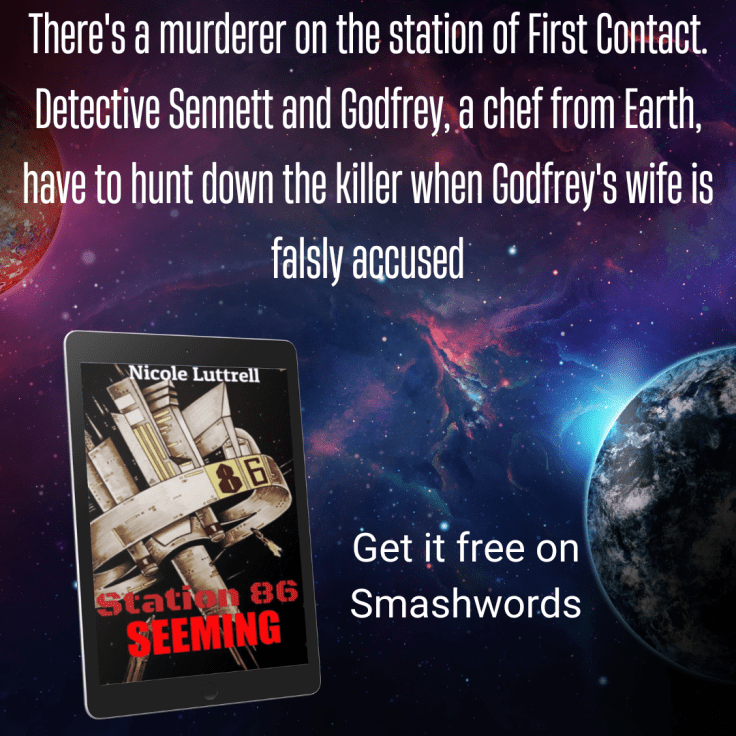
Nova will start on February 5th. But if you need to start at the beginning, you can get Seeming for free on Smashwords right now.

Paper Beats World is a labor of love. If you love what we do here, please consider supporting me on Ko-fi.

Paper or PC

Welcome back to our fundamental series here on Paper Beats World. We’re slowly, over time, diving back into the basics of writing. We’re talking about the barebones standards of writing in a mundane way that is magical in practice. Today, I want to talk about something that has many answers, and none of them are wrong.

Do you write longhand, or do you type your writing?

No, let’s narrow that down a bit. Because there are just some parts of the writing process that are not going to work in one medium or the other. A second draft cannot be handwritten in my opinion. And while there can be a healthy debate about that, I don’t think anyone’s going to argue that by a third draft you should really be clacking keys. Though if you’ve got an argument for that please let me know in the comments because you are clearly a fascinating individual. Or you’re a time traveler from the past.

So let’s narrow this down to just the first few steps of your book. The brainstorming and rough draft steps. Now, I’ve written rough drafts on paper, and I’ve written them right into Word. Both have pros and cons, so let’s talk about them.

On paper

This is how I started, and how I think most writers my age or older stared. Writing a rough draft on anything else but paper. I think Stephen King wrote his rough drafts on an old typewriter. But he also says he wasn’t super prone to typos in his book, On Writing.

I am super prone to typos. And I didn’t have a typewriter. So I write in college ruled notebooks.

I still prefer to write my rough drafts in notebooks. There are several reasons for this.

One, of course, is the issue with typos. I know it doesn’t matter in a rough draft, but I can’t stop myself from going back and fixing them. Writing on paper allows me to ignore the mistakes and just keep on flowing.

Another is that I can take a notebook anywhere. And when I’m in the rough draft zone, I might well take the damn thing anywhere. Yes, I can do this with a laptop, but I don’t drive. And when you’re walking or riding the bus, a laptop can get heavy.

Or get broken.

Writing on paper has a lot of aesthetic benefits for me. There’s a reason I called my blog Paper Beats World. I love paper. I love watching pages stack up with story on them. I love filling a blank page with ink.

More than anything though, I write on paper because my brain works best when I do.

Likely from years of habit, my creativity comes out most on paper with pen. I can scribble, work out problems and figure out what’s going on in my mind when I have a pen in my hand. So, because this is what my muse works best with, it’s what I lean towards.

On PC

All that being said, I have written rough drafts on my computer. Well, on Dabble to be specific.

There are many good reasons to do this. For one, it costs no money. Well, for me it costs my Dabble subscription. But I’m going to keep paying that anyway. So it cost me no additional money. And you can always write on Google Docs or Libre Open Office.

There’s also the fact that my rough drafts written on pc are legible. Like, the whole way through. I have terrible handwriting, and it gets worse when I get excited and start writing fast. I have definitely gone through some handwritten rough drafts and just written big question marks on pages. I just had no idea what I’d written in a fit of creative passion.

Another thing that’s nice about writing your first draft on pc is that you’re not going to have to rewrite as much of it. Well, you might not have to rewrite as much of it. When I type my second draft, I have to literally type every word. When I write a rough draft on pc, I can just copy and paste anything worth keeping. If there’s anything worth keeping.

There is also the matter of speed. I can write pretty fast, but I can type almost as fast as words come to me. Even if you aren’t a fast typist, you probably still type faster than you write.

When you don’t have a ton of time, getting words down fast can be a necessity.

Built in spell checks don’t hurt either.

Finally, there is something incredibly satisfying in watching a word-count rise. Especially right now during Nanowrimo. I have been loving the little ticker at the right hand side of my screen. It makes my little Type A heart happy.

What’s worked best for me, after years of trying and testing, is a combination of the two. I write brainstorming and notes, then the rough draft, on paper. The second draft goes onto my pc, as do all other drafts that come after. And I, and my muse, are happy with this.

But now I want to hear what you think. Do you write your rough drafts on paper, do you start at your pc, or do you do something totally different? Let us know in the comments.

Paper Beats World is a labor of love. If you love what we do, please consider supporting us on Ko-fi.

What do you listen to when you write?

Music is a wonderful thing. I thrive on it. I’ve got playlists for different moods, seasons, days of the week. I use music to help me clean, calm me down, or pump me up. Recently I’ve fallen in love with lo-fi and ambient music for reading and, of course, writing.

This, of course, is our topic for today. What do you listen to when you write?

I can’t write in silence. It’s too loud. Neither can I write with any music that has lyrics. I’ve learned I can’t even listen to instrumental versions of songs that I know normally have lyrics, because I’ll just fit them in myself and get distracted by that.

I was not born knowing this information about myself. Nobody is. This is one of many reasons it’s important to understand ourselves as creatives and as people in general.

Understanding how you react to music, or just sounds, can help you be more productive, sleep better, and overall be happier throughout your day. So it’s worth taking some time to learn this about yourself.

To do this, I suggest three exercises.

Listen to music and journal how you feel

Yes, my answer to everything is journaling. But this is a fun exercise you can do just about anywhere. I’m not suggesting a long freewriting session, though some songs might inspire that. I’m saying to jot down a few words or sentences that come to mind.

You can also do this the opposite way. Write a list of songs that make you feel excited. Or that make you feel brave, nostalgic, or safe.

Freewrite while listening to different music

This is another fun one. Listen to some music and free write while you’re doing it. Then, see what you’ve written. Does lo-fi help you write romance? Does rock music bring out battle scenes? How does the soundtrack from Wicked work for you?

Try to free-write without judgment, and see what comes. You’ll probably find that some genres work better with some writing than others.

Try listening to something brand new

This is a great exercise if you’re feeling stuck with your writing. Find a genre or music style you’ve never listened to, and try to write with it. Or some other sort of background sound. Ambient noise videos abound on YouTube. You can listen to the sounds of a coffee shop, a library, or even a train station. I love fireplace videos. Recently I’ve been listening to videos of vintage music played in another room. Here’s a link if you don’t know what I’m talking about.

So that’s it for today. I hope these exercises help you learn a little about yourself and what kind of music makes your creative brain happiest. And for those of you participating in Nanowrimo next week, I wish you the best of luck. I’ll be right there with you.

Paper Beats World is a labor of love. If you love what we do here, please consider supporting us on Ko-fi.

Where do you write?

With Nanowrimo right around the corner, I thought it might be nice to do a series getting back to some real bare-bone basics of living a writing life.

Then I realized I’m going to be doing a ton of Preptober content this month, and Banned Books Week is next week. Then of course there’s all the holiday content coming up. So while I’m still doing this series, it might be a little scattered.

But it will be here, damn it!

Today, I want to start with a question. Where do you write?

I’ve been blessed to always have a desk of my own. Even as a kid, I had a table in my bedroom. Today I have a whole office in our home, small as it is. I do work from home for my day job, so unfortunately it isn’t just a writing desk. But it is a desk of my own in a room of my own.

While this is a blessing, it’s not a necessity. I wrote books long before I had a whole office when my desk was crammed into a living room or my bedroom. I wrote books while I was working outside of my home. And even though I’ve always had a desk, I’ve written lots of my books while I wasn’t anywhere near it.

I’ve written in diners, laundromats, coffee shops, doctor’s waiting rooms, hospital rooms and libraries. I’ve written at bus stops, rest stops, haircut places, fast food joints. I’ve written in break rooms, under trees in the grass and on the couch in front of the TV. About the only place I don’t write (except maybe some journaling) is in bed because somewhere I heard it’s not good to work in bed because it trains your brain that this isn’t a place to rest.

Flexibility is crucial if you’re going to be a working writer. Unless you are very lucky, you are just not going to have the amount of quiet alone time in your home at your desk to put the number of words on the page that you want.

While it’s great, and necessary, to be flexible, it also doesn’t hurt to put some intention into your writing space. I have always tried to keep a physical space where I can (ideally) write in peace at home. But I’ve also kept a bag packed with things that allow me to create a writing space anywhere I am.

Crafting both of those things requires the same questions to be answered. And of course, your ideal writing space is going to look quite different than mine. So here are some practical considerations to help you create a place where writing is a pleasure.

Consider what you’re writing

Writing a blog post or review is different for me than writing a novel. Editing again is different. I almost never write posts in coffee shops because I’m so used to writing prose there.

How does a certain place make you feel? Does the library bring out your childish side? Do you feel more professional working at your desk? Do you think best at the kitchen table after everyone else is in bed?

If you’re unsure, try this exercise. Attempt a fifteen to twenty-minute freewriting session at several places you tend to write in.

How did you feel writing in each of these places? Does one place feel safer? Does another place feel like you ought to be doing your Math homework instead?

I can’t explain it, except that some places have certain vibes that lend themselves to certain activities. Maybe it’s the lighting. Maybe it’s the background sounds. Maybe it’s something in our past that makes us associate a place with a feeling.

Consider your tools

Different writing projects require different things of us. When I’m rough drafting, I just need my notebook and my outline. And a pen, of course. This is probably the easiest draft to take everywhere.

The second draft requires my laptop, the first draft, and several colored pens. Again, this can all be tossed into a bag and taken to most places.

Outlining is a whole other thing. This requires index cards, post-it notes, pens, markers, three virgin sacrifices and a mandrake root.

And coffee.

This isn’t an activity I would try anywhere but my house, because it’s such a mess and requires so much space.

The point is that you should consider what you’re going to need to accomplish a project. Do you need space, quiet, coffee? Is a good internet connection vital (when I write a review) or forbidden (when I’m writing prose?)

These are all things to consider when you’re planning where you’ll be writing. Even in your own home. Maybe your writing desk doesn’t have the space for a certain project. Maybe your place has internet dead spots. Maybe one spot in the house seems to invite tabby battles.

Think about it before, and you won’t have to think about it when you’re writing.

Consider your preferences

Everyone has likes and dislikes. And while we can’t always have everything we want, we can usually have some of it.

Consider what sort of chair you’d like. What sort of lighting do you like? Do you enjoy having a candle burning when you work? Are there certain reference books or things you like to have around for inspiration?

What kind of pens do you like? Do you prefer paper or PC? Maybe you’re an absolute weirdo perfectly valid person deserving of love who writes on their phone.

Do not let anyone tell you what you should like. Writing is, after all, art. You should choose the tools you use for your art all by yourself. And hopefully, you’re going to be spending a lot of time writing. You should be as comfortable as possible while you do that.

So that’s it. If you’re a new writer, I hope this post helps you create a space in your home and out to write. If you’ve been a writer for a while, I hope this post inspires you to update where you’re writing if it needs it.

Next week is the start of Preptober, so get excited for some extra content. Banned Books Week also begins next week. We’ll be seeing a lot of each other in the next month is what I’m trying to say.

See you then.

Preptober starts in just a few days! Jump over to Ko-fi and grab a copy of my preptober planner. Don’t forget, I’ll be posting additional posts all month to walk you through each Preptober page together.

It’s not important until you make it important

There’s a person I follow on all social media. Her name is Molly, the art witch. I love her. I want her to be my auntie. 

I’ve learned so many wonderful things from her about art, expression, finding joy in life, and witchcraft. One of the best things I’ve learned from Molly is this. Nothing is sacred until we say it is. 

Now, she was talking about grimoires and other magical tools. And this was great news for me as a beginner witch who was being far to methodical about my grimoire. It was incredibly freeing, realizing I could have a grimoire that didn’t look anything like the books I grew up seeing on Charmed. I’ve since crafted three full grimoires, and have two active ones for my continued learning.

But I didn’t come here today to talk about grimoires. I can if you want me to. Let me know in the comments.

Today, though, I want to talk about something else. Tuesday was the ninth anniversary of Paper Beats World. It was a terribly important day for me, filled with big positive emotions. Do you know what I did?

I went to work, because I had to work that day. 

I have launched ten books and three seasons of podcasts. I’ve had a handful of mini milestones in my writing career aside from those. And on most of those days, I have done just about the same thing.

I’ve taken some pictures, posted them on social media, and gone to work. 

What in the hell am I doing? 

I think for the longest time, I’ve been expecting other people to make a big deal out of these days, these milestones and achievements. But that’s a lot to put on anyone. My darling husband is as supportive as they come, and even he didn’t do much more than congratulate me. But really, what else was there for him to say? 

Especially as indie writers, our successes seem lackuster. Our books come out to little fan-fair. Instagram didn’t turn pink when AA came out. No one was waiting outside a book store to snag a copy of Quiet Apocalypse before they went to work. 

Please understand that this isn’t a pity party. Nor is it me talking down about myself or other indie authors. Most of the content I was most excited for this year didn’t have a massive party when it launched. Silver Nitrate came out, no one was dressing up as film monsters and waiting in line to get their copy. Old Gods Of Appalachia is about to start season four. We aren’t seeing a bunch of stoked fans dressed up as dead miners. Instead fans of these things, myself included, simply got the book. We listened to the podcast. We celebrate the stories that we love by consuming them, then posting pictures of the covers on social media and raving about how cool the story was. Quietly.

The point is that no one is going to celebrate your successes as much as you do. These days don’t have meaning, unless we make them have meaning. And yeah, it’s kind of hard to make them have meaning, even if it’s something you’ve waited years for. 

I had to go to work on Tuesday. I actually got sick and had to leave work, spend the rest of the day on the couch on Tuesday. But most launch days, the world just has no intention of stopping. There’s still pets that need cared for. Laundry, dishes, day jobs. These things do not and will not go away. 

But we are achieving things, damn it! We are launching books, we are signing contracts. We are getting our first good reviews and holding the copies of our books for the first time. We as indie writers are winning all the time. And damn it, I’m going to take more time to celebrate those wins. 

So sometime soon I’m taking myself to my favorite coffee shop. I’m getting a Fall coffee, and sitting down with my laptop to look over my own site. To revisit the memories, advice, lamentations and everything else I’ve poured nine years of work into. After all, I start this blog while I was still working on Broken Patterns. It is a very real documentation of my entire writing career. 

This is how I’m making this anniversary sacred, how I’m making it special. And I’m vowing now to never pass up another opportunity to celebrate a writing win again. 

So how about you? What do you do to celebrate your writing milestones? Let us know in the comments. And I’ll see you again next week. 

Don’t forget, Preptober is officially just a month away. I have a brand new updated for 2023 version of my Preptober Planner available now on my Ko-fi shop.

Nine years of Paper Beats World

There are moments in our lives that we should pause for. Life is so incredibly fast, and it just feels like it’s getting faster every year. Holidays, anniversaries, birthdays. These are the times we want to slow down, and just see how far we’ve come. 

Today is one of those days for me. Because, as of today, I’ve been writing Paper Beats World for nine years. 

Yup, nine. I kind of can’t believe it either. 

So much has changed since then. As this is technically a blog, I hope you’ll let me indulge in some self reflection. I’ve changed careers, changed faiths, changed my last name. We’ve moved three times. 

The world has changed since I started PBW. A pandemic, a horrible president, a less horrible president, societal shifts for better and worse. And through all of this, I’ve been writing my little stories. 

It’s the only way I know to keep myself sane, really. Creating my little worlds in which things work out well, people make sense, bad guys get what they deserve and good guys win. 

Most of the time.

And through all of these changes, you’ve been here. More of you than I ever thought possible. It’s a pleasure and a privilege to get to talk to you every week. I hope that you find value in what I have to say. Or at least get a chuckle out of it. 

Since I’m assuming most of you are here for the stories, I wanted to give you an idea of what you can expect in the next year. While life changes and these plans might go awry, this is at least what I have planned right now. 

Woven, my first series about a boy who weaves visions and a girl who spins light, is out of print right now. I am planning a relaunch of the whole series in 2024, maybe starting in May. But I want to make sure I do it right this time. I’m blessed with a second change here, and I want to be sure to give the series the time and attention it deserves. And the covers it deserves. 

Station 86 fans, I have better news. I know it’s been a while, and I really want to thank you all for your patience. 

The next Station 86 story will begin in January. It’s significantly longer than any other Station 86 book has been so far. I sincerely hope that it’s worth your wait. 

Finally, we’re in the middle of the second season of AA. It’s a quirky little horror scifi podcast about found families, aliens, and monsters that go bump in the basements of grocery stores. Just in case you haven’t heard it yet. We are blessed to have some terrific voice actors, and it’s a really good time. 

Finally, what can you expect here on Paper Beats World? Well, in a word, you can expect more.

More book reviews, more writing advice, more prose poetry. I want to give you an opportunity to let me know in the comments what you’d like to see more of here. Do you want more poetry content, more political rants, more reviews? Do you have writing questions? Do you want to hear more about the business side, the creative side or the lifestyle side of writing? Let me know. 

Finally, to thank you all for sticking with me for nine years, I’m doing something a little extra special today. Right now, today only, (Today being August 30, 20230) all of my books available on Smashwords are free. 

This includes Twelve Little Christmas Stories, Quiet Apocalypse, and all four Station 86 books.

Thank you again for being here. And rest assured I have no intention of stopping anytime soon.

After all, I’m still too young to take up stamp collecting. 

A WordPress.com Website.

Up ↑