Is all writing art?

I’ve been busy recently. My darling husband is home, finally. And I am overjoyed. But a stroke is a serious thing and it takes a lot of work and care to recover. It’s a team effort. So it’s been a little hard for me to spend time on my writing.

We all go through these times. It’s nothing new. Right now I’m spending a lot less time writing and a lot more time cleaning and caretaking. Since my time is limited, I’m focusing on things that have actual deadlines. Sometimes, that means that all the writing I’m doing is reviews, blog posts and my daily freewriting.

That’s, um, not a lot. At least not compared to what I’m used to. And the writing I’m doing isn’t what I consider super artistic.

At least, it’s not the sort of writing most people would consider to be particularly artistic.

When you think of artistic writing, what do you think of? Everyone’s going to have a different list, but here’s mine.

Poetry

Songwriting

Short stories of all lengths

Novels and novellas

Now, I don’t write music. But I usually write all those other things. Even if I don’t always share the poetry, this is the writing that makes me feel like a real writer. A real artist!

But of course, there’s lots of writing that is, in fact, artistic writing. Let me give you a list of writing that counts as art.

All writing. All writing can be art.

No, I don’t think there’s an exception. I’ve written ad copy that is art. I’ve ghostwritten blog posts that were art. Everything I post here is art. Even my reviews of horror content on Haunted MTL are art.

If you’re creating something new, you’re making art.

If you’re writing something that gives you joy to write, you’re making art.

If you’re pouring your heart into your writing, you’re making art.

I believe that a lot of the rules some people have about art are bullshit. It tends to be quite elitist, relying on having the approval of the right people. But that has many issues. First off, art is subjective. What I consider art and what you consider art is going to be completely different. Visual artists have been poking fun at this forever. Consider the banana taped to a wall that sold for just so, so much money. I consider this art, not because the banana itself is somehow valuable. It’s art because its existence says something. Thought went into that piece. Intention went into that piece.

You get to decide what counts as art for you. Don’t worry about if anyone else agrees with you. People have also been misinterpreting art forever. Consider the heartbreaking story behind Portrait of Ross in LA, by Felix Gonzalez-Torres. If you haven’t heard of this piece, it looks different every time. It’s a pile of candy. People are invited to take a piece of candy, or even a few.

This piece represents the life and death of a man named Ross, who was the artist’s lover. He wasted away and died due to AIDS. This art piece represents the sweetness of his life wasting away. It’s beautiful and sad and meaningful. It captures the honest and raw emotion of a man who lost his person. We are gifted a glimpse of that pain in the pile of sweets that slowly diminishes. It is art.

What is art to you? To me, it’s a piece of work that’s created with joy. It’s something that is crafted with care. It’s creative work that we make to share with others, or just to take our own emotions and memories out of ourselves and into ink or paint or scraps of paper put together in a collage. Take this post. I wrote this for you, and I wrote it for me. I wrote it to share something with you that’s been making me feel better. I took care with the words I used, bringing some poetry to my prose. I put thought into it. It brought me joy to write. I hope that it brings you joy to read. My reviews of slasher flicks and gory anthology TV shows are also a joy to write. I hope that they’re a joy to read and that they help you find good stories about things that slither in the night.

Art is subjective. But don’t let yourself think that you’re not creating art. It’s a big tent, and all kinds of writing are welcome.

What I learned launching four books in four months

Last year, I launched four books in four months. It was a massive project that took the better part of a year to do. But it’s done now. Well, at least it’s mostly done. We’ll get to that in a bit.

Launching one book is a project. Launching four in four months is something I will probably not do again.

And then, of course, while I was just at the tail end of this marathon of launches, the unthinkable happened.

Was it a success? Well, the books are out, and they’re selling, so I guess so. Could I have done more? The answer is always yes. The answer is also always no. So, let’s talk about what I learned during this marathon of launches.

It’s going to take so much more time than you think it will

This is the most crucial thing to keep in mind before you even start. Everything, and I do mean everything, is going to take more time than you think it will. At no point during this past year did I think, wow, I’m ahead of schedule and everything is going smoothly. Promoting takes time. Writing additional content takes time. All the little minute details of launching take time. And all of it is going to take more time than you think it will. Especially if you’ve never done this before. Keep this in mind for the next part.

Plan everything out ahead of time

When I decided to relaunch Woven, the first thing I did was sit down and make a plan. And, being the anxious person that I am, I planned everything down to the day. When was I going to make promo material? When was I going to write and post? What sort of blog posts was I going to write that had something to do with Woven so I’d get the right audience to look at the book? When was I ordering covers? When was I announcing covers? When would the presale go up?

Most importantly, when was I going to need to take breaks? When was I going to be busy with family stuff and holiday stuff and not be able to full steam ahead on this massive project? Remember, I work a full-time job. And I had decided to launch these books during the holiday season. Now, if I ever do this again, I’ll certainly plan to do it earlier. But as I had the glorious idea of having all four books available for holiday gifts, my path was sort of set already. So I needed to make sure I had some time blocked out for family and holiday time.

This includes promotional planning

I of course had a promotional calendar ready. Before I announced a launch, I had a five-month promotional calendar set up which included what books I’d be promoting and how during which times. Even if this just meant what book I’d be posting about on Instagram, I knew.

This was important to me because I tend to suffer from decision fatigue. And when I’m already thinking of a hundred things that need to be done, need decided on and need attention right now, little things get lost. So having a written plan of action I could just follow took a few decisions off my mind. And there were days I needed that.

The work starts long before you even announce a launch date

As I mentioned before, the work to relaunch Woven started much earlier in the year. Remember, I actually launched five books last year, including Nova. The work for this marathon year started in December of the year before. I was already planning and working on the material and details. So if you’re planning to do something like this, plan for it to be a long-term project. Rapid releases only look rapid to those outside. To you, it’s going to be a long, slow process.

Plan for the unexpected

I’ll be the first to say that my launches went surprisingly smoothly. There were no issues with Amazon. The covers came back on time and looked great. There were no technical issues at all.

But that doesn’t mean things went to plan. As you might already know, my husband suffered a severe stroke in December. He was hospitalized for a month before he could be released to a rehab facility. As I write this on February 4th, he is only coming home today. And so a lot of the things I’d planned to do, like be on podcasts and do guest blogs and a bunch of other fun promotional stuff got put on the back burner.

Thanks to all of the heavy lifting I’d done at the start of the project, I was still able to release all four books. Because by the time the stroke happened, everything was pretty much set up on autopilot. I didn’t have to think about whether the book would come out on time or the sale prices would go up because I’d already seen to that.

The point is, to be ready for things to go wrong. Because really, anything could happen. This is why it’s important to plan far in advance and don’t announce a launch date until everything, and I mean everything, is ready to go.

The work doesn’t end when the books are out

Finally, I’m still working on this launch. Because this is, again, a huge project. While I delayed a lot of outreach promotions, I didn’t cancel them. And, of course, there’ll be some buzz when the books go wide. (Spoiler, that’s starting sometime soon)

Promoting and selling a book doesn’t stop once it’s out. It’s kind of a long term thing. Which in a way is a huge relief. I don’t need to rush. I don’t need to feel like I messed up my launch by not being on ten podcasts last month. I can streatch out. I can get to things when I get to them.

I can go at my own pace, and so can you.

So now I want to hear what you think. Would you ever consider doing a rapid release? Let me know in the comments.

If you want to support Paper Beats World, or get some exclusive stories and writing planners, you can do so on Ko-fi.

You can also get my Novel Planner! Make a plan and get writing with this thirteen page planner.

Stories Save Us

This is a speech I gave during the Stories We Share Event at the Butler Library event on December 27th. Several lovely people suggested that I publish it. So, here you are.

Hi there. My name is Nicole. I write stories about dragons, ghosts and spaceships. Sometimes I write about the ghosts of dragons on spaceships. And, like most people who are at least mildly funny, I have been through some hard life events.

Don’t worry, this isn’t all depressing, I promise.

I was raised by a mother with a lot of chronic health issues. This meant I spent more time in my childhood than I should have in waiting rooms, doctor’s offices, or just keeping myself occupied quietly so my mom could rest.

I passed the time by reading. Chronicles of Narnia, Goosebumps, Laura Ingells, Babysitter’s Club. These stories kept me company in dark places. I escaped into Secret Gardens and attic rooms enhabited by Little Princesses.

As an adult, I fell in love with and married a man who also has chronic health issues. Because of course, right? And again, books have come to my rescue. Stephen King, Philippa Gregory, Tamora Pierce, Kiersten White and Grady Hendrix keep me company through scary days.

Now I do more than read these stories, I write my own. And in the past few years, while almost everyone has fallen on hard times, it’s sometimes felt foolish to keep writing fiction. Indulgent, and insensitive even. A writer I’m very fond of named Matt Wallace, who wrote the Savage Rebellion series, said that marketing right now feels like standing outside of a burning building and yelling at the people coming out, “Hey, you wanna buy a book?”

But the answer is yes, yes I actually do want to buy a book and read it. I want stories.

Stories can save us. And they do this in two ways. The first is of course that they’re entertaining. It’s fun to read. And while you can’t run away from your problems, you can take a break from them. Maybe you need some time in Narnia, or a haunted house, or a world where sewing is magic. Because after we take that time, take that break in a book, we come out a little bit stronger. Maybe that gives us the clearer eyes we need to look for the helpers that Mr. Rodgers told us about. Maybe it even gives us the strength and courage to be the helpers.

Here’s the other thing that stories do for us. They tell us that we are not alone. Fear can make us feel like we’re the only ones suffering. That no one else understands the pain we’re going through. But that’s not true. We’ve all had those seasons in life where we’ve gotten a scary diagnosis, tried to leave a dangerous relationship, fought an addiction, moved far away from everything familiar, or worried about how we’re going to pay rent and get groceries, and keep the electric on. We’ve all said goodbye to people we never wanted to say goodbye to, or had something violent and terrible happen to us that we neither deserved or saw coming.

Neil Gaiman said this about writing Coraline. “Fairy tales are more than true: not because they tell us that dragons exist, but because they tell us that dragons can be beaten.” But we knew this before Gaiman. The author of Beowulf knew this and wrote about monsters and dragons that the great hero faced. These stories comforted and guided our first ancestors. They helped them cope, heal, and find the courage they needed.

We are not going to fight literal dragons. We aren’t going to face Voldemort, or a sentient haunted house, or a series of unfortunate events orchestrated by a school friend of our dead parents. But we are going to fight our own dragons. And a lot of the time we win, and live to see brighter days.

What worries me, is how many people can’t remember the last time they read something for pleasure. Most of us spend a lot more time doom-scrolling than resting our hearts in fiction. If that’s you, find a book you want to read today. We are standing in a library right now. Find a book to take home with you. Take half an hour, ten minutes, hell five minutes, and read a story you love. Maybe it’s something you read as a child, or maybe it’s a new book. Maybe it’s wildly out of your age range. Look, when I’m stressed I reach right for Beverly Cleary so I’m not going to judge.

Make the space for you to have joy, no matter how bad your day is going. Because we all need to remember that dragons can be beaten.

Content behind paywalls

I meant to write this post months ago, but the second half of 2024 has been way busier than the first half. So, here we are.

Earlier this year, a YouTube channel I’m very fond of called Watcher made a big decision. They announced that they were going to pull all of their content off of YouTube and put it on their own streaming platform, Watcher.com. It would cost $7 a month to view any of their shows.

The Watcher fan base, many of which had followed Shane, Ryan and Steven from Buzzfeed, lost their minds. Within twenty-four hours, the guys put out an apology and rethought the whole situation. Instead of yanking all of their old content from YouTube, they would leave it up. They would also continue to post new content, though they would do so only a month after they posted it on their own site.

This whole situation got me thinking about how much we’re paying for entertainment. And how much we as creators should be expecting to be paid for our work.

First off, I want to say that I probably would have paid for the Watcher site if that was the only way to get new episodes of Ghost Files and Are You Scared. Those shows are fire.

Selling your creative work is a tricky thing. On the one hand, creatives don’t generally create to get paid. I certainly don’t. If all I wanted was to make money, there are faster and easier ways to do that. What I want more than anything is to share what I make with other people.

That being said, I need to eat. And publishing books cost money. I pay to have PBW on WordPress. I pay for my cover art. I pay to print copies of my book. All of this cost money. Then there’s the fact that if I want time to write, I need to not be at my day job so much. So I need to make enough money to justify not working overtime. Eventually, I’d like to make enough to justify going down to part-time and then quitting altogether.

What I’m saying is, on the one hand, I understand where the Watcher team was coming from. Their content costs a lot more money to create than mine does. And if they want to keep making that content, they need to have the money to do it. That isn’t going to come if they’re beholden to the ever-changing rules and algorithms on YouTube. I don’t blame them at all for making what they thought was a sound business decision.

I also don’t fault them for stepping way back when their community reacted the way they did. I applaud them for listening and considering the points of view of their audience. I think that holding some content back for pay and delaying the release of free content, is probably a pretty good way to go.

I mean, it’s what I do.

I post here on PBW every week for free. I hope I’m giving you content that’s worth something, even though I don’t ask for money. I share some short stories and chapters of my books for free. I even post all of Station 86 for free, for a limited time.

I, however, have novels that are not free. I have short stories for fifty cents on my Ko-fi page. I, like most online creatives, have to walk the line between giving away what we can and charging for what we think is the most valuable.

All of this to say, it’s incredibly challenging to be creative, balancing our desire for eyes on our work and our need to survive in a capitalist society. None of us, I’m sure, forget that people buy our work with hard-earned money. Money that has to go farther and farther as inflation and housing costs get way out of hand.

But I sure am glad you’re here, whether you buy my books or read my content here for free. I’m glad you’re here if you never pay me a dime. I’m just glad you like what I write. And if you do donate, or buy a book or short story, thank you. It means so much more than the financial amount itself. It means, to me, that my work helped someone enough that they were willing to pay money to have it.

So yes, I probably will eventually subscribe to Watcher. I’ll continue to subscribe to some of my favorite creators on Patreon. I’ll buy their books, stickers, and T-shirts. Because I want to. Because I want the content they put out. And because I want them to know that their work is something that I value.

It doesn’t have to be me, but if you can, please consider supporting a creative today. It means the world to us.

If you love the story and want to support Paper Beats World, you can do so on Ko-fi.

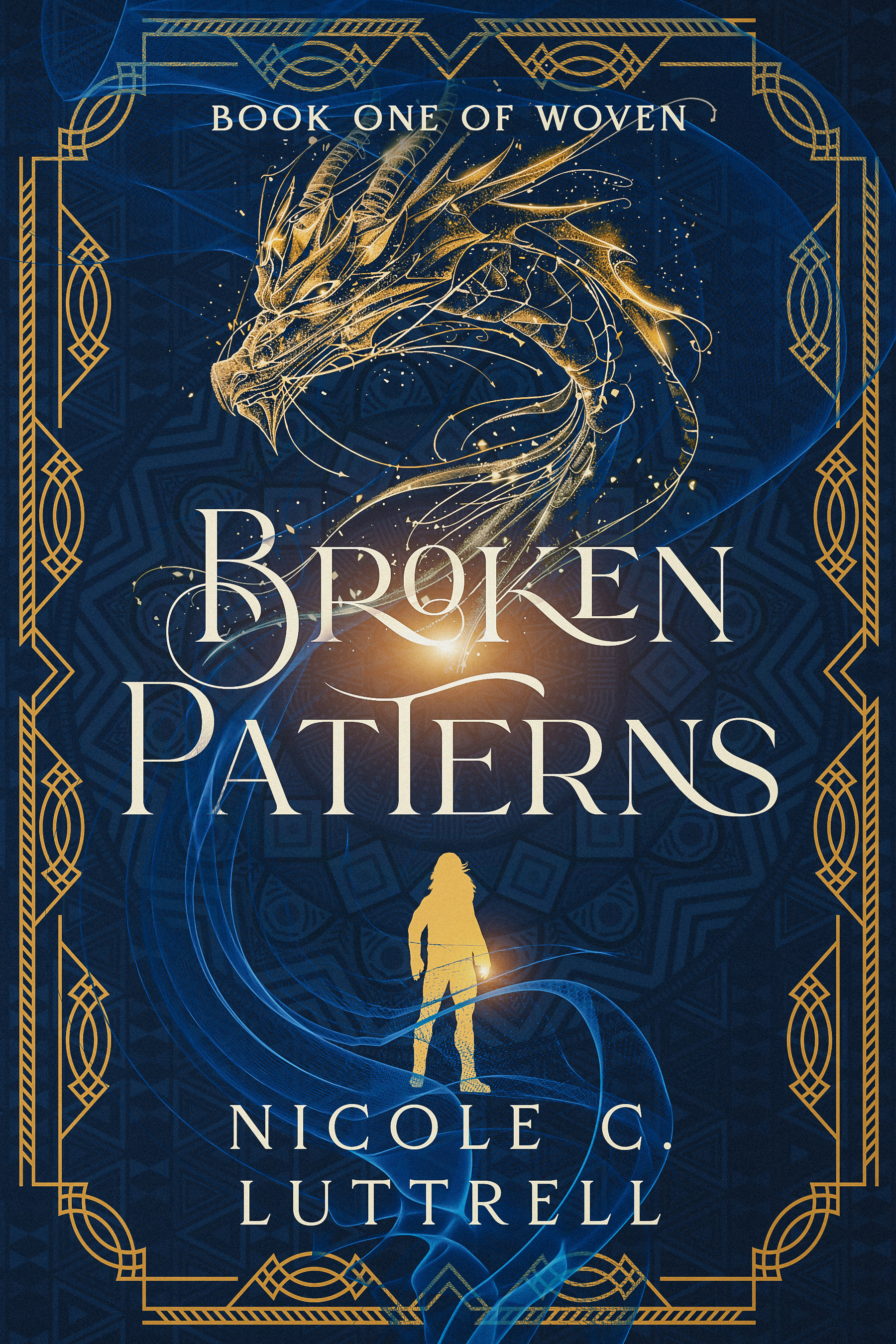
Broken Patterns is now live! You can get it right now on Amazon.

Looks like we made it

As I write this, I’m sitting in my home office. It is sun-drenched, messy, and smells of the cinnamon wax melt I have burning on the windowsill. As I write this, we are creeping closer to the relaunch of my first fantasy series, Woven. I’m writing the last book of the Station 86 series. I’m on a path to joining SFWA.

As I write this, I’m so much farther than I ever thought I would get. A professional author and critic. A blogger. A happy woman.

There are many dark and terrible things in this world, and indeed in my own life. It is never perfect and will likely never be. But what life ever is? It’s hard to think of these things when I feel so blessed today.

I have a beautiful, fulfilling, joyful writing career. I have people who show up to read what I write. I have put art out into the world and it has been well received.

I want to keep this short today because I feel like I’m repeating myself. But I do want to thank you all, again, for being here. I’ll keep showing up if you’ll keep reading. And yes, I have lots planned for the rest of the year.

And, God willing, many years to come.

See you soon.

Today is the last day of our Paper Beats World giveaway week. And today, I’m giving away a free copy of Broken Patterns before it’s even published! Just like this post and leave a comment to enter.

If you liked what you saw here today, please consider liking and sharing this post. Or you can support the site financially on Ko-fi.

Broken Patterns is available now for preorder! You can order it now on Amazon.

Ten ways to fill your creative cup

I write most days. Not every day, because I live in a capitalist society and I have to have a job. But I try to get some writing in most days.

I don’t do writer’s block. This isn’t to say I’ve never looked at the blank page and been stuck. Because of course that happens. That happens all the time. But I don’t like the term writer’s block. It makes it sound like a large, unmovable brick in your path. That is pretty daunting. I prefer thinking of it as an empty cup. And you can fill a cup.

What do we fill our cups with? Well, I tend to fill mine with things that take a little effort, but not much. Coffee and tea, mostly. You have to do a little more than just pouring something from one container to another, but not a lot.

That is how I want you to think of the advice in this post. These suggestions will take a little effort, but not much. But, like a cup of warm coffee or tea, you will feel filled in more ways than one.

Freewrite

Of course, this is where we always start. Freewriting has always been the first line of defense against an empty creative cup. Sit down, set a timer for five, ten, fifteen minutes, and just start writing. They don’t have to be good. They don’t have to have punctuation or good spelling. Hell, they don’t even have to be in order. They just have to exist

Read people who inspire you

Many writers inspire me. Natalie Goldberg and Maya Angelou come to mind first. So when I’m feeling creatively drained, I read some of my favorite works from them. It always encourages me to get back to the page quicker.

Find a random picture online

This is something I’ve done as a group game, and as a way to unstick my creativity. Jump on a website like Pixabay, and check out some random pictures. Or if you’re trying to write a certain genre, look up a keyword from that. Look up ghosts, dragons, haunted castles. Whatever you want. Then write a story about the pictures that come up.

Grab a writing prompt

Similar to the last bit of advice, find a writing prompt.

I used to think this was cheating. Was I really writing my own work if I wasn’t coming up with my own ideas? But honestly, I’ve written some of my best work from a prompt. And trust me when I say, it’s still your story. You can give a group of writers a prompt, and every one of them will write a completely different, unique story. So go get one and get writing.

Do a writing exercise

A writing exercise is different than a writing prompt. A writing prompt is an idea for a story. An exercise is a little less structured.

What does blue make you think of?

What are five things you wish you didn’t remember from your childhood?

How many ways can you write the same information?

Write the same scene from three characters pov.

These are little things that stretch our writing muscles and make us look at the world differently. This is never bad.

Give yourself a goal that is aside from finishing a project

Sometimes if you sit down and try to write a thousand words, that can feel oppressive. And if your goal is to write a whole novel, that can feel like a goal that is never going to happen. So these goals, while good in theory, can get in the way of actually getting writing done.

So try to give yourself a more unique goal. Write until a sand timer runs out. Put on a song and write until the end of it. Or write just this one scene, however long or short that scene is.

Rewrite something

Sometimes I find that my cup is empty because something is wrong with the story I’ve been writing. I’ve messed something up somewhere, and what I’m trying to write now doesn’t feel right. The cure for that is to go back and rewrite whatever isn’t working. Maybe it’s the scene before. Maybe it’s further back.

A warning, though. Sometimes this is the whole damn project that needs to be rewritten. This happened to me recently with my latest Station 86 book, and I had to throw out over fifty thousand words. While this was necessary, it also sucked ass.

Read over what you’ve read already

Sometimes you just need to get back into the groove of your story. So try reading the scene or chapter that came right before the one you’re working on. Maybe you forgot something that can turn into a serious plot bunny.

Write a list of things that absolutely won’t happen. Why won’t they happen?

If you aren’t sure what is going to happen next in your story, try making a list of what you are sure won’t happen. This helps get your brain moving in a way that doesn’t have a lot of pressure behind it.

A funny thing happens every time I do this, though. As I’m writing things I’m sure won’t happen, I start to wonder why they won’t happen. Wouldn’t it be cool if this happened? Wouldn’t it mess things up for the characters if that happened?

It’s your story, after all. Anything can happen.

Plan a writing date with a friend

Peer pressure! Grab a writing friend, and make a plan for a creativity date. Plan to go somewhere, or even get together over Zoom. When you see someone else hacking away, you’ll feel inspired to do it yourself.

If you don’t have any writing friends, there are a ton of virtual writing events online. You can find a bunch on YouTube, both live and prerecorded. There’s a big, wide community of writers out there. And we’re ready to write with you.

So now it’s your turn. What is your favorite way to fill your creative cup? Let us know in the comments.

And don’t forget, we are still doing a giveaway a day for Paper Beats World’s Tenth Anniversary. Like this post and leave a comment for a chance to win a free copy of Nova.

See you tomorrow.

If you liked what you saw here today, please consider liking and sharing this post. Or you can support the site financially on Ko-fi.

Broken Patterns is available now for preorder! You can order it now on Amazon.

Ten toxic lies I believed about being a writer

I’ve wanted to be a writer since I was thirteen years old.

Thirteen years old is still basically a child, despite the insistence to the contrary by any thirteen-year-old. And some Republican lawmakers. Children don’t have a very good grasp of what their dream careers actually look like. When a kid wants to be a doctor they don’t imagine the paperwork or fighting with insurance companies. And when a kid dreams of being a writer, they don’t picture staring at a screen with a brain that can’t give them anything but the lyrics to the Carmon Sandiego theme song.

My perception of what a writer does and what kind of lives they live have changed dramatically in the two-plus decades since I was thirteen. My perception of a lot of things has changed, thank God. But some of these toxic beliefs followed me further into adulthood than I’d like to admit. Some of them didn’t go away until I started meeting and spending time with other writers.

Some of these still haunt me today. So I wanted to share them with you. To call them out for the limiting bullshit they are.

All writers are very serious people

I thought this about college professors, too. Until one asked during a Zoom convention panel if another panelist’s dog was ‘pickupable’.

I love that man.

This one really messed with me, because I am not a very serious person. I am a very silly person. I like watching children’s shows and painting with my cats.

But no, you don’t have to be a serious person to be a writer. Even if you’re going to write about serious things.

All writers are very smart people

All you have to do is meet a few writers to know this one’s bullshit. Or read some books that have been published by actual publishing companies.

This was great news to me, though, because I do not consider myself a very smart person anymore that I consider myself a very serious person. I am clever. I am smart about many things, but not everything. About some things, I am a dingus.

That’s kind of the human condition, though. So please don’t ever feel like you’ve got to be smart all the time to be a good writer.

Writers write all the time

And I mean, all the time. Real writers, as I thought when I was a kid, want to write all the time. They skip meals, don’t go out, have trouble keeping a day job, and make terrible partners because they just don’t want to do anything at all but write.

Or read.

And while that seems lovely in theory, it’s not exactly realistic. For one thing, most of us do not want to write and read all the time in the same way that we don’t want to eat ice cream and sushi all the time. It sounds fantastic until you do it. Then you realize you miss French onion soup.

You are allowed to enjoy other things and still be passionate about writing. This world is too full of amazing experiences to limit ourselves. Even if it’s our very favorite thing.

Writers are often tortured by their work

How often do we see this in the media? A writer is suffering from writer’s block. They can’t think of an ending. They can’t get their character right. Their plotlines are more tangled than secondhand yarn.

It’s tearing them apart, Lisa!

Look, I’m not going to say that I never feel messed up when my writing isn’t going well. But it doesn’t wreck my whole day. Rather, it’s a puzzle I’ll keep coming back to. A song that gets stuck in my head because I don’t know all the lyrics. But most writers aren’t chain-smoking because they can’t get a line of dialog right.

Writers focus more on their work than their family

Maybe this is just the inherent guilt I felt being raised in a church that discouraged women from doing anything for themselves. But yes, I understand this concern very well.

Let me tell you, it’s not going to kill your family to deal without you for an hour. And no, writing will probably not, as we already discussed, take all of your time away so you have no time to care for the people who depend on you.

Drinking makes you a better writer

I don’t know where this one got started. I can’t write well when I’m drinking. I can’t even string sentences together without using fuck like a comma. I’m sure not writing anything worth a damn.

Worse, being dependent on a muse that comes from a bottle (or other places) only kills you. You need to be healthy to write. Overindulging in drinking isn’t a healthy decision.

Stay safe, drink tea.

The only way to be a real writer was to be traditionally published.

Boy howdy, was this one wrong. And because I was so sure that this was the truth, I jumped in with both feet for the first company that would take me.

We see how that turned out.

Self-publishing used to be laughed at. But these days it’s a respected option and one that I am so glad to see.

Once you are traditionally published, your career is on lock

I think we also know that this one didn’t work out how I thought it would.

Anything can happen in the publishing industry. Your company can liquidate. Or drop you. Or decide to break your contract. Or maybe your book doesn’t sell as well, so they refuse to buy any more books from you. The point is, just because you have a published book doesn’t mean you’re set. You’ve still got to put in that hustle.

Writers don’t bother with social media

Maybe this is just because I’m a bit older, but I never thought writers would be on social media as much as we are. And honestly, I love it. I keep up with my favorite writers and my writing friends. Social media also allows me to let people know what projects I have going on.

Real writers only write books or poetry

This one is a killer. So many writers write screenplays, scripts, podcasts and blogs. There are some fantastic writers on Wattpad.

Yes, I am a novelist. But I’m also a scriptwriter. I’m also a professional critic and blogger. These are all also valid writing. And even if I didn’t write novels, I would still be a real writer.

Remember, all you have to do to be a writer is to write. Everything else is a bonus. But also, don’t develop a drinking problem.

We are still doing our Paper Beats World anniversary giveaway. Like this post and leave a comment for a chance to win a copy of Virus. See you tomorrow.

If you liked what you saw here today, please consider liking and sharing this post. Or you can support the site financially on Ko-fi.

Broken Patterns is available now for preorder! You can order it now on Amazon.

My ten favorite writing content creators

Writing isn’t a team sport. But it also kind of is. We’re not all shooting for the same goal. We’re not all scoring the same, or even using the same metric to define what scoring means. We’re often competing against each other for spots in magazines, podcasts and publishing companies. Some of us are showing up for practice every day, some are more weekend contributors.

But we are all on the same team, even if it feels like some of us are playing football while others are playing lacrosse. Because every time one of us hooks a new reader, that person will be a reader forever.

Since most of us don’t live in a big lovely writing commune, our main way of interacting with our fellow writers is online. And it feels like there’s a new way to do that every week. It should surprise no one that what writers want to talk about the most is writing.

Today I want to share with you a list of my top ten favorite writing content creators. Some of these people are educational. Some are inspirational. Some I follow because they say out loud the things I was already screaming in my head. While most of these are Instagram accounts, there are some YouTube and even podcasts included as well. Inspiration can come from anywhere.

Ursie.writes

Rory Ursula’s Instagram is so aesthetically appealing. It’s all pinks and grays and tans. I love it.

Aside from the aesthetics, you’ll find mini moments of writing frustrations and joys. I don’t so much learn from this Instagram, but I feel seen.

Bert Slenchner

Bert’s Instagram writing inspiration comes in the form of his personal goal-setting. He shares his progress, his cooking, and his cats. It’s a friendly feed.

Escape Pod

This is an aspirational podcast for me. It’s easily some of the best short fiction around. And they will sometimes do interviews with the authors, which is wonderful.

Mary Robinette Kowal

Following Mary Robinette on Instagram is like following an auntie who writes. She shares her work, writing tips, and videos of her cat Elsie.

Nanowrimo

Specifically, I’m talking about the Nanowrimo Instagram feed. It’s full of writing joy and inspiration. And while it usually updates more around November, April and July, there’s always something going on.

Write as Rain

AKA Rain Sullivan, this Instagram feed is so funny. It shares Rain’s frustrations and joys along her writing journey. These are so relatable it feels like she reached inside my head to pull them out.

John Green Writes Books

Yes, that John Green.

While he doesn’t post often, Green’s quiet determination about his writing career is amazing. He is the steadfast voice we all need.

Behind the Bastards

Yes, this is a podcast. Yes, it’s mostly about bad people doing horrible things. However, they sometimes read books by horrible people. Horrible people who write horrible books.

These book readings are masterclasses in what not to do when writing a book. They’re like an inoculation against shitty behavior on the page.

Writing Excuses

I know I’ve mentioned this podcast before, but it continues to be a fantastic place for writing inspiration. While the hosts change over time, the writing advice and career comradery do not. And I appreciate the homework given every episode. Because learning about writing is all well and good, but it means nothing if you don’t put it into practice.

Writing With Jenna

Finally, we’ll end on a twofer. Writing With Jenna has a fantastic and informational YouTube channel. She also has a fantastic Instagram feed. Both are full of great advice on writing, marketing, and living as a professional writer.

Don’t forget, that today is day four of the Paper Beats World Anniversary giveaway. Like this post and comment for a chance to win a copy of Man in The Woods. Check back tomorrow to find out the winner.

See you tomorrow.

If you liked what you saw here today, please consider liking and sharing this post. Or you can support the site financially on Ko-fi.

Broken Patterns is available now for preorder! You can order it now on Amazon.

How do you know when your series is done?

For most of my writing career, I’ve worked on three book series. Woven, Station 86 and AA. All three series were planned out, with a specific number of books and a specific storyline in place.

Woven ended up being one book longer, with a prequel novel. Station 86 was supposed to be three books. Then it became four. Then five. Now I’m working on the last one for real this time. And at this point, I have no idea how many seasons AA is going to have. I think I know how it’s going to end, but I guess we’ll see.

Long-running book series, TV shows and comics can feel like institutions. It can very much feel like they will never have an ending. Some shows, like Star Trek, Dr. Who and The Simpsons, really feel like they could go on and on forever. Book series aren’t as prone to this, but we all know there are some series that will probably go on even after the original author passes. Looking at you, Rita Mae Brown.

So how do we know, as writers, when to stop writing? When do we know that the story, and the series, is finished?

While every story will ask something different from a writer, here is the best advice I can give regarding the matter.

Start with an outline

This isn’t a safe space for pantsers, sorry not sorry. If you’re writing a story that is going to span several books, you need to at least have some idea of where the damn story is heading. You need to have a destination in mind. That way, even if you take a winding path to get there, you at least have some direction.

When I wrote Woven, I knew how I wanted the story to end. And I stayed pretty true to that. It was going to originally be one book, but ended up bloating and growing so much that it needed a whole trilogy. Then, of course, Grace had to sneak into my mind and refuse to let go, so I had to give her her own story.

The thing is, I could write more in this world. And I might yet. But for right now, I had a specific story in mind, and I told it.

If you stop having fun

I know I harp on this, and I’m not likely to stop. Writing is supposed to be fun. Not all the time. There are some times when it’s absolutely a nightmare. Sometimes writing will shatter your soul and your will to exist. But your passion for the work cannot wain. It cannot feel like a slough.

When writing starts to feel like work, it might be time to set this series aside. Maybe just for a while. Maybe forever. But if it’s work to write, it’s gonna be work to read. And nobody wants that.

If you start repeating yourself

I mentioned Rita Mae Brown earlier. I used to love her books. I also loved The Cat Who series by Lillian Jackson Braun. But even though Brown is still around and writing, I’ve stopped reading. Because it became repetitive.

There are only so many stories one person wants to read about a cat and corgi who solve mysteries. Especially when it doesn’t feel like any of the characters change or grow. Given that, it’s easy for all the books to feel the same. So if you feel like you’re on repeat, it might be time to give that story a rest.

When all the loose threads are accounted for

Even in continuing series, there are some overall plots. Maybe it’s just a running gag or a long-standing irritation. Maybe one character is constantly one-upping another. Think of Lucy and Charlie Brown with the football.

I certainly suggest having things like this in your writing. It’s fun. But when you think you might be ready to stop writing your series, it’s time for some payoff. It’s time for Charlie Brown to get to kick the football. Or, just become savvy and self-assured enough to walk away from the situation.

Now that I’m working on the last Station 86 book, I’m re-reading the whole series. Because I want to make sure I don’t leave any of these loose ends

When you feel passionate about a new project

Sometimes it’s easy to get in a rut, even with our creative work. We sit down and start writing a story in the same way we’ve always written stories because it is the same way we’ve learned to write stories.

Then, something new comes along. A new idea. Maybe a whole new genre. A new character steps into the light and asks for your attention.

Then demands it.

That might be a sign that it’s time to put your current tale to rest. I’m not suggesting dropping the story mid-draft, or if you have a cliffhanger out there. But if the muse is tempting you with new, exotic tales, they might have a very good reason for doing so. And you might have a very good reason to listen.

Don’t forget, we are on day three of the Paper Beats World’s tenth anniversary giveaway. Like this post and leave a comment for the chance to win a copy of my 2024 Preptober Planner. Check back tomorrow for the winner.

If you liked what you saw here today, please consider liking and sharing this post. Or you can support the site financially on Ko-fi.

Broken Patterns is available now for preorder! You can order it now on Amazon.

Ten things I’ve learned in ten years as a working writer

I have been a working writer for ten years now. That means that I am actively producing content to sell it. Or, at least put it somewhere people might see and enjoy it.

Being a working writer is a weird job. You spend years practicing only to realize that you will never master it, you’ll just become a better apprentice. But there are certainly some things I’ve learned over the last decade. As I said yesterday, I hope I’ve learned something after ten years of working at it. So here are some hard-won pearls of wisdom. I hope they help you.

A yes to one thing is a no to something else

I have a too much gene. What, the person who decided to write a ton of extra content and host ten different giveaways in ten days does too much? I’m sure you’re surprised.

The problem is that I want to do everything. I want to submit to every magazine and enter every contest. I want to write so many novels and produce so many podcasts. So this is a lesson I have learned the hard way by trying to juggle too many projects at once.

If you decide to write one book, you don’t have time to write a different one. If you enter one contest, that means you have to turn down another. Everything you say yes to means there’s something you’re going to have to say no to.

There is just no other way around it. Our time is finite, our energy is too. So pick your projects carefully. Because when you pick something, it means you’re going to have to reject another thing.

You can push yourself only so hard

This one gets more true as I get older. Just as you only have so much time in a day, you also only have so much energy. You only have so many spoons, as the kids say. And yes, we all know that we can push through exhaustion and get things done. I at least was raised with this toxic work ethic. It doesn’t matter if you feel like it. It doesn’t matter if you feel sick, or if you’re in a funk, or if you did a whole lot yesterday and are still recovering. You have work to do, damn it.

Yeah, we all need to stop this. Especially when it comes to our creative projects.

Listen, I get that deadlines are a thing, but there is only so much you can push yourself before you burn out. I have pushed myself too hard for too long many times. And what happened wasn’t that I persevered and created great art. What happened was that I put out work that wasn’t as good as if I’d been well-rested. What happened was that I burned myself out and had to spend months recovering. What happened was that I got myself to the point where I hated the work, hated myself, hated everything. And that is not how I should feel about my writing. It’s sure as hell not how I want to feel about my life.

Most people do not give a damn that you are a writer

I tell people I’m a writer. Of course, I do. But the older I get, the less I tell people. Because most people, sadly, do not care. The average response I get when I tell someone I write books is, “Oh, that’s cool.” And then we move on.

Or worse, I’ll be informed that they self-published a poetry collection on CD twelve years ago, and that’s basically the same thing.

So if you think you’re going to wow someone with the fact that you’re a writer, I’m sorry to tell you that you’re not. Unless you’re Sarah J. Mass, most people do not care.

You have to love your writing the most

I have read Series of Unfortunate Events the whole way through at least five times. I have read Woven the whole way through ten times over. Many writers have read their work even more.

When you set out to write a book, you are committing to spending a lot of time with that book. Probably years, if it’s a series. Maybe years if it’s just one and you’re a slow writer. No shame there. And your passion needs to stick with you through every rewrite, line edit, revision and maybe even reading the damn thing for an audiobook. The only way that’s going to happen is if you are just wild about your story. I was, and still am, wild about Woven. I am wild about Station 86. I am wild about AA. And I have to be because I am going to spend more time with these stories than anyone else ever will.

Schedule writing time

The best piece of advice I can give anyone starting to write is to block out time to do so.

But, you might say, it’s writing. And writing is art! You can’t schedule art, man.

Well yes, you can. It might surprise you that I schedule my hobbies, too. Otherwise I’d never actually do them.

Writing is something that takes a lot of time. And if you have an already busy life, it’s easy to keep putting it off and putting it off until we’re putting you in a coffin. So if you want to write, the first thing you should do is get a planner. Mark out all the time you already have committed to things. Your day job, child care, appointments. Then take a good hard look at the time you have left. It doesn’t matter if you’ve got fifteen minutes every other Saturday, mark it out and commit to those fifteen minutes.

But I bet you have more time than that.

Writing friends are wonderful friends

I have many friends who I love. But writing friends are the best friends. Not just for networking. I find that kind of gross. But it’s amazing to have someone who understands the writing process. Who gets the joys and nightmares of the craft. Who’s read the same writing books and been irritated at the same NYT bestsellers that weren’t worth the paper they were printed on. Having writing friends to talk to about the craft and the business is a godsend.

Covers matter!

We judge books by their cover, it’s just a fact. We are visual creatures and pretty pictures get our attention. There’s nothing wrong with that. I have bought several books because the cover caught my eye.

So if you’re going to self-publish, invest in good cover art. Unless you are a graphic artist, don’t do it yourself. I’m in the process of relaunching all of my books with professional covers and let me tell you, I am so glad I am. They look so much better.

You can never predict what’s going to happen

This might also be life advice. Nothing is ever certain, and you just don’t have any way to predict how your career is going to turn out. I never thought my first completed book would sell, because everyone tells you your first book won’t ever sell. I never thought my publisher would drop me. I never thought I’d start writing for a horror review site. I sure as hell never thought I’d produce a podcast that I wrote.

While having a plan is lovely, it’s best to understand that this plan is never, ever set in stone. Things will change, and people will get sick. New people will come into your life and people you thought would always be there will leave. You might land your dream agent only to have them retire. You might sign with someone you aren’t sure of and then have them launch your career into space. You just never know.

Hold on tight and enjoy the ride.

Post more than you think you need to

This is on social media, specifically. And it’s something I’m still struggling with. Because I always feel like I’m bothering people. Especially when I post about my books. No one wants to be bombarded by ads on Instagram. People want to see my cats and dog, not my book covers.

But, that’s probably not true. If someone’s following you on social media, they probably do want to hear about your writing. I use Instagram to keep up with my favorite authors, and I want them to post about their books so I remember that they’re coming out.

So if you have a book you want to sell, let people on social media know about it. Repeatedly.

There is always another place to submit

If you’re a working writer, you’re going to get rejections. A lot of them. That’s just the way of things. There are only so many spots for stories, but there seems to be a never-ending stream of writers.

But here’s the thing. There are a ton of spots for stories. There are always new magazines, websites, podcasts, and publishing companies. And best of all, there are always new readers.

So every time you’re rejected, get your story back out there and submit it again. Write another story. Then write another one. Submit them over and over until they sell. That is the only way to break into this business, by writing and submitting over and over.

Don’t ever be afraid of rejection. It just means you’re out there doing the work.

Don’t forget to like this post and leave a comment to be entered into today’s giveaway. Today, one lucky reader is going to get a copy of Man in The Woods. I’ll post the winner here tomorrow.

See you then.

If you liked what you saw here today, please consider liking and sharing this post. Or you can support the site financially on Ko-fi.

Broken Patterns is available now for preorder! You can order it now on Amazon.

A WordPress.com Website.

Up ↑