Using Flylady tips to help your writing

Hi, my name is Nicole, and I am a Fly Baby.

If you don’t know what that means, you haven’t been introduced to the Flylady. And I want to introduce you to her today if you’ve never met her.

I’m sure that you’ve read about me using the Flylady’s habits to keep my home in order. I have a lot on my schedule, and her techniques have helped me learn to keep better care of my home, my family and myself.

Like with everything else that comes into my life, I have used the Flylady techniques to make me a better writer. I’ve taken the loving lessons she’s taught and incorporated them into my writing life.

Here’s how.

You are not behind

This is the first, best, and most often repeated lesson from the Flylady. Because she helps the flybabies work through zones in our house so that everything gets cleaned up eventually.

I took this another way. As writers, we have to do so much more than just write! We have to have a social media presence, keep a blog, do outreach for other authors. It can be hard not to feel like we need to hit the ground running with all of this. And to a new writer, who’s struggling to find the time just to write every day, let alone all of these other things. It’s like we’re starting out way behind!

You are not behind. Begin where you are, do what you can. Don’t beat yourself up because you’re not where other authors are. I’ll say it again, you are not behind.

Shine your desk

The first daily task that the Flylady teaches is to shine your sink. I scoffed at this at first, but I did it. Before I went to bed, I made sure that my kitchen and bathroom sink were both clean and shiny.

I was amazed at how this impacted my morning. I didn’t worry about putting my precious makeup down in anything gross in my bathroom, and I could make my coffee without fighting with the dirty dishes in the kitchen.

When I saw how good this made me feel, I thought about how I could use this in my writing. And so I took this as cleaning off or shining, my desk at the end of my work each day. No more leaving coffee mugs or notebooks out. When I left my desk, it was tidy.

This allowed me to come to my desk the next time and begin right away. I didn’t have to clean the desk off first, and it wasn’t unappealing to look at.

15 minutes

The Flylady doesn’t ask you to spend all of your time cleaning. She doesn’t even ask for an hour. She asks for 15 minutes. Spend 15 minutes getting your place in order, and see what an improvement it can make.

If you tell yourself that you must write a whole chapter or a whole short story, you might never start. Instead, try saying, “I must write for 15 minutes. It doesn’t have to be good, it doesn’t have to be ready for my English teacher to see. I must simply work for 15 minutes on whatever project I’m working on right now.”

I bet you can make good on that.

Get dressed to the shoes

This one took me some time. I work a full-time job and I really don’t want to get up and get dressed on my day off. That’s part of why we’re writers, right? So we can make our millions dressed in our fluffy Winnie the Pooh pajamas.

Well, what do you know, I’m more likely to be productive when I’m dressed like I’m going to work. It’s a mental thing. Being dressed tells me it’s time to get working. It also helps my cyber schooled kids. Even though no one’s seeing them, they have to get dressed as though they’re going to a brick and mortar school.

Have a schedule

The Flylady encourages you to have certain chores assigned to certain days of the week. There’s anti-procrastination day, family fun day, pampering day, home blessing day. I’m sure you’ve heard me talk about home blessing day before. It helps a ton!

I’ve added another day to that list. Writing work day. This is the day I submit work, write blog posts, design images, work on projects, create my newsletter. Basically, anything writing-related that isn’t working on my current draft goes on this day.

Control journal additions

Finally, when you go through the Flylady Baby Steps you’ll create a control journal. I, having writing things to control just as much as household things, have added several pages.

  • Agent submission pages- I keep track of every time I submit to an agent. I track the agent and the agency, in case someone switches to a different agency.
  • How long did this take chart- I track how long each draft took me of each book. This gives me an idea of how long these same drafts will take me for each new book. That way I’m able to plan my year out better.
  • Series outlines- I keep my series outlines in my control journal because I refer to them frequently. I need to make sure, through each draft, that the book is in line with where the series needs to be.

Do you follow the Flylady? Tell us about it in the comments below!

Making specialty coffees at home

Coffee is awesome. It’s delicious, gives you a boost of energy and is good for you in moderate doses. An excessive amount is bad, but an excessive amount of anything is bad. Did you know you could poison yourself with water? True story.

I really love a good cup of coffee. While I will drink a standard cup with great joy, I also love a specialty coffee or fancy coffee. I make a hobby, actually, of making specialty coffees at home.

The problem is that specialty coffees are expensive! Even if you make them at home, it costs money. And most indie writers are not rolling in cash. I sure as hell don’t have the money or time to have a whole coffee shop set up on my kitchen counter. But if there’s one thing I’ve learned in my life, it’s that education can compensate for a lack of money any day. So today I’m going to share with you what I know about making a good cup of specialty coffee at home.

Tools

Here is a list of tools I use to make coffees at home.

  • A Mr. Coffee Kurig
  • A Mr. Coffee standard coffee pot. Super boring, there’s not even a timer on it.
  • A french press. Don’t be scared, these are hella cheap.
  • A glass mason jar

The Keurig is for when I don’t want to or don’t have the time to make a specialty coffee. So don’t feel like you need to have one. To make specialty coffees, you just need the last three things. I spent $15 on my coffee pot and $7 on my french press. Mason jars can be had for a dollar, or if you buy a glass jar of jelly.

Roasts

When we’re talking about coffee, we talk about roasts. Blond, light, medium and dark roasts are the basic ones you’ll see. The lighter the roast, the lighter the flavor.

Here’s something a barista at Starbucks taught me. The lighter the roast, the higher the caffeine content. So if you want something to wake up in the morning, a dark roast might not do it for you. This is why a breakfast blend will almost always be a light roast. (I hate breakfast blends.) Most specialty coffees can be made from any, depending on your preference.

The lingo

Now, this can be useful to know just if you’re ordering a specialty coffee at a shop. Honestly, do you really know the difference between a cappuccino and a macchiato? Well, now you will

Espresso- This is just a shot of concentrated coffee. We’ll discuss how to make this without an espresso maker later.

Black Eye- Another name for this is called a Shot in The Dark. It’s a shot of espresso at the bottom of a cup of coffee. My favorite morning drink. It’s a cup of coffee, with a cup of coffee inside.

Americano- This is a shot of espresso in a cup of hot water. I don’t love these.

Cafe late- One part espresso, two parts steamed milk and topped with froth or foam.

Cappuccino- One part steamed milk, one part foamed milk and one part espresso.

Macchiato- 4 parts espresso, one part steamed milk. My personal favorite.

Now that you understand the basic recipes, making specialty coffees is as simple as understanding how to make four things and knowing what combination to put them in.

Making coffee- Coffee pot, Keurig, french press. Take your pick. I assume I don’t need to tell you how to use a coffee pot or a Keurig, and we’ll be discussing a french press below. But I do have some all around tips for coffee making.

  1. Clean your coffee pot out. I clean mine once a month, using vinegar. I run a pot of half water, half vinegar through. Then I do a whole pot of straight water to rinse.
  2. Follow the instructions on the container in relation to how much to put in the machine. At least, the first time. You might find that your tastes call for more or fewer grounds. But the first time you try a new blend, follow the directions!

Making espresso- I use a french press to make espresso, and here’s how. I put in the number of coffee grounds I would use for one cup of coffee, usually about a tablespoon. Then, I put a two shot glasses worth of almost boiling water into the french press. I stir it all up and let it sit for three to five minutes. And there you have some fresh espresso.

Making frothed milk- Pour your desired amount of milk into a glass jar. Put the lid on and shake it like hell. Now you have frothed milk.

Making steamed milk- Take your frothed milk, and take the lid off of the jar. Pop it in your microwave for thirty seconds. Now, you have steamed milk, and it’s wonderful.

Sometimes it’s just all about the mug.

I kind of collect coffee mugs, and it’s part of why I like having coffee at home. A good mug, instead of a chipped old mug that your kids stained while painting even though they swore they were going to clean it out, can make the experience for you. My husband and I just got our first matching dish set of our married lives. A cup of homemade macchiato in my new blue and gray mugs is now my favorite thing.

No coffee shop required.

What are your thoughts on coffee? Do you have any special tips for making it at home? Let us know in the comments below!

What I learned from school that had nothing to do with my lessons.

I recently talked about how much I hated school as a child and teenager. I stand by that. In fact, I cyber school my kids because I didn’t think they needed to go through that shit.

Looking back though, I realized that I learned a ton of things that had nothing to do with the classes I was taking. Some of these lessons came from bad teachers giving bad examples. Some of the lessons were from exceptional men and women who the world is blessed to have as teachers. And some of the lessons came to me just from experiencing a tough situation and living through it.

Watch your volume, other people can hear you.

I had a teacher who I’m not going to name who was twenty-four when she was my teacher. (Shit, can you imagine that? She was seven years younger than I am now, and she was in charge of a bunch of teenagers!) It was her first year of teaching, and she was dealing with life! I mean, who isn’t dealing with life at that age? But she was going through a breakup, and she would talk quietly about this with the librarian.

Not so much quietly, actually. Loudly enough that the students in her class knew way too much about her personal life. I loved the teacher, but she needed to stay classy. Talking about your love life where your students can hear you, not classy. From this, I learned to watch my volume, because other people can hear me.

Life doesn’t slow down just because you’re having a baby.

I was pregnant during my junior year of high school. My math teacher that year was also pregnant. I was in her first class of the day. From her, I learned by example how a woman handles herself while pregnant. The woman missed few classes because she knew that she had a job to do. She did sit down through more and more classes as her pregnancy progressed, though. She always had a snack, usually ginger snaps. In this way, she taught me to take good care of myself. Without telling me a thing, she taught me a lot. She was a damn good math teacher too.

Speak up!

In fifth grade, I was quite shy and quiet. I was attending a country grade school and my teacher was an old school teacher. She had a beehive hairdo and a ruler that she wasn’t allowed to hit us with anymore. And when we talked in class, she taught us to speak up. “I like the way Nicole just read,” she might say. “They could hear her over at Freidmans across the street.” (Freidmans is a grocery store in Western PA.) Everyone in her class learned to project!

Stand up for yourself.

While many of my teachers were awesome about the whole pregnancy thing, I had one teacher who was especially nasty about it. He made several snide comments at me and constantly mocked my other friends in the class. One friend, who was rather goth and liked wearing chokers, was often barked at in class. It came to a crescendo one day when he accused me of not returning my book at the end of the year. I had returned my book, but he claimed that he’d issued me two. (Some backstory; many of my teachers had issued me two books, one to keep at home and one to keep in class so that I wouldn’t have to carry a book bag while pregnant. Let’s think about that for a moment. A student is expected to carry a book bag that is an unhealthy weight for a pregnant woman. Let that sink in.)

This accusation of theft, after his refusal to help me when the other teachers had, was the end of my patience. I informed my friend, the one with the collar, that I was going to go speak to the principal about the issue. She agreed to go with me.

He doesn’t work a the school anymore.

You really are a capable person and you can do things that you didn’t know you could do.

My Jr. ROTC instructor was always pushing me to do what I didn’t think I could do. Run more, run harder. Lead PT. Climb that wall, try out for volleyball. Whatever it was, he pushed me to try.

There’s nothing wrong with not getting what you were going for.

I applied to be the editorials editor of my school paper for two years. The first year I got it, the second year I didn’t. I couldn’t have been more okay with that, though. I learned to be okay with trying my best and not succeeding.

There’s a lot of camaraderies that comes from stressing out with other people.

The year I was the Editorial’s editor was a tough year. Being an editor is hard. We all had to work together to make the paper happen. Each editor had to lay their page out, approve stories, edit them, come up with titles and enforce deadlines. That’s right, it was my job to make sure my classmates were doing their damn work. Oh, and did I mention that we all had to sell add space?

The other editors and I were often found standing up on desks so that we could take full advantage of the whiteboard to map out pages. We were all pretty close, after spending hours upon hours making the damn paper happen.

Alternative animals are the shit.

One of the science teachers in my school had cockroaches as pets. They were awesome. They were Madagascar hissing cockroaches, and they were so cute when they hissed! I loved them.

History is as fascinating or as boring as you make it.

History is either a great class or a boring as hell class because there are two ways to look at history. One way is to memorize names and dates. The other way is to tell the stories, our shared heritage. Guess which one we learn more from?

Don’t let other people tell you what to do with your own damn life.

When I found out I was pregnant, my school decided that I had to take a parenting class. I didn’t need it, I didn’t want it, and it took time out of my schedule. I had to drop Japanese class to make room for it. Looking back, I realized that I should have said no. I let other people tell me what to do, and was barred from learning something that I wanted to know. I should never have done that.

Sometimes you have to throw the rules out the window.

That same teacher who couldn’t keep her personal life out of the classroom was my first journalism teacher. And she did something that I will never get to thank her for. She was my teacher in the school year of 2001 and 2002. That meant that she was my teacher on September 11th, 2001.

The teachers weren’t supposed to talk to us about it. We were locked down in the school, and we weren’t supposed to be told what was going on outside. When we walked into her class, she closed the door after us and locked the door.

“You need to know what’s going on,” she said and turned on the news. And we watched what was happening. We talked about it and understood together that this was the moment that would shape our generation. She treated us like young adults and gave us the emotional tools to deal with what we were seeing.

Listen when someone tells you that you can do what you want.

I don’t have many regrets in my life. But this is one of them.

A representative from Penn State came to my journalism class to talk to us about attending college. She made a point to talk to me. I told her that I didn’t think I would be able to go to college because I was pregnant.

She told me about grants.

She told me about child care that was available for students.

She told me everything I needed, and she told me that I could do it.

I wish that I had listened to her.

What did you learn from your time in high school? Is there a lesson you wish you’d have learned earlier? Tell us about it in the comment section below.
Learning New Things As An Adult

I’ll be the first person to admit that I hated school as a child. I still think our public school system is dramatically messed up, to be honest. When I learned more about the founding of our country from a musical than I ever did in class, something is wrong. I hated everyone I went to school with. I hated several of my teachers. I was frankly terrified of the principal. Some of my teachers were exceptional people who taught me things that had nothing to do with their subject, and I’ll forever owe them a debt. But to get to them, I had to suffer through the lazy, the proud and the arrogant. Not to mention my peers, who were mostly interested in quoting South Park and impregnating each other as soon as possible.

But I always enjoyed learning. With the exception of Math, I found value in all of my classes. (Yes, I realize that Math is important. But I can figure out a 20% tip in my head, tally up a grocery bill and adjust a cooking recipe by either deciding or multiplying a fraction. So obviously I absorbed enough to get by, okay?)

Now that I’m an adult, I get to learn about whatever I want, whenever I want. If I have the time, that is. Oh, and if I can afford it. But that’s kind of adulthood in a nutshell. All of the freedom to do whatever you want, and none of the time or cash to do it anyway.

That’s why I’ve made my word of 2018 learn. I want to focus this year on establishing a habit of learning new things. I realized that I don’t have to spend a lot of money on this. I can find classes online for nothing. I won’t be accredited, but that’s not what I’m after.

Here are eight things I’m doing to learn more this year.

Learning a new language with Dulingo

I don’t feel like enough Americans are bilingual. There, I said it. So I’m doing my part by learning a second language, German. I chose German because I have family there. And, once I start learning it I can look up German fairy tales. I’m fully aware that to be truly bilingual takes years of study. Good thing I’m starting now.

Doing free writing

You learn about writing by reading and (duh) writing. Writing exercises and freewriting are crucial parts of that. So don’t shirk your daily exercises, kids.

Taking some courses in poetry

I love poetry, but I’m really bad at poetry. But it still fascinates me so! So I’m going to take some free classes to learn about poetry. It might not make me a better poet, but I’ll have fun. I’ll be sure to share a link when I find one.

Reading history books for pleasure

I have always devoured historical fiction. So this year I intend to go straight to the source and actually read some history books. I’m particularly fascinated by the War of The Roses and America’s founding. Be prepared for some blog posts about weird stuff I find, I’m sure.

Finding spots of historical significance when we go on vacation

My family tries to go somewhere different every year for vacation, but this year we plan on repeating one. We went to DC a couple years ago, and we really want to go back. We didn’t see all of the Smithsonian’s the first time, you see. We did see the Hope Diamond and the original concept art for Sonic The Hedgehog. But there’s so much more!

Watching informational shows on TV

I’m all for the educational value of TV. I watched every episode of Bill Nye Saves The World. I love watching animal documentaries. I even love those Ken Burns documentaries about wars. So if I’m going to crash on my couch and watch TV at the end of the day (and I am) I might as well get something out of it.

Listening to more podcasts

Like a lot more. I walk to work, and it’s a 20-minute walk. Why am I wasting all of that time?!

Reading better newsletters and magazines

I get several newsletters that I read daily. I used to get a subscription to Wired, but I let it lapse. There’s just so much information out there, that I don’t know why I haven’t been doing this more. The three big newsletters I read are The Skimm, Lisa Jacob’s, and The Flylady. Those three keep me up to date on the news, give me marketing tips and help me keep my house tidy.

Watching Youtube

We live in a crappy old house that breaks a lot. I don’t like having people in my house. I want to learn to fix things around my house so I don’t have to pay someone.

I also watch YouTube to learn to draw better, cook cool things, and knit. I did learn to knit by watching YouTube. I also learned to do my makeup better. I also learn tons of random or creepy crap. See, it’s not all snack boxes and video game walkthroughs!

I hope there’s never a time when I stop learning new things. I hope that you’re still learning new things too, no matter what age you are.

So, what are you learning right now?

If Your Goal Is To Self-Publish in 2018

So, your book is done, and you’ve decided to self-publish. Good for you. I self-publish my science fiction series, Station 86. I loved that everything is totally under my control.

I also hate that everything is under my control because it also means that everything is on my to-do list. Self-publishing is hard work and can be a serious financial investment. Don’t believe anyone who tells you anything different. But it can be done, and here’s the proof.

ff9a8a_d364e70623f041a199d588b5124fcc3c-mv2

If your goal is to self-publish in 2018, here’s what you’re going to want to do.

Get a social media presence right now

Yes, I really do mean right now. Start gaining a following now by sharing and producing good content that people enjoy. Maybe you have a blog, or just a really funny Twitter page. Maybe you rock out on Instagram. Whatever it is, start getting attention right now by offering people things they value.

Have it edited

And by that I mean to have it actually edited, by someone paid to do such things. At this point, your book should have gone through you, a beta reader or two, and Grammarly. Now it’s time to have a professional look at it. You don’t want a friend or loved one because they won’t tell you the truth. You want an actual editor. Full disclosure, that’s expensive. But it’s worth it. Unless you’ve got an English major friend like I do. Then you can pay them to rip your book to shreds in the most loving way possible.

Start marketing

When you have a few followers and have been giving the goods away for free for a while (about the time it took you to go through the editing process) it’s time to start letting people know you have a book coming out. Don’t give a release day yet. Just start sharing things about your book.

Invest in a killer cover

I cannot explain to you how important your cover it. It is your book’s first opportunity to sell itself. It is the most effective way to draw attention to a new book. And in this day and age, having a self-published book is no excuse to have an amateur cover. There are plenty of ways to get a decent cover at low cost. I’ve used Canva, Fiverr and art student buddies for my covers, and been truly pleased with all of them.

Build your book

There are lots of e-book building software. The one I use is Calibre, and it works really well for me.

Take your time with this part of the process. Decide on a professional looking font, check the word size. If you’re making a physical book, consider that it will lay on the page differently than an e-book.

Decide on a distributor

I obviously went with Amazon, but they’re not the only game in town. Gumroad has been great for me in the past, and I still do free books through them.

Make sure you understand what you’re getting into before you publish! Read all the fine print and understand what rights you give up. Don’t skip this. If you have questions about what you’re signing up for, ask questions.

Set a release date

Now, and only now, are you ready to set a release date. I advise setting one for at least two months past the day you are totally done and ready to publish.

Why would I advise wasting all of this time, you may ask? Actually, I have three very good reasons why you should wait.

1. You’re going to use this time to market. Get people excited, get the pre-sale going. Get the word out that your book is coming out soon!

2. You should never ever set a release date before everything is done because anything could go wrong. An edit might take too long. An artist might fall through. Your computer might die and you could be stuck with nothing until you can replace it. So don’t ever, ever set a release day until the book is totally, absolutely done.

  1. Finally, you can use this time to work on your next book. Actually, you should probably already be doing that after you finished this one. Seriously, book three of Station 86 is coming out in April, I’m already done with the rough draft of book 4. (This works with traditionally published books, too. Book two of the Woven trilogy is coming out soon. Book 3 is done and I’m working on the second draft of the follow-up series right now. Due to the pace of traditional publishing, I’m a book ahead!)

Ramp up your marketing

My favorite marketing person, Lisa Jacobs, will tell you that no one is seeing your message as much as you think they are. She’s right. Whatever marketing you’ve been doing, those two months before your book comes out is the time to double it.

Plan your launch day

Your launch day is big, my friend, I mean super big. It’s the day that all of your sweat and tears and sleepless nights have been for. And you should party!

Every time I launch a book I try to go bigger than I did last time. I host Facebook parties, give away copies of the book, give out teaser info for the next book, make free wallpapers. Whatever I can think of to get people’s attention online. I even go live as much as I hate being in front of a camera.

Don’t stop

Hey, did you know that people will buy your book after the launch day? It’s true. I keep up the crazy promotion on social media for a few weeks after the launch day. I also host live events in my town, signings and in-store launches. It’s actually a lot of fun, and also kind of surreal. It’s like, I’m kind of a celebrity because I’m going to this event so people can meet me and get my autograph. Like, I’ve done that exact thing four times now.

Self-publishing a book in 2018 is a huge goal. But it’s not an unattainable one. Just take it a step at a time, and you’ll get there.

Six Things To Do if Your Goal is To Get Published This Year.

If your goal is to get published this year, then you obviously didn’t listen to my lecture at the start of the month. Any goal that is out of your control is a bad goal. And I’m here to tell you, getting published is not something that’s in your control, baby. There are hundreds of people trying to get published every single day, and publishing companies are flooded with submissions. The good news is that a lot of the submissions are really good. The bad news is that really good books don’t have any better chance of getting published than really bad books. I promise you that there are books in print right now that make your novel look like Lord of The Rings. And there are books that are in the reject pile that make your book look like a pile of month old fruitcake that a cat’s eaten, shit out, and then a dog has eaten and shit out. Mine too, if you’re wondering.

So you can’t control whether or not a publisher is going to accept your work. But I have some good news, too. That’s the only thing about the process that you can’t control. Everything else is totally up to you. And if you follow these six steps, the same six steps that led me to a book contract, you’ll be in a better position to succeed.

Step one, the polished manuscript

The person who looks at your book at a publishing house is in no mood for your second best work, my friend. They are in no mood for typos, misspelled words, or weak beginnings. So you have to come out of the gate with your very best material, right up front. That usually means your first chapter or first ten pages.

For some unknown reason, some authors seem to think that’s all that needs to shine. But no, you should not ever ever be pitching a book that isn’t in it’s final, completed stage. That means that you’ve written the book, the whole way to the ending. You’ve edited it and made it shine. You’ve had someone else read it. You might have even run the first ten pages through Grammarly. (I totally did this.) If your book is not completely done, then you’re done with this post, my friend. Bookmark it and come back to it when your book is ready to go. When you’d swear on your copy of Elements of Style that this book is ready to be printed and sold as it is right now. (It’s not, but that’s what editors are for; finding all our flaws when we think we did the perfect editing job.)

Step two, do your research

Let me tell you something else the person who reads your book at the publishing company doesn’t have time for. A fantasy novel if they carry horror. A western when they sell self-help books. So please, take some time and do some research. Every literary agent and publisher has a website where they list all of the vital information that you need to pitch to them. What genre they take, when they take submissions, who they’ve worked with in the past. Read their requirements before you make a query packet for them, please. You don’t want to waste your time submitting to someone who doesn’t publish or represent your genre.

Another thing to research is whether or not you want to query an agent or a publisher. I went the direct route and pitched to an indie publisher. I’m now trying to get an agent because I’m ready to step up my game and I need some professional help. So you can go either way. Having an agent will help you land a publisher. Getting a book or two published will make it easier to find an agent (I hope).

Finally, check with a respected source like Predators and Editors before you submit or accept any kind of deal. Remember, a respected agent or publishing company would never ask you for money upfront. They make their money if your book succeeds, not from you directly.

Step three, your query packet

I actually wrote a whole post about making a query packet, and you can read it here. Just remember, this is your first, maybe your only, chance to impress the editor. Make your query letter shine, because if it doesn’t, no one’s going to read past it.

Most agents and companies will tell you exactly what they want to be included in a query packet. Before you even start looking, it doesn’t hurt to have a book blurb and personal bio ready. While your query letter will be personalized for each new agent, these can pretty much be standard.

Step four, the waiting game and the numbers game

One thing I check for when I’m submitting, and that I try to gracefully work into my query letter, is the matter of simultaneous submissions. Most places accept them, but they like you to tell them if you’re doing it.

And I suggest doing it.

Submitting is a waiting game. It usually takes agents or publishers months to get through their slush pile and respond to you, if they take the time to respond at all. So it doesn’t hurt to keep on submitting while you wait. It’s going to take a long time to find a place to sell your book if you’re only pitching once every three months.

Submitting is also a numbers game. The more people you pitch, the more likely you are to catch someone on the right day, at the right time, in the right mood. So keep on pitching.

Step five, tracking submissions

As you’re pitching, make sure you’re keeping track of where and who you’re pitching to. I keep an Evernote document tracking the following information.

  • Who I sent it to (Company and person. Agents move around sometimes and I don’t want to pitch the same person the same book they already rejected just because they switched jobs.)
  • When I sent it, and how long they said they’ll take to get back to me. If they don’t give a time, I assume three months.
  • What sort of response, if any, I got.

Start keeping track from query number one, and don’t let yourself lose track. If your submitting like you should, which is to say a shit ton, then you’re going to need to take this seriously.

Step six, don’t take it personal, kid

As I said in the beginning, getting published is freaking hard. Don’t take a rejection personally. Maybe the book just didn’t appeal to them, or they’ve got too many of that genre already. Maybe it’s not the right time of year, or they just weren’t wild about it. That doesn’t mean it’s a bad book, or that you’re a bad writer. It probably just means that it was a bad time.

Finally, if you want to get published, don’t put it all on this year. Don’t forget, I started writing Broken Patterns on July 20, 2013. It was just published in December 2016! So don’t feel like you’re behind, or that it’s taking you too long to get published.

And don’t stop writing while your submitting. It’s never going to be a bad thing to be a book ahead.

Don’t forget about the AA Facebook party tonight!

The Facebook party to celebrate the launch of AA is tonight, from 6:00 to 9:00 (EST).

Here’s a list of authors who will be hosting author takeovers.

51EYer7GjTLSA Gibson, author of Pratima’s Forbidden Book


C.A King, author of Tomoiya’s Story. 51LzAofuvpL._SY346_


51am0YgGURLK. Matt, author of Obsession


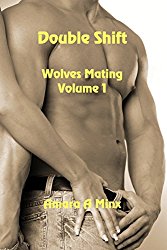
Double Shift, by Amara A. Minx. 51tuAc2LroL._UY250_


I also have a surprise for all of you. AA will be totally free from today until Sunday! Here’s a link. Download it now, and it’s yours forevor.


5 Steps if Your Goal Is To Write More This Year

Writing takes time, you guys. It takes a lot of time. And for a long time, I felt like I wasn’t doing enough of it. That’s why I made my word of the year for 2017 Create.

I created a lot! I worked hard to create a life that let me, well, create, as much as possible. It bore dividends that I’m still feeling this year. My goal is to publish 6 books in 2018, but the only reason I’m able to do that is the hard work I put in in 2017. I honestly probably won’t be able to publish as many in 2019, for instance. That’s because I’m focusing on learning this year, and going deeper into what I’m writing.

But you’re here to find more time to write, right? Okay, we can do that. Here are five things I did all last year to write more.

Figure out your priorities, and make them known.

I tell you all the time that writing is the third highest priority in my life. My family and my own self-care are the only two things that I will put above that.

I know that writing comes before almost all else, and so does everyone around me. I don’t have people in my life who expect me to drop everything and hang out with them. I don’t have people in my life who get offended when I tell them lovingly, respectfully, that I’m writing and don’t want to cancel that time. Even my kids respect writing time, though it took a good long while to make that happen.

I managed to make the people around me respect my writing time by respecting it myself. I don’t answer texts or messages when I’m writing. I write during the time that I say I’m going to write, so if someone should happen upon me they’ll find me working. I don’t do anything else while I’m writing, and so I show the people around me that this is serious. I teach them how to treat me.

Schedule everything

You can’t find time to write if you don’t know what you’re doing with your time, it’s just that easy. I buy an Erin Condron planner, but of course, you don’t need to invest that kind of money. Just keep track of things. Write down doctors’ appointments as soon as you schedule them. Put down your work schedule, and your spouses. Put down your kid’s school schedule. Put in every birthday of the year, so that you’re that guy who always remembers people’s birthdays.

Then take a good look at the time left over, and schedule some writing time every day. If you’re already writing every day, see where you can put in more time. Now that you’re no longer scrambling to get things done last minute, I imagine that you’ll find a lot more free time.

Cut out the crap

Have you ever tracked your time to see what you do in a day? It’s eye-opening, let me tell you. I had no idea how long I could scroll on Reddit.

While some ‘time wasting’ in a day is okay, even good, there are limits. So take a look at how long you’re spending watching tv, mindlessly consuming social media, or shopping for stuff you don’t need. Cut out as much of it as you can.

Do I cut out all of it? No, of course not. I watch tv with my kids and play on my computer or crochet every single night. I also like to check Reddit and Instagram a few times a day.

But I do those things at specific times that I’ve assigned to those activities. I’m not doing them mindlessly, or at times of my day when I might get something decent done. (I read Reddit during brain ‘down times’ like right when I get up or just before I go to bed when I’m fried for the night.)

So cut out the crap you do that I bet you don’t even want to do, and you’ll probably find all sorts of time to write.

Streamline the things you have to do

I would love to have a chef and housekeeper, but that’s never going to happen. So what I have instead is a super streamlined way of doing things that mean I spend as little time as possible keeping my house in order and keeping my family fed.

I won’t go into too much detail here because if I do I’ll just be repeating the entire Flylady baby steps and that’s a silly waste of time. Just check out the website, go through the baby steps, and see what a chance it makes in your life.

Get creative and be flexible

I’ve gotten quite flexible with places and times I can and do write. I used to ride public transportation a lot, and I’d write on the way to and from work. I write in doctor’s waiting rooms. I take occasional writing retreat days and go spend the day at the library or a coffee shop. I write while my kids watch stuff on Youtube that irritates me.

Basically, I’ve learned to get creative and flexible with when and where I write. It makes it a lot easier to reach my writing goals every day. Or, at least most days.

I want to take a minute, and just draw your attention to the title of this post. It doesn’t say 5 super easy and convenient ways to write more because that would be disingenuous. These are not easy things. If you do these five things then you will insist that people respect your goal to be a writer. More than that, you will insist that you respect your goal to be a writer.

But it’s how it’s going to happen.

If your goal is to edit your NaNoWrimo book in 2018

As it is January, and I’m hopeful that all of us are going to reach our writing goals in 2018, I’m going to spend the rest of the month focusing on tips and tools to achieve different writing goals. Because we’re all at different places on the path of writing. Being a writer has a thousand different paths, we’re not all on the same one.

Today, I want to talk to the NaNoWriMo winners. First of all, you guys are rock stars. You wrote 50,000 in one freaking month! That’s amazing. You’ve taken a huge step towards the goal of writing a book.

Oh, that’s the scary part, isn’t it? You’re not at the finish line. You’re at a mile marker. An important one, that I don’t mean in any way to belittle. But you’re not done yet.

What follows is an updated, step by step guide to completely finishing your novel. The point here is to get your novel to the point that it’s ready to be sent to an agent or editor if you’re going the traditional route. Or, it’s ready to go to your editor if you’ll be self-publishing.

I do three drafts, generally. Some people do less, but I don’t feel like that gives the draft enough time and attention. Some people do more, but at some point, you need to accept the book for what it is and either roll with it or let it go.

Step one, finish your book.

I know that when I did Nano, 50,000 words weren’t enough for me to finish my book. I was still writing well into December and January. So if you haven’t written the end of your book yet, do that now.

Let it sit

I’m not the only one who advises letting your rough draft sit before you start editing. Stephen King advises it in On Writing. He suggests waiting at least 6 weeks, which I consider a good amount of time. I actually put each draft aside when I’m done, and work on something for the other series. As an example, when I finished the rough draft for Sandwashed, I wrote the rough draft for Station Central. When I finished that rough draft, I started on the second draft of Sandwashed. So the amount of time I let it sit was dependent on how long the next project took me.

Major Edits

Micro Edits

The first edit your novel should go through is a major edit. This means you’re doing what might be a major rewrite of your novel. You go through the rough draft, writing down every single thing wrong with your novel. This is where characters die. For instance, my characters from Broken Patterns used to have a grandmother. Used to.

Outlines change, characters names change. Your whole story might be completely different at the end of this draft. This is the draft that usually takes me the longest. Not only because it’s a major rewrite, but because it’s the first time my book has been typed.

Your book is probably in a lot better shape now than it was to start with. Now is the time go through and find the things you might have missed the first time around. This is the first draft that I print out, usually. It gives me a different perspective.

This is also the draft where I start really considering how I’ve said something, and why I’ve said it the way I have. I’ll often read the whole book out loud this time around. I’m listening for poor dialog and clunky sentences. Anything that sounds stupid in general.

Final Polish

This is my last chance to go through the book and do some housekeeping. Grammar, spelling, character descriptions. Everything gets cleaned up here. It’s my last chance to make the book as good as it can be.

And that’s it. At this point, I feel like the book is ready for other people to look at. This is when I bring in a few beta readers. Then, and only then, am I ready to send the book to my editor.

So what do you think? Are you ready to edit your book in 2018? Let us know in the comments below.

Come Celebrate The Launch of AA on Friday

I have some exciting news! I have a new standalone science fiction story available, called AA.

Josey was new in town, working two jobs and reeling from her divorce. She needed a lot of things, but most of all she needed a meeting. She finds one in the basement of her local library. But the meeting that she finds isn’t the one that she’s expecting.

My wonderful publisher, Solstice, put this out as a standalone after its sucess in the anothology called Project 9.

To celebrate, I’ll be hosting a Facebook party on Friday, January 19th. Here’s a link, if you’d like to attend. There will be some other awesome science fiction authors there, hanging out and talking about their latest projects. I’ll keep you updated as names become available.

Hope to see you there.

A WordPress.com Website.

Up ↑