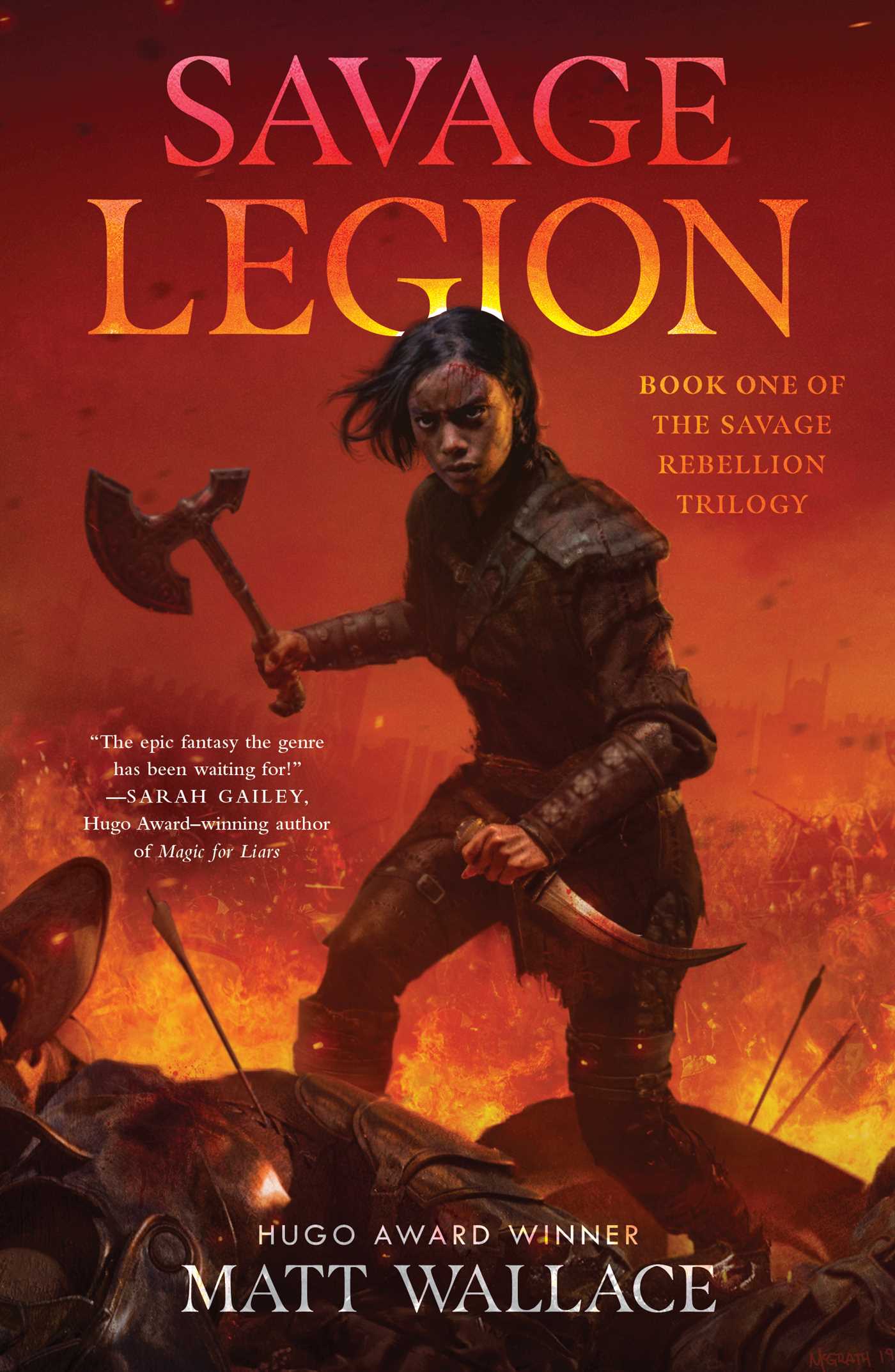
Why Savage Legion Works

I love a good, thick fantasy novel, let’s just get that out of the way, first. And we were to judge Savage Legion by Matt Wallace only on its size, it would be a winner. 

Fortunately, it’s got a lot more going for it. It’s funny, has great characters and was just overall fun to read. 

Today, we’re going to break down why Savage Legion works. And if you haven’t read it yet, we’ll also be talking about why you should. 

The first thing that really stuck me with Savage Legion was that it’s set in the present tense. This was a weird decision that was, frankly, a bit jarring at first until I got used to it. It was one of those brave decisions that we all want to make, but we’re too scared to. 

It did, as I said, take a bit of getting used to. But once I was accustomed, it was great. I felt more in the moment. This was not a tale being told. It was a story that was happening right as I was reading it. 

Now, am I saying everyone should start writing all their books in the present tense? No, probably not. But it wouldn’t hurt to take a few artistic chances. They might lead to the best thing you’ve ever written. 

Now, let’s talk about Taru. Taru is the first and only non-bionary person I’ve seen in a fantasy book. And instead of their whole story being about that, they’re an actual person who has thoughts and opinions outside of their sexuality. 

What a concept! 

I’m sure I’m missing a ton of non bionary characters out there, but the only one I can remember was on an episode of Bones. They were not handled well, to say the least. 

Taru is loyal, funny, brave and scary as hell. And if you want to write about a non bionary character, this is how you do it. 

Another thing done well in this book is the world building. This world, and the city of Crache feels real. It feels like something that would evolve in our own world. The politics, because there’s a lot of politics in this book, make perfect sense. The enemies battling Evie and the other savages feel real. And when the characters, one by one, come to horrible realizations about their government and the people who run it, that feels real too. 

Finally, let’s talk about connecting plotlines. Early in the book we’re introduced to three very different women. Evie, Dyeawan and Lexi. It’s only as their stories progress that we find that they are very much tied together in the deadly web those in power are weaving. 

Now, I’ve seen this done well and I’ve seen it done poorly. I’ve seen it done as a plot device to simply show the world from diffrent points of view. 

That’s not what’s going on here. This is giving vital understanding of the scenes and plans unfolding that we just wouldn’t have with just one character. While the three main characters meet face to face only once or twice, their stories are barreling head on towards each other. I’m honestly not sure who’s going to be enemies or allies when that time comes. And that’s the sort of thing that gets a reader itching to read the next book. 

So that’s why Savage Legion works. It takes chances, it depicts people from different walks of life well, and it shows multiple plotlines coming together in surprising and wonderful ways. But now I want to hear what you think. Have you read Savage Legion? Why do you think it works? And what would you like to see me talk about next? Let us know in the comments. 

Support Paper Beats World and get posts add free and two days early when you subscribe on Patreon. And get bonus content.

You can also support us on Ko-fi.

Why Truth Seekers works

Say what you will about Amazon (and I do) but they are putting some of the most original, creative and brave shows out there right now. I’ve already talked about several of their shows and why they work. And today we’re going to talk about another one. Truth Seekers.

I won’t lie, I was first drawn to Truth Seekers because I am a huge fan of Shaun of the Dead. I tend to have certain actors that drive me to watch anything, and Simon Pegg is one of those actors. (He’s also amazing in Star Trek.)

Sometimes that leads me to watch some shitty things. Truth Seekers is not one of those times.

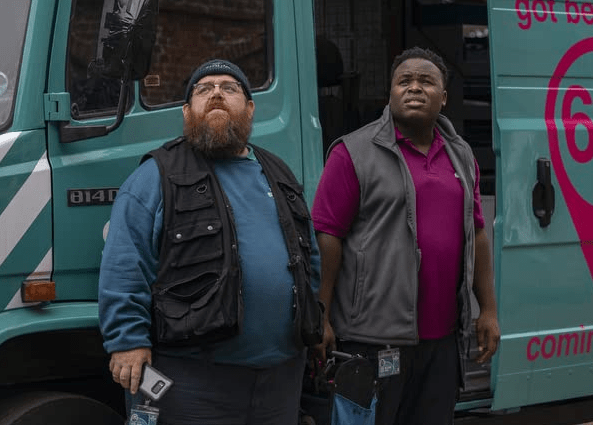
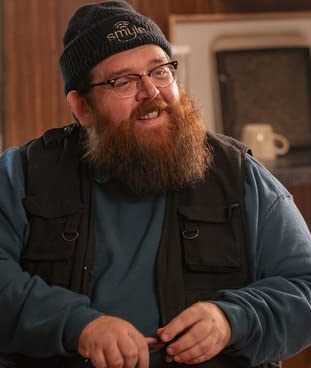
The story of season one is thus. Gus, a cable repair tech, is saddled with training a new partner named Elton. 

Elton John. Yes, that’s real.

This is stressful for Gus because he likes to work alone. But it’s also getting in the way of his ghost hunting side gig.

Yes, Gus is a Youtube persona who hunts for ghosts. 

This is all well and good when he’s posting time-lapse videos of a door opening by itself. It becomes quite another sort of adventure when the ghosts start acting like they’re in a horror movie and not in an episode of Ghost Hunters.

So let’s talk about the three biggest reasons Truth Seekers works. 

The characters

Okay, I point out characters in almost every single why it works post. There’s a reason for that. This might be an unpopular opinion, but I don’t care. A good cast of characters can save a dull story faster than the other way around. 

Every one of the characters, from main character Gus to Elton’s agoraphobic sister Helen, every character feels real. Everyone feels like someone you might honestly meet on a day to day basis. 

More than that, though, is the interactions between characters. Gus is devoted to his dad, even though they fight constantly. He misses his wife every day, and he’s not the least bit shy about it. Elton and his sister have a relationship that gets better the more you learn about them. 

I cared about each of these people. I wanted them to succeed. I wanted them to be okay. There wasn’t a single character I didn’t believe to be an honest person. This is because we see the bad along with the good. We see selfishness, anger, pain. But these aren’t just traits thrown in so the authors could say they made a character with good and bad traits. The flaws and strengths of each character made sense given what they’d been through.

Everyone’s got a secret

Mind you, my opinion of these things came from watching the whole first season. It takes that long to get to know each character’s true motivations. Why does it take that long? Because everyone is lying to each other all the time.

Not for cruel or selfish reasons. The reasons for the lies are best left discovered by the viewer. 

This works so well because there are so many secrets waiting to be discovered. And every secret is a payoff for the viewer. These payoffs are scattered through the season, keeping the viewers guessing while doling out bits of satisfaction as we go along.

The ending is shocking but makes total sense

This is something I love in fiction. Something so hard to do. The ending of this season is a twist. It’s a hell of a twist and I don’t dare ruin it.

That being said, once you know the ending you’ll see all the little clues that led up to this making perfect sense. It’s hard to do. But if you can create an ending that is surprising but also makes sense, you’re golden. 

So what do you think? Have you seen Truth Seekers? Do you think it works? Let us know in the comments below. 

You can support Paper Beats World on Patreon and Ko-fi.

Why Utopia Works

As a lover of comic books, I’m surprised it took so long for Utopia to end up on my radar. Now that it’s there, it’s easily one of the coolest shows I’ve watched all year. And given how much tv I’ve been watching recently, that’s a high bar. 

Utopia was a dark, horrifying, fun ride that honestly hasn’t had a bad episode yet. I’m waiting for the next season. While we wait, let’s break down the first season of Utopia and talk about why it works.

Utopia is the story of a group of comic fans obsessed with a comic called Dystopia. They’ve all been waiting for a follow-up series, called Utopia.

But they’re not just waiting for the story. They’re waiting to see what horrific tragedy Utopia might predict. Because this group of online buddies doesn’t just love Dystopia for the story. They’ve spent years looking deep into the storyline and artwork for clues as to what’s going on in the real world.

This is something I think a lot of us think we want to happen. I’ve had fantasies of opening wardrobes to find new worlds since I was a child. Like everyone else, I find nothing but mothballs and old coats. 

But what if I did find something? What if it turned out that your favorite fantasy world was real? I think most of us would find out pretty damn fast that we don’t really want that and we’d like to go back to our regular lives right now, talking animals or not. 

That being said, it’s really fun to think about. And that’s where a lot of the enjoyment of this show comes from. It’s a very realistic view of what might happen if our conspiracy theories turned out to be true. 

Another choice the creators made that worked well for them is to make the main character, Jessica Hyde, totally selfish and crazy. She is willing to do literally anything to survive, including straight up killing innocent people.

This was a brave choice. And it could have gone bad. I mean, we all love an anti-hero, but your MC has to be at least a little bit likable. That’s hard when your MC starts the series by shooting an innocent woman in the head.

And yet, in the way the story progresses, you don’t hate her. You understand where she’s coming from. Maybe you still don’t agree with everything she does. But you at least sort of understand why she did it.

Finally, Utopia managed to find the most perfect item that makes things go viral. It has an incredibly catchy catchphrase.

Stay alive, Jessica Hyde. 

It’s a great line that gives a lot of information. Who’s our main character? Jessica Hyde. There’s some reason why she might not stay alive, but people sure want her to. It also sums up the biggest storyline for the first season. What does Jessica Hyde want to do? Stay alive. What does the bad guy want to do? Kill her. It’s a simple conflict that has a complex resolution. The best kind.

Altogether, this show was designed to draw you in, make you scream out loud, and wait with bated breath to see what happens next. Things we could all do well to remember in our own writing.

Stay alive, Jessica Hyde. 

After a year of nightmares, Sennett and her family need a vacation. Together with Godfrey, they’ve faced assassins, killer AI dogs, mind-altering viruses and politicians. So they’re setting off for Station Central, the ultimate vacation destination with water parks, roller coasters, fine dining and the best hotels in the stations.

But they’re barely off the ship when Godfrey finds himself embroiled in Station politics that he can’t seem to avoid. Sennett discovers not one, but two people stalking her on the station. One of whom might have the secret to her birth family.

Through it all, Sennett and Godfrey are haunted by a darker set of questions. Where are the Hollow Suits, and what are they planning?

Preorder Station Central now on Smashwords.

Why Upload Works

Why isn’t everyone talking about Upload? It’s a clever, funny show that the husband and I binged in two days. Now everyone else needs to binge it in two days.

Upload is about a man named Nathan, a computer programmer. The show starts with Nathan being in a horrible car accident. His body isn’t going to make it. So his wealthy girlfriend, Ingrid, pressures him to let his mind be uploaded into a simulated afterlife called Lake View. 

So yes, this show is about a dead man living in a computer simulation. 

Lakeview is a paradise. It’s everything you could ever want. Like a retirement village you wish you’d end up in. The rooms are amazing, the food is magnificent. You can change the weather anytime you like. You can eat, sleep, swim, love, have sex. It’s just like being alive.

Except it isn’t, not really. And Lakeview is expensive. Nathan doesn’t have the kind of money someone would need to exist there. So Ingrid is paying all the bills. She’s entirely in control of Nathan, even down to what he wears. He’s entirely at her mercy. This isn’t a great set up under the best circumstances. Then, Nathan starts falling for his handler, a woman named Nora. As his very existence depends on Ingrid’s goodwill, this is a dangerous crush.

Hilarity is sure to ensue.

So, let’s talk about why this works.

To start with, this is the rare original concept. There’s nothing else like it. While it does share some traits with other stories, I can honestly say I’ve never seen a show like it.

Now, this is hard to hold up as an example to follow. I mean, coming up with original stories is what all writers are trying to do. It’s freaking hard! As a side note, I don’t see a huge issue with retelling an old story with a fresh voice. Fairy tale retellings, quests to save the kingdom, a young woman befriending dragons. I’ll consume those stories all day long and ask for more. So long as the voice is fresh and the writer brings something new to the story, I’m going to love it.

That being said, sometimes writers use that as an excuse to play it too safe. We’re afraid to reach out to the weird. To experiment outside of set genres, or blend them in weird and new ways. Don’t be scared of this! It’s exactly what people want. 

Now, let’s take a look at the characters. At the start of the season, everyone seems like the asshole. Nathan’s wrapped up in his own tragedy, not noticing that he’s surrounded by people going through the same thing. Or worse. Let’s not forget that his mom and girlfriend watched his head get chopped right the hell off with no warning.

Ingrid, the girlfriend, is entirely an asshole. She is aware that she’s financially responsible for Nathan. And she’s not afraid to use that power to make him heel. And it’s not like he’s upset that he doesn’t have a big enough allowance. Early in the series, we find out that the people who don’t have money to pay for Lake View are called Two Gigs. They have only two gigs of data a month. When that’s gone, they can’t do anything until the next month. That’s the fate that waits for Nathan if Ingrid cuts him off. She’s not shy about threatening it.

Then there’s Nathan’s friend and partner, Jamie. He’s been letting Nathan’s calls go to voicemail since he died. There are reasons, and they have something to do with the app he and Nathan were making. The app that Nathan can’t remember anything about. 

All that being said, the characters make some really hard choices. Like, things I don’t know if I could do. 

Ingrid is having a relationship with a dead man. Even if she’s being a bitch about it, she’s actively choosing to not leave him for someone who is, you know, alive. And she’s a sexy blond with a shit ton of money. It’s not like she doesn’t have options. 

Do you remember I was talking earlier about the Two Gigs? They become a crusade for Nathan. He can’t stand that these people have nothing when it would cost nothing to give them anything. He didn’t have to care about these people. He doesn’t have anything. Not anything that’s his. But he wants them to be okay.

There are harder decisions than that, for sure. But to go into them would ruin some truly wonderful surprises. 

Sorry, I know that was super vague. But a lot of the fun from this season was the misdirection. I’m going to try to explain what I mean without ruining too much. You see, there’s a mystery in this first season. Part of Nathan’s memory is missing. Someone removed it and deleted it. That’s not spoiling much, it’s in the very first episode. This sets off a list of mysteries that gets deeper and darker. 

And it’s not what you think. That’s the great thing about this whole season. Whatever you think is going on, you’re wrong. 

Finally, let’s talk about the morals of the story. There’s always a moral, whether writers mean there to be or not. Sometimes the moral is hidden, soft like a whisper. Sometimes it smacks you in the face like a dead fish. You didn’t need it, didn’t want it, and it smells rotten.

Sometimes it smacks you in the face like a cold wave in the ocean. It’s undeniable and it’s cleansing. That’s how the moral was here. I’m pretty sure you can guess it, just based on this post.

There was a lot to love about Upload. A lot to learn too. Let me know what you thought about it in the comments below. 

Want to know why another show, movie or book works? Suggest it in the comments.

Why Mexican Gothic works

So often I’m behind on my reading list. But not this time! This book came out this year, and I got to read it!

Well, listen to it. I got the audiobook because I just have more time to listen than to read. 

On one hand, I wish I had read it. It was such a delicious story, the thought of spending hours with the book in hand, sipping tea while rain pelted my windows and I was lost in a gothic castle is fantastic. On the other hand, hearing the story read by Frankie Corzo was a treat. She did a fantastic job, especially jumping from accents and characters. 

The story starts simple enough. A young socialite, Noemi, gets a frantic letter from her cousin. She goes to check on her, at her father’s request.

When she arrives, she finds a cold, dark castle better suited for Transylvania than Mexico. It’s inhabited by a family of depressing English, old aristocracy whose money is all gone. It appears clear soon that Catalina, Noemi’s cousin, was only brought here for her money.

But it’s hard to suss that out, as she’s not in her right mind. The family keeps the two girls away from each other most of the time, leaving Noemi to wander around the castle and the graveyard. 

In doing so, she finds out more and more about family secrets. Secrets that are doing their damndest to wrap around her neck and strangle her.

There’s a great amount of symbolism that I only realized in hindsight. The story is about two young women trapped in a castle. But it’s also about an older generation that refuses to let go. Old ways, old customs, old hatreds. Especially old ignorance. It festers and grows, infecting younger generations who are struggling to break free from this toxic behavior. This is met by a younger generation that wants to escape, evolve. But they’re trapped by the needs and traditions of those who have come before them. Who refuses to leave, no matter the price.

All of this is wrapped up in the story of a haunted house. Something is creeping in the corners and shadows. Something haunting Noemi’s dreams. Something that seems to be driving Catalina mad.

Woven among this story, is a love story between Noemi and Francis, the youngest son of the family. It blends through brilliantly and seems like a natural process. The book wouldn’t have been half so good without it.

Sylvia Moreno-Garcia is one of those authors that makes you add all of her books to your to-read list as soon as you finish one. The story was classic and clever. It was nestled in a haunted house story that we’ve read a hundred times, with a new twist I didn’t see coming. I loved every second of it.

Have you read Mexican Gothic? Let us know what you thought of it in the comments below. 

Why Buffy The Vampire Slayer worked, until it really didn’t

Let me tell you about my Thursday nights as a kid. Well, as a teenager. It was sort of the best night of the week. I would park myself in the dining room, for three solid hours of tv. Those hours were devoted to some of the best television I’ve ever seen.

Buffy, Angel and Charmed. 

Yes, I have been a nerd my whole life. 

The darling husband and I have been binge-watching Buffy and Angel recently, because what the hell else are we going to do? And I have to say, I can see why I loved Buffy so much as a kid. As an adult, I can also see where and why it went downhill.

Boy did it go downhill fast. 

When it was good

It’s very good. It’s a fun show for a teenage girl to watch. The characters are a lot of fun. Willow is relatable, so is Zander. I loved Giles and still do.

The show was funny, but it also had deep moments. No one was a throwaway character. People reacted when someone died. 

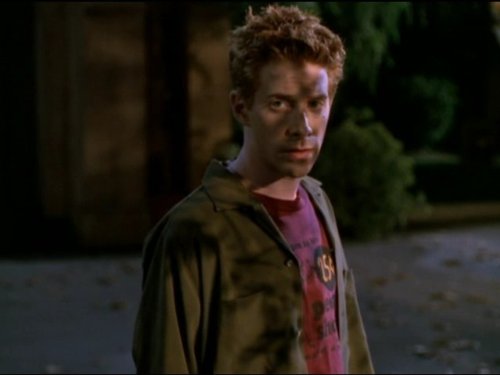
None of the characters were perfect. Buffy was a pain in the ass. Everyone kept secrets Ozfrom each other, everyone was selfish sometimes. Except for Oz. Oz was always perfect.
It was just a really fun show to watch every week that wasn’t preachy, stupid or overly complicated. 

I’ll grant, though, that it might be benefiting from nostalgia. Would I like it so much if I didn’t still have those fond memories of Thursday nights? I honestly don’t know. That’s one of the bad things about revisiting shows we loved in the past. We can never again see them with fresh eyes. We’ll always see them through the lens of the past, with the heart of the girl who first fell in love with them.

When it started getting bad

On the other hand, my eyes have still gotten used to modern special effects, and the ones from Buffy did not stand the test of time. The husband and I just watched an episode with a giant snake monster, and we were howling anytime the thing was on the screen. Probably not the impact they were going for. 

Sad to say, but I think most of the good writers left Buffy and went to Angel when it split off. The stories from that point on got a little less mature. They got a little more silly, a little less coherent. 

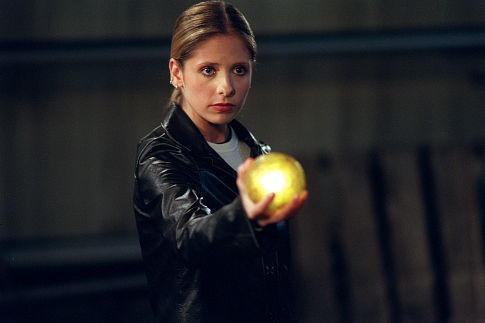
And character development changed. That was a big issue for me. Buffy continued to grow as a person, but not into a very nice person. She’s selfish and unaware of how she uses people. She doesn’t care about the emotional well being of anyone else, her problems always seem to overshadow everything else. And it’s not just when we’re talking about saving the world problems. It also includes boy troubles. Which are no more crucial than anything anyone else is going through.

I also wasn’t thrilled with many of the story arches. Some of them just seemed designed to be heartbreaking. 

Like Joyce dying. I get that the actress wanted to leave the show. I get that people lose their parents. But I don’t think that this sort of thing had a place on this kind of show. It felt out of place, too mean. 

Finally, let’s talk about the worst addition to the show.

DawnDawn.

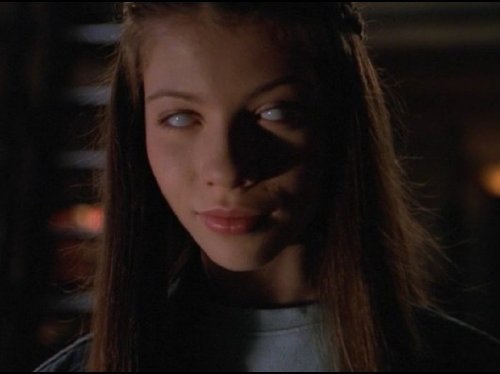
I hated this character. I love the actress, but the character is a huge pain in the ass. She’s the scrappy doo of Buffy. I honestly can’t tell you what she adds to the show. Buffy didn’t need an annoying little sister. She didn’t need additional responsibility. 

Which isn’t to say it stopped being good then. It’s still fun, so long as we’re not having a depressing episode. And the addition of the antagonist Glory was great. 

Mind you, I’m not saying that Buffy wasn’t worth watching. I still enjoy the later seasons, right up to the last episode. It just wasn’t what it was at first. It was still a revolutionary show that opened doors for a lot of work we wouldn’t have now without it. That’s worth overlooking some flaws.

Now I want to hear what you think. Did you watch Buffy when it originally aired? What are your thoughts about it now? Let us know in the comments. 

Why What We do in the Shadows works

Spoiler alert. 

I don’t feel like enough people are talking about this show. That’s a shame because it’s a tightly written story. We marathoned both seasons within three days because of course, we did. But if you’re looking for something else to watch while you’re stuck inside, you should consider this. Here’s why it works.

Let’s start with that theme song. I’m a sucker for a good theme song, and this is a great Shadows, old photoone. I never skip it, I always let it play. The song is good, but so is the imagery. Pictures and paintings of the main characters through the ages are funny. More importantly, though, it gives a feel of who the characters are. That’s something we’ve come away from in recent years. But as this show is character-driven, it makes sense that the theme song gives such a good feel of the characters.

The show is about vampires, of course. And while they do show the vampires as hunters and killers, they lean heavily into the sexual aspect of the vampire myth. But not in a sexy way. Oh no, this is hilarious. Like Lazlo’s vagina topiary. This wouldn’t have been half so funny if he wasn’t so damn proud of it! Or the way Nadjia talks about her lover. She thinks it’s very dark and romantic. It comes off as silly, but in the best possible way. 

Which brings me neatly to the next reason why What We Do in the Shadows works. It’s funny! At no point does this show take itself seriously. The characters think a lot about themselves, but they’re ridiculous. They’re silly and selfish and they always think they’re entirely right.

Take, for instance, Colin Robinson. He’s an energy vampire. He’s a Daywalker, and he can feed off other vampires. All the other vampires in the house are scared of him. This sounds like a really tough, badass character.


Shadows, colin
Two horrifying vampire

Until you realize that he talks his victims to death. And that he has an office job because that’s his feeding ground. And he wears bland clothes and glasses. He’s a really funny character.


What We Do in the Shadows is a mockumentary. But unlike many of the other popular ones, it feels like it could be. The camera crew is attacked a few times. They never show up anywhere you wouldn’t expect a crew to be. At least one time a camera guy is locked in a well with the vampires, about to witness their fiery, sunny deaths. And I swear you can see the camera shaking. I’m highly amused that the least realistic mockumentary show has the most realistic camera crew.

From a visual perspective, the show does a great job of portraying the feel of an old, gothic mansion. Everything is dark wood paneling, red drapes. It’s all very heavy. The shadows stretch in just the right angles. Every scene is very dark, but also colorful.

Unless we’re at Colin Robin’s office. Then the tan and gray are even more striking by contrast.

Finally, let’s talk about my favorite part of the show.

Guillermo De la Cruz. 

Guillermo is Nandor’s familiar. He wants to be a vampire. But as the series progresses,

Shadows Guillermo
Badass king

we start to realize one thing about him; he’s going to crack hard. We can start to see this in the very first episode when Nandor forgets their anniversary. We also find out later that Guillermo is related to Van Helsing. There is vampire hunting in his bones. This becomes apparent when he starts accidentally killing vampires. All of this becomes a good thing for Nandor and the other vampires after they accidentally invoke the wrath of the vampire council. Slowly, as the series progresses, Guillermo becomes filled with rage and kind of becomes a badass. The last episode, which I loved, includes him wiping out an entire theater of vampires to save our main characters. And then, standing atop two theater chairs, he says, “My name is Guillermo De la Cruz.”


Because the vampires he’s defended for two seasons don’t even know his last name. 

If you haven’t seen What We Do in the Shadows, I can’t recommend enough that you watch it. And if you have watched it, leave a comment below. I want to know what you thought of it.

Why the IT Crowd Works

I’m still marathoning old shows, at least for now. As usual, I hate myself and have decided to do Camp Nanowrimo this month. I decided that three days before the end of June.

(Okay, I’m being too hard on myself. What happened is that I realized I was way behind where I wanted to be in my novels for the year. So I needed to clear my plate and put novel working first for a whole month.)

But all that aside. I finally got around to watching all of The IT Crowd.

I’m amazed it took me this long. I work in technical support, I love British comedy and I have a weird tolerance for laugh tracks. I don’t like them, but I can tune them out. 

I’m not going to say the show is genius. I’m not even going to say it’s great. But it’s good, it’s lasted, and it works. Let’s discuss why.

In describing The IT Crowd, I kept coming back to one phrase. It’s relatable, but then it

it crowd, roy
We don’t all date women who’s parents died in a fire at a water park.

goes past that and becomes ridiculous. Let me give you an example. We’ve all messed up at work. Most of us haven’t set a fire extinguisher on fire and just let it burn for hours. We’ve all been on bad dates. We usually don’t have chocolate pudding on our faces the whole time, only for our date to think it’s literal shit.


While the characters get into ridiculous circumstances that are somehow relatable, it doesn’t end there. The characters themselves are caricatures of people we might very well have in our own lives. 

it crowd, mossNo one is as socially awkward as Moss. But I bet there’s someone in your life or at your job who you think of every time you see Moss. I have a friend who seems just like Roy. To my knowledge, he’s never run through his place of work without a shirt on. But he doesn’t tell me everything, so who knows? And I have, for sure, forced my feet into shoes that were too small because they were just so cool! (They were baby pink Sperry’s. Don’t judge me.) But I didn’t let it get to the point of crippling me. 

I have a soft spot for any show that manages to surprise me. They’re rare. And they’re even rarer when we’re talking about relationship predictions. And I was sure, from episode one, that Roy and Jen were going to end up together. And they don’t! And that makes perfect sense for them. It would have been awful if they’d gotten together. It would have ruined the show. I think we see that way too much. We don’t see enough friendships between men and women. I was never so thrilled to be wrong.

Finally, let’s talk about catchphrases. Is there any more iconic one than, “Have you tried turning it off and on again?” It’s good advice, it’s funny, and it’s so true for anyone who works in technical support and IT! If literally anything isn’t working, turn it off and back on. It was even referenced in Dr. Who. Hell, it’s been suggested several times that we should turn 2020 off and back on. And if I could find a way to do it, I would.

Now I want to hear how you think. Have you watched The IT Crowd? What worked for you?

Want to help out the BLM movement? Are you an artist or writer? Leave a comment below or email me at nicolecluttrell86@gmail.com to get involved.

Why Shitt’s Creek works

Normally I stick to speculative fiction on this site. But frankly, I think everyone needs a feel-good show right now. And since I just watched all of Shitts Creek in the span of like, a week, I wanted to bring it to your attention.

I didn’t watch this show as it was coming out. I was barely aware it existed. But, being at home more than ever we were running out of shows to watch. So we thought we’d just check out the first episode, see what it’s about.

And we were hooked from there.

So let’s break it down. Let’s talk about why this show was so good. And why I hope to see a lot more like it.

Let’s start, as always, with the characters. Every character on the show is lovable. But Davidalso sort of awful. Let’s take David, my favorite character, as an example. He’s self-centered, obsessed with material goods and has the weirdest fashion sense I have ever seen. When in a relationship he’s weirdly distant and clingy at the same time.

He’s also a really good big brother. While Alexis has been running all around the world and getting herself into all sorts of trouble, he’s been at the ready to help her. He’s still there for her, even if he’s there in the most acidic way possible. 

David also has a head for business. He’s smart, good with numbers, and understands what people want. 

If a character is too good, we can’t stand them. It’s unrealistic. And it sort of makes us hate ourselves a little by comparison. But if a character is too bad, we don’t like them. I don’t like watching someone be cruel to others and mess their life up time and time again. A blend of good and bad is entertaining, comforting and realistic. If we can see that other people are flawed but still good, then we can allow ourselves to be as well.

Most of the shows I watch are kind of horrible. Rick and Morty, Dead Like Me, Angel, The StevieOrville. Bad things happen, characters have real falls from grace. People get addicted, divorced, maimed, fired, lose their kids, go to jail, get beaten half to death, or the whole way.

Nothing really bad ever happens on Schitt’s Creek. Yes, there is tension. Yes, there are problems. But nothing that is emotionally scarring. And right now, when there are so many awful things going on, that’s a comfort.

However, that doesn’t mean that there isn’t growth and change. It’s hard to see if you just go episode by episode. But, in the same way we change without really noticing, the characters do too. The care they feel for each other and the town deepens. Their concern for other people widens. They open themselves up to loving others. They learn the value of earning what they have, which they’ve never had to do before. By the end, they’re still themselves. But they’re better, deeper people too.

So what do you think? Have you watched Schitt’s Creek? What other feel-good shows would you recommend? Let us know in the comments below!

Why Man in High Castle worked, until it didn’t

I am a big lover of alternate history. I also have this weird fascination with stories about WWII. So it’s no surprise that I enjoyed Man in the High Castle. It seemed almost custom made for me. What would have happened if America had lost WWII?

This isn’t the first story to explore that theory. Hell, I don’t think it was the twenty-fifth to do it. But despite going over material most of us have already read before, the creators of this show managed to do it in a new and fresh way. A way that grabbed my attention and the attention of millions of others.

MHC JuliannaUntil that is, they lost it.

But we’re not to that point in the story yet. Let’s talk first about what the show did that worked.

Let’s start with the Smiths, who could be considered the first family of the Reich in America. The parents are John and Helen Smith. They are the picture of American 1950’s perfection. Except, of course, for the fact that they are all nazis.

This is part of how the story crept under my skin. John’s everything a good American man should be. Good at his job, a loving father. But there he is with a swastika on his arm. Oh, and the little matter of killing people who oppose him. There’s Helen, the picture of a 50’s housewife, but she has nazi buttons on her collar. It’s a reminder of how close we all are to that sort of life.

Life is good for the Smiths. Until it isn’t. Until their son is diagnosed with an illness that MHC John use this onemarks him for death. This brings to light a very simple and horrific truth that this show brings to light quite well. This sort of life works very well for people who fit in. For people with the right skills, right skin color, right body. For those who don’t fit into a very specific mold, this sort of world is heartless and unbearable. The part of the show that worked best for me, the part that I cared about the most, was watching the Smith family break until they didn’t fit anymore.

The other sides of the show were just as deep. Julianna, an American living in the Japanese controlled West Coast, dives deep into the world of the man in the high castle. She finds out that she and a few others can switch between different alternate universes, bringing back home videos to inspire hope. 

All of this blended in a science fiction alternate history story that was riveting.

Until the last season, when the creators came to a confusing conclusion.

They decided to take everything good about the story and throw it out the window. Or, taking it to such an extreme as to be no longer enjoyable.

They also made the baffling decision to murder several beloved characters. 

The story focused more and more on Juliana, which I wasn’t thrilled with. She’s always been the most unlikable character. They also separated the characters, going so far as to trap one character into an alternate universe. There, she finds characters that we know in a specific way acting the lives they might have had if America had won WWII. You know, our time. While that was a fetching concept for an episode or two, it didn’t hold up. 

All in all, I didn’t even finish the last season. For a show that had me sobbing over the death of a Nazi youth, it worked hard to just make me not give a damn anymore.

Falling From Grace eBookFalling From Grace is available now! Get it on Amazon.

A WordPress.com Website.

Up ↑