My horror heroes, Wes Craven

When I think of Wes Craven’s films, I’m struck with a flood of memories. Nightmare on Elm Street is the first horror movie I remember watching, with a babysitter who probably shouldn’t have let me watch it. I was little, curled up on our old couch in our trailer in the dark, eyes big as the moon and glued to the gore. 

Nightmare on Elm Street

I remember watching Scream at a sleepover, complete with pizza and sodas and a gaggle of girls. Everyone else was a little off the pizza after the first scene. 

I was not.

Wes Craven created some of my favorite slasher movies of all time. Nightmare on Elm Street, Scream, The Last House on The Left. All of them leave people sick to their stomachs in the very best way possible. 

And can I also just mention that this guy won the name lottery? His actual birth name is Wesley Craven. I always thought that was a stage name. How lucky do you get?

Craven always allows the main characters to be the heroes. And his main characters are very often teenage girls. There’s no boyfriend, father, or parent jumping in to save them. It’s Nancy or Sydney saving everyone else’s ass, even after no one wanted to listen to them. They never once came across as scream queens. They also didn’t suffer from what I call the Alice Problem. By that, I mean Alice from Resident Evil. She had no personality, could have been anyone. I can’t think of a single thing about her that would distinguish her from Jill Valentine.

Scream poster

There’s none of that with Craven’s leading characters. They are their own people. 

I’ve never watched a Wes Craven film and not had a good time. In addition to being wonderfully bloody, they’re often funny. Especially the Scream movies. I love a good laugh to go along with the gore. I love that his movies aren’t afraid of being silly. They’re never taking themselves too seriously. 

I have no problem with fiction that has a message. Some of my favorite books and movies are all about that. Pleasantville, Dogma, Jacob the Liar. These are great films. But not everything has to have a message. Sometimes a piece of art can just be there to be enjoyed. And I love that Craven does that.

Finally, Craven figured out how to avoid one of the biggest issues with the horror genre. Almost everything has been done. Most viewers are genre-savvy. So, to surprise an audience, you’ve got to embrace the meta.

And Craven has made a habit of doing just that. The Scream series is a great example, giving us film after film full of in-jokes designed for horror fans. Even better is my favorite horror film, Wes Craven’s New Nightmare.

In this film, the actors from Nightmare on Elm Street are attacked by Freddy. Even Robert Englund, the actor who played Freddy himself. This was a ton of fun for a super fan like me. 

So, what have I learned from Wes Craven? And what can you, as a writer learn from him?

-Understand that your fans are probably genre-savvy, and have fun with that

-Have fun with your art in general. Don’t be afraid to go big.

-Give your main character a real personality. 

Don’t miss the other posts in this series, where we talked about Stephen King, George Romero, and R. L. Stine

My Horror Heroes, RL Stine

Can I be honest with you? For someone as devoted to stories as I am, I learned to read very, very late. I was in third grade before I learned. In a year, though, I went from illiterate to college level.

The secret? I fell in love with Goosebumps. 

Goosebumps, The Barking Ghost

It turns out all I needed was a story about a monster librarian to inspire me.

R.L Stine is a monster in the children’s literature field. He’s published over a thousand books so far. So far! Can you imagine the work ethic and dedication it takes to create that many stories? This is not a man who knows what it feels like to be tapped out. This is not a man who lacks inspiration. This is a man who sits down at his desk every day and puts the words on the page.

I loved Goosebumps and Fear Street, his series for older kids. I loved how scary some were, and how silly others were. I loved that the characters felt like kids I might know. And I loved the twist endings. Even if you could usually see them coming from a mile away.

I loved that it never felt like Stine was talking down to me. The stories didn’t pull any punches. Kids died, or got turned into squirrels, or were already dead to start with. There were real consequences to the actions they took or the situations they found themselves in.

Goosebumps, The Ghost Next Door

A happy ending isn’t always assured. Which I kind of love, because it’s honest. It’s also honest that sometimes bad things happen when you didn’t do anything to cause them. Some of these characters did things to incite the horrors that befell them. They went places they shouldn’t go. They were mean to their friends. They didn’t listen to their parents. All the usual stuff. But some of these kids didn’t do anything wrong. 

They went to summer camp.

Their family bought a new house. 

They went to the library.

These are innocent things that people do, yet the kids still suffered. 

Again, that’s honest. It’s real. Maybe you won’t be attacked by a ghost dog if you move into a new house. But maybe the roof is bad and you didn’t know before. That’s not on you. 

Aside from the clear lesson that anything horrible can happen to you at any time, there weren’t a lot of morals in these books.

And I kind of love that they were for entertainment purposes only. I get that we want kids to learn, and learn a lot. Their brains are so mushy at that age, we can just shove a ton of facts in there and they’ll stick. Anything that is just for fun seems like a waste of that precious prime learning time.

Goosebumps The Haunted Mask

But that’s exhausting for kids! And it can be a big reason why kids don’t want to read. Everything is educational, everything takes effort. Nothing can just be fun for fun’s sake. 

Fun is something we’re missing out on in our lives. As adults, and as kids. Reading should be fun. Stories should be fun. And sometimes, they can just be fun, without trying to sneak learning or morals in there too. Sometimes we can just have macaroni and cheese, without sneaking broccoli into the recipe. 

Here then are the lessons that I learned from R.L Stine.

-Don’t talk down to your audience. They’re probably tougher than you think.

-There is a never-ending well of stories. You have as many books in you as you have the time to write. 

-There doesn’t have to be a moral to every story. Even if it’s a story for kids. 

-Stories should be fun first, before anything else. 

Don’t miss the rest of this series, where I talked about Stephen King and George Romero

My first horror novel is ready to debut! You can preorder Quiet Apocalypse now on Smashwords or Amazon

Paper Beats World is a labor of love. If you got something from this post, please consider donating on Ko-fi. 

Announcing my latest book, Quiet Apocalypse

I’ve always called myself a speculative fiction writer because I write science fiction, fantasy, and horror. To that end, I’ve published a fantasy series and a science fiction series.

Now, it’s time for my horror debut.

On Friday, May 13th, I’ll be launching my first horror book, Quiet Apocalypse. 

The end of the world began with a winter storm.

Sadie’s quiet life is interrupted when a tree crushes the roof of her attic apartment. She’s forced to move to a smaller apartment in the building. Then, her aunt guilts her into clearing an ouija board of a particularly irritating spirit. 

But it wasn’t just the roof that was broken by the tree. There was something trapped within the building, waiting. Waiting to wake and bring about the end of the world. 

Not with screams, but with silence. 

This book is about demons, witchcraft, and a small community coming together to survive. It’s about the end of the world. 

You can preorder Quiet Apocalypse now on Smashwords or Amazon

I hope you all love Quiet Apocalypse. I know I say this every time, but I think this might be the best book I’ve written so far. And I’m sure it’ll scare the hell out of you.

My Horror Heroes, George Romero

Don’t miss the first episode of this series, about Stephen King.

Long-time readers of PBW will know that I am in love with Pittsburgh. I wasn’t born here, but I’ve lived most of my life in Butler, which is close enough to consider Pittsburgh my hometown. So it’s no surprise that I have a little-sister-like admiration for George Romero.

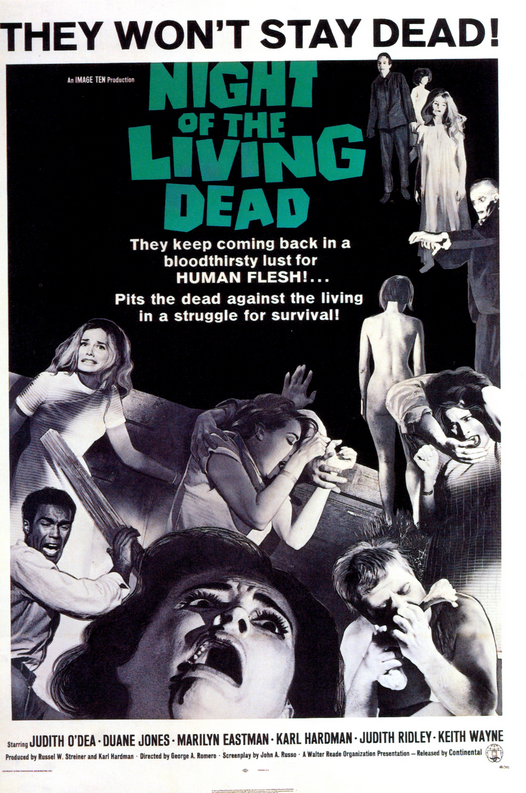
Night of The Living Dead poster

Romero spent most of his life in Pittsburgh. He got his start in the field on a small show, maybe you haven’t heard of it. 

Mr. Rodger’s Neighborhood. 

If you know anything about Pittsburgh, you know what a big deal that is. Mr. Rodgers, being the supportive saint that he was, was a lifelong cheerleader for Romero. He even went to the premiere of Romero’s iconic film, Night of The Living Dead. 

Speaking of Night of The Living Dead, you may not know that the film was done on a shoestring budget. And I mean a thin shoestring. Like, this shoestring would have probably broken if someone else had been handling it. $114,00, to be specific. I know that sounds like a shit ton of money. It’s more than I make in a year, that’s for damned sure. So to put that in context, Rosemary’s Baby came out the same year. Another horror classic, by the way. That movie cost 3.2 million. And I’d argue that both movies are equally scary.

Creepshow poster

Romero committed himself to the horror genre. He found what worked for him, and he went with it. And it worked! Romero went on to create 26 films, most of which were about zombies. He revolutionized the zombie genre and is a large reason why it’s so well-loved today. And, he put Steel City on the map for zombie lovers. There are still massive zombie events held here every year.

All of this Romero was able to do because his work is fun. I have never seen a Romero film that I didn’t love from start to finish. Even as time goes on, they hold up. 

I think this is largely because everyone working on these movies was just having a blast. The actors are having fun. The special effects crews had fun. The makeup people might have had a little too much fun. Romero’s movies were a great time, from start to finish.

To sum everything up, here’s what any creator can learn from George Romero

– Money doesn’t matter as much as a good story told well.

-Find a place in the world where you’re happy. 

-Having supporting mentors is priceless. 

-When you find something you’re good at, do it! 

-Have fun with your work, and other people will have fun with it too. 

Did you love this post? You can support Paper Beats World on Ko-fi.

My Horror Heroes, Stephen King

I’m starting a mini-series today, covering some of my heroes in the horror genre. I’ve been a horror fan all my life, ever since the first time I watched Nightmare on Elm Street. Horror has always been my favorite form of entertainment. Bad horror, good horror, it rarely matters. I love zombies, haunted houses, Poltergeist. Give it all to me.

So I thought it would be fun to talk about some of my favorite horror creators of all time. I want to talk about why they’re amazing writers, creators and people in general.

Anyone who’s read this blog for any amount of time knows I love Stephen King. Even if I don’t love many of his endings. I’ve learned so much from him as a working writer, as a storyteller, as a creative person who has to exist in the real world. And I’m far from the only one inspired by him. He is, after all the reigning king of horror and has been for basically my entire life. Who else has that long of a career, honestly?

Cover of Stephen King's Bag of Bones

King knew he wanted to be a writer as a kid, something I relate to. In his book, On Writing, he tells stories of nailing rejection letters on his wall with a railroad spike. But since writing rarely pays the bills, at least at first, he got a teaching degree. Jokes on him, teaching usually doesn’t pay the bills either. 

But the part of him that wanted to teach never went away. It fairly does with those passionate about helping others learn. And so King has written several books about writing and the horror genre. I talked about On Writing extensively here. I also talked about his amazing book, Danse Macabre on Haunted MTL. It’s a formative education on the horror genre, and everyone with even a passing interest in horror should read it. 

King has always been generous with his knowledge. He wants to help people be better writers. And he enjoys talking about his favorite topics. He’s also very good at talking about his favorite topics, which makes sense. After all, he’s made a fortune telling stories.

Most people are fully aware that King suffered from substance abuse. He’s never shied away from that. He’s critical of himself for it and honest about how his addictions hurt his family. This bravery is something to be admired. I’m sure it opened him up to armchair therapists who want to label people who create horror as sick individuals. People like that will be quick to say that something must be wrong with him. People like that will be quick to say that about almost anyone, though.

But his honesty should inspire all of us to talk more openly about substance abuse. If it was easier to find help without judgment, more people would.

King makes it clear that he never needed drugs or alcohol to create. There are a lot of jokes in the creative world that the real geniuses are always tortured. That artists and writers are always drunks or drug addicts. I hate that suggestion. It’s an excuse for bad behavior, and an invitation for young creatives to experiment with things they should be staying far the hell away from. And King didn’t need that shit to write horror that scares the hell out of us. Neither does anyone else.

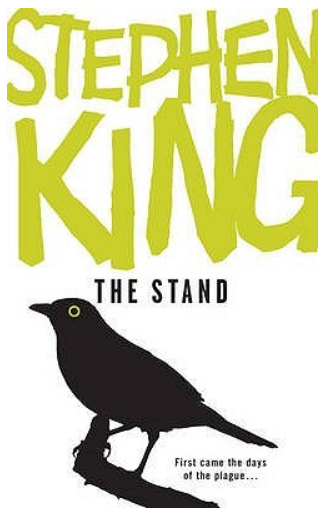
Cover of The Stand by Stephen King

King was able to get himself clean and stay clean largely because of his family. When reading On Writing, it’s clear that King is devoted to his wife, Tabitha. She is his partner in every sense of the word. I admire that. He’s fully aware that he wouldn’t have been able to create what he did without her.

On a personal note, I read On Writing for the first time when I was sixteen. I dreamed of having that sort of partner then. I’m blessed to have found that sort of partner. The kind who will tell me clearly when my writing sucks, and then tell me how awesome I am in the next breath. I am always grateful for that.

The point I’m trying to make here isn’t to get married. It’s the same point King makes, again, in On Writing. I can’t say it better than him, so I’ll just go ahead and quote him.

Art is a support system for life, not the other way around. 

I try to keep this in mind. When it feels like the words want to suck up my whole day. When I want nothing but the page staring back at me. When I feel like I’m behind on all my projects, and I want to start even more, and who needs to sleep anyway, I remember that good advice from my teacher. And I put the work away for a little while. I walk Oliver. I play chase the pen with Harper. I watch tv with the darling husband. I sing along with the music while I wash the dishes and I remember that I am more than the words I put on the page. I am a writer, but I am more.

The great thing about this lesson, putting your life before your art, is that it doesn’t mean you don’t create. King has published 64 novels, plus his short story collections, nonfiction works, and all the work he does adapting his books into tv shows and movies. The man is a creative machine. And it’s for one simple reason. He treats the writing as work. This is to say that he shows up every day at the blank page and writes. He does not wait for the muse to come to him. He sits down and starts writing. And eventually, the muse shows up.

King does not believe, and I do not believe, in writer’s block. If you’re a writer, you write. If you’re not writing, you need to figure out why you’re not. Or, you can do what King does and what I do. You sit down and write anyway, even if it’s shit writing. Even if it’s the worst thing you’ve ever written. Because the only way to get past writer’s block is to write.

Honestly, I don’t know that I’ll ever hit the 64 novel number. I have four, and four novellas, and one radio drama podcast. And I’m pretty sure you could stack all my work together and it wouldn’t match the page count of the extended version of The Stand. But I’m young, and I still have a full-time job. I’ll get there.

Turning now to the quality of King’s stories, I don’t think anyone can argue that they’re popular. And if you ask him, he’ll tell you that this comes from two things. Reading a lot and writing a lot. 

I think it’s a little more than that, of course. King has been a horror fan his whole life. He has lived the genre. He knows the classics. He knows what scares the hell out of people. And he uses it. This takes time, years really. But it’s the only way to get good at something.

TLDR, here are the lessons that any writer can learn from Stephen King

– Put your life before the work

-You don’t need drugs to create

-Writing is work, treat it as such

-Know your genre inside and out

Paper Beats World is a labor of love. You can support this website on Ko-fi.

How to write a truly creepy Creepypasta

Let me tell you a story.

I used to live in a part of town called The Island. It wasn’t great. It was run down, there was some drug activity. Not a bit of this stopped me and the other kids around there from playing outside, though. We often hung out next to the train tracks, in this long patch of dirty grass. It was actually pretty great. There were the tracks, then a creek on the other side. Not the cleanest of creeks, but any running water is going to attract kids.

I was playing there with my friend Emily one day when we were both around twelve. We were doing all the normal things. Balancing on the tracks, throwing rocks into the water. Basic broke kid shit. 

We saw a guy walking towards us near the tracks. He was kind of between us and the row of houses, or we might have taken off right away. 

The guy was getting closer. He was wearing a dirty pair of jeans and a windbreaker zipped all the way up to his chin. He wasn’t walking in a straight line. It was almost like he was drunk. As he moved closer I could start to smell him. He smelled awful like he hadn’t had a shower in years.

Emily was balancing on the tracks. She was giving the guy a worried look. I wasn’t thrilled about him either. But I figured he’d just walk past us without even noticing. 

Instead, he stopped. “Isn’t it a little cold for you girls to be playing out here?” he asked.

No,” Emily said. It was only about sixty, so this was a strange thing for him to suggest. 

The guy seemed to lean a little closer to us. There was something wrong with his skin. It looked almost like it was hanging off him. Not just old people wrinkles, but like it might actually drip off any second. 

When he spoke again, it didn’t sound like his words were coming from his mouth. More like it was from under his coat.

Not a safe place for kids to be playing alone.”

He leaned closer to Emily. “Does your mom know you’re here?”

“Get away from me!” Emily said. She jumped away from the man but fell. I guess her shoelace must have gotten caught on the track. The man reached down and grabbed her jacket sleeve. She screamed. I shoved him away from her and almost screamed too.

It didn’t feel like touching a person. It was like under that windbreaker there were just pounds and pounds of cold hamburger.

The guy had to pull away. I helped Emily pull her shoe free from the tracks and we ran back to her house. 

We ran inside and slammed the door shut behind us. Her dad was home that day. When we told him what happened, he grabbed his shotgun and went outside. Of course, the guy was long gone.

There was no reason to call the cops. Emily’s dad was sure the guy was just a homeless man and they wouldn’t be able to find him. I would have thought so too, except for one thing.

We never told her dad, because we didn’t think he would believe us. But on Emily’s jacket, where the man had grabbed her, there was a handprint. It looked like the skin from the guy’s hand had come off, and stuck itself to her sleeve. 

The internet is awash with horror stories referred to as Creepypastas. Microfiction and flash fiction stories that almost seem like they could be real. 

Kind of like the one I just told you.

They’re creepy, they’re upsetting. Some are incredibly gory and some are just uncomfortable. Some of them are mistaken for true stories. Some have become beloved characters, like Jeff the Killer or Slenderman. They are today’s modern urban legends, and we love them. I even wrote a Slenderman inspired story once

You can find these sorts of stories all over. There are a few subreddits, including one called R/nosleep. Youtube is littered with videos titled like ‘3 scary Snapchat stories’ or ‘4 home alone stories to make you scream. I even just downloaded an app called Chilling that’s full of them.

Honestly, I cannot get enough of them. And some of them have freaked me out. I especially love Rap Rat.

If you’re interested in writing one of these Creepypasta stories, here’s the advice I have for you. These are tips not only from me as a writer, but from me as someone who has consumed far too many of these things to be healthy.

Keep it just this side of true

In case you haven’t already guessed, my story at the beginning wasn’t a true story. I was never attacked by a rotting man while playing outside as a child. 

I was, however, a broke kid who lived in a bad part of town called the Island. I did play near the train tracks and in the creek with my friends. I did once get my shoelace caught in the tracks. Thankfully, there was no train coming. And once I was approached by a stranger who stood too close to me. Then, talked too long to a preteen girl outside by herself.

It’s this sort of thing that makes these stories so relatable. And relatability is something that you need if you want to scare the hell out of someone. 

Good horror is honest, especially in Creepypastas. So much so that some people don’t quite get the joke. Stories on R/nosleep are often laughed at because they ‘can’t possibly be true. Well of course they aren’t true. No one ever said they were. They’re just written in such a way that they feel like they might be true.

And of course, there’s always a chance that some of them are. We don’t know, do we?

Grammar can fall away a bit

Many of these Creepypasta stories appear to be written by amateurs. The grammar is off. 

Well, that might be on purpose. Generally, the best stories are written in the first person, like you’re telling someone a story. So, since you’re the whole story is narrated from your MC’s pov, you can get away with bad grammar the same way you do while writing dialog. I’m betting you don’t use perfect grammar while talking in the best of circumstances. Neither do I. So why would we when we’re telling someone about a creepy thing that happened one night?

A really scary thing. Something you don’t usually talk about. 

Good storytelling cannot

While often the grammar in a Creepypasta isn’t the greatest, the writing mechanics are still there. Some great examples can be seen on the Youtube Show, Are You Scared? 

All of the other parts of telling a good story are still in play. Foreshadowing, word usage, descriptions, dialog. None of these can be forgotten in any story. No matter how informal the type of story. 

KISS (keep it short, sweetie.)

Finally, Creepypasta stories work best when they’re short. There are some exceptions, like the aforementioned Rap Rat. But most of these stories can be read in under fifteen minutes. 

First off, this is nice because most of us don’t have time for a long story all the time. And while I do love an epic fantasy story, sometimes I need a bit of short-form entertainment during my break. 

More than that, though, a short story doesn’t have as much time to show the zipper on the back of the monster. I wrote a post long ago about brevity being the soul of horror. I don’t want to rehash all of this. Suffice to say that shorter stories have more of a gut punch. And the best Creepypastas are the ones that keep it short. 

Have you tried your hand at a Creepypasta? Let us know in the comments, or leave a link to your story. 

Writing Dark Scifi

Horror and science fiction go together so well that it’s often hard to write one without at least some elements of the other. Unless you’re writing something more akin to dark fantasy, which we talked about last week. 

Dark Scifi is a fun subgenre, and a popular one, too. I’ve always been a fan. One of my favorite shows of all time, X-Files, falls right into this category. Another great example is the Alien franchise. My science fiction tends to sway heavily into Dark Scifi territory. You Can’t Trust The AI in particular.

The trick to getting Dark Scifi right is balancing the expectations of each genre. Scifi readers expect to see technology that is beyond what we have today. Beyond even what we might fantasize about having. Horror fans expect a body count. I’m sure you can see how these two expectations can work together. 

What exact expectations you’ll be juggling will vary. Within each genre, there are a million subgenres. I’ve talked about Scifi genres here. So if you’re starting on a Dark Scifi story, it’s not a bad idea, to begin with, the expectations your readers might have. From there, consider how these lists might complement each other. Or, how you might use these expectations to surprise your reader and create a more original story.

When you’re considering the genre expectations of Scifi and Horror, your mind will likely also wander to the weaknesses of each genre. We are hardest on the things we love most, of course. And I really, really love horror.

It can be callous with human life, though. It’s not always great with character development. It often throws science right out the window. And I don’t mean advanced science most people don’t know. I mean some pretty simple shit. 

Scifi has its own set of issues. It can talk over people’s heads with the science. Worse, some authors are worried that they’re going to do that. So they spend way too much time making damned sure they explain every detail, derailing the story and boring the reader. Asimov, to my dismay, had that problem.

The great thing about writing Dark Scifi, though, is that the problems of one genre can be solved with elements of the second. Your horror story with a baseline of scientific understanding is going to feel more real, therefore scarier. 

Scifi tends not to be as character-driven as some other genres, but it’s often more so than Horror. This means that your characters will tend to be richer, more fleshed out. So, when one of them dies it’s worse. This means that there’s more worry and anxiety over their deaths, upping the tension of every page. 

Dark Scifi is a beautiful marriage between two genres. Where one is strong, the other is weak. And when done right, it’s a genre that is rich, thrilling, and scary as hell.

Paper Beats World is a labor of love. If you want to support this site, you can check us out on Ko-fi. 

How to start writing dark fantasy

Dark fantasy is certainly having a moment. Shows like Witcher and Wheel of Time, both of which I talked about on Haunted MTL, have gotten more fantasy fans interested in the creepier, more sinister side of the genre. And I love it. Not that I don’t enjoy the lighter side of fantasy. I wrote a whole series that could hardly be considered dark. Honestly, that’s just because I haven’t gotten to it yet. 

Yes, fantasy that is all about magic and adventure and dragon friends is awesome! But there is so much more that we can do with the genre if we’re willing to explore the shadowy side. 

Just in case you’re not sure what I mean by dark fantasy, another great example is the Spiderwick Chronicles. In here we see much of what I’d consider dark fantasy. We see the fai acting with malicious intent. We see dark magic slipping a young woman into a coma. We see characters who are menaced, rather than enchanted, by the fantasy world. There’s a lot more monster-slaying than finding fairy rings, is what I’m saying.

If you want to write some dark fantasy, here are some suggestions.

Details and world-building

A cornerstone of good fantasy is good world-building. And a dark fantasy is no different. But of course, the details of a dark fantasy world are going to be a bit different. We’ll see more danger, of course. More places our characters fear to tread. More people you don’t want to come across. Think of Miss Peregrine’s School for Peculiar Children. Yes, at the start the children are in a magical place frozen in time. But soon enough they find themselves mucking through dark allies, filled with monsters and men who want nothing more than to crush their heads against the pavement.

Don’t shy away from the gore

Speaking of pavement head crushing, any good horror story is going to have some moments of gore. That’s just a hallmark of the genre. 

I don’t love stories that rely on it. If there’s not an underlying terror, then all the blood and broken bones in the world aren’t going to do more than turn my stomach. But I do expect to see a little bloodshed. 

The best horror is based on reality

Horror that revolves around otherworldly creatures is great. I love a haunted house story, and I love a sentient demonic house even more. But the best horror story is the one that has a basis in real life.

Carrie was about more than a killer prom queen. It was about a young woman bullied at school and suffering abuse at home. Amityville Horror is about a house set on killing its inhabitants. It’s also about a family with money worries. These are things we can relate to, which makes the horror that much more satisfying. 

This can be a little trickier with dark fantasy, which is by definition not based on reality. But remember that characters are people. And people are generally scared by the same things. As Stephen King put it, we’re scared of the Bad Death. That’s pretty well universal, even if you are an elf. 

Anything that can befriend you can also kill you

I’d like to take this moment to point out something in fantasy that has always bothered me. Fairies are often seen as whimsical little friends, who might play a little prank on us from time to time but have our best interests at heart.

If you know anything about fai lore, you know that’s bullshit. They might be befriended, but they’re more likely to steal you away, take your babies, poison you, or otherwise mess up your day. 

The same can be said for mermaids. 

Any creature has a dark side. Any creature can be seen as either benevolent or malevolent. Think of fantasy creatures as dogs. Most of the time they’re our great little companions who sleep at our feet and keep us company while we type blog posts. But under the right circumstances, they’ll take a hand. 

If the good creatures exist, so do the dangerous ones

Finally, there is this. Fantasy creatures we like tend to get a lot of attention. But if they exist in your fantasy world, so do their darker counterparts. So do the banshees, the evil magic users, the werewolves, wendigos and vampires. Light casts a shadow, and you don’t get one without the other. So when creating your fantasy world, remember to write in the shadows as well. 

Fantasy and horror complement each other in many ways. A touch of one can make the other stronger, and often is unavoidable. How much you decide to let the darkness in is, of course, depended on how gruesome you want your fantasy story to be. 

What is your favorite dark fantasy? Let us know in the comments. 

If you would like to support Paper Beats World, you can do so on Ko-fi. 

Do I have a short attention span, or is this a bad story?

Has this ever happened to you? You’re watching a new movie or tv show that you’ve never seen before. Usually with a friend or a spouse. All of a sudden, you realize that you’re not watching the content you wanted to share anymore. You’re on your phone or tablet, scrolling social media and you’ve lost track of the storyline. 

Maybe this happens because you’re tired. Or maybe you’ve got a touch of ADD (Probably not. Everyone thinks they’ve got ADD.) Or maybe Instagram is actually more interesting than whatever you were watching.

If you’re anything like me, you probably beat yourself up over this a little. And if you don’t, someone else has probably done it for you. I’ve even developed a little pathological fear of watching anything new because of this. I mean, I’m a writer, and also thirty-five years old. I should have a better attention span. I should be getting into this story. Lots of other people love this movie, why can’t I focus? Am I a three-year-old, what is the matter with me?!?

Probably nothing. There is a really good chance that the content you’re trying and failing to watch is just not working. Today I thought it would be helpful to talk about some ways to tell if the story you’re watching is just bad, or if it’s a you problem.

Spoiler, it’s probably not you. 

Don’t rely on other people to help you with this. 

There are some movies, books, and tv shows everyone claims to love. Some are classics like Casablanca or The Godfather. Some are heavy thinking films like The Shape of Water. But this list could include anything you’ve ever been made to feel bad for not liking.

You must not have gotten it.

It’s too smart for you. 

This is bullshit. There are plenty of reasons you might not like a story that other people, even a lot of other people, claimed to enjoy. 

For one thing, people lie. And sometimes people claim that they like something because they think everyone likes it. 

We should have learned this lesson as children, but most of us struggle with it our whole lives. Do you remember the story of the Emperor’s New Clothes? No one wants to be the first to point out the Emperor’s junk is swinging free in the breeze.

Of course, just because you didn’t like something doesn’t mean it’s bad. For instance, I didn’t like the movie Last of The Mohicans. I get that lots of people loved it. But I found it boring as hell.

I am not wrong. The story isn’t wrong. We just didn’t click. 

Maybe it’s not the story for you at this point in your life

There are some stories we are just not ready to hear. And that can be for a ton of reasons. The most common reason is that we are not yet emotionally mature enough for it. 

This is why children are often said to have a shorter attention span than adults. Sometimes that’s the case. And sometimes they just haven’t lived long enough to emotionally connect with a story.

One great example for me is The Truman Show. I saw this movie when it came out, in 1998. I was ten, and I didn’t get it. I hated it. It was long, boring, and a real disappointment. 

It didn’t help that my expectations were way off base. I had seen Jim Carrey in The Mask and Ace Ventura. I wasn’t prepared for him to be in a serious role. 

Seeing the film as an adult, I loved it. I understood the raw rage Truman must have felt, realizing that his whole world was a lie. It’s a brilliant film, I’ve seen it several times since then. And I’ve never considered it too long. 

There’s nothing wrong with being too young or too old for a film. It’s just where you are in your life. 

Don’t listen to older people who tell you our generation has a shorter attention span.

This is the one that pisses me off. It’s the general Blame Millenials trope that I’m truly sick and tired of. It’s the theory that our generation, after a lifetime of cartoons and social media, just doesn’t have the attention span for a real story anymore.

Again I say Bullshit. We’re the generation that devoured Avatar, Titanic, and six Lord of The Rings movies including extended cuts. And I, who have the attention span of a stoned raccoon in a Twinkie factory, have no issue reading Stephen King novels the size of phone books. 

If a story is good, there is no such thing as too long. 

Often I find this argument used to defend classics. But what is considered a classic might need an upgrade. Frankly, I consider a classic any story that is still entertaining and/or relevant. People still read Frankenstein every year. To Kill A Mockingbird was so popular the publisher might have committed elder abuse to get a sequel.

TLDR- What can writers do with this information? 

None of this is any help at all if we don’t know what to do about it. Okay, so sometimes a story just doesn’t work for us and it’s not your fault. 

It’s enough to remove this guilt from ourselves, certainly. But as writers, we can do more. 

The next time you’re watching something and you go to reach for Instagram, stop and grab your writer’s notebook instead. Write down what you’re watching and what was going on when you lost interest. Try doing this every time a story loses you, and you’ll start to see a pattern of what doesn’t work for you. And if it doesn’t work for you, there’s at least a chance that it doesn’t work for other people too. 

Remember, a bad story can teach you as much as a good story. So if a story is boring you, at least you can learn something from it. 

Paper Beats World is a labor of love. If you loved this post and want to support the site, you can buy us a cup of coffee on Ko-fi

Why Futurama Works

As I mentioned last week, Futurama is one of my favorite television shows of all time. I’ve watched it a hundred times. The darling husband and I quote the show almost daily. There are some episodes I can’t watch because they’re too emotionally damaging. There are some I could watch every day and not get sick of them. 

The Star Trek cast in Futurama

Futurama has won countless awards for writing. And it’s with good reason. Now, I know that some of you reading this right now will think I’m being far too generous to a silly cartoon. But I’ll submit to you that I’m not. And the massive fan base that Futurama still holds would agree with me. 

So, it’s time to get it up on the table, break it apart, and see why it works.

There are professionals on the writing staff.

Of course, the writers are professionals with years of creative experience. I would hope the same could be said of most content, but that’s probably idealistic. 

Futurama takes this several steps further, though. Among their writing team, you’ll find scientists, mathematicians, physicists. And if they don’t have a professional on staff, they go find one. 

While this is a fiction show, they want to make sure that the science they use is real. Which makes the rest of the story more believable. As one of their splash screens says, you can’t prove it won’t happen. 

The writers hid jokes and didn’t explain.

If you’re casually watching an episode of Futurama while scrolling Instagram, you’re going to miss background jokes. And a lot of them. That’s because the writers love throwing in hidden jokes and never explaining them. They even developed alien languages and hid messages in the background. They never released a key for these languages, either. 

This means that the show can work on two levels. If you just want to watch a silly show, it’s great for that. If you want to watch it on a whole other level with a ton of in-jokes, it’s great for that too. 

Awesome attention to detail.

In the first episode, the main character Fry is tossed into a cryogenic chamber and frozen. This starts the whole story. But, as you go through the series, more and more comes to light regarding that moment. And every time you learn something else, you can go back and watch the first episode again to see if there are signs visible. 

And they always are. 

The writers trust their audience to be smart. 

The writers can do all of these great things, because of one simple fact.

They believe that their audience is smart. They don’t talk down, they don’t over-explain. They put out smart content, and they trust us to get it. 

Futurama The Sting

It’s time for the wrap-up. What can we as writers learn from Futurama?

– Get the factual parts of your story accurate, and it will make the whole thing more believable. 

-Don’t be afraid to add details or background jokes without an explanation.

-Pay attention to detail, and keep everything cannon. 

-Trust your audience to be at least as smart as you are. 

Is there a show, movie or book you’d like me to take apart to see why it works? Let me know in the comments. 

Paper Beats World is a labor of love. If you want to support this site, you can do so on Ko-fi. 

A WordPress.com Website.

Up ↑