And then it was April, and then it was Spring. And then it was poetry month and a prose writer tried to clumsily sound poetic.
I love poetry the way a child loves a cat. I don’t understand it, but I know that I love it.
Poetry is an art form more prose authors should consider practicing. Not because I think we’d be particularly good at it. But because understanding words in that way will help any writing. A poet considers each word carefully to invoke the emotion of a moment. They take wordplay to a whole new level.
That being said, I was listening to an episode of Writing Excuses that gave me a question I do not have an answer for.
What is poetry?
I’d like to say it’s like porn. I know it when I see it. But that seems like an oversimplification and a lazy joke beside.
I’d advise all of you to listen to that episode, as they answer the question better than I ever could.
Anyway, here’s a list of ways you can celebrate Poetry Month. I hope you enjoy them.
Read your favorite poems and share them on social media.
I do this all the time, but this is the month for it. Poems are the perfect thing to share on social media. They’re short, they convey emotions and experiences. And they’re much better than celebrity gossip and fights with strangers.
Write some of your poetry, even if it’s bad.
Especially if it’s bad. Poetry is a way to express yourself. It’s a way to give a voice to things you might not know how to say. It’s a way to commemorate a moment, a feeling. So even if it’s bad, it’s art. And the world never has enough art.
Look into word art.
Since we’re talking about art, let’s discuss word art. Think micro-fiction or a poem paired with some awesome visual art. This is a really fun thing to create, layering creative methods on top of each other. Using one to elevate the other. I love it. If you’ve never tried it, you should. You might love it too.
Learn about a new form of poetry.
There are so many kinds of poetry, it’s sort of staggering. One that I love is found poetry, the method of finding a poem within a page of pre-written prose. But there are so many other forms. And this is the month to learn about a new one.
So what do you think? How are you celebrating Poetry Month? What’s your favorite poetry form? Let us know in the comments below.
Beverly Cleary died yesterday and a part of my childhood died with her.
Cleary was the author of some of the greatest books for children ever written. She wrote Socks, a book I used to read, finish, then start reading again. She wrote the Mouse and The Motorcycle trilogy, featuring Ralph. If you’ve never read them, they’re a fun time.
Most importantly, though, for me, was Ramona. Beverly Cleary wrote Ramona, and in doing so she changed how I saw the world.
Ramona is a scrappy kid. She’s always done her own thing, and her thing isn’t always the best. She had stringy brown hair, like me. She had scuffed-up knees and stains on her school dresses. The worst thing in her life was having to wear ugly second-hand rain boots. When her dad lost his job and decides to go back to school, her mom goes to work.
Ramona wasn’t anything like the characters in other kids’ books and shows. But she was very much like me.
Much like Ramona, I was a stringy-haired little girl who didn’t always get the world. When Ramona draws cattails on her Q’s, I remember getting in trouble for doodling loops all along my practice papers. When she squeezes out all the toothpaste in the tube or takes just one bite out of every apple in a bin, I want to do those things. Even though as an adult who understands money, those things make me want to cringe. Wasting a whole tube of toothpaste, when they’re not cheap!
Ramona was awkward, messy, loud, selfish. She was a pain in the ass. But so was I as a kid. We all are. And too often as kids we’re left wondering what it was we did that has everyone so mad.
There are a million real moments in these books. Some are awful but relatable. Like when Henry’s grandmother is fine taking the money to watch Ramona but doesn’t seem to care for actually watching her. These sorts of moments make the good times all the better. Like when Ramona finally learns to ride her bike, with the ribbon laced through the spokes to create a bright red circle when she rides.
One scene that comes back to me over and over is this. Ramona’s had a hard day. When she gets home, she finds that her mother’s had one too. Her mother says they should go out for burgers for dinner. This is the light at the end of the tunnel for Ramona. She has a vision of sitting in a snug booth with her family, enjoying hot fries and bubbly soda.
Then her dad comes home, and he’s been laid off.
There’s no way the family can go out for burgers. So, instead, the parents make do and make pancakes.
And you know what? I’ve been there. I’ve been there as a kid who has to settle for pancakes after a hard day. And I’ve been there as the adult who’s just happy they were able to scrape together some kind of dinner after a hard day. It’s life.
What Ramona did was tell me I wasn’t alone. I wasn’t bad, or wrong. I was just human. We’re all just humans.
Thank you for that, Ms. Cleary. Thank you for giving me books full of struggles and joys that I could see myself reflected in. Thank you for brightening my childhood and giving me the tools to handle adulthood. Thank you for giving the world Ramona, Ralph, Socks, Henry Huggins and Ribsy. Thank you for every time I found one of your books in a second-hand store, battered but whole. Thank you for every moment I spent reading them laying out on the grass, or in my childhood bedrooms.
At over 100 years old, we couldn’t have asked you to stay. You’ve earned your rest. May we carry your torch.
A little while ago I shared a list of my favorite bullet journal collections to keep my sanity and my plants. When I did so, I also promised a list of my everyday pages. Pages that I set up for the month and week that allow me to keep track of my projects, due dates, house and everything else I need to keep track of.
Well, folks, today is that day. We’re going to be looking at my monthly pages, what function they serve, and what sort of planning goes into them.
They’re not pretty, and most of them aren’t unique. But they are lifesavers. I know I lived before I had a bullet journal. I just don’t know how.
The first thing I put in is a cover page. It is 100% not necessary and serves no other purpose but designating the start of the month. I just happen to think they’re nice. And, since part of the reason I bullet journal is to have fun with drawing and scrapbooking, this is one place for it to shine.
Next comes the calendar. Now, a lot of bullet journalers like to use a layout that resembles a full monthly calendar. I like the traditional vertical layout with one line per day. This gives me plenty of space to write down any appointments or events for the day. I can also put in big satisfying lines for things like vacations. Finally, I keep track of the days of the week on one side, and the moon cycles on the other. Everything I need to know about a month is in one place.
Next, I have a three-month overview. This is nothing big. It’s just a mini calendar with a little list of appointments and events happening that month. On the far right of that page, I write down a rough idea of things I think I’ll be working on that month. This is in no way set in stone, just an estimate.
Next comes my social media tracker. If you’re not an online business person or content provider, you might not need these. But if you are, you do. I keep track of all the social media places I post and check off if I’ve posted that day. I use the same page to track when I’m posting anything anywhere. This includes blog posts here, on Patreon, on Haunted MTL, any episodes of Off The Bone, guest posts. If I have a piece coming out anytime that month, it’s on this page.
After that, I have a space for check-in dates. This is a half-page spread because it’s just a few questions. How much money did I make this week? How much did I spend? What’s my overall number for the month? Easy enough.
The other half of the page I use for blog post ideas. As I think of things I want to write about, I write them down. So when I’m making the next month’s social media page and I’m stuck for a post idea, I’ve got a well of them.
Next comes my mood tracker. This is the same as any other mood tracker you’ve seen all over the internet. I have some bit of blank artwork that is slowly filled in as the month progresses. I think it helps to see how my emotions are fluctuating. And it makes me take a moment and think about them. I tend to be very in the moment and not contemplate how I felt about something. So this makes me question how I felt, overall, in a day.
After that comes the monthly goal page. Pretty self-explanatory. This is where I write down all my goals for the month. At the bottom, I like to write a little motivational quote. But that’s not necessary.
Now, here’s a fun one. I set up a best moments and wins page. This is where I’ll record moments or drawings that represent things that happened during the month that were just awesome. For instance, in March my mother-in-law got her covid vaccine, I sold two short stories, we went to Phipps Conservatory, and I made some personal tea blends. Below you can see how I memorialized each of these things. I love building this page every month. It also helps to remind me that even hard months have good moments.
Now, it’s time to talk about money. First up, we have the abundance tracker. I keep track of how much money I made in every way that I make money. It helps me see where my abundance is coming from.
Now, let’s talk about where it’s going. The next spread is an envelope budget one. It’s not a pure envelope budget because I don’t take out cash. But I do separate my money into specific categories and try to keep spending to those categories within that budget.
At the start of the month, I make a budget based on my paycheck and bill due dates. This helps me figure out what paycheck is going to be bill heavy, and which one I can save a little more from.
Finally, I track my savings goals. I like to do a good old-fashioned bar graph for each goal.
Once the month is set up, it’s time for a weekly spread. There are lots of ways to do this, but I like to keep it pretty simple. I just list out each day of the week, any events I have planned, and a to-do list. I also like to keep a list of things I can make for dinner with what’s in the house.
So that’s it. That’s all the pages I used in my monthly setup. What about you? Do you use any I didn’t have on the list? Let us know in the comments.
(A note about the graphics used in this post. I love making all my bullet journal pages look like a scrapbook. But you don’t need to do that for bullet journals to be a great tool. Please don’t let the artwork overshadow the planning. Also, all of these photos have been highly edited. )
I don’t know who needs to hear this, but you’re not as old as you think you are and people older than you want you to shut the hell up.
This has been said with love, as someone who complains too often about being in her mid-thirties.
(It’s my fault I feel old, by the way. I watch all these creators on YouTube who are in their twenties. They’re all great, inspiring women who make me feel like a crone.)
But I’m not old. And even if I was, I’m still not too old to learn new things.
All of this is a roundabout way of saying that I’m learning a new way to write.
This year I launched a true-crime podcast called Off The Bone with the amazing Boxhuman. I’m getting ready to launch a fiction podcast sometime this year. In creating these new podcasts, I’ve learned to write a different way. I’ve learned to write content that’s meant to be heard instead of read.
It kind of astounds me how different it is to write this way. I don’t know why this should be so shocking. It’s a totally different medium. But I think if I’d realized how different it was going to be, how alien it would feel, I might have chickened out.
If you’re considering starting a podcast, let me share with you what I’ve learned. Here are four things to consider when writing to be heard.
Are you talking over people’s heads?
I’m not a big fan of talking down to people or thinking I’m smarter than others. I’m not. That being said, sometimes my word choice is, well, unusual.
If I’m writing a blog post or book that doesn’t matter so much. If a reader doesn’t know the word I used, they can look it up. But if someone’s listening to a podcast, they don’t have as much time to stop and look up some archaic weird word I used. The same can be said for concepts or references unless I’m going to take the time to stop and explain them.
Now, I’m not saying you should assume people won’t know what you’re talking about. I’m also not suggesting that challenging people with new concepts is a bad idea. But we all have topics and theories that we know a stupid amount about. Like, more than most people do and anyone needs to. Maybe that’s why you’re doing a podcast to start with. Maybe the whole point is to explain more about the life cycle of kiwi birds. But if you’re just quickly referencing some obscure thing like everyone knows what you mean, that’s going to throw some people off. You’re going to lose listeners. So don’t go over people’s heads. If you’re talking about something complex or not commonly understood, take a few seconds to make sure everyone’s on the same page. Or at least in the same book.
How do your sentences sound?
Sentence structure is one of the real nut and bolts parts of grammar that I don’t always pay as much attention to as I should. Usually when I’m writing it’s to tell a story or entertainingly convey information. The smaller the piece, the more I pay attention to sentence structure, though. I also pay more attention to word usage and flow to convey an emotion.
When you’re writing a script to read out loud, though, you want to keep in mind that you are going to have to actually read it out loud. And it needs to sound a certain way.
Do yourself a favor, and read your entire script out loud as part of your editing process. Some sentences look and feel just fine on the page, but sound clunky and soulless when spoken.
Are you droning on?
Remember earlier when we talked about not talking over people’s heads? Please, for the love of Benji don’t use this as an excuse to drone on.
Yes, the point of most podcasts is to talk at length about a certain topic. But that doesn’t mean you need to over-explain.
Let’s say I’m writing a podcast about HH Holmes. (Which I did). Do I want to talk about how he put people down a body chute to his basement to ‘play’ with the corpses? (Not like that, you pervert.) Oh yeah, that’s the kind of content a listener is there for. Do I need to go into a lengthy explanation of how the chute was built? Probably not. Maybe I want to toss in a little bit of info, but a ton is not needed.
How’s your pacing?
Honestly, a lot of this advice comes down to this one factor. Is your pacing entertaining? Are you giving information in an informative way without bludgeoning someone with facts they can’t absorb?
This goes for fiction, too. Info dumping isn’t a great idea in a book. It’s even worse in a podcast. If you go into an info dump on the page, at least the reader can go back over it a couple of times if they need to soak it all in. But people listen to podcasts most often when they’re doing other things. I listen to them while I edit, wash dishes, schedule social media, or any of the other less glamorous parts of writing. (It’s not all prancing through a mental playground, folks. Writing is work. Work worth doing, the best work there is, but still work.)
The point is, if someone’s listening to your podcast while driving to the grocery store and you info dump on them, they’re not going to retain half of what you just said. And if they didn’t retain it, you might as well have not wasted anyone’s time by saying it.
So what do you think? What should writers keep in mind while writing a script to be read? And, as a bonus, what’s your favorite podcast? Let us know in the comments below.
Want to support Paper Beats World and get ad free blog posts a day early? Support us on Patreon.
Last year I talked about why a book called Mexican Gothic worked. It turned out to be one of my favorite books of 2020. It was good enough to convince me I needed to lay hands on every other book Sylvia Moreno-Garcia ever wrote or will write. On the off chance she reads this review, I am a fan for life, girl.
Fan for life.
Gods of Jade and Shadows was next on my list from her. Published in 2019, it’s not a new book. Nor is it very old. It was impossible to put down.
Let’s break down why Gods of Jade and Shadow works. Because boy, does it work. And I think we’d all like to see more books like this on the shelves.
If you haven’t read it yet, the story is about a god of death named Hun-Kame. Well, really the story is about a young woman named Casiopea. Her family is horrible to her. She and her mother are treated as poor relations. She wants nothing more than to run away and never have to see them again. Then she finds the bones of Hun-Kame in a box in her grandfather’s room.
The story is like a modern-day fairy tale. Like a greek fable, but with gods most people haven’t heard of. Hun-Kame has to battle his brother to regain his throne. But as they are gods, they can’t battle themselves. So they have to choose champions to battle for them. Hun-Kame choses Casiopea. His brother chooses her cousin. They have to race through the land of the dead to decide who will sit on the throne.
One thing you don’t see a lot of in fables is character growth if the character happens to be a god. But that’s not the case here. I don’t want to ruin anything, but Hun-Kame is forced to look at his past actions. He’s forced to grow. Which is something I think we need to see more of.
It should surprise no one that there’s a lot of heat between the two main characters. Like smoldering heat. It has some sexy, sexy parts.
But there’s no sex! There’s nothing I’d be worried about if my grandmother caught me reading. I wish we had more ghost pepper hot scenes in fantasy stories that aren’t cringy sexy.
Finally, let’s talk about the ending. I’m going to do this carefully, as I don’t want to spoil it for you. It’s not a perfect fairy tale ending. The thing I wanted to happen didn’t happen. But it is so satisfying. It’s everything that needed to happen, and it couldn’t be happier.
All in all, Gods of Jade and Shadow is a great read. And other authors would do well to learn why it works.
If you spend any time online, you’ve seen an ad for Skillshare. Every Youtuber I watch is working with them. And all that pitching got to me. I’ve had a subscription to Skillshare for almost a year now.
I’m not working with them. I’m not an affiliate, and I’m getting no money for this post. But I know that I’ve found myself subscribed to one service or another with little to no idea what I was supposed to do to it.
If you as well have subscribed to Skillshare and are now a little daunted by the selections, I’ve got you. I’ve done a lot of the classes on the platform. So today I want to share with you the five best Skillshare classes that I’ve taken.
Write an Irresistible Query Letter, Blair Thornburgh
I’ve struggled with query letters. I think all professional writers have that one part of the submission process that they just hate. It’s a toss-up for me, whether it’s query letters or blurbs.
Now that I’ve taken this class, blurbs are my least favorite. It made me think about my novel in a different way. And, even better, it gave me an easy-to-follow template to create a query letter that doesn’t feel like it was written from a template.
Writing Suspense: How to write stories that thrill in any genre, Benjamin Percy
Suspense isn’t a genre I write. But it’s an aspect of every well-written story. And this class, man, was so good. The exercises and explanations are just so helpful. I learned so much about story structure and giving clues through a story.
5 Techniques to Generate Creative Writing Ideas, Alison Stein
This class, my goodness. I wrote out so many pages of ideas for this class. And if I need new ideas, I go back to it. The class was entertaining, inspiring, and left me with a ton of blog posts. At least one of which I recently sold.
Writing Flash Fiction, Hannah Lee Kidder
I love writing little flash pieces. They take little time and are easy to share on social media. Plus, they can be an emotional gut-punch when done well.
This class helped me do them well. If you’ve read a flash piece of mine and you liked it, thank this class. If you want to write flash pieces, take this class.
Instagram Poetry, Alison Malee
Finally, this class was a ton of fun. I’m always looking for interesting new ways to show my art. And blending poetry with visual art is rewarding. It’s something that I like doing on a day off or in the evening while watching tv. Again, this class inspired me to do more of it. It also, I hope, helped me do it better.
So those are my top five Skillshare classes. What do you think? What’s the best class you’ve taken? Let us know in the comments below.
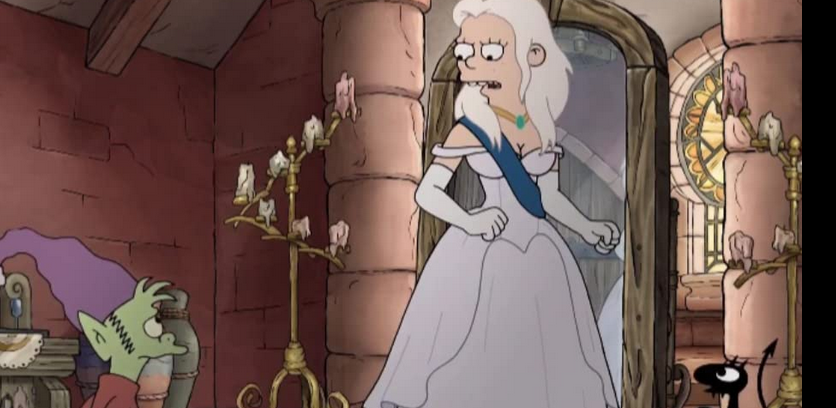
Often when I’m talking about why a show works, I find myself pointing out one strength over and over. The stories I love the most are the ones with the best characters.
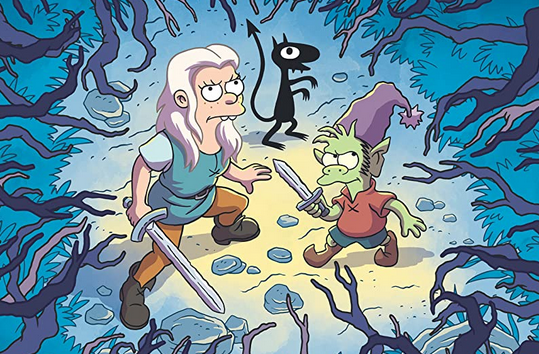
That being said, instead of breaking down all of the reasons why Disenchantment season three works, I thought I’d focus on just this one element.
We’re not going to go into all of the characters in this season. There was a lot, and most of them were good. We’re just going to look at the five main characters, and what made them so well written.
Elfo
Elfo was one of the most sickeningly nice characters for the first two seasons. The only nice one. And he got shit on, constantly. Bean took him for granted, Luci actively tortured him. And this season he’s just done with it.
Good for him.
But instead of handling this responsibly, Elfo’s lashing out in every and any direction. He’s looking for love in some self-destructive places. He’s having a hard time keeping his emotions under any kind of control. While this is obnoxious, it’s also realistic. People don’t have mature and level responses to things all the time, neither do elves. It makes Elfo a more realistic character that he’s being kind of an oversensitive prick this season.
Luci
Originally tasked with being Bean’s personal demon, Luci has decided that he doesn’t care to live his life for another. Even if he’s living his life to mess with another. He’s decided to branch out and take care of his needs. He bought a bar and seems to enjoy running it. That being said, he’s still around when his friends need him. Or when he wants to express his love for them by torturing them.
Luci also finds himself growing attached to King Zog in his illness, which we’ll discuss later. At first, he resents being treated like an emotional support pet for a crazy person. But in the end, he wants to be helpful. He wants to help take care of the people he cares about, despite his selfish instincts.
He’s still a demon, but he’s not a very good one.
King Zog
Some hard stuff has happened to King Zog. Like really hard. His first wife tried to kill him, a couple of times. His second wife finally had enough of him and ran off to be a pirate. He was briefly in love with a bear. On top of that, his daughter is a rebellious handful, his closest advisors are plotting against him, and he was trapped alive in a coffin for a while.
Rather than just having him shrug all this off with a cliche ‘I’m getting too old for this shit’, he has a psychotic episode. He starts making weird quacking sounds, can’t make decisions. He’s scared of everything. He can’t feed himself.
This is kind of funny. But it’s also kind of what a realistic physic break might look like. I appreciated that.
I also appreciated that, even though Zog’s a meathead and selfish, he’s ready to do what he needs to for his people. I don’t want to spoil things. So I’ll just say that he shows humility, and does something that we don’t see a lot of characters with power do.
He gives it up.
Queen Oona
Queen Oona was the biggest surprise in this season. I wasn’t expecting to see her much. It kind of felt last season like they put her on a bus. Or in this case, a pirate ship.
Instead, she comes in with her brand of support for Bean. She’s there when she’s needed, but she’s not there to take on the whole situation.
And it’s not for the sorts of reasons we usually see. She’s not leaving Bean to take care of things herself because Bean needs to be strong. She’s doing it because she’s got her own life to live. This is still her family, but she’s got her own thing going on. Her own badass pirate thing. The evolution of this character from a walking joke to a feminist badass has been really fun to watch. It’s an example of how you do character evolution well.
Bean
Finally, we get to the main character, Bean.
Bean is what I would call a flawlessly flawed character. She drinks, she’s selfish, she’s a pain in everyone’s ass. I don’t know why anyone thought she needed a personal demon. She does well enough getting into trouble on her own.
But it’s not just pain in the ass behavior with no purpose. Bean doesn’t want to care about anything, but she does. She isn’t just selfish and then starts caring about others. She seems as though she pretends not to care. She is trying to numb herself to a world she didn’t feel qualified or able to fix. When allowed to change things, to fight for things, she does it.
It’s amazing what someone can do when they think they might make a change. And what sort of debauchery they’ll get into when they care but feel helpless.
So what do you think? Have you seen the latest season of Disenchantment? Let us know in the comments.
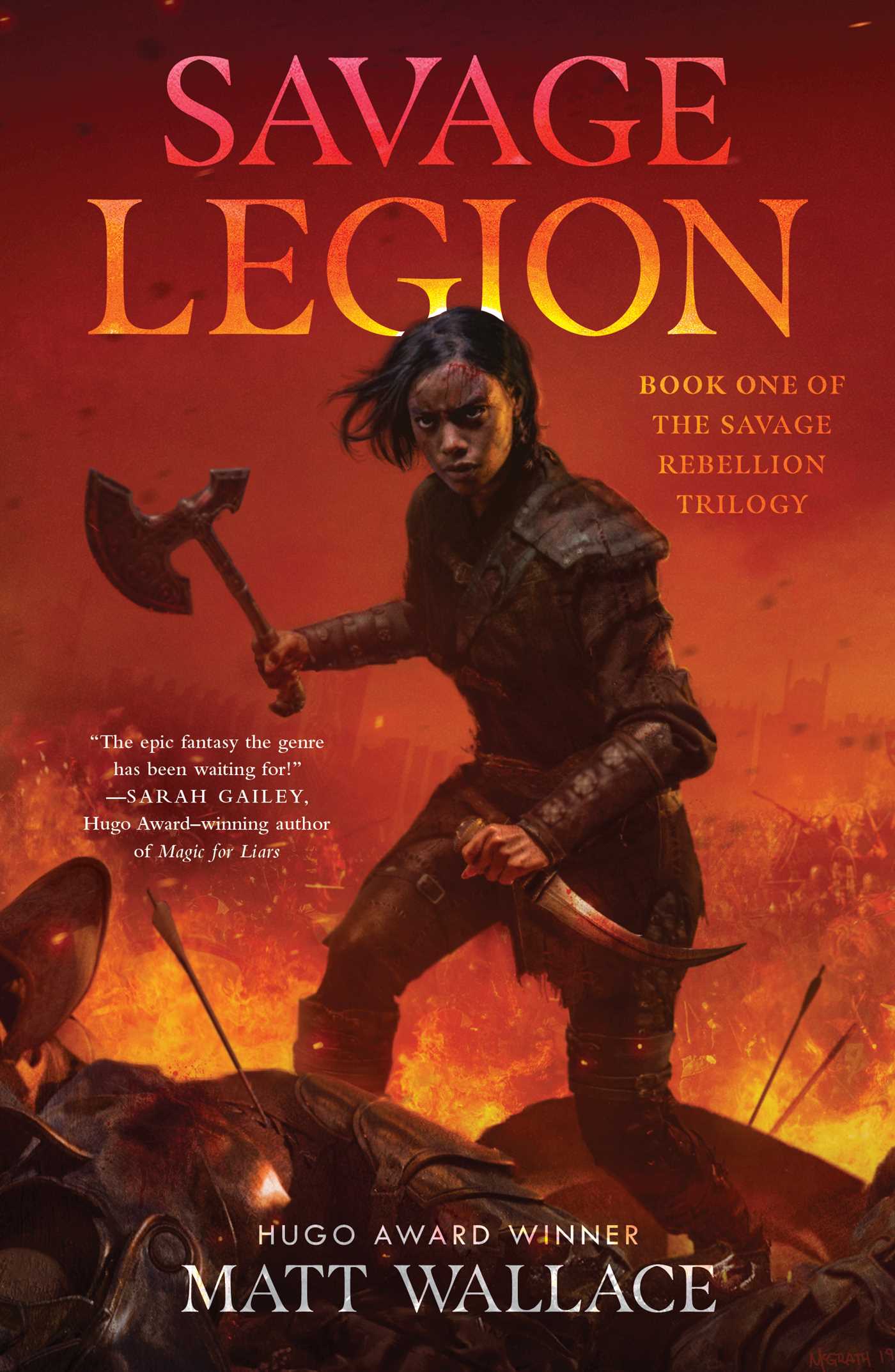
I love a good, thick fantasy novel, let’s just get that out of the way, first. And we were to judge Savage Legion by Matt Wallace only on its size, it would be a winner.
Fortunately, it’s got a lot more going for it. It’s funny, has great characters and was just overall fun to read.
Today, we’re going to break down why Savage Legion works. And if you haven’t read it yet, we’ll also be talking about why you should.
The first thing that really stuck me with Savage Legion was that it’s set in the present tense. This was a weird decision that was, frankly, a bit jarring at first until I got used to it. It was one of those brave decisions that we all want to make, but we’re too scared to.
It did, as I said, take a bit of getting used to. But once I was accustomed, it was great. I felt more in the moment. This was not a tale being told. It was a story that was happening right as I was reading it.
Now, am I saying everyone should start writing all their books in the present tense? No, probably not. But it wouldn’t hurt to take a few artistic chances. They might lead to the best thing you’ve ever written.
Now, let’s talk about Taru. Taru is the first and only non-bionary person I’ve seen in a fantasy book. And instead of their whole story being about that, they’re an actual person who has thoughts and opinions outside of their sexuality.
What a concept!
I’m sure I’m missing a ton of non bionary characters out there, but the only one I can remember was on an episode of Bones. They were not handled well, to say the least.
Taru is loyal, funny, brave and scary as hell. And if you want to write about a non bionary character, this is how you do it.
Another thing done well in this book is the world building. This world, and the city of Crache feels real. It feels like something that would evolve in our own world. The politics, because there’s a lot of politics in this book, make perfect sense. The enemies battling Evie and the other savages feel real. And when the characters, one by one, come to horrible realizations about their government and the people who run it, that feels real too.
Finally, let’s talk about connecting plotlines. Early in the book we’re introduced to three very different women. Evie, Dyeawan and Lexi. It’s only as their stories progress that we find that they are very much tied together in the deadly web those in power are weaving.
Now, I’ve seen this done well and I’ve seen it done poorly. I’ve seen it done as a plot device to simply show the world from diffrent points of view.
That’s not what’s going on here. This is giving vital understanding of the scenes and plans unfolding that we just wouldn’t have with just one character. While the three main characters meet face to face only once or twice, their stories are barreling head on towards each other. I’m honestly not sure who’s going to be enemies or allies when that time comes. And that’s the sort of thing that gets a reader itching to read the next book.
So that’s why Savage Legion works. It takes chances, it depicts people from different walks of life well, and it shows multiple plotlines coming together in surprising and wonderful ways. But now I want to hear what you think. Have you read Savage Legion? Why do you think it works? And what would you like to see me talk about next? Let us know in the comments.
Support Paper Beats World and get posts add free and two days early when you subscribe on Patreon. And get bonus content.
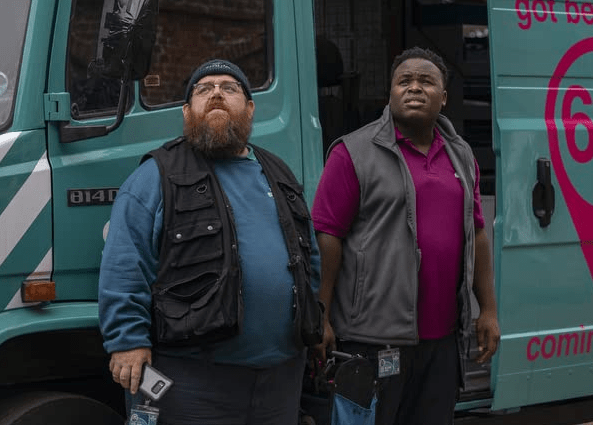
Say what you will about Amazon (and I do) but they are putting some of the most original, creative and brave shows out there right now. I’ve already talked about several of their shows and why they work. And today we’re going to talk about another one. Truth Seekers.
I won’t lie, I was first drawn to Truth Seekers because I am a huge fan of Shaun of the Dead. I tend to have certain actors that drive me to watch anything, and Simon Pegg is one of those actors. (He’s also amazing in Star Trek.)
Sometimes that leads me to watch some shitty things. Truth Seekers is not one of those times.
The story of season one is thus. Gus, a cable repair tech, is saddled with training a new partner named Elton.
Elton John. Yes, that’s real.
This is stressful for Gus because he likes to work alone. But it’s also getting in the way of his ghost hunting side gig.
Yes, Gus is a Youtube persona who hunts for ghosts.
This is all well and good when he’s posting time-lapse videos of a door opening by itself. It becomes quite another sort of adventure when the ghosts start acting like they’re in a horror movie and not in an episode of Ghost Hunters.
So let’s talk about the three biggest reasons Truth Seekers works.
The characters
Okay, I point out characters in almost every single why it works post. There’s a reason for that. This might be an unpopular opinion, but I don’t care. A good cast of characters can save a dull story faster than the other way around.
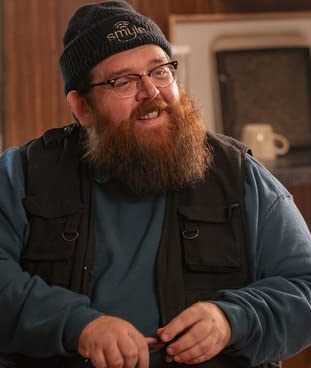
Every one of the characters, from main character Gus to Elton’s agoraphobic sister Helen, every character feels real. Everyone feels like someone you might honestly meet on a day to day basis.
More than that, though, is the interactions between characters. Gus is devoted to his dad, even though they fight constantly. He misses his wife every day, and he’s not the least bit shy about it. Elton and his sister have a relationship that gets better the more you learn about them.
I cared about each of these people. I wanted them to succeed. I wanted them to be okay. There wasn’t a single character I didn’t believe to be an honest person. This is because we see the bad along with the good. We see selfishness, anger, pain. But these aren’t just traits thrown in so the authors could say they made a character with good and bad traits. The flaws and strengths of each character made sense given what they’d been through.
Everyone’s got a secret
Mind you, my opinion of these things came from watching the whole first season. It takes that long to get to know each character’s true motivations. Why does it take that long? Because everyone is lying to each other all the time.
Not for cruel or selfish reasons. The reasons for the lies are best left discovered by the viewer.
This works so well because there are so many secrets waiting to be discovered. And every secret is a payoff for the viewer. These payoffs are scattered through the season, keeping the viewers guessing while doling out bits of satisfaction as we go along.
The ending is shocking but makes total sense
This is something I love in fiction. Something so hard to do. The ending of this season is a twist. It’s a hell of a twist and I don’t dare ruin it.
That being said, once you know the ending you’ll see all the little clues that led up to this making perfect sense. It’s hard to do. But if you can create an ending that is surprising but also makes sense, you’re golden.
So what do you think? Have you seen Truth Seekers? Do you think it works? Let us know in the comments below.
You can support Paper Beats World on Patreon and Ko-fi.





 Paper Beats World
Recent Comments