Writing nonfiction often gets a bad reputation. Lots of authors think it lacks the creativity and storytelling of fiction.
And I blame the public education system.
English class taught me to love books and hate nonfiction writing. It kind of made me hate writing anything I was going to turn in for a while until I learned to work with the system.
The problem is that not everyone works with the system well. And when you’re writing an essay for English class, it’s fairly dull work.
It’s boring to write and it’s boring to read. I’d think teachers would assign different topics that encourage kids to explore creativity. But then, teachers don’t usually make their lesson plans.
Here’s the thing, though. Writing a nonfiction book is not the same as writing a school essay.
It’s not a school essay because you’re writing about something you have a passion for. Unless you were very lucky, I’m assuming you didn’t like most of your school essays. But a nonfiction novel is about a subject that you care about enough to live and breathe.
At least it had better be if you’re going to successfully write about it.
You’re excited about your topic. You’re passionate about it. And the language you use needs to reflect that.
Language and word choice is one major way we can utilize creativity in nonfiction pieces. When someone’s reading your piece, they should be able to feel your excitement. They should feel your love.
Not for them. That would be weird. For the topic.
Another thing that pissed me off about school essays was the strict reliance on templates. You know, a standard intro, key topics and then a closer.
Okay yes, I use a loose version of this for writing blog posts. But I don’t have to. And I certainly don’t use them when writing nonfiction.
If you want to write great nonfiction, throw out the rules. Your work doesn’t have to fall into neat paragraphs. You don’t have to discuss things chronologically if that doesn’t make sense.
The book is your own. You are an artist. Free yourself from the shackles of topic sentences.
The most important thing to remember is this. Your nonfiction books are meant to convey information. That’s its main purpose. But it’s not its sole purpose. Your book also needs to be entertaining. It needs to be fun to read.
As you might have noticed, we’re more than halfway through 2021. And I, gasp, haven’t launched a book yet.
For those of you keeping track, I’ve launched a book every year for the past five years. Often, more than one.
Well, I have some bad news and some good news, you guys. The bad news is, I’m not launching a book in 2021.
The good news is, I’m launching a podcast instead. The even better news? It’s based on my most popular short story ever.
You guys, Haunted MTL is launching a podcast that I wrote called AA on September second.
Yeah, that’s happening.
When Josey moves to a new town, she finds that she can’t escape her demons. She needs a meeting. But the one she finds isn’t the one she was looking for.
She discovers a community of aliens, hiding in plain sight. Josey is thankful to find a group of people who accept her, including a new roommate and a cute guy.
But the community isn’t without its darkness. And they have their enemies. Josey soon finds herself caught in a war that she barely understands, but can’t help but join.
During this war, Josey learns that the alien community is hardly the only thing unexpected in her new home. She stumbles into one dark place after another, realizing that small towns hold more secrets than outsiders could ever imagine.
I originally published AA as a standalone short story with Solstice Publishing. And I’m pretty proud to say it had a good reception. I even had one delightful commenter on Amazon say they thought this would be a great tv series. I don’t know who this person is, but I will love them for the rest of my life. And yes, this did inspire this idea.
AA includes some amazing voice talent. I play a few characters, of course. But you’ll also hear the voice of my talented and amazing co-star of Off The Bone, J.M. Brannyk.
Along with us, you’ll hear Jim Phonix, Ev, Jennifer Weigel, and Kal Scarlett. This is such an awesome group of voice actors that I was blessed to work with. They’re also great writers, artists, and critics who share amazing content every day on Haunted MTL.
AA is creepy fun. It’s about addiction. It’s about being new in a small town. It’s about the dark shadows in hometowns that we all know but don’t talk about. It’s about all of those things and more, and I think you’re going to love it.
Stay tuned for more info as we get closer to the release date. I can’t wait to introduce you all to the world of AA.
Writing a nonfiction book is a world away from writing a fiction book. As I travel this brand new terrain, I’m taking you along for the ride.
Don’t forget to read part one of this series, Research, if you missed it.
Today we’re talking about one of my favorite parts of writing a nonfiction book, planning it.
Don’t laugh, I’m not joking.
Planning a nonfiction novel is designing the skeletal system of the whole book. You’re figuring out what’s going to go where as you gather information and write content. It’s like the sketching a painter might do before beginning a painting.
When planning a nonfiction book, I find it’s best to start with your goal. When I’m working on an Off The Bone episode, I always remember my main goal is to provide the background you might not know about stories you probably love.
Knowing the goal of your project will guide you through the whole process. Is your goal to convey information? Do you want to inspire others to act? Are you sharing a personal story to convey comfort and comradery? It doesn’t matter what your goal is, so long as you have one. Otherwise, why are you writing a book at all?
I know this kind of sounds like a school essay. I think we all learned these sorts of essay writing styles. An informative essay, entertaining, persuasive. And yeah, it kind of is like that. It’s also super not like that, but we’ll talk more about that in a future post.
Once you have your goal, it’s time to make your outline. Now, the information going into your outline is going to vary wildly depending on what kind of nonfiction book you’re writing.
The project I’m working on right now relies a lot on personal essays. They tell a story. So, it was easy to use this as a large part of my outline. Through this, I add in interviews and helpful (hopefully) charts to support the points I’m making in the book.
I made my outline on Notion. You can use any outline software or even pen and paper. But I’ve been loving Notion for my project organization. (If you want to see a post about how I use Notion in addition to my bullet journal, let me know in the comments below.)
The outline helps me out through the entire project. I can see easily how much work still needs to be done on the book. I can also see at a glance if the book is a little unbalanced. For instance, if I see that I have a lot of personal essays, I know I need to set up more interviews. If all of my interviews are personal ones, I know I need to hit up some professionals.
It’s also kind of inspiring to watch my outline fill out as I work. You all know I love visualizing progress.
I have just one more bit of advice for planning your nonfiction novel. It might be the most important bit of advice yet.
Leave room for what might surprise you.
You’re going to do a ton of work on a nonfiction novel. Like, I don’t think you realize how much work goes into this. And as you do this good work, you’re going to find things that surprise you. That might throw your entire plan totally off the rails. And I highly suggest you make space for that.
Or, as it’s hard to leave space for the unexpected, I’d encourage you to be flexible. You never know what you’re going to learn. And nothing is ever set in stone until it’s printed.
I hope that you’ve enjoyed this series so far. I’ll see you next week. And if you have any questions regarding nonfiction writing, feel free to leave them in the comments below.
Most of you know me as a speculative fiction author and blogger. But I’m much more than that. I am a Gemini after all, duality is in my very being. So I am a speculative fiction author and a blogger. But I’m also a critic and podcaster. And as if that weren’t enough, I’ve decided to add nonfiction author to my list.
That’s right, I’m working on my very first nonfiction book. It’s an emotional project that I’m not ready to talk about publically yet.
Writing a nonfiction book is totally different than writing fiction. And there’s been quite a bit of a learning curve. I’m writing something where facts matter, statistics matter. I need to get things right. But it also needs to be entertaining and people need to want to read it.
I’m learning a lot in this process. So I thought I’d do a series on nonfiction writing.
Today, we’re going to talk about where it all begins, research.
Yes, I do research things when writing fiction. But it’s not the same. If I mess up a fact in a fiction book, most people aren’t going to notice. Or I can just say this is a fictional world and this is accurate for the book.
Nope, none of those cop-outs exist in nonfiction. Here’s what you do instead.
Know what you’re looking for before you start researching
For the sake of this series, let’s say you’re writing a book about how crystals have been used by different cultures through the years. That’s not what I’m writing, it’s just a handy example. Before you start diving into research, have an idea of what information you’re looking for. I found it best to have certain questions I wanted answers to. I kept track of them at the beginning of my notes. (Don’t worry, I’m doing a whole post on organizing your notes both digitally and physically.)
This keeps you from getting too far off in the weeds while you’re researching. Because if you don’t know what you’re looking for, then you’re looking for everything.
Of course, you’re going to find new things as you learn. New questions you didn’t even realize existed. And as you do, feel free to add them to your list of questions. But at least having a basic idea of what you want out of your research at the start will help you with some direction.
Vet your sources
Some people think they know everything about a subject there is to know. It does not matter what subject we’re talking about. Someone out there thinks they are the expert. That someone is usually a Youtube commenter.
I kid. But you must know where information is coming from before you believe it. If you’re using a book, who is the author? Are they a specialist in this topic? Where did they learn it from? If you’re on a website, do some basic digging. Is it a reputable website? Do they cite sources? Are they the original source? Basically, where was this information before it was in your hands?
I did this a lot when I was researching for the first season of Off The Bone. It turns out there’s a lot we don’t know about HH Holmes, for instance. But lots of dumb schmucks on the internet think they know. I do not want to be one of those dumb schmucks.
Double-check facts
On a similar note, let me advise you to double-check facts, even if you think you know them.
I’ll use Off The Bone as an example again. When I was researching for the episode about Dauphine LaLorie, I thought for sure she’d had some sort of run-in with Marie Laveau. They never met. I’m pretty sure I got that from American Horror Story, Coven. I’m really glad I double-checked that little ‘fact’ before I just threw it out there.
Don’t lean too hard on books
A lot of people have written a lot of books about a lot of topics. So no matter the topic of your nonfiction book, others are going to cover at least similar topics.
And if all you do is regurgitate information from the other books, that’s a waste of time. It’s also kind of shitty behavior.
It’s much better to do the research yourself. I’m not saying that you’ve got to reinvent the wheel here. If you’re writing about crystal lore, you don’t have to ignore historical knowledge. But you also want to go talk to people who know about these things. At the very least, you want to add a new perspective to your topic. Otherwise, why the hell are you writing the book?
But at the same time, read a lot of books
All this is not to say don’t read books about your subject. But maybe be a little more varied about the books you read. Let’s go back to that crystal lore example. (Is it weird that I kind of want to write that now?)
Maybe you can research what other kind of lore a culture had. Or what minerals were around them. What was more or less valuable? What kind of society did they have? What were their means of saving stories and information? All of these things can be avenues of research that can dramatically change how you write your book.
Keep careful track of all of your sources
You’re going to learn a lot for your book that comes from other people. I mean, that’s the whole point of this post. And since this information was not yours, but obtained through working with others, you have to give them credit.
There’s always a source list at the back of books for this reason. When I’m doing an episode of Off The Bone, JM and I include links to our sources. We want you to know where we got the information from.
So for the love of Gatsby, write down your sources and keep very careful track as you go!
Never for a second think you’ll remember later where you picked up some obscure fact. Write it down. Get a link to the site. Write down the author, book title, edition and page number. You will need it.
Personal stories are fine, but cannot be relied upon
Finally, let’s consider personal stories. This is also called anecdotal evidence. And it’s a tricky thing.
Lots of people will tell you to leave these kinds of things out altogether. But I’m not one of them.
Anecdotal stories are great for showing different sides to a subject. They give an emotional punch. They put a real face on your topic. They move your topic from the hypothetical to the relatable. And if you’re using an anecdote to do these things, you’re using them right.
If you’re using an anecdote to prove a point or a fact, you’re doing it wrong.
As House says, everybody lies. But even if your anecdote isn’t a lie, it might still be total bull. We don’t mean to lie. We just often see things differently than other people.
If you need proof, here’s an experiment. Think of something in your childhood. Some memory that you have a clear recollection of. Now, go as your parent about that memory. I imagine you’ll get a wildly different set of facts.
I’m planning on doing a whole series about converting to nonfiction writing. If you’ve got any specific questions or topics you’d like me to cover, please drop them in the comments. Until then, have a great day.
I know, I’m behind. But I finally just watched all of The Good Place in the span of like, a week.
I went into it knowing almost nothing about the show. I knew it was about ‘the good place’. That was it.
If you’ve never seen the show before, click away now. Because you don’t want the twists ruined. I mean, it would be almost impossible to ruin them all. My goodness, there are so many twists. But we’ll talk about that soon.
I understand entirely why people were so obsessed with this show. The writing was amazing. And as always, there’s a lot to learn from it.
Let’s start with the twists. Because, you consistently have no idea what’s going to happen next. I was blown away all the time, just by what they managed to sneak past me.
The twists work especially well because, when you look back, they make sense. And this is the tricky thing about writing twists. You want them to seem like they come out of nowhere. But if they don’t make sense, then they’re just jarring.
You learn pretty quickly while watching this to trust nothing. You don’t know who to trust. And honestly, you probably shouldn’t trust any of the characters. Everyone is lying pretty much all the time. To themselves, to each other. You’d think this would make the characters unlikable. But it doesn’t.
You know, characters make or break the show for me. And Elenore, Cheedie, Janet and the rest stole my heart every single episode. You hate/love the characters. And I think it’s because we’ve all been where they are. We’ve all tried to be better. We’ve all tried to help people. We’ve all found it difficult to do the right thing, no matter how hard we try. And for sure, we’ve all felt like we don’t belong. And so their struggles become your struggles. Their failures become yours. And their successes become yours as well.
Speaking of which. The Good Place called me out several times. Yes, I am one of those people who take their shoes off during long trips. I probably do any number of other things that will land someone in the bad place. The whole time we’re watching this, the darling husband and I kept giving each other pointed glances. It makes you second guess everything you’ve ever done. But in a non-judgy way. The show does that by poking fun at little things we all do. Things that probably annoy others, but we just can’t help ourselves. Bad little selfish habits that wouldn’t get you sent to the bad place.
Right?
Yeah, you’re probably fine. The best thing about The Good Place is that there is a really happy ending. Not like an over-the-top Adam Sandler ending. But also not gut-wrenching sad. It’s sweet, beautiful, perfect. Honestly, I couldn’t have asked for better.
Too often I feel like endings seek to piss their fans off. I know that doesn’t make a lot of sense, but it happens. How else could you explain the ending of Roseanne or The Dinosaurs? It is so nice to see a show not outlive its welcome, not get canceled, and have a real, solid, satisfying happy ending.
Have you seen The Good Place? What did you think of it? Let us know in the comments.
It’s that time again. July is a week away, and I’m getting ready to participate in Camp Nanowrimo.
I almost decided not to do it this year, to be honest. A lot is going on in my life right now. I’m working on some big projects for Haunted MTL. I have a pretty big personal project that I’ll talk more about early next year. And I’ll be going back to the office for my day job in July.
So why in the hell am I thinking of adding another major project to July? Well, as always, there’s a reason. I’m not just being self-abusive, stacking projects on top of myself until it all comes crashing down like Jenga bricks. This project is good for me. Here’s why.
I’d like to have some fun
Yes, writing is hard. Especially that second draft! But it’s also kind of the most fun thing? I don’t know, writing confuses me. The second draft has the bare bones of the story already there, but it needs so much work to get it right.
And in that work, nestled like opals in a mine, are a thousand aha moments. Realizing the hows and the whys and the wheres of the story. It’s like the best puzzle in the world. And I live for it, despite complaining about it like crazy on social media.
I haven’t been working on my novel as much as I want to be
As I mentioned, I’m busy as hell. And I love that I have the opportunity to do so much good work. I even got a screener for a show! I’m like an actual critic or something.
But I haven’t worked on my novel since I finished the rough draft in December. And that just doesn’t fly with me. See, this novel is important. And I’m going to be self-publishing it to get it right into your hands. And I think, I think, you’re going to love it.
So I want to work on it. And Camp Nano is a great way to make myself make the time.
I love the feeling of community
Why will Camp Nano inspire me? Because the feeling of community is amazing. I love that feeling when you put in your word count at the end of the day and see how all your writing friends did. We’re all working on different projects, all working alone. We may never meet in person. But we’re still working together. And that just never gets old.
I’m never really myself unless I’m working on a novel
I am a writer. And a critic, and a podcaster. Most of all, I am a writer. And I am just never, ever myself when I’m not working on a book. I learned this in the years before I started this blog. I am happiest when I have a novel.
And so yes, I am busy. And yes, I am doing all sorts of other writing. But this is writing that is just for me. One day, it will be for all of you.
But for now, my novel is for me. And I need to take the time to write for myself. Even if it’s just during July.
I hope to see you at camp. You bring the chocolate, I’ll bring the marshmallows.
We’ve come to the end of the Why Star Trek Works series, and it seems appropriate that we’d end with the latest of the shows, Picard.
I’m not going to lie, I was worried about this show. When I heard they were getting Patrick Stewart to reprise his role, I worried this was going to be cringy. I worried it was going to be the science fiction equivalent of The Mule with that ridiculous threesome scene with Clint Eastwood.
I should have known better, of course. Picard was great. It works exactly as it needs to.
Picard is a direct follow-up to Next Generation. It begins with Captain Picard, retired on his family’s vineyard. Because of course, his family has a vineyard. He seems content, at first. We find out soon enough that he’s haunted by his past decisions. And when some of them come back, he finds that he must put a crew together and set things right.
If you’re expecting to see Captain Picard, the stuffy in charge man who always has a diplomatic answer for everything, you’re wrong. He’s older, and he’s grown. That’s one of the reasons this show works. Sometimes we need a reminder that even adults have things to learn. There’s always another stage in our lives to grow towards. And Picard has grown past his former bigotry, his coldness. He’s starting to see how always focusing on the mission has hurt people he’s loved.
But he also sees the good he did, despite that. Which I appreciated.
One thing Picard had going for it that a lot of other shows don’t was the age of the main character. We don’t often see heroes this age. And frankly, that’s a sad thing. I feel like we always get the same sort of story, and few of them have anything to do with people in the later parts of their lives. It’s no wonder we’ve got a whole society of people terrified of getting older. If fiction is to be believed, you stop being the main character of your life and take on a supporting role. Which deprives us of a whole collection of stories.
Another thing Picard did well was the fan service. No, I’m not talking about nudity. I’m talking about moments that only mean anything to the long term Star Trek fans. I like that it had these fan service moments, while still being its own story. We see old characters and old stories coming to their eventual conclusion. But we also see new characters, new lives. We see old battles from different perspectives. What this does is simple. If you’re a Star Trek fan, you’re going to understand and value this show on every level. Moments that might be meh to a new viewer will break your freaking heart. But if you’ve never seen an episode of Star Trek before, you’re still going to like it.
There’s a problem with that, too. At least, if you as a writer hope to learn from it. Only a show with this foundation could have pulled this off.
As I said, there are moments in this show that made me bawl. Mostly dealing with the Borg. These moments weigh years of storytelling behind them. Decades. Two or three shows had to be successful, have beloved characters and set up long-term storylines for this to work. And that’s something that, if you’re just starting, you can’t do yet.
What you can do, though, is prepare for it. If you’re writing a series in a world you think you want to explore more, maybe prepare for this sort of thing. Write worlds that can be seen from multiple points of view. The best way to do this? Remember that no story is black and white. Everyone sees things from their perspective. And if you do things right, you can get your fans to see that too.
That’s really what makes Picard, and Star Trek in general, work.
Well, we’ve come to the end of our series. I hope you’ve enjoyed reading it as much as I’ve enjoyed revisiting some old, and new, favorite shows. Let me know in the comments which one is your favorite Star Trek show.
Representation matters. We know this. And as nerds, we know that the speculative fiction genre is full of great, and not so great, representations of the LGBTQ+ community. So today, I wanted to put a spotlight on my top six favorite examples. These are characters that are not caricatures, not stereotypes. They’re real, honest people who happen to also be LGBTQ+. I’m only talking about speculative fiction characters, so we won’t be talking about characters from Brooklyn 99 or The Loud House. Though both have several great examples.
Bess Till, Snowpiercer
If you want a full review on Snowpiercer, I’ll be doing that over on Haunted MTL later this month. But for now, let’s just talk about Bess.
Bess is a great character for a lot of reasons. She starts out being pretty much a pain in the ass. She, like everyone else, looks down on the people in the ‘tail’. Eventually, she becomes one of the main character’s strongest allies.
Bess has a relationship with a woman in the second class of the train. They’re hiding their relationship because Bess is from third class, and such relations are frowned upon.
But her character isn’t defined by this relationship. She’s defined by who she is, a badass fighter for equality.
Jadzia Dax, Deep Space 9
Alright, this is a bit of a stretch but hear me out. Jadzia Dax might be one of the earliest transgender characters ever. They are essentially two (or more) souls in the same body. Many people see Jadzia and interact with them as a female. Some, who know Dax, see them as a man. But Jadzia Dax responds just the same to both.
Taru, Savage Legion
I talked about Taru during my Why it Works post about Savage Legion, but I’d be remiss not to mention them again. They’re one of the first non-binary characters I’ve ever seen in fiction. And they’re amazing. They’re loyal, funny, smart, and scary strong.
Yes, being non-binary is part of their story. But it’s only a part. The larger story is one of loyalty and struggles to protect the poor districts they were raised in.
April May, An Absolutely Remarkable Thing
April’s a wonderfully flawed character. She’s quick to get caught up in all the craziness of THE CARLS. But she’s just as fast to sacrifice her whole life to save the world.
With her girlfriend, their potato plant, and CARL, they manage to save the world from something so much bigger than they could ever imagine.
Kisha, Alice Isn’t Dead
Well, and also Alice, I guess. But Kisha’s the main character.
I talked at length about this podcast on Haunted MTL. But basically, it’s the story of a woman driving across America to find her wife. Well, as Kisha says, this isn’t a story. It’s a road trip.
Kisha is in love with Alice, but soon enough her mission isn’t just about finding her. It’s about all the dark strange corners of the country that are hard to explain. It’s about fighting an enemy that is so unfairly equipped to beat us that we can’t help but battle against injustice. It’s about the magic of a rest stop at three in the morning, the shadows in the booths of roadside diners. It’s about America.
So what do you think? What’s your favorite LGBTQ+ character? What’s one that you think needs a little extra love? Let us know in the comments.
Premiering in August of 2020, Lower Decks is different than the other Star Trek shows we’ve talked about in this series so far. But also not as different when you get into the details.
It’s not set on Enterprise, but many of them haven’t been. Lower Decks is set on the U.S.S. Cerritos. Of course, it’s animated. But that’s not the big difference. No, the real difference is, in my opinion, why Lower Decks works so well. Let’s discuss.
We should start, as I always do, with the characters. The four main characters, Beckett, Brad, D’Vana and Sam, are all beautifully flawed. They’re neurotic, annoying, party lovers. These aren’t characteristics we usually see in Star Trek characters. Sure, Kirk was a man whore and Picard had a stick up his ass. But they were never what I’d call relatable. I can relate to D’Vana in particular. She’s socially awkward and loves her work. She gets way too excited. But the people who can up with her energy are rewarded for it.
There’s something great about looking at a character and seeing parts of yourself reflecting.
Lower Decks also shows a different part of the world than we’ve ever seen. This, I think is really where the show differs from the others. The main characters have always been mostly bridge officers. And, you should excuse me for saying, they’re kind of bitchy about it. We can even see this in an episode of Next Generation when Picard sees what his life would have been like if he hadn’t gotten into a bar fight while he was in the academy. He finds himself no longer a bridge officer and quickly realizes something. His friends are kind of dicks. And yeah, if you watch through the show, our beloved characters are not nice to the people who work under them. I think it’s great to see the lives of the grunts. The people who are doing the day-to-day work. Not the people living in the posh cabins and making the big decisions.
Finally, Lower Decks manages to do something that I always want to do. Something some of my favorite writers manage to do well. It has a sense of levity, but it can still bring emotional gripping moments.
It’s important for a character if they’re going to be funny, to have a depth to them. No one’s the comic relief all the time in the real world. That buddy you’ve got who always makes you laugh? There’s no way she’s always like that.
Creating a character like that is hard. You’ve got to start carefully, making sure that we see their pain without really seeing it. The best way to handle it is small warnings, little signs that are only really visible in hindsight.
It’s hard, and it takes a lot of editing. But if you can manage it, it’s great.
We’re almost done with this series. It’s been a lot of fun. Next week we’ll be talking about Picard. But if there are any Star Trek shows I missed that you’d like me to cover, let me know in the comments.
You can support Paper Beats World on Patreon. Or, buy me a cup of coffee on Ko-fi.
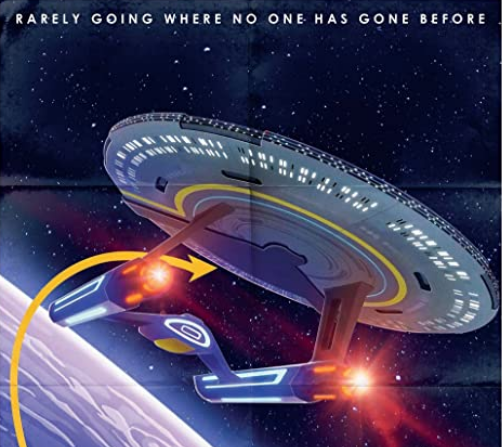
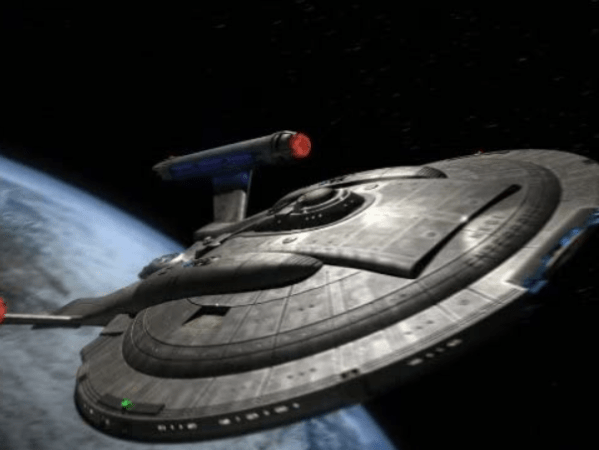
Full disclosure. All the other shows in this series have one of two things in common. Either they were a childhood favorite of mine or a recent love. I’ve only seen bits and pieces of Enterprise. And there’s a chance that, even if you’re a big Trek fan, you haven’t seen much of it either.
Enterprise has a hell of a bad reputation. Trek fans kind of hate it. And so, for a long time, I didn’t bother to give it the time of day.
I should have. Enterprise has all the same qualities as the other Star Trek shows. It’s got great storytelling, fun characters who grow and change as people. It’s funny, it’s smart. It has that same fast and loose hand with science that we’ve all come to love.
So why is it so disliked? And more importantly, how can you as a writer avoid these same traps?
It only makes sense to begin at the beginning. In this case, we’re talking about the theme song.
Oh, this theme song! It’s like someone ate the theme song for Full House and threw it back up.
Not only is the song a bad eighty’s pop ballad, but it also has nothing to do with the show. It doesn’t fit the style at all.
This alone was enough to throw people off. Okay, well what does that have to do with writing a book? Let’s compare a theme song to a cover. A cover is something that everyone tells you not to judge your books by, but you do.
Don’t feel bad, I do it too. And at least two books I’ve loved recently have caught my eye because of their cover.
Your cover matters. If you’re an indie writer, make good use of that. If you work with a publisher, then use whatever pull you have to make sure you love the cover.
Now, let’s talk about the ending. And by that, I mean the last episode. And I’m not going to lie, you this is a problem that a lot of shows seem to have. No one seems to know how to end a show without pissing everyone off.
I’m not talking about endings that weren’t supposed to be endings, like Chuck or Santa Clarita Diet. I’m talking about endings that knew damn well they were going to be ending. Like Game of Thrones or Roseanne. Shows that decided the best way to end was to kick their fans square in the junk.
That’s the kind of ending Enterprise has. And a bad ending is always bad for business.
I don’t mean a sad ending. A good sad ending can rip someone’s heart to pieces and they’ll thank you for it. Good examples of this are Flowers for Algernon or Lord of The Rings. No, I mean a lazy ending, that makes the reader or watcher feel dumb for putting so much time in. Or an ending that doesn’t make any sense. Anything that falls into categories like this.
It was all a dream.
The main character’s been in a coma.
The whole story took place in a little boy’s mind while he looked at a freaking snow globe.
It was all a playback on the holodeck.
These are things that make fans hate you. They make fans want to hurt. Since that’s legally frowned upon, they will do the next best thing. Trash you and your work all over the internet. And word of mouth matters.
Word of mouth, after all, is why I didn’t watch Enterprise for so long. I’d just heard too much bad about it to think it could be good. And that’s a really hard thing to get over.
That’s it for this time guys. Next week we’ll be talking about a new favorite of mine, Lower Decks.
Thanks for reading! You can support Paper Beats World on Patreon or Ko-fi.








 Paper Beats World
Recent Comments