An Open Letter To The Teacher Who Told Me Not To Be A Writer

When I was thirteen, I was subjected to the same ‘career planning’ we subject everyone to at that age. It’s kind of messed up that we ask kids that age to start making real decisions about their future. I have kids that age. I don’t think they have the slightest idea what they want out of their lives, except to be allowed to stay up as late as they want and drink Coke every day.

I was actually the exception to the rule; I knew just what I wanted to be. I wanted to be a writer.

But that’s not the answer a teacher wants to hear at thirteen. It’s not ‘realistic’ at thirteen to want to be a writer. So, when I told my English teacher this, she kindly suggested to me that it wasn’t a viable option. Writers don’t make a lot of money. And if they do make money, it takes them years and years to make it.

I think she talked to me about journalism. I think I folded and told her I wanted to be a vet just so that she’d stop gently breaking my spirit.

That year I shadowed for a vet’s office and decided that wasn’t for me. Too much death for my gentle soul. I joined Jr ROTC and the school paper, still trying to figure out something I could do that would make me happy. I doubt I need to tell you that I wasn’t the military sort. Journalism was fun, but I didn’t see it being a lifelong love.

Of course, you know how the rest of the story goes. I had a rocky couple of, um, decades. But now I am, in fact, a writer. I still have a full-time day job, that’s true. But I am a published author. And I wish that I could talk to that teacher, who told me how wholly unrealistic this life would be. So I decided to write her an open letter. Here it is.

I guess that nearly 20 years is a long time to hold a grudge against someone who only meant well. It’s been a long time, and I guess there’s a good chance you don’t even remember me. You’ve had so many students come and go, I’m sure. And, in fairness, I bet you didn’t ever mean to dash my dreams.

Actually, you didn’t. You told me that people don’t make money writing, at least not for a long, long time. You told me something that I think every writer needs to hear, but maybe not so early.

I wish that you would have done something more, something better. I wish that you would have talked to me about what I could do. I wish that I’d had someone, anyone, to take me by the hand and explain that money wasn’t going to matter. That I could always make money in other ways. I wish that you, and all teachers, were more in the habit of explaining how someone achieves the big dreams. The shoot for the sky dreams. I know it was nothing personal when you told me my dream wasn’t likely to happen. I imagine you’d have said the same thing to any child who told you she wanted to be a writer, singer, artist, actor. Not the kids who want to open their own restaurants, or the ones who want to be lawyers or police officers. There’s a simple, straight path to those jobs. You might still fail, sure, but the chance for failure is significantly less. Most people who want to be lawyers become lawyers if they can afford to go to school. Most people who want to be writers won’t be writers.

And there’s not a lot of room for careers where you’re probably not going to succeed. What I needed was for someone to say, “Look, you’re not going to make a lot of money at this right off the bat. For a couple of years, maybe decades really. So, the first thing you do is that you get yourself a fallback. You start applying for grants right now, and maybe you’ll get a couple. But you might not. Even if you do get grants, they might run out before you’re making enough money writing to keep yourself fed. So here’s what you do. You find a job that you like, that pays the bills well enough. You get that job to keep a roof over your head, and then you start writing. You write every day, and you treat it like it’s going to be the thing that you do for the rest of your life. Be good at your day job, because there’s a good chance you’re going to be doing it forever. But maybe there are more important things than money. Maybe you’ll find that you really like what you’re doing, and you’re happier doing that than you ever could be doing anything else. And who knows, maybe you will make it big, and the dream job can be the only job. It’s always possible, don’t think that it’s not. But you’ll for sure never get it if you don’t try.”

Maybe you can’t say that to a kid. Maybe a college teacher could have said it but a high school teacher can’t. Maybe that’s the problem we need to be fixing.

I want to tell you that I’ve almost made it, anyway. I’m not making money writing, but I am writing. People are reading what I’m writing, which is the more exciting thing. I’m doing what I love and letting the money follow.

I want to tell you that, if you can, help the kids with the unrealistic dreams. Maybe they won’t succeed, and they’ll end up in a dead-end job.

Or maybe they will succeed.

Thank you for teaching anyway, it’s a damn hard job.

Love,

Nicole.

Want to keep up to date with PBW, as well as get info on indie authors besides me? Click here to sign up for the bi-weekly PBW Update.
Rick, a Character Study

Warning: This is probably the most offensive, inappropriate show that we’ve ever talked about here on PBW. If you haven’t yet seen Rick and Morty, I’m warning you now that there is violence, offensive language and lots of gross sexual depravity. This is not a cute show about a boy and his grandpa.

If you have seen it, I don’t have to tell you that, despite its graphic vulgarity, the show is brilliant. You’re probably dying for the new episodes to start this summer, wondering if the April Fools Day episode was canon (because there’s a rumor that it’s not,) and wishing that there were more than two seasons to re-watch while we wait.

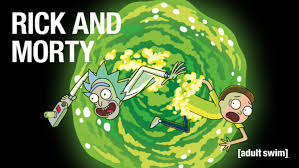
I love this show, and I think it’s a lot smarter than people give it credit for. And, as with everything I love, I have to pull it apart and see how it works. As I did this, I realized that the main reason this show works, for me at least, is the character of Rick himself. So, instead of picking apart the whole show, I just want to talk about Rick. Because he’s a fascinating character and the sort that you don’t often see as main characters in shows.

He’s a horrible person.

Rick is not a hero. He’s not even an antihero most of the time. He’s selfish, offensive and interested only rick post 2in his own happiness. In fact, it could be said that Rick is often a bad guy. He created and enslaved a whole race just to be his car battery. He coldly sells weapons to assassins and kills without mercy or remorse. He has actively stated that the only reason he takes his grandson with him anywhere is because he works as sort of a shield, keeping people from detecting Rick. The only person he seems to genuinely care about, most of the time, is his daughter, Morty’s mother Beth.

This does not make him an admirable person. I know that some people would tell you that there’s a part of everyone who would love to be Rick; acting without a conscience, without fear of repercussions. Forgive my presumptions, but I think that’s bullshit. Maybe I’m just naive, but I think most people wouldn’t want to cause harm to most people. I can certainly think of people who don’t have that moral compass, and I can think of people I personally wouldn’t mind causing harm to. But to say that people like characters like Rick because we’d like to emulate him I think is completely wrong.

I like watching Rick because he is different than me. I’d like to write a character like that for the same reason. I enjoy new experiences, things that are foreign and different than my every day. I enjoy stories in which I don’t know what’s going to happen next. If a character is like me, I have a pretty good idea of what she’s going to do. While I’ll connect more with a character like that, I won’t be as compelled by a character like that.

His past, of which we know so very little.

The unknown is a lot of why this character works, actually. If you’ve watched all of season one and two, you know that we don’t know a lot about Rick’s past. We don’t know why he wasn’t in Beth’s life until recently. We don’t know why he’s living with her family (though I think it’s got a lot to do with the fact that he’s got to have Morty around to shield him.) We don’t know a lot of why the large governmental agency wants to arrest him. And we’re just now starting to get hints about some great galactic war he was in. Hell, we don’t even know who Beth’s mom is. (I’ve heard a theory that it might be Unity. I don’t know if I agree, but I think it’s an interesting idea. I think that Beth would have some sort of powers if that were true.)

The fact that this blog post has been full of fan theories should tell you what sort of reaction this causes in fans. It’s that same 1+1 analogy again. I want to solve the mystery; I want to know what’s happening! I want to know the juicy, probably really sad reason he left his wife and daughter. I want to know, if the April Fools Day episode was canon, why did Rick leave his wife and daughter?

Sometimes a story is defined by what we don’t know, or what we want to know, just as much as what we do know. In fact, not knowing the ending is a large part of why we keep reading or watching. Because if we already know the end, where’s the fun?

His interactions with Morty.

I mentioned earlier that Rick seems to only care about his daughter, Beth, but that’s not entirely true. It just so happens that she’s the only one he seems to have outward affection for. But we do see, occasionally, his attachment to his grandchildren. Especially Morty.

rick post 3It’s been clearly established that Rick has to have Morty around to shield him. We also know that there is an infinite number of Ricks throughout different alternate universes, with infinite Ricks and Mortys. There’s a memorable, and chilling episode in which this is discovered at length. Ricks don’t care about Mortys. But it’s made clear, in that same episode, that Rick not only cares about Morty but holds fond memories of him as a baby. While he manages to hide it most of the time, from himself as much as anyone, he really does care about his grandson. This is the speck of humanity that Rick needs to be a redeemable character, in my opinion. We can argue that he’s only kind to his daughter to have a place to live. While he is brilliant and doesn’t seem to have any trouble making money, he might find it easier to mooch off of his daughter and son in law.

It’s only with Morty that we see Rick be selfless. Not even both of the kids, though I suspect he would die to protect Summer as he nearly died to protect Morty. And it’s this shred of humanity, that redeems Rick and makes him a complex, dynamic character.

If you’re a fan of Rick and Morty, I suggest watching the episodes from season one and two again, as a writer. Pick apart Rick, see what makes his character work as well as it does.

Want to keep up to date with PBW, as well as get info on indie authors besides me? Click here to sign up for the bi-weekly PBW Update.

Rules in a Housefull of Artists

My daughters have always been interested in art. Painting, sketching, even a little bit of writing. I encourage this because I’m their mom and I want them to experiment with things. I also encourage this because I am an artist, a writer, and I would like them to be artists as well.

Having three artists in the house is challenging, though. A normal house with three women is loud, we’re loud and messy. No, we’re loud, messy and scatterbrained. As you can imagine, my husband is often moderator, critic and highly stressed out by all of us.

We’ve had to establish a pretty strict list of rules to help each other grow, and support each other. Also, not kill each other. Here are some of our artist house rules.

We don’t watch anything that we can’t pause.

Going to movies at theaters isn’t something we enjoy. We can’t stretch out, the snacks are expensive and there are people. But the biggest issue, the thing that really keeps nerds like us away from opening nights, is that we like to talk about what we’re watching. And that’s frowned upon. Actually, I’ve nearly been asked to leave a few movies.

So, it’s a rule in our house that, no matter what we’re watching, if someone has something to say we pause it. This can be for jokes, comments, full-blown discussions about the Holocaust. Whatever comes up.

We don’t have to like each other’s work.

But I’m their mom, everything they make is art, right?

No, not when they’re trying to get better. Not when one daughter is talking about teaching art and one is talking about having a show at the local art center.

Not when they’re serious about it. And the same goes for my writing. Yes, I do let my kids read my writing if they ask to. No, I don’t expect them to read it, ask to read it or enjoy it even if they do read it. They’re my kids, they don’t owe me that.

If you’re wondering, one kid does read and enjoy my work. One doesn’t. The one who does is mad I won’t let her see Starting Chains until it’s published.

We also don’t have to be assholes about it.

This is a rule more for my children than me. They’re sisters, after all, and sometimes they just don’t give a shit about each other’s feelings. In fact, sometimes they want to hurt each others feeling on purpose. Don’t judge. I bet Mother Theresa wasn’t nice to her sister either.

While the kids aren’t always good about it, we do try. If we have something negative to say about someone’s work, we try to say it nicely.

We all have to be open to criticism.

Which isn’t to say that we’re not allowed to criticize. As I said, we all want to be better. My kids love to find issues with my books, of course. I do make them prove it’s an actual problem, though. But we must have open minds when it comes to getting better.

We don’t mess with each other’s work.

No moving each other’s work. No scribbling in each other’s books. No anything like that. Pretty self-explanatory.

No piece of paper may be thrown away until everyone in the house has handed a chance to pass on it.

Not a lot of paper gets thrown away. Either there’s something important on it, or something important can be on it.

These are your pens, these are my pens and that’s how it’s going to stay.

I write and they draw. I don’t let them use my Le Pens and I don’t want to use their artist pens. But they’re also not permitted to use each other’s pens. We all have different opinions of how we should care for our pens. Keeping our supplies to ourselves prevents a lot of fighting.

Everyone pitches in with chores so that we all have more time to create.

No one in the house is big on housework. We’d all rather be drawing or writing. But I’ve taught my kids that if we all work together no one has to do too much.

We are artists, but we’re a family first.

Artists take a lot of pleasure in being independent. We all think that we’re lonely creators, tortured by our talent.

We don’t really deal with this crap in our house. We support each other, we look out for each other. We love each other.

If you’ve got a house full of artists, I suggest coming up with your own house rules.

Want to keep up to date with PBW, as well as get info on indie authors besides me? Click here to sign up for the bi-weekly PBW Update.

Blood of Dragons, on sale this weekend.

Hope you’re all having a good Mother’s Day. Just wanted to take a second to let you know about this book that a buddy of mine has on sale this weekend.

Drast and Tyran might be considered a bit black-hearted, or even immoral. Drast is cunning but reckless, hunting for admiration. Tyran is calculating but tactless, searching for affection. When the two brothers set aside their ambitions to fulfill their father’s desire for immortality, they readily discover many opportunities for redemption. Now, while wielding a powerful magic that drains their life, Drast and Tyran will embark on a maddening quest, facing skin-switchers, dragons, and the God of the Dead.51PXV+50fKL._SX311_BO1,204,203,200_


Here’s a link to buy it, if you’re interested.

And We’re Back

Hey, guys.

So, a long time ago I had an email list. I sent out a monthly newsletter called The Road To Full Time.

I stopped doing that over a year ago. At the time it was just too much in addition to everything else I was doing.

Today, I’ve decided to start doing newsletters again. I’m officially launching the PBW Update. Here’s why.

I often find myself missing out on content from some of my favorite bloggers because I just don’t remember to check their sites. I get distracted, life happens. You know how it is. I know we all have the same number of hours in our day as Beyonce, but she has a housekeeper.

So, I wanted to start this newsletter as a way to help you keep in touch. Every other Monday, I’ll send you a quick hello and a link to the three most popular PBW posts from the last two weeks. Then, I’ll tell you about any new indie writers I’ve fallen in love with.

Finally, if I have a book coming out or if my books are going to be on sale, I’ll let you know.

I’m promising you right now that the people on my email list are going to be the first to know about sales. All of you who read Paper Beats World will know before anyone who only follows me on social media.

I’m not going to spam you. I might do some email challenges later, depending on what sort of feedback I get and if I design one that’s worth your time. If I’m not doing a challenge, I’ll be sending one email, every other Monday.

If you’d like to sign up, here is a handy dandy link to the sign up sheet.

As always, thank all of you for the never ending support you show me.

Peace.

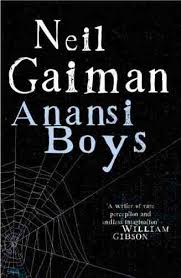
Picking Apart Anansi Boys

Yes, I am on a Neil Gaiman kick, if you’re wondering. Today, I’d like to pick apart Anansi Boys, book two of American Gods.

While this is book 2, I highly advise reading it before reading book one, simply titled American Gods. I ended up reading them out of order, and I’m really glad I did. While Anansi Boys is a great book, it lacks the depth and wonderment of American Gods. I don’t know if I would have enjoyed the book as much if I’d been expecting an actual sequel.

I will soon be picking apart American Gods if you’re wondering. But today, let’s talk about Anansi Boys.

Our main character, Fat Charlie.

Unlike Coraline, which we picked apart last week, Anansi Boys is very much a character driven story. While the death of Fat Charlie’s father is the catalyst, the rest of what happened would never have happened if the main character hadn’t decided to act. I tend to prefer character driven stories. I prefer believing that I’m in control of my own damn self.

Anyway, Fat Charlie, who isn’t really fat at all, is an American living in England. He’s getting engaged to a woman named Rosie, working at a place he hates for an evil man, and pretty much getting by. His fiance doesn’t really like him that much. His boss doesn’t really like him that much. He, in fact, doesn’t really like himself that much.

I, in fact, didn’t like him that much. He was a sad sack, and I lack patience for that sort of person. But he becomes endearing, once we meet his brother, Spider. Because once you meet Spider, you can’t help but feel bad for anyone who has to deal with him long term.

Spider, the brother

Spider is a really fun character. He does what he wants when he wants, and with very little concern for how that might affect anyone around him. I didn’t like Spider, and I don’t think we’re supposed to. But I did like reading about Spider. I see this sort of character a lot. The selfish ass hat who acts abhorrent, but does so in such a way that it’s entertaining to watch him act abhorrent. The two of them have been separated since they were children. Spider remembers, Fat Charlie doesn’t. There’s never an explanation of what Spider did when he was sent away, or of how their mother reacted to this. It’s something that’s left up to the reader’s imagination. Which is part of the strange web of storytelling that made this book so fascinating.

Telling, not showing, but in the best way possible.

Much like with Coraline, I finished reading Anansi Boys and was left with questions. Which I found amazing because, when the book starts, Gaiman does all of the telling and none of the showing.

He tells you that Rosie doesn’t really like Fat Charlie. He tells you that he hates his life, resents his father and any number of other things. He tells you that Fat Charlie’s boss is an evil, horrible person. He tells you that Spider usually thinks about Spider and only Spider. He tells you, flat out, as Spider and Fat Charlie start to change their attitudes in life.

But let’s be fair. Anyone reading my description of the characters could have told you that the boss would be evil, Charlie would learn to stand up for himself and Spider would learn to think of others. This wasn’t a huge shock. These aren’t unique things, they happen in a lot of books. Generally, if someone is a sad sack or an asshole, they’ll be brave or humble by the end of the book. So what in the hell would be the point of showing, not telling that? Just say it and get the hell on with the story.

What the book doesn’t tell you, what I’d like to know, is if Charlie is the new Anansi. How long will Mr. Nancy, their father, stay out of the boy’s lives? I have other questions, lots of them. But if you haven’t read the book, I don’t want to spoil it for you.

If you’ve never read Anansi Boys, I suggest you read it twice. Read it once to experience it, because it’s a good story well told. Then, read it again as a writer, as a lesson. Because the more I read Gaiman, the more I realize that he has a lot to teach me.

This Writing Book is Coming Out on Saturday

Hey, guys. I wanted to let you know that this book is coming out on Saturday. And I have to say, it looks pretty sweet. So I want to introduce you to the author, who has a collection of great books. Check her out.

I am currently promoting a new release!

My newest book is a non-fiction Self-Help book for authors. I created the book based on lessons I learned about creating an effective book marketing plan.

Publish Promote Repeat: Preparing to Launch your Book Workbook

https://www.amazon.com/dp/B071KQDRMS

Promotion is a process. There is no magic formula for selling books. Hard work and dedication are required to create, publish, and market a masterpiece. 
This workbook guides you through a three-phased process of bringing your book to a broader audience. Following the steps outlined in this workbook will streamline your prepublication, publication, and post publication marketing process, delivering to you the potential to not only achieve, but maintain, an improved ranking in the sales market.

About the Author

Lucinda Moebius has been a writer since she was a child and was first published in 2010. Since then she has worked hard to create unique visions and stories. Her work includes novels in multiple genres including: Science Fiction, Fantasy, Paranormal, Children’s Books, Screenplays and Non-fiction. Lucinda has a Doctorate in Education and loves teaching, but her greatest desire is to help others understand how literature and writing can bring enlightenment and understanding to everyone. She offers book coaching and advice to everyone, whether they want it or not.

My favorite part about writing is the magical shiver I get up my spine when I read something really good 044and I realize I wrote it. Sometimes I wonder if I’m the one who wrote my books or if there is someone else taking over my thoughts and fingers and weaving a spell over the computer. Part of my writing process is to set aside a project once I complete it for at least two to three weeks so when I pick it up again I am looking at it with fresh eyes. When I come across those little gems of word magic in the pages I get goosebumps all up and down my arms and I feel like I can feel a Muse breathing secrets into my ear. I believe in spirits at exactly that moment.
What is your chosen genre, and why?

I don’t really have a chosen genre. I love the written word and write in whatever genre I feel most inspired to write at the time. Currently I have published Science Fiction, Paranormal, Literary Fiction, Self-Help Nonfiction, Poetry and Children’s Concept books.

I have two series in progress right now. One is a Science Fiction Family Saga and the other is a paranormal thriller series.

What inspired you to write it?

I write because I have to. There is no other reason. I need to have the creative outlet to let the voices play and evolve. Honestly, it doesn’t matter to me if no one else ever reads my writing. I love to watch the words spill out onto the page and weave themselves into the magic of a story.

Books

Echoes of Savanna: Book One: The Parent Generation

http://www.amazon.com/gp/product/B006RM66QM

Raven’s Song: Book One: T1 Generation

http://www.amazon.com/gp/product/B006YJ92GO

Write Well Publish Right

http://www.amazon.com/gp/product

Publish Promote Repeat

https://www.amazon.com/dp/B071KQDRMS

Feeder: Chronicles of the Soul Eaters Book 1

http://www.amazon.com/gp/product/0615968325

30 Days Stream of Consciousness V. 1

http://www.amazon.com/30-Days-Streams-Consciousness-1-ebook/dp/B01BW8JXBU

A Haunting

http://www.amazon.com/30-Days-Stream-Consciousness-Haunting-ebook/dp/B01D7T9CFY

Abduction

https://www.amazon.com/dp/B01F1DMOBI

Fire and Ice A Love Story

https://www.amazon.com/dp/B01GGL8QUM

Raising Grandpa

https://www.amazon.com/dp/B00OPP1FCI

I Know I am Awesome

https://www.amazon.com/dp/B00QYAQBZI

Oh Brother!

https://www.amazon.com/Oh-Brother-Baby-Coping-Kids-ebook/dp/B01A1PC5YM

Firefighter Jeff

https://www.amazon.com/Firefighter-Jeff-Dr-Lucinda-Moebius-ebook/dp/B06ZZ41W6N

How can we follow you on Facebook?

Lucinda Moebius Fan Page: https://www.facebook.com/Lucinda-Moebius-Fan-Page-136358979707547/

SFF Promo Group: https://www.facebook.com/groups/1132459036786385/

Twitter Handle

GoodReads: https://www.goodreads.com/author/show/4176363.Lucinda_Moebius

Website: www.lucindamoebius.com

Blogs:

Your Next Favorite Author: http://mynextfavoriteauthor.blogspot.com/

Moebius Musings: http://moebiusmusings.blogspot.com/

Hope Chests

When I was preparing to leave my mother’s house and begin my life as an adult, she and I built a hope chest together. It was a big maroon footlocker, in which we placed things I was going to use in my new home. Some of these things I still have, like a set of decorative porcelain bowls. Many of the things were baby items, as I was already pregnant.

This ended up being a rushed job for me because we started building the hope chest late. Some parents create their hope chests almost as soon as their baby is born.

More parents, however, have never heard of hope chests. At least, that was the impression I got when my older daughter turned thirteen last month and I started talking about building her one. So, in an effort to help my fellow parents of teenagers out there, I wanted to share our hope chest building experience so far with you.

What is a hope chest?

Traditionally, a hope chest was a big cedar chest that mothers and daughters filled with useful things that the daughter would need in her home. This was back in the days when a young lady would create a home for her husband and children. When husbandry was an art highly treasured. Women started creating these early because they would largely be filled with handmade items like sheets, blankets, towels, rugs and baby clothes. Nice dishware was often included if the family was well off enough to afford it.

While the days of the happy homemaker being a woman’s only option in life are long gone, thank God, a hope chest is still a good practice. In five years my kid is leaving my house for a crappy college dorm, or a crappy first apartment. She’s going to need blankets and curtains, towels and wash clothes. She’s going to be all on her own, broke and probably cold. (Excuse me while I go hyperventilate for a second.)

Not just for girls!

If you have a son, I do suggest making a hope chest anyway. We don’t teach men how to create homes they’re comfortable in, and I think that does them a disservice. If you have a son, you should be teaching him how to keep a home comfortable, do minor clothing repairs and cook a few simple dishes for himself. He should also go into the world with the means to make his home comfortable without a girl.

Start with the box

We’re still on the lookout for the best box. By the time I find one, I’ll probably buy two. My other daughter is turning 13 in August. (Pray for me.) I want to find them something sturdy. Something that can be a coffee table or extra seating when needed. Something big enough for us to fill, yet not so big that two people can’t lift it. Something that, once all of the needful things have been taken out of it, can be used as a memory chest. I don’t have mine anymore, and I’m kind of sorry for that. I wish I’d kept a hold of it. I’ll encourage my daughters to do so.

Modern twists and traditional items

Of course, this is the 21st century and we like functional things in our house. So there’s not going to be a lot of fancy in this box. There will be no tatted lace or decorative things. There will be warm blankets, and we’ll be hand making that. But there will also be a tool box so that if something breaks my daughter can fix it. There will be extra charging cords for whatever electronic device she leaves my house with. There will be a bible, probably with a couple hundred bucks tucked in the book of Ruth. (Why the book of Ruth? Because it’s my favorite.) There will be a blend of the traditional handmade items and practical modern accessories.

Our list

With my kid’s permission, I’m sharing with you the list of items we’ll be collecting over the next five years. Many of these things will likely not suit your needs or taste. But it’s a place to start if you are ready to begin building your hope chest with your child.

The Chest

A copy of The Bible. (Money to be inserted later, without telling her.)

Kitchen

Wash clothes

Hand towels

Dishes

Pots and pans

Dish drainer

Tea kettle

French press

Flatware

Salt and pepper shakers

Cutting board

Cleaning sponges

Bathroom 

Towels

sponge

toilet scrubber

toothbrush holder

soap holder

rug for the floor

curtains

Bedroom 

Sheets

comforter

curtains

bedside tray

Living room

blanket

curtains

Misc

Toolbox

charging cords

What do you think of the hope chest tradition? Do you have any suggestions for the chest that I might not have thought of? Let me know in the comments below.

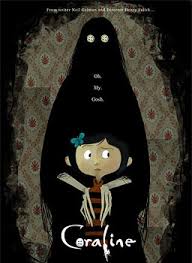
Picking Apart Coraline

This is going to be a long post. So, maybe go grab a Coke.

Coraline is a cult favorite of Neil Gaiman fans. The movie did amazingly well, even if everyone thought it was Tim Burton, the book has been reprinted at least twice. My kids and I have seen it a ton of times. The book is, quite honestly, mind-bending. Which is strange to say because my first impression of the story was that it was fairly simple. So why did it get under my skin so much?

Today we’re going to pick apart Coraline, lay it out on the table. We’re going to do this as fans, but we’re also going to do this as writers. While no one can ever duplicate Neil Gaiman, we can learn from him.

The Characters

I first want to look at the characters. I wouldn’t consider Coraline a character driven story, despite the fact that it’s named after her because if we just had Coraline all by herself there wouldn’t be much of a story. She’s a great character, don’t get me wrong. But she is a similar character to many that you’d find in young adult literature. She’s strong-willed, brave, and kind of a pain in the ass from a parent’s perspective. She’s kind of in fairness, a brat. But she’s not that dissimilar from many other protagonists. In fact, the story starts out like half of the Goosebumps books. A kid moves into a creepy house with her parents. She’s not happy about it and misses her old friends in her old town. Really, we can insert any other kid there and we’d get a similar result.

It’s the Other Mother that makes this story.

Coraline 2I just want to take a moment and consider how insidiously creepy just that name is. The Other Mother. You’ve got to remember that this book is written for kids. As adults, we see our parents as humans with faults and fears. As kids, we see our parents as fearless, strong and capable of solving anything. Our mothers and fathers are there to protect us and, when we’ve gotten ourselves in too deep, they’re who we run to. So what the Other Mother represents is, essentially, running to your mother in fear only to find yourself embraced by the very thing you were running from. She’s like reaching out for a loyal pet and finding that it’s turned rabid. She’s a razor blade in a slice of birthday cake.

She’s also, I think, a metaphor for the way we perceive things we don’t have and think that we want. While Coraline’s mother is busy and short tempered, the Other Mother has nothing but time for Coraline, nothing but patience. Coraline’s real mom is writing a book, a gardening catalog with her husband. She’s been in a car accident recently and just went through a tiring move. She and Coraline’s real father are focusing on what parents focus on; keeping the bills paid. This is something that I can relate to, as a parent. But Coraline’s Other Mother and Other Father just want to spend time with her. They don’t have anything to distract them from her, even sitting in her room to watch her fall asleep. Of course, it’s all a horrible lie, intended to trap Coraline so that the Other Mother can eat up her life. In short, the Other Mother feeds off of our inherent selfishness. And in this way, I feel that she’s a great antagonist. What do we fear more than our own weaknesses, our own sins?

Because I mentioned Coraline’s mother and father, let’s take a look at them. I read CoralineCoraline as an adult, and so I loved her parents. They were real, they were honest. I am Coraline’s mom, sitting at the table trying to work, being irritated by a bored kid. I get her. I get feeling angry, and guilty at the same time. Sometimes I just want to scream, “I’m taking care of you, can’t you see how hard I’m working to take care of you? Can’t you see that if I stop what I’m doing and play with you there won’t be food or the house will become infested with bugs? How many parents reading this right now would love to be the Other Mother? I’d love to have all the time in the world to make wonderful, scrumptious dinners for my family, provide them with all the new clothes they want and just focus all of my time and attention on my daughters. But there are bills to pay. And we can listen to Cat’s in The Cradle as many times as we want and talk about how money doesn’t matter until we don’t have a breath left. The bills have to be paid, the food has to be bought. And yet we feel guilty when we do it!

Even the background characters are memorable, all four of them. (Eight if we count their Other World manifestations.) I think this small cast is part of what makes them memorable, though. They are unique, certainly able to stand out in a crowd. And yet there is not a crowd for them to stand out of. There’s no normal in this world. Well, Coraline’s family is normal. But I’m willing to bet that none of your neighbors have a mouse circus no matter how much it sounds like it at night.

The World

Now that we’ve talked about the characters of Coraline, let’s take a look at the world. It’s broken up into two distinct universes for Coraline; the world and The Other Mother’s world. (Actually, there’s a fan theory that there’s actually a third plane of existence and that once Coraline goes into the Other Mother’s world she never really goes back to her own world. But more on that later.)

Let’s look first at the real world. Coraline and her family live in an old house that’s been broken up into apartments. It’s called the Pink Palace, which honestly sounds like a sort of slummy place. It’s realistic, though. It’s old, boring, and rainy. It’s average, brought alive by the people who inhabit it.

The Other World is the opposite. The world itself is designed to love Coraline all by itself. The bedroom is full of animated toys, the very plants in the garden want to come and say hello to her. Chandeliers that dispense mango milkshakes are a common occurrence, as are huge taffy cocoons that are full of vengeful taffy monsters. Much like the Other Mother, this whole world is a lie. When Coraline looks through the Seeing Stone she sees the world for what it really is; thin, one-dimensional, and dead.

In this way, the world itself feeds into the symbolism of the story. The real world is gray and boring, but it’s honest, tangible and solid. The Other World is fantastic, bright, and unsubstantial. It can all go away so easily, like wiping away steam on a mirror.

The things that are not in the story

Coraline isn’t a long book. I was actually surprised that it made such a long movie. And here’s not a lot of explaining things. You just sort of go through the story and if you get what’s going on super. If you don’t get what’s going on, well, that’s too bad because the rest of us are moving on.

I’ve read Coraline, of course, and I’ve seen the movie. And I still have questions about the damn story! Why can the cat get back and forth from the real world and the Other World? Why does he care to save Coraline? Why did the landlady let Coraline’s family move in, after not allowing kids in for so long? Did she know that the Other Mother was responsible for taking her sister and would still prey upon children in that house? Why can’t the Other Mother, or the Beldame, leave the Pink Palace and hunt other places? Is Coraline really in the real world at the end of the story? There are fan theories on Youtube, and you could fall down a really long rabbit hole watching them. I have, and that’s actually what inspired me to write this post. This longer than I thought it was going to be post.

There are so many mysteries left unexplained in this story, even after the book, movie and graphic novel. I’ve seen this movie a lot, and every time I watch it I catch something I didn’t see before. The picture of a boy dropping his ice cream cone in the real world, contrasted by the same picture of him enjoying his treat in the Other World. The single snow globe in the Beldam’s sitting room. The fact that, even when Coraline is entranced by the Other Mother she refuses to call her mother. She instead called her ‘she’ or ‘her’. There is a depth to this story, simply because it assumes that we know things we don’t.

And this not knowing has inspired a generation of fans to make up their own answers. Many of the answers are as interesting as the story itself. And really, there’s nothing better than managing to get audience participation with a book.

It’s the same thing we talked about with Dr. Horrible’s Singalong Blog. It’s 1 + 1 instead of 2.

The book, the movie and the comic.

To really understand Coraline you almost have to experience all of the material. Reading the book is a different experience than watching the movie is different than reading the comic book. Not only because they’re highly different mediums, but because the same story is told different ways each time. This includes things like one of the ghost children being replaced by a fairy in the comic book.

Let’s take a look at that decision from a writer’s perspective. While Gaiman didn’t get to completely rewrite the story three different ways, he did get three different cracks at it. That’s an artist’s dream right there. But it also got people, like me, to buy the same story three different times. That’s kind of evilly brilliant. I doubt that was Gaiman’s intention, but it’s still awesome.

If you have the chance, I do suggest reading Coraline. If you’ve already read it, do so again with the mind of a writer.

My Freeform Outline

I’m a big fan of outlines. I kind of have to be, with what I write. I have sixteen books planned out for the Woven universe and I kind of need to have an idea of where the story is going. So I have a series outline, of course. But the series isn’t all one long story. There are trilogies and two book collections and stand-alone books. So, in the event that I have a couple books that go together, they need their own, separate outline. Then, of course, I have an outline for the book I’m working on at the moment. I’ll even go so far as to outline the chapter I’m working on before I get started.

What I’m saying is, I pretty much know what’s going to happen in every book I intend to write for the rest of my life.

Except that I don’t. While I was writing the Broken Patterns Trilogy, I made outlines like I described above. Then I’d rip the outlines up and redo them part way through. Or I’d end up rewriting so much of the book in the editing process that what I ended up with was totally different than what I’d started with. This doesn’t mean that my outline was bad. It just means that the story grew and went on its own path, like a living thing. It did what it was supposed to do, in other words.

Now I’m writing a new Woven story. A two book collection, hesitantly titled The Roc Hunters. (That’s pronounced rook, like the chess piece. It’s a great huge mythological bird.) It’s a new story, with new characters. I thought it might be time for a new approach.

I opened up an Evernote note and got down some of the major things I know I want to have happen in the books. I have a beginning, an end, and an antagonist. Then I threw in a few protagonists for good measure.

Then I started writing.

As I go along, I’m adding some things to the outline and deleting others. Characters are appearing, weaving themselves into the story in ways I didn’t expect at all. It’s all flowing, all coming to me in new, fascinating surprises.

I was afraid I’d get writer’s block, writing this way. But actually, the opposite has happened. The story is just coming to me as I write. The more I move the pen, the more of the path ahead I can see. I’m more excited than ever to get to my writing every day, and I find myself writing more than I used to.

Now, I don’t know how this rough draft is going to end up. The benefit of a more detailed outline is that the first draft ends up reading more like a second draft. So it might be that the second draft of this book is an even more massive rewrite than I usually do. (Traditionally second drafts take me five to six months to write.) But maybe that’s worth it if the book I write is more original, more organic. Maybe this will be the best book, the one that shows how I’m growing as a writer. Maybe I’ll hate it and scrap the whole thing.

The point is that I don’t know how this is going to turn out. Which is a feeling I’m used to in life, but not so much in my writing. I think I like it.

A WordPress.com Website.

Up ↑