Why Year of The Mer works

I received an ARC copy of Year of The Mer by L.D Lewis. And when I read the description, I was hooked almost at once. A dark retelling of The Little Mermaid that is bloody and saphic? Yes, please. The Little Mermaid was my favorite Disney movie growing up. And, you know, bloody horror is kind of my jam.

Now that I’ve read it, I can honestly say that it surpassed even my high expectations. I feel confident comparing it to the work of Tamora Pierce. If you’ve been around here for any length of time, you know the sort of compliment that is. And yes, we need to talk about why it works.

What happens after happily ever after?

We all love a good fairy tale. But often we’re left with so many questions. Because, of course, life doesn’t end at happily ever after.

In the Disney version of Ariel, she and Prince Eric get their happily ever after. However, their lives go on after that. And I don’t know how much you know about royal marriages, but they’re not just for love. A marriage in which someone is going to inherit a throne, and in which someone else is going to abdicate their throne, has impacts for other people besides the two exchanging vows.

Especially when one of those two people is a totally different species and is considered a deity by half the population. It’s gonna make shit weird.

The fallout from this situation is where our main character, Yemaya Blackgate, finds herself. She’s the granddaughter of Ariel (Spelled Arielle in the book) and Eric, though I don’t think he’s ever mentioned by name.

Yemi’s parents spent their lives leading their country, Ixia, in war. Many of her people blame these wars on Yemi’s mother’s mer ancestry. And she has no relationship with her mer family at all. Given all that, she’s filled with rage.

The royal people actually love each other

It’s easy to see why royalty often has a reputation for not loving their family members. However, I feel like the whole Knives Out approach to family is a bit played out. (Maybe I read too much Phillipa Gregory.) So it’s wonderful in this book to see royal family members who actually love each other. Yemi misses her father; she’s scared of losing her mother. Yemi and Nova, who are engaged, love each other. There is none of the ‘I am raising you to be royalty, so I’m not going to show you any affection’ sort of bullshit. Just people who genuinely love each other, warts and all.

The story wasn’t about being gay

Our two main characters, Yemi and Nova, are gay. They are in a gay relationship. That’s not what this story is about.

Almost all of the characters are also Black. That’s also not what this story is about.

Now, a story about being gay in this very straight world is a great thing. So is a story about being Black in societies that are very, very white. But people who are gay and Black have stories that are not about being those things.

I can’t speak for the Black community, as I am very, very white. But I am part of the LGBTQ+ community. And yeah, it’s sort of exhausting that every gay character’s story tends to be about them being gay.

This was honestly a breath of fresh air. The characters simply are gay. It’s not a crucial plot point. They can just be. Just exist.

Yemi

Finally, I am thrilled with the main character, Yemi. She feels dangerous.

Yemi loves the people she loves fiercely. She wants to be a good person. She wants to take care of her people.

But she also wants to lead. Not because she thinks she is the best person for the role, but because she feels the throne is hers. That this is something that has been taken from her when a coup takes place.

This is a dangerous sort of person. Someone who believes they’re owed obedience, power, and respect. All of this means that Yemi is the protagonist, but not necessarily the good guy.

Which, of course, made her an incredibly fun character to read.

Overall, there was only one thing I didn’t like about reading Year of The Mer. It ended on a hell of a cliffhanger. And, since I read the book before it even came out, I have no idea when book two will be released!

Year of The Mer launches on April 7th. I highly suggest you preorder it right now. Then you can join me in waiting (in)patiently for the sequel.

Should writers be self-indulgent?

I was watching Micky Adkins a few weeks ago. I spend maybe too much time watching YouTube, but there we are. Micky’s great, you should check her out.

Of course, when I saw the title of this post, I had to watch it right away. (And by right away, I mean over the course of several days, because it was a three-hour-long video.) The title was, This BookTuber’s Vendetta Against Fanfiction Is Actually Pretty Sinister.

This video pissed me off so much that it actually inspired two different posts from me. Part two is coming soon. At some point, not sure when.

Look, I had Covid this week. Bear with me, everyone.

Now, Micky’s clear in this video that she is not a writer. So her opinions about this video are from a therapist’s perspective. But that’s okay, Micky. I am a writer. And I got you.

If three hours is too long a video for you, let me summarize it. It’s about another YouTube video from a channel I will not name, by a woman I will only call Hillary. Hillary doesn’t like fanfiction for many reasons. But the main reason for her hate seems to be that she finds fanfic to be self-indulgent. And Hillary thinks that self-indulgence is bad.

But is it? Let’s talk about it.

The dreaded Self-Insert

One of the biggest bugs up Hillary’s ass seems to be writers putting self-insert characters in their stories. You know, the sort of character that’s just clearly based on the author.

And that’s super cringy, right? Like, imagine if an author with a history of substance abuse issues and an absent father, who probably worried about being a good father, and lived in Maine, and was a teacher, wrote a lot of books about men with substance abuse issues who had terrible fathers, and lived in Maine, and taught. (Steven King)

Or like if a writer was a closeted lesbian who wanted to be a man her whole life, so she wrote about a closeted lesbian who wanted to be a man her whole life. (Louisa May Alcott)

Or if a writer got really into witchcraft and wrote a character who was really into witchcraft. (Me)

The point is that there’s actually nothing wrong with writing self-insert characters. I would argue that every character we write will have a little of ourselves in it. Even if we don’t mean to. We do it on purpose if we’re writing honestly. Our characters will reach for our favorite drinks. They’ll use our verbal idioms. We might even write them to look like us. That’s fine. So long as your characters are still as well-rounded as we can make these bags of bones, then go for it.

Oh no! I wrote about this super niche thing I like!

This is going to sound bitchy, but stick with me. We are not the precious little manic pixi individuals we think we are. Yes, every person is unique. Yes, every person is valuable as an individual and contains a whole universe of experiences that no one else can fully understand.

But we’re not that different. This is something that the internet has made clear to most of us. Any experience you’ve had, any joy or revolution, someone else has felt that too.

This means that if you write something that you really like, but you think it’s too niche for the rest of the world, you’re probably wrong. There’s probably someone out there, a lot of someones, who would really love to read your weird niche thing. So write about it, even if it seems self-indulgent.

I made art! Wait, I did it wrong?

Writing is art. We are artists, creating art. We are not producing a product.

There are no rules about art. There are techniques. There are widely accepted beliefs. And, I mean, of course, we have grammar rules. And spelling does count. But other than that, there are no rules.

You can write whatever you want. Your work doesn’t have to be super disciplined. It doesn’t have to follow traditional story structure. It doesn’t have to follow any agreed-upon structure. It can.

Art changes and evolves. What was considered standard a decade ago is passe now. And we as artists are allowed to shape how those changes come about by experimenting. Some might consider this part of our responsibility.

I’m a fan of what I wrote!

I know I’ve mentioned this before, but this seems like a good time to bring it up again. Writing a book takes so much time and work and passion and time and dedication and time. You have to love not just writing, but the writing that you specifically are doing. You have to be your story’s first and biggest fan. Because that love and devotion will get you through the days when it feels like you just can’t face the page. You just can’t take another round of editing.

This fandom will carry you through more than just the creation process if you let it. And that’s good, because you are going to have to champion your work to the world. You are going to have to be its biggest advocate. That’s easier if you, you know, like your book.

Wait, I’m actually a good writer?

So, what if you wrote something that’s super self-indulgent, but it turns out that it is, in fact, not good?

Maybe you wrote a really great sex scene, but it doesn’t really fit in your story.

Maybe you set a politician on fire in effigy, but that doesn’t make sense for your character to have done that.

Maybe you wrote this amazing description of the lush, gorgeous forest your character finds themselves in. Maybe you wrote three pages about it. In a row.

As you’re revising and editing your work, you’re going to work some of this stuff out for yourself. The longer you write, the more you edit your own work, the more you’ll see these things. Beta readers will also help you catch these moments.

Sometimes we have to kill our darlings. Sometimes we have to take out the things that don’t work for our story. Or kill off characters we’d rather live long lives.

Part of learning the craft of writing is learning what works and what doesn’t work. You know when it doesn’t work. You read it out loud, and it hurts your ears like an off-key melody. Or no matter how hard you try to make the storyline function, it won’t. Or you hate the character you’re supposed to love. Even if it hurts, you’ll know what needs to go.

These are all considerations for later drafts, though. When you’re rough-drafting, don’t worry about it. Throw everything in. Figure out what works later. Because, like you can’t see the whole painting in a brush stroke, you can’t tell if your self-indulgent scene works until the whole story is finished.

So, to sum it up, yes, your writing should be self-indulgent. You should write your story exactly how you want to write it. Give it the happiest ending. Write in that person you hate and evicerate them. Write smut. Craft a sappy love story that heals your specific wound. Skin a character.

Now look. I usually shy away from insulting other authors. And I’m not directly insulting Hillary. Even though sis went out of her way to insult a whole bunch of writers.

Writers who, as far as I can tell, are more prolific than she is. Whose work people like to read.

I’m not saying this to shame her or dunk on her. I am saying this because, for some reason I do not understand, she seems to be popular on YouTube. And I worry that some young writer might stumble upon her bullshit and feel bad about their writing. And if that’s you, let me say this with my whole chest.

Every single thing I have ever written has been very self-indulgent. I wrote Woven because I loved Tamora Pierce and wanted to write about thread crafts in magic. I wrote Quiet Apocalypse because I love haunted house stories and wanted to write about a modern witch. I’ve written and published nine books. I will, God willing, keep right on writing and publishing.

Hillary has published one. Do with that information what you will. And maybe, going forward, she should keep her eyes on her own work.

If you love what we do here and want to support Paper Beats World, please like and share this post. You can also support us financially on Ko-fi.

Want a free book? Check out Seeming, book one of Station 86.

In case we haven’t met

2026 is upon us. Whether we’re ready for it or not. And it seems like as good a time as any to introduce myself. Or, reintroduce myself.

My name is Nicole Luttrell. I’m thirty-nine, and I live in Western PA. I write speculative fiction. I tend to inject at least a little horror into everything I write.

I’ve written two series. One is a fantasy series called Woven, about a boy who weaves visions and a girl who spins light. The second one is called Station 86. It’s about a police officer and a chef living on the space station of First Contact. I’ve also written a standalone horror novel, called Quiet Apocalypse.

Here on Paper Beats World, we talk about stories. We talk about writing them and keeping yourself healthy enough to do so. We talk about reading them and watching them. We talk a little bit about the business of writing. Something I want to do more of this year is talk about money management, because writers don’t make a lot of it, and we’ve got to make it count.

I like to take books I read and shows I watch, break them down, and talk about why they work. I talk about books about writing and tools for writers. I post here once a week, usually on Fridays.

Of course, as writers, we have to experience the world. Otherwise, what the hell are we writing about, and who the hell are we writing for? So from time to time I’ll talk about politics, religion, and world events. So you’re not caught off guard, I am, in fact, a bleeding heart feminist liberal who uses pronouns (She/her). I stand strongly against AI writing ‘art’. I defend banned books, trans people, immigrants, and drag queens. I am fiercely pro-choice. I am also bisexual and a Christian Witch.

I have a husband who’s disabled after a stroke, a dog named Oliver, and a cat named James. I also have a full-time job. It should be no surprise at all that I’m a big fan of coffee.

And wine.

My goal here is the same as it’s always been. To entertain you and teach you to fit a fulfilling writing practice into your life.

Now, for those of you who have been around for a while, I have bad news and good news.

The good news is that we have another year of writing, reading, and complaining about politics together to look forward to. I’m going to be refreshing the site to make it a little more personal and on brand. And I’m going to be posting new poetry or microfiction on Instagram most days.

The bad news is that I will not be publishing a new book this year. And it’s because I’ve been trying to write the book that I know some of you are waiting for, the finale of Station 86.

No lie, I have written two full rough drafts that were just terrible. They didn’t work at all. And this is the finale, you guys. It’s got to be what you deserve. What the story deserves.

So, this year I’m taking some time away from the project. There’s no sense in my beating myself bloody over something that clearly isn’t ready to exist yet. I’m working on a new-ish novel before I dive back into the Station 86 world.

That doesn’t mean, of course, that there will be nothing new from me. I have some fantastic ideas for the year. And I hope, whether this is your first visit or you’re an old friend, that you enjoy the journey with me.

If you love what we do here and want to support Paper Beats World, please like and share this post. You can also support us financially on Ko-fi.

Want to start of the year with a free book? Check out Seeming, book one of Station 86.

Do you care about me? A conversation about parasocial relationships

Do you like me? Do you really like me? Like, as a person?

I promise, this isn’t some desperate cry for attention. I’m not your ex or super needy friend texting you at 12:45 at night on a Thursday. Do you like me, Nicole, the person?

If you consider yourself a reasonably kind person, you might well want to answer yes. Of course you like me. You come here every week and read whatever writing or reading-related thing I’ve come up with between working and trying to keep my cat from eviscerating my roommates’ dog.

And yes, part of me wants you to like me. I am human. We all want to be seen and loved for who we are. But the other part of me, the larger part, doesn’t really give a damn. And if you’re a writer or content creator, you probably shouldn’t care if your fans like you, either.

That’s right, we’re talking about parasocial relationships today. And why they’re not only dangerous for everyone, but really don’t have any upsides.

Your readers can’t really know you

You can’t really like me as a person, because you don’t really know me as a person. You know the face I show to the internet.

This isn’t to say that I lie about the things I say online. I really am a writer, feral Christian, witch, progressive, horror fan who lives in Western PA and refers to Stephen King as dad. I really do love the books I praise and hate the books I berate.

But to know these things about me isn’t the same as knowing me. You can know a lot about a person online, and it’s not the same as having an actual relationship with them.

We know people in our real lives. People we’ve been able to have real-world back-and-forth conversations with. People who we’ve seen grow and change, and who have seen us do the same. Can this be done on the internet? Yes, of course. I have several good friends I’ve never met face-to-face. But it’s still a two-sided relationship with give and take.

Liking someone doesn’t always translate to liking their work

Even if you like a creator, that doesn’t mean that you like their creation. I love Cardi B as a person, but I don’t listen to any of her music. I like her politics, her sex positivity and the way she supports other female creators. But her music, while I can appreciate the quality and talent, isn’t for me.

Likewise, some people I am not fond of make some wonderful content. I don’t mean people I can’t justify supporting financially anymore. I mean people who are fine, just kind of dicks. Joss Whedon strikes me as a pompous ass. I’ll still watch almost anything he’s involved in.

Most people I’m a fan of, though, I don’t know a lot about. I know almost nothing about Sylvia Moreno Garcia, Grady Hendrix or Kirsten White. I’ll buy their books sight unseen. I don’t think liking them as people is a big part of that. It’s the fact that their books are fantastic.

Parasocial relationships are dangerous

I am very blessed. No one who’s ever been weird to me online has ever found me in real life. I’d love to keep it that way.

Other writers and content creators aren’t so lucky. One witch I follow on YouTube had someone trying to break into her home with a screwdriver. An Instagrammer had to move to another country because she was getting death threats and people were calling ICE on her.

Being online is scary. While the vast majority of people are perfectly kind and normal (And the comments you guys leave are so sweet!), it just takes one devoted crazy person to find a content creator and threaten their life.

This danger goes both ways. We’ve all heard horror stories of content creators taking advantage of their fans. Like Miranda Sings, for instance. The less said of her, the better.

That’s not why we’re here

We as writers and content creators aren’t here to make friends.

I don’t mean this in the mean, competitive way. I have certainly made friends in my writing journey. Other writers and creators are not my competition. And that is a blessing. But that isn’t why I started writing.

I started writing to tell stories. I started this blog to share my writing journey and hopefully help you with your journey. I’m assuming that you started writing to tell your stories.

No one needs to like us. They just have to like our stories.

So, do you like me? If so, that’s great. I’d probably like you too. But if you don’t, that’s alright. All I really want you to like is my writing.

Why House of Quiet Works

Released in September of this year, House of Quiet is the latest novel by Kiersten White. This is the same author who brought us Mister Magic, Lucy Undying, The Dark Decent of Elizabeth Frankenstein, and Hide. Which is to say, the author of some of the best books I’ve read in the past few years.

House of Quiet is about a young woman named Birdie. She’s spent the last several years trying to find her little sister Magpie, who vanished after undergoing the mysterious Procedure. Birdie poses as a maid to get into the mysterious house of quiet. But what she finds there is a group of children who need to be rescued.

Today, we’re going to break it down and see why it works. Because there’s a lot that can be learned from this wonderfully dark, sweet tale.

Just jump in

The story starts in the middle of things. It starts with a mysterious woman wandering around the House of Quiet with a candle, bemoaning how loud it was.

We then jump to Birdie, heading to the house of quiet, thinking of all of the shady things she had to do to get there.

As we follow along, we only get an idea of the world she lives in and what she’s doing. We know that she’s grown up in crippling poverty. We know that she’s never speaking to her parents again. And that’s about it.

But that’s okay, because we’re going up to the house. We’re meeting the other new maids. We’re being drugged with tea. There is stuff going on, and there will be time to explain later. The important thing is that we’re not slowing down the start of our story. We are jumping right in.

Don’t over-explain

I spent a lot of this book trying to figure out what in the hell was going on. I wanted to know what happened to Magpie. I wanted to know what the procedure was. I wanted to know what had happened to Birdie’s friends. I wanted to know why Minnow was acting so strange.

And never once was any of this simply out and out explained.

No, the story was moving too fast for that sort of thing.

This was infuriating, but in a good way. Because everything is answered, eventually. It’s just that we have to piece things together as we go. Or, we find out as the characters do.

House of Quiet brought the ‘show don’t tell’ rule almost to its breaking point, but not quite. At no point did I feel so lost I thought I’d never catch up. But it wasn’t until near the end that I really felt like I knew what was happening.

This is a hard line to walk, giving just enough information for the reader to barely understand. But, I think the easiest way to do this is to have faith in your reader. Don’t feel like you’ve got to spell everything out for them. Leave some spaces for them to fill in the blanks themselves.

Anything can be used to world build

One of the most charming things about House of Quiet was the naming structure of the characters. People raised in poverty have animal names like Minnow, Magpie, and Birdie. People from the upper class have names like River or Forest.

This is a super quick and efficient way to give us information about a character with the fewest words possible. We know the character’s name, and we know what class the character is from. And in a book that is all about class warfare, that’s vital information.

This is a great example of using every element you can to world-build. Names, clothes, jewelry. Think about how all of these things impact our real world. And yes, you should be using any of these to show your world, rather than telling us about it.

Now, all this being said, this book wasn’t perfect. My biggest complaint, I think, is the relationship between the characters. They were, in my opinion, a little too sweet. They came together too quickly. They were too kind to each other. But, of course, this is a book for young adults. So maybe that’s why.

This was not enough to ruin the story for me. House of Quiet was a fun, heartwarming tale, and I enjoyed it greatly. If you haven’t read it yet, do it today.

Paper Beats World is a labor of love. If you love what I do here, please consider liking and sharing this post and leaving a comment. You can also support me financially on Ko-fi.

And while you’re there, you can pick up a copy of my Novel Planner.

Writing a novel is a journey! Here is your roadmap.
The Novel Planner takes you through four weeks of planning to help you successfully write a novel. Includes twelve pages to plan your time, your team and your life.
Also included are some useful pages to keep track of your wip, like a map page and an injury tracking chart.

Why I love haunted houses

This is the speech I gave at my local library this past week. I’m still working on this week’s post, so please en

Hello. My name is Nicole Luttrell. I’m a local speculative fiction writer. That means I write about ghosts, dragons and spaceships. Sometimes I write about the ghosts of dragons on spaceships. 

I want to start by thanking Dianne and everyone here at the Butler Library for hosting this talk. And frankly, for being here and doing the job they do. Being a librarian has never been easy, but it seems to get harder all the time. 

I’ve written a fantasy series called Woven, which I have copies of today, about a prince who weaves visions and a princess who spins light. I also write a science fiction series called Sation 86. It’s about murder, politics and possibly the end of mankind on the station of First Contact. I have a QR code here so you can get the first book in that series free. 

But what I love writing most is horror. 

This month is my time to shine, yes. 

I became a writer for the same reason most people do. I love stories. I love reading. And that love has been well fed within these very walls for most of my life. One day it occured to me that someone had to write books the same way someone had to build cars or wait tables. Someone had to do it, so why couldn’t that be me? So I came to the library, and I found the section upstairs with the books about writing books. And there I found a copy of the Writer’s Market. 

If you’re not a writer yourself, or even if you’re just a writer who started submitting work after the internet was in everyone’s homes and pockets, you might not know about this book. It’s like a phonebook for the publishing world. Magazines, publishing companies and literary agents are all listed. Itwas a thing of beauty. An expensive thing of beauty that had to be replaced every year. But it made me feel like a real writer to use it. 

The Writer’s Market isn’t updated anymore because, again, internet. And while I certainly wouldn’t use it anymore, I’ll forever be grateful to it for helping me see that writing is a career as well as art. 

But it’s almost Halloween, and today, I want to talk about something scarrier than the publishing industry and a teenage girl’s flounderings through it. If there is anything scarrier than that. 

I wrote a book called Quiet Apocalypse. It’s about a witch named Sadie. She’s enjoying her quiet life as a school nurse, living in a cozy apartment with her dog Sage. 

Yes, Sage makes it.

Then a tree falls on her apartment building, and it lets something loose. Something bloody and dark. 

Allow me now to read the introduction. 

 The end of the world started on a dark winter night.

 Trees circled the apartment building at 437 Oakmont. They weren’t old trees, nor were they tall. Yet to look at them, one would think them ancient. They were twisted and gnarled. Every gust of wind found them, even when no other tree moved. The cold of winter clung in their branches, no matter the weather. Passersby didn’t like to dawdle along the sidewalk. The trees made them feel unwelcome. Children especially felt this, but of course, children always feel these things most keenly. 

 But we weren’t talking about children. We’ll come back to them. For now, we’re discussing the trees. 

 They’d been groaning and moaning for most of their lives. Sometimes you couldn’t hear them unless you were listening carefully. Other times the inhabitants of the apartment had to turn their TVs up to drown the trees out. But on one dark night in February, the sounds were unrelenting. There was a winter storm. The wind was hellacious, cutting through the town like a vengeful spirit. It took out hanging signs for stores on Main Street, brought down the old pine next to the library, and crashed Mr. Wallback’s patio table into his sliding glass window. Ashley Homestead regretted leaving her potted pine tree out for the night. It was thrown against the house from the back porch with such force that the pot shattered. 

Leslie Richard’s trampoline, covered over with a tarp for the season, was lifted and thrown into the yard of his next-door neighbor. 

 The wind rattled windows, pushed its way through cracks in the walls and around doors. Heaters couldn’t keep up with the sharp, blistering cold. The families in the apartment building were kept awake by it, huddled under blankets to keep warm.

The storm built up steam as it headed for Oakmont. It was as though those trees in a circle were its target, and it meant to have them. The storm came to a head at almost four in the morning. One of the trees, exhausted from a night’s battle, couldn’t hold on any longer. It came down, crashing into the roof and jutting sharp, dark branches into the attic apartment.

The wind died away almost at once. Gentle snow replaced it, covering the ice. The next morning this would cause several accidents. 

The trees that remained continued to scream, as though mourning their fallen brother.

I wrote Quiet Apocalypse for two reasons. First, I was starting to feel more comfortable as a witch. I wanted to write a character who was also a witch. A real world witch, not a magical creature one. 

Secondly, and what I really came here to talk about, I wanted to write a haunted house story. Haunted house stories have always been my favorite sort of story. The House Next Door, The Haunting of Hill House, The Amittyville Horror. These are the sort of books that keep me turning pages and rethinking every creak and groan in my own house. 

I’m not alone in my love of haunted houses. They’re a mainstay of the horror genre for a reason. We all want to think that our homes are our safe havens from the world. That our front door acts as a barrier to the bad things. The dark things.

So the thought of something lurking in the dark and dripping corners of our homes is viceral. But it’s also realistic. I would argue that haunted houses are the most realistic horror genre. 

Bad things happen in our homes. House fires from wires we didn’t even know were frayed. Carbon monoxide leaks. Storms large and powerful enough to rip and tear buildings apart. 

When was the last time you checked your smoke alarms? 

Quiet Apocalypse starts with a very mundane and realistic disaster. One that almost takes Sadie’s life before the story even starts. Allow me to read a passage.

 Sadie sat in the doorway of her ruined apartment. Her eyes were itchy, there were rivets of tears dried to her face. She had cried herself out the night before. Now she only wanted a shower and a good long rest. But, as a tree had crashed through the roof of her apartment, neither of those things could happen. 

 She knew she ought to be grateful. She’d been in the kitchen with Sage, her creamy colored lab mix when the tree came down. Branches seared through the exterior wall, crashing through her living room and bedroom. One had pierced right through her bed. It was still there, jammed right in the center of the quilt. If Sadie’d been asleep, she wouldn’t have survived. All she’d lost were things. She should be thankful for that. 

 When she was done mourning her things she would be. Her mother had made her that quilt. The crystals on the altar in her living room were all buried in the rubble. Her whole living room was a loss. What wasn’t destroyed in the crash or buried under the roof was damaged by the snow that had flooded in. 

And her books! Her family had given her irreplaceable books. Thank the Green Man Himself that her grandmother’s grimoire was at Aunt Helen’s place. But Sadie had her mother’s grimoire. And now it was destroyed. 

 She looked at the cardboard box that contained everything she now owned. There was her teapot, gray with a design of cherry blossoms. The cups that matched it had shaken loose from their shelf and shattered. 

There was her grimoire, a battered old sketchbook with a red cover. A french press, some herbs. A truly astounding assortment of tea. A handful of crystals and candles had been on her kitchen windowsill. Sage’s food and water bowl. That was all she had. 

 They were just things. Things that didn’t mean anything aside from everything. Ties to family members lost. Tools for her magical work and her mundane life. Decades of learning were destroyed in no time. 

A haunted house story can be seen as an alligory for accidents and natural disasters that threaten our families. But the ones that scare us the most, and stay with us the longest, are usually about family traumas and abuse. 

Amityville Horror is about a family tortured by dark entities until the father nearly kills everyone. But it’s also about dark financial worries. It’s about a man feeling like he failed as a provider and taking it out on his family. 

Poulterguist is about a house opening a portal to a horrific and hungry dimension. But it’s also about Suburban Sprawl and guilt. 

Quiet Apocalypse is about a demon trying to break free and cause the apocalypse. But it’s also about the fear of dying alone. Of having no one to leave behind a legacy for. 

I’ve been in a haunted house. And I bet you have too. If you’re fortunate enough to not have lived in one, you’ve visited one. It was the friend’s house where things got quiet when their mom came home from work. Or one that got way too loud. Maybe it was a family home after a funeral. 

Maybe it was just a place that didn’t feel right. It seems safe, but it doesn’t feel safe. Your instincts are screaming at you to run. To get the hell out of there despite no apparent danger. 

In my experience, it’s best to listen to those instincts. 

So we understand why cultures all over the world come back over and over to the haunted house story. But I want to go a step further and suggest that women in particular are drawn to reading and writing haunted house stories. We, along with children, tend to be the main characters and main victims of haunted house stories. 

It’s Eleanore who senses something wrong and eventually goes mad in Hill House. 

It’s Diana Freeling who insists to her husband that something’s wrong in the house, only to be dismissed until their daughter is sucked into the television. 

It’s Col Kennedy who has to convince her husband that there is something very wrong with the beautiful new house next door.

I think this is the case for a number of reasons. First, women historically spend more time at home than their spouses. Or, we at least spend more time caring for our homes and the people in them. So if the kids are talking to invisible playmates, we’re more likely to notice. If there’s blood dripping out of the ceiling, we’re probably the ones cleaning it up thinking it’s rust stains. 

At first. 

If our loved one is suddenly spending an uncomfortable amount of time with their axe collection or singing in a language we don’t recognize, we’ll probably be the ones to point it out. 

In addition to this, haunted house stories are cathartic to women. Consider how often in a horror movie the main character starts out trying like hell to convince someone, usually her partner, that something is wrong. Blood’s coming out of the faucets, there’s a spot in the back yard that’s never warm, bottles are popping and spilling with no one in the room. But no one is listening! No one else seems to see it all happen. It’s almost like they’re looking away at just the wrong time on purpose. Only to calmly and condecendingly explain the shape and color of the trees while missing the forest entirely. 

What else does that sound like to you? Maybe like trying to explain medical symptoms to your partner, or doctor? 

You just need to lose weight.

It’s the house settling.

You’re just getting older.

You didn’t hear a child screaming, it was just these old pipes. 

You’re overreacting.

You’re being histerical. 

Finally, I think women are most often main characters in haunted house stories because home is a place of guilt for us. We feel more responsible for our homes because we’re taught that we’re responsible. At least, I was. So if something is wrong with our house, it’s our fault. 

The dishes aren’t done. It doesn’t matter if we dirtied them, it’s still our fault. The laundry’s piling up, our fault. An ancient demom is cracking through the basement floor, our fault. 

Of course, as society changes so do the stories we tell. A great modern haunted house story is How To Sell A Haunted House by Grady Hendrix. The main character is acutally the one who needs convinced that something is wrong, and it’s her younger brother who does the convincing.

That book, by the way, is a great example of siblings being raised by the same people but very different parents. 

All of that being said, haunted house stories appeal to everyone. There isn’t a culture in the world that doesn’t have haunted house stories. The Himuro Mansion in Japan. The Wolfsegg Castle in Germany. Every community, neighborhood and village has a haunted house. I’m willing to bet our cave dwelling ancestors had certain caves they didn’t want to go into because they were jsut too creepy.

Finally, I would argue that haunted houses are more frightening than other supernatural elements because they are so incredibly intimate. If houses are alive, and as a witch I believe they are, they know us. They see us at our best and our worst. They see us in moments that we manage to hide from everyone else. And so if your home wanted to scare you, wanted to harm you, they’d know just how to do it. 

This is something that Sadie learns in Quiet Apocalypse. Allow me to read one final passage. 

 “Do you know where my mommy is?” the child asked. 

“I don’t know,” Sadie said. “What’s your name?” 

 The child didn’t respond. She just shook her head.

 “Where am I?” 

 Sadie swirled around. There was a little boy, standing in the middle of the main room. He looked terrified. 

 “Oh, it’s okay,” Sadie said. “Here, come over here. I’ll try to help you. I mean, I’m not really good with spirits, but I can-.” 

 “Mommy? Where am I, why can’t I see you?” 

 Another child was coming out of the bathroom. Then another. Suddenly there were two sitting on the futon, and three more standing in the middle of the room. They were all covered in blood. In their hair, on their shoes, on their clothes. It dripped onto the floor, smearing from their feet and dropping from toys or blankets they clutched.

 Sadie spun, looking around at all of the children. There were so many of them, and every moment there were more. Sage stood next to her, gasping out sharp, panicked barks. 

 “Sage, stop barking,” Sadie said. She whirled around again. “Please, calm down. I can help you, but I, I need a minute to think about what to do.” 

 They crowded towards her, reaching out with bloody hands. Crying out for her, reaching for her and pulling at her clothes. “Help, help us,” they cried. 

 “I’ll help you, I will,” Sadie said, but the children were pulling her down. 

 “Help us. You have to help us!” 

 Sadie couldn’t answer. She could barely breathe, drowning in the sea of bloody hands and crying screaming faces. She couldn’t see Sage anymore, couldn’t see anything. There were only the children, clawing at her. Killing her. 

Sadie is a school nurse. As I’m sure you can imagine, that carries an emotional burden. 

Now, unfortunately I don’t have any personal really good haunted house stories to share with you. Most of my experiences are subtle. I saw a shadowy figure out of the corner of my eye. I felt someone staring at me when there wasn’t anyone there. I found myself in a terrible mood, or unable to control my anxiety in certain parts of a house. This is all scary to live with but not overly interesting. And since you’ve all been listening to me ramble for a while now, it’s your turn. Tell us about your haunted house story in the comments below. 
Banned Books Week 2025

Did you know that Stephen King was recently acknowledged as the most-banned author in America? Way to go!

It’s Banned Books Week once again. And every year this week feels more and more important. Because every year it feels like America takes another goosestep towards fascism.

But we are still here, damn it! We can still protest. We can still fight in our own ways. And we can do our part this Banned Books Week to help fight off censorship.

Here is a list of things I’ll be doing, both this week and going forward.

(As always, Banned Books Week is an event hosted by the American Library Association.)

Share banned books

I’ll be sharing some of my favorite banned books on social media, using the hashtags #BannedBooksWeek and #Censorshipisso1984. Get the word out far and wide.

Read banned books

This one might be obvious. But what the hell, I’ll put it on here in case. The best way to support banned books is to read banned books.

This year, I’ll be reading Chains by Laurie Halse Anderson. I’m reading this because it’s the book suggested for the Right To Read events being held all over America this week. If you’re close to one, you should consider attending.

Start a little free library

This might be a project. I’m certainly not expecting to get this one done in a week. But now that we’ve moved and I have a yard again, I’m going to put in a little free library. And I’m going to stock it with banned books. I already have some ordered.

The top ten banned books every year are going right in that box.

Support the ALA

The American Library Association needs our help. They need support, financially and politically. Here’s a link if you want to check them out and see all the work they do all year, not just during Banned Books Week.

Show up for libraries

If you can, show up at town halls and community nights where your local library is being discussed. Make it clear that you oppose censorship. Make it clear to your local politicians, too.

Elections are a month away

Speaking of your local representatives, make sure you’re registered to vote. I know I say this a lot. I also know that there’s someone reading this right now who’s been meaning to register and keeps forgetting.

Get it done.

Go vote. Make a plan now. Know your local politicians and know who’s supporting freedom. And who’s not.

So now it’s your turn. What are you reading for Banned Books Week? Do you have a little library or know of one in your neighborhood? Let us know in the comments.

Your writing should look like your writing

I’m writing the third draft of a new project. I can’t tell you what it is yet, only that it’s a dark fantasy piece dedicated to Hekate.

As I’ve been working on this book, the same thought keeps coming up over and over. As I flesh out scenes. As I rewrite dialogue. As I sketch out brainstorming notes.

I keep thinking, “This isn’t the right way to do this. No one writes like this. This isn’t how it’s supposed to be done.”

I’m doing my best to quiet this thought. Because it’s getting in the way of what could be some of the best damned writing I’ve ever done.

Each writer has a specific voice. A certain feel to their work that is distinct, no matter the genre they write. King’s books feel the same from Danse Macabre all the way to Never Flinch. Kiersten White’s work feels the same no matter if she’s writing fantasy or horror. And a lot of the reasons why they feel so different are stylistic choices that, frankly, I might not have made. You might not have made them. I certainly don’t write with such gory detail as King, for instance. We have wildly different word choices, and I don’t feel the need to set every story I write in Main.

Your personal voice comes from five different elements. The first is your word choice.

Words. Writing nerds like us obsess over words. Word choice can change a scene from cozy to chilling. It can make a story inspiring or terrifying. Consider the difference between these two sentences.

“Sharon sauntered towards the door and slid it open.”

“Sharon stalked to the door and ripped it open.”

Both examples include Sharon opening a door. The first one feels sexy. The second is vaguely threatening.

In both, she might just eat the person on the other side alive.

Word choice is about the voice of your story. Dialog is the voice of your characters, and the second element of your writing voice. It helps build setting, build character. And it tells something about you as well.

Are you the sort of writer who does a lot of exposition in dialogue? Do you use it to give away clues? Do you tell us who your character is?

Characters in general are a big part of a writer’s voice. King, for example, used to write a lot about drunk men who were bad fathers. Then he wrote a lot of men trying to get and stay sober. And far too many of them are named Bill.

I tend to write characters who are irritated all the time. Who have a strong hand on their tempers, until they don’t. Sylvia Moreno-Garcia writes characters who are terrifyingly single-minded.

Then, there are descriptions. This is a place where your voice can truly come out. And a place where prose writers can indulge in a little poetry.

How you describe something shows us your voice. How long it takes you to describe something also does that.

Some writers I could mention could spend a little less time describing things if I’m being honest.

You might be wordy. You might write tight. All of this is part of your voice.

Finally, where you set your stories is a huge part of your voice.

I tend to write about communities big enough that you don’t know everyone, but not so big that you can get through Walmart without seeing a high school acquaintance you’d rather not. I probably do this because I’ve always lived in that sort of place. So that is how I understand the world to be. Even when I’m writing about spaceships with ghost dragons, this theme comes up.

Some people write about small southern towns. Some people write about dark, gothic places. Some people write about the Pacific Northwest like it’s the eeriest place in the world. Which I take personally, as a person who lives in the foothills of the Appalachian mountains.

Here’s the thing about your writer’s voice. It’s the most important thing to remember. You can recognize your voice. You can, and should, study other writers’ voices. But you really shouldn’t try to force your voice.

Who you are is going to come through in your writing. Where you live, how you were raised, who did the raising. How you see the world. It’s all going to come out, one way or another, in your work.

And that’s a good thing! That’s the whole point of art. Entertaining stories don’t stick with us as much as ones that make us feel something. And we make readers feel something when we share how we uniquely experience the world.

We don’t have to do that by writing memoirs or opinion pieces. We can write about whatever we want to. Werewolves, hockey players, dragon hunters. No matter what you choose to write, you should shine through. And you should never, ever feel like you need to copy another writer’s voice. First of all, you won’t be able to. And second of all, we need as many unique voices in the world as we can.

Paper Beats World is a labor of love. If you love what I do here, please consider liking and sharing this post and leaving a comment. You can also support me financially on Ko-fi.

Spooky season is coming, and it’s time for some creepy reads. Check out my horror novel Quiet Apocalypse, about a witch trapped in her apartment during a dark winter storm with a demon devoted to ending the world.

Or check out my horror short, The Man In The Woods. A man tries desperately to protect his granddaughter from the mysterious man in the woods. But his fear only grows when a new housing complex is built too close to the woods.

The story remains

Please indulge me in a moment of nostalgia today. It’s a very special anniversary.

Eleven years ago today, I started writing Woven. After years of feeling stuck in my writing. Years of starting projects but never finishing. Years of shrugging and saying I was a writer, but never really writing. I took expensive bread from a coffee shop that isn’t there anymore to a park that still is. I fed the birds and prayed for a book idea that wouldn’t die before its first real breath.

A spell is just a prayer with extra steps. I believe this was the most successful spell I’ve ever cast.

Eleven years have passed. I have moved homes three times. (And am getting ready to move again, God help me.) The walls and roof that surround me have changed. The desk at which I sit, sipping copious cups of coffee and tea, has changed. I’ve written at a desk older than me, painted over countless times. I’ve written at coffee shops, laundromats, doctor’s offices, libraries and day jobs. I’ve written at a desk my husband made for me by hand. It’s actually the first piece of furniture I’ve ever owned that wasn’t second-hand, and that’s where I’m still writing right now.

The story has remained.

I’ve changed jobs then job titles. I’ve changed my last name.

My family has changed. It shrank, but then swelled again. I lost people I never thought I’d lose. Never thought I could survive losing.

I’ve found new people. A new family, a new place in the world to need others and be needed in.

The story has remained.

I’ve written other stories. Some published, some not. Some tucked away for ‘someday’. Every one of them owes their existence to Woven. Because if it wasn’t for the story about a boy who weaves visions and a girl who spins light, I never would have had the courage or knowledge to write anything else.

I stepped out of my twenties and into my thirties. Soon, I’ll move into my forties. My hair has started to show silver. My back hurts in fun new places.

And yet, this story remains.

I became a horror critic. Then the site folded. Woven was bought by a publisher and then dropped. I republished it. Then I published it wide, a thing I wouldn’t have been able to do if the publisher hadn’t dropped us.

The story, through it all, remains.

We’ve lived through a pandemic and at least two recessions. At least some of us have. We’ve seen wars start and start. And start. We’ve seen three presidents. Well, two presidents and one threat to our country.

The story, though, remains.

And at this point, I feel like I’m ending a long journey. With Falling From Grace going wide this Friday, I’ve done almost everything I can do with it until I can afford to make it an audiobook. (I’m working on it.) Unless I write another book in the same world, the story of Woven is at its inevitable end.

Except, of course, that there are new readers in the world every day. New people looking for new stories. And I don’t think that’s likely to change anytime soon.

So this story will remain. I’ll write others. I’ll share others. And we’ll all keep right on changing.

I am so glad you’re here to share the journey with me.

Falling From Grace is going wide on Friday!

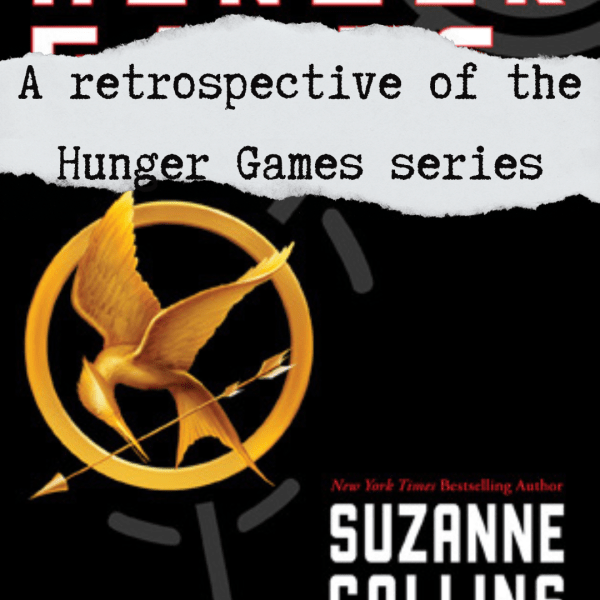
A retrospective on the Hunger Games series

“If a book will be too difficult for grown-ups, then you write it for children,” 

Madeleine L’Engle

Hello, my name is Nicole. I’m thirty-nine years old, and I love young adult fiction. No, I don’t think we need a support group for this. Unless we all support each other in telling people who judge us to mind their own damn business.

One of my favorite series is Hunger Games. It’s been getting a lot of talk recently, with the release of the latest prequel, Sunrise on The Reaping. The good news is that the book was terrific. The bad news is that Suzanne Collins has said publically that this will likely be the last Hunger Games book.

However, I think that we’ll still be talking about this series for a very long time. While its popularity will likely wax and wane, this is the sort of story that stands the test of time. 

Inspired by the new book launch, I recently reread the series. And I have some thoughts, both as a writer and as a person living through the prolog of a distopian novel. 

So I know we’ve talked about several of the books by themselves. But today, I want to pull out and look at the series as a whole. Maybe we can learn something about writing a series that will stand the test of time. Maybe we can also learn something about dealing with our political situation. 

There are so many questions remaining

At this point I’ve read the whole series twice, except for Sunrise. And I still have so many questions. If anything, I have more questions after the reread. What happened to Lucy Gray? Is the Tigress that shelter’s Katness Snow’s cousin? If so, why does she now hate him so much?!

A great story doesn’t do all the heavy lifting from us. It leaves things open to interpretation, and argument. It allows fans to feel like we’re a part of the story. It also builds a community. A fandom. 

Speaking of which. What do you think happened to Lucy Gray? Let me know in the comments. I personally think she ran off and found a covey in the forest. 

The characters are complicated

There are several characters in Hunger Games that are wonderful people.

Katness is not one of those people. Neither is Haymich. And I don’t even think I need to discuss what sort of person Snow is. 

But, maybe I do? Because he’s not always a monster. Sometimes he’s kind. Sometimes he’s compassionate. He’s brave even, in some ways. 

That’s probably the best thing about this series. The main characters are morally gray. They do some bad things. And some good. These are characters that I think we can all see ourselves in, for better or worse. I think it’s the worse part that’s the bigger hook, actually. 

For me, Katness has a lot of the flaws I see in myself. She’s selfish. She uses people. She refuses to consider that other people might care about her. And she clearly doesn’t ever trust another human soul.

These are parts of myself that I don’t like. And so, I don’t like Katness. But I’ll also never forget her.

It asks something of us

I don’t think it’s any surprise to anyone that we are living through some dark times. Honestly, I lack the energy and time to list all the things wrong with our society right now. 

In the Hunger Games series, Katness is raised in a very dark world. She hates this world, but she accepts it. Her aim is never to overthrow the Capital. It’s just to make sure her sister survives. And while Peeta is happy to fight, he probably never would have if he hadn’t been backed into a corner where it was his only option.

Haymich wants to fight in Sunrise on The Reaping. So does Lenore Dove. They fight. They do not go quietly. They battle with everything they have, as little as it is. 

They paint their posters.

Hunger Games asks us to consider our actions in the America of right now. Are we painting our posters? Are we making good trouble? Or are we just enjoying the bread and circus?

We should strive to be Haymich and Lenore Dove, so that later generations don’t have to be Katness and Peeta. Sing the protest songs. Vote. Send physical mail to representitives. Protect your neighbors and show up for your community. 

Speaking of showing up for your community. I know a lot of people are struggling right now. But if you can, please consider donating to The Trevor Project. Their federal funding ended on July 17th, and they do crucial work to support LGBTQ+ youth.

Another charity that means a lot to me is the Brigid Alliance. They help people travel to access abortion care. 

Please do what you can, when you can, while you can. Don’t let the sun rise on another facist regime. 

Oh, I guess that got a little political. It’s almost like art is crucial in dark times. Go write something rebellious today. 

A WordPress.com Website.

Up ↑