When and how to update your time management plan

Confession time again. Here’s a big one, folks. 

In the past few months, I have really been struggling with productivity. And I hate it. I hate not being where I want to be for the year. I should have already finished the book I’m writing. I should have done another draft of the nonfiction book. And there’s the book I wrote last year for Nanowrimo that I’d really like to be editing right now. Then, of course, there are all of my other responsibilities that are slacking. 

A recent change in my day job schedule forced me to sit down and look at how I’ve been spending my time. And I realized that I had to make some changes. 

Now, what do I mean by a time management plan? This is the way you schedule your time and the tasks you need to accomplish. 

My time management plan worked for a long time. These days, it’s not. So it’s time to make a new one. 

There are a lot of reasons why your time management plan might not be working for you anymore. So it’s a good idea to consider how you’re doing things every six months or so. Here are some reasons your time management plans might have to change. 

Your priorities will change

Life changes. You change. Your priorities are going to change. Maybe you’ll get a new job or promotion. Maybe you’ll be inspired by a new life path. Maybe your family grows. Maybe you feel like you’re being called to do a different kind of work. 

Whatever the reason, your goals are going to change. your priorities will change. And that’s good. 

Your obligations will change

Some changes to your life are ones you cause intentionally. Some changes are totally out of your control, but now you’ve got to deal with it. 

Maybe your family grew in a way you weren’t expecting. Or you have a loved one dealing with an illness. Maybe you yourself have fallen ill. 

There are any number of ways life can start asking more of you than it did before. Some are blessings. Some aren’t. All need to be taken into account. 

Your goals will change

When I started working on AA, my goals changed. My workload changed. When I decided to drop everything last year and write a completely standalone novel for Nanowrimo, my goals changed. When I realized I had three novels and a podcast season sitting unfinished on my desk, my goals changed again. (To finishing them!) 

When I realized that I was miserable most of the time, as I did recently, my goals changed as well. 

As your goals change, what you do to meet those goals will have to change. 

Your energy level will change

This is the one that’s really been getting me. I just don’t seem to have the energy I used to. I don’t have the patience I used to. Part of that’s getting older, I’m sure. Part of it’s being angry at the world and majority of politicians. 

But this, honestly, has been what’s dragging me down. And I’m sorry to say, it’ll probably happen to all of us eventually. And while that sucks, it’s just part of getting older. 

When you’re rethinking your time management style, it’s important to be realistic. Consider not just how many hours you have in the day, but when your good hours are going to be. 

Here’s what I did when I realized I wanted to redo my time management. 

Step one: Pull out a planner or a virtual planner. Start by filling out out all of the requirement on your time that you can’t change. For most of us, this starts with our day jobs. School and work obligations are usually not something we control. So that goes in first.

Next, consider when you need to rest and commit time to self care. You need to sleep. You need time to cook meals and make sure you have clean clothes. You need time to play, to have completely unstructured time. Even if it’s just taking thirty minutes during a day off work and not planning anything for that time, that is so important. 

Now you have a better idea of how much time you have to focus on your passion projects. And yes, even after all this time, writing is still my passion. So, when are you going to work on your passion? 

I take an hour of writing time in the morning before work. This is pure creating time, not time spent on social media or other business writing work. 

I spend the evenings with my husband and pets, caring for our home and each other. 

So, when does the writing business work happen? Well, I’m blessed with two days off a week, so I spend one day working on that. Social media graphics, marketing, submitting, all those good things. I do try to get some writing done that day, but I try to keep everything at no more than five hours. 

The final day of the week is spent taking care of my home, spending time doing fun things with my family and running errands. 

This is all a lot slower than it used to be. I need time to write for pleasure and therapy. I need time to read for pleasure too. Hell, I’m a witch. I need time to contemplate the moon. I need to take my dog to get his nails clipped and stop for coffee after. In short, I need to plan my life so that I have time to live it. And when I take some time to update my time management, I allow myself to keep living well. 

Don’t forget, I just updated my Preptober Planner for the new year! Check it out now on my Ko-fi shop.

Alternative Memory Keeping

Paper Beats World is a labor of love. If you’d like to support us, you can do so on Ko-fi.

My birthday was this past Wednesday. Like most people, I spent a little time around the day, when I wasn’t enjoying extra coffee and the best brownie ever, reflecting on the past year of my life. And it’s been an interesting one. Some ups and downs, both personally and professionally. I’ve grown some and learned a lot. There have been better years of my life, for sure. But by God, there have been far worse. 

I enjoy having the ability to look back on the past year. Memory keeping isn’t a huge part of my life, but it’s still important. 

Here’s the thing, though. I don’t keep a journal. Frankly, on top of all the other writing I do in a day, it’s too much. And while I take pictures, I don’t often get them printed. I don’t scrapbook, though I do like it in theory. 

Record keeping is something that takes time. And time is something most of us just don’t have a lot of. It’s often something we do for holidays, birthdays, and vacations, but not so much on an everyday basis. I mean, who’s got that kind of time, right?

But the regular days hold so much joy. It’s on average Tuesdays when we find a new book series that will become our whole personality for the next three months. It’s a common Thursday when the dog finds the bag of flour and makes himself the cutest ghost ever. The creative breakthrough, the new coffee shop, the cozy rainy afternoons, the really good talk with your partner. These are things that I want to remember just as much as what we did for my birthday. 

So today, I want to share with you four things I do to collect memories daily. They aren’t large things, they don’t take up a lot of time. But they create a net that traps the everyday memories that I treasure looking back on.

Bullet journaling

Most of you know that I keep a bullet journal. Mostly this is to keep myself organized and my plants alive. But it also catches memories. I have a page every month dedicated to recording the best memories. Here I’ll track big events, of course, but also little things. When I discovered the musical Six. When the power went out in our little city. 

Even my everyday to-do list in my bullet journal tracks some memories. Looking back I can see exactly how long I struggled with a short story. When I went through a big cleaning phase and cleared out a ton of house tasks. When I had to run every errand known to man in a single day. These are fun things to look back in, even if they weren’t fun at the time. 

Notes on a perpetual calendar

If you follow me on Instagram, you might have seen my Peanuts perpetual desk calendar. Because it’s one that I can use year after year, I decided to use it as a mini memory keeper.

On November 15th of 2022, I started writing one sentence about my day on the calendar page. This might be something like, we finished Reboot today. Or, I went to visit my grandma today. 

As the days and years go by, I’ll be building on these little notes. So this becomes more and more precious as time goes by. 

Instagram

I post something on Instagram most days. Often it’s pictures of things that made me smile that day. A new plant, a nice sunset, or the cute way Harper curled up next to my book.

Yes, I also post info about my books and blog posts. But even that’s kind of a fun look back. I spent some time on my birthday just looking back at what I’ve posted in the last year. Between this year’s picture of my birthday coffee and last year’s. And I was awash with memories. What I was reading. What I was passionate about. When my one air plant sprouted flowers without warning. A hundred little mini-adventures, snapping silly pictures of dogwood blossoms while running errands. 

Now look, I don’t suggest sharing your whole life on social media. And I caution you to remember that Instagram in particular is a highlight reel. But if you do use social media, consider using it in such a way that you’re reminded of good moments when you look back over your account. 

Gratitude logs

Finally, this is a practice I’ve used for almost a decade. Every morning I write at least three things I’m thankful for from the day before in my planner. 

First off, this is just a good way to start the day. Even if the day before was a hard one, I can at least think of three things I was thankful for. I made a really good cup of coffee. I slept well. I took a shower with a shower bomb and it was nice.

This also has a built-in memory-keeping factor. I keep all of my old planners, of course. And I can look back to any day and be reminded of at least three good things that happened. 

And on hard days, I can look back on other hard times. I can see that even at my lowest, I still had things to be thankful for. Hard not to feel good about that. 

What about you? What’s your favorite memory-keeping habit? Let us know in the comments. 

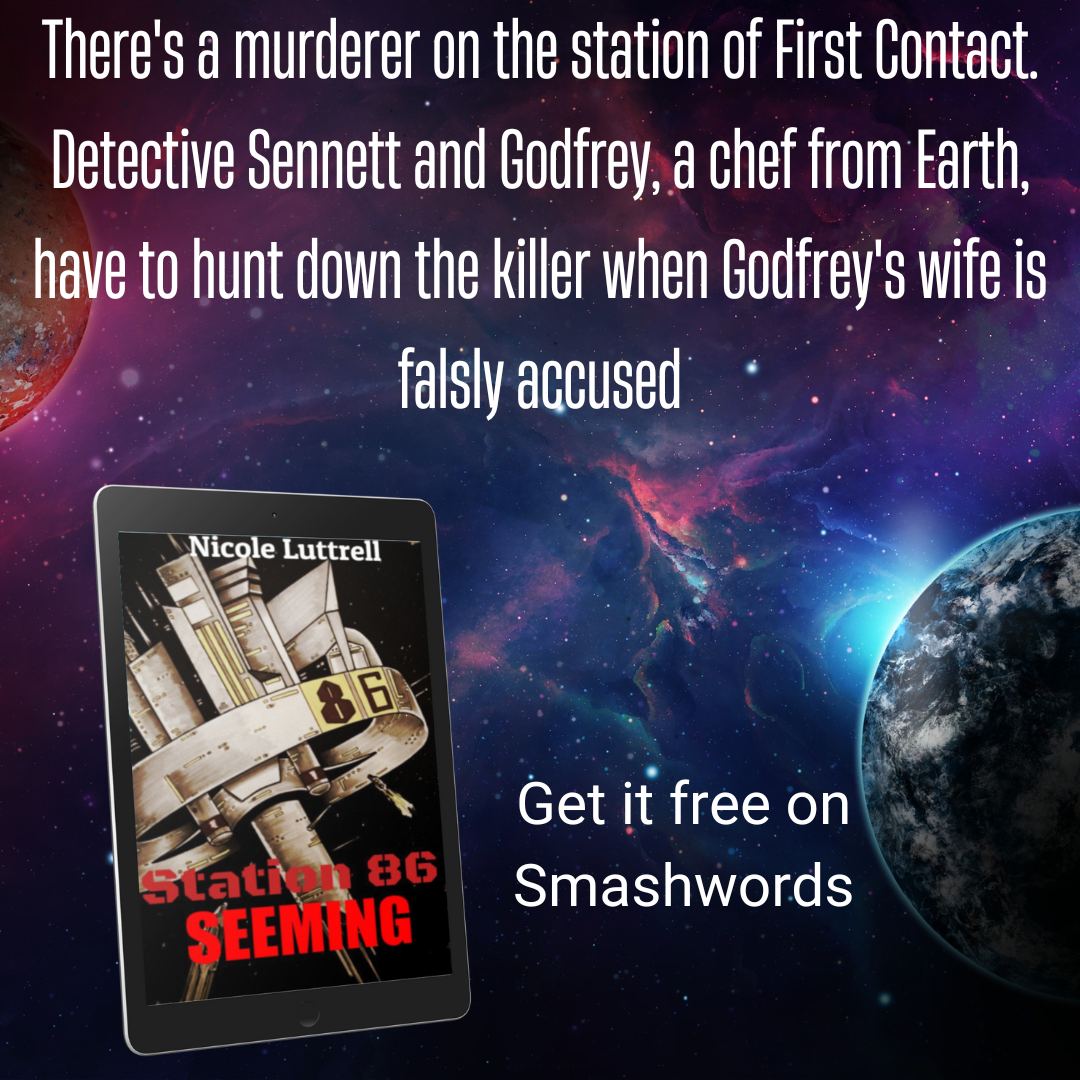
Get Seeming free here on Smashwords

What writers can learn from Peanuts

Writers love Snoopy at the typewriter. At least, I love him. Like, a lot. I love his terrible stories that all start the same way, it was a dark and stormy night. I love his rejection letters that threaten violence. I love the everlasting optimism that drives him to write another story, send another submission, and even enlist Lucy as his beta reader. While his writing might be terrible, his ability to get up and dust himself off is an inspiration to all of us drowning in the slush pile. 

But that’s not all the inspiration that Peanuts has for us. Unlike his beloved creation, Charles Schultz was a terrific writer. Charlie Brown, Snoopy, and the gang have been a constant source of joy and inspiration for decades. Today, I wanted to share with you the five most important lessons I’ve learned as a writer from them.

It’s okay to lose

Charlie Brown never has a winning baseball season. Lucy never gets Schroder to like her. Linus never gets to see the great pumpkin and Snoopy always gets rejection letters. Even Peppermint Patty, who always wins on the football field loses in the classroom. 

But that’s okay. They all lose, over and over, and they’re fine. They get through, they get by. And they’re pretty happy most of the time.

Look, we’re going to lose from time to time. I know I do. I’ve had failed launches. My football and hockey team didn’t make it to the playoffs this past season. I’ve bottomed out my emergency fund more times than I care to talk about. Life is far from perfect. And that’s okay. Life is still good, even when we lose.

Don’t shy away from what you believe in

My favorite Peanuts character is Linus. He knows himself. He knows what he needs, what he believes in, and who he is. 

Linus is a Theologian who carries around a blue blanket for support and believes wholeheartedly in God and The Great Pumpkin. And he doesn’t care if anyone else believes. He also doesn’t care if anyone thinks he’s foolish, or childish for doing what’s best for him.

Linus is my role model. I want to be brave enough to tell people exactly who I am and what I believe in. And in fairness, I usually am. Most people reading this will already know that I’m a witch and also a Christian. It’s weird, but it works for me. 

I also aspire to be unapologetically me. To carry my version of a blue blanket for comfort as I face a world that is sorely lacking in peace. To insist upon my cup of stars. 

What’s your blue blanket? Let us know in the comments. Mine is a specific red lipstick and my favorite crystal necklace with a St. De Sales medal attached to it. 

Plan for the rain

One of my favorite Charlie Brown quotes is this. He said the secret to happiness is to own a convertible and a lake. If the sun is shining, you can ride around in your convertible and enjoy it. If it’s raining, you can be comforted by the knowledge that all that rain is good for your lake. 

It’s gonna rain in your life. Bad things are going to happen. Life’s gonna be a lot easier if you accept that. Especially in your writing life. Maybe your publishing company will go under. Maybe your computer will crash and take your document with it. (Cloud backups, people!) Maybe your loved one will get sick while you’re trying to launch your book. Your career and your life is going to be a lot brighter if you accept right now that things aren’t always going to go to plan, and it’s not even a little bit your fault. 

It’s okay. Enjoy your convertible, and know that the rain is good for your lake. 

Know when to fight for yourself and your creations

This one’s a bit of a cautionary tale. Charles Schultz, much like his beloved Charlie Brown, was a little bit wishy-washy. He never liked the name Peanuts for the strip. He wanted to call it Lil’ Folk. 

He also wasn’t super thrilled with the rampant commercialization of Charlie and the gang. I’m not thrilled that Hallmark owns the rights.

At some point, Schultz lost control of his creation. Likely it happened in the same way the frog is boiled, little by little. 

We have to protect our creations. Yes, as writers we have to work with publishers. Yes, sometimes we need to listen to other people’s ideas. But sometimes we need to listen to ourselves and stand up for ourselves. Sometimes we’ve got to say no, even if that means we don’t work with a certain company. Otherwise, we end up with a comic strip named something we don’t like, or a whole series of books with trashy covers. 

This was a lesson I needed to learn myself.

Keep trying

Even though Charlie Brown never wins a baseball game, he keeps trying. Even though Linus never sees The Great Pumpkin, he keeps trying. Even though Lucy will never win Schroder’s love, she keeps trying. Okay, maybe Lucy should stop trying. That’s kind of stalker behavior. 

But the rest of them are right to keep trying. And so are we.

We’re not idealists here. We’re professional writers, and we know how freaking hard that is. It’s getting harder every year.

There are fewer and fewer publishing companies and bookstores. Magazines are dying. The paying markets are drying up. More and more people are struggling to make ends meet, so they sure as hell aren’t buying luxury items like books. At least not as many. 

And yet, I’m going to keep trying I’m going to publish my books and submit my short stories. I encourage you to do so as well. 

Step up to that pitcher’s mound. Show up in the pumpkin patch with your best friend and blue blanket. Yes, you might lose the game, or miss trick-or-treat. 

But maybe, just maybe, the Great Pumpkin will find that your pumpkin patch is the most sincere. And he’ll bring toys to all the good little boys and girls. 

Or, in our case and Snoopy’s, publishing contracts.

Pre-order Man In The Woods on Amazon now.

My publisher just dropped me! What do I do now?

On March 27th, I woke up to five of the most confusing emails I’ve ever received. Each one was from my publisher, had a pdf of one of my books attached, and contained only two words.

Rights returned.

Confused, I did the unthinkable and checked the author’s Facebook page for the publisher. At first, it appeared that it had simply vanished. I caught a comment from another author in a notification that I could no longer open. It read simply “I just got emails that said rights returned.”

Still incredibly confused, I sent an email to the publisher. It was fairly simple, so I’ll include the entire email below.

Hello,

Sorry, I must have missed an email. Can you tell me why all of my book rights are being returned?

Thanks,

Nicole Luttrell

The answer came days later. As it was also simple, I’ll include that entire email below as well.

Your books were returned for a lack of promotion.

The only thing I cut from that communication was the name of the COO. I could share it. But I, unlike the people who run this publishing company, am a professional. I’ll not be saying the name of the publisher here. You know who published me. 

I have had links to my books on my website for years. The Woven trilogy isn’t exactly something I’m quiet about. And yet, at some point, this became not good enough. It wasn’t good enough for at least one other writer. I believe there were likely other victims in this culling, but I cannot prove that.

So here I was, at the end of March, with four books dumped into my lap that had been adequately represented just days before and me with no reason to think this was going to happen. 

I am hurt. I feel betrayed. I don’t know the real reason my publisher decided to drop me and potentially other authors. And yes, I imagine if I’d fought the issue I could have forced them to keep right on publishing my book. But frankly, I don’t feel like it. 

Frankly, I think I’ve got every reason to take my books and go home. Frankly, there’s a reason that Falling From Grace was the last book I published with them, even though I’ve published several books and a podcast since then. The company wasn’t exactly professional to start with. The covers were sad, the promotion was dismal. The launches were botched and my concerns were never met with any real answers. And honestly, the rights for at least one of my books were about to expire anyway.

If you ever find yourself in this situation, I have some advice for you. First, understand that it is perfectly okay to get mad. This was shitty behavior, and I didn’t deserve it. My books didn’t deserve it. I have every right to be angry. 

Don’t freak out online

Just because I have a right to be angry doesn’t mean I should jump on social media and start dragging people. It’s childish, and it’s unprofessional. Even here on my personal blog, I’m not going to start calling out my former publisher by name. I’m not going to call names.

For one thing, I’m a grown-ass adult. Just because others have not treated me properly doesn’t mean I’ve got to act in kind.

For another thing, the publishing world isn’t all that big. If I was to act like a child over this, I’m not going to like how other professionals in the field react. 

Don’t feel like you’ve got to hide what happened to you

That doesn’t mean I can’t tell you all that this happened, though. After all, I have every reason to warn people that this is the kind of thing that can happen to you. Since this is a blog about living a writing life, it’s kind of my job to warn you. Just because you have a publisher doesn’t mean your career is set.

This is one of many reasons literary agents are worth their weight in coffee. 

But if you have been mistreated in the publishing world, and you can talk about it without acting like a twat, do so. We need to know who the bad actors are in this world. 

See this as the opportunity that it is

Finally, celebrate. Yes, I’m sorry to say that this means my books are out of print right now. If you never got a chance to read the Woven series, you’re going to have to wait until later this year. 

Don’t think for one second that a setback like this has to be the end of your writing career. It’s not. You have your work, and you can do whatever the hell you want with it now. That’s the beautiful thing about the self-publishing world. If you have the rights to your books, then do what you want with them.

More of this on Monday. 

All in all, I think the next several months are going to be pretty exciting for me. And for you, if you like my work. Because now I have all my books back. I can only make them better. And of course, I have several other projects in the works. 

If you’re a fan of my horror stories, check in on Monday. 

If you loved season one of AA, July is going to be fun for you.

If you’re a fan of fantasy stories about boys who weave visions and girls that spin light, you should look forward to November. 

Don’t let anyone stop you, my loves. Don’t let other people’s shitty behavior make you shine any less. And I can’t wait to take you along on this journey with me. 

Paper Beats World is a labor of love. If you can, please consider supporting us on Ko-fi.

We should be concerned about AI writing

It was a dark and stormy night, the kind of night that makes you want to stay inside and lock all the doors. But Sarah had promised her friend she would house-sit for her while she was away on vacation. The house was old and creaky, and the sound of the rain tapping against the windows made Sarah uneasy.

As she settled into the couch to watch a movie, she heard a strange noise coming from upstairs. It sounded like footsteps, slow and deliberate. She tried to convince herself it was just the old house settling, but the sound persisted.

Sarah cautiously made her way upstairs, her heart pounding in her chest. As she approached the guest bedroom, the sound grew louder. She pushed the door open and found the room empty. But then she noticed something odd – the closet door was slightly ajar.

As she reached for the door handle, a cold breeze swept through the room, sending a chill down her spine. She hesitated for a moment, but curiosity got the better of her. She slowly pushed the door open, and what she saw made her scream in terror.

Standing in front of her was a figure, dark and shadowy, with eyes that glowed like fiery embers. Its mouth twisted into a sinister grin as it reached out to grab her. Sarah turned and ran down the stairs, the figure hot on her heels.

Just as she reached the front door, Sarah felt something grab her ankle, causing her to trip and fall. As she looked up, she realized that the figure had been nothing more than a coat hanging in the closet. But the relief was short-lived as she heard a sinister laugh echoing through the empty house.

Sarah quickly got up and ran out of the house, never looking back. She never returned to that house again, and she never spoke of that night to anyone. But she knew that she had encountered something truly terrifying, something that she could never explain.

I didn’t write that story, a chatbot did. 

Yeah, we’re talking about chatbots today. And I’ll be really surprised if I’m the first person you’ve heard talk about this topic. It’s been hotly contested in social media. Artists of all sorts are in arms about AI-generated art. Is AI content taking a chunk of the already slim writing market? Are we going to lose our jobs to AI writers? Was this blog post written by an AI?

(No, except for the above story, it was not. This is all me, baby.)

The bad news

Let’s start with how I got the above story that, again, is not mine. I pulled up a free AI word generator and asked it to write me a scary story. That’s exactly what I typed in. Write me a scary story. Whether or not that story was scary is arguable. But the story is competent.

So what if I had asked the AI to write me a product description? Or a blog post on a specific topic? The chances are good that I’d have gotten a similarly bland but competent response. 

Back in the day, I wrote product descriptions for independent businesses. Lots of writers do that to make money. Some other ways writers make money include but are not limited to ghostwriting blog posts, writing content for business sites, and copywriting. When done well by a creative and talented writer, any of this content can be awesome. But not everyone needs that writing to be awesome. Frankly, that writing just needs to be competent. Businesses need a ton of writing done, and nothing is saying it needs to be lyrical and lovely. It just needs to give accurate and concise information. So yes, I think a lot of companies that used to pay writers for writing are probably already using AI-generated work instead. Being a full-time writer was already hard. Hard enough that I, after nine years of work have not gotten there. Lots of writers rely on copywriter gigs to make consistent income. To me, this feels like low-cost competition copywriters didn’t fucking need.

Then, of course, there’s the thorny little question about where this content came from. Again, referring to the story above, I do not know how the AI did that. In a matter of seconds, by the way. For all I know, this writing is the work of some unnamed and uncredited author. An author that I just unknowingly stole from. And insulted by calling their work dull. If that’s you, I am sorry. But don’t worry, creativity’s like any other muscle and it can be strengthened. 

The point is that stealing from creatives is a terrible thing. And it’s the last thing we want happening on a grand scale.

This is a major concern for visual artists, and I get it. No one should have the right to take your work, even a part of it, without giving you the credit you deserve.

The good news

You probably didn’t need me to tell you that the story above wasn’t mine. It’s clearly not my writing style. If you’ve been around Paper Beats World for a while, you know my writing style. 

If you’re a fan of anyone’s writing, you can probably recognize their writing style. I could read a paragraph by either Laini Taylor or Justina Ireland and probably tell you who wrote it. 

This is what is really missing from that writing example above, any sense of personal style. 

This is why I don’t think creative writers have anything to fear from AI writing. At least, not yet. AI can only replicate what already exists. It cannot develop its own style, or create new things. 

Yes, I do think the market’s going to get flooded by shitty, AI-written fiction. No, I don’t think it’s going to cause much of an issue. There is still no replacement for human creativity and personality. 

What can we do about it?

Sadly, I don’t know that there’s much we as individual creators can do. We can’t make businesses hire actual writers instead of using AI-generated content. And we certainly can’t stop people from using this AI technology. Nor should we, because that’s a slippery slope. Look, I might not think the AI can write a good horror story, but it still has a ton of vital uses.

But we can reject AI-created work. As indie writers, we can keep hiring actual graphic artists to create our covers. We can shun AI art and writing online, and call it out when we see it. We can make sure that we’re being honest if we do use AI in any of our writing. 

Which, to be clear, I have no intention of doing. But if you do, that’s fine. Just remember that real human creativity is always going to shine through. 

Another way to battle AI content is to support flesh and blood creators. If you’d like to support Paper Beats World, you can do so on Ko-fi.

The best writers in films

Last week, we talked about ten of the best fictional writers on television. Which of course got me thinking about some of my other favorite fictional writers. The writers portrayed on the big screen. Because of course, people love talking about what they’re passionate about. And what writers are passionate about, more often than not, is writing. 

Today, I’m bringing you the top seven best portrayals of writers in movies. Some of them are funny. Some are scary. And some made me bawl like a baby. But all of them are great examples of flawed people trying to do the same thing we’re trying to do; craft stories.

Secret Window

Starring Johnny Depp and based on a short story by Stephen King, Secret Window is the story of a writer named Mort Rainey looking for some peace to write his latest book. This quiet is destroyed by a man named Shooter, who insists that Rainey stole his short story. Rainey desperately tries to prove that he didn’t commit plagiarism, while Shooter stalks him through town.

I honestly think being accused of plagiarism is scarier than being accosted by some hayseed in a wide-brim hat. I adored this movie. And I thought the ending, unlike some of King’s other endings, was truly satisfying. 

Orange County 

Starring Colin Hanks and Jack Black, this is the hilarious story of a young writer named Shaun, desperate to escape his dysfunctional family. He goes through a series of hilarious hijinks with his brother and girlfriend, trying to get him into a writing program at Stanford. 

If you’ve never seen this movie, it’s a great time. And of course, it discusses the very real issue of whether or not to attend higher education. 

The Shining

Of course, I was going to be talking about this one. It’s not the first Stephen King story on this list, and it won’t be the last. It is, perhaps, the most famous. 

Do I even need to summarise this story? Jack and Wendy, and their son Danny, spend the winter at a hotel as caretakers. This is every writer’s dream, and Jack is a writer. He thinks he’ll spend the whole winter writing his novel while making some easy money.

Of course, that amount of quiet and isolation is often the last thing a writer needs. It’s also the last thing a struggling alcoholic needs, especially when his spirits are replaced by, well, spirits. 

Dead Poet’s Society

(Note. This movie deals with teen suicide.)

A good teacher can make all the difference in a young person’s life. Especially the life of a young artist. Such is the case with John Keating, played by Robin Williams. He inspires a group of teenage boys to not only read poetry but to care about it. To care about their own writing as well. Keating reminds them, and us, that a poem is not a dry dead thing. It is a moment in time, an emotion, a spark, captured in words on a page. 

It’s a passionate movie about living for what makes you feel alive. 

Moulin Rouge!

Yes, I do love this movie, and not ironically. Is it a good movie? No, not really. Is it a really fun movie with a wonderful soundtrack and a fun main character? Yes, yes it is. 

Christian is a writer looking for work. He wants to write a play for a dance club called the Moulin Rouge. Its star is a woman named Satine, who is dying of consumption. Through his writing, Christian makes her last days magical. Even as he struggles to protect her from the evil Duke. It’s full of music, wild characters, and absinthe. It is, I think what a lot of us thought the writing life would be like, full of drugs and interactions with wild artists. Spoiler, it’s actually full of coffee and editing manuscripts while turning down social invites because you’re on a deadline. 

Misery

This will be the last time I talk about Stephen King in this post, I swear. But you know I had to talk about Paul Sheldon, Annie Wilkes, and Misery. 

Starring James Caan and Kathy Bates, this is the terrifying tale of an obsessed fan who saves her favorite author from a car crash. All is going fine until she finds out he’s going to kill off her favorite character. Then, things get not fine real fast. 

On one hand, I love the thought of having someone obsessed with my writing. On the other hand, I hate the idea of having someone that obsessed. Either way, it’s a dark and gruesome tale, told well. 

Also, Kathy Bates is a queen. 

Finding Forrester

This is easily my favorite movie about writing of all time. It stars Rob Brown and Sean Connery. This is the tale of a reclusive writer who is, frankly, an asshole. Through a series of events, he starts mentoring a young writer named Jamal. 

A lot of topics are discussed here. Racism, of course. Poverty, and how it impacts the opportunities of young people. When it is and is not okay to approach a famous person. In the end, though, it’s a story about a friendship built on a common passion. A passion for writing. If you’ve never seen it, go watch it right now. It is incredible. 

Now, I want to hear what you think. What is your favorite movie about a writer? Let us know in the comments. 

Paper Beats World is free to read, but it’s not free to make. If you can, please consider supporting the site on Ko-fi. 

Emotional Support Stories

If you want to support Paper Beats World, you can do so on Ko-fi. 

At the start of 2023, I was not in a good place. I’m doing better now. It was just a bad case of seasonal depression. But I decided to manage my depression by diving into my emotional support book series. 

Series of Unfortunate Events. 

It’s a long series, I’m still reading it. Currently reading the Grim Grotto. As a side note, you can always follow along with what I’m reading on Goodreads and Bookbub.

All that being said, I wanted to talk a little bit today about emotional support content. It’s been trendy on Instagram recently to share your emotional support content, and I am down for this. As always, I love that people turn to stories in times of darkness. We can always find light between the pages of a book.

Or other mediums, honestly. I have several emotional support shows, like The Good Place, Schitt’s Creek and Futurama. 

So, we already know that good fiction can brighten our lives when we feel dark. But why do we have these specific stories that we come back to over and over again? Wouldn’t a new story be a better distraction? I mean, I know what’s going to happen in every Unfortunate Events book. Can it engage me enough? Wouldn’t it be better to read something new, like finally getting into Sarah Mass or reading Wheel of Time like my husband has been trying to get me to do for years?

I took some time to think about it. While I was thinking, I also paid attention to how I was emotionally reacting to the new content I was consuming. And I realized something. Certain stories were making me sad because they reminded me of some of the very real traumatic events in my past. Things that are still hurting me today.

Yes, I could avoid content that might trigger these memories. Except, sorry to say, trigger warnings don’t work with trauma. Because you don’t always know what’s going to trigger your trauma.

Some things are clearly going to be impactful. I knew going in that things like Stephen King’s The Outsider was going to be upsetting. I did not expect a random episode of Agents of Shield to trigger me. I knew Inside Out was probably going to be hard. Didn’t expect Encanto to make me bawl. 

A story doesn’t have to directly relate to the cause of your trauma to remind you of your trauma. So, unfortunatly, any piece of content could potentially upset someone.

Okay, but that doesn’t mean I’m going to stop reading, watching or listening to new things. I love new stories. And realistically, we are never going to live in a world where we are completely safe from memories of our past. I personally don’t think we should even try to, because I’m a big believer in shadow work and healing from my past.

But that work, my friends, is exhausting! And we cannot, should not do it all the time. So yes, there are times when we should fall back on our emotional support series. 

I know how I’m emotionally going to respond to Unfortunate Events. There are no surprise triggers waiting for me. I can enjoy a story and give my emotions a rest. 

Emotional support content doesn’t need to be uplifting or happy. Though my shows certainly are. The only requirements are as follows. 

You’ve experienced the story before.

You know that your emotional reaction to this story will be positive. 

So please, if you have a friend who is watching Parks and Rec for the fifteenth time, don’t judge them. They might just need a break. 

I would love to know what your emotional support content is. Please let us know in the comments. 

Creativity Burnout, focusing on the results, not the journey

So far in this series, we’ve talked about fighting creative burnout in a world that’s difficult to survive in. We talked about fighting it in a world that feels like it’s on fire the majority of the time. And we’ve talked about fighting it when the problem is your project. Now we’re at the final post in this series, so it’s time for me to call myself out. (At least, it’s the final post in the series for now. I am open to doing more in this series if there’s a specific creative burnout you’d like me to cover.) Today, we’re talking about my biggest writing weakness. Focusing too much on the results, and not enough on the journey.

So, what do I mean by this? I mean two things, both of which I’m susceptible to. One, we worry too much about meeting self-imposed deadlines. And two, we worry too much about how the work is going to be received.

Let’s look at the two problems separately. 

First, the self-imposed deadline. Deadlines are a beautiful thing, and I certainly encourage every writer to have them. Without a deadline, it’s far too easy to put off writing for all the other things clamoring for our attention. So when I start a writing project, I set what I think is going to be a realistic deadline. Then, I add another week past that. 

Even this is sometimes not enough of a cushion. Because things happen. Some days I can’t work at all. And sometimes the project takes more time than I think it will, thanks to rewrites and freewriting. 

The best thing to do here is not to get rid of deadlines altogether. But instead, see them as flexible. Rather than rushing and putting out poor content, it’s better to give yourself and each project the time it needs to be what it deserves to be. 

However, knowing this and putting it into practice are two different things. And I can tell you from experience that it’s freaking hard when there’s so much pressure to remain relevant. It often feels that if I’m not putting a new book out, a new blog post, a new podcast, a new short story, or a new something you all who read my work are going to forget about me.

These are the demons that whisper to me. I bet you have a similar demon. 

But let’s think about this, without the stress demon whispering to us. I know that I don’t forget about my favorite authors, not even when it’s years between books. When Tamora Pierce comes out with a new book, you want to believe I will buy that sucker. The same for a litany of other authors. 

And the same is true for content creators I follow online. Lisa Jacobs, one of my favorite marketing people, vanished for several years to pursue a corporate job. When she decided to come back to the online marketing space, I was pumped! I bought one of the first courses she offered. 

Also, it’s been years since season two of Limetown. If they came out with season three in 2026, I’d still be there to listen unless I was dead. 

So, I don’t forget about content creators even after they take long breaks between projects. Why should I assume that those who read and listen to my content won’t do the same? 

Next, let’s talk about the fear of how our work will be received. I don’t know a single writer who doesn’t worry that their work isn’t going to sell. This is another demon that likes to whisper to us. No one’s going to buy your book. No one’s going to listen to your podcast. No one’s going to read a long-winded blog post full of too many tangents and stamp collector hate. 

Every single creator has those thoughts. And the scary thing is, they might be right. There is every chance that a creative project might fail. 

If you let those thoughts get into your brain, it might stop you from writing altogether. It might also leave you spiraling, going over your work over and over again, sure that it’s never good enough. Sure that this line will be taken wrong, it’ll offend someone you never meant to offend.

If I may be totally honest with you, I almost didn’t publish Quiet Apocalypse, because I was scared to death that people would think it was anti-abortion. Just in case anyone has that concern, IT IS NOT ANTI-ABORTION. 

This spiral worry that the story isn’t good enough, or that it’ll be taken the wrong way can mean death for your writing. It can drown you. 

What’s the solution? Write for yourself. Write content that you enjoy, and that you would want to read. Write what makes you happy. Because yes, there’s a possibility that you might be the only one who reads it. So you might as well like it. And remember, creating art just for art’s sake is still awesome. It’s still more than a lot of people do. And I have said over and over that writing is its own reward. 

But here’s the great thing about that. You’re going to produce your best work when you like what you’re writing. When you’re having fun writing, it’s going to be more fun to read. 

So take your time. Write what you love, and don’t worry about how it will be received until later drafts. That’s when your marketing brain can come into play. And I think you’ll be surprised to find that the work you did while you were having fun is pretty damn good. 

If you’re interested in supporting Paper Beats World, you can do so on Ko-fi.

Creative burnout, your project isn’t working

Paper Beats World is free to read, but it’s not free to make. If you want to support Paper Beats World, you can do so on Ko-fi. 

So far in this series, we’ve talked about some heavy reasons you might be experiencing creative burnout. We talked about life taking a toll on us. We talked about the world sometimes being a shitty place to be. 

There are other reasons we might suffer creative burnout that aren’t so clinically depressing. This week, we’re going to talk about a common one. 

You have a project you’ve been working on. A novel, a short story, a podcast season. Whatever it is, suddenly you’ve hit a snag. You don’t have the energy to work on it anymore. You have the time, but not the inclination. Is it the dreaded writer’s block? Have your words failed you?

Probably not. 

The problem is probably with your story. For whatever reason, it’s not working. You know it’s not working, and you’re not ready to admit it. So, instead, you’re ghosting your draft like you’d ghost someone on Tinder. But unlike your Tinder stalker, your project can still be saved. 

See the problem for what it is

The most important step to take is to see your problem for what it is. It’s a problem with the story, not with you. You are not lazy. Remember, laziness doesn’t exist

This is good news because problems with your story can always be fixed. Maybe your characters are boring. Maybe the pacing is wrong. Maybe there’s just not enough going on to compel the plot forward.

The important thing is to not internalize this. You are not your writing. No one story, no matter how bad, is going to define you. 

Now that you understand that, we can talk about how to fix it. 

Freewriting time

Freewriting is my favorite writing tool. I will come to the blank page like I would a trusted friend and just spill my guts. When my story isn’t working, a lot of what I’m doing in freewriting is complaining. 

This is boring. 

I hate this main character.

What is even happening?

I don’t want to write fight scenes, I hate them.

This isn’t interesting enough.

There’s too much going on to keep track of.

Yes, I do eventually get tired of hearing myself complain. But, by that time I have a list of things that need fixing in my draft.

Mind you, I will do this even if it’s a rough draft. While I don’t normally edit first drafts until they’re done, sometimes it’s unavoidable. Sometimes the project just isn’t going to work how it’s going right now. It’s better to toss a draft and start at the beginning again than to lose the project together.

Talk it out

Sometimes the blank page isn’t the best ear, though. While it’s a great listener, it can’t talk back.

This is when it’s important to have writing friends. Or, at least friends who you can bounce things off of. Friends who don’t mind hearing about your story in its infancy. Most importantly, friends who you trust to be honest with you, even if they don’t think you’re going to like the answer. 

Take a break

If you’ve taken your project’s problems to the freewriting page, you’ve met a writing buddy for coffee to talk it out and you still don’t know how to fix your project, it might be time to take a break. Set the project aside for a while, and work on something else. Note that I don’t suggest avoiding writing altogether. I suggest taking a break from that specific writing project.

The reason for this is simple. You want to keep exercising your writing skills. Every bit of writing teaches us something. And remember, your brain is still working on problems even when you’re not actively thinking about them. So while you’re writing a bit of poetry, your subconscious is still working through the problems with your space opera. 

I don’t suggest taking too much time away from a problem project, though. Otherwise, the subconscious will forget. My rule of thumb is no more than a week.

Is this the story you want to tell?

Before I even go into this, let me be clear. This is a last resort. This is not going to be the case most of the time. 

That being said, sometimes a story just isn’t one that you want to tell. Sometimes it’s a great idea, but you aren’t the person to write it. 

There’s no shame in this. Maybe you tried a different genre and it’s just not working for you. I, for example, love reading historical fiction. I do not love writing it. That does not mean that I am a bad writer. It just means that I have a genre that I’m good at writing, and several genres that I am not good at writing.

Of course, there are other reasons a story might not work. It’s hard for me to tell you how to spot this problem because it’s a personal problem. But deep down, we as creators know when our creation just isn’t working out. 

It’s okay to know when to quit. Just so long as you can truly say that you’ve given it your best try. 

Creative burnout when the world is on fire

You can support Paper Beats World on Ko-fi.

I’d already planned to write this post today before the train wreck in North Palestine Ohio. It’s one of those coincidences that doesn’t feel coincidental. 

I’m not in Ohio, but I am in the dangerous range. We could smell the chemicals in our little town. My throat burned when I went outside. Thank God, we weren’t downriver. But we were downwind. 

The people who are living in North Palestine are living in poisoned land. They are hurting, they are suffering, and they are livid. They should be. 

I am living in tainted land. And I am pissed about it. 

I’m so pissed, that it’s been kind of hard to write. 

This isn’t the first time. I don’t need to tell you what I’ve been struggling with, because you’re struggling with it, too. Flint Michigan still doesn’t have clean water. Cops are continuing to murder innocent black people with little to no repercussions. Living is becoming increasingly unaffordable. Oh, and last year half of us lost the right to make medical decisions about our own bodies. 

And what am I doing? I’m writing my little stories about ghosts, dragons, and spaceships.

When the world is burning around us, it is easy to feel like creating art is worse than pointless. In the years since 2020, I have actively felt like I was almost mocking the world by writing and publishing stories. What did my work matter, with everything going on? What does any of our work matter? Thoughts like that are enough to still any pen. 

But stories do matter. Stories about the dark and dismal parts of our lives matter. And we have seen this in both classic and modern literature. Stories can tell truths about our world in ways that make them easier to handle. They can shine light into deep shadows we can’t, or won’t, see into. They can give us a glimpse into other people’s lives, so we can understand their world better. So we can empathize with people who live far different lives than we do. 

If you don’t think this is powerful, ask yourself this. Why are politicians working so hard to ban books? 

That being said, a lot of what I write doesn’t have a damn thing to do with current world events. My last book was about a haunted apartment building. So, am I still wasting my time if I’m not writing serious literature about the horrors we’re facing? 

Well, let me ask you something. What did you do the last time you were overwhelmed by the world?

Did you read a book? Watch tv or a movie? Listen to music? 

I did. Hell, there’s not a day that goes by that I don’t do all three of those things. Stories get me through the worst of times. And I’m willing to bet they do the same for you.

So, why wouldn’t we put out stories for other people? If I can write a little ghost story that helps someone through a hard time, why not do it? That sure doesn’t sound like a waste of time to me. 

Thoughts like that are enough to get my pen moving. I hope they do the same for you.

And check out last week’s post, when we talked about creative burnout caused by trying to survive.

A WordPress.com Website.

Up ↑