Note: You all know I love Nanowrimo. I stand by that, I think it’s a powerful tool to get writers writing and seek out other writers in fellowship. But, here’s the thing. Not all writers are going to write like me. So, I’m proud to share with you this guest post today by an amazing writer named Taryn Dryfhout. Check out her site here.
This week marks the beginning of a month of novel writing madness as hundreds of thousands of people all over the globe begin Nanowrimo in an attempt to see themselves, and have others perceive them as writers by writing 50,000 words of what is possibly nothing but mindless dribble, over the next four weeks.
National Novel Writing Month or “NaNoWriMo” is a yearly, internet-based writing project that takes place from the 1st to the 30th November, when people sign up online, committing to themselves a goal of writing 50,000 words over the course of the month. The idea is that these words form a rough draft for a novel, which can then be edited and published when the challenge is up. Nanowrimo mania starts in October when participants sign up through the website, creating profiles and discussing the synopses for their novels.
Nano attempts to foster the craft of writing in an intense way, by having the participating writers work within an online community of people all working towards the same goal – not of quality or completion, but just putting words down on paper. Novels written during the program can be any genre, about any theme and in any language and the word count is validated through the site, where the writers can submit their work for automatic counting. According to the official rules, planning and note-taking is permitted at any time but no words written outside November can contribute towards word count.
Although 50,000 words is considered a low word count for a novel, the aim of the program is to aid participants in getting their creative juices flowing and getting a project underway. However, no publisher will accept a novel this length, making the effort redundant. With this being the case, Nanowrimo is nothing more than National Novel Starting Month, where one can produce half of a slapdash novel which will require months of work in order to shape into anything creditable. To stay on track with the program, one must write almost 1,700 words per day, with the focus being on attaining word count with no regard to quality. This is to encourage people to get writing, with the intention of editing the work later, outside of the project. While the idea of an online community, dispensing a healthy dose of peer pressure and a calendar deadline might be enough to push someone into attaining the set word count, the ‘quantity over quality’ philosophy encourages average work that may or may not be revised and edited at an unforeseen date, in the distant future. By producing a poor first draft of an unfinished novel, participants ‘win’ the challenge, and to make matter worse, the novel needn’t even have a storyline in order to win the program. One of the project’s mottos is “No Plot? No Problem!”, suggesting that participants should write, regardless of whether or not they have a solid story, or even any story at all to work with.
The madness was started in 1999 by a freelance writer who roped in 21 other people into the month-long commitment. The following year an official website was launched in the project’s honour and people from all over the world started signing up, until so many people were participating that some basic guidelines were established and over a decade later, there is more than 400,000 people participating.
From the last week of November until deadline, participants can submit their work through the project’s website for word count verification. Those who complete consider themselves to be ‘winners’, though no prizes are awarded for any efforts made. Anyone who manages to reach the 50,000 word count is considered a winner and receives a printable certificate which they can display at home or on the web. Though no measures are in place to prevent or identify cheating of any kind, it seems unlikely that anyone would bother, given that the only reward for ‘winning’ is a piece of paper and self-satisfaction.
The official Nano forums come alive in early October, with participants discussing their novels while they eagerly await the challenge ahead. The idea of it is great, in theory – a large, online community of writers, all working toward the same goal, swapping advice, ideas and support from the advanced novelist to the blossoming young writer. The vision for Nano is honourable, with the idea being that the art of writing is fostered within a safe community, accessible to anybody who has internet, at no cost, in a forum where one is not expected to be a professional. It also encourages a daily writing habit, which in turn is supposed to be the way in which the writer will produce their book, and consequently their writing career. However, in reality, the forums become a space where unpublished writers can spend more time discussing writing, than actually writing, and much like Christmas, the anticipation of Nano becomes more desirable than the hard work that is supposed to take place in November. Young people who aspire to be Stephen King or Danielle Steel join Nano in an effort to be seen as a writer because of their involvement in this worldwide movement, rather than being appreciated for their will to write, and their dedication to actually doing so. It’s fairly clear from the amount of hashtags like #NanoPrep and #FutureWriter, and ‘feel good’ quotes on Pinterest about Nano that the culture of this project is not producing as many quality writers as it is enthusiastic, naive ones.
As all writers, aspiring writers, publishers and agents know, writing is a small part of the process of producing a novel. While it may take only the month of November to pen the great American novel, it takes months of editing and revision in order to get it worthy of being submitted for publishing. Nano’s emphasis on simply putting pen to paper means that the work arising out of this project might simply account for a whole lot of crap writing rather than producing good, solid work which has the potential to go on and be considered for published. While the project can be useful for those who want to carve out time for themselves to write each day and push themselves to adopt a daily habit of working on their craft, it could also be a completely fruitless waste of a month, particularly one so close to Christmas. The amount of hurried, sloppy work that must come out of Nano every year is enough to make editors and book agents cringe in anticipation of the substandard manuscripts they will shortly receive.
Writers are known for their determined persistence of the craft, and their ability to overcome long term obstacles and creative blocks in order to produce something that is complete, and highly edited to a standard worthy of publishing. Nano fosters a process of writing a large amount of anything, simply in an effort to establish habits of intense writing, but concentrated writing alone, does not a good novel make. Good novels require time and powerful perseverance, two things which Nano cannot offer.
On the upside, around 100 novels have been produced out of Nano which made it through traditional publishing channels (i.e.: publishing houses and not the ever growing trend of self-publishing e-books). This includes Sara Gruen’s bestseller “Water for Elephants” which later became a film starring Reese Witherspoon and Robert Pattinson. Nanowrimo has also been responsible for inspiring countless online classes, discussion groups and workshops to enhance the craft of writing which can only be a positive thing, and one that will hopefully contribute to the overall standard of the work produced out of Nano over time, as participants become stronger writers.
Taryn is an experienced writer, teacher, English major and coffee
junkie who lives in Auckland with her husband and children.A Rory
Gilmore-inspired blue-stocking, Taryn is a serial student and now has
two diploma’s, a bachelor’s degree, a master’s degree, and is working
on her next post-grad diploma. Taryn regularly contributes to
magazines, newspapers and websites and has been an author, guest
writer, and editor for e-books and print books. She was recently
nominated for “Best Feature Writer” and “Best Columnist” at the ASPA
Awards and is a member of the NZ Society of Authors, and NZ Christian
Writers. When Taryn is not writing, studying, or with her kids, she
can be found reading books, buying books, or watching Gilmore Girls.

 council. Officer Sennett Montgomery and Councilman Godfrey Anders swear to find the assassin after Godfrey’s wife is falsely accused. But the killer, and the council itself, are not what they seem. Neither, as it turns out, is Sennett’s daughter.
 Station 86 is shocked when a Khloe assassin begins killing members of the all powerful council. Officer Sennett Montgomery and Councilman Godfrey Anders swear to find the assassin after Godfrey’s wife is falsely accused. But the killer, and the council itself, are not what they seem. Neither, as it turns out, is Sennett’s daughter.
 council. Officer Sennett Montgomery and Councilman Godfrey Anders swear to find the assassin after Godfrey’s wife is falsely accused. But the killer, and the council itself, are not what they seem. Neither, as it turns out, is Sennett’s daughter.
 stepping out of my comfort zone and trying new things. The only thing it needs is a candle. (I’m a Unitarian and a flame is a symbol of my faith. Here’s a pretty image.)
  Station 86 is shocked when a Khloe assassin begins killing members of the all powerful council. Officer Sennett Montgomery and Councilman Godfrey Anders swear to find the assassin after Godfrey’s wife is falsely accused. But the killer, and the council itself, are not what they seem. Neither, as it turns out, is Sennett’s daughter.
 council. Officer Sennett Montgomery and Councilman Godfrey Anders swear to find the assassin after Godfrey’s wife is falsely accused. But the killer, and the council itself, are not what they seem. Neither, as it turns out, is Sennett’s daughter.

 the office where they will work together and fall in love. There is only one problem: they are married to others and Lee has four daughters to whom he is devoted.
 Heartbroken and resentful, Lee has a difficult time adjusting to his life without Deirdre and struggles to settle in to his new surroundings. Knowing he made the only decision a father could make does little to lessen Lee’s profound sense of loss. Although he tries to be upbeat and optimistic for the sake of his daughters, in the dark and quiet of his lonely nights, Lee relives the fifteen heady months that he spent with Deirdre and gives free rein to the anguish and bitterness he feels because he was forced to leave her.
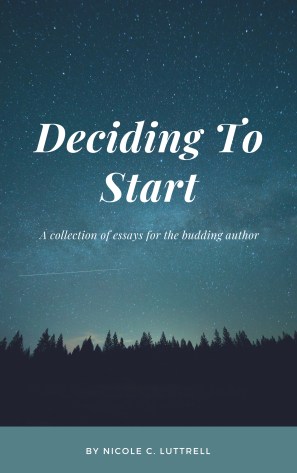 Beats World, updated with new information and new insights. It covers such topics as inspiration to start writing, advice on the tools you need to get started, how to be a writer while also being a full time human being, and inspiration to keep going.
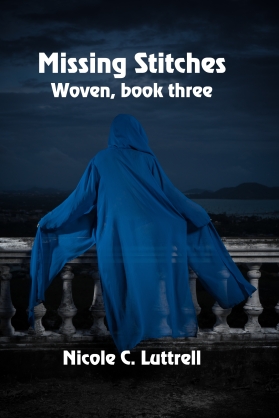 Michael. Lenore, the princess, and heir, hopes that she and her husband, Victor, can bring some stability. Meanwhile, her brother Devon and his wife, Queen Sultiana, come to visit and meet Lenore and Victor’s twin daughters. Sultiana comes with a heavy heart, having just miscarried her own child, and lost her father.
 Paper Beats World
Recent Comments