It’s Banned Books Week! This is always a good time. Reading books that other people consider offensive or inappropriate just makes me feel good about life, you know? And this year it’s even more important because book banning has been rampant. So it’s up to those of us who care to read out louder than ever. So let’s talk about the ten books that were most banned in 2021. Let’s read them, let’s share them, and let’s make banning books a thing of the past.
(As always, all of this information is from the Banned Books website. Please check out their site for more information and ways you can battle censorship.)
Beyond Magentaby Susan Kuklin
This one was banned because of LGBTQ+ content. Spoiler, this is going to be a bit of a theme.
This Book is Gayby Juno Dawson
Want to guess why this book was banned? That’s right, LGBTQ+ content and sexual education. Because why would we want to educate people about sex, one of the fundamental driving forces of our existence as a species?
The Bluest Eyesby Toni Morrison
Banned for child sexual abuse scene. Maybe stick a content warning on this one.
Me and Earl and the Dying Girlby Jesse Andrews
Banned because of sexually explicit content. I wish we protected children from guns the same way we protect them from sex scenes in books.
The Absolutely True Diary of a Part-Time Indianby Sherman Alexie
Banned for profanity, sexual references, and use of a derogatory term. I think this book makes the list every year.
The Hate You Giveby Angie Thomas
Banned for profanity and violence. Here’s the best part. It was also banned for anti-police indoctrination. No one seems to give a damn about pro-police indoctrination. This might be the one that pisses me off the most this year. It should get a special award for this.
Out of Darknessby Ashley Hope Perez
Banned for depictions of abuse. Again, I get that maybe we want to give a content warning. But don’t ban a book outright.
All Boys Aren’t Blueby George M. Johnson
Banned for LGBTQ+ content. As a side note, this book has one of the prettiest covers I’ve seen all year.
Lawn Boyby Jonathan Evison
Banned again for LGBTQ+ content. I don’t see any books getting banned for straight content.
Gender Queerby Maia Kobabe
Finally, banned for LGBTQ+ content. If you can read this list and tell me someone doesn’t have an agenda, I don’t know what’s the matter with you.
This year I’ll be reading A Song Flung Up To Heaven by Maya Angelou. I’d love to hear what you’re reading for Banned Books Week. Let us know in the comments.
I made a planner! If you’re getting ready to write a novel, then you want the Preptober Planner to guide you through a month of planning.
We all spend more time on Youtube than we’d probably like to admit. Honestly, I think I spend more time watching it than any of the streaming services I’m paying for. Which is kind of amazing when you think about it. Here’s a platform where anyone can post their content. Yes, there’s lots of controversy around that, as there is about anything on the internet. But that doesn’t stop the videos on Youtube from being some damn entertaining stuff. Or horrifically cringe worth.
Today I want to share with you six Youtube channels I watch that help me be a better writer. I’m not going over the channels I watch for pure entertainment or the ones I watch to learn Spanish or witchy stuff. These are just the ones that help me write. And I’ll bet they’re going to help you, too.
Okay, I bet you’ve already heard of this one. But Lofi Girl is my go-to background music when I want to get some writing done without distractions. There are no commercials, the lofi music just goes on and on. The animation moves just a little, not enough to be distracting. It is perfect.
While I’m not a particularly social person, I love going somewhere public to write. Libraries and coffee shops tend to be cluttered with other people doing exactly what I’m doing. Typing away on a keyboard, working on some project or another.
I missed this during the pandemic, this feeling of working around other people in a warm fuzzy sense of companionship. Without actually talking to one another.
The Merve Youtube channel gives you exactly that. Merve is just a college student, working on her studies, while she sits in front of a beautiful view. It’s soothing to hear someone flipping pages, highlighting, and typing while I’m doing the same.
I also like that there’s a timer on the video, reminding me to take occasional breaks.
This is a channel dedicated to art, by a fantastic artist named Temi. She gives tips and art advice, does draw-along videos, and talks art shop.
I love this channel from a writing perspective because the advice she gives for visual art applies to writing as well. The advice is sweet, uplifting, and super useful.
This is an overall life Youtube channel, not so much writing advice. But it’s got a ton of beneficial advice. I am often humbled by this woman who’s a decade younger than me, but has so much advice to give! I learn about home care, time management, money, and self-employment. None of those things are writing advice, but all of them are writing advice if you want to be a working writer.
This channel is full of the kind of writing advice I need right now. There’s info about trends, writing styles, and marketing. Listening to Michael talk is like listening to a really smart big brother. I just love it. And I for sure have gotten some awesome writing advice from him.
Finally, there’s Writing with Jenna. It’s also a Youtube channel filled with writing and marketing advice. It just has a lot more swearing and a small dog.
Jenna’s not interested in your feelings. She’s interested in telling you how you’re being dumb with your writing career and how you can fix it.
I love this because I’m not big on feelings when it comes to writing. I care about actually, you know, having a career that pays more than my Hulu bill.
So that’s it. Hopefully, if we’re going to spend all our time on Youtube, we can become better writers as we do it.
What’s your favorite writing Youtube channel? Let us know in the comments.
I made a Preptober planner! It’s available in my Ko-fi shop right now. Plan along with me so we can successfully write our novels.
It was the fourth of July. Then I blinked, and now it’s halfway through September.
I love this time of year, and I hate how fast it seems to go. My to-do list right now is packed with tasks and events. Next week is Banned Books Week, the holidays are starting. We’re starting recordings for the next season of AA soon. It’s a busy time when all I want to do is warm up a pot of apple cider and read about cult leaders on my back porch.
And now, Preptober is in two weeks! Clearly, I need a plan if I’m going to get everything done.
The Preptober planner is six pages plus a cute cover page that will guide you through simple tasks each week. By the end of October, you’ll have a plan in place for how you’re going to write, when you’re going to write, and what you’re going to write. I’ll be printing out one for myself and getting in some planning time in October.
Probably with some warm apple cider.
I hope you’ll join me. It’s a great way to ensure you succeed in writing your novel, and it helps support Paper Beats World.
And I hope you’ll be here next week for Banned Books Week. We’ll have extra content galore because the stupidest thing anyone can ever do is ban a book.
Spoiler warning: While I’m not going to directly spoil the ending of The Daughter of Dr. Moreau, I’m going to say some things that will make certain parts of the ending fairly clear. You’ve been warned.
I feel dirty even writing this post. Because I’ve read other books by Silvia Moreno-Garcia and I loved them. You can check out my review of Mexican Gothic here, Velvet Was The Night here, or God of Jade and Shadow here. They were great books!
The Daughter of Dr. Moreau was, at best, okay.
Let’s discuss.
The book did have a lot to love. Moreno-Garcia has a knack for writing endings that aren’t the anticipated happy ending but are so much more satisfying than that ending would have been. And for sure, this ending fit that bill.
I fell in love with our main character, Carlota, right away. Just like I always fall in love with the main characters. I devoured the lush description of the jungle, just like I always love the descriptions in Moreno-Garcia’s work. These are the reasons I kept reading.
My problem with this book is simple. It tried to be two things and didn’t manage either.
The book is supposed to be a sci-fi thriller and a romance. All of Moreno-Garcia’s books have that romantic element. I don’t adore that, not being a huge romance fan, but it fits in so well normally that it’s hard to argue with it.
But the romance genre has certain expectations. One huge expectation is that the love interest is going to end up with the main character. That didn’t happen. Worse, there was a gross age difference between Carlota and the man in love with her.
This wouldn’t have bothered me that much, since it’s unrequited love if so damn much of the book hadn’t been devoted to Carlota wanting to fall in love!
She does fall for and has a full-on relationship with another man named Eduardo Lizalde. A lot of the book centers around what a bad match this is, how everyone knows it’s a bad match, and how Carlota’s father wants this match to work because Eduardo is rich. How much this is all hurting Langdon, our other MC.
At this point, I’d like to remind you that they are surrounded by hybrid monsters. I do not give a damn if Langdon is drinking himself sick because he doesn’t want Carlota to be hurt by some callous rich boy. At least, I don’t care half so much as I do about the hybrids meeting up with the rebel leaders to overthrow the elite of the area and bring freedom to the land.
That’s the book I want to read!
But the hybrids and their plight seem like little more than a backdrop. I know we were introduced to more hybrids, but we only really get to know one of them, Lupe.
This wasn’t enough to make me lose interest in this author. The other books are strong enough to tell me this was a temporary issue. But The Daughter of Dr. Moreau isn’t one I’ll be re-reading anytime soon.
To sum it up, here’s what you can learn from The Daughter of Dr. Moreau.
-Don’t go halfway in a story.
-Understand your genre expectations, and either meet or subvert them.
Paper Beats World is a labor of love. If you want to support us, you can do so on Ko-fi.
Do you know what’s expensive? Everything, my fam, everything. Grocery bills and utilities are up from last year. Rents are going up, including mine. This is leaving everyone’s budget tight, including mine.
Do you know what else is expensive? Being a working writer, specifically an indie writer. Professional editing, writing software, cover art, web hosting, conventions. It all adds up fast.
I’m going to be fully transparent with you right now, and share exactly what I’ve spent writing money on this year.
– $150 for Nebula con
-$110 for web hosting
-$60 for Dabble (If you do Nanowrimo you get a really sweet coupon for Dabble that takes the price down by a lot.)
-$15 for printing
– And I’ve lost track of how much I spent on Amazon ads.
Everything I spend is worth it. I’m not spending as much as some other authors, honestly. I could be investing more. (And I should for sure be keeping better track of how much ads cost me.)
But most of the things I use every day to run my writing business don’t cost me anything. So I wanted to talk today about what I use, give a shoutout to some companies that deserve it, and maybe help you save some hard-earned money.
None of these items are sponsored, these are only my opinions.
I rely on the International Movie Database for reviews. I use it to check facts about actors, directors, and anyone else involved with a piece of visual content I’m talking about. I can check the upcoming schedules, release dates, all of it. Honestly, this site is my best review friend.
Much like IMDB, I use Goodreads to check facts for my book reviews. I also cross-post my blog posts there if they’re book related. I use them to market my books, reach out to all of you lovely people, keep track of the books I want to read, keep track of what my friends are reading. It’s a good time.
Oh, and Bookbub tells me when books I might like are on sale. So I’ve gotten some good book deals that way.
I might have talked about Grammarly before, but it bears repeating. Everything I post online goes through a Grammarly search first to make sure I’m putting out my best material.
Notion has a paid service, but I’ve been using the unpaid one for almost a year now and I love it. I use it to organize projects, my schedule, my to-do list, and my blog plans. Keep in mind, I run this site, contribute to Haunted MTL, work on three podcasts, and write novels and short stories. This is all in addition to having a full-time job and, you know, living. If I didn’t have Notion in addition to my bullet journal, I would lose my goddamned mind.
(Are you guys interested in how I use Notion along with my bullet journal? Let me know in the comments if that would be an interesting blog post)
I for sure have mentioned Canva before, but I’m going to go ahead and sing its praises again.
Canva is a site that allows you to create graphics, book covers, Instagram posts, anything pretty much. I’ve also started making my wallpapers there recently, and that’s been an enjoyable experience. I make all of my blog graphics there, including the one for this post itself.
Again there are some paid options, but a free version works just fine.
Along with Canva, Pixabay is the site I use to find good fair use artwork and pictures. And they are, let me tell you, lovely. Almost any picture on here or on my social media, unless I specifically took it myself, is from there.
This is by far my favorite site when I’m submitting work to literary agents. It has up-to-date information on agents, lets me search by genre, and keeps track of who I’ve submitted to! I am so bad at keeping track of things like that, no matter how hard I try. This site has kept me from double submitting more than once.
I swear, sometimes it takes longer to find a place to submit a short story than it did to write it. But the Submission Grinder helps out here. You can specify what sort of market you’re looking for in a great amount of detail. What word count, genre, and pay level are you looking for? You can be specific, allowing you to just see markets that fit your current story’s needs instead of wading through places that are just a waste of your time. I love this site.
This is one that I’ve been using for years and years to find writing markets. And it doesn’t just contain short story markets. I’ve searched for writing jobs, review work, nonfiction, agents, and publishers. Anything you want to sell, you can find somewhere to sell it here.
The Library
This might seem like a no-brainer, but it’s just not talked about enough. A writer cannot do anything better for themselves than having a good relationship with their local library.
I tweeted about this the other day but in case you missed it, here’s a list of things I did in just one trip to the library.
-I got a pile of research material for an upcoming book.
-I got a draft of AA published for the next round of editing for way cheaper than anywhere else.
-I had a quiet place to work and read for a bit.
-I was able to get a cheap cup of good coffee.
-I snagged a copy of Daughter of Dr. Moreau, which I’ve been excited to read.
Your local library is an indispensable resource. We don’t talk about them enough. We don’t thank them enough.
So that’s it! Hopefully, this list will save you some money and maybe even some time.
I’d love to hear from you, though. Are there any writing tools that you couldn’t live without and cost no money? Let us know in the comments.
Want to support Paper Beats World? You can do so on Ko-fi.
Long-time readers probably knew this was coming. Today is the eighth anniversary of my writing weekly posts for this little corner of the internet we call Paper Beats World.
I just read through the last six anniversary posts, and I don’t want this post to be just another thank you and I don’t know how the hell we got here post.
I mean, thank you for sure. While I would keep writing stories no matter the response, I for sure wouldn’t be posting here every week unless someone was out there consuming it. Every time you read my work and like it, it feels like a virtual hug.
At this point, it seems pretty clear that I’m going to keep showing up here. So let’s not waste any time today talking about how amazing it is that my Gemini brain didn’t get bored yet. I’m here to stay. So let’s talk about something worth our time.
How have you leveled up in the past year?
Remember last year, when I challenged all of us to level up together? Well, here’s how I did.
I went to Nebula Con, and have been participating in weekly writing dates with other con attendees.
I’ve tried my best to write posts that would help you level up your writing. I hope it’s helped.
And I’m not done leveling up. Over the next year, I’ve got big plans. I’m working to find an agent, of course. And I’m trying to join SFWA. While I’m doing that, I’m going to be bringing some self-published to you.
Here’s what you can expect from me between now and the next PBW anniversary.
1. Season two of AA is on its way. In case you haven’t heard season one yet, it’s available here.
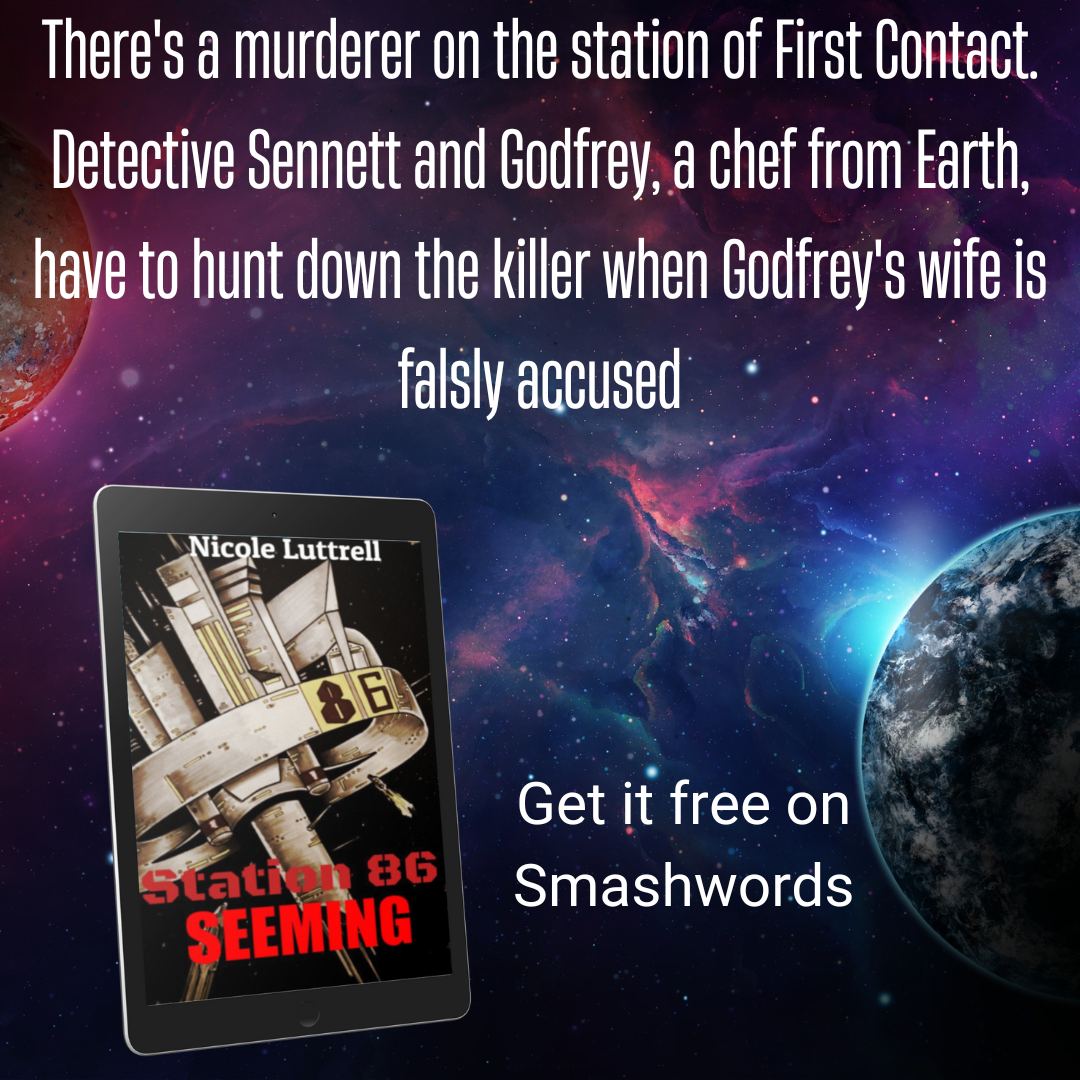
2. The very last Station 86 book will be coming out within the next twelve months. Don’t know when yet, but it’s coming. (You can get the first book for free on Smashwords right now.)
3. The good news for Station 86 fans doesn’t stop there. I’m currently working to convert the books into audiobooks and relaunch the whole series.
There will be other goodies coming your way. Short stories exclusive to PBW. New content to make you a better writer or just live a better life. Reviews of speculative fiction content. Next month, of course, we’re going to be celebrating Banned Books Week.
Writing for this blog continues to be one of the most uplifting projects in my week. Thank you for being a friend, and showing up with me every week.
This book might as well have been titled This is How You Win All The Awards. In 2020, This Is How You Lose The Time War won the Hugo and Nebula award for best novella. I finished it in one day, laying in bed crying.
Needless to say, everyone should read this book. And every writer can learn something from it.
Just in case you haven’t read it, the book is set up as letters between time travelers, on opposite sides of a war. Red and Blue are manipulating the future so that their side will have an advantage. Their letters to each other are at first mocking, then playful. Then, they become love letters scrawled out over trees and mountains.
This is a story that took chances. I don’t read a lot of books that are just letters back and forth. This is an example of two authors (Amal El-Mohtar and Max Gladstone) knowing their craft well enough to do something like this. To write a whole novella in letter form, you have to understand what you’re doing. You don’t have dialog. You don’t have a third-party description. You have a limited point of view. With all of these restrictions, you’ve got to know how to use what you’ve got left. (This is something I’m learning as I write the second season of my audio drama, AA.)
This book is also an example of trusting the story enough to tell it the way it needed to be told. Not every story could be told in a letter format. Not every story could be told in a journal format, like so many of my favorite books from childhood.
But some stories can. Some stories won’t work any other way.
Don’t be afraid of writing your story the way the story wants to be written. Be it a series of letters, or even tweets. If you have a story that isn’t working, this might be a great way to fix it.
Another thing that was striking about this book was its literary flow. The words are beautiful, they flow like a poem. And that’s something I wish more speculative fiction authors would embrace.
There’s still a disconnect between genre writers and literary writers. While one focuses on pure storytelling, the other wants the writing itself to be pleasurable. Both of those things can work together, but you’ve got to put the work in to make it happen.
Now, a warning. The story should always come first. I’ve read some truly bad writing because of a damn good story. I’ve yet to sit through a boring story because the paragraphs were just so beautiful.
Finally, This Is How You Lose The Time War was an achievement in co-writing. Each of the authors wrote for one of the characters. This worked wonderfully because it allowed both authors to bring their own voices and style to the story. In an episode of Writing Excuses, Amal El-Mohtar talked about writing in a gazebo with Gladstone, sending chapters back and forth to each other. This sounds like a blast. This is probably part of why the book was so fun to read.
This could only be done because each writer trusted the other. They respected each other enough to follow along where the other one lead. Clearly, it worked out very well for them.
To wrap things up, here is what you can learn from This is How You Lose The Time War.
– Trust your craft enough to try something different.
-Trust your story to tell you what format it needs to be told in.
-Don’t be afraid of literary writing, even in speculative fiction.
-When you’re working with others, let both of your styles and voices shine.
Spoiler warning! I’m going to ruin the ending of this book for you. Proceed with caution.
The Travelling Cat Chronicles is not a speculative fiction novel. (By the way, that is the correct spelling of the title. It’s the UK version of travelling. My spellcheck is not happy with me right now.)
It is from the point of view of a cat. But it’s not a magical cat. It’s just a regular cat, traveling around Japan with his regular person.
As someone who usually reads only speculative fiction, with the occasional dive into historical fiction, this was a step out of the norm.
And I’m honestly glad I did. It was a great story. By the end of the book, I was crying on a public bus. Just, you know, as a warning.
As writers, we should never restrict ourselves to reading our genre. We should read as widely as we can. If a book catches your attention, read it. There’s always something we can learn from a story, no matter the genre.
One of the things that kept me turning the pages was the vivid descriptions of Japan. This is a country I’ve long been fascinated with. I loved hearing about Nana, the cat, and Satoru, his person, exploring the country. I was fascinated by the stories of Satoru’s childhood, his school tales, and descriptions of trips with friends. They had such rich detail. I loved every single second of it.
If your work takes place in a fantasy world, then it’s easy to talk up the details. But if you’ve got a story set somewhere real, it can seem less important. But it’s still just as crucial. Your hometown is probably boring to you because you see it all the time. But for someone who’s never visited, it’s fascinating.
It didn’t take me long to realize that this story wasn’t going to have a happy ending. I’m willing to bet you can guess what happens. I guessed around page four.
But that didn’t stop me from bursting out into tears when it was happening. Because by that time, I was connected to the characters. There’s only so much you can brace yourself.
Your ending doesn’t have to be a shock for a reader to enjoy it. Yes, there should be questions. Yes, it’s better if someone can’t guess the ending by reading the blurb, which I’ve done on multiple occasions. But the main ending doesn’t have to be a huge surprise.
I knew pretty soon that Satoru was going to die. (I did warn you that I was going to spoil the ending.) But I didn’t know what would become of Nana. And I desperately needed to know.
That I won’t ruin for you, by the way. Trust me, the book is worth reading to find out.
I will tell you that the book has a happy ending. It wasn’t all syrup and perfection. It was great, though. Satoru doesn’t live, but he does touch the lives of the people he cares about for the better. He leaves the world a brighter place. And that’s a realistic happy ending. And a fully satisfying one at that.
Some other good examples of this can be found in Pixar movies. This has been pointed out before, and by lots of fans. The toys in Toy Story go to a new home, so they’re not with Andy anymore but they’re still happy. Sully from Monster’s Inc doesn’t get to keep Bo, but he can visit her. There are lots of ways to have a happy ending. I love that we have so many that go beyond our expectations.
To wrap it up, here’s what you can learn from the Travelling Cat Chronicles.
Read outside of your genre. Read anything that sparks the slightest bit of interest.
The description of your story’s location can and should be a selling point.
Your ending doesn’t have to be a shock to be satisfying.
You don’t have to have a traditional happy ending for it to be a happy ending.
I have a surprise for all of you today. 2022 has been a bit of a slow year for me, publishing wise. I mean, I did launch an awesome horror novel, but that’s been about it.
Until tomorrow, that is, when a new podcast launches on Haunted MTL.
Here’s what you can expect from Bite Sized Horror. You’ll get three short stories read by myself and my co-host, a rather hard to handle little one (little what I don’t know) named Mick. Some are written by me, some by Mick, and some by listeners. You’ll also hear about a scary book that is perfect for younger horror fans.
Some of the books we’re covering this season include Coraline, Ms. Peregrine’s School for Peculiar Children, and The Witches.
I had so much fun with this podcast. And if you have a little horror fan, I know you’ll love it. Check it out tomorrow, when the first episode premieres.
As a witch, Practical Magic by Alice Hoffman is required reading. I’ve of course seen the movie countless times. But I only recently cracked into the novel.
It was a far different journey than the one I was expecting. I’m not the only person to mention this, but the movie is far different than the book. Normally when this happens, one or the other is more enjoyable. Most of the time, like with the Giver or Hunger Games, the book is better. On rare occasions, like with Forrest Gump, the movie is better. But in the case of Practical Magic, both are great. Just in very, very different ways.
First, let’s discuss what the two have in common. Both are about two women, sisters named Sally and Gillian Owens. After their parents die, they’re raised by their aunts. Gillian, the wild child, runs off as soon as she’s old enough. Sally finds a good man, has two baby girls and is widowed when the girls are still little. Then Gillian brings back trouble, in the form of an abusive boyfriend she accidentally poisoned. When a detective named Hallet arrives, Sally and Gillian try to hide their homicide. But soon Sally finds herself falling in love with him.
The movie, on the off chance you’re one of three women in the world who hasn’t seen it, is a feel-good film about sisterhood. The townswomen have hated the Owens family for generations. But in their time of need, they come together.
The book isn’t that sort. Sally Owens, after being ostracized her entire life, decides to leave. This is after her husband died, and she spent a year in a depressive fog.
The book is a bit more episodic. Yes, Gillian does bring her troubles and her abusive boyfriend to her big sister for help. But then the two bury him in the backyard and go about their lives.
Their lives revolve largely around raising Sally’s daughters.
And this is where the book shines.
Sally and Gillian fight over how to live their lives and, by an extent, how to raise the children. Gillian undermines Sally’s parenting, and Sally in return blows up at her.
The girls bicker like teenagers, fall in love with boys, and are threatened by drunks. It all feels real. It all feels like the lives of girls all over the world right now.
The same can be said for Sally and Gillian. They’re both struggling with the fact that, despite The Aunt’s best intentions, they never felt wanted. Sally handled that by growing up to fast. Gillian handled it by not growing up at all.
In the end, though, The Aunts prove that they love the sisters more than they ever realized. They come to their aid, after years of neglect by both girls, might I add.
I know I keep saying this, but it all feels so real. And through it all, we see notes of magic that feel attainable. It feels, in short, practical.
In short, here’s why Practical Magic works.
It’s honest. That’s it. The book talks honestly about depression. It talks honestly about a woman’s relationship with her parents, her sister, and her daughters. It talks honestly about romantic relationships, both good and bad. It talks about loss, and it doesn’t sugarcoat a damn thing. Sometimes Sally and Gillian are just fucking mean to each other. Sometimes they do stupid things. Sometimes Sally isn’t a good mother. Sometimes the girls are also fucking mean to each other. And I love that none of them are right all the time, none of them are wrong all the time. They are, only and entirely, family.
I loved this book, and I’ll be reading it again soon. I hope that if you haven’t read Practical Magic, you do soon. Because it works.
Paper Beats World is a labor of love. If you’d like to support this blog, you can do so on Ko-fi.




 Paper Beats World
Recent Comments