My Review of Notion

So I’ve been using Notion for a couple of months now. I started using it after watching an Amanda Lee video on YouTube. She just made it seem so cool, I had to try it.

I have a bad habit of trying new software and apps, spending hours moving all my notes and info over to them, then dropping them like a hot coal a few days later. The reasons vary. It didn’t do what I thought it would. It’s redundant. It’s just one more bloody app to check in the morning. It’s not easy to use. Something new and shiny caught my eye. You get the idea.

But I’ve continued to use Notion for long enough now that I think I’m ready to share it with you. (Not a sponsored post.) 

So, if you don’t know what Notion is, it’s a note-taking app. Think of it as a virtual notebook. I tend to use it as a virtual bullet journal. You can keep to-do lists, pictures, documents. if you have a paid account, you can share access to all of those things.

I don’t work with a team, so I don’t have a paid account. And I have to say, I use it almost every day for both my personal and my writing life. 

Here’s what I use it for. 

Social media plans- Pretty self-explanatory. I keep a little chart of ideas for Tweets, pins, Instagram posts and the like. I hate sitting down to plan a day worth of social media and having no ideas. Why do I have all these pithy thoughts until I have my keyboard under my fingers?

Meal prep plans- Whatever makes my brain go blank when I’m trying to write social media does the same damned thing when I’m trying to figure out dinner. Even when I try to write a shopping list, I forget every meal I have ever made. So having a list of meals I make, or that I want to try, is a huge help.

Utility info- Another pretty self-explanatory thing. This is the information I need if I have to deal with any of my utilities.

Savings info- I know everyone suggests having separate savings accounts but I don’t have time for all that nonsense. So my savings account has just one chunk of money. Then I keep track of what money is for what on this Notions page.

Expense trackers- If you’re not tracking how much your bills usually are, you should be. 

Address book- Again, pretty simple. Nothing’s worse than fumbling for the vet’s number because Oliver swallowed something he ought to know not to.

Rolling to-do list- While my daily goals are in my bullet journal, I like to keep a rolling list of things I need to get to. This gets slowly moved to my bj as I can manage these tasks. Nothing gets forgotten, but I’m not looking at a list of things that no one could do in a day.

Contests- I have a bad habit of entering too many contests. I like to have a place to keep track of them. Due dates, word requirements, all the rules, links to pages. It’s super useful to have all of that in just one place.

Project pages- This is especially useful as I get into more forms of storytelling. As I work on AA and other podcasts, there’s just a huge amount of info to keep track of. And Notion is where it all goes. 

Blog post schedule- Finally, I keep track of all my blog posts for here and Haunted MTL. I keep notes, links, info, calendars. 

Now, you might be wondering if I still use a bullet journal. The answer is yes. I use Notion for long-term planning and things that need to stick around as I switch from book to book. My daily and weekly planning are more in the moment. Even my monthly goals to a degree. And of course, there’s also the memory capturing part of a bullet journal that I don’t want to convert to virtual just yet.

The big reason why I started using Notion is that I had things that either changed too often or not often enough. Things like my blog schedule, which might switch on a whim, are a pain to do then redo on paper all the time. Things like what recipes I like to make for dinner don’t change so often that they need refreshed every three to six months when I get a new BJ.

I do appreciate that I can pull Notion up on any device. My tablet has the app, of course. And I can pull up the website on any computer. I like that I can access all of my notes, for both home and writing life, no matter where I am. 

The fact that it’s cute doesn’t hurt. 

Have you tried Notion? Let us know in the comments below. 

You can support Paper Beats World on Ko-fi.
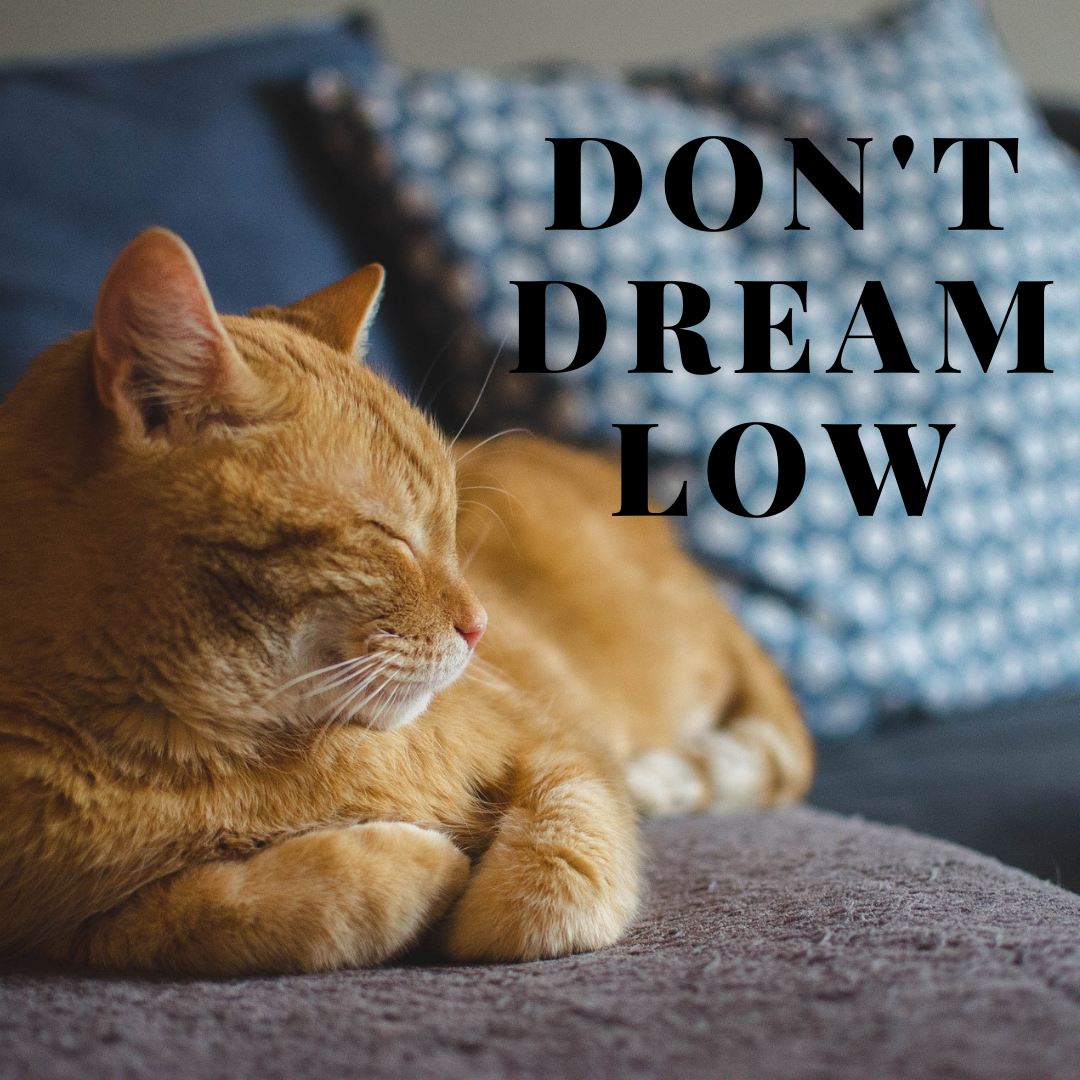
Don’t Dream Low

Storytime, guys. Once upon a time, right before I started this blog, I managed a shoe store. And back then, I’d worked hard to get that position. I’d put in intense hours, said yes to abusive things. I did something I’m still pretty proud of and worked with several cheer squads to provide their shoes. That alone brought in thousands in revenue for my store. I could go on, but you get the point. I wanted to be the manager.

And I got it. 

Funny thing about wanting something and working really really hard for it. You often get it. And you think that’s going to make you happy, right? 

I got the manager job, and I did a happy dance around the store. And if I was committed before, I was doubly so after. I was so proud. 

It took me months to realize I was struggling emotionally. To realize that I hated the damn place, the job and everything about it. 

For a long time, I tried to ignore that feeling. I beat myself up over it. I told myself that I didn’t have any right to be unhappy. Isn’t this what I’d worked for? A poisoned mantra was imprinted in my mind, and I couldn’t get rid of it. I didn’t want to get rid of it, because it served me. It made me get up and go to work every day, even when I’d rather have died.

I’ll never be happy if I’m not happy here. 

The realization that something had to change didn’t hit me all at once. It came in trickles. Moments that, when looked back upon, should have been my wake-up call. (Like the time I got a bad kidney stone. I was in so much pain I thought I was going to have to be hospitalized. And I was scared to take a day off of work.) But there were so many, many reasons to ignore them. Really good, adult reasons too.

This was the best job I’d ever had. 

I was making more money than ever.

This job was way better than any my mother had ever had.

I had a family relying on me.

I loved most of the people I worked with.

Our rent was high.

I didn’t think I was qualified for any other job.

I didn’t think I deserved a better life. 

I’d worked so damn hard to get there. What if I threw it all away and I still wasn’t happy?

I would love to tell you that I eventually made the leap and improved my life all on my own. Sadly, I didn’t. But I did start writing again, after not writing anything for years. And this helped, for a time. 

I thank God that I got fired from that job. Honestly, I don’t know if I ever would have been brave enough to leave on my own.

From there, everything changed. I got another day job, something I never thought I was good enough for. I wrote more and got published. I worked hard, again. I got what I wanted again. Thank God, I liked it a lot better this time.

I’m telling you all that to tell you another story. The manager at my current day job, the one I didn’t think I was good enough for but went for anyway, just left. She got a better job. Which isn’t to say, at all, that this job isn’t good. Just that she could do better, so she did. 

Right now I have a day job that I like. I help people, that has value to me. I respect the company that I work for, that has value to me. I feel respected, that has huge value to me. I have a nice home. I have a job as a critic on Haunted Mtl. I have several published books.

In short, the life I live today has exceeded my dreams from before I started this blog. I am happy. 

But I will never, ever let that poisoned mantra come back. 

We can do better. Obviously, I don’t just mean our day jobs. I mean, more than anything, our art.

If you have a job writing, or you’ve been published, that is freaking amazing. Pop some champaign, do the Snoopy dance. Then, decide what your next step is. Because I told you all that to tell you this. While I didn’t let that poison mantra return, I did plateau over the last few years. 

So I’m working on that. I’m going back to the basics. I’m working on really improving my writing. I’m trying to get an agent, trying to join SFWA. 

I never want to learn this lesson the hard way again. There is always another level to reach for. I can always be a better version of myself. I can always surpass my goals, my dreams. 

Dream high, guys. You are capable of so much more than you think. 

You can support Paper Beats World on Ko-fi.
Writing nonfiction, writing the hard topics

Often when someone chooses to write a nonfiction book, it’s because something has moved them. Something has changed their world. Often, it’s for the worse. Nonfiction books are often written because there’s something terrible in the world that the author wants to shine a light upon.

These are things that cause us grief. And it’s good that we talk about it. Grief is healthy. It’s a visitor that we all have to sit with in our lives.

But grief is also duplicitous. It will tell you you’re the only one feeling this. That you’re weak to handle this so poorly or to be so upset. That you are, and always will be, alone.

Of course, this is all bullshit. But it’s hard to remember that when you’re looking at everyone’s Instagram-worthy life. No one’s posting pictures from their mother’s funeral.

This is exactly why writing personal books about things that have left scares are so vital. It’s a way to reach people you may never meet, hold their hand, and tell them that we’ve been where they are. That we can walk this path together. That they are not alone.

All that being said, writing a book about hard topics is difficult. Especially if it’s something you have firsthand experience with.

If you have chosen to undertake this, God bless and go with you. It is hard work, but it can be so worth it. In writing about hard topics, you’ll exorcise the poison inside you from them. But it’s still hard. 

If you’re writing about something you’ve experienced first hand, it is terrifying to wade back into that. If you’re writing about something that impacts others, it’s still emotionally taxing to delve into these stories. So you need to take care of yourself when you’re working on these kinds of projects.

Start with boundaries

Boundaries are vital in all aspects of your life. Especially when dealing with difficult work. So the first thing I suggest is having specific break days. Mark these out. Don’t work on the project at all. Don’t take notes or meetings, or do any research. Not even one little slip. If this is the only day someone can meet for an interview, then they don’t get interviewed. These are days for you to rest. For your psyche to recover from the beating it’s getting.

 Because this work can be so much more draining than writing fiction, I suggest you don’t set strict deadlines. If you need a break, then take it. Don’t add that extra stress of a deadline that you emotionally might not be able to make. Deadlines, even if they’re ones I’ve put upon myself, make me a little anxious to start with. This helps push me to get work done. But it’s not a great idea if I’m pushing through emotional trauma. 

Just like it’s important to have days off, it’s vital to put your work away at the end of a session. While I get that it’s easy to let writing bleed into the rest of your life, I don’t suggest this being a project that does that. When you’re done writing for the day, put your work away and do your best not to think about it until the next session. 

Finally, you need to have boundaries about what will and will not go into your book. You don’t have to put everything in. I’m not suggesting you lie, or hide part of the truth. If something is difficult to write about, that might be the exact thing that needs to go in there.

But we all have those moments that are truly personal. Things that we just want to keep to ourselves. 

Yes, a large part of writing nonfiction about hard topics is to share those hard moments. That doesn’t mean you have to lay your entire life bare. If you’re wondering whether or not to add in a particular story, think of it this way. Will it help someone to read it in a way that isn’t covered by another part of the book? If not, then you don’t have to put it in.

This is your life, you get to decide how much of it you share. Because you’re going to have to keep living it after someone else has long finished reading about it.

You might need some help

Writing tends to be a solo gig. But writing about hard topics is easier if you don’t face it alone. Let’s talk about building a support system.

We’ll start with a close friend or family member. Someone who knows you well enough to watch you for warning signs of depression, anxiety, or just overall being not okay. Talk with that person. Let them know what you’re doing and how they can help you if they worry you’re getting in too deep. Then, if they say they’re worried, listen to them. If you can talk to a therapist about this, do it. But I understand that not everyone can do that.

The next part of your team is your editor. If you’re working with a publisher, great you have an editor. If you’re self-publishing, get yourself an editor as soon as you can. Because here’s a nasty fact that you don’t want to hear. A hard topic book still has to be as polished and well written as any other book. And I know, the thought of such paltry things as grammar when talking about serious topics is laughable. This is why you’re going to have to rely heavily on your editor. They’re going to be the level head and steady hand when you can’t be.

Finally, don’t forget that you’re not the only one working on a difficult book. Reach out to other people who are doing this work. Find other writers online or within your community. Ask them how they’re coping. 

That’s all I have for the nonfiction series right now. But I’m open to doing more. If you have any questions about nonfiction writing, please feel free to leave them in the comments.

You can support Paper Beats World on Ko-fi.
Writing Nonfiction, Organization

In learning to write nonfiction, I’m discovering a beautiful part of it that I wish I’d known about all along. It’s something so dear to my heart that it makes nonfiction a joy, even aside from the pleasure that writing always brings me. 

I finally have a worthy reason to use the metric ton of stationary I own to organize all my notes. 

Organization when writing a nonfiction book is a whole other dimension than when writing a fiction novel. Organizing for a fiction book is like playing for the farm leagues. Nonfiction is getting called up to play in the majors. If you want to come at me over this, I’ll remind you that I’ve written and published four novels and four novellas. I understand the research, organization, and planning that goes into that process like I know how to make pasta. I’ve simply done it too many times to ever forget.

All that being said, let’s dive in. 

I find organization works best when it’s a blend of physical and digital. No surprise, I am a hybrid in all things. So let’s talk first about the physical. 

Here’s a quick shopping list to get you started. As you keep your notes and find what works best for you, you’ll likely add to it. But I’ll be surprised if you subtract too much from it. 

One dedicated notebook. 

Colored highlighters.

Sticky notes. 

Yes, you need a notebook, even if it’s a small one. No, you probably don’t want to keep notes in your writer’s notebook, because that has all sorts of other things in it. If you start keeping notes for your nonfiction book in there it will fill up too fast and make it harder for you to refer back to the info when you need it.

Colored highlighters are a joy. But they’re also useful to color-code things. More on that later.

Finally, there are sticky notes. What can’t you use these things for? I like to mark passages in books with them. I make detailed notes and stick them into research material so I’m not scribbling through the margins. (God forbid it not be my book and I write on it.)

Remember, physical organization has two goals. Capture the information you need and make it easy to find later when you need it. These are the bare necessities and can be had at the dollar store. You don’t have to be a psycho like me and invest way more than is required. (But if you do want to, I get most of my materials at either Stationary Pal or Jet Pens. Not sponsored, I just find that they have good stuff for good prices.)

You may ask, in this digital world, why take physical notes? Well, I have two reasons. One, I don’t have a smartphone. I have a tablet that I love but is sometimes cumbersome to whip out if I’m out doing research. Two, I still do my best thinking with pen and paper. While I even write many rough drafts on Dabble now, I still outline everything in a notebook first. It just helps me get my thoughts together. I’m going to stand by writing on paper with pen until my dying day.

However, there’s just no way I could write a nonfiction book without some serious digital organization. Here’s just a shortlist of things I’ve had to keep track of digitally.

Virtual interviews and email interviews

Photographs

Notes from e-books

Links to sites

Lists of books to read

Lists of people to talk to

Essays I’ve written

Interview question pages

Source links (Cite your sources, my friends. Cite your sources.)

I’m using Notion to organize all of my information. (I’ll be doing a full review on Notion soon.) But you can use any sort of system that works for you. You can use word documents, google docs, Evernote, Milanote. Whatever software you’re comfortable with. The only important thing here is that when you find one system, stick with it. 

This is hard if you’re impulsive like me. Because I swear, I stumble upon a new organization and note-taking software every week. And because they’re new, they’re shiny.

Not one to stick with anything that isn’t working as well as it can, it’s hard to stay with one system. But I’m not doing myself any favors by switching things up mid-project. All that’s going to happen is that I’ll lose precious hours of work time swapping documents and files over. And I will almost certainly lose something vital in the process. So once you’ve chosen your note-keeping system, that’s the one you’re using for the entirety of this project. You can try something new next time.

Finally, I have a few bits of overall advice for organization. The first is the most important. Start out organizing your notes right away, when you have even a single document. Do not organize your notes every month or week. Organize information as it comes in, at the end of every work session. 

If this seems ridiculous to you, you don’t yet understand the work you’re going to go through getting info for your info. You don’t grasp how foolish you’ll feel having to ask to re-interview someone. Or how many hours you can waste riffling through audio files for the one you need. 

Next, make sure that you’re backing information up regularly and securing it. You never know when something might happen to your computer or your online accounts. I keep everything backed up on a flash drive that doesn’t leave my home. Everything I do online regarding this project is password protected. It’s not that I think I’m writing anything groundbreaking, or that someone’s going to steal my precious work and publish it as their own. It’s that there are assholes with nothing better to do than mess with others. 

One final bit of advice I have is to color-code your notes in a way that makes sense to you. And keep your colors consistent from physical to digital. That way you’re not remembering or tracking multiple color meanings. It helps considerably when you’re looking for something in a rush.

That’s it for this time. Let me know in the comments if you have any questions about nonfiction writing that you’d like me to cover. 

You can support Paper Beats World on Patreon.

Or buy me a cup of coffee on Ko-fi.

Writing nonfiction, interviewing

As I dive further into the world of writing nonfiction, one thing is becoming clear. Interviewing people as someone with social anxiety sucks so hard. 

What the hell was I thinking, putting myself in a position where I was going to have to like, talk to people? As a professional?!

Okay, all that aside, conducting interviews is something that I had to learn how to do. I’ve also developed some ways to make it easier on myself. Are any of these world-shattering revelations? No, not really. But they’ve all helped me. And if you’re writing a nonfiction book, they might help you too.

Especially if you, like me, don’t like talking to people. I mean, that’s why we became writers. 

When you’re setting up interviews, common courtesy comes into play. You don’t want to waste anyone’s time. While there are benefits to being interviewed, largely your subject is doing you a favor. So act like it, and value their time.

Start by doing some research ahead of time. No, forget that. Start by doing a lot of research ahead of time. Don’t ask this person things you can google, is what I’m saying.

It might also help if you check out interviews they might already have done if they’re a specialist that gets interviewed frequently. I can imagine it gets tiresome to be asked the same questions all the time. Try to shake it up a little. Or at least not waste their time, and yours, asking them things that you don’t need them to answer.

Another part of not wasting their time (or yours) is to write up your questions ahead of time. That way you’re not fumbling around, trying to think of what to ask next. This helps with anxiety, too. I’m sure that as you’re thinking of someone you want to interview, you’ve got millions of questions in your head. Writing them down might seem useless. Until you’re face to face with another human being that you probably haven’t met before. Then all of your questions vanish from your head like a puddle on a hot day. 

It also just makes you look like you’re a professional. Like you’ve got your shit together. 

When you’re writing out your list of questions, you’ll want to start with some basic release stuff. This is always useful, but even more so if you’re working on an emotional topic. Once you start talking, you might forget entirely. So let me help you get started.

1. Do you want me to use your name? 

2. If so, how do you spell it? 

Ah, but before we get to the questions, you have one very simple piece of information you need to give them. Repeat this sentence with me. 

I’m going to record our discussion today. If you’d like, I can send you a copy.

That’s it. Don’t give them the chance to say no. If they don’t want to be recorded, maybe don’t talk to them.

I understand that I’m being a little hard line here. And of course, you don’t have to listen to me. What the hell do I know?

Well, one thing I know is that having a recording of a conversation protects your subject and you. If you fuck up and misquote them, there’s a record for them to fall back on. If they claim you misquoted them and you most certainly did not, you have the record too. 

There are a lot of other good reasons to keep a recording of the conversation, of course. You’ll need it along with your notes to refer back to. And you do want to make sure you’re not misquoting anyone.

One thing that’s helped me when conducting interviews is not doing them face to face. First off, Covid. Second off, lots of people I want to interview don’t live near me. Or, they’re super busy people who find it hard to make time to sit down and be interviewed by some random woman.

That’s why I utilize zoom interviews and email interviews.

Honestly, the emailed ones are the best. It gives your subject time to consider the questions you’re asking and give you thought-out answers. It also lets them answer the questions in their own time. It’s just a lot more schedule-friendly.

Also, once again, you’ve got a complete record of what was said. #protectyourass #notlegaladvice. 

Finally, remember that in most cases you’ll be interviewing professionals. While you might do some personal interviews, most people are informed members of their field who are qualified to talk about your topic. Treat them as such.

But remember that you’re a professional too. You are writing a book, and that has some clout to it. Your subject is adding to your book, and you should be grateful. But you don’t need to be scared of them. This book is your project. Hold your head up high. You’re doing something most people only talk about doing. 

Thanks for reading! You can support Paper Beats World on Patreon.

Or, buy me a cup of coffee on Ko-fi.

Nonfiction, not a school essay!

Writing nonfiction often gets a bad reputation. Lots of authors think it lacks the creativity and storytelling of fiction. 

And I blame the public education system. 

English class taught me to love books and hate nonfiction writing. It kind of made me hate writing anything I was going to turn in for a while until I learned to work with the system.

The problem is that not everyone works with the system well. And when you’re writing an essay for English class, it’s fairly dull work.

It’s boring to write and it’s boring to read. I’d think teachers would assign different topics that encourage kids to explore creativity. But then, teachers don’t usually make their lesson plans.

Here’s the thing, though. Writing a nonfiction book is not the same as writing a school essay. 

It’s not a school essay because you’re writing about something you have a passion for. Unless you were very lucky, I’m assuming you didn’t like most of your school essays. But a nonfiction novel is about a subject that you care about enough to live and breathe.

At least it had better be if you’re going to successfully write about it.

You’re excited about your topic. You’re passionate about it. And the language you use needs to reflect that. 

Language and word choice is one major way we can utilize creativity in nonfiction pieces. When someone’s reading your piece, they should be able to feel your excitement. They should feel your love.

Not for them. That would be weird. For the topic. 

Another thing that pissed me off about school essays was the strict reliance on templates. You know, a standard intro, key topics and then a closer.

Okay yes, I use a loose version of this for writing blog posts. But I don’t have to. And I certainly don’t use them when writing nonfiction.

If you want to write great nonfiction, throw out the rules. Your work doesn’t have to fall into neat paragraphs. You don’t have to discuss things chronologically if that doesn’t make sense.

The book is your own. You are an artist. Free yourself from the shackles of topic sentences. 

The most important thing to remember is this. Your nonfiction books are meant to convey information. That’s its main purpose. But it’s not its sole purpose. Your book also needs to be entertaining. It needs to be fun to read.

Because if it’s not, no one is going to bother. 

Announcing a brand new scifi/horror podcast

As you might have noticed, we’re more than halfway through 2021. And I, gasp, haven’t launched a book yet. 

For those of you keeping track, I’ve launched a book every year for the past five years. Often, more than one. 

Well, I have some bad news and some good news, you guys. The bad news is, I’m not launching a book in 2021. 

The good news is, I’m launching a podcast instead. The even better news? It’s based on my most popular short story ever. 

You guys, Haunted MTL is launching a podcast that I wrote called AA on September second. 

Yeah, that’s happening. 

When Josey moves to a new town, she finds that she can’t escape her demons. She needs a meeting. But the one she finds isn’t the one she was looking for.

She discovers a community of aliens, hiding in plain sight. Josey is thankful to find a group of people who accept her, including a new roommate and a cute guy. 

But the community isn’t without its darkness. And they have their enemies. Josey soon finds herself caught in a war that she barely understands, but can’t help but join.

During this war, Josey learns that the alien community is hardly the only thing unexpected in her new home. She stumbles into one dark place after another, realizing that small towns hold more secrets than outsiders could ever imagine.

I originally published AA as a standalone short story with Solstice Publishing. And I’m pretty proud to say it had a good reception. I even had one delightful commenter on Amazon say they thought this would be a great tv series. I don’t know who this person is, but I will love them for the rest of my life. And yes, this did inspire this idea.

AA includes some amazing voice talent. I play a few characters, of course. But you’ll also hear the voice of my talented and amazing co-star of Off The Bone, J.M. Brannyk. 

Along with us, you’ll hear Jim Phonix, Ev, Jennifer Weigel, and Kal Scarlett. This is such an awesome group of voice actors that I was blessed to work with. They’re also great writers, artists, and critics who share amazing content every day on Haunted MTL.

AA is creepy fun. It’s about addiction. It’s about being new in a small town. It’s about the dark shadows in hometowns that we all know but don’t talk about. It’s about all of those things and more, and I think you’re going to love it.

Stay tuned for more info as we get closer to the release date. I can’t wait to introduce you all to the world of AA. 

Writing nonfiction, Planning

Writing a nonfiction book is a world away from writing a fiction book. As I travel this brand new terrain, I’m taking you along for the ride.

Don’t forget to read part one of this series, Research, if you missed it. 

Today we’re talking about one of my favorite parts of writing a nonfiction book, planning it.

Don’t laugh, I’m not joking.

Planning a nonfiction novel is designing the skeletal system of the whole book. You’re figuring out what’s going to go where as you gather information and write content. It’s like the sketching a painter might do before beginning a painting.

When planning a nonfiction book, I find it’s best to start with your goal. When I’m working on an Off The Bone episode, I always remember my main goal is to provide the background you might not know about stories you probably love.

Knowing the goal of your project will guide you through the whole process. Is your goal to convey information? Do you want to inspire others to act? Are you sharing a personal story to convey comfort and comradery? It doesn’t matter what your goal is, so long as you have one. Otherwise, why are you writing a book at all?

I know this kind of sounds like a school essay. I think we all learned these sorts of essay writing styles. An informative essay, entertaining, persuasive. And yeah, it kind of is like that. It’s also super not like that, but we’ll talk more about that in a future post. 

Once you have your goal, it’s time to make your outline. Now, the information going into your outline is going to vary wildly depending on what kind of nonfiction book you’re writing.

The project I’m working on right now relies a lot on personal essays. They tell a story. So, it was easy to use this as a large part of my outline. Through this, I add in interviews and helpful (hopefully) charts to support the points I’m making in the book.

I made my outline on Notion. You can use any outline software or even pen and paper. But I’ve been loving Notion for my project organization. (If you want to see a post about how I use Notion in addition to my bullet journal, let me know in the comments below.)

The outline helps me out through the entire project. I can see easily how much work still needs to be done on the book. I can also see at a glance if the book is a little unbalanced. For instance, if I see that I have a lot of personal essays, I know I need to set up more interviews. If all of my interviews are personal ones, I know I need to hit up some professionals. 

It’s also kind of inspiring to watch my outline fill out as I work. You all know I love visualizing progress. 

I have just one more bit of advice for planning your nonfiction novel. It might be the most important bit of advice yet.

Leave room for what might surprise you. 

You’re going to do a ton of work on a nonfiction novel. Like, I don’t think you realize how much work goes into this. And as you do this good work, you’re going to find things that surprise you. That might throw your entire plan totally off the rails. And I highly suggest you make space for that.

Or, as it’s hard to leave space for the unexpected, I’d encourage you to be flexible. You never know what you’re going to learn. And nothing is ever set in stone until it’s printed. 

I hope that you’ve enjoyed this series so far. I’ll see you next week. And if you have any questions regarding nonfiction writing, feel free to leave them in the comments below.

You can support Paper Beats World on Patreon.

You can also buy me a cup of coffee on Ko-fi.

Writing Nonfiction-Research

Most of you know me as a speculative fiction author and blogger. But I’m much more than that. I am a Gemini after all, duality is in my very being. So I am a speculative fiction author and a blogger. But I’m also a critic and podcaster. And as if that weren’t enough, I’ve decided to add nonfiction author to my list.

That’s right, I’m working on my very first nonfiction book. It’s an emotional project that I’m not ready to talk about publically yet.

Writing a nonfiction book is totally different than writing fiction. And there’s been quite a bit of a learning curve. I’m writing something where facts matter, statistics matter. I need to get things right. But it also needs to be entertaining and people need to want to read it.

I’m learning a lot in this process. So I thought I’d do a series on nonfiction writing.

Today, we’re going to talk about where it all begins, research. 

Yes, I do research things when writing fiction. But it’s not the same. If I mess up a fact in a fiction book, most people aren’t going to notice. Or I can just say this is a fictional world and this is accurate for the book. 

Nope, none of those cop-outs exist in nonfiction. Here’s what you do instead.

Know what you’re looking for before you start researching

For the sake of this series, let’s say you’re writing a book about how crystals have been used by different cultures through the years. That’s not what I’m writing, it’s just a handy example. Before you start diving into research, have an idea of what information you’re looking for. I found it best to have certain questions I wanted answers to. I kept track of them at the beginning of my notes. (Don’t worry, I’m doing a whole post on organizing your notes both digitally and physically.)

This keeps you from getting too far off in the weeds while you’re researching. Because if you don’t know what you’re looking for, then you’re looking for everything.

Of course, you’re going to find new things as you learn. New questions you didn’t even realize existed. And as you do, feel free to add them to your list of questions. But at least having a basic idea of what you want out of your research at the start will help you with some direction.

Vet your sources

Some people think they know everything about a subject there is to know. It does not matter what subject we’re talking about. Someone out there thinks they are the expert. That someone is usually a Youtube commenter.

I kid. But you must know where information is coming from before you believe it. If you’re using a book, who is the author? Are they a specialist in this topic? Where did they learn it from? If you’re on a website, do some basic digging. Is it a reputable website? Do they cite sources? Are they the original source? Basically, where was this information before it was in your hands?

I did this a lot when I was researching for the first season of Off The Bone. It turns out there’s a lot we don’t know about HH Holmes, for instance. But lots of dumb schmucks on the internet think they know. I do not want to be one of those dumb schmucks.

Double-check facts

On a similar note, let me advise you to double-check facts, even if you think you know them.

I’ll use Off The Bone as an example again. When I was researching for the episode about Dauphine LaLorie, I thought for sure she’d had some sort of run-in with Marie Laveau. They never met. I’m pretty sure I got that from American Horror Story, Coven. I’m really glad I double-checked that little ‘fact’ before I just threw it out there.

Don’t lean too hard on books

A lot of people have written a lot of books about a lot of topics. So no matter the topic of your nonfiction book, others are going to cover at least similar topics.

And if all you do is regurgitate information from the other books, that’s a waste of time. It’s also kind of shitty behavior.

It’s much better to do the research yourself. I’m not saying that you’ve got to reinvent the wheel here. If you’re writing about crystal lore, you don’t have to ignore historical knowledge. But you also want to go talk to people who know about these things. At the very least, you want to add a new perspective to your topic. Otherwise, why the hell are you writing the book?

But at the same time, read a lot of books

All this is not to say don’t read books about your subject. But maybe be a little more varied about the books you read. Let’s go back to that crystal lore example. (Is it weird that I kind of want to write that now?) 

Maybe you can research what other kind of lore a culture had. Or what minerals were around them. What was more or less valuable? What kind of society did they have? What were their means of saving stories and information? All of these things can be avenues of research that can dramatically change how you write your book.

Keep careful track of all of your sources

You’re going to learn a lot for your book that comes from other people. I mean, that’s the whole point of this post. And since this information was not yours, but obtained through working with others, you have to give them credit. 

There’s always a source list at the back of books for this reason. When I’m doing an episode of Off The Bone, JM and I include links to our sources. We want you to know where we got the information from. 

So for the love of Gatsby, write down your sources and keep very careful track as you go!

Never for a second think you’ll remember later where you picked up some obscure fact. Write it down. Get a link to the site. Write down the author, book title, edition and page number. You will need it. 

Personal stories are fine, but cannot be relied upon

Finally, let’s consider personal stories. This is also called anecdotal evidence. And it’s a tricky thing. 

Lots of people will tell you to leave these kinds of things out altogether. But I’m not one of them.

Anecdotal stories are great for showing different sides to a subject. They give an emotional punch. They put a real face on your topic. They move your topic from the hypothetical to the relatable. And if you’re using an anecdote to do these things, you’re using them right.

If you’re using an anecdote to prove a point or a fact, you’re doing it wrong. 

As House says, everybody lies. But even if your anecdote isn’t a lie, it might still be total bull. We don’t mean to lie. We just often see things differently than other people. 

If you need proof, here’s an experiment. Think of something in your childhood. Some memory that you have a clear recollection of. Now, go as your parent about that memory. I imagine you’ll get a wildly different set of facts.

I’m planning on doing a whole series about converting to nonfiction writing. If you’ve got any specific questions or topics you’d like me to cover, please drop them in the comments. Until then, have a great day.

If you want to support Paper Beats World you can become a patron on Patreon.

Or you can buy me a cup of coffee on Ko-fi.

Why The Good Place Works

I know, I’m behind. But I finally just watched all of The Good Place in the span of like, a week.

I went into it knowing almost nothing about the show. I knew it was about ‘the good place’. That was it.

If you’ve never seen the show before, click away now. Because you don’t want the twists ruined. I mean, it would be almost impossible to ruin them all. My goodness, there are so many twists. But we’ll talk about that soon. 

I understand entirely why people were so obsessed with this show. The writing was amazing. And as always, there’s a lot to learn from it. 

Let’s start with the twists. Because, you consistently have no idea what’s going to happen next. I was blown away all the time, just by what they managed to sneak past me.

The twists work especially well because, when you look back, they make sense. And this is the tricky thing about writing twists. You want them to seem like they come out of nowhere. But if they don’t make sense, then they’re just jarring.

You learn pretty quickly while watching this to trust nothing. You don’t know who to trust. And honestly, you probably shouldn’t trust any of the characters. Everyone is lying pretty much all the time. To themselves, to each other. You’d think this would make the characters unlikable. But it doesn’t.

You know, characters make or break the show for me. And Elenore, Cheedie, Janet and the rest stole my heart every single episode. You hate/love the characters. And I think it’s because we’ve all been where they are. We’ve all tried to be better. We’ve all tried to help people. We’ve all found it difficult to do the right thing, no matter how hard we try. And for sure, we’ve all felt like we don’t belong. And so their struggles become your struggles. Their failures become yours. And their successes become yours as well.

Speaking of which. The Good Place called me out several times. Yes, I am one of those people who take their shoes off during long trips. I probably do any number of other things that will land someone in the bad place. The whole time we’re watching this, the darling husband and I kept giving each other pointed glances. It makes you second guess everything you’ve ever done. But in a non-judgy way. The show does that by poking fun at little things we all do. Things that probably annoy others, but we just can’t help ourselves. Bad little selfish habits that wouldn’t get you sent to the bad place.

Right?

Yeah, you’re probably fine. The best thing about The Good Place is that there is a really happy ending. Not like an over-the-top Adam Sandler ending. But also not gut-wrenching sad. It’s sweet, beautiful, perfect. Honestly, I couldn’t have asked for better.

Too often I feel like endings seek to piss their fans off. I know that doesn’t make a lot of sense, but it happens. How else could you explain the ending of Roseanne or The Dinosaurs? It is so nice to see a show not outlive its welcome, not get canceled, and have a real, solid, satisfying happy ending.

Have you seen The Good Place? What did you think of it? Let us know in the comments. 

You can support Paper Beats World on Patreon.

Or, buy me a cup of coffee on Ko-fi.

A WordPress.com Website.

Up ↑