Do I have a short attention span, or is this a bad story?

Has this ever happened to you? You’re watching a new movie or tv show that you’ve never seen before. Usually with a friend or a spouse. All of a sudden, you realize that you’re not watching the content you wanted to share anymore. You’re on your phone or tablet, scrolling social media and you’ve lost track of the storyline. 

Maybe this happens because you’re tired. Or maybe you’ve got a touch of ADD (Probably not. Everyone thinks they’ve got ADD.) Or maybe Instagram is actually more interesting than whatever you were watching.

If you’re anything like me, you probably beat yourself up over this a little. And if you don’t, someone else has probably done it for you. I’ve even developed a little pathological fear of watching anything new because of this. I mean, I’m a writer, and also thirty-five years old. I should have a better attention span. I should be getting into this story. Lots of other people love this movie, why can’t I focus? Am I a three-year-old, what is the matter with me?!?

Probably nothing. There is a really good chance that the content you’re trying and failing to watch is just not working. Today I thought it would be helpful to talk about some ways to tell if the story you’re watching is just bad, or if it’s a you problem.

Spoiler, it’s probably not you. 

Don’t rely on other people to help you with this. 

There are some movies, books, and tv shows everyone claims to love. Some are classics like Casablanca or The Godfather. Some are heavy thinking films like The Shape of Water. But this list could include anything you’ve ever been made to feel bad for not liking.

You must not have gotten it.

It’s too smart for you. 

This is bullshit. There are plenty of reasons you might not like a story that other people, even a lot of other people, claimed to enjoy. 

For one thing, people lie. And sometimes people claim that they like something because they think everyone likes it. 

We should have learned this lesson as children, but most of us struggle with it our whole lives. Do you remember the story of the Emperor’s New Clothes? No one wants to be the first to point out the Emperor’s junk is swinging free in the breeze.

Of course, just because you didn’t like something doesn’t mean it’s bad. For instance, I didn’t like the movie Last of The Mohicans. I get that lots of people loved it. But I found it boring as hell.

I am not wrong. The story isn’t wrong. We just didn’t click. 

Maybe it’s not the story for you at this point in your life

There are some stories we are just not ready to hear. And that can be for a ton of reasons. The most common reason is that we are not yet emotionally mature enough for it. 

This is why children are often said to have a shorter attention span than adults. Sometimes that’s the case. And sometimes they just haven’t lived long enough to emotionally connect with a story.

One great example for me is The Truman Show. I saw this movie when it came out, in 1998. I was ten, and I didn’t get it. I hated it. It was long, boring, and a real disappointment. 

It didn’t help that my expectations were way off base. I had seen Jim Carrey in The Mask and Ace Ventura. I wasn’t prepared for him to be in a serious role. 

Seeing the film as an adult, I loved it. I understood the raw rage Truman must have felt, realizing that his whole world was a lie. It’s a brilliant film, I’ve seen it several times since then. And I’ve never considered it too long. 

There’s nothing wrong with being too young or too old for a film. It’s just where you are in your life. 

Don’t listen to older people who tell you our generation has a shorter attention span.

This is the one that pisses me off. It’s the general Blame Millenials trope that I’m truly sick and tired of. It’s the theory that our generation, after a lifetime of cartoons and social media, just doesn’t have the attention span for a real story anymore.

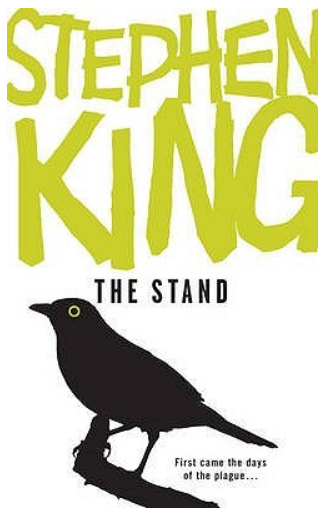
Again I say Bullshit. We’re the generation that devoured Avatar, Titanic, and six Lord of The Rings movies including extended cuts. And I, who have the attention span of a stoned raccoon in a Twinkie factory, have no issue reading Stephen King novels the size of phone books. 

If a story is good, there is no such thing as too long. 

Often I find this argument used to defend classics. But what is considered a classic might need an upgrade. Frankly, I consider a classic any story that is still entertaining and/or relevant. People still read Frankenstein every year. To Kill A Mockingbird was so popular the publisher might have committed elder abuse to get a sequel.

TLDR- What can writers do with this information? 

None of this is any help at all if we don’t know what to do about it. Okay, so sometimes a story just doesn’t work for us and it’s not your fault. 

It’s enough to remove this guilt from ourselves, certainly. But as writers, we can do more. 

The next time you’re watching something and you go to reach for Instagram, stop and grab your writer’s notebook instead. Write down what you’re watching and what was going on when you lost interest. Try doing this every time a story loses you, and you’ll start to see a pattern of what doesn’t work for you. And if it doesn’t work for you, there’s at least a chance that it doesn’t work for other people too. 

Remember, a bad story can teach you as much as a good story. So if a story is boring you, at least you can learn something from it. 

Paper Beats World is a labor of love. If you loved this post and want to support the site, you can buy us a cup of coffee on Ko-fi

Why Futurama Works

As I mentioned last week, Futurama is one of my favorite television shows of all time. I’ve watched it a hundred times. The darling husband and I quote the show almost daily. There are some episodes I can’t watch because they’re too emotionally damaging. There are some I could watch every day and not get sick of them. 

The Star Trek cast in Futurama

Futurama has won countless awards for writing. And it’s with good reason. Now, I know that some of you reading this right now will think I’m being far too generous to a silly cartoon. But I’ll submit to you that I’m not. And the massive fan base that Futurama still holds would agree with me. 

So, it’s time to get it up on the table, break it apart, and see why it works.

There are professionals on the writing staff.

Of course, the writers are professionals with years of creative experience. I would hope the same could be said of most content, but that’s probably idealistic. 

Futurama takes this several steps further, though. Among their writing team, you’ll find scientists, mathematicians, physicists. And if they don’t have a professional on staff, they go find one. 

While this is a fiction show, they want to make sure that the science they use is real. Which makes the rest of the story more believable. As one of their splash screens says, you can’t prove it won’t happen. 

The writers hid jokes and didn’t explain.

If you’re casually watching an episode of Futurama while scrolling Instagram, you’re going to miss background jokes. And a lot of them. That’s because the writers love throwing in hidden jokes and never explaining them. They even developed alien languages and hid messages in the background. They never released a key for these languages, either. 

This means that the show can work on two levels. If you just want to watch a silly show, it’s great for that. If you want to watch it on a whole other level with a ton of in-jokes, it’s great for that too. 

Awesome attention to detail.

In the first episode, the main character Fry is tossed into a cryogenic chamber and frozen. This starts the whole story. But, as you go through the series, more and more comes to light regarding that moment. And every time you learn something else, you can go back and watch the first episode again to see if there are signs visible. 

And they always are. 

The writers trust their audience to be smart. 

The writers can do all of these great things, because of one simple fact.

They believe that their audience is smart. They don’t talk down, they don’t over-explain. They put out smart content, and they trust us to get it. 

Futurama The Sting

It’s time for the wrap-up. What can we as writers learn from Futurama?

– Get the factual parts of your story accurate, and it will make the whole thing more believable. 

-Don’t be afraid to add details or background jokes without an explanation.

-Pay attention to detail, and keep everything cannon. 

-Trust your audience to be at least as smart as you are. 

Is there a show, movie or book you’d like me to take apart to see why it works? Let me know in the comments. 

Paper Beats World is a labor of love. If you want to support this site, you can do so on Ko-fi. 

Why Only Murders In The Building Works

A few months ago, everyone was talking about Only Murders in The Building. Even one of my favorite writing podcasts, Ditch Diggers, discussed it. It was for a time everybody’s favorite show.

And I’m part of Everybody. I watched every episode, and couldn’t wait for the next one. Honestly, with comedy writing legends like Steve Martin, Martin Short and Tina Fey involved, I’m not the least bit surprised. These are some of the best comedy writers in the business with years of experience. 

Steve Martin, Martin Short and Selena Gomez in The Building

So today it’s our topic for why it works. Let’s get it on the table, cut it apart, and see why it worked.

Motivated by the characters conflicting wants

Some stories are motivated by a situation. Some stories are about people coming together for a common goal. And some are about characters reacting to something in varying different ways, depending on what they want. 

The latter is a bit more complicated but far richer. 

Only Murder In The Building is about three people with parallel goals, not necessarily the same goal. You have Mabel, who wants to find out who killed Tim Kono. She has several reasons for this, that I don’t want to ruin for you on the off chance you haven’t seen it yet. Oliver wants to have a successful project to prove that he isn’t a failure. And Charles wants to prove that his career isn’t behind him. He isn’t a has-been. More than that, though, he wants to have people love him again. 

Oh, and both Oliver and Charles want to prove that they’re hip enough to have a millennial friend. 

All of these goals can line up, but won’t always. 

Relatable on multiple levels

I think we’ve all had friends who are only our friends because we share a common fandom. People we don’t have a single thing in common with beyond liking this piece of art. It’s a true-crime podcast that brings Mabel, Oliver and Charles together. And I think most of us love a little True Crime

But we’ve also all experienced that excitement when a new episode of something we love comes out. Many of us, unfortunately, know what it’s like to lose someone. We know what it’s like to be hurting for money, or missing someone we’d like to call but can’t.

So we might not know what it feels like to investigate a murder in an upscale apartment building. But we can still absolutely relate to these characters. 

Selena Gomez in Only Murders In The Building.

Twist upon twist upon twist

At any time while watching Only Murders in The Building if you think you know what’s happening, you’re wrong. There were so many twists and turns I barely knew which way was up. But at no time did I feel cheated. At no time did I feel like a twist came out of nowhere or didn’t make sense. 

I want to tread lightly here because I don’t want to ruin anything for you. But there’s more than one mystery to solve. 

This isn’t the sort of thing achieved in one draft. This is the sort of thing that takes rewrites upon rewrites to make sure that the twists are logical, but still hard to see coming. This is what can be achieved when you know your story back and forth. When you’re careful with your craft. When you’ve gone through the damned thing over and over. It takes planning and patience. 

Every episode left you with a question

When I was a kid I used to love reading Goosebumps. Every chapter ended with a cliffhanger. They weren’t, in hindsight, good cliffhangers. A common one was for the character to open a door and scream. On the first page of the next chapter, it was too often revealed that this was just a sibling or friend startling them. Cheap.

But it did give me a taste for that sort of thing. 

A much better way to handle an ending is to leave your audience with a question. And I mean something beyond the core question of the larger piece. In Only Murders in The Building, the main question is who killed Tim Kono. But in any given episode, you might have any other questions. 

Will the dog die?

Why is that strange ring there?

Why is that hoodie important?

Will this character lose their home?

None of these are cheap gimmicks. They’re real questions that stick with you for the whole week. Until it’s time for the next episode. 

To sum it up, here’s what we can learn from Only Murders in The Building.

-Make sure every character wants something. Bonus points if it’s something different from the other characters.

-Make your characters relatable in realistic ways, and we’ll be more likely to relate to them in unrealistic ways. 

-Plan out your twists and take your time.

-Give us a question, not a cliffhanger. 

What piece of content would you like to see me cover next? Let us know in the comments. 

Paper Beats World is a labor of love. If you want to support the site, you can buy me a cup of coffee on Ko-fi. 

Why Velvet Was The Night Works

Velvet Was The Night is the latest novel by Sylvia Moreno-Garcia. We’ve talked about several of her books in the past, including Mexican Gothic and God of Jade and Shadows. She has no trouble genre-hopping, going from horror to fantasy to political noir without missing a beat.

Through each genre hop, some things remain constant. Each book shows Mexico for the beautiful, complex, rich country that it is. And each book includes a love affair that melts my heart. 

Velvet Was The Night is that political Noir genre I was talking about. Set in the 1970s, it’s all about political uprisings and protests. And, about a young woman named Maite who accidentally gets caught up in all of this.

I loved every single page of this book. So let’s break it apart to see why it works. 

We see the story in this book from two points of view. One is Maite, a secretary who’s bored to death with her life. She has just one pleasure in her life, a series of romance comics.

The second pov character is Elvis. He’s a pseudo-government agent, tasked with shutting down protests in the city.

These two people show us entirely different views of the situation and the city itself. More than that, though, they know things the other doesn’t. They’re able to see the mystery from different angles, revealing secrets to the reader that one or the other character isn’t privy to. This means that this is one of those delightful mystery novels that you can play along with.

I’m not a fan of mysteries you can’t solve. Maybe that’s just a me thing.

So now, let’s talk about Maite. I didn’t like her at first. She seemed dull. Not interested in anything but her comics. She also didn’t like cats, which is a total turn-off.

Maite was also a thief. She stole little things from her neighbor’s apartments. It’s a weird thing to do, not gonna lie. At first, it seems like this is just a weird thing she does. And it makes sense. Maite is bored with her life. Bored people sometimes do dumb things to entertain themselves.

Eventually, though, we find out that this is a crucial plot device. If this petty theft trait of Maite’s hadn’t made sense right from the start, this would have felt cheap. Instead, it made total sense. 

Honestly, a lot of the enjoyment of this book came from Maite. She’s miserable, but it makes sense that she’s miserable. Her mother treats her like an afterthought. Her boss barely notices she’s there. She’s broke and has no friends. Everyone would be a little miserable. 

As you read the story, you can see exactly why she fell into the scary situations she found herself in. 

There are a lot of stories about bored young women ending up in fantastical, scary, dangerous situations. Most of them don’t seem plausible. But this one does. 

So, what can you as a writer learn from Velvet was The Night? 

Point of view switching is a great way to build suspense. 

Flawed characters work best when their flaws make sense.

It doesn’t work to put a random character in a random situation. How or why did they of all people end up there?

Is there a movie, tv-show or book you’d like me to break apart to see why it works? Let me know in the comments.

You can support Paper Beats World on Ko-fi.

Why Loki didn’t work

We talked about Wandavision, and how it collectively broke us. We talked about Falcon and Winter Soldier, and how it revealed dark truths and personal growth. Now, let’s talk about Loki.

I’d describe Loki as the Booberry of the Halloween cereal trinity. It’s fine, but if there’s Count Chocula or Frankenberry I’m grabbing those first. 

We watched Loki, but it’s hard to say I can remember a lot of it. It just didn’t grab me in the same way most of the other Marvel content. So let’s break it down and talk about what didn’t work.

First, though, I do have to say that there were several really good characters in Loki. Mobius, played by Owen Wilson, was a good character. He had hopes, dreams, friendships. He cared about his job for good reasons, which allowed the world to shatter his reasons to the four winds.

Unfortunately, the time and care that went into this character didn’t transfer into the rest of them. One prime example is Sylvie. 

I thought a female Loki was a clever idea, at first. But honestly, I can’t tell you one damn thing about her that distinguishes her. 

And I don’t mean I can’t distinguish her from other Loki variants. I mean I couldn’t tell you what makes Sylvie different from literally any character. She’s like Selene from Underworld or Alice from Resident Evil. We just do not know anything about them. You could literally swap out either one of these women for Sylvie, and it wouldn’t change the story at all. She was, in a word, boring. 

We also don’t see a lot of growth in our world’s Loki. At least, no more than we’ve seen in the Marvel movies. And this is what I’d consider the cornerstone flaw of this show.

The character of Loki transitioned a lot from his first appearance to his last. He went from being compared to Hitler by an old man who had for sure survived the Holocaust, to being a hero who gave his life to save his brother. 

And this took several movies! We were given time to see the complexity of the character. He loved and hated his adoptive family. He wanted to be accepted but didn’t want to have to try too hard. This was an important story arch for him that impacted the rest of the world around him.

All of this great character growth was smooshed into a few moments, scattershot here and there through a series that consisted of six episodes. 

Finally, the biggest issue I had with this show was the constant talking. Not talking about anything interesting, mind you. Just talking. 

Especially between Sylvie and Loki. It appears that whoever was writing this series thought the only interesting characters were them, and the only interesting thing they could do was fall in love with each other. Which I, at least, didn’t care about in the slightest.

I’ll be honest, I left the show feeling cheated. Here we have an awesome premise. Time cops, making sure that there aren’t a million evil timelines going on. Someone to step in like Abed in the best episode of Community and grab the dice out of the air. So many cool things could have been done with that! We could have seen alternate timelines where literally anything could have happened.

Instead, we get a lot of sensitive talking done by two people who aren’t that interesting, followed by a lot of things blowing up that we don’t care about because we don’t care about anyone who’s affected by them.

Time for the wrap-up. Here’s what we can learn from Loki.

One clever character doesn’t make a show.

You have to make your characters actual people for your audience to care about them.

It would be nice if something, you know, happened. 

So that’s it. What did you think of Loki? Let us know in the comments. 

You can support Paper Beats World on Ko-fi.

Why Resident Alien Works

Premiering in January of this year, Resident Alien is based on a Dark Horse comic. Proving once again that some fantastic writers are working in comics. It’s funny, it’s emotional, and it’s on our table today. We’re going to break it apart and discuss why it works. 

The story is simple enough. An alien intending to blow up Earth accidentally crash lands. His ship and the device he needs to blow us all to small gooey bits are both broken. But not beyond repair. He can fix it and complete his mission. But first, he has to find all the pieces.

To do that, he has to pose as a human in a tiny town where everyone knows everyone. He kills a man and assumes his form. This would have all worked out fine, and the world might have been destroyed before we got a chance to do it ourselves. But he had the bad luck to have taken the form of Harry, the only doctor in town. After, that is, the current doctor died under mysterious circumstances.

A laugh riot!

Breaking this all down to its basic elements, we have all the good points for a story to hit. We have a main character with a clear goal. We have several obstacles in his way. Plot bunnies abound here, my friends.

The show took it several steps further, though. For one, it’s a blending of some genres we don’t see blended often. It’s SciFi, but it’s also sometimes a medical drama. But it’s also a small-town cozy murder mystery. Normally if a writer were to throw all those things at a story, I’d assume they lacked a compelling storyline in just one to carry the whole way through a season.

But that’s not the case at all. The way this story is constructed, the elements of each genre build on each other. They fit together like puzzle pieces. We wouldn’t care about who killed the doctor if we didn’t see Harry taking on his patents who loved the guy. We wouldn’t care so much about the medical aspects of a small-town doctor if we didn’t have that extra element of trying to figure out who killed the doctor and why. And both of these elements would be overused tropes if we didn’t have an alien pretending to be a doctor and looking up surgery procedures on Google.

But blending unusual genres is only part of the picture. As always, it comes down to the characters.

Take Harry. We really shouldn’t like the guy. As previously stated, he’s here to kill us all. So why do we like him? 

Part of it is that we all like a flawed character. He is selfish and socially stupid. But he starts getting better despite himself, surrounded by the positive influences of Asta and D’Arcy. When we see him move past his hatred of the little boy, Max and start to care about him, this endears Harry to us. This works in two ways. First, we all love a redemption story. But it also works because the people he interacts with are likable characters to start with. I loved Asta and her dad. I want to go drink with D’Arcy, even if I’m pretty sure I wouldn’t survive the experience.

Of course, this only works if the opposite is true. That is if we don’t like the antagonists. In this case, it’s a couple of deep-cover military operatives named Lisa and David. We should like them. After all, they are trying to save all of us by catching Harry. And, for the most part, we do like David.

But we don’t like Lisa. And that’s because, right away, she proves that she has no moral compass. Or if she does, it doesn’t work like other people’s. She has no issues with killing people, innocent or guilty because they threaten her mission. And even though her mission is for the good of all mankind, it doesn’t feel like that matters to her.

Lisa feels less human than Harry. She feels like a weapon, that could be pointed in any direction. 

So that’s why Resident Alien works. It blends genres, making them depend on each other. It endears us to a character that we shouldn’t like through growth and the great use of secondary characters. And it makes us hate people we should side with by painting them as cold and inhuman.

What did you learn from Resident Alien? 

Is there a show, movie, or book you’d like me to talk about in Why it Works? Let us know in the comments.

You can support Paper Beats World on Ko-fi.

Why 9 Works

Spoiler warning! We can’t break apart a movie like this without giving away its twist.

9 is a little heard of film from 2009. It’s a dark dystopian film about little dolls left over after all the humans are gone. 

In this version of the end of the world, we were destroyed by our machines. This movie would have fit very well in the Animatrix. 

Much of what made 9 enjoyable was the atmosphere. The artwork is bright and dark at the same time. The little dolls have some great detail that holds up even after twelve years. And I love anything cute and creepy.

But as a writer, that’s not something I can replicate. What I can learn from is the story. 

Now, I have to say, the plot of the movie leaves something to be desired. It’s a little all over the place. At different times 9, our main character, has very different goals. It certainly doesn’t fall into a three-act structure.

While this is disorienting, it’s also not terrible. It’s just what I’d consider experimental. 9 has a set goal in mind, save his friend from the horrifying cat machine who stole him. 

It was entirely shocking to me when he failed at this. I had no idea what was going to happen after that. Which is kind of awesome. It’s kind of fun to be disoriented in the same way it’s kind of fun to be scared. 

It’s also brave to have your main character just straight up fail to do something he’s been trying to do through most of the movie. It’s realistic. We fail sometimes, at really important things. And if art is to be honest, we need to show those failures. 

I loved that, even though 9 couldn’t save his friend, he wins in the end. Because that’s a lesson we should all learn. That even if we fail at really important things, that doesn’t mean we’ll keep failing. 

Writing is about lying while telling the truth. The lie is this whole dystopian story. The truth is that one failure, no matter how big, isn’t a deciding factor for the rest of your life.

Now, you know I have to talk about characters. I’ll be honest with you, I didn’t like the characters in this movie at first. They all seemed one-dimensional. This character was brave, this character was angry. They all seemed to have no more depth than that.

But that’s the gimmick. Because these aren’t separate characters. It’s only at the end of the movie that we learn they’re all aspects of their creators’ personality. This floored me. But I love it.

The main takeaway is this. 9 did two things that, if the movie hadn’t done them just right, would have been awful. They changed goals halfway through the movie and they had a cast of one-dimensional characters. And yet the story wouldn’t have worked any other way.

What we learn from this is to break the rules of writing if you can do it well. We don’t just ignore these rules out of laziness. No, I’d say that this story took a lot more effort than if the writer had obeyed the rules to the letter. If we ignore them, it should be a conscious choice. It should be to tell a great story, rather than just a good one.

Is there a story you’d like me to break apart to see why it works? Let me know in the comments.

Thanks for reading! You can support Paper Beats World on Ko-fi.

Writing nonfiction, Planning

Writing a nonfiction book is a world away from writing a fiction book. As I travel this brand new terrain, I’m taking you along for the ride.

Don’t forget to read part one of this series, Research, if you missed it. 

Today we’re talking about one of my favorite parts of writing a nonfiction book, planning it.

Don’t laugh, I’m not joking.

Planning a nonfiction novel is designing the skeletal system of the whole book. You’re figuring out what’s going to go where as you gather information and write content. It’s like the sketching a painter might do before beginning a painting.

When planning a nonfiction book, I find it’s best to start with your goal. When I’m working on an Off The Bone episode, I always remember my main goal is to provide the background you might not know about stories you probably love.

Knowing the goal of your project will guide you through the whole process. Is your goal to convey information? Do you want to inspire others to act? Are you sharing a personal story to convey comfort and comradery? It doesn’t matter what your goal is, so long as you have one. Otherwise, why are you writing a book at all?

I know this kind of sounds like a school essay. I think we all learned these sorts of essay writing styles. An informative essay, entertaining, persuasive. And yeah, it kind of is like that. It’s also super not like that, but we’ll talk more about that in a future post. 

Once you have your goal, it’s time to make your outline. Now, the information going into your outline is going to vary wildly depending on what kind of nonfiction book you’re writing.

The project I’m working on right now relies a lot on personal essays. They tell a story. So, it was easy to use this as a large part of my outline. Through this, I add in interviews and helpful (hopefully) charts to support the points I’m making in the book.

I made my outline on Notion. You can use any outline software or even pen and paper. But I’ve been loving Notion for my project organization. (If you want to see a post about how I use Notion in addition to my bullet journal, let me know in the comments below.)

The outline helps me out through the entire project. I can see easily how much work still needs to be done on the book. I can also see at a glance if the book is a little unbalanced. For instance, if I see that I have a lot of personal essays, I know I need to set up more interviews. If all of my interviews are personal ones, I know I need to hit up some professionals. 

It’s also kind of inspiring to watch my outline fill out as I work. You all know I love visualizing progress. 

I have just one more bit of advice for planning your nonfiction novel. It might be the most important bit of advice yet.

Leave room for what might surprise you. 

You’re going to do a ton of work on a nonfiction novel. Like, I don’t think you realize how much work goes into this. And as you do this good work, you’re going to find things that surprise you. That might throw your entire plan totally off the rails. And I highly suggest you make space for that.

Or, as it’s hard to leave space for the unexpected, I’d encourage you to be flexible. You never know what you’re going to learn. And nothing is ever set in stone until it’s printed. 

I hope that you’ve enjoyed this series so far. I’ll see you next week. And if you have any questions regarding nonfiction writing, feel free to leave them in the comments below.

You can support Paper Beats World on Patreon.

You can also buy me a cup of coffee on Ko-fi.
Writing Nonfiction-Research

Most of you know me as a speculative fiction author and blogger. But I’m much more than that. I am a Gemini after all, duality is in my very being. So I am a speculative fiction author and a blogger. But I’m also a critic and podcaster. And as if that weren’t enough, I’ve decided to add nonfiction author to my list.

That’s right, I’m working on my very first nonfiction book. It’s an emotional project that I’m not ready to talk about publically yet.

Writing a nonfiction book is totally different than writing fiction. And there’s been quite a bit of a learning curve. I’m writing something where facts matter, statistics matter. I need to get things right. But it also needs to be entertaining and people need to want to read it.

I’m learning a lot in this process. So I thought I’d do a series on nonfiction writing.

Today, we’re going to talk about where it all begins, research. 

Yes, I do research things when writing fiction. But it’s not the same. If I mess up a fact in a fiction book, most people aren’t going to notice. Or I can just say this is a fictional world and this is accurate for the book. 

Nope, none of those cop-outs exist in nonfiction. Here’s what you do instead.

Know what you’re looking for before you start researching

For the sake of this series, let’s say you’re writing a book about how crystals have been used by different cultures through the years. That’s not what I’m writing, it’s just a handy example. Before you start diving into research, have an idea of what information you’re looking for. I found it best to have certain questions I wanted answers to. I kept track of them at the beginning of my notes. (Don’t worry, I’m doing a whole post on organizing your notes both digitally and physically.)

This keeps you from getting too far off in the weeds while you’re researching. Because if you don’t know what you’re looking for, then you’re looking for everything.

Of course, you’re going to find new things as you learn. New questions you didn’t even realize existed. And as you do, feel free to add them to your list of questions. But at least having a basic idea of what you want out of your research at the start will help you with some direction.

Vet your sources

Some people think they know everything about a subject there is to know. It does not matter what subject we’re talking about. Someone out there thinks they are the expert. That someone is usually a Youtube commenter.

I kid. But you must know where information is coming from before you believe it. If you’re using a book, who is the author? Are they a specialist in this topic? Where did they learn it from? If you’re on a website, do some basic digging. Is it a reputable website? Do they cite sources? Are they the original source? Basically, where was this information before it was in your hands?

I did this a lot when I was researching for the first season of Off The Bone. It turns out there’s a lot we don’t know about HH Holmes, for instance. But lots of dumb schmucks on the internet think they know. I do not want to be one of those dumb schmucks.

Double-check facts

On a similar note, let me advise you to double-check facts, even if you think you know them.

I’ll use Off The Bone as an example again. When I was researching for the episode about Dauphine LaLorie, I thought for sure she’d had some sort of run-in with Marie Laveau. They never met. I’m pretty sure I got that from American Horror Story, Coven. I’m really glad I double-checked that little ‘fact’ before I just threw it out there.

Don’t lean too hard on books

A lot of people have written a lot of books about a lot of topics. So no matter the topic of your nonfiction book, others are going to cover at least similar topics.

And if all you do is regurgitate information from the other books, that’s a waste of time. It’s also kind of shitty behavior.

It’s much better to do the research yourself. I’m not saying that you’ve got to reinvent the wheel here. If you’re writing about crystal lore, you don’t have to ignore historical knowledge. But you also want to go talk to people who know about these things. At the very least, you want to add a new perspective to your topic. Otherwise, why the hell are you writing the book?

But at the same time, read a lot of books

All this is not to say don’t read books about your subject. But maybe be a little more varied about the books you read. Let’s go back to that crystal lore example. (Is it weird that I kind of want to write that now?) 

Maybe you can research what other kind of lore a culture had. Or what minerals were around them. What was more or less valuable? What kind of society did they have? What were their means of saving stories and information? All of these things can be avenues of research that can dramatically change how you write your book.

Keep careful track of all of your sources

You’re going to learn a lot for your book that comes from other people. I mean, that’s the whole point of this post. And since this information was not yours, but obtained through working with others, you have to give them credit. 

There’s always a source list at the back of books for this reason. When I’m doing an episode of Off The Bone, JM and I include links to our sources. We want you to know where we got the information from. 

So for the love of Gatsby, write down your sources and keep very careful track as you go!

Never for a second think you’ll remember later where you picked up some obscure fact. Write it down. Get a link to the site. Write down the author, book title, edition and page number. You will need it. 

Personal stories are fine, but cannot be relied upon

Finally, let’s consider personal stories. This is also called anecdotal evidence. And it’s a tricky thing. 

Lots of people will tell you to leave these kinds of things out altogether. But I’m not one of them.

Anecdotal stories are great for showing different sides to a subject. They give an emotional punch. They put a real face on your topic. They move your topic from the hypothetical to the relatable. And if you’re using an anecdote to do these things, you’re using them right.

If you’re using an anecdote to prove a point or a fact, you’re doing it wrong. 

As House says, everybody lies. But even if your anecdote isn’t a lie, it might still be total bull. We don’t mean to lie. We just often see things differently than other people. 

If you need proof, here’s an experiment. Think of something in your childhood. Some memory that you have a clear recollection of. Now, go as your parent about that memory. I imagine you’ll get a wildly different set of facts.

I’m planning on doing a whole series about converting to nonfiction writing. If you’ve got any specific questions or topics you’d like me to cover, please drop them in the comments. Until then, have a great day.

If you want to support Paper Beats World you can become a patron on Patreon.

Or you can buy me a cup of coffee on Ko-fi.

Why The Good Place Works

I know, I’m behind. But I finally just watched all of The Good Place in the span of like, a week.

I went into it knowing almost nothing about the show. I knew it was about ‘the good place’. That was it.

If you’ve never seen the show before, click away now. Because you don’t want the twists ruined. I mean, it would be almost impossible to ruin them all. My goodness, there are so many twists. But we’ll talk about that soon. 

I understand entirely why people were so obsessed with this show. The writing was amazing. And as always, there’s a lot to learn from it. 

Let’s start with the twists. Because, you consistently have no idea what’s going to happen next. I was blown away all the time, just by what they managed to sneak past me.

The twists work especially well because, when you look back, they make sense. And this is the tricky thing about writing twists. You want them to seem like they come out of nowhere. But if they don’t make sense, then they’re just jarring.

You learn pretty quickly while watching this to trust nothing. You don’t know who to trust. And honestly, you probably shouldn’t trust any of the characters. Everyone is lying pretty much all the time. To themselves, to each other. You’d think this would make the characters unlikable. But it doesn’t.

You know, characters make or break the show for me. And Elenore, Cheedie, Janet and the rest stole my heart every single episode. You hate/love the characters. And I think it’s because we’ve all been where they are. We’ve all tried to be better. We’ve all tried to help people. We’ve all found it difficult to do the right thing, no matter how hard we try. And for sure, we’ve all felt like we don’t belong. And so their struggles become your struggles. Their failures become yours. And their successes become yours as well.

Speaking of which. The Good Place called me out several times. Yes, I am one of those people who take their shoes off during long trips. I probably do any number of other things that will land someone in the bad place. The whole time we’re watching this, the darling husband and I kept giving each other pointed glances. It makes you second guess everything you’ve ever done. But in a non-judgy way. The show does that by poking fun at little things we all do. Things that probably annoy others, but we just can’t help ourselves. Bad little selfish habits that wouldn’t get you sent to the bad place.

Right?

Yeah, you’re probably fine. The best thing about The Good Place is that there is a really happy ending. Not like an over-the-top Adam Sandler ending. But also not gut-wrenching sad. It’s sweet, beautiful, perfect. Honestly, I couldn’t have asked for better.

Too often I feel like endings seek to piss their fans off. I know that doesn’t make a lot of sense, but it happens. How else could you explain the ending of Roseanne or The Dinosaurs? It is so nice to see a show not outlive its welcome, not get canceled, and have a real, solid, satisfying happy ending.

Have you seen The Good Place? What did you think of it? Let us know in the comments. 

You can support Paper Beats World on Patreon.

Or, buy me a cup of coffee on Ko-fi.

A WordPress.com Website.

Up ↑