In defense of fanfic

In March, I wrote a post about writers being self-indulgent in their writing. It was inspired, let’s say, by a post from a rather popular Booktuber who I won’t be naming. Suffice to say, I don’t watch her and only found out about the dreck she was spouting through the endlessly educational and uplifting Micky Adkins.

At the time, I mentioned that this very long video actually inspired two blog post ideas. Along with several furious rants, only heard by the people in my house who can’t escape me. I am nothing if not a woman of my word, and I am here today with part two.

Click here if you want to read part one of this conversation.

I did mention before that I am not out to shame the original booktuber. And I want to repeat this. We, as a writing community, do not need to tear each other down. I just happen to disagree vehemently with the argument that this person is making, and I want to offer a rebuttal.

Today, we’re going to talk about fanfiction and why I personally think it’s a great way to learn to write.

Fanfic is the closest thing we can get to an apprenticeship in fictional writing

Consider the apprenticeship. What does an apprentice do? They follow around their teacher, learning their style and technique. They learn the basics of a craft bit by bit, with a learned elder by their side.

When we write fan fiction, we are doing something similar. We are not coming to a blank page with nothing to fill it. We have a set world. A series of parameters. We’re not building something from scratch, but building onto something that already exists.

Through this, we start to learn the fundamentals of writing that are never taught in English classes. Character interactions, pacing, and dialogue. These are all valid skills that can be taught when writing fanfic.

Now, I will say that some skills can’t be taught this way. The biggest example of course is world-building. The world’s already been built, after all. The characters have already been created for you, unless you’re adding a character of your own creation. But there are other ways to learn world-building. And that’s another skill you can master in addition to what you’re learning by writing fanfic.

It encourages creativity

Writing fan fiction can turn a passive experience like watching a movie or reading a book into an active, creative exercise. It becomes a game.

Let’s use Lord of The Rings as an example. Because God knows there’s a metric ton of fanfiction about LOTR. So you’re watching Return of The King for, if we’re being honest, the twentieth time. And you start thinking about a character you made up to fit in this world. What are they doing in this scene? Who are they talking to? How are they fighting? Would their special skill wrap something up here, or are they completely useless right now? How are they feeling about the person who’s bleeding out right now?

These are writer questions. These are character-building questions. When you’re writing any scene, you do have to think about how every individual character is responding to the action or conversation at hand, even if they aren’t the main character. And this is a great way to sneak in a little practice during family movie night.

Sometimes you can end up writing those characters for real

I was recently obsessed with a book called The End of The World As We Know It. It is a collection of short stories set in the world of Stephen King’s The Stand. As a writer, I’m insanely jealous that I didn’t get to participate. As a reader, I’m insanely grateful that the book exists.

You can read my full review on Weird Wyrlds.

But guess what. That’s fanfic. That’s fans of King writing their own stories in his world.

So many writers that I love have gotten to write stories in the Star Wars universe. Or the Star Trek universe. And the comic book characters! My God, the comic book characters. Every month, we see a new show, book, movie, mini-series, comic, or podcast spinning off from beloved franchises. And yes, they’re all looking for writers.

The chances of getting one of those jobs are slim, but not zero. I mean, the competition is fierce. But thousands of writers are, right now, writing fiction about characters they were huge fans of.

I wrote some truly terrible fanfic as a teenager, and it helped me learn to write better

Of course I did. You saw this coming, right? As a kid, I wrote some seriously terrible fanfic about X-Men and Sailor Moon. No, I will not be sharing it. Thank God, I was a teen before Wattpad was a thing, so all these stories were written out long form with pencil and paper. And they are now long decomposed in some landfill somewhere.

You know what? It taught me to be a better writer. It taught me the passion of sitting down and putting a story on the page. It taught me about descriptions and dialogue. I used to write some of this with a friend of mine, and we learned a whole lot by yes-anding each other. It also taught me what characters I was passionate about. What sort of characters I want to write. And yes, some of my published works were inspired by writing I did during my fanfic days.

No, I won’t tell you which ones.

But if you’ve read something I wrote and liked it, you can thank my fanfic writing. If for no other reason than that I got a lot of bad writing out of the way.

This is not the only writing we’re doing

While I was writing my X-Men fanfiction, I was also writing original stories. I know, crazy, right? This was when I was in junior high and middle school, so I actually spent a lot of time writing. On any random weekday, I might bang out an essay for English, play around with some fanfic, write a truly terrible poem about a kitten poster I had hanging up, then write a few pages in my moody gothic vampire novel. It was all bad writing, but it was writing.

And that’s the thing. Just because someone’s writing fanfic doesn’t mean that’s the only writing they’re doing. Or the only writing they’ll ever do. Justina Ireland writes a shit ton of Star Wars books, but she also writes novels purely of her own creation. And they’re fantastic! Looking down one’s nose at a person who writes fanfic is like suggesting that because someone drank a Coke, they’re going to die of dehydration. Surely they can’t also be drinking water.

It’s just fun to write

Finally, the biggest argument I’ll ever have in defense of writing is that it’s fun. Writing is fun. And it’s supposed to be fun.

To be a writer is to be passionately in love with writing. It gives us something that we can’t get anywhere else. And if writing fanfiction is fun for you, then do it!

I think we forget sometimes that not all writers are writing to be Novelists. I mean, I am. But some people just want to write as a hobby. And yes, I have made fun of that in the past. But there is honestly no shame in it.

I like drawing, painting, mixing my own teas, and crocheting. All of these things give me pleasure. They make life good. And I will never do any of them professionally. Why can’t writing be the same for someone?

So if you write fanfic, or you’ve ever written fanfic, don’t despair. It’s a valid form of writing that can teach you to be a better writer or just bring some joy to your life. Embrace it.

Paper Beats World is a labor of love. You can support us by liking this post, sharing it and commenting. You can also support us on Ko-fi.
Why On Pins and Needles Works

Launching on April 7th, On Pins and Needles by Kamden Cornell is possibly the most thorough dive into magical poppetry I’ve ever read.

I received an arc of this book from the publisher, and I am very glad I did. It was a fascinating read. If you’ve ever wanted to know more about making poppets for witchcraft or magical work, it’s a great book.

So today, let’s talk about why it works. If you’re a witch like me, I hope you add it to your TBR. If you’re writing a nonfiction book, let’s break this one down and talk about why it works.

Thorough overview

The first thing I like about On Pins and Needles is how thorough it was. Not so much in one part of poppetry, but in the practice as a whole.

The book contained a brief history of the craft. Though honestly, several books could be written just on the history alone. It talked about the many different supplies that can be used, from stuffing to scissors. It talked about the creation, the magic, the intention, and all the many ways this sort of working can be used.

This really gave a wide picture of poppet work, rather than diving down into the weeds with one specific part. Which is why this is such a good place for beginners to start.

Non judgemental explination of some dark material

This part might get a little touchy. But that’s why we’re talking about it.

Poppet work can be used for all sorts of magic. Healing, luck, love, prosperity, protection. They are so much more than the ‘evil voodoo doll’ people not in the know tend to picture.

Boy howdy, is that a shitty and racist stereotype, by the way.

However, like any magic, poppetry can be used for baneful magic. Now, I’m not going to openly admit to or discuss cursing anyone on the internet. But you’ll get no judgment from me if you choose to do so. And, you’ll get no judgment from Cornell, either. Instead, what you’ll find is a frank and open discussion of how to make a poppet for curses or baneful work, and some safety tips along the way. That was especially nice to see.

I really appreciated the lack of judgment on a subject that tends to get the ‘light and love’ crowd up in arms.

Inspiration!

Another thing I loved about On Pins and Needles was the examples of amazing creativity that can go into poppet work. Because honestly, you can use just about anything to make a poppet.

This is where craft supply hoarders like me shine! Want to make a paper doll? Go for it. Have a bunch of scrap fabric lying around? Use it! Do you like carving? Carve a doll! Got a bunch of those gems from a forgotten diamond painting? Use them to make a face on your doll!

This book had me itching to make a doll. Or, like twenty. I kept putting the book down to write out ideas. And honestly, that’s my favorite sort of nonfiction book. The sort that has me inspired to dive into the subject myself, and leaves me with a ton of new knowledge to do that with.

Real-life understanding

Finally, I want to shine a light on Cornell’s work with dolls. They make it clear through this book that they have done the work. They’ve made dolls, researched the topic, and seen results from it.

First-hand knowledge is always the best source for nonfiction work. Especially when it’s more of a how-to sort of book. And it’s clear that this author had that in spades.

Overall, I learned so much from On Pins and Needles. It was entertaining, creative, and bursting with inspiration. If you’re interested in all in poppet work, I cannot recommend it enough.

Should writers be self-indulgent?

I was watching Micky Adkins a few weeks ago. I spend maybe too much time watching YouTube, but there we are. Micky’s great, you should check her out.

Of course, when I saw the title of this post, I had to watch it right away. (And by right away, I mean over the course of several days, because it was a three-hour-long video.) The title was, This BookTuber’s Vendetta Against Fanfiction Is Actually Pretty Sinister.

This video pissed me off so much that it actually inspired two different posts from me. Part two is coming soon. At some point, not sure when.

Look, I had Covid this week. Bear with me, everyone.

Now, Micky’s clear in this video that she is not a writer. So her opinions about this video are from a therapist’s perspective. But that’s okay, Micky. I am a writer. And I got you.

If three hours is too long a video for you, let me summarize it. It’s about another YouTube video from a channel I will not name, by a woman I will only call Hillary. Hillary doesn’t like fanfiction for many reasons. But the main reason for her hate seems to be that she finds fanfic to be self-indulgent. And Hillary thinks that self-indulgence is bad.

But is it? Let’s talk about it.

The dreaded Self-Insert

One of the biggest bugs up Hillary’s ass seems to be writers putting self-insert characters in their stories. You know, the sort of character that’s just clearly based on the author.

And that’s super cringy, right? Like, imagine if an author with a history of substance abuse issues and an absent father, who probably worried about being a good father, and lived in Maine, and was a teacher, wrote a lot of books about men with substance abuse issues who had terrible fathers, and lived in Maine, and taught. (Steven King)

Or like if a writer was a closeted lesbian who wanted to be a man her whole life, so she wrote about a closeted lesbian who wanted to be a man her whole life. (Louisa May Alcott)

Or if a writer got really into witchcraft and wrote a character who was really into witchcraft. (Me)

The point is that there’s actually nothing wrong with writing self-insert characters. I would argue that every character we write will have a little of ourselves in it. Even if we don’t mean to. We do it on purpose if we’re writing honestly. Our characters will reach for our favorite drinks. They’ll use our verbal idioms. We might even write them to look like us. That’s fine. So long as your characters are still as well-rounded as we can make these bags of bones, then go for it.

Oh no! I wrote about this super niche thing I like!

This is going to sound bitchy, but stick with me. We are not the precious little manic pixi individuals we think we are. Yes, every person is unique. Yes, every person is valuable as an individual and contains a whole universe of experiences that no one else can fully understand.

But we’re not that different. This is something that the internet has made clear to most of us. Any experience you’ve had, any joy or revolution, someone else has felt that too.

This means that if you write something that you really like, but you think it’s too niche for the rest of the world, you’re probably wrong. There’s probably someone out there, a lot of someones, who would really love to read your weird niche thing. So write about it, even if it seems self-indulgent.

I made art! Wait, I did it wrong?

Writing is art. We are artists, creating art. We are not producing a product.

There are no rules about art. There are techniques. There are widely accepted beliefs. And, I mean, of course, we have grammar rules. And spelling does count. But other than that, there are no rules.

You can write whatever you want. Your work doesn’t have to be super disciplined. It doesn’t have to follow traditional story structure. It doesn’t have to follow any agreed-upon structure. It can.

Art changes and evolves. What was considered standard a decade ago is passe now. And we as artists are allowed to shape how those changes come about by experimenting. Some might consider this part of our responsibility.

I’m a fan of what I wrote!

I know I’ve mentioned this before, but this seems like a good time to bring it up again. Writing a book takes so much time and work and passion and time and dedication and time. You have to love not just writing, but the writing that you specifically are doing. You have to be your story’s first and biggest fan. Because that love and devotion will get you through the days when it feels like you just can’t face the page. You just can’t take another round of editing.

This fandom will carry you through more than just the creation process if you let it. And that’s good, because you are going to have to champion your work to the world. You are going to have to be its biggest advocate. That’s easier if you, you know, like your book.

Wait, I’m actually a good writer?

So, what if you wrote something that’s super self-indulgent, but it turns out that it is, in fact, not good?

Maybe you wrote a really great sex scene, but it doesn’t really fit in your story.

Maybe you set a politician on fire in effigy, but that doesn’t make sense for your character to have done that.

Maybe you wrote this amazing description of the lush, gorgeous forest your character finds themselves in. Maybe you wrote three pages about it. In a row.

As you’re revising and editing your work, you’re going to work some of this stuff out for yourself. The longer you write, the more you edit your own work, the more you’ll see these things. Beta readers will also help you catch these moments.

Sometimes we have to kill our darlings. Sometimes we have to take out the things that don’t work for our story. Or kill off characters we’d rather live long lives.

Part of learning the craft of writing is learning what works and what doesn’t work. You know when it doesn’t work. You read it out loud, and it hurts your ears like an off-key melody. Or no matter how hard you try to make the storyline function, it won’t. Or you hate the character you’re supposed to love. Even if it hurts, you’ll know what needs to go.

These are all considerations for later drafts, though. When you’re rough-drafting, don’t worry about it. Throw everything in. Figure out what works later. Because, like you can’t see the whole painting in a brush stroke, you can’t tell if your self-indulgent scene works until the whole story is finished.

So, to sum it up, yes, your writing should be self-indulgent. You should write your story exactly how you want to write it. Give it the happiest ending. Write in that person you hate and evicerate them. Write smut. Craft a sappy love story that heals your specific wound. Skin a character.

Now look. I usually shy away from insulting other authors. And I’m not directly insulting Hillary. Even though sis went out of her way to insult a whole bunch of writers.

Writers who, as far as I can tell, are more prolific than she is. Whose work people like to read.

I’m not saying this to shame her or dunk on her. I am saying this because, for some reason I do not understand, she seems to be popular on YouTube. And I worry that some young writer might stumble upon her bullshit and feel bad about their writing. And if that’s you, let me say this with my whole chest.

Every single thing I have ever written has been very self-indulgent. I wrote Woven because I loved Tamora Pierce and wanted to write about thread crafts in magic. I wrote Quiet Apocalypse because I love haunted house stories and wanted to write about a modern witch. I’ve written and published nine books. I will, God willing, keep right on writing and publishing.

Hillary has published one. Do with that information what you will. And maybe, going forward, she should keep her eyes on her own work.

If you love what we do here and want to support Paper Beats World, please like and share this post. You can also support us financially on Ko-fi.

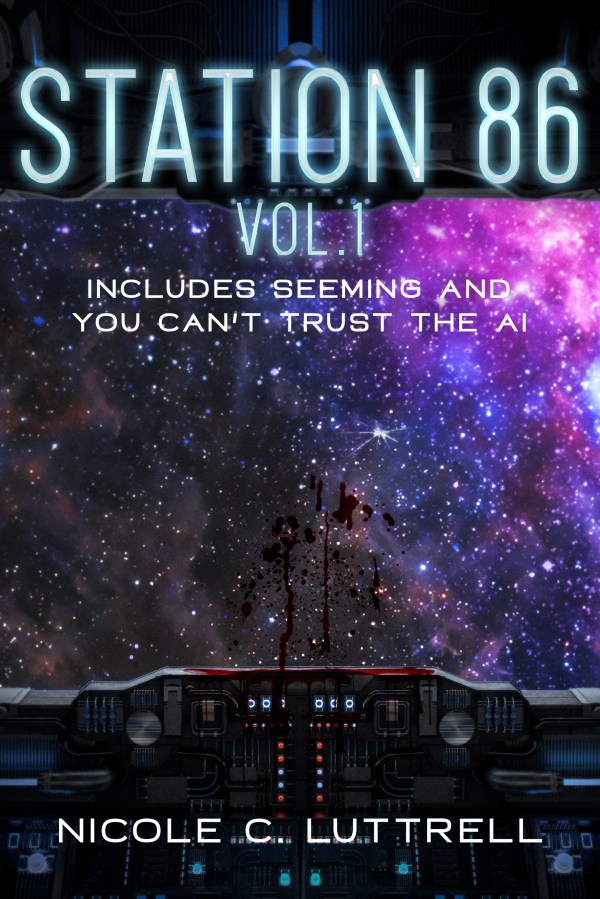
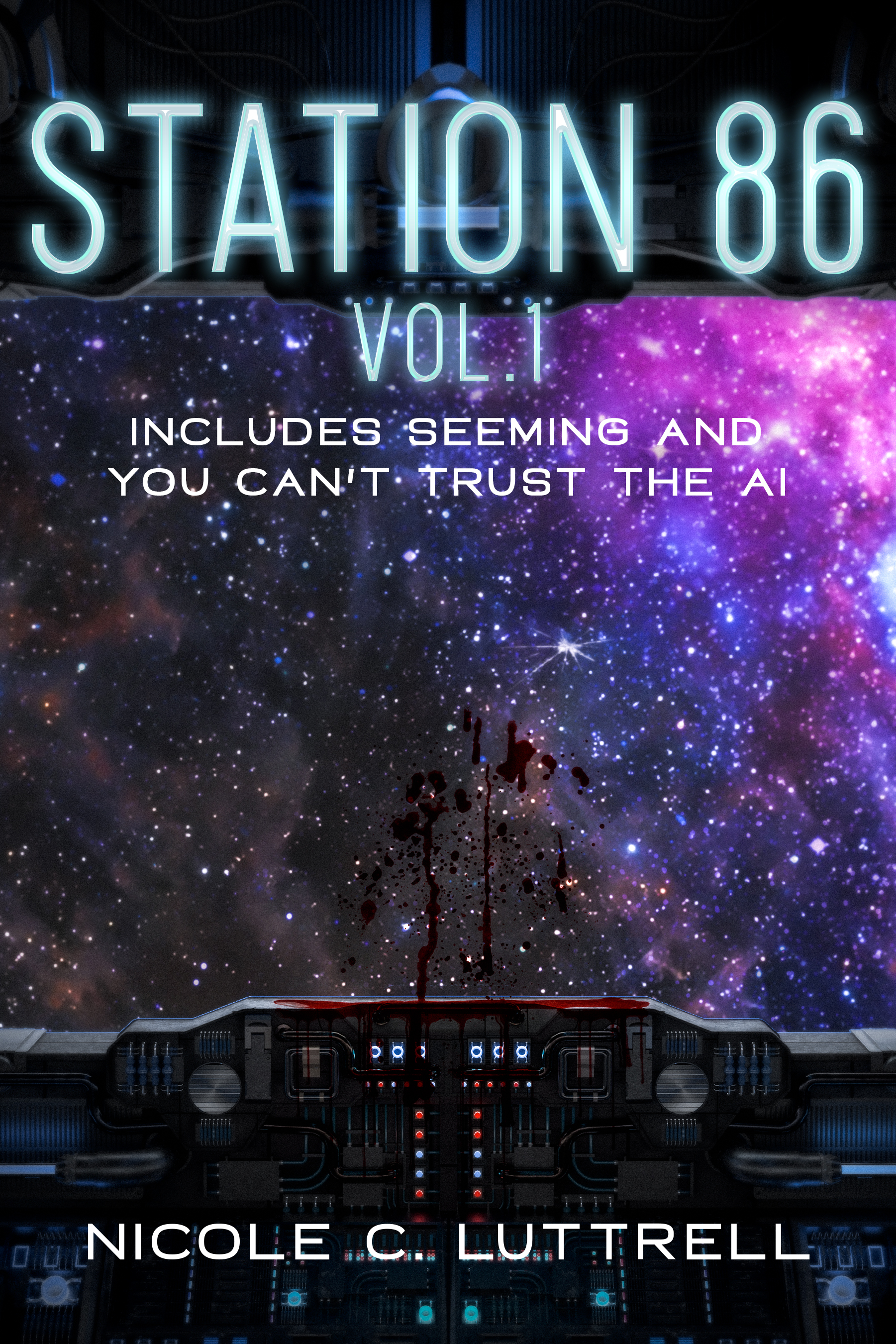
Want a free book? Check out Seeming, book one of Station 86.

Maybe we should do emergency planning?

Here’s something you might or might not know about Mormons. Or, as they prefer to be called, members of the Church of Jesus Christ of Latter-day Saints. They are really big on emergency prepping. Specifically, keeping emergency food stores.

I was raised in the Church. And while my family didn’t go overboard, we did always have a little bit extra around. Extra batteries, extra canned veggies.

When I visited the homes of my church friends, they’d have basements full of canned or preserved food. Around here in Western PA, where the Mormon traditions blend with Appalachian common sense and know-how, lots of women garden and preserve produce. If you want a great deep dive about Mormons and emergency planning, check out this video from Alyssa Grenfell.

Now, I didn’t walk away from the church so much as I put on running shoes and took the hell off. But as I go through my healing journey, I’m learning that not everything I was taught as a child was bad. For instance, emergency prepping and food storage are sensible practices.

If a bad storm hits, you’re going to be happy you have some extra food, candles and batteries. But having a food storage also allows you to bless your community in times of great need. Like when people weren’t getting their SNAP benefits last November. It will also be a blessing to you if you lose your job or if a surprise gas bill wipes out half your paycheck. Then, of course, there’s the ever-present fear of ICE invading your community and making it unsafe to leave your home if your skin happens to be brown or black.

But Nicole, you might be saying, this is a writing and book blog. Food storage doesn’t have anything to do with ghosts, dragons or spaceships. Well, that’s where you’re wrong. Much like you can’t write your stories if ICE kills you, you can’t write your stories if you’re starving. So, let’s get started.

Make a plan

Everything starts with a plan. And for this project, we’re going to start with a list of things you’ll eventually buy for your emergency storage. This can include anything that you might need, but I recommend starting with food.

And I mean food that you won’t mind eating in case of an emergency. Food that your whole family will eat. For instance, most people have dried beans in their food storage. I don’t, because the Darling Husband wouldn’t eat them if we were starving.

I started by making a spreadsheet in Notion. But any spreadsheet software will work. Even a cheap notebook will work.

In the first column, write a list of things to buy for your emergency storage. Everyone’s needs are very different, so my list might not be the same as yours.

If you need a list of suggestions, there are a million online from people far smarter than me. However, one category that I think gets overlooked is spices.

Frankly, some people who look like me could also use a reminder that spices exist in everyday life. Cayenne, curry, cumin, red pepper. All of these are good additions that will be well-appreciated when and if the time comes. I also suggest salt, an extra pack of playing cards, and powdered milk.

Now that we have all of that in our spreadsheet, time to move into column two. In here, we’re going to write down how many of these items our family will need within a time frame. I suggest starting with one week and moving up from there as you grow your food storage.

Column three is where we’re eventually going to keep track of how many of these items we have on hand.

And finally, column four is where we’re going to keep track of expiration dates for these items, if they have them. All food goes bad eventually. So as you’re keeping your food storage and growing it, you’ll want to occasionally weed out things that are about to expire.

Start small

Now, I don’t want you to be overwhelmed. Because I have good news. Once you’ve made your spreadsheet, the hardest part is over. Now, you just have to start slowly getting the items on this list. You do not have to buy everything on your list all at once.

Let me say this louder. YOU DO NOT HAVE TO BUY EVERYTHING ON YOUR LIST ALL AT ONCE.

Nor do you need rows and rows of shelving units in your basement to hold all of this. I am just starting this process myself. Right now, my emergency storage looks like one bag of rice, some packets of instant mashed potatoes and a gallon of water, all tucked in a reusable shopping bag in the corner of my dining room.

Think of it like writing a novel. (See, I can always work things back to writing.) You’d never think to sit down and write an entire 50,000 + word rough draft in a day. You write a thousand words, or 500 words. The words add up until you finish your story.

Every time I go grocery shopping, I try to grab one or two things for the food storage. A tub of oatmeal here, a bag of rice there.

Slowly but surely, it all adds up.

And yes, it’s true that an emergency might happen at any time. But any amount of food storage is better than nothing. If tomorrow I lose my job, at least I know I’ve got a few meals’ worth of rice and mashed potatoes standing between me and my family going hungry.

Some bigger items you might consider

Now, if you happen to have some extra money, or if you’re the sort who likes to ask for practical gifts, I do have a list of suggestions. These are some bigger ticket items that will sure come in handy if things go south. I don’t actually have any of these items yet, but I have plans to get them.

– A battery-powered hot plate

– A good first aid kit

– A battery-powered lantern

– A blow-up mattress complete with extra bedding

– A generator

I am sure there are more things to be added to this list. I’d love to hear them in the comments.

Don’t be scared, be prepared

Remember, the point of all of this is not to live in fear. It is, in fact, the opposite.

Things happen in life. Things you never see coming. My God, things you never imagined living through just sneak up on you like fog at night.

Is having a well-stocked food storage going to protect you from everything that might go wrong? Of course not. But knowing that you’ve done what you can is a comfort. Whatever happens, at least you won’t go hungry. And at least you’ll be able to write about it.

I’d love to hear what you think. Is there a crucial item I’ve left off my emergency planning list? Let me know in the comments.

If you love what we do here and want to support Paper Beats World, please like and share this post. You can also support us financially on Ko-fi.

Want to start of the year with a free book? Check out Seeming, book one of Station 86.

Fallow Years

I’m here! I’m alive!

I’d understand if you were a bit concerned. Normally, I’m nothing if not consistent. Since 2014, I’ve rarely, if ever missed a week posting without warning. Let alone two weeks in a row.

January was tough. It was tough for everyone. I’m not going to belabor that.

Today, I want to talk about something I’ve alluded to a few times so far. Something that I have some real deep feelings about. Something that maybe a lot of other writers have gone through, or will go through.

I don’t have a book coming out this year. Not a new book, not a relaunch. Nothing is coming out this year. And honestly, I don’t know when my next book will come out.

Right now I have three books on my desk. I have one book that’s on its second draft, but I’m pretty sure the whole thing needs rewriting at this point. The other two books are in rough draft phase. And by that, I mean that one book has fewer than two thousand words written, and the other is a page in my sketchbook that’s mostly just vibes.

As always, I’m of two minds about this. The artist part of me is perfectly happy. I’m listening to my muses. I’m giving myself the time and space to write something great. I’m enjoying the process. I’m creating something I can be really proud of, no matter how long it takes.

The self-loving part of myself is also happy with this. I’m leaning into a caretaker season in my life. The Darling Husband is still healing from his stroke, so a lot of my time and energy is spent on caring for the two of us.

Writing is still a big part of my day. It always will be, God willing. But I have other commitments.

All that being said, the ambitious part of me is losing her fucking mind. And she’s got a lot to say.

Publish or perish! People are going to forget about you! People are going to move on and stop caring! Put something new and fresh in front of your audience right now, or they’re going to jump ship.

I know this isn’t true. I know that fans will wait for the ending of a story. God knows I do.

My inner critic is never louder than my ambition monster. In some ways, that’s good. I don’t have a lot of fear in hitting publish. In other ways, it’s terrible. I have a ticking clock, insisting that I publish something, even if it isn’t something I’m totally proud of.

All that being said, how I feel about this situation doesn’t really matter. It’s still the situation I find myself in. So, what am I going to do about it?

Well, for starters, I’m writing. The only way out is through, after all. These fallow years won’t end until I, you know, finish a book. So that’s my main focus. By the end of 2026, I want to have finished two rough drafts, and possibly one second draft.

I’m also going to try to post more microfiction on Instagram. I tried to post something every day for a year, and failed. But I’m going to try again soon. Microfiction and poetry are great ways to sneak in a little bit of creativity, even on the busiest days. And I like putting them together in an aesthetically appealing way. So, I’m going to try to post something every day for 365 days. Don’t know yet when that’s starting, but look for it soon.

I’m focusing on promoting the books I already have out. And there are quite a few of those. Station 86, Woven, Quiet Apocalypse. I have work out there, guys. And if you haven’t read it, it’s new to you.

Finally, I’m writing some short stories set in the Station 86 world. That way, fans have something new for now, while waiting for the grand finale.

I don’t know how well any of this will work. I’ve published or republished something almost every year since Broken Patterns came out. So, I’ve literally never done this before.

If you’ve experienced this, I’d love some advice. Please drop it in the comments below.

For those of you who are fans of my books, and not just my yapping about books, I want to let you know what I’m working on. There are more books coming, I promise!

First, of course, is the final Station 86 book. I have written so many rough drafts that didn’t work for this book. That’s one of the reasons I don’t have anything to put out right now. It’s slow. I don’t think the story is ready yet. But when it’s done, I want it to be the best book I’ve ever written. Sennett and Godfrey deserve that.

The other book, and the one I’m working on right now, is a little different.

Those of you who’ve been around a while know that I used to write for a horror site called Haunted MTL. I did reviews and sometimes wrote short stories. I also wrote a horror sci-fi podcast called AA. Last year, after writing and producing two seasons, Haunted MTL shut down. I was heartbroken for many reasons, not the least of which was that it meant there would never be another season of AA. I just don’t have the time or resources to put out that sort of thing on my own.

But the last season left so many questions unanswered! And I want to answer them, you guys. So, I’m doing the only thing I know how to do. I’m making a novelization of AA.

It’s probably going to have a different title. Can you imagine trying to search for that at Barnes & Noble? But yes, all questions will be answered. If you were a fan of AA and have some burning questions in mind, please feel free to drop them in the comments.

That’s it for today. I promise to be around more consistently and have lots of good things planned. Remember that art gets us through our darkest times, and we can all make art. See you next week.

Some thoughts on the moment

I painted my nails today. Blue, my favorite color. It’s a small thing. Nobody cares, or should care, but me. I painted my nails because it made me feel a little better for a few minutes.

Sometimes that’s all we can give ourselves.

I had a whole post almost ready to go about the Stranger Things finale. That post will probably come out over the weekend. But today, I want to talk about how life is going for us in America. It’s not great.

On January second, under the cover of darkness, Trump oversaw the kidnapping of Venezuelan President Nicolas Maduro and his wife Cilia Flores. Our military attacked a nation we were not at war with and kidnapped their president and first lady from their bed. Trump is now claiming that he is in charge of Venezuela.

In case you missed out on some civics classes, Trump isn’t allowed to do that without congressional approval, no matter what that Neo-Nazi weasel Stephen Miller says.

To quote Stephen Colbert, those Epstein Files must be crazy.

Then, on January 7th, a woman named Renee Good was murdered by an ICE agent in Minneapolis. She was killed by a small man who was looking for an excuse.

Maybe that’s the worst part of Trump’s presidency. It’s given small men an outlet for their hatred. It gives cowards and bullies opportunities to hurt people.

If you haven’t seen the video, I’m sorry, but I am going to ask you to watch it. It’s painful, but we need to see with our own eyes what we’re talking about. The president and his ghouls are trying to tell us that this woman is a domestic terrorist. That she deserved what she got. What she got, by the way, was shot in the face in front of her wife and dog.

Maybe it’s easier for some people to believe that. Believing that Good was a terrorist feels safer. Because if she were attacking ICE agents, then we’re safe. We’re certainly not going to try to run someone over with our car.

But we need to believe what we are seeing with our own eyes. Renee Nicole Good was not attacking anyone. She was not trying to hurt anyone. She was trying to protect herself and her family. She did not run over the ICE agent. And we have to face the truth, no matter how scary it is. It could have been me. It could have been you.

This won’t stop me from spitting on any ICE agent I see, by the way.

So today, I’m going to give you the same advice I give you every time the world gets too heavy. Contact your representatives. Make a plan to vote in your elections. Show up to protests if you can. Take care of each other.

History has its eyes on us. Let it see that we are not co-signers to this madness. That we do not agree with the dark and hellish deeds. Now is the time, more than ever, to fight for the soul of our very nation. Are we a nation of the fascist regime changers? Or are we Americans who believe these truths to be self-evident, that all men are created equal? Are we the land of the free and the home of the brave?

I also want you to do something else, though. Paint your nails. Read something that brings you joy. Watch a funny cartoon. Do something to put a bright moment in your day. Because while we’ve got to fight, we’ve also got to live. So I want you to put two things in the comments. First, tell me what you’re doing to fight for an America we can be proud of. Then, tell me something you’re doing to bring yourself joy today.

In conclusion, Fuck Trump and Fuck ICE.

In case we haven’t met

2026 is upon us. Whether we’re ready for it or not. And it seems like as good a time as any to introduce myself. Or, reintroduce myself.

My name is Nicole Luttrell. I’m thirty-nine, and I live in Western PA. I write speculative fiction. I tend to inject at least a little horror into everything I write.

I’ve written two series. One is a fantasy series called Woven, about a boy who weaves visions and a girl who spins light. The second one is called Station 86. It’s about a police officer and a chef living on the space station of First Contact. I’ve also written a standalone horror novel, called Quiet Apocalypse.

Here on Paper Beats World, we talk about stories. We talk about writing them and keeping yourself healthy enough to do so. We talk about reading them and watching them. We talk a little bit about the business of writing. Something I want to do more of this year is talk about money management, because writers don’t make a lot of it, and we’ve got to make it count.

I like to take books I read and shows I watch, break them down, and talk about why they work. I talk about books about writing and tools for writers. I post here once a week, usually on Fridays.

Of course, as writers, we have to experience the world. Otherwise, what the hell are we writing about, and who the hell are we writing for? So from time to time I’ll talk about politics, religion, and world events. So you’re not caught off guard, I am, in fact, a bleeding heart feminist liberal who uses pronouns (She/her). I stand strongly against AI writing ‘art’. I defend banned books, trans people, immigrants, and drag queens. I am fiercely pro-choice. I am also bisexual and a Christian Witch.

I have a husband who’s disabled after a stroke, a dog named Oliver, and a cat named James. I also have a full-time job. It should be no surprise at all that I’m a big fan of coffee.

And wine.

My goal here is the same as it’s always been. To entertain you and teach you to fit a fulfilling writing practice into your life.

Now, for those of you who have been around for a while, I have bad news and good news.

The good news is that we have another year of writing, reading, and complaining about politics together to look forward to. I’m going to be refreshing the site to make it a little more personal and on brand. And I’m going to be posting new poetry or microfiction on Instagram most days.

The bad news is that I will not be publishing a new book this year. And it’s because I’ve been trying to write the book that I know some of you are waiting for, the finale of Station 86.

No lie, I have written two full rough drafts that were just terrible. They didn’t work at all. And this is the finale, you guys. It’s got to be what you deserve. What the story deserves.

So, this year I’m taking some time away from the project. There’s no sense in my beating myself bloody over something that clearly isn’t ready to exist yet. I’m working on a new-ish novel before I dive back into the Station 86 world.

That doesn’t mean, of course, that there will be nothing new from me. I have some fantastic ideas for the year. And I hope, whether this is your first visit or you’re an old friend, that you enjoy the journey with me.

If you love what we do here and want to support Paper Beats World, please like and share this post. You can also support us financially on Ko-fi.

Want to start of the year with a free book? Check out Seeming, book one of Station 86.

Do you care about me? A conversation about parasocial relationships

Do you like me? Do you really like me? Like, as a person?

I promise, this isn’t some desperate cry for attention. I’m not your ex or super needy friend texting you at 12:45 at night on a Thursday. Do you like me, Nicole, the person?

If you consider yourself a reasonably kind person, you might well want to answer yes. Of course you like me. You come here every week and read whatever writing or reading-related thing I’ve come up with between working and trying to keep my cat from eviscerating my roommates’ dog.

And yes, part of me wants you to like me. I am human. We all want to be seen and loved for who we are. But the other part of me, the larger part, doesn’t really give a damn. And if you’re a writer or content creator, you probably shouldn’t care if your fans like you, either.

That’s right, we’re talking about parasocial relationships today. And why they’re not only dangerous for everyone, but really don’t have any upsides.

Your readers can’t really know you

You can’t really like me as a person, because you don’t really know me as a person. You know the face I show to the internet.

This isn’t to say that I lie about the things I say online. I really am a writer, feral Christian, witch, progressive, horror fan who lives in Western PA and refers to Stephen King as dad. I really do love the books I praise and hate the books I berate.

But to know these things about me isn’t the same as knowing me. You can know a lot about a person online, and it’s not the same as having an actual relationship with them.

We know people in our real lives. People we’ve been able to have real-world back-and-forth conversations with. People who we’ve seen grow and change, and who have seen us do the same. Can this be done on the internet? Yes, of course. I have several good friends I’ve never met face-to-face. But it’s still a two-sided relationship with give and take.

Liking someone doesn’t always translate to liking their work

Even if you like a creator, that doesn’t mean that you like their creation. I love Cardi B as a person, but I don’t listen to any of her music. I like her politics, her sex positivity and the way she supports other female creators. But her music, while I can appreciate the quality and talent, isn’t for me.

Likewise, some people I am not fond of make some wonderful content. I don’t mean people I can’t justify supporting financially anymore. I mean people who are fine, just kind of dicks. Joss Whedon strikes me as a pompous ass. I’ll still watch almost anything he’s involved in.

Most people I’m a fan of, though, I don’t know a lot about. I know almost nothing about Sylvia Moreno Garcia, Grady Hendrix or Kirsten White. I’ll buy their books sight unseen. I don’t think liking them as people is a big part of that. It’s the fact that their books are fantastic.

Parasocial relationships are dangerous

I am very blessed. No one who’s ever been weird to me online has ever found me in real life. I’d love to keep it that way.

Other writers and content creators aren’t so lucky. One witch I follow on YouTube had someone trying to break into her home with a screwdriver. An Instagrammer had to move to another country because she was getting death threats and people were calling ICE on her.

Being online is scary. While the vast majority of people are perfectly kind and normal (And the comments you guys leave are so sweet!), it just takes one devoted crazy person to find a content creator and threaten their life.

This danger goes both ways. We’ve all heard horror stories of content creators taking advantage of their fans. Like Miranda Sings, for instance. The less said of her, the better.

That’s not why we’re here

We as writers and content creators aren’t here to make friends.

I don’t mean this in the mean, competitive way. I have certainly made friends in my writing journey. Other writers and creators are not my competition. And that is a blessing. But that isn’t why I started writing.

I started writing to tell stories. I started this blog to share my writing journey and hopefully help you with your journey. I’m assuming that you started writing to tell your stories.

No one needs to like us. They just have to like our stories.

So, do you like me? If so, that’s great. I’d probably like you too. But if you don’t, that’s alright. All I really want you to like is my writing.

Your writing should look like your writing

I’m writing the third draft of a new project. I can’t tell you what it is yet, only that it’s a dark fantasy piece dedicated to Hekate.

As I’ve been working on this book, the same thought keeps coming up over and over. As I flesh out scenes. As I rewrite dialogue. As I sketch out brainstorming notes.

I keep thinking, “This isn’t the right way to do this. No one writes like this. This isn’t how it’s supposed to be done.”

I’m doing my best to quiet this thought. Because it’s getting in the way of what could be some of the best damned writing I’ve ever done.

Each writer has a specific voice. A certain feel to their work that is distinct, no matter the genre they write. King’s books feel the same from Danse Macabre all the way to Never Flinch. Kiersten White’s work feels the same no matter if she’s writing fantasy or horror. And a lot of the reasons why they feel so different are stylistic choices that, frankly, I might not have made. You might not have made them. I certainly don’t write with such gory detail as King, for instance. We have wildly different word choices, and I don’t feel the need to set every story I write in Main.

Your personal voice comes from five different elements. The first is your word choice.

Words. Writing nerds like us obsess over words. Word choice can change a scene from cozy to chilling. It can make a story inspiring or terrifying. Consider the difference between these two sentences.

“Sharon sauntered towards the door and slid it open.”

“Sharon stalked to the door and ripped it open.”

Both examples include Sharon opening a door. The first one feels sexy. The second is vaguely threatening.

In both, she might just eat the person on the other side alive.

Word choice is about the voice of your story. Dialog is the voice of your characters, and the second element of your writing voice. It helps build setting, build character. And it tells something about you as well.

Are you the sort of writer who does a lot of exposition in dialogue? Do you use it to give away clues? Do you tell us who your character is?

Characters in general are a big part of a writer’s voice. King, for example, used to write a lot about drunk men who were bad fathers. Then he wrote a lot of men trying to get and stay sober. And far too many of them are named Bill.

I tend to write characters who are irritated all the time. Who have a strong hand on their tempers, until they don’t. Sylvia Moreno-Garcia writes characters who are terrifyingly single-minded.

Then, there are descriptions. This is a place where your voice can truly come out. And a place where prose writers can indulge in a little poetry.

How you describe something shows us your voice. How long it takes you to describe something also does that.

Some writers I could mention could spend a little less time describing things if I’m being honest.

You might be wordy. You might write tight. All of this is part of your voice.

Finally, where you set your stories is a huge part of your voice.

I tend to write about communities big enough that you don’t know everyone, but not so big that you can get through Walmart without seeing a high school acquaintance you’d rather not. I probably do this because I’ve always lived in that sort of place. So that is how I understand the world to be. Even when I’m writing about spaceships with ghost dragons, this theme comes up.

Some people write about small southern towns. Some people write about dark, gothic places. Some people write about the Pacific Northwest like it’s the eeriest place in the world. Which I take personally, as a person who lives in the foothills of the Appalachian mountains.

Here’s the thing about your writer’s voice. It’s the most important thing to remember. You can recognize your voice. You can, and should, study other writers’ voices. But you really shouldn’t try to force your voice.

Who you are is going to come through in your writing. Where you live, how you were raised, who did the raising. How you see the world. It’s all going to come out, one way or another, in your work.

And that’s a good thing! That’s the whole point of art. Entertaining stories don’t stick with us as much as ones that make us feel something. And we make readers feel something when we share how we uniquely experience the world.

We don’t have to do that by writing memoirs or opinion pieces. We can write about whatever we want to. Werewolves, hockey players, dragon hunters. No matter what you choose to write, you should shine through. And you should never, ever feel like you need to copy another writer’s voice. First of all, you won’t be able to. And second of all, we need as many unique voices in the world as we can.

Paper Beats World is a labor of love. If you love what I do here, please consider liking and sharing this post and leaving a comment. You can also support me financially on Ko-fi.

Spooky season is coming, and it’s time for some creepy reads. Check out my horror novel Quiet Apocalypse, about a witch trapped in her apartment during a dark winter storm with a demon devoted to ending the world.

Or check out my horror short, The Man In The Woods. A man tries desperately to protect his granddaughter from the mysterious man in the woods. But his fear only grows when a new housing complex is built too close to the woods.

Some thoughts on Jimmy Kimmel

I’m in the process of actively moving and close to a breaking point, stress-wise. So if today’s post doesn’t feel as polished as others, I ask you to bear with me.

I woke up today to the news that Jimmy Kimmel Live has been cancelled. And this is very scary. It comes after learning that Stephen Colbert’s show was cancelled. Kimmel’s end appears to be swifter. While Colbert will still be on the air until May, Kimmel’s show seems to be gone as of now.

I could be wrong. Please let me know in the comments.

I can only imagine that Seth Meyers is counting the days until his show is pulled.

Now, I’m not scared so much for Kimmel and Colbert themselves. They’re both wealthy men who will, I’m sure, bounce back from this just fine. Colbert just won an Emmy, for God’s sake. I’m sure they’ll find another platform.

What scares me is this. If this is what’s happening to the popular, visible, wealthy white men who are standing up to Trump, what is happening to the people like us? People with little blogs and little voices? How many of those voices have been silenced without us even noticing?

This is the eventuality that writers have been warning about for years. As news media is controlled by fewer and fewer companies, our access to it becomes easier to lose. It’s the same thing that happened as publishing companies began to buy each other up. This led to more gatekeepers, more control over what books were coming out, and worse treatment of writers. Because where were we going to go?

It’s been happening for decades, and now we’re truly seeing the results. We’re seeing how easy it is for one small, petty man to quiet voices he doesn’t like.

Let’s talk about Trump. And let’s talk about the staggering hypocrisy from the right.

See, the First Amendment is the first for a reason. I’m not sure why so many people today seem to want to hop right over that one and defend the second so quickly. But clearly that’s what’s happening.

“Congress shall make no law respecting an establishment of religion, or prohibiting the free exercise thereof; or abridging the freedom of speech, or of the press; or the right of the people peaceably to assemble, and to petition the Government for a redress of grievances”

But Nicole, you might say, no one’s taking away the First Amendment rights of late-night show hosts. They are perfectly free to say whatever they want. And that’s true. They’ll probably have very popular podcasts. Freedom of Speech doesn’t guarantee freedom of reach.

But you don’t have to remove Freedom of Speech if you can just silence everyone who disagrees with you. If you strangle every avenue they have to be heard. Sure, we can say whatever we want. But if no one can hear us, it doesn’t really matter.

I’d also like to point out that removing voices from large platforms corrodes the already shaky trust we have in our news media. It’s hard to know who to trust when the established voices aren’t established anymore. It’s also just easier to trust the word of someone who has a whole team of writers, fact checkers and editors behind them.

When someone on a late-night or news show tells you something, it isn’t just them talking. And this goes for everyone in the media. Rachel Maddow has a team of writers. And that helps us trust in what they’re saying more.

All this is being done intentionally so that we the people don’t know what’s happening. To let information and misinformation combine until we don’t know which way is up. And it’s working.

Fortunately, there are things we can do.

We can verify sources on social media before we share things. Don’t be part of the problem. Don’t share news unless it’s from a reputable source.

Of course, for that we need to know who the reputable sources are. I always trust the Associated Press, personally. I tend to trust late-night people, John Stewart, John Oliver, and Some More News.

Trust what you’re seeing with your own eyes. We can look around and see that climate change is impacting us. We can see that the economy is struggling. We can see prices going up and wages remaining stagnant. We can see police violence and racism on the rise. We can see women’s rights and LGBTQ+ rights being stripped away. Don’t let someone tell you that you’re not seeing what’s right in front of you.

More than anything, don’t allow yourself to be bogged down with despair. Don’t let fear cripple you. Take care of yourself, and take action. It’s the same advice I give every time I talk about politics. Vote. Go to protests if it’s safe for you to do so. Write politicians. Write physical mail and send it. Support your local libraries, local schools, and local food pantries.

After I’m moved, I’ll be doing a series about media literacy and disaster preparation. Until then, stay safe and stay informed.

A WordPress.com Website.

Up ↑