Stories Save Us

This is a speech I gave during the Stories We Share Event at the Butler Library event on December 27th. Several lovely people suggested that I publish it. So, here you are.

Hi there. My name is Nicole. I write stories about dragons, ghosts and spaceships. Sometimes I write about the ghosts of dragons on spaceships. And, like most people who are at least mildly funny, I have been through some hard life events.

Don’t worry, this isn’t all depressing, I promise.

I was raised by a mother with a lot of chronic health issues. This meant I spent more time in my childhood than I should have in waiting rooms, doctor’s offices, or just keeping myself occupied quietly so my mom could rest.

I passed the time by reading. Chronicles of Narnia, Goosebumps, Laura Ingells, Babysitter’s Club. These stories kept me company in dark places. I escaped into Secret Gardens and attic rooms enhabited by Little Princesses.

As an adult, I fell in love with and married a man who also has chronic health issues. Because of course, right? And again, books have come to my rescue. Stephen King, Philippa Gregory, Tamora Pierce, Kiersten White and Grady Hendrix keep me company through scary days.

Now I do more than read these stories, I write my own. And in the past few years, while almost everyone has fallen on hard times, it’s sometimes felt foolish to keep writing fiction. Indulgent, and insensitive even. A writer I’m very fond of named Matt Wallace, who wrote the Savage Rebellion series, said that marketing right now feels like standing outside of a burning building and yelling at the people coming out, “Hey, you wanna buy a book?”

But the answer is yes, yes I actually do want to buy a book and read it. I want stories.

Stories can save us. And they do this in two ways. The first is of course that they’re entertaining. It’s fun to read. And while you can’t run away from your problems, you can take a break from them. Maybe you need some time in Narnia, or a haunted house, or a world where sewing is magic. Because after we take that time, take that break in a book, we come out a little bit stronger. Maybe that gives us the clearer eyes we need to look for the helpers that Mr. Rodgers told us about. Maybe it even gives us the strength and courage to be the helpers.

Here’s the other thing that stories do for us. They tell us that we are not alone. Fear can make us feel like we’re the only ones suffering. That no one else understands the pain we’re going through. But that’s not true. We’ve all had those seasons in life where we’ve gotten a scary diagnosis, tried to leave a dangerous relationship, fought an addiction, moved far away from everything familiar, or worried about how we’re going to pay rent and get groceries, and keep the electric on. We’ve all said goodbye to people we never wanted to say goodbye to, or had something violent and terrible happen to us that we neither deserved or saw coming.

Neil Gaiman said this about writing Coraline. “Fairy tales are more than true: not because they tell us that dragons exist, but because they tell us that dragons can be beaten.” But we knew this before Gaiman. The author of Beowulf knew this and wrote about monsters and dragons that the great hero faced. These stories comforted and guided our first ancestors. They helped them cope, heal, and find the courage they needed.

We are not going to fight literal dragons. We aren’t going to face Voldemort, or a sentient haunted house, or a series of unfortunate events orchestrated by a school friend of our dead parents. But we are going to fight our own dragons. And a lot of the time we win, and live to see brighter days.

What worries me, is how many people can’t remember the last time they read something for pleasure. Most of us spend a lot more time doom-scrolling than resting our hearts in fiction. If that’s you, find a book you want to read today. We are standing in a library right now. Find a book to take home with you. Take half an hour, ten minutes, hell five minutes, and read a story you love. Maybe it’s something you read as a child, or maybe it’s a new book. Maybe it’s wildly out of your age range. Look, when I’m stressed I reach right for Beverly Cleary so I’m not going to judge.

Make the space for you to have joy, no matter how bad your day is going. Because we all need to remember that dragons can be beaten.

The books that inspired me to write Woven

Writers are readers first. I have been honored to know and befriend many writers, and I have never met one who didn’t have a passion for books. Ask any of us about what we’re reading, or what our favorite books from childhood are, and watch our faces light up.

(I am currently reading Halloween Tree by Ray Bradbury. Tis the season.)

What we read shapes what we write. Because of course, we want to tell the sort of stories that we love to read.

There are exceptions, of course. I love some good historical fiction, memoirs and biographies of interesting people. But I have no desire to write one of those.

As a child, I loved fantasy, science fiction and horror. As an adult, that’s what I write. And there are three series in particular that inspired my fantasy series, Woven.

Likely, you’ve read these before. If you have, maybe you can see the inspiration already. If you haven’t read them, I cannot recommend them enough. Here now are the three series, what they taught me, and how they inspired me to write Woven.

Dragon Riders of Pern taught me to love dragons and see a place for myself in writing fantasy.

This might surprise you, but Dragon Riders of Pern was my first introduction to dragons. It shouldn’t surprise you, because this introduction took place when I was about five, being read to by my aunt. I immediately fell in love with the relationships between humans and dragons. And when I discovered dragons who were just as smart, if not smarter, than humans in the film Dragonheart, I was hooked.

Dragon Riders of Pern was also the first time I remember seeing a woman’s name on the cover of a book. At least, a fantasy book. I was fully aware that The Babysitter’s Club and Sweet Vally High were written by women. And I was already hooked on Ramona. I mean no offense to Francine Pascal, Ann M. Martin, and certainly not Beverly Cleary. They wrote great books that I loved as a child. But they always wrote about, well, children and teenagers. They wrote about the real world, and all the problems girls and boys got into. The people who wrote about robots and dragons and ghosts were, well, men. Stephen King, J.R Tolkien, R.L Stine, C.S Lewis. I loved them, but I had a hard time seeing myself among them. Anne McCaffrey showed me that I could belong in that world first.

Chronicles of Narnia taught me to write about faith.

Speaking of C.S. Lewis, I love him. I love the Chronicles of Narnia.

The story is fantastic, I cannot stress this enough. But it’s also faith-affirming.

Gently. And that is the important part here.

Chronicles of Narnia is not judgemental. It’s not the Left Behind series. It’s not one of the many books I read as an LDS child. It is a gentle story that teaches real morals about being a good person.

While Woven doesn’t have a strong religious component, it is a little bit about faith. Lenore specifically learns about celebrating your faith when it doesn’t celebrate you. She deconstructs and removes herself from the Church, but not the Creator.

Gee, wonder why I wrote about that.

Chronicles of Narnia gave me the inspiration to write about faith, as I experienced it, without worrying that I was going to be judgemental towards others.

Circle of Magic taught me to write about tactile magic

Finally, Tamora Pierce’s Circle of Magic was the biggest inspiration for Woven.

Pierce once said that she was inspired by her mother and sisters doing handcrafts. She saw magic in creating cloth from string. This is something I agree with. I knit and crochet, and that’s always felt like a very attainable magic.

Great, grand magic is loads of fun. It’s fun to read about people who wave a sword and bring lighting down from the sky. So I wrote that. But it’s also somehow comforting to imagine magic coming from such a simple act and powerful act.

Now it’s your turn. What books inspired your current WIP? Let us know in the comments.

If you love this content and want to support Paper Beats World, you can do so on Ko-fi.

Starting Chains is available now on Amazon. Check it out.

My thoughts on the Nanowrimo controversy

Before we begin, I just want to state that everything I’m going to say today is my opinion and my opinion alone. It does not represent any organizations I belong to or write for.

I don’t want to write this. It irritates me that I feel like I have to.

I’m heartsick that I feel like I have to.

In case you’ve missed the news, the NaNoWriMo organization, apropos of nothing, decided to put out a statement that has everyone in the writing community hot under the collar.

Including me.

Now, they’ve since updated this statement. But I think it’s important to share the original one to see why everyone is so upset. Here is a link.

So, if you read this and you don’t understand why everyone’s so up in arms, let me explain. Nanowrimo is not encouraging people to use AI tools to write their novels. They are simply not opposed to this.

Now, let me tell you why I’m furious.

In April of last year, I wrote about the fears of AI writing and how I thought it would hurt the writing community. Specifically, I was worried less about creative writing and more technical writing, like mass-produced blog posts and pithy product descriptions. That was before I found out that the AI generators have been scraping the internet and stealing any work published online.

At this point, it’s safe to say that the primary AI chatbots have my books. They have every post I’ve ever written here. And if you publish your work online, they have yours too. Visual art is taken as well, of course. The online artists were the first ones to sound the alarm.

That is not fucking okay. Artists like us work for years. We practice our work, finding our individual voices and honing our crafts. It isn’t easy, what we do. It takes talent, yes, but it also takes a shit ton of work. I am infuriated that the people who control these chatbots and AI tools feel entitled to the work that we pour into our art. They don’t have the right.

I know that legal protections are coming. At this time I’m unsure how much good it will do. But I am looking into ways to be a part of that.

I am sad to say that the Nanowrimo organization is not. And based on their updated statement, they have no intention to. Their response to the well-deserved fury and vitriol online was to remain as wishy-washy as they were to start with. Though at least they apologized for calling all of us abalist and classist.

It would have been one thing if they’d come out and said that some AI tools are beneficial for writers. I don’t know what those tools might be, but I am open to there being some tools that help people. I am not myself disabled and my mental illnesses don’t impact my writing. At least not in such a way that would be helped by any AI tool I’ve ever heard of.

But that isn’t what they did. They did not say that they were supportive of tools that help people with disabilities. They didn’t list examples of AI tools that help people with disabilities. They instead gave blanket approval to tools that steal our creative work and allow people to take it whenever they please and call it their own. And I cannot abide that. So for the first time in a decade, I will not be participating in Nanowrimo. I deleted my account. I’ll be removing my Preptober planner from my Ko-fi shop, and restructuring it as a novel planner instead. I hope that the board at Nanowrimo reverse their decision. But I’m not holding my breath.

In the end, I am not going to judge anyone, personally or privately, who continues to participate. Nanowrimo is still a great inspiration, especially for young and new writers.

But I cannot in good faith associate myself with any organization that does not fiercely defend writers and artists from the creative cannibalism that is generative AI. So for now, as much as it pains me, I’m stepping away.

10 things I’ve learned about blogging in 10 years

I’ve been writing Paper Beats World for ten years now. And it’s impossible to do anything for ten years without getting better at it. At least, I hope so. I’m always learning new things, trying new styles and doing what I can to make Paper Beats World a fun place to be on the internet.

So, today I want to share with you the top ten things I’ve learned about blogging after doing it for ten years. If you have your own blog, or you’re thinking of starting one, I hope some of this advice helps you.

People like hearing about how you screwed up

I messed up a book launch and wrote about it. That post got so many likes and views. My publisher dropped me, and my site traffic went up.

Posts where I talk about what’s going right don’t do have as well as the posts about when I’ve truly stepped in it. I don’t love that, but here we are.

I tell you this not to suggest you write a blog full of doom and tragedy. Rather, I want to encourage you to share your setbacks along with your wins. Instagram might be a highlight reel of your life, but your blog shouldn’t be.

The posts you don’t expect to do well take off

I try my best with every post. But of course, some come out better than others. Some I’m just more proud of, and some do better traffic-wise.

Those two things don’t always match up. They usually don’t. Posts like my series about using tarot for storytelling, which I spent so much time researching and writing, do fine. But posts about writing dark poetry, which I enjoyed writing but didn’t think anyone was going to care about, become literally the most popular post on the site of all time.

There is no telling what’s going to go viral and what’s going to end up forgotten. So you might as well just put out what you want to put out and hope for the best.

You never know what is going to be a huge drive for your blog

Do you know what I do that brings the most people to Paper Beats World? I post about them on Pinterest. That draws more traffic than anything else. It upped my traffic so much that the year I started doing it, I doubled my views from the year before.

While I don’t believe in using social media I don’t like just because it will get traffic (There’s a reason I’m not on Facebook or Twitter) I do think you should try some things out. You might like the site more than you think at first. And you might find an audience ready and eager for what you have to offer.

Quality over quantity

When Paper Beats World started, I was writing three posts a week. It was exhausting. When I stopped, I had more time to focus on what I was posting. And my views went up. Because rather than blasting out posts, I was carefully putting out good work. Or, at least better work. One good post is always better than three meh ones.

Every time I change the style of the site, views take a hit

Occasionally I like to change up the style of the site. Use a different theme, change the font. And every time I do it, numbers drop. I’m not sure why, but the math maths.

Maybe it’s because people inherently dislike change. Maybe because the site looks different they can’t find their way around. Or maybe I make too many changes too fast and regular visitors find it unrecognizable. And I wish I could ask, but I assume the people who leave don’t come back. If you’re someone who left the site for a while after a style change but is back now, please let me know why in the comments. I am genuinely curious.

Don’t judge your numbers by last month, but last year

When I look at my stats for the month, I will sometimes be depressed if one month isn’t as good as the one before. But of course, that doesn’t make a lot of sense. People are spending more time online during certain parts of the year. When it’s nicer out, people want to touch grass, not their laptops.

My outlook got a lot better when I started comparing my numbers each month to that same month the year before. It also gave me a better sense of trends over time.

Pictures matter so much

I didn’t care much about my pictures when I started the site. I was writing, after all, not doing visual art. But when I wanted to post my work on social media, a graphic was needed. And it improved the overall feel of my site dramatically when I started taking that seriously. Rather than just throwing any old thing up if it kind of made sense.

Now I use a structured type of image, to convey the feeling of the post while still looking somewhat uniform. I hope most of you can spot one of my posts in your feed at once, based on the ripped paper title.

SEO makes no damn sense, but it works

I hate SEO. I hate it with every fiber of my being. I hate that if I use a header at the beginning of a new paragraph instead of just bolding it, more people find the page.

While some things about SEO make sense, some do not. Adding graphics helps your SEO. Writing longer posts. Linking to other sites. All of those things make your site more attractive to search engines. I wish I didn’t have to take any of that into consideration, but I do. And it’s, damn it, helped the traffic.

Every post is a new challenge, no matter how many you’ve written

You would think, after writing over a thousand posts for Paper Beats World, I’d have this down. But every time I sit down to write a blog post, it feels like I’ve never written one before.

When you think about it, though, this makes sense. No matter how many books I write, every one feels like the first. Every short story, every poem. Every time I commit words to the page, it feels like I have never done this before. It further feels like I cannot possibly do it again. Whatever muse I had has left me alone, and I am a dry old sock of a writer now with nothing clever to say.

Of course, that isn’t true. But it never gets less intimidating, the blank page. It never gets easier, you just get stronger.

Content has no expiration date

The most popular post so far this year is Three Creepy Podcasts I’ve Been Loving. I wrote that in September of 2019. That is a pre-covid post, and it has more popularity than anything I’ve written so far this year.

I should probably write an updated version of that.

The point is that you shouldn’t feel down if you write a post and it doesn’t get a lot of traction right away. There’s every chance that it’ll spark and go viral later.

Words are not milk to go bad. Words are not rocks to be washed away by the sea. Words are the sea, changing and returning over and over again. We still tell the story of Beowulf. We still read Shakespeare. We still read Rosemary’s Baby. It should be no surprise that blog posts written years ago will still get some attention.

Now, I’d love to hear from you. Let us know in the comments the best lessons you’ve learned about blogging. And don’t forget, everyone who likes this post and leaves a comment will be entered into today’s giveaway. Today, I’m giving away a copy of my Preptober Planner. I’ll announce the winner in tomorrow’s post.

Best of luck, and I’ll see you tomorrow.

If you liked what you saw here today, please consider liking and sharing this post. Or you can support the site financially on Ko-fi.

Broken Patterns is available now for preorder! You can order it now on Amazon.

Writing when someone you love is ill

I didn’t mean for this post to be late today, but it does kind of fit into the theme.

My husband has several chronic illnesses. I don’t want to go into details because that’s not my story to tell. Suffice it to say that caring for his health is a full-time job for him and a part-time job for me.

If you’ll recall, I also have a full-time job, as well as trying my damndest to have a writing career.

Having a partner with chronic illness is a journey. It’s difficult to watch someone you love suffer. It’s terrifying to come close to losing them. It’s hard to make plans for the day, let alone the future when you just have no way of knowing how their health is going to be from day to day. Some days he’s fine, some days he can’t get out of bed. Some days he goes to the hospital.

There are countless books and blogs about living with a partner with a chronic illness. That’s not what I’m here today to talk about, that’s way out of my lane. What I do want to talk about is maintaining a creative career while caring for a loved one with a chronic illness. Because it’s what I’ve been doing for almost ten years now.

You do not have to keep writing for an audience

Let’s just get this out of the way first. If you don’t want to keep writing for anyone but yourself. I don’t care if you are in the middle of a series. I don’t care if people are waiting with bated breath on the cliffhanger of a lifetime. I don’t care if you’re Stephen King. If Tabitha King suddenly took a nose dive health wise I would light a candle for her and expect to never see another King book.

The people you love will always be more important than any success you might find in this world. If you don’t have the physical or mental bandwidth to create for days, weeks, or even years at a time, that is okay. You don’t owe your art to anyone. Everything else in this post is for people who want to keep going.

Don’t feel guilty

That being said, you do not need to feel guilty if you want to keep writing. My writing career has gotten me through some very dark moments. Having work that I was passionate about has given me something to focus on when I felt useless. It gives me something that is for me. And we all deserve something that is for us. We all need something that is for us.

Be realistic about how much you can take on.

I might seem like the worst person to talk about this. I’m working on a sci-fi series, a podcast series, multiple short stories, writing for this blog, and writing reviews on Haunted MTL. And yes, sometimes that is too much. That’s why this post came out in the afternoon instead of in the morning.

But let’s be fair, there’s always more I could be doing. Things I’d like to do. I’d like to create audiobooks. I’d like to write a serialized story on Wattpad. I’d like to make a true crime podcast series, enter more contests, write more short stories, do more micro-fiction on social media. I want to do so much more than I realistically can do.

Here’s what I suggest. Make a list of everything you want to do. All the projects you would love to work on. Take your time.

Then, list all of your projects from the ones you most want to do to the least.

I keep a whole list on Notion at all times. Sometimes projects drop off the list, and sometimes more get added. But I’m always putting my energy on the top priorities of that list. So if I can only get one thing done, it’s at least the most important thing.

Learn to write in strange places

I am so blessed to have an office in my home. I use it to work from home and write my stories and I love it. It’s bursting with light, colors, art and books. I have ample desk space, a comfortable chair and a place for all my pens.

I don’t always get to write there, though. I have gotten very good at writing in waiting rooms and hospitals. I have written in a notebook balanced on my knees in an uncomfortable plastic chair. I have written on my laptop, sitting on an emergency room couch and trying not to think of what sort of fluids that couch might contain. I’ve written in cafeterias, on patios, with bad cups of coffee and the same Lipton tea every hospital seems to have.

Because of this, I’ve always kept a writer’s bag. I can do an updated post about this if you’d like. I don’t go anywhere without a notebook and pen. Even if I don’t know I’m going to be stuck somewhere for a time and might as well do some writing, I might suddenly get stuck somewhere and be inspired to write a little short fiction.

Be flexible

This one sort of goes along with the last piece of advice.

When you’re dealing with a chronic illness, things cannot always go to plan. This is true for most of us anyway. Washing machines break. People call off at work so you have to go cover for them. The power goes out. The internet goes out. People with chronic illness and their families aren’t immune to these things. We just have that extra hurdle of health to consider. I might be right on pace to meet a deadline, or get a blog post out in time, and suddenly get waylaid because a health concern took precedence.

This is why it’s important to under-promise when it comes to deadlines. Whether you’re working with a publisher or just setting a deadline of your own. If you think something’s going to take a week, plan for two. Trust me, no one is ever angry that you beat a deadline.

You have to be ready for your day to not look how you expected it to look, and roll with it. Trust me, I hate this. This is not where I thrive. I thrive when everything happens exactly how my Google calendar says it’s supposed to happen. I am mentally prepared for that, I have supplies and snacks for that. But we don’t always get to live the day we planned for. We have to live the day we have.

I have a lot more to say about this topic, but we’re running long as it is and this post is late as it is. So I’ll be doing part two next week. See you then.

Paper Beats World is a labor of love. If you love what we do here, please like and share this post. You can also support us financially on Ko-fi.

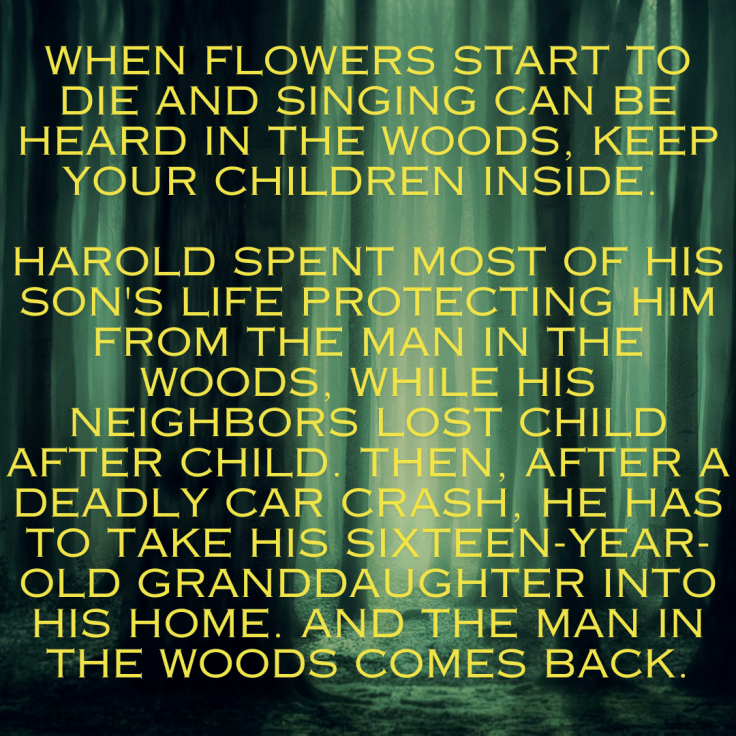
Man in The Woods is now available on Smashwords and almost everywhere!

Writing your second to last book

Nova comes out in a week. This is incredibly exciting. But, you probably already knew that. You probably also already knew that this is book 5 in the Station 86 series and that it is the second to last book.

What you might not know is that this is the first time I’ve ever written a series this long before. Woven was only four books, and one of those was a prequel. So, technically, that was only a trilogy.

Writing a long series, as I’ve found, is a whole different creature. Now that I’ve written the penultimate book in my series, I’ve learned a few things. And so today, I’d like to share what I’ve learned with you.

Have a series outline as soon as possible

I’ve talked a lot, and I mean a lot, about bad endings. Especially in my reviews on Haunted MTL. Endings that don’t feel satisfying, don’t fully answer all the questions asked during the series or simply don’t fulfill the promises of the story.

One of the ways you can avoid that sort of bad ending is by establishing a series outline as soon as possible. Ideally, before writing book one. I had a series outline for Station 86 after book one, and I honestly wish I’d have started earlier.

This is important for several reasons. The first is that it enables you to start working in foreshadowing from the start. A great example of this is Futurama. Spoilers ahead.

In the very first episode, we see a shadow on the floor when Fry falls into the cryogenic tube. It is several seasons before we find out who that shadow belonged to, and the significance of Fry being frozen.

Writing a series outline also stops you from feeling paralyzed when starting your next book in the series. Unless you’re writing a continuing series that doesn’t have an overarching plot, like The Cat Who series, you have an overlying story that you’re telling through the series. So it’s important to understand, at least a little, how each book is going to move that main plot forward, while also being a satisfying story by itself.

For example, the main storyline of Station 86 is that there are hollow mechanical things that are killing people for seemingly no reason. This is the main issue our heroes have to face. Each story has been about some new aspect of that.

Seeming set the stage, introduced our characters and world, and established that Earth had gone dark and wasn’t sending or receiving messages.

You Can’t Trust The AI was a story about AI dogs attacking Station 86, because the Hollow Suits had taken over their home station.

Virus was a zombie sci-fi story, that happened because someone was trying to create a weapon against the Hollow Suits.

Station Central was the first one to include an actual attack by the Hollow Suits. And Nova is where we finally learn what the Hollow Suits are, and our heroes come face to face with them.

None of this was by accident. It was all in my initial series outline.

But understand that it is not set in stone

This is something I think a lot of people don’t understand about an outline. Just because you have one, doesn’t mean it can’t change dramatically. If you come up with something better, or your original outline just isn’t vibing anymore, you can redo it. You can change it. You can toss the whole thing and start over.

For example, Nova was not going to be a book at all. All the important parts were going to be flashbacks in the final book, the one I’m writing right now. Then, I realized that there was simply too much to tell, and too much I wasn’t going to have the space for if I tried to do that. It would feel rushed, and unsatisfying. So, I wrote a whole other book. And in doing so, I had to rewrite the final one.

This is why this book took so long, but that’s a whole other issue.

The important thing is that you don’t have to stick to your initial outline. Your series is going to surprise you. Let it.

Anything might happen

A series ender can bring all sorts of surprises. People who you never thought would come back might. People you never thought would get back together might. People you thought were certainly going to live to the end of the series might not.

This is when it’s time to pull no punches. This is when your character’s worlds are unraveling. It’s when they’ve leveled up, been beaten down, and are standing just outside of the big boss’s reach. Which means it’s time to go for broke.

Which sometimes means making some tough decisions. Like killing a character you didn’t want to kill. Or having a love story end badly. Because, well, that brings me to the next point.

It can look like the bad guys won

No one wants to read a book where the antagonist is a pushover. They need to be someone intimidating. Someone it seems like the hero can’t possibly beat. And so, it’s okay if it looks like good is temporarily defeated in your second to last book. Maybe their team has been thinned. Maybe they’re imprisoned. Maybe we think they’re on death’s door.

Maybe any number of things. But, it’s okay for your second to last book to not have a happy ending. I would argue it’s probably for the best. Because we all like a comeback story, right? We all love the times someone defeats all odds and comes out with a win.

That’s what your last book is for. It’s the finish line, the moment of triumph after years and years of writing for you and years of journeying for your readers. So if you want that comeback, you have to knock your character down first.

Know what’s happening in your last book

While I was writing Nova, I had a document open the whole time for notes on the last book. Because, of course, this is what it’s all been building to. And so it’s fair to say that the last two books in a series are one book, just published at different times. Never is it more important that the story should flow from the last page of one book onto the first page of the next. I’ll be honest, I was tempted to write Nova and the new book at the same time, going through drafts together as though they were one large book. I might have done that if I hadn’t let so much time lapse between Station Central and this one. But if I do another long-term series, I’ll probably do just that.

If you’re writing a long-term series, I’d love to hear about it. And if you have any suggestions or tips, let us know in the comments.

Paper Beats World is a labor of love. If you love this post, please like and share it. And if you want to support us financially, you can do so on Ko-fi.

Nova is coming out next week! You can preorder it now on Amazon.

What is our moral responsibility as writers?

This is a subject that I’ve touched on a few times recently. But I realized I’ve never done a whole post about it.

Which is strange, because I think about this a lot. Like, probably more than I should.

To what extent are we as writers morally responsible for the actions of people who consume our content?

Books have gained infamy for inciting violence and bad behavior. Violent video games were blamed for school shootings. Music is blamed for promoting promiscuity and gun violence. Well, only rap music is ever blamed for that. Country music talks about sex and shooting people all the time. Ben Shapiro never has anything bad to say about those performers.

This is a topic I thought a lot about after writing Quiet Apocalypse. When I was writing it, I just wanted to write a scary haunted apartment story about a clever witch and her attempts to stop the apocalypse. It was only afterward that I realized it might be seen as an anti-abortion message.

Which was never, ever my intention. I am pro-choice all the way and regularly donate to the Brigid Alliance.

So, am I to blame if someone uses Quiet Apocalypse as an example of anti-abortion propaganda? Are any of us responsible for people who use our fiction as an excuse to do awful things?

No, we’re not. And if you, like me, have these concerns, I hope that today’s post will help you put them to rest.

People who do bad things are just looking for an excuse

It is the sad reality of our world that some people are going to do terrible things. They’re going to be bigots, they’re going to bully others. Sometimes they’re going to shoot up innocent places. Even holy places.

But these people didn’t get this idea from reading a fictional story. Not a single mass shooter was a perfectly well-adjusted member of society before they played Call of Duty, and now they’re shooting up a nightclub. Drug addicts weren’t clean and sober, then read Alice in Wonderland and started dropping acid.

The desire to do those things was there before the fiction was consumed. And while this fiction might speak to a dark part of them, it didn’t build that dark part from nothing. To say otherwise is to scapegoat storytelling so we don’t have to look at the deeper societal failings that lead to drug addiction and gun violence.

There’s a ton of WWII fiction, and yet there are still Nazis in America right now

We are surrounded by WWII stories. Any streaming platform is bound to have countless movies and TV shows about the war. And there are hundreds upon hundreds of books about it. Some of my favorites are Maus, Number The Stars, and Jacob the Liar.

Nowhere in any of these stories are the Nazis the good guys. And, in case this needs to be said, that’s how it fucking should be. The Nazis are not now, and never will be, the good guys.

And yet, somehow, we have modern American Nazis. Proudly marching around with swastika flags and tiki torches.

How did this happen when our society is flooded with fiction that demonizes (rightly) the Nazi agenda?

Well, there are a lot of reasons why this is happening. People with far more understanding and education than me have researched this issue and published in-depth work regarding it. But I think we can safely say that it wasn’t the massive amount of WWII fiction. It seems to be despite it.

So if all of this work has been done with Nazis as the bad guys and it hasn’t deterred modern Nazis, why do we assume that pro-violent material will cause violence?

There is no way to tell how people are going to interpret your fiction

Lewis Carroll never wanted anyone to associate Alice in Wonderland with drug use. Homelander from The Boys was never supposed to be a good character, but some on the far Right in America have rallied around him. Rage Against the Machine has always been political, and yet somehow people have missed the message.

We just have no way to tell how people are going to perceive our work. No matter how clear we think we are with our message, someone can still take it the wrong way.

This isn’t because people are dumb. Well, not entirely. It’s because people see the world through their own experiences. Our perceptions are based on every experience we’ve ever had, the society we live in, and the lessons we were taught as children. And no matter how compassionate and empathetic we are, we can never see the world through someone else’s eyes.

We are never responsible for the actions of other people

This is something that I struggle with, coming from a high-control religious group. The sort of group that teaches girls to dress modestly so that we are not stumbling blocks for our brothers. We were taught that we weren’t supposed to go shopping on the Sabbath, because we were then causing other people to sin by working on the Sabbath. We were taught that we would be missionaries in our everyday lives if we lived the gospel well enough and devoutly enough.

I was also told by my grandmother that I should fast and pray so that my mother would stop smoking.

That’s a lot of responsibility for other people that was placed onto my very young shoulders. And yes, deconstruction has been a journey for me. There’s going to be a post about this soon.

So I get it. I get what it’s like to feel guilty because of what other people do. But we are never responsible for other people’s actions. Unless you are intentionally inciting violence and hate, it is not your fault if people commit violence or are hateful after reading your work. You are responsible for you. That is it.

At the end of the day, it’s good that we as writers are concerned about the impact we have on the world. It’s good if anyone worries about that. But we cannot allow our fear of other people’s reactions to silence our work. All we can do is tell our stories to the best of our ability, and hope that they inspire good and not hate.

If you want to support Paper Beats World, please share and like this post. Or you can support us financially on Ko-fi.

Nova is available for preorder now on Amazon. Check it out.

Why aren’t you writing?

Writing for most of us starts as a passion. It’s something we love, something that brings joy to our lives. I started writing stories as a child, scribbling down my imagination play.

These days, writing is still a passion. It’s still something I get very excited about. Time spent writing is still fulfilling, still fun. It’s still the best way I know to get my feelings out, entertain myself, and get the demons out of my head.

So why, then, do I feel like I don’t want to write?

Not all the time, of course. Most of the time I want to write so much that I actively forgo other activities to write. I used to play video games, for instance. Used to. Writing and reading are the best ways I can think to spend my time.

And yet there are still times when I want to do literally anything other than write. If you’re a writer, I bet you feel the same way sometimes.

This isn’t ideal. Anything that makes you want to avoid the thing you love most of the world is not great. But to avoid the desire to avoid your writing sessions, we need to figure out why you don’t want to write. And to help you with that, I have five questions for you to ask yourself.

Do you not like your current project?

Sometimes we don’t like our projects. Usually, this happens in the middle of a rough draft for me, and for a lot of other writers. The story feels boring here. It feels like starting at point A was a ball, and getting to point C will be fantastic. But point B is shitty and we feel shitty writing it.

When you feel like this, you want to consider what you’re writing. Is it dull? If so, then maybe you should change it up. Make it more exciting. Because I’m sure we all know as readers that books bog down in the middle. But there’s no reason to accept this as a matter of course. Middles of books can be great fun to read and write. And this will help a lot if you find that you don’t want to write what you’re writing right now.

Remember, if you’re not having fun writing, the reader isn’t going to have fun reading.

Have you made writing into a chore?

When you write for a (alleged) living, it’s easy to feel resentful towards your work. I have a real problem with this. I have this innate hatred of anything I’m supposed to do. This often seems like a kiss of death for things that I love. If I adore a show, there’s no way to ruin that love faster than to decide to review it.

Which isn’t to say I don’t love reviewing things. It’s just that as soon as it turns from something I do for fun and something I do because I have a deadline I’m irritated by it.

But if I let that dumb rebellious you can’t tell me what to do attitude win, I would never do the thing I love most in this world. I would never write work I’m proud of and share it with all of you.

We all have an inner child, but we also all have an inner teenager who wants to slam our bedroom door and play loud music while our parents try to reason with us. The problem is that, in most cases, our parents were right and we should have listened. The other problem is that now that we’re adults and working for ourselves for the most part, we have to be the parents to our inner teens. And the best way I’ve found to do this is bribery.

Bribe yourself to get started. Promise yourself a new book, a trip to your favorite coffee shop, or your favorite bag of chips if you’ll just sit down and get started on the project. I’m sure you’ll find, like I do, that once you get your ass in the seat you don’t need that reward anymore. The writing is always rewarding after we get over that rebellious hump.

Are you tired?

These next two questions might sound the same at first, but they’re quite different. Being tired is a shorter-term malady.

Which isn’t to say it shouldn’t be respected. Maybe you’re tired today. Maybe yesterday you wrote a whole bunch. Or maybe you didn’t get a lot of sleep last night. Maybe you had a few days that asked more of you than you had to give and now you need to rest.

Never put your health in jeopardy to get words on the page. If you need to rest, then rest. The work will be there when you get back.

Are you burned out?

Burnout isn’t the same as being tired. It’s like the difference between a cold and a flu. Burnout is going to take much longer to recuperate from and will take more serious treatment.

I wrote a whole series about writing burnout a few years ago, that you can check out starting here.

The first thing to remember when feeling burned out is that it is morally neutral. You are not lazy. You are not failing. You have been doing too much for too long and in our society that’s almost unavoidable.

Being burned out might require more time away from your desk than you like. I know I hate it. I feel like I’m falling behind while everyone else is running ahead of me. And it sucks.

But you’ve got to give yourself grace.

There are going to be things you cannot put down. You have to do your day job. If you have contractual obligations, you have to meet them or ask for an extension. You have to care for your family, your pets, and yourself. Not in that order. If your writing isn’t the sort of thing that you’re working on a deadline for, then put it aside for a while.

It will be there when you get back. And so will your readers.

Are there more important things you need to be doing?

Finally, I come to the worst question. Because it involves adulting, and it’s the reason why this post is so late. I didn’t have time to write it this week when I usually do. I had obligations at my day job, then I had to go to a doctor’s appointment. Then I had to go get blood work done because of the doctor’s appointment. Then I had to run errands for Easter on Sunday. Then I had to fight with my bank over something. I woke up with the will and desire to spend an hour at my desk working on my current rough draft. What I didn’t have was the time.

I had to be a grownup yesterday. Today, I have to be a grown-up again write contractually obligated work, and clean my house. I have to be an adult, even though I want to write my story.

Sometimes your creative writing is going to have to take a back seat. Sometimes there are other priorities that you just cannot ignore. You have to take care of yourself. You have to mind the business that pays you. You have to care for your family and your living space.

The important thing here is to separate what needs to be done, what probably should be done but can wait for another day, and what doesn’t need to be done at all or could be delegated to someone else. I would never skip writing to dust, sweep, wash the windows, or vacuum. I might have to skip writing to do dishes or wash clothes. It’s about what needs to be done, and what doesn’t.

So that’s it. Now, I want to hear from you. What do you think is the best question to ask yourself when you’re not writing? Let us know in the comments.

Paper Beats World is a labor of love. If you love what we do here, please consider supporting us by liking and sharing this post. You can also support us financially on Ko-fi.

Adding new characters so people don’t hate them

If you’re writing a series, you’re going to find that your cast changes over time. This makes sense and is realistic in real life. If your MC is learning, growing, and changing then people are going to leave and come to their lives. They might move, go to school, change jobs, or get a new neighbor. Maybe a family member needs to come stay with them for some unexplained reason.

Sometimes this is great. Some fantastic characters have been added later in a series. Using some TV examples because they’re the best known, here are some later added characters I loved.

Patrick from Schitt’s Creek.

Kimmi from Rugrats.

Ben and Chris from Parks and Rec.

Alex from Chuck.

Natalie from Monk.

Chris from 30 Rock

Jessie from Burn Notice.

All of these characters were great additions to their respective shows.

But not all characters added later in a series are great. Some are Godawful. And the examples of that are downright cringy. Think of Dill from Rugrats, Suzie from Space Cases, Scrappy Doo, and the much despised Bobby from Brady Bunch. This horrible addition trend is so well understood, that it was mocked by the Simpsons in their eighth season.

So how do we do it right? How do we add to our cast without creating a Poochie? Well to me, this involves a series of do’s and don’ts.

Do add something to the story that was missing

Most of the characters in my ‘good’ list fall under this rule. Patrick added a straight man (comedic straight) to a pretty zany cast. Kimmi gave Chucky someone who admired him in Rugrats. Alex gave Casey a softer side that he needed in Chuck.

Do you have a character that is a little too silly? Too responsible? Too damn irritating? Give them a character that has the opposite qualities to balance them out. If your story is just a little too dark, add a character that can give levity.

Do give them a believable and sensible reason to be there.

How did this new character join your cast? Did they move? Okay, why did they move?

Kimmi’s a good example of this. She and her mom joined the cast after the Rugrats went to Paris. Her mom was working for the antagonist, fell in love with Chaz, and moved back to the States with him. That makes sense. Well, not in the real world. But in the lovely fictional world in which a school teacher can afford to keep her family in a house in the suburbs.

As a bad example, we can look at Scrappy Doo. Why is he hanging out with his uncle? Why did we never meet his parents? Why doesn’t he ever go home?

It needs to

Do make sure they fit the style and overall theme of the show

We all know that fiction content tends to have a certain vibe. Some shows are warm and cozy, some are more dark. For this example, let’s consider The Good Place with The Boys. In The Good Place, everyone seems to be a little messed up, but essentially decent people.

Compare that to The Boys, where no one seems like an essentially decent person except the two main characters, Hughie and Annie. And even they, if they were plopped into The Good Place, would seem far too dark and messed up to belong there.

So, as much as you’re trying to bring something new and different to your universe, you don’t want them to be so different as to feel like they don’t fit into the world you’ve already created.

Don’t force this character to take up too much space

Now, we’ve reached the don’ts. And this first one is a doozy.

If you’re adding a new character, you don’t want them to necessarily take over as the main character. So they shouldn’t be treated as such. Yes, they should have some storylines. Yes, they should take up space in the world. Yes, they should be important to the plot. But they shouldn’t be the new focus, to the detriment of other characters.

A great example of this done wrong was Rugrats. Dill took over too many of the storylines. Now that there was a baby who needed looked after and cared for by the rest of the cast, every story had to be about him in some way. Before, each episode told a story of one baby, or the assembled cast facing a problem. Now all the problems were about dealing with Dill. Or they were exacerbated by his presence.

Honestly, did Stu and Didi never actually watch their kids?

Don’t take the place of existing characters

This one is a personal issue with me. And it started young. I’m likely dating myself here, but when I was a kid I loved the show Space Cases. It was kind of like Voyager, but with a younger crew. A ship was lost in way outer space, carrying two adults and a group of teens. Scifi hilarity ensued.

My favorite character was Catalina. At the end of season two, she was replaced by her best friend Suzee, who until this moment most of us thought was an imaginary friend.

And I never got over that.

Of course, if you’re writing anything that requires actors, you’re sometimes going to have to replace people. I had a few actors leave my podcast between seasons one and two.

Some of the characters I recast. Some I simply wrote out and didn’t replace. But if you’re writing for TV, you can’t always just replace an actor.

(Yes, sometimes it can be pulled off.)

Then there are examples like Space Cases, or Charmed, where an actor leaves and their position is simply taken over by a new character. And that’s a jarring situation.

If you’re writing a book series, you don’t have to worry about actors leaving. So you do not ever need to shoehorn a new character in to take the place of somebody else. So, you know, don’t do it.

Don’t add a character just because they’re cute

Alright, you all knew this was coming. That’s why I saved it for last. I have some words of revulsion for the Scrappy Doo, Dill Pickles, and Cousin Oliver sort.

We do not need a character added just for the sake of being cute young and new. We don’t need it. If you find yourself writing a new baby, a new puppy, or a new adorable pet sidekick to keep things interesting and fresh, stop right there. Your story doesn’t need it, and it won’t be the saving grace you think it would be. That stunt has worked once and only once, and that was on Sailor Moon.

I hope this post has helped you. And I hope I didn’t trash-talk a character you loved. If I did, please let me know in the comments. And if there’s a later addition character I didn’t reference that you think deserves some love, please let me know about them too.

Paper Beats World is a labor of love. If you love what we do here, please consider supporting the site on Ko-fi.

And don’t forget that Nova, book five of Station 86 starts on Monday! And yes it does have one later series addition, a survivor from Station Central. See you then.

It’s not important until you make it important

There’s a person I follow on all social media. Her name is Molly, the art witch. I love her. I want her to be my auntie. 

I’ve learned so many wonderful things from her about art, expression, finding joy in life, and witchcraft. One of the best things I’ve learned from Molly is this. Nothing is sacred until we say it is. 

Now, she was talking about grimoires and other magical tools. And this was great news for me as a beginner witch who was being far to methodical about my grimoire. It was incredibly freeing, realizing I could have a grimoire that didn’t look anything like the books I grew up seeing on Charmed. I’ve since crafted three full grimoires, and have two active ones for my continued learning.

But I didn’t come here today to talk about grimoires. I can if you want me to. Let me know in the comments.

Today, though, I want to talk about something else. Tuesday was the ninth anniversary of Paper Beats World. It was a terribly important day for me, filled with big positive emotions. Do you know what I did?

I went to work, because I had to work that day. 

I have launched ten books and three seasons of podcasts. I’ve had a handful of mini milestones in my writing career aside from those. And on most of those days, I have done just about the same thing.

I’ve taken some pictures, posted them on social media, and gone to work. 

What in the hell am I doing? 

I think for the longest time, I’ve been expecting other people to make a big deal out of these days, these milestones and achievements. But that’s a lot to put on anyone. My darling husband is as supportive as they come, and even he didn’t do much more than congratulate me. But really, what else was there for him to say? 

Especially as indie writers, our successes seem lackuster. Our books come out to little fan-fair. Instagram didn’t turn pink when AA came out. No one was waiting outside a book store to snag a copy of Quiet Apocalypse before they went to work. 

Please understand that this isn’t a pity party. Nor is it me talking down about myself or other indie authors. Most of the content I was most excited for this year didn’t have a massive party when it launched. Silver Nitrate came out, no one was dressing up as film monsters and waiting in line to get their copy. Old Gods Of Appalachia is about to start season four. We aren’t seeing a bunch of stoked fans dressed up as dead miners. Instead fans of these things, myself included, simply got the book. We listened to the podcast. We celebrate the stories that we love by consuming them, then posting pictures of the covers on social media and raving about how cool the story was. Quietly.

The point is that no one is going to celebrate your successes as much as you do. These days don’t have meaning, unless we make them have meaning. And yeah, it’s kind of hard to make them have meaning, even if it’s something you’ve waited years for. 

I had to go to work on Tuesday. I actually got sick and had to leave work, spend the rest of the day on the couch on Tuesday. But most launch days, the world just has no intention of stopping. There’s still pets that need cared for. Laundry, dishes, day jobs. These things do not and will not go away. 

But we are achieving things, damn it! We are launching books, we are signing contracts. We are getting our first good reviews and holding the copies of our books for the first time. We as indie writers are winning all the time. And damn it, I’m going to take more time to celebrate those wins. 

So sometime soon I’m taking myself to my favorite coffee shop. I’m getting a Fall coffee, and sitting down with my laptop to look over my own site. To revisit the memories, advice, lamentations and everything else I’ve poured nine years of work into. After all, I start this blog while I was still working on Broken Patterns. It is a very real documentation of my entire writing career. 

This is how I’m making this anniversary sacred, how I’m making it special. And I’m vowing now to never pass up another opportunity to celebrate a writing win again. 

So how about you? What do you do to celebrate your writing milestones? Let us know in the comments. And I’ll see you again next week. 

Don’t forget, Preptober is officially just a month away. I have a brand new updated for 2023 version of my Preptober Planner available now on my Ko-fi shop.

A WordPress.com Website.

Up ↑