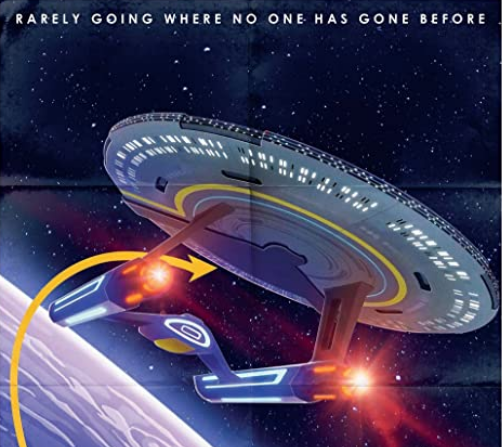
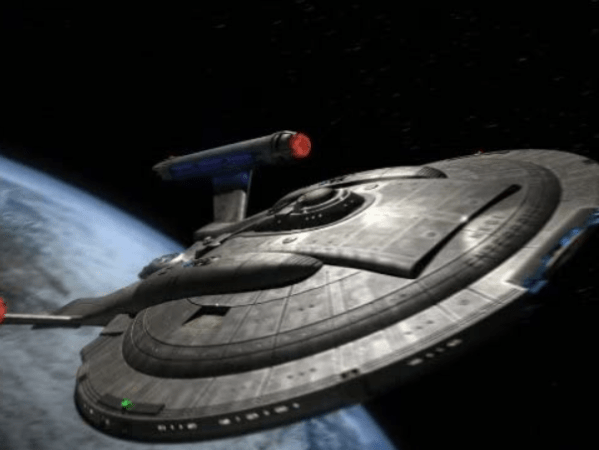
Full disclosure. All the other shows in this series have one of two things in common. Either they were a childhood favorite of mine or a recent love. I’ve only seen bits and pieces of Enterprise. And there’s a chance that, even if you’re a big Trek fan, you haven’t seen much of it either.

Enterprise has a hell of a bad reputation. Trek fans kind of hate it. And so, for a long time, I didn’t bother to give it the time of day. 

I should have. Enterprise has all the same qualities as the other Star Trek shows. It’s got great storytelling, fun characters who grow and change as people. It’s funny, it’s smart. It has that same fast and loose hand with science that we’ve all come to love.

So why is it so disliked? And more importantly, how can you as a writer avoid these same traps? 

It only makes sense to begin at the beginning. In this case, we’re talking about the theme song. 

Oh, this theme song! It’s like someone ate the theme song for Full House and threw it back up. 

Not only is the song a bad eighty’s pop ballad, but it also has nothing to do with the show. It doesn’t fit the style at all.

This alone was enough to throw people off. Okay, well what does that have to do with writing a book? Let’s compare a theme song to a cover. A cover is something that everyone tells you not to judge your books by, but you do.

Don’t feel bad, I do it too. And at least two books I’ve loved recently have caught my eye because of their cover. 

Your cover matters. If you’re an indie writer, make good use of that. If you work with a publisher, then use whatever pull you have to make sure you love the cover. 

Now, let’s talk about the ending. And by that, I mean the last episode. And I’m not going to lie, you this is a problem that a lot of shows seem to have. No one seems to know how to end a show without pissing everyone off.

I’m not talking about endings that weren’t supposed to be endings, like Chuck or Santa Clarita Diet. I’m talking about endings that knew damn well they were going to be ending. Like Game of Thrones or Roseanne. Shows that decided the best way to end was to kick their fans square in the junk.

That’s the kind of ending Enterprise has. And a bad ending is always bad for business. 

I don’t mean a sad ending. A good sad ending can rip someone’s heart to pieces and they’ll thank you for it. Good examples of this are Flowers for Algernon or Lord of The Rings. No, I mean a lazy ending, that makes the reader or watcher feel dumb for putting so much time in. Or an ending that doesn’t make any sense. Anything that falls into categories like this.

It was all a dream.

The main character’s been in a coma.

The whole story took place in a little boy’s mind while he looked at a freaking snow globe.

It was all a playback on the holodeck. 

These are things that make fans hate you. They make fans want to hurt. Since that’s legally frowned upon, they will do the next best thing. Trash you and your work all over the internet. And word of mouth matters. 

Word of mouth, after all, is why I didn’t watch Enterprise for so long. I’d just heard too much bad about it to think it could be good. And that’s a really hard thing to get over.

That’s it for this time guys. Next week we’ll be talking about a new favorite of mine, Lower Decks. 

Thanks for reading! You can support Paper Beats World on Patreon or Ko-fi.

Why it works, Deep Space 9

Welcome to week four of our Why It Works, Star Trek series. This week, as promised, we’re talking about Deep Space 9.

This was another that I watched with my grandmother as a child, and then revisited as an adult. 

Running from January 1993 to June of 1999, it’s the third Star Trek show to come out and the first to take place on a stationary location instead of on a ship. It’s unique in a lot of ways. I’d say the biggest difference between this and other series is that we see a lot of civilians. I appreciated getting a better understanding of what life’s like in this world if you’re not part of Starfleet. Commander Sisko is part of Starfleet, but most of the station is full of civilians. It’s a different dynamic.

Which is our first tip. While this one doesn’t apply unless you’ve been writing a while, it checks out. Dont be afraid to do new things. 

Not to plug my stuff here, but that’s what I did with Falling From Grace. A good world, Fantasy or Science Fiction, should have different societies, different walks of life. If you’ve created a good world, explore it.

In the first post of this series, I talked about an episode called Trouble with Tribbles. It’s a much-loved episode of the original series, with a hilarious mess up. During a scene where tribbles fall from a vent onto Captain Kirk, a stagehand’s hand can be seen tossing the little critters out. Well, Deep Space 9 had a chance to fix it, and they did. I mean, if you’re going to have a time travel episode, might as well fix some old mess-ups.

They intentionally wrote in a scene with Sisko and Dax in that same vent. And being covered in tribbles, they decide to toss them out of the vent. And Dax worries that her hand was seen. Well done, guys. 

Who is here that doesn’t belong? Leave your response in the comments.

Another thing that Deep Space 9 did well was to remind us that it is set in the same world as the other series. Particularly the world of Next Generation. Worf, of Next Generation, is a character for much of the series. Deep Space 9 was great at utilizing past success, but not as a crutch

You see that sometimes, with spin-offs or follow-up series. The original show was great, everyone loved it. And so the new show leans too much on the popularity of that show, having old cast members pop in and rehashing old running jokes. That’s not what’s happening on DS9. A good test of this is that it can stand alone. You could pull Worf out of the show and it would still be good.

Is it cool to have those old nods? Yeah, of course. But if that’s all your new story has, then you don’t have a new story. You have a continuation of an old story. One that, if you finished, was probably done.

So that’s it for Deep Space 9. There’s a lot to learn from it, of course. If you’ve never seen it, give it a shot. And join us again next week for Enterprise.

Thanks for reading! You can support Paper Beats World on Patreon or Ko-fi.

Why Star Trek Voyager works

It’s time for another episode in our Why Star Trek Works series. This week we’re looking at Voyager. 

Technically Deep Space 9 came out before Voyager. But we’ll be talking about that next week. Both shows aired at roughly the same time, so it didn’t matter which one you watched first.

Voyager was, of course, far different than the original series or Next Generation. For starters, it’s not set on the Enterprise. 

Duh, I know. But think about what that means. Enterprise is the flagship of the Federation. The people who work on the Enterprise are the best of the best. Everybody from Captain Picard to the dude cleaning the toilets is the best there is at what they do.

That’s not to say that the Voyager crew is bad. But they’re not the flagship. They’re not the best of the best. They’re not getting the best of the best, either. There’s no posh bar run by an eternal psychic here. There’s a crew doing the best they can to survive a hell of a situation.

If you don’t know the premise of the show, let me break it down for you. Captain Janeway and her crew are tasked with tracking down a group of rebels called the Maquis. While trying to catch up with them, both ships are transported somewhere in space they’ve never seen. Over seventy years’ worth of travel stand between them and their families. While Captain Janeway is still dedicated to the mission of seeking out new life, her main mission is clear. To get her people home.

Now, let’s talk about why the show does and doesn’t work. Because while it’s great overall, sometimes we learn lessons from other people’s screw-ups.

Make your own rules, and stick to them. 

There’s a rather infamous episode of Voyager that messes up the math for warp speed for every other show in this cinematic universe. That was pretty extreme, but it’s by far not the only example of this show just not sticking to its own damned rules.

Take the Captain, for instance. Sometimes she’s a badass no-nonsense queen. Sometimes she wants to be everyone’s mom. And no one bats an eye at this. Look, I get that people change and grow. But if you’re going through a switch like that, someone’s going to notice.

Let your characters grow.

Alright, all that being said. There is a great amount of character growth in Voyager. And I love that. The premise of the show, that they’re lightyears away from home and might never get back, is going to force growth. No one’s the same person they are by the end of this. Which, if I’m being honest, is something that was lacking in the other Star Trek shows. Picard is Picard, from the start of Next Generation to the end. The same can be said for almost everyone. And that’s just not realistic. I’m not the same person I was seven years ago. Why should any of these characters be?

Have a clear goal that not everyone shares

Here, though, is the biggest reason Voyager works. Right from the start, there’s a clear goal, get home. But, and this is the important part, not everyone necessarily shares this goal.

There are a couple of characters who might be way better off on the other side of the universe. People who were in prison or maybe heading to prison. People who might be just as happy to make their way home, or their way in a new universe.

This sets up the immediate conflict for the whole series. There’s no writer’s block here because you always have something for your characters to be working towards and against. It also sets a finish line.

Over the last few years, never-ending shows have gone out of fashion. There’s an end to most stories, after all. A moment to pause. While life may go on for the characters, one tale doesn’t go on with them. Think of your own life. Has it all been one battle? Or has it been a thousand different battles? Giving a story an ending doesn’t just prevent you from jumping the shark. It’s also infinitely more satisfying.

So that’s it for Voyager. I’ll see you next week when we’ll talk about Deep Space 9. 

Want to support Paper Beats World and get posts two days early? Subscribe on Patreon.

You can also buy me a cup of coffee on Ko-fi.

Why Star Trek Next Generation works

Welcome to week two of our why Star Trek works series. This week, we’re talking about Next Generation. 

Full disclosure, I have a soft spot for this series. It’s the one I watched with my grandmother when I was a little nerdling. So I might be biased when I say that this is the best Star Trek ever. But I also think I’m critical enough to judge the show honestly. After all, we’re harder on the things we love than anything else. 

Taking place 78 years after the original series, the show included a fancier more advanced Enterprise with an entirely new cast. The mission remained the same. To explore strange new worlds, to seek out new life and new civilizations. To boldly go where no one has gone before!

The show aired from September 28th, 1987 to May 23rd, 1994. Since then, there hasn’t been a time when reruns haven’t been available on tv somewhere. 

I’d like to say the popularity of the show was just because the characters were great. They were great, after all. But it goes so much deeper than that. 

To start, the show was intelligent. Not so much in the science, most of that was bullshit. It was the creative writing that had to be smart. The show was working within a world that had already been established by the original series. They could make some changes, blame them on advancements. But some things they were just stuck with. 

It would have been easier to just make it an extension of the original series. But they went past that and did it well. Picard is a different kind of captain than Kirk. Dr. Crusher is a world away from Bones. While the positions remained the same, the people who inhabited them were wildly different.

Another thing that stayed the same, aside from the mission, was the lesson of inclusion and equality. It’s one of the first times we see an enemy race become allies in the Klingons. While sometimes the relationship is strained, they aren’t volatile. Over and over we’ll see this trend. Even into Picard, where we see the Borg become friends. But we’ll talk about that later. 

One thing I appreciated about Next Generation is the willingness to pivot. When something wasn’t working, they tried to fix it. One great example is Wesley Crusher. His character was an irritating pain in the ass. Mouthy, smarmy. He thinks he’s smarter than everyone around him. Spoiler, he’s not.

Wesley got taken down a peg when he goes off to school and messes up, hard. He becomes a better person after that and a better character. This decision was made after a huge wave of fan hate directed at the kid.

Brag in the comments if you know what he’s drinking.

(Will Wheaton, by the way, is the actor who played Wesley. He’s an adorable cat dad who makes me smile on Twitter all the time.) 

Finally, let’s talk about the comedy of the show. It wasn’t overall a laugh riot. It has some of the darker episodes of anything I’ve ever seen.

There are four lights. If you don’t get that, look it up. Then watch the episode and cry.

Somehow they manage to blend this with some really funny things. Like Data’s cat, Spot. Spot the cat hates everyone. No one can take care of this little monster. She put Riker in the medical ward. Even Worf is scared of this fluffy orange cat. Oh, and in case you don’t know, she doesn’t have a single spot on her. 

The whole crew would shred you if you hurt this cat.

Hilarious. 

There are so many lessons a writer can learn from Next Generation. I’m just going to give you a bullet list below.

-Don’t be afraid to be funny, even in a serious series.

-Let your characters be wrong sometimes.

-Think out your storylines in advance.

-At the same time, don’t be afraid to pivot. 

I hope you’re having as much fun with this series as I am. Next week we’ll be talking about Star Trek, Voyager. 

You can support Paper Beats World on Patreon.

You can also buy me a cup of coffee on Ko-fi.

Why it works, Star Trek the original series

I grew up watching Star Trek, Next Generation with my grandma. It’s pretty mainstream now, but back then Star Trek was a niche show. A nerd show. 

But being a nerd is cool now, so screw that. And now Star Trek’s got so much love it can’t handle it. I could be a bitter hipster about that. I mean, I liked Star Trek before it was cool. Or, I could just appreciate that everyone loves Star Trek. 

Third option. I could revisit Star Trek as a writer and see why it works. I like option three. 

Of course, I couldn’t possibly talk about all things Star Trek in one post. So over the next few weeks, we’re going to look at all of the different Star Trek shows, starting with the original series and ending with Picard.

Today, we’re starting with the original series. Why does it work?

Let’s start with the fact that it probably shouldn’t work. I mean, it was kind of a mess. The budget was garbage, the special effects were terrible, the costumes looked tragic.

But it does work. The series ran from September of 1966 to June of 1969. This means that the whole series started and finished seventeen years before I was born. And yet I can tell you Kirk’s last words.

Oh my. 

No, not the way Sulu says it. 

We’re going to break this down, but I can sum up in three words why Star Trek worked so well. Why it has survived well into the 21st century and will hopefully be around for a lot longer.

It was fearless.

Okay, it could get away with being fearless. No one expected the show to succeed. So it was working with little to no budget and a bunch of actors no one had ever heard of before. So, it could get away with anything. 

There’s a great quote by Lorne Michaels that I live my life by. The show doesn’t go on because it’s ready. It goes on because it’s 11:30. 

Well, someone must have told Roddenberry that quote. Because let me tell you, Star Trek went on because it was 11:30. This lead to some hilarious moments. Like the tribble incident. 

On the off chance you don’t know this story, man are you in for a treat.

In the iconic episode, Trouble with Tribbles, there’s a scene where Kirk opens a hatch and is just showered with the fuzzy little things. If you look closely, or hell not that closely, you can see the shadow of a stagehand shoveling the tribbles through the hatch. 

Okay, so what is there to learn from this? Who wants to go into the world with their shirt untucked, so to speak? Why would you want to put work out there when it’s not ready?

Well, is it not ready? Or do you just feel not ready? 

Let me tell you something, from my heart to yours. You are never, ever going to feel ready. Your book, tv show, podcast, movie script, is never going to feel ready. It’s never going to match up with the flawless project in your head because how could anything ever be that perfect?

So, because we have to assume that nothing will ever be ready, we have to go on because it’s time. Because it’s 11:30, or we’ve revised the damn thing so much we’re sick of looking at it, or we’ve had it sitting on our desk for years. Does that mean sometimes we’re going to see hands throwing tribbles out of the hatch? Yeah, of course. But the alternative is never sending anything out. Pick one.

Here’s the other way Star Trek was fearless. And it’s arguably a bigger deal. Star Trek wasn’t afraid of doing things that were taboo at the time. Like having a Russian man and an Asian man as officers. Like having a black woman as an officer. 

Like having the first interracial kiss in American history on television. 

In an episode called Plato’s Stepchildren, Kirk and Uhura share a passionate kiss. Funny story about this kiss, aside from it being the first one of its kind in America. The producers were worried about it, so they wanted to film the scene a few ways. Shatner agreed but then proceeded to intentionally fuck up every single take that didn’t include the kiss until they’d run out of time and had to use the scene as it was written.

That’s right. Shatner decided to be a dick to force social change. Good use of bad behavior. 

Not all the episodes worked, that’s for sure. The ones that missed, missed hard. But the episodes that work, work amazingly well. They work so well that they’re still working to this day. 

See you next week when we’ll be talking about Next Generation.

You can support Paper Beats World on Patreon and Ko-fi.

Why Wandavision Works

Spoiler Warning: It is all but impossible to talk about Wandavision without some serious spoilers. So if you haven’t seen it yet and you plan to, click away and come back later. You have been warned.

Speaking of a spoiler warning, funny story. The darling husband and I had been planning to watch Wandavision but we hadn’t quite gotten to it yet. Then, we were watching Youtube and stumbled on an Honest Trailor for Wandavision. Normally we watch those right away. But there was a giant spoiler warning at the beginning. This prompted us to watch it, finally.

And man, the twists in this! 

So, now that you’ve been fully warned, let’s talk about why Wandavision works. 

First off, I don’t know that Wandavision would have worked for people who aren’t old-school tv fans like me. A lot of the fun from the first few episodes comes from the constant references to older shows. I Love Lucy, Dick Van Dyke, The Brady Bunch, Bewitched. This was pure nostalgia and it worked so, so well.

Worked into that, though, are some eerie moments. Right from the start, we see that not everything is how it should be in this picturesque little world. The first episode could have been an episode of Bewitched, except for the man who almost dies at their kitchen table.

It’s so dark a moment, then everyone goes back to what they were doing like nothing ever happened. This is done perfectly. It almost makes the audience feel like they might not have seen what they thought they saw.

Another thing that worked well in this show was the depth it gave to two Avengers who weren’t as well know. I mean, I know Wanda. I know all about House of M, and the epic No More Mutants moment. But from the movies, not so much. Wandavision gives us a chance to see both of them in a new light. In a crisis, in joy. We see more of Wanda’s background. It fleshes them out, makes them real people. And this is something that these characters needed.

Finally, I appreciated that this story didn’t have a fully happy ending. But, if you read House of M, you kind of knew that. Wanda has to make a torturous decision. She has to give up everything she’s ever wanted to do what’s right.

It’s hard, it’s heartbreaking, and it needed to happen.

Let’s be real here for a second. It’s just us writers here. Some stories have happy endings, and they should. Like every single Adam Sandler movie. Stupid happy. Some stories don’t have a happy ending. Just like life doesn’t always have a happy ending. Old Dan and Little Ann died in Where The Red Fern Grows. The Baudelaire children never find their parents or their friends. And Wanda doesn’t get to have her perfect Pleasantville family. Because if that’s how those stories ended, then they wouldn’t matter as much.

Now, all that being said, there is one reason why Wandavision doesn’t work. 

If you haven’t seen The Avengers movies, this story isn’t going to make any damned sense to you at all.

Part of that is the feature, not the bug. The Marvel Universe is supposed to be all one big story. Every character’s tale fitting into the next one’s, like puzzle pieces. You have to see it all to see the big picture. But that’s daunting for someone new, who hasn’t been watching from the start.

This is a flaw of the whole Marvel setup, in my opinion. If you’re going to get into the story, you’ve got a ton of watching to do. That’s great if you want to do it. But if you just want to dip your toe in, then this amount of material might just scare you off.

Why Gods of Jade and Shadow works

Last year I talked about why a book called Mexican Gothic worked. It turned out to be one of my favorite books of 2020. It was good enough to convince me I needed to lay hands on every other book Sylvia Moreno-Garcia ever wrote or will write. On the off chance she reads this review, I am a fan for life, girl. 

Fan for life.

Gods of Jade and Shadows was next on my list from her. Published in 2019, it’s not a new book. Nor is it very old. It was impossible to put down.

Let’s break down why Gods of Jade and Shadow works. Because boy, does it work. And I think we’d all like to see more books like this on the shelves. 

If you haven’t read it yet, the story is about a god of death named Hun-Kame. Well, really the story is about a young woman named Casiopea. Her family is horrible to her. She and her mother are treated as poor relations. She wants nothing more than to run away and never have to see them again. Then she finds the bones of Hun-Kame in a box in her grandfather’s room.

The story is like a modern-day fairy tale. Like a greek fable, but with gods most people haven’t heard of. Hun-Kame has to battle his brother to regain his throne. But as they are gods, they can’t battle themselves. So they have to choose champions to battle for them. Hun-Kame choses Casiopea. His brother chooses her cousin. They have to race through the land of the dead to decide who will sit on the throne.

One thing you don’t see a lot of in fables is character growth if the character happens to be a god. But that’s not the case here. I don’t want to ruin anything, but Hun-Kame is forced to look at his past actions. He’s forced to grow. Which is something I think we need to see more of.

It should surprise no one that there’s a lot of heat between the two main characters. Like smoldering heat. It has some sexy, sexy parts.

But there’s no sex! There’s nothing I’d be worried about if my grandmother caught me reading. I wish we had more ghost pepper hot scenes in fantasy stories that aren’t cringy sexy.

Finally, let’s talk about the ending. I’m going to do this carefully, as I don’t want to spoil it for you. It’s not a perfect fairy tale ending. The thing I wanted to happen didn’t happen. But it is so satisfying. It’s everything that needed to happen, and it couldn’t be happier. 

All in all, Gods of Jade and Shadow is a great read. And other authors would do well to learn why it works. 

Want to get Paper Beats World posts two days early and commercial free? Support us on Patreon.

Love this post and want to buy me a cup of coffee? Check us out on Ko-fi.

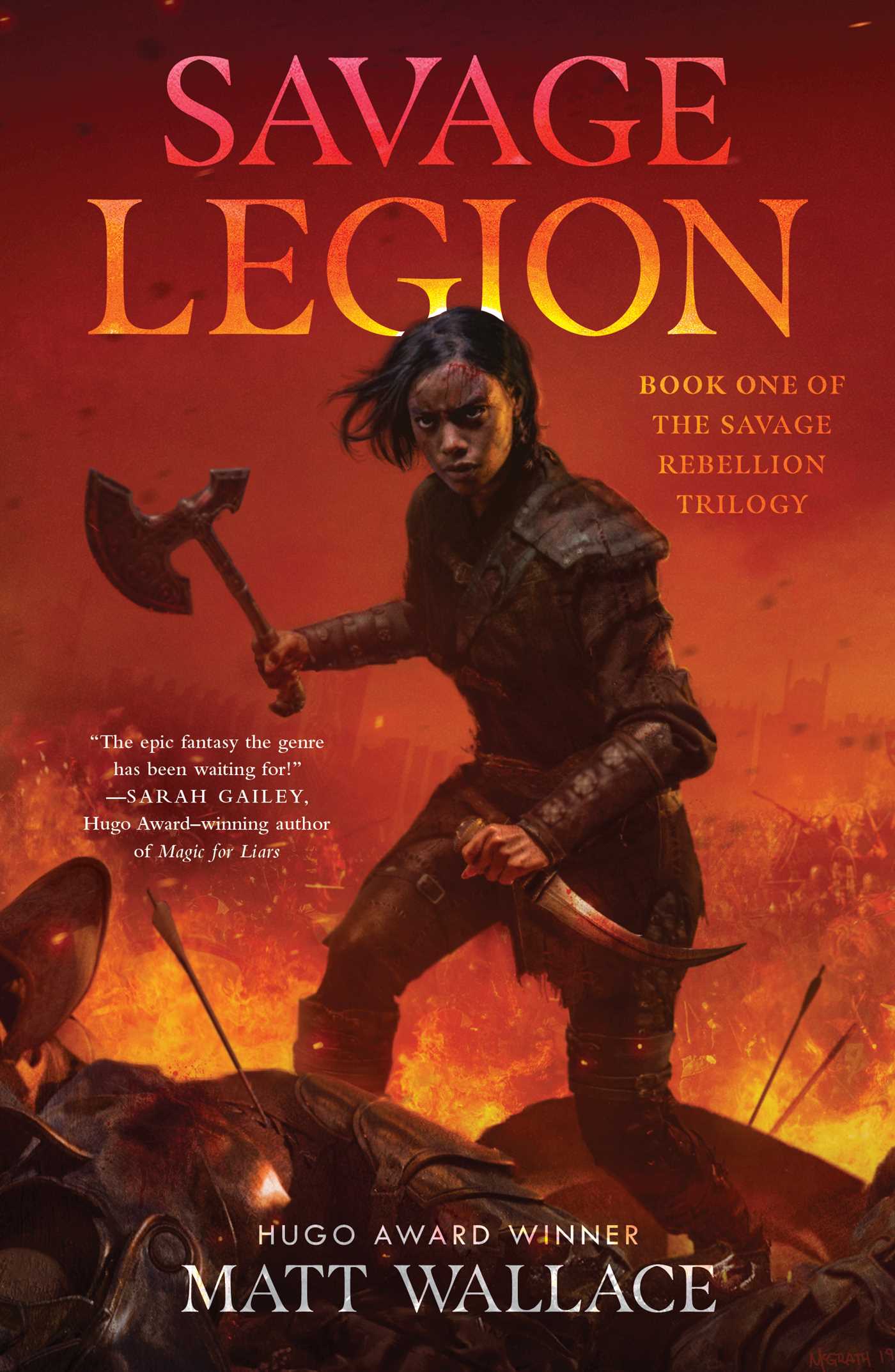
Why Savage Legion Works

I love a good, thick fantasy novel, let’s just get that out of the way, first. And we were to judge Savage Legion by Matt Wallace only on its size, it would be a winner. 

Fortunately, it’s got a lot more going for it. It’s funny, has great characters and was just overall fun to read. 

Today, we’re going to break down why Savage Legion works. And if you haven’t read it yet, we’ll also be talking about why you should. 

The first thing that really stuck me with Savage Legion was that it’s set in the present tense. This was a weird decision that was, frankly, a bit jarring at first until I got used to it. It was one of those brave decisions that we all want to make, but we’re too scared to. 

It did, as I said, take a bit of getting used to. But once I was accustomed, it was great. I felt more in the moment. This was not a tale being told. It was a story that was happening right as I was reading it. 

Now, am I saying everyone should start writing all their books in the present tense? No, probably not. But it wouldn’t hurt to take a few artistic chances. They might lead to the best thing you’ve ever written. 

Now, let’s talk about Taru. Taru is the first and only non-bionary person I’ve seen in a fantasy book. And instead of their whole story being about that, they’re an actual person who has thoughts and opinions outside of their sexuality. 

What a concept! 

I’m sure I’m missing a ton of non bionary characters out there, but the only one I can remember was on an episode of Bones. They were not handled well, to say the least. 

Taru is loyal, funny, brave and scary as hell. And if you want to write about a non bionary character, this is how you do it. 

Another thing done well in this book is the world building. This world, and the city of Crache feels real. It feels like something that would evolve in our own world. The politics, because there’s a lot of politics in this book, make perfect sense. The enemies battling Evie and the other savages feel real. And when the characters, one by one, come to horrible realizations about their government and the people who run it, that feels real too. 

Finally, let’s talk about connecting plotlines. Early in the book we’re introduced to three very different women. Evie, Dyeawan and Lexi. It’s only as their stories progress that we find that they are very much tied together in the deadly web those in power are weaving. 

Now, I’ve seen this done well and I’ve seen it done poorly. I’ve seen it done as a plot device to simply show the world from diffrent points of view. 

That’s not what’s going on here. This is giving vital understanding of the scenes and plans unfolding that we just wouldn’t have with just one character. While the three main characters meet face to face only once or twice, their stories are barreling head on towards each other. I’m honestly not sure who’s going to be enemies or allies when that time comes. And that’s the sort of thing that gets a reader itching to read the next book. 

So that’s why Savage Legion works. It takes chances, it depicts people from different walks of life well, and it shows multiple plotlines coming together in surprising and wonderful ways. But now I want to hear what you think. Have you read Savage Legion? Why do you think it works? And what would you like to see me talk about next? Let us know in the comments. 

Support Paper Beats World and get posts add free and two days early when you subscribe on Patreon. And get bonus content.

You can also support us on Ko-fi.

Why Truth Seekers works

Say what you will about Amazon (and I do) but they are putting some of the most original, creative and brave shows out there right now. I’ve already talked about several of their shows and why they work. And today we’re going to talk about another one. Truth Seekers.

I won’t lie, I was first drawn to Truth Seekers because I am a huge fan of Shaun of the Dead. I tend to have certain actors that drive me to watch anything, and Simon Pegg is one of those actors. (He’s also amazing in Star Trek.)

Sometimes that leads me to watch some shitty things. Truth Seekers is not one of those times.

The story of season one is thus. Gus, a cable repair tech, is saddled with training a new partner named Elton. 

Elton John. Yes, that’s real.

This is stressful for Gus because he likes to work alone. But it’s also getting in the way of his ghost hunting side gig.

Yes, Gus is a Youtube persona who hunts for ghosts. 

This is all well and good when he’s posting time-lapse videos of a door opening by itself. It becomes quite another sort of adventure when the ghosts start acting like they’re in a horror movie and not in an episode of Ghost Hunters.

So let’s talk about the three biggest reasons Truth Seekers works. 

The characters

Okay, I point out characters in almost every single why it works post. There’s a reason for that. This might be an unpopular opinion, but I don’t care. A good cast of characters can save a dull story faster than the other way around. 

Every one of the characters, from main character Gus to Elton’s agoraphobic sister Helen, every character feels real. Everyone feels like someone you might honestly meet on a day to day basis. 

More than that, though, is the interactions between characters. Gus is devoted to his dad, even though they fight constantly. He misses his wife every day, and he’s not the least bit shy about it. Elton and his sister have a relationship that gets better the more you learn about them. 

I cared about each of these people. I wanted them to succeed. I wanted them to be okay. There wasn’t a single character I didn’t believe to be an honest person. This is because we see the bad along with the good. We see selfishness, anger, pain. But these aren’t just traits thrown in so the authors could say they made a character with good and bad traits. The flaws and strengths of each character made sense given what they’d been through.

Everyone’s got a secret

Mind you, my opinion of these things came from watching the whole first season. It takes that long to get to know each character’s true motivations. Why does it take that long? Because everyone is lying to each other all the time.

Not for cruel or selfish reasons. The reasons for the lies are best left discovered by the viewer. 

This works so well because there are so many secrets waiting to be discovered. And every secret is a payoff for the viewer. These payoffs are scattered through the season, keeping the viewers guessing while doling out bits of satisfaction as we go along.

The ending is shocking but makes total sense

This is something I love in fiction. Something so hard to do. The ending of this season is a twist. It’s a hell of a twist and I don’t dare ruin it.

That being said, once you know the ending you’ll see all the little clues that led up to this making perfect sense. It’s hard to do. But if you can create an ending that is surprising but also makes sense, you’re golden. 

So what do you think? Have you seen Truth Seekers? Do you think it works? Let us know in the comments below. 

You can support Paper Beats World on Patreon and Ko-fi.

Why Utopia Works

As a lover of comic books, I’m surprised it took so long for Utopia to end up on my radar. Now that it’s there, it’s easily one of the coolest shows I’ve watched all year. And given how much tv I’ve been watching recently, that’s a high bar. 

Utopia was a dark, horrifying, fun ride that honestly hasn’t had a bad episode yet. I’m waiting for the next season. While we wait, let’s break down the first season of Utopia and talk about why it works.

Utopia is the story of a group of comic fans obsessed with a comic called Dystopia. They’ve all been waiting for a follow-up series, called Utopia.

But they’re not just waiting for the story. They’re waiting to see what horrific tragedy Utopia might predict. Because this group of online buddies doesn’t just love Dystopia for the story. They’ve spent years looking deep into the storyline and artwork for clues as to what’s going on in the real world.

This is something I think a lot of us think we want to happen. I’ve had fantasies of opening wardrobes to find new worlds since I was a child. Like everyone else, I find nothing but mothballs and old coats. 

But what if I did find something? What if it turned out that your favorite fantasy world was real? I think most of us would find out pretty damn fast that we don’t really want that and we’d like to go back to our regular lives right now, talking animals or not. 

That being said, it’s really fun to think about. And that’s where a lot of the enjoyment of this show comes from. It’s a very realistic view of what might happen if our conspiracy theories turned out to be true. 

Another choice the creators made that worked well for them is to make the main character, Jessica Hyde, totally selfish and crazy. She is willing to do literally anything to survive, including straight up killing innocent people.

This was a brave choice. And it could have gone bad. I mean, we all love an anti-hero, but your MC has to be at least a little bit likable. That’s hard when your MC starts the series by shooting an innocent woman in the head.

And yet, in the way the story progresses, you don’t hate her. You understand where she’s coming from. Maybe you still don’t agree with everything she does. But you at least sort of understand why she did it.

Finally, Utopia managed to find the most perfect item that makes things go viral. It has an incredibly catchy catchphrase.

Stay alive, Jessica Hyde. 

It’s a great line that gives a lot of information. Who’s our main character? Jessica Hyde. There’s some reason why she might not stay alive, but people sure want her to. It also sums up the biggest storyline for the first season. What does Jessica Hyde want to do? Stay alive. What does the bad guy want to do? Kill her. It’s a simple conflict that has a complex resolution. The best kind.

Altogether, this show was designed to draw you in, make you scream out loud, and wait with bated breath to see what happens next. Things we could all do well to remember in our own writing.

Stay alive, Jessica Hyde. 

After a year of nightmares, Sennett and her family need a vacation. Together with Godfrey, they’ve faced assassins, killer AI dogs, mind-altering viruses and politicians. So they’re setting off for Station Central, the ultimate vacation destination with water parks, roller coasters, fine dining and the best hotels in the stations.

But they’re barely off the ship when Godfrey finds himself embroiled in Station politics that he can’t seem to avoid. Sennett discovers not one, but two people stalking her on the station. One of whom might have the secret to her birth family.

Through it all, Sennett and Godfrey are haunted by a darker set of questions. Where are the Hollow Suits, and what are they planning?

Preorder Station Central now on Smashwords.

A WordPress.com Website.

Up ↑