Writing your second to last book

Nova comes out in a week. This is incredibly exciting. But, you probably already knew that. You probably also already knew that this is book 5 in the Station 86 series and that it is the second to last book.

What you might not know is that this is the first time I’ve ever written a series this long before. Woven was only four books, and one of those was a prequel. So, technically, that was only a trilogy.

Writing a long series, as I’ve found, is a whole different creature. Now that I’ve written the penultimate book in my series, I’ve learned a few things. And so today, I’d like to share what I’ve learned with you.

Have a series outline as soon as possible

I’ve talked a lot, and I mean a lot, about bad endings. Especially in my reviews on Haunted MTL. Endings that don’t feel satisfying, don’t fully answer all the questions asked during the series or simply don’t fulfill the promises of the story.

One of the ways you can avoid that sort of bad ending is by establishing a series outline as soon as possible. Ideally, before writing book one. I had a series outline for Station 86 after book one, and I honestly wish I’d have started earlier.

This is important for several reasons. The first is that it enables you to start working in foreshadowing from the start. A great example of this is Futurama. Spoilers ahead.

In the very first episode, we see a shadow on the floor when Fry falls into the cryogenic tube. It is several seasons before we find out who that shadow belonged to, and the significance of Fry being frozen.

Writing a series outline also stops you from feeling paralyzed when starting your next book in the series. Unless you’re writing a continuing series that doesn’t have an overarching plot, like The Cat Who series, you have an overlying story that you’re telling through the series. So it’s important to understand, at least a little, how each book is going to move that main plot forward, while also being a satisfying story by itself.

For example, the main storyline of Station 86 is that there are hollow mechanical things that are killing people for seemingly no reason. This is the main issue our heroes have to face. Each story has been about some new aspect of that.

Seeming set the stage, introduced our characters and world, and established that Earth had gone dark and wasn’t sending or receiving messages.

You Can’t Trust The AI was a story about AI dogs attacking Station 86, because the Hollow Suits had taken over their home station.

Virus was a zombie sci-fi story, that happened because someone was trying to create a weapon against the Hollow Suits.

Station Central was the first one to include an actual attack by the Hollow Suits. And Nova is where we finally learn what the Hollow Suits are, and our heroes come face to face with them.

None of this was by accident. It was all in my initial series outline.

But understand that it is not set in stone

This is something I think a lot of people don’t understand about an outline. Just because you have one, doesn’t mean it can’t change dramatically. If you come up with something better, or your original outline just isn’t vibing anymore, you can redo it. You can change it. You can toss the whole thing and start over.

For example, Nova was not going to be a book at all. All the important parts were going to be flashbacks in the final book, the one I’m writing right now. Then, I realized that there was simply too much to tell, and too much I wasn’t going to have the space for if I tried to do that. It would feel rushed, and unsatisfying. So, I wrote a whole other book. And in doing so, I had to rewrite the final one.

This is why this book took so long, but that’s a whole other issue.

The important thing is that you don’t have to stick to your initial outline. Your series is going to surprise you. Let it.

Anything might happen

A series ender can bring all sorts of surprises. People who you never thought would come back might. People you never thought would get back together might. People you thought were certainly going to live to the end of the series might not.

This is when it’s time to pull no punches. This is when your character’s worlds are unraveling. It’s when they’ve leveled up, been beaten down, and are standing just outside of the big boss’s reach. Which means it’s time to go for broke.

Which sometimes means making some tough decisions. Like killing a character you didn’t want to kill. Or having a love story end badly. Because, well, that brings me to the next point.

It can look like the bad guys won

No one wants to read a book where the antagonist is a pushover. They need to be someone intimidating. Someone it seems like the hero can’t possibly beat. And so, it’s okay if it looks like good is temporarily defeated in your second to last book. Maybe their team has been thinned. Maybe they’re imprisoned. Maybe we think they’re on death’s door.

Maybe any number of things. But, it’s okay for your second to last book to not have a happy ending. I would argue it’s probably for the best. Because we all like a comeback story, right? We all love the times someone defeats all odds and comes out with a win.

That’s what your last book is for. It’s the finish line, the moment of triumph after years and years of writing for you and years of journeying for your readers. So if you want that comeback, you have to knock your character down first.

Know what’s happening in your last book

While I was writing Nova, I had a document open the whole time for notes on the last book. Because, of course, this is what it’s all been building to. And so it’s fair to say that the last two books in a series are one book, just published at different times. Never is it more important that the story should flow from the last page of one book onto the first page of the next. I’ll be honest, I was tempted to write Nova and the new book at the same time, going through drafts together as though they were one large book. I might have done that if I hadn’t let so much time lapse between Station Central and this one. But if I do another long-term series, I’ll probably do just that.

If you’re writing a long-term series, I’d love to hear about it. And if you have any suggestions or tips, let us know in the comments.

Paper Beats World is a labor of love. If you love this post, please like and share it. And if you want to support us financially, you can do so on Ko-fi.

Nova is coming out next week! You can preorder it now on Amazon.

Reposting You Can’t Trust The AI, Chapter Two

Here is the second chapter of You Can’t Trust The AI. If you don’t know, the first four books have additional chapters that were never published here. You can check out You Can’t Trust The AI on Smashwords and Amazon.

You can preorder Nova now on Amazon. Launch day is next week, May 17th.

Creating like a child

I’ve started taking art classes at my local library. I’ve been to two so far. We’ve painted canvas bags and decorated ceramic tiles. In both cases, mine looks like the work of a child.

I love it. I love the crafts we do. I love meeting the wonderful people who come to these events. Most of them are older ladies and it’s an uplifting environment. Everyone compliments each other’s work and shares the glue. It’s like an elementary school art class, except with people you might want to spend time with.

I am a writer. Creativity is my job. I write stories, posts, reviews, and poems about the birds I see out the window. I make graphics for social media to showcase my work. Creativity is a mainstay in my life.

And yet I am constantly looking for other ways to create. I scrapbook. I draw. I keep a bullet journal and decorate my planners for fun. Like, as a hobby. I get that a lot of people do this, and I still think it’s a little weird we’ve made a whole hobby around the book we keep to make sure everyone gets to their dentist appointment on time.

But I digress.

My writing in novels, here on the blog, in my reviews on Haunted MTL, and on social media need to be good. They at least need to be competent. I am a professional writer. So if I’m going to put out a piece of writing, it needs to be as good as I can make it. All the I’s dotted and T’s crossed. It needs to be good, professional work.

When I am crafting, none of that need apply. I can just make something. And that might be the best thing that I do. It might be the best thing you do, too.

Creation for creation’s sake

To start, creating just to create is a freeing activity. It’s a wonderful feeling, to simply make something and not worry about how it turns out. It’s a mediative, healing thing. Especially if you’re struggling with anxiety, depression, or several other emotional issues.

Physical creations are great for this. I love things like working with clay, paints, or pastels. It’s wonderful to simply feel something in our hands, to craft something that didn’t exist before you started.

I have certainly done some crafts that didn’t turn out how I wanted it to be. Lots of them. Scrapbooking pages, sketches, even a handmade snow globe. The result was, for lack of a better word, shitty.

And that’s okay. The result didn’t matter. What mattered was the act of creation. What matters is losing ourselves in the act.

As we learn this truck, we can apply it to our writing. We learn to turn off our inner critic with clay and paint by telling ourselves that it doesn’t matter if someone else likes it. And as we learn the trick of quieting the critic, we can carry that trick into our rough drafts, allowing the muse free reign to inspire work and words that you might not have thought of with the critic pointing out every perceived flaw.

Novelty is to be sought after

Every new activity stretches our understanding of the world. This might not seem to apply to something like making coasters with alcohol ink. But even that, because I’d never done it before, allowed me to experience the student mind. This is harder to activate when you’re out of school, but it’s no less important.

Learning that a new craft might be fun and accessible also allows you to find something else that can bring you joy in your life. This applies to a concept I learned from therapist Mickey Atkins on YouTube. She calls it ‘diversifying your portfolio’ in regards to things that make you happy.

The theory is this. If you are only feeling alive and enjoying life when you are doing one or two things, then a lot is riding on those things. Let’s say you’re only happy when you’re reading or writing. Well, then what do you do if you’ve read so long you have a headache? What if you’ve run out of good books? What if you have simply read so long that you’re bloody well sick of it? But there’s nothing else that makes you happy, so you read so long you make yourself even more sick of it, sucking all the joy out of something you once loved?

But if you love reading, writing, playing video games, scrapbooking, crocheting learning new cookie recipes, and watching YouTube, then you have a lot of things to do to bring joy to your day. So if one of those things fails you, you aren’t stuck.

Novelty also brings out your creativity. Anything can inspire your writing, even if it’s an evening making a canvas bag with other people. You just don’t know what it will spark until you have the experience.

We can do things just for fun

Finally, creating is fun. It’s an enjoyable experience, even if it does nothing else for us.

It can feel very much as an adult like everything we do has to be productive. Anything that’s fun without another purpose feels like a waste of time. But it’s not.

I am not doing anything productive in my craft classes. I am not learning a skill that I can make money from, or crafting things that I will then not have to purchase, thereby saving myself money. I am just having fun for the sake of having fun. I am enjoying being alive, enjoying living.

The best thing we can produce is a happy life for ourselves. A life full of things that make us joyful. A life full of things we look forward to. Otherwise, what’s the point of all of this?

If you have the chance to take a craft class in your community, I can’t suggest it enough. If you can’t, check out YouTube for some craft lessons. You never know what you might find that will bring joy to your life and inspire deeper wells of creativity.

Paper Beats World is a labor of love. If you want to support what we do, please like and share this post. You can also support us financially on Ko-fi.
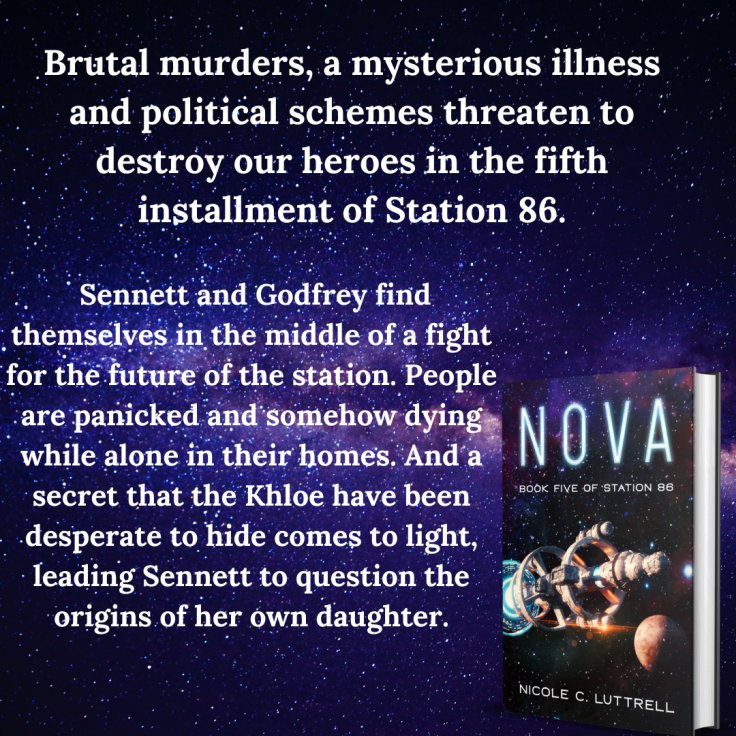
Nova is available now for preorder on Amazon. Get your copy ordered now before the launch on May 17th.

What is our moral responsibility as writers?

This is a subject that I’ve touched on a few times recently. But I realized I’ve never done a whole post about it.

Which is strange, because I think about this a lot. Like, probably more than I should.

To what extent are we as writers morally responsible for the actions of people who consume our content?

Books have gained infamy for inciting violence and bad behavior. Violent video games were blamed for school shootings. Music is blamed for promoting promiscuity and gun violence. Well, only rap music is ever blamed for that. Country music talks about sex and shooting people all the time. Ben Shapiro never has anything bad to say about those performers.

This is a topic I thought a lot about after writing Quiet Apocalypse. When I was writing it, I just wanted to write a scary haunted apartment story about a clever witch and her attempts to stop the apocalypse. It was only afterward that I realized it might be seen as an anti-abortion message.

Which was never, ever my intention. I am pro-choice all the way and regularly donate to the Brigid Alliance.

So, am I to blame if someone uses Quiet Apocalypse as an example of anti-abortion propaganda? Are any of us responsible for people who use our fiction as an excuse to do awful things?

No, we’re not. And if you, like me, have these concerns, I hope that today’s post will help you put them to rest.

People who do bad things are just looking for an excuse

It is the sad reality of our world that some people are going to do terrible things. They’re going to be bigots, they’re going to bully others. Sometimes they’re going to shoot up innocent places. Even holy places.

But these people didn’t get this idea from reading a fictional story. Not a single mass shooter was a perfectly well-adjusted member of society before they played Call of Duty, and now they’re shooting up a nightclub. Drug addicts weren’t clean and sober, then read Alice in Wonderland and started dropping acid.

The desire to do those things was there before the fiction was consumed. And while this fiction might speak to a dark part of them, it didn’t build that dark part from nothing. To say otherwise is to scapegoat storytelling so we don’t have to look at the deeper societal failings that lead to drug addiction and gun violence.

There’s a ton of WWII fiction, and yet there are still Nazis in America right now

We are surrounded by WWII stories. Any streaming platform is bound to have countless movies and TV shows about the war. And there are hundreds upon hundreds of books about it. Some of my favorites are Maus, Number The Stars, and Jacob the Liar.

Nowhere in any of these stories are the Nazis the good guys. And, in case this needs to be said, that’s how it fucking should be. The Nazis are not now, and never will be, the good guys.

And yet, somehow, we have modern American Nazis. Proudly marching around with swastika flags and tiki torches.

How did this happen when our society is flooded with fiction that demonizes (rightly) the Nazi agenda?

Well, there are a lot of reasons why this is happening. People with far more understanding and education than me have researched this issue and published in-depth work regarding it. But I think we can safely say that it wasn’t the massive amount of WWII fiction. It seems to be despite it.

So if all of this work has been done with Nazis as the bad guys and it hasn’t deterred modern Nazis, why do we assume that pro-violent material will cause violence?

There is no way to tell how people are going to interpret your fiction

Lewis Carroll never wanted anyone to associate Alice in Wonderland with drug use. Homelander from The Boys was never supposed to be a good character, but some on the far Right in America have rallied around him. Rage Against the Machine has always been political, and yet somehow people have missed the message.

We just have no way to tell how people are going to perceive our work. No matter how clear we think we are with our message, someone can still take it the wrong way.

This isn’t because people are dumb. Well, not entirely. It’s because people see the world through their own experiences. Our perceptions are based on every experience we’ve ever had, the society we live in, and the lessons we were taught as children. And no matter how compassionate and empathetic we are, we can never see the world through someone else’s eyes.

We are never responsible for the actions of other people

This is something that I struggle with, coming from a high-control religious group. The sort of group that teaches girls to dress modestly so that we are not stumbling blocks for our brothers. We were taught that we weren’t supposed to go shopping on the Sabbath, because we were then causing other people to sin by working on the Sabbath. We were taught that we would be missionaries in our everyday lives if we lived the gospel well enough and devoutly enough.

I was also told by my grandmother that I should fast and pray so that my mother would stop smoking.

That’s a lot of responsibility for other people that was placed onto my very young shoulders. And yes, deconstruction has been a journey for me. There’s going to be a post about this soon.

So I get it. I get what it’s like to feel guilty because of what other people do. But we are never responsible for other people’s actions. Unless you are intentionally inciting violence and hate, it is not your fault if people commit violence or are hateful after reading your work. You are responsible for you. That is it.

At the end of the day, it’s good that we as writers are concerned about the impact we have on the world. It’s good if anyone worries about that. But we cannot allow our fear of other people’s reactions to silence our work. All we can do is tell our stories to the best of our ability, and hope that they inspire good and not hate.

If you want to support Paper Beats World, please share and like this post. Or you can support us financially on Ko-fi.

Nova is available for preorder now on Amazon. Check it out.

I will never write anything as good as this!

Recently I read a fantastic book called Mister Magic. You can read my full review on Haunted MTL here.

This book sent me into a tailspin for a couple of reasons. The first one was that it dealt heavily with the Mormon church and religious trauma. But the second reason is the one I want to talk about today.

I will never, as long as I live, write anything as good as this book.

I will never write anything as good as The Southern Book Club’s Guide to Slaying Vampires. I will never write anything as good as The Stand. I will never write anything as good as American Gods. These are all works of art, and I am just not a good enough writer to come up with anything so breathtakingly creative and wonderful as these books.

Writers are readers first. People who want to write stories usually want to do this because we love stories. And we love good stories. So I doubt I’m the only writer to look at a great piece of writing and think that my paltry contributions are nothing in comparison.

But, of course, if I let myself be bogged down by this, I’d never write a single word again. And I think some people would miss my work. I know I would miss it.

So what do we do when we feel like this? Well, here are some of the things I’ve been reminding myself of. Hopefully, they’ll help you too.

Art is subjective

It’s important to remember that everyone’s tastes are different. The same book can keep one reader up at night while being a sleeping pill to someone else. And every single book I mentioned as being works of art has one-star reviews right now on Amazon. And as amazing as it is to realize, you might write something that someone else likes better than you do. You should always be your work’s biggest champion, but someone else will probably be your work’s biggest fan. The flip side of this is that the work that you love, might not be for everybody. Maybe some people love it. Maybe some people hate it. But no book is really perfect, and we should probably all take our favorites down of the pedestals we’ve so lovingly placed them on.

You can always get better

It’s probably not fair of me to say that I will never write anything as good as those books. Because, frankly, I might. I’m always trying to get better. I want to write better, more creative, and gripping stories. I honestly feel even now that I’m just coming into my stride as a writer, yes even after writing and publishing eight books.

Writing requires talent, but it also requires learning and practice. We practice every time we sit down and tap on the keyboard just the same as a musician practices at a piano. We are learning, we are growing. And we can, if we want to, write something as amazing as our favorite books.

Not everything has to be a work of art

Works of art are amazing. A fantastic book can be moving, and life-changing. It can save us when we’re in our darkest hour. It can inspire us to change the world, or just be better people.

But we don’t always consume content that is amazing or life-changing. My life was not even a little changed by Rick and Morty, or any book by Philippa Gregory. But I love those a lot. I’ll go nuts over a Philippa Gregory book because it’s fun to read. The same can be said for most of the books I read or shows I watch.

You can write something just because you think it’s fun. You don’t always have to set out to write the next Great American Novel. You can just write something good. That’s okay, encouraged even.

Besides, I’m willing to bet that the people who write those great books didn’t set out to write something that was going to be world-changing. They had a good idea, and they wrote it to the best of their ability at the time. Sometimes that means we end up with trash. Sometimes that means we end up with art. Sometimes that just means we end up with something that passed the time and helped us enjoy our lunch break a little more.

All of those things are okay.

Your work is your own

I was raised with a mindset that I’m still trying to unlearn. It sounds good at first.

You are already doing better than a lot of people. You right now, wherever you are, are doing better than a lot of other people. Your book is better than other published books. If your book isn’t published yet, at least you wrote a book. That puts you ahead of people who are still working on theirs. If you’re still working on yours, at least you’ve started. That puts you ahead of the people who are just wishing they could write a book but haven’t yet bothered to put pen to paper. And all the way down to the poor scrub who doesn’t want to create any art at all and just wants to watch Real Housewives after work in peace.

There are two problems with that. One, we do not gain our worth from creating things. We are inherently worthy of love, acceptance, joy, and peace without ever making one single thing. But two, if this theory works one way, it works the other way. If you haven’t started your book yet, people who have are better. If you have started your book, people who have published theirs are better. If you’ve published your book, someone’s book was more popular. And there is always going to be someone more popular. Someone else will get a bigger advance, sell more copies, get a movie or TV adaption faster or with a bigger budget.

So instead of comparing your art and your journey against anyone else, compare yourself to where you were yesterday. Compare this project with your last project, and see how much you’ve grown. So I don’t need my current book to be better than Mister Magic. I just need it to be better than Nova.

I hope that you write something today. And even if it’s not as good as you want it to be, I hope you like it. I hope it’s good. Because just by existing, it’s already good enough.

Paper Beats World is a labor of love. If you love what we do here, you can support us by liking and sharing this post. You can also support us financially on Ko-fi.
Nova is available now for preorder! You can order it now on Amazon, and read it in full now on May 17th.

Read Nova before it’s gone

Hey guys! Just popping in here to let you know that I’ll be pulling Nova from the site on Thursday, April 25th in preparation for the book’s launch. So if you’ve been waiting to read it, now is your time.

Here’s a link to the prologue to get you started.

And if you want to get the book in actual physical form or e-book form, your time is coming. Because Nova will be launching on Friday, May 17th.

I want to thank everyone who’s read Nova so far. If you can, please consider sharing it on social media. This helps a ton in getting the word out.

Thanks again.

A WordPress.com Website.

Up ↑