Just in case you’ve never read Seeming, here’s chapter one. And don’t forget, you can get the whole book free right now on Smashwords.
And you can preorder Nova now, available May 17th.

If you love stories about ghosts, dragons and aliens, come in.

Just in case you’ve never read Seeming, here’s chapter one. And don’t forget, you can get the whole book free right now on Smashwords.
And you can preorder Nova now, available May 17th.

I’ve started taking art classes at my local library. I’ve been to two so far. We’ve painted canvas bags and decorated ceramic tiles. In both cases, mine looks like the work of a child.
I love it. I love the crafts we do. I love meeting the wonderful people who come to these events. Most of them are older ladies and it’s an uplifting environment. Everyone compliments each other’s work and shares the glue. It’s like an elementary school art class, except with people you might want to spend time with.
I am a writer. Creativity is my job. I write stories, posts, reviews, and poems about the birds I see out the window. I make graphics for social media to showcase my work. Creativity is a mainstay in my life.
And yet I am constantly looking for other ways to create. I scrapbook. I draw. I keep a bullet journal and decorate my planners for fun. Like, as a hobby. I get that a lot of people do this, and I still think it’s a little weird we’ve made a whole hobby around the book we keep to make sure everyone gets to their dentist appointment on time.
But I digress.
My writing in novels, here on the blog, in my reviews on Haunted MTL, and on social media need to be good. They at least need to be competent. I am a professional writer. So if I’m going to put out a piece of writing, it needs to be as good as I can make it. All the I’s dotted and T’s crossed. It needs to be good, professional work.
When I am crafting, none of that need apply. I can just make something. And that might be the best thing that I do. It might be the best thing you do, too.
To start, creating just to create is a freeing activity. It’s a wonderful feeling, to simply make something and not worry about how it turns out. It’s a mediative, healing thing. Especially if you’re struggling with anxiety, depression, or several other emotional issues.
Physical creations are great for this. I love things like working with clay, paints, or pastels. It’s wonderful to simply feel something in our hands, to craft something that didn’t exist before you started.
I have certainly done some crafts that didn’t turn out how I wanted it to be. Lots of them. Scrapbooking pages, sketches, even a handmade snow globe. The result was, for lack of a better word, shitty.
And that’s okay. The result didn’t matter. What mattered was the act of creation. What matters is losing ourselves in the act.
As we learn this truck, we can apply it to our writing. We learn to turn off our inner critic with clay and paint by telling ourselves that it doesn’t matter if someone else likes it. And as we learn the trick of quieting the critic, we can carry that trick into our rough drafts, allowing the muse free reign to inspire work and words that you might not have thought of with the critic pointing out every perceived flaw.
Every new activity stretches our understanding of the world. This might not seem to apply to something like making coasters with alcohol ink. But even that, because I’d never done it before, allowed me to experience the student mind. This is harder to activate when you’re out of school, but it’s no less important.
Learning that a new craft might be fun and accessible also allows you to find something else that can bring you joy in your life. This applies to a concept I learned from therapist Mickey Atkins on YouTube. She calls it ‘diversifying your portfolio’ in regards to things that make you happy.
The theory is this. If you are only feeling alive and enjoying life when you are doing one or two things, then a lot is riding on those things. Let’s say you’re only happy when you’re reading or writing. Well, then what do you do if you’ve read so long you have a headache? What if you’ve run out of good books? What if you have simply read so long that you’re bloody well sick of it? But there’s nothing else that makes you happy, so you read so long you make yourself even more sick of it, sucking all the joy out of something you once loved?
But if you love reading, writing, playing video games, scrapbooking, crocheting learning new cookie recipes, and watching YouTube, then you have a lot of things to do to bring joy to your day. So if one of those things fails you, you aren’t stuck.
Novelty also brings out your creativity. Anything can inspire your writing, even if it’s an evening making a canvas bag with other people. You just don’t know what it will spark until you have the experience.
Finally, creating is fun. It’s an enjoyable experience, even if it does nothing else for us.
It can feel very much as an adult like everything we do has to be productive. Anything that’s fun without another purpose feels like a waste of time. But it’s not.
I am not doing anything productive in my craft classes. I am not learning a skill that I can make money from, or crafting things that I will then not have to purchase, thereby saving myself money. I am just having fun for the sake of having fun. I am enjoying being alive, enjoying living.
The best thing we can produce is a happy life for ourselves. A life full of things that make us joyful. A life full of things we look forward to. Otherwise, what’s the point of all of this?
If you have the chance to take a craft class in your community, I can’t suggest it enough. If you can’t, check out YouTube for some craft lessons. You never know what you might find that will bring joy to your life and inspire deeper wells of creativity.
Paper Beats World is a labor of love. If you want to support what we do, please like and share this post. You can also support us financially on Ko-fi.
Nova is available now for preorder on Amazon. Get your copy ordered now before the launch on May 17th.
This is a subject that I’ve touched on a few times recently. But I realized I’ve never done a whole post about it.
Which is strange, because I think about this a lot. Like, probably more than I should.
To what extent are we as writers morally responsible for the actions of people who consume our content?
Books have gained infamy for inciting violence and bad behavior. Violent video games were blamed for school shootings. Music is blamed for promoting promiscuity and gun violence. Well, only rap music is ever blamed for that. Country music talks about sex and shooting people all the time. Ben Shapiro never has anything bad to say about those performers.
This is a topic I thought a lot about after writing Quiet Apocalypse. When I was writing it, I just wanted to write a scary haunted apartment story about a clever witch and her attempts to stop the apocalypse. It was only afterward that I realized it might be seen as an anti-abortion message.
Which was never, ever my intention. I am pro-choice all the way and regularly donate to the Brigid Alliance.
So, am I to blame if someone uses Quiet Apocalypse as an example of anti-abortion propaganda? Are any of us responsible for people who use our fiction as an excuse to do awful things?
No, we’re not. And if you, like me, have these concerns, I hope that today’s post will help you put them to rest.
It is the sad reality of our world that some people are going to do terrible things. They’re going to be bigots, they’re going to bully others. Sometimes they’re going to shoot up innocent places. Even holy places.
But these people didn’t get this idea from reading a fictional story. Not a single mass shooter was a perfectly well-adjusted member of society before they played Call of Duty, and now they’re shooting up a nightclub. Drug addicts weren’t clean and sober, then read Alice in Wonderland and started dropping acid.
The desire to do those things was there before the fiction was consumed. And while this fiction might speak to a dark part of them, it didn’t build that dark part from nothing. To say otherwise is to scapegoat storytelling so we don’t have to look at the deeper societal failings that lead to drug addiction and gun violence.
We are surrounded by WWII stories. Any streaming platform is bound to have countless movies and TV shows about the war. And there are hundreds upon hundreds of books about it. Some of my favorites are Maus, Number The Stars, and Jacob the Liar.
Nowhere in any of these stories are the Nazis the good guys. And, in case this needs to be said, that’s how it fucking should be. The Nazis are not now, and never will be, the good guys.
And yet, somehow, we have modern American Nazis. Proudly marching around with swastika flags and tiki torches.
How did this happen when our society is flooded with fiction that demonizes (rightly) the Nazi agenda?
Well, there are a lot of reasons why this is happening. People with far more understanding and education than me have researched this issue and published in-depth work regarding it. But I think we can safely say that it wasn’t the massive amount of WWII fiction. It seems to be despite it.
So if all of this work has been done with Nazis as the bad guys and it hasn’t deterred modern Nazis, why do we assume that pro-violent material will cause violence?
Lewis Carroll never wanted anyone to associate Alice in Wonderland with drug use. Homelander from The Boys was never supposed to be a good character, but some on the far Right in America have rallied around him. Rage Against the Machine has always been political, and yet somehow people have missed the message.
We just have no way to tell how people are going to perceive our work. No matter how clear we think we are with our message, someone can still take it the wrong way.
This isn’t because people are dumb. Well, not entirely. It’s because people see the world through their own experiences. Our perceptions are based on every experience we’ve ever had, the society we live in, and the lessons we were taught as children. And no matter how compassionate and empathetic we are, we can never see the world through someone else’s eyes.
This is something that I struggle with, coming from a high-control religious group. The sort of group that teaches girls to dress modestly so that we are not stumbling blocks for our brothers. We were taught that we weren’t supposed to go shopping on the Sabbath, because we were then causing other people to sin by working on the Sabbath. We were taught that we would be missionaries in our everyday lives if we lived the gospel well enough and devoutly enough.
I was also told by my grandmother that I should fast and pray so that my mother would stop smoking.
That’s a lot of responsibility for other people that was placed onto my very young shoulders. And yes, deconstruction has been a journey for me. There’s going to be a post about this soon.
So I get it. I get what it’s like to feel guilty because of what other people do. But we are never responsible for other people’s actions. Unless you are intentionally inciting violence and hate, it is not your fault if people commit violence or are hateful after reading your work. You are responsible for you. That is it.
At the end of the day, it’s good that we as writers are concerned about the impact we have on the world. It’s good if anyone worries about that. But we cannot allow our fear of other people’s reactions to silence our work. All we can do is tell our stories to the best of our ability, and hope that they inspire good and not hate.
If you want to support Paper Beats World, please share and like this post. Or you can support us financially on Ko-fi.
Nova is available for preorder now on Amazon. Check it out.


Recently I read a fantastic book called Mister Magic. You can read my full review on Haunted MTL here.
This book sent me into a tailspin for a couple of reasons. The first one was that it dealt heavily with the Mormon church and religious trauma. But the second reason is the one I want to talk about today.
I will never, as long as I live, write anything as good as this book.
I will never write anything as good as The Southern Book Club’s Guide to Slaying Vampires. I will never write anything as good as The Stand. I will never write anything as good as American Gods. These are all works of art, and I am just not a good enough writer to come up with anything so breathtakingly creative and wonderful as these books.
Writers are readers first. People who want to write stories usually want to do this because we love stories. And we love good stories. So I doubt I’m the only writer to look at a great piece of writing and think that my paltry contributions are nothing in comparison.
But, of course, if I let myself be bogged down by this, I’d never write a single word again. And I think some people would miss my work. I know I would miss it.
So what do we do when we feel like this? Well, here are some of the things I’ve been reminding myself of. Hopefully, they’ll help you too.
It’s important to remember that everyone’s tastes are different. The same book can keep one reader up at night while being a sleeping pill to someone else. And every single book I mentioned as being works of art has one-star reviews right now on Amazon. And as amazing as it is to realize, you might write something that someone else likes better than you do. You should always be your work’s biggest champion, but someone else will probably be your work’s biggest fan. The flip side of this is that the work that you love, might not be for everybody. Maybe some people love it. Maybe some people hate it. But no book is really perfect, and we should probably all take our favorites down of the pedestals we’ve so lovingly placed them on.
It’s probably not fair of me to say that I will never write anything as good as those books. Because, frankly, I might. I’m always trying to get better. I want to write better, more creative, and gripping stories. I honestly feel even now that I’m just coming into my stride as a writer, yes even after writing and publishing eight books.
Writing requires talent, but it also requires learning and practice. We practice every time we sit down and tap on the keyboard just the same as a musician practices at a piano. We are learning, we are growing. And we can, if we want to, write something as amazing as our favorite books.
Works of art are amazing. A fantastic book can be moving, and life-changing. It can save us when we’re in our darkest hour. It can inspire us to change the world, or just be better people.
But we don’t always consume content that is amazing or life-changing. My life was not even a little changed by Rick and Morty, or any book by Philippa Gregory. But I love those a lot. I’ll go nuts over a Philippa Gregory book because it’s fun to read. The same can be said for most of the books I read or shows I watch.
You can write something just because you think it’s fun. You don’t always have to set out to write the next Great American Novel. You can just write something good. That’s okay, encouraged even.
Besides, I’m willing to bet that the people who write those great books didn’t set out to write something that was going to be world-changing. They had a good idea, and they wrote it to the best of their ability at the time. Sometimes that means we end up with trash. Sometimes that means we end up with art. Sometimes that just means we end up with something that passed the time and helped us enjoy our lunch break a little more.
All of those things are okay.
I was raised with a mindset that I’m still trying to unlearn. It sounds good at first.
You are already doing better than a lot of people. You right now, wherever you are, are doing better than a lot of other people. Your book is better than other published books. If your book isn’t published yet, at least you wrote a book. That puts you ahead of people who are still working on theirs. If you’re still working on yours, at least you’ve started. That puts you ahead of the people who are just wishing they could write a book but haven’t yet bothered to put pen to paper. And all the way down to the poor scrub who doesn’t want to create any art at all and just wants to watch Real Housewives after work in peace.
There are two problems with that. One, we do not gain our worth from creating things. We are inherently worthy of love, acceptance, joy, and peace without ever making one single thing. But two, if this theory works one way, it works the other way. If you haven’t started your book yet, people who have are better. If you have started your book, people who have published theirs are better. If you’ve published your book, someone’s book was more popular. And there is always going to be someone more popular. Someone else will get a bigger advance, sell more copies, get a movie or TV adaption faster or with a bigger budget.
So instead of comparing your art and your journey against anyone else, compare yourself to where you were yesterday. Compare this project with your last project, and see how much you’ve grown. So I don’t need my current book to be better than Mister Magic. I just need it to be better than Nova.
I hope that you write something today. And even if it’s not as good as you want it to be, I hope you like it. I hope it’s good. Because just by existing, it’s already good enough.
Paper Beats World is a labor of love. If you love what we do here, you can support us by liking and sharing this post. You can also support us financially on Ko-fi.
Nova is available now for preorder! You can order it now on Amazon, and read it in full now on May 17th.
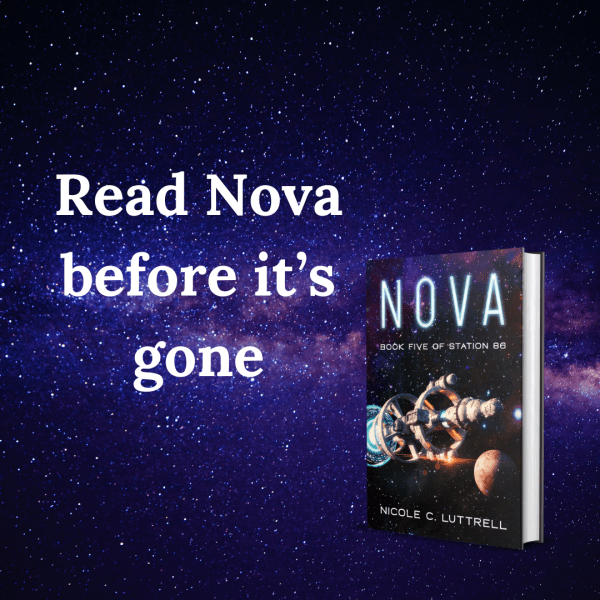
Hey guys! Just popping in here to let you know that I’ll be pulling Nova from the site on Thursday, April 25th in preparation for the book’s launch. So if you’ve been waiting to read it, now is your time.
Here’s a link to the prologue to get you started.
And if you want to get the book in actual physical form or e-book form, your time is coming. Because Nova will be launching on Friday, May 17th.
I want to thank everyone who’s read Nova so far. If you can, please consider sharing it on social media. This helps a ton in getting the word out.
Thanks again.

Anti-heroes become more popular with each passing year. And I’m not referring to heroes with negative qualities like Tony Stark or Deadpool. That’s an example of a character who has personal failings, but still overall does heroic things.
No, I’m referring to characters who are bad guys. Dexter, Hannibal, Ray Donovan, The Joker. These are all characters who are not seeking to do good in the world but are hurting others based on their selfish wants.
Lots of bad guys are getting their stories told. And I love this, even if the execution isn’t always fantastic. The Joker was a fantastic movie. Cruella, not as much. But it was still interesting to see the world from her perspective.
While I wouldn’t be thrilled if my fiction content was full of bad guys, I do love that we are seeing more and more of this. I do think, however, it takes a bit of creative bravery and imagination to write these sorts of characters. Writing Jim Gordon is easy, and makes the writer feel good because he’s doing everything just like we hope we would do. Writing The Joker is harder because he’s doing everything we’re disgusted by.
So, this sort of character is worth some consideration.
Bad guys are cathartic
Still picking on The Joker, I mentioned that most of what he does is disgusting. But some of what he does is also cathartic. There’s a part of us that roots for him when he abuses bank owners and politicians. When he’s punching up, terrifying, and abusing people in power, that’s great fun. It allows us to get some of our anger out. No one’s too upset when The Joker is harassing Bruce Wayne’s rich buddies, I’m sorry to say. So, that always feels like a good time.
No one is ever the bad guy in their own life. Or are they?
Most of us would consider ourselves good people most of the time. But, not all of us. Some people genuinely do not like themselves. Some people feel like they’re trapped making a series of bad decisions over and over again. They’re hurting themselves and the people around them, and they do not know how to stop.
Even if you don’t feel like this all the time, we’ve all felt like it some of the time. We have all not liked ourselves. We have all made stupid, selfish decisions. We have all struggled.
In that case, a character who’s doing the same sort of thing can be inspiring, if they eventually pull themselves out of it. When that character who’s spiraling asks for help, goes to therapy and gets away from the life they’ve been living, that should inspire all of us. Because we can always choose to be better tomorrow. It’s not easy, but it can be done.
You can explore the different morality levels
There’s bad, and then there’s bad. One good example is the title character in Lucifer. He openly encourages people to give in to their most selfish desires. Cheating on their spouses, drinking too much, and gambling. All the things we know we shouldn’t do, but they feel so good in the moment.
And while this is damaging, there are worse things. Murdering people, for instance.
Bad characters can give an example of moral hierarchy. Dexter, in the first episode, killed someone who serially abused and killed children. Lucifer tracks down murderers.
I think these bad characters give a good example of bad things because they hurt us, and things that are bad because they hurt other people. While neither is good, one is worse.
Your bad guy can learn a lesson
This isn’t a necessity. I think some of the worst fiction is created under the guise of teaching a moral lesson. The story should come first, and you don’t have to give any moral lessons at all if you don’t want to.
But if you want to give a lesson, then using a bad guy character can be a great way to do it. Let them heal. Let them grow. Let them have a breakdown moment and come back a better person.
Let us see that, in this dark and scary world, someone really can get better. That’s going to be a genuinely uplifting story every time.
But what about the morality question
So, what if you don’t want your bad guy to be redeemed? Are you endorsing bad life decisions? What if your fiction encourages someone to do something bad or wrong? Are you responsible?
Honestly, this could probably be a post all on its own, but I’ll try to keep it brief today. Our society loves to blame fictional stories for actual atrocities. And I absolutely call bullshit on that.
The guy who killed John Lennon didn’t do it because he read Catcher in the Rye.
The shooters at Columbin didn’t do it because of violent video games.
Ted Bundy didn’t kill people because of porn.
These were people who were just looking for an excuse to do what they already wanted to do. And they were going to find one. We as artists cannot blame ourselves for the actions of others unless we are actively condoning and inciting violence in real life. Otherwise, if someone watches Rick and Morty and then thinks it’s okay to become an abusive alcoholic, they probably didn’t need that much of a push.
So write what you want to write.
In the end, remember that we are making art. We are making a character, not moral decisions for other people. We are not preachers, teachers, or advisers. Our job is to tell a story that only we can tell. And that means that your characters should be as bad, or as good, as you want them to be.
If you love what we do here and want to support this site, you can do so on Ko-fi.
Writing for most of us starts as a passion. It’s something we love, something that brings joy to our lives. I started writing stories as a child, scribbling down my imagination play.
These days, writing is still a passion. It’s still something I get very excited about. Time spent writing is still fulfilling, still fun. It’s still the best way I know to get my feelings out, entertain myself, and get the demons out of my head.
So why, then, do I feel like I don’t want to write?
Not all the time, of course. Most of the time I want to write so much that I actively forgo other activities to write. I used to play video games, for instance. Used to. Writing and reading are the best ways I can think to spend my time.
And yet there are still times when I want to do literally anything other than write. If you’re a writer, I bet you feel the same way sometimes.
This isn’t ideal. Anything that makes you want to avoid the thing you love most of the world is not great. But to avoid the desire to avoid your writing sessions, we need to figure out why you don’t want to write. And to help you with that, I have five questions for you to ask yourself.
Do you not like your current project?
Sometimes we don’t like our projects. Usually, this happens in the middle of a rough draft for me, and for a lot of other writers. The story feels boring here. It feels like starting at point A was a ball, and getting to point C will be fantastic. But point B is shitty and we feel shitty writing it.
When you feel like this, you want to consider what you’re writing. Is it dull? If so, then maybe you should change it up. Make it more exciting. Because I’m sure we all know as readers that books bog down in the middle. But there’s no reason to accept this as a matter of course. Middles of books can be great fun to read and write. And this will help a lot if you find that you don’t want to write what you’re writing right now.
Remember, if you’re not having fun writing, the reader isn’t going to have fun reading.
Have you made writing into a chore?
When you write for a (alleged) living, it’s easy to feel resentful towards your work. I have a real problem with this. I have this innate hatred of anything I’m supposed to do. This often seems like a kiss of death for things that I love. If I adore a show, there’s no way to ruin that love faster than to decide to review it.
Which isn’t to say I don’t love reviewing things. It’s just that as soon as it turns from something I do for fun and something I do because I have a deadline I’m irritated by it.
But if I let that dumb rebellious you can’t tell me what to do attitude win, I would never do the thing I love most in this world. I would never write work I’m proud of and share it with all of you.
We all have an inner child, but we also all have an inner teenager who wants to slam our bedroom door and play loud music while our parents try to reason with us. The problem is that, in most cases, our parents were right and we should have listened. The other problem is that now that we’re adults and working for ourselves for the most part, we have to be the parents to our inner teens. And the best way I’ve found to do this is bribery.
Bribe yourself to get started. Promise yourself a new book, a trip to your favorite coffee shop, or your favorite bag of chips if you’ll just sit down and get started on the project. I’m sure you’ll find, like I do, that once you get your ass in the seat you don’t need that reward anymore. The writing is always rewarding after we get over that rebellious hump.
Are you tired?
These next two questions might sound the same at first, but they’re quite different. Being tired is a shorter-term malady.
Which isn’t to say it shouldn’t be respected. Maybe you’re tired today. Maybe yesterday you wrote a whole bunch. Or maybe you didn’t get a lot of sleep last night. Maybe you had a few days that asked more of you than you had to give and now you need to rest.
Never put your health in jeopardy to get words on the page. If you need to rest, then rest. The work will be there when you get back.
Are you burned out?
Burnout isn’t the same as being tired. It’s like the difference between a cold and a flu. Burnout is going to take much longer to recuperate from and will take more serious treatment.
I wrote a whole series about writing burnout a few years ago, that you can check out starting here.
The first thing to remember when feeling burned out is that it is morally neutral. You are not lazy. You are not failing. You have been doing too much for too long and in our society that’s almost unavoidable.
Being burned out might require more time away from your desk than you like. I know I hate it. I feel like I’m falling behind while everyone else is running ahead of me. And it sucks.
But you’ve got to give yourself grace.
There are going to be things you cannot put down. You have to do your day job. If you have contractual obligations, you have to meet them or ask for an extension. You have to care for your family, your pets, and yourself. Not in that order. If your writing isn’t the sort of thing that you’re working on a deadline for, then put it aside for a while.
It will be there when you get back. And so will your readers.
Are there more important things you need to be doing?
Finally, I come to the worst question. Because it involves adulting, and it’s the reason why this post is so late. I didn’t have time to write it this week when I usually do. I had obligations at my day job, then I had to go to a doctor’s appointment. Then I had to go get blood work done because of the doctor’s appointment. Then I had to run errands for Easter on Sunday. Then I had to fight with my bank over something. I woke up with the will and desire to spend an hour at my desk working on my current rough draft. What I didn’t have was the time.
I had to be a grownup yesterday. Today, I have to be a grown-up again write contractually obligated work, and clean my house. I have to be an adult, even though I want to write my story.
Sometimes your creative writing is going to have to take a back seat. Sometimes there are other priorities that you just cannot ignore. You have to take care of yourself. You have to mind the business that pays you. You have to care for your family and your living space.
The important thing here is to separate what needs to be done, what probably should be done but can wait for another day, and what doesn’t need to be done at all or could be delegated to someone else. I would never skip writing to dust, sweep, wash the windows, or vacuum. I might have to skip writing to do dishes or wash clothes. It’s about what needs to be done, and what doesn’t.
So that’s it. Now, I want to hear from you. What do you think is the best question to ask yourself when you’re not writing? Let us know in the comments.
Paper Beats World is a labor of love. If you love what we do here, please consider supporting us by liking and sharing this post. You can also support us financially on Ko-fi.

Spring is upon us! Time for gardening, picnics, egg-themed holidays and lots of rain. At least, here in Western PA.
A new season brings a new reading list. Because at heart, I miss parts of elementary school.
Not all of it, just the structured creative and leisure activities. I would kill for someone to mandate afternoon recess for grownups, art and music classes and weekly library trips. Timed multiplication tests and state capital quizzes I could do without.
Sadly, I didn’t get to all the books I wanted to read during the Winter. I still read a lot of books, eleven in total. They just weren’t the ones I planned to read. So, some of these are repeats.
As always these are in no particular order. Some are fiction, some are nonfiction. The books on this list represent me as a speculative fiction fan, as a witch, and as a professional writer. So hopefully you’ll find some suggestions for your own TBR.
Coal Region Hoodoo by Maxim W. Furek
This is a nonfiction book about the horrors of Western Pennsylvania. Things like Centralia, the eternally burning city. And it includes stories about Ed and Lorraine Warren. So, super excited about that.
Ghost Hunters by Ed Warren
This is a book of firsthand accounts of spiritual battles fought by Ed and Lorraine Warren. Do I need to explain why I want to read this book?
The Color Purple by Alice Walker
I know, this is a classic. I should have read it years ago. I should have read it in high school. But I can’t go back in time and fix it. I can just make time this spring to read it.
Six Wakes by Mur Lafferty
I love Mur Lafferty for her work on Ditch Diggers. I’ve been wanting to read Six Wakes for years, and I am finally going to do it.
Let The Whole Thundering World Come Home by Natalie Goldberg
Goldberg is one of my writing heroes. To find out she has another memoir that I haven’t read yet feels like a personal gift.
Where The Gods Left Off by Sara Raztresen
If you happen to be of the witchy persuasion and also happen to be Christian, Raztresen’s YouTube channel is a good place to go for answers. Or if you’re just wondering how those two things can exist in the same person. I’m eager to see what she has to say in print.
New Moon Magic by Risa Dickens and Amy Torok
I love some good moon magic. I love it even more when it’s anti-capitalist.
Welcome to Nightvale by Joseph Fink
I’d be very surprised if you’ve never heard of this insanely popular podcast. I haven’t listened to many episodes, just because there are so many episodes that it seems daunting. So I thought starting with the book might help.
Self Publisher’s Legal Handbook by Helen Sedwick
I’m not in any legal trouble. And I would like very, very much to keep it that way.
Save The Cat Writes A Novel by Jessica Brody
I’ve always wanted to read this book. Everyone raves about it. I just haven’t gotten around to it. But 2024 is my year of intention. And I will intentionally read the books I’ve been meaning to read.
Rainbow Magic by Molly Roberts
I’ve mentioned Roberts before as someone you just have to look up if you’re an artsy or witchy person. She has a new book coming out all about color magic, and I am so excited.
You Like It Darker by Stephen King
Stephen King is publishing a new short story collection. I love him.
Two Sides to Every Murder by Danielle Valentine
I have yet to read a book by Valentine that I haven’t loved. Her book, Delicate Condition, is the inspiration for the latest season of American Horror Story.
So that’s it. That’s what I’ll be reading this Spring unless something else comes along and distracts me.
I do want to make this suggestion, though. If you make your list, but are distracted by another book, that’s okay. Reading is supposed to be a pleasure. We aren’t in elementary school anymore, thank goodness. We aren’t giving ourselves homework. We are keeping lists of experiences we want to have and things we want to learn.
Keep it casual. And please let me know in the comments what you want to read this Spring.
Paper Beats World is a labor of love. If you want to support us financially, you can do so on Ko-fi. Or, you can like and share this post.
I recently came upon a difficult decision in my writing career. A conundrum totally of my own making, because I make stupid decisions sometimes.
Well, that’s not true. I make decisions fueled by my desire to write specific stories at specific times. It’s just the outcome that is stupid and avoidable.
So here’s what I did.
I can never have just one writing project at a time. My fluttery Gemini brain just doesn’t work that way. And I do try to let my projects rest between drafts. So, when I was writing Woven, I started another series. One you might be familiar with.
Station 86.
Well, I finished Woven before I finished Station 86, no surprise. And so I started working on other projects.
I actually wrote an entire science fiction novella. It’s done, but I’m not ready to write the sequel so I don’t know what to do with it.
I wrote a whole novel based on the world of Woven. Again, it’s done and sitting there because I don’t have the time or space to write the second book in the series yet.
The problem is that before I did either one of those things, I wrote the first season of a podcast. And that one I went ahead and produced, then put out in the world before I was ready to work on season two.
Then people liked season one, so I had to write season two.
But I was already working on another book, which ended up being Quiet Apocalypse. And that one I went ahead and published because it was a standalone story.
But then I had to rush, because I was now producing two series that had people waiting for the next book or season. So what did I do?
I caved during Nanowrimo and started a rough draft of a new novel, because FOMO.
If you’re keeping track, that means I now have two novels gathering dust, one novel that I’ve written the rough and second draft of, and two active series that have people waiting for the next installment. If you are one of those people who was waiting way too long for Nova or season two of AA, I am really sorry.
But I wasn’t ready to tell those stories yet.
This is when being an artist and being a content creator are at odds with each other. As an artist, I wanted to write something fresh and new. I was struck by inspiration and went with it. And if I was just writing for myself, that would be more than fine.
But I’m not just writing for myself. I’m also writing for the people who like my stories. I’m writing to hopefully grow an audience of people who like what I do. I’m writing to create art, and then share that art with the world.
And I’m trying not to be a dick about that. I’m trying not to be a George R.R. Martin about that. I want to produce work that people are excited to read, but I also need to be excited to write it. It feels very much like serving two masters. If you’ve ever seen the show Human Resources, I find it to be a useful analogy. I have a muse whispering in one ear, telling me all about the gorgeous new world we could create together. The stories, the very important stories we can tell! All I have to do is take her hand, crack open a notebook, and start this new love affair.
We all know how alluring that can be, don’t we?
But I’ve also got an ambition monster. And she is screaming at me that my fan base is going to dry up and blow away if I let more than a year pass between books/seasons. That bitch is loud, her heels are fabulous, and she has my best interests at heart.
The muse also has my best interests at heart, though.
If this has all been confusing, I understand. It’s a confusing situation. And if you’re working on a series, or maybe just one novel, you might well have felt like this before. It is almost impossible to decide which to listen to, the muse or the ambition monster.
So here is what I’ve done. I don’t know if it’s going to work, but it’s what I’m trying for now. I’m bringing both the Muse and Ambition Monster to the table, and letting them both have a say.
Here’s what they’ve said to me so far.
From the Ambition Monster
You only like the new project because it’s new. And as soon as you start on that new project, it’s not going to be new anymore. So you’ll start on something else. Then you’ll get bored with that, because it’s not new anymore. And if you keep doing that, you’ll end up with a bunch of half-finished stories that you’ll never show anybody. Is that what you want? A bunch of book one’s that never have their book two’s?
Fan guilt is crushing. And you know there are people waiting for that next book. Aren’t you currently irritated that several authors you like don’t have new books out? How long have you been waiting for a new Tamora Pierce book?
Just because no one is reading your story now doesn’t mean they never will. Lots of people wait for a couple of books to come out in a series before they start, so they don’t have to wait years and years for the answer to a cliffhanger. You’ve got to get a couple of books out in a series before you start getting a real following. Focus on that.
From the Muse
You will not write the same book now as you will in a year. You won’t even write the same short story now as you will in a year. You are always learning, always growing. You’re reading new things, and having new experiences. So if you need to wait to write that next book in your series, it might be better for the time away.
You will write a better book if you are passionate about it. That passion is what you need to get through the countless drafts and revisions. Discipline is great, but it can only take you so far without passion to back it up. Besides, if you sit down and write words every day just because you’ve disciplined yourself to do it, they’re not going to be good words. Not words anyone wants to read.
If you force yourself to keep working on a series when you’re not passionate about it, you’re going to burn out. There’s a good chance you’ll never finish it at all. Isn’t that worse than a delay between books? How many shows and book series have broken your heart because you never got a satisfying ending?
So, which of them is right? Both, if I’m being honest. The trick is to balance the two. For me, that looks like working on the next Station 86 book and setting AA aside for now until I feel more inspired to work on it. And it looks like having the self-control to not start another damn series until I have finished with at least one of these.
What the answer to this difficult question looks like for you will depend on your passion, your priorities, and where you are in your career. The only real advice I have is this. Invite both the Muse and your Ambition Monster to the table. They both have important things to tell you.
If you love Paper Beats World and want to support us financially, you can do so in Ko-fi. If you want to support us not financially, please like and share this post.

I love a good crazy character. They’re some of the best characters in fiction. What sort of person do I mean, exactly? Harley Quinn, of course. But also Dolores Roach, Azula, Jack from The Shining, The Narrator from Fight Club, Patrick Bateman, Dexter, and The Trashcan Man. And, of course, Annie Wilks.
Kathy Bates, if you ever read this, you are my queen.
Crazy characters are fun because they are wild and unpredictable. When a crazy character is written well, they stick with you for the rest of your life. They make you laugh and check to make sure your door is locked. They’re the class clown who might at any moment shove a pencil through someone’s ribs. Even if they’re the good guys.
When a crazy character is written poorly, though, it’s usually because the writer was trying too hard to write zany, wacky, or unrealistic character traits. Listen, your character cannot just staple a peanut butter sandwich to someone’s forehead and be a memorable crazy character. I mean, they can do that. But there has to be more to it than that.
So today I want to discuss five ways to write a crazy character that will both delight and terrify your audience.
First, though, a disclaimer. This post has nothing at all to do with mental illness, nor is it in any way meant to vilify or objectify people who have mental illnesses. Perfectly sane people commit horrible atrocities and people with mental illnesses get up and go to work without hurting anyone every single day. I have a mental illness, and I’m safe to be around unless you’re a wasp or a lantern fly. We are not pointing and laughing at the crazy person who can’t get help. We are admiring the varied characters in fiction and aspiring to write them in more realistic ways.
No one thinks it’s cool when your character just does weird stuff for no reason
One of the laziest ways someone can write a ‘crazy’ character is to have them do weird things for absolutely no reason. I don’t mean weird things that don’t make sense to the people around them. I mean things that don’t even make sense to the characters themselves. Just in the same way it’s not funny to yell banana hammock for no reason, it’s not fun to see a character doing random stuff that doesn’t tell us anything about their character, their emotions, or move the plot forward in any meaningful way.
No one ever thinks they’re the crazy one
Harley never thinks she’s crazy. She thinks she fell in love and ran away to the circus. She broke out of her life and finally felt free.
Bateman certainly doesn’t think he’s crazy. He thinks this is how one has to act to get by in the high-powered world he’s put himself in.
This is one of the reasons it’s fun to write a character like this. You have to imagine that you see the world in this way. You have to crawl into an unstable mind and stay there for a little while. See the view from those eyes. And those eyes don’t think there’s anything wrong with what they’re doing most of the time. They think they’re the sane ones.
Focusing on their thoughts
One of the reasons why the first season of Dolores Roach worked is that a lot of focus was on how she was feeling and what she was thinking. This worked for Dexter as well. Though I would consider him more of a ‘straight man’ killer.
Much of the fun of these characters is in the novelty of their experiences. Most of us are fairly sane, after all. Most of us would never think to strangle someone, tape them to a table and cut them open, or trap someone in our guest bedroom and break their ankle when they try to escape.
I hope.
So it’s fascinating to see how that sort of mind works. This might take some research into psychology, which I think we as writers should have at least a surface-level understanding of anyway. So much of creating art is seeing the world not just from our limited perspective, but from as many perspectives as we can. Even when we don’t agree with them. Especially when we don’t agree with them.
The trick is to show as much of how that different person sees the world as you can. This not only makes for a more entertaining story but gives more humanity to your character as well. And in doing so, maybe you can help people understand them a little better.
Moments of lucidity
I think every person has had these moments in their lives. Maybe when we’re mad, or scared, or burned out. We realize we are in the middle of doing something or saying something or talking about something that is just bonkers. And we stop, and we either in our minds or out loud ask, “What in the hell am I doing? Why am I doing this? I shouldn’t be doing this.”
Dolores Roach is full of those moments. Largely because we didn’t start that show with a mentally unstable woman. We watched her descend into madness.
I highly suggest giving your characters those moments. There are three ways this can be incredibly useful. If your character, like Dolores, is going mad this can be a great gauge of that. As she gets deeper and deeper into her madness, these moments of lucid self-reflection get further and further apart.
If your character, like one I’m writing right now, is already mad, and they suddenly have a moment of sanity, it might be a sign that your hero can reach them. Can bring them around, can help them come back to the side of goodness. We see this with Harley often. There is one beautiful, heart-wrenching moment in some comic or another when Harley realizes the woman she’s fighting, Black Canary, is pregnant. Harley refuses to continue the fight. She tells Black Canary, who until this point has been an enemy, that she has a daughter. She gave the baby to her sister, to protect her from the Joker. And for a few minutes, Harley seems as sane as you or me. She’s sharing her grief and connecting with another woman on a very personal level. And this does eventually lead to Harley becoming a hero.
As she should have been all along.
Of course, it could be a misdirection as well. Your character might have that moment of lucidity, then sink right back down into her madness. I think the best example of this is Azula from Avatar the Last Airbender. There are many moments in the series when we see someone almost reach her. Aang tries. Zuko tries. Uncle Iro certainly tries. Even Katara tries, and she would have liked to snap that bitch’s neck. And we see her almost come back from her madness.
Then, she doesn’t. And her defeat is so much sadder because of it. It’s clear that Azula is too far gone, but that she almost wasn’t. It’s heartbreaking, and it stays with you. Honestly, I considered the defeat of the Fire Lord anti-climatic after seeing Azula screaming and crying with rage because someone had finally beaten her.
Make them memorable
And that leads me to the most important advice. If you’re going to write a crazy character, don’t half-ass it. Put your whole ass into it. Do not hold back, no one likes a polite crazy character. Give them traits and verbal habits that make them stand out.
You can’t write Harley, The Trashcan Man, or Dexter because they’ve already been written. But you can write someone completely new. Someone that will be on someone else’s list in years to come.
This, honestly can apply to any character you’re writing. Make them their own person, not just one thing. No one is just crazy, or just a hero, or just a love interest. Why is your character who they are? Figure that out, and the character will stand out to your readers and stand the test of time.
In short, your crazy character is going to work best if they’re a fully-rounded person. Not just a prop to occasionally do Wild Card things and then fade back into the background. Just like any character, they have to have character.
 Paper Beats World
Recent Comments