Science Fiction sub-genres, part three

Welcome to part three of our overview of Science Fiction Subgenres. If you missed Part One, or Part Two, you can catch up now.

Why are there so many science fiction sub-genres? Because they’re pretty different from each other, and everyone’s taste is different. It’s hard to say that a story about virtual reality belongs in the same category as a story about First Contact. While many of these sub-genres can be found blended together, it’s safe to say that any one of them is strong enough alone to tell a good story.

Most of my research came from a site called World Without Ends. A huge thanks to them, for being so crazy thorough when listing sub-genres.

Hard SF

Okay, I don’t hate any subgenre. A genre is like a dog, most of its defaults can be blamed on its owner. Books are the same. The defaults are because of the writer, not the genre.

At the same time, sometimes people pick the wrong breed of dog for their lifestyle. I am not a good owner for a husky or collie, because these are high energy dogs that require honest to goodness jobs to be happy. Likewise, some writers are writing genres that they are not equipped to write. For me, one of those genres is Hard SF. For a lot of people, one of those genres is Hard SF.

This Science Fiction Subgenre is based on actual, hard science. Good science that can be explained and holds up under peer review. Issac Asimov is someone who writes Hard SF and writes it well.

The problem is that most people who write Hard SF and get the science right are actual scientists or engineers. There’s a woman in my Science Fantasy group online who does hold several degrees. She is totally qualified to write Hard SF, and she does so well.

But sometimes being a smart scientist doesn’t mean you’re a creative or entertaining writer. So, we end up with a lot of stories that have great science, but not great stories.

Some examples of Hard SF done well are Red Mars, by Kim Stanley Robinson and A Fall of Moondust by Arthur C. Clarke

Human Development

The Human Development Science Fiction Subgenre is another that is pretty self-explanatory, and another that is fairly common to see combined with other genres. It’s all about how we, as humans, are developing and what we might develop into.

Some examples of the Human Development Subgenre are Warhorse by Blake Henriques and Heirs of Earth, by the same author.

Immortality

Who hasn’t dreamed of being immortal? Never aging, never getting sick. Seeing unimagined futures. Well, I actually don’t think that sounds great. I think living forever sounds like a nightmare march of loneliness, watching person after person I love die.

That’s mostly because I’ve read too much Immortality Science Fiction Sub Genre.

My favorite example and one that a lot of people might not think of as science fiction is Tuck Everlasting. Yes, the family was given immortality by water they drank from a spring. But a lot of science is based on nature.

Light/Humorous

Another Science Fiction Sub Genre that is almost always blended with others is light, or humorous. I don’t think I need to go into that much detail. It’s funny. It’s science fiction that’s written to be comedic.

My favorite example of this is Space Balls, by Mel Brooks. I can’t think of a good example of a book for this sub-genre, but if you know one please leave it in the comments below.

Military SF

Fun fact, Military Science Fiction is the most popular and best-selling genre right now. So, if you enjoy Military Science Fiction, now is your time to shine.

This sub-genre is fairly straightforward. Stories about war and the military, in a science fiction setting. One of my favorite examples is Starship Troopers, based on the novel of the same name by Robert Heinlein.

Mind Uploading

I bet you don’t think you know a story about mind uploading unless you read a ton of Science Fiction. I bet you’re also wrong because there was a stupidly popular movie based on Mind Uploading.

Avatar.

The Mind Uploading subgenre is an exciting one, that’s on my list to explore. I was fascinated by the theory in Dollhouse, too.

Put simply, this sub-genre is all about uploading a mind into a different body. Maybe it’s human, maybe it’s alien, maybe it’s animal. The important thing is that the brain in question is no longer in its original packaging.

I hope you’re enjoying our review of the many, many different Science Fiction Sub-Genres. Join us next week for Part Four.
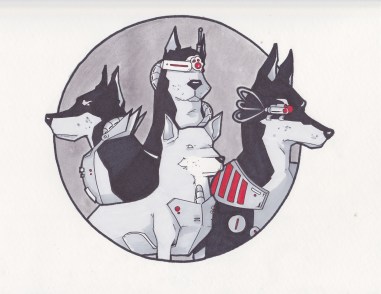
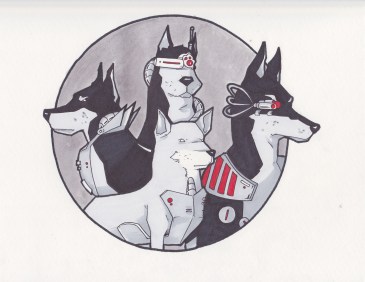
scn_0047Sennett, Godfrey and the rest of Station 86 are trying to put their society back in order after the Core attack. Then a mysterious ship from a dying station arrives, bringing artificially intelligent robotic, murderous dogs.
Godfrey, Mason and April must get to the hospital safely, while Sennett is trying to protect Marshal’s Joy and Howard. But the AI dogs are nothing compared to the terrors they left behind on their own station.

Fall is for readers

Happy Labor Day! Actually, forget that. Labor Day is fine and all, but what I’m really looking forward to is tomorrow.

Because even if Summer technically lasts until the 22nd, I’m going to honor the unofficial start of Fall tomorrow.

I love Fall, every single thing about it. I’ve had this big heavy pink scarf I’ve been waiting to wear. Actually, I have a huge collection of scarves, because they’re easy to make and I love them. And they’ve been sadly ignored all Spring and Summer. But their time to shine is coming soon. I love the flavors of Fall, the cinnamon, cloves and ginger that everyone is actually appreciating in a pumpkin spiced latte. I love the smells of Fall, the leaves, the apples, even the smell of the heater coming on after a long Summer. In the Fall, I feel most alive, most vibrant. I feel like my true and authentic self.

The huge amount of stationary on sale this time of year doesn’t hurt.

I know that there are many of you cussing me out right now. I’m basically dancing on the grave of the most popular season in America. Well, I have news for you, I don’t care. I am celebrating Fall, and you should be celebrating too.

I’m assuming that if you’re on Paper Beats World, you’re kind of into books. In fact, I hope you’re insane about books. I hope you have book launch days marked on your calendar, don’t go anywhere without something to read, actually participated in the Goodreads Reading Challenge. I hope you’re that kind of reader because that’s who I’m writing for. And if you are that kind of reader, I have news for you.

Fall is made for books.

It is the season for stories, and I can prove it. For one thing, the Summer Blockbuster season is over, so we’re not going to movies as much. I do love movies, and that’s one of my favorite things about Summer. But now I’ve seen all that I really want to see. (Actually, I still want to see Christopher Robin and Slenderman.) Instead, I’m spending more nights chilling on the couch with kettle corn and my Kindle.

Actually, most of my outdoor activities get replaced with staying in and reading in the Fall. I probably get through more books this time of year than any other time. I also get more writing done, of course.

Honestly, everything about Fall is intended to make reading and writing the most pleasurable pursuits you can imagine. Consider a coffee shop in an Autumn storm, with the warmth and glowing lights inside. Everyone’s snug in sweaters and cozy jackets. Leather boots and soft knit scarves abound. The smell of coffee lingers in the air, and everyone is more inclined to linger over another cup. It’s all made so much better by the chill of outdoors, and the gratitude that comes from not being out there.

I mentioned that everyone is willing to linger this time of year. That’s good because in the coming months there might be little time to linger. The holidays are coming, and for most people, that means a lot of extra work added to already crammed full schedules. NaNoWriMo is also coming, and I know that’s going to take up a lot of my time. Then there’s weatherizing the house, and trying to finish up some projects before the year is done.

What I’m saying is, the quiet is not going to last, much like the pumpkin spice lattes we all love so much. So, we’ve got to savor both the season and the flavor while we can.

With all of this, I can definitely see why we chose this month for Banned Book Week. (Week? Didn’t this use to be a month-long event?)

I love this event, and every year I accept the challenge to read banned books. This year I’ll be reading Fahrenheit 451, by Ray Bradbury and Harriet The Spy, by Louise Fitzhugh.

I hope that you take advantage of Fall while it’s here. Please let us know in the comments below what books you’ll be reading for Banned Books Week.

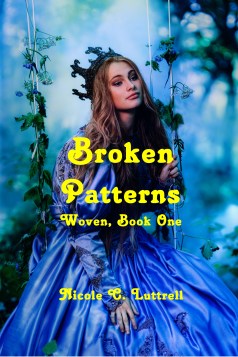
In Devon’s world, magical work is as common as turning a pot or fletching an arrow. What broken-patterns-001isn’t common is a man with thread magic. When Devon finds that he is a seer, weaving prophetic tapestries, his family tries to keep it a secret.
But the family can’t hide Devon’s visions after he predicts a devastating plague in the dragon lands of Coveline. He travels there to help the dragon queen save her people.
Meanwhile, Devon’s sister Lenore joins the Church of Singular Light. As Lenore learns to serve, and falls in love with her city, she discovers a dark underbelly to the church.
Lenore fights for her city, and Devon rushes to find a cure to the plague, while an unseen enemy raises an army to destroy Septa from within.


It’s Paper Beats World’s four year anniversary!

Today marks the fourth-year anniversary of Paper Beats World. Four years ago, way back in 2014, I posted my first blog post, I am a writer. I’ve kept right on posting ever since.

In four years, I haven’t made any money from Paper Beats World. Hell, I haven’t made any money from writing in general. I’ve actually lost money.

I’ve posted 727 posts, averaging two posts a week. For a while, I was writing three posts a week, but that was too much. We’ve gone through a few different themes and designs, and I might yet change the theme a few more times.

I’ve published 3 physical books in the last four years, and 9 books total if we count all the novellas and short story collections. And I am.

  • Broken Patterns (The story that started it all.)
  • Starting Chains
  • Seeming
  • You Can’t Trust The AI
  • Virus
  • Days and Other Stories
  • Spook
  • Man In The Woods
  • AA

There have definitely been some growing pains. I’ve gone from 1 to 2 views a day to hundreds, and that’s been so humbling. I am so thankful to all of you who visit the site, and I hope that you get as much out of this as I do.

In four years, my personal life has also changed dramatically. I’ve moved twice, from a crappy apartment to a crappy house to now living with my mother in law for a while. I’ve gone from a shitty job managing a shoe store to working for a company that I respect. I love everyone I work with at my day job, and I wish I could name you all here. But I try to keep a shield between this blog and the job, so I can’t. You know who you are, and I appreciate you all so much.

I got a dog, which I swore I’d never do. I also changed my last name about two and a half years ago, when I married my best friend and my partner for the rest of my life.

I’ve made some wonderful friends in this writing business, through my Science Fantasy group to my fellow Solstice writers. These wonderful people, who I’ve never met in real life, have enriched my life so much. They are exceptional authors and people, and I’m honored to know them.

Writing this blog has given me the courage to do so many things that I don’t know if I would have done otherwise. It’s kept me accountable and given me the opportunity to share my journey with all of you. It’s brightened my day in the darkest of times and given me joy in boring moments. I can’t begin to tell you how grateful I am for everything you’ve all given me with your likes, shares, and support.

But no, I haven’t made anything as common as money.

If I could ask a favor of all of you, I’m trying to make Paper Beats World better. To that end, I’ve made a little survey that I would really appriciate you taking. It’s not long, and shouldn’t take more than a minute or two of your time. Here’s a link.

And, of course, I have a present for all of you. It’s a free Station 86 Wallpaper, which you can download below. Thank you for a wonderful four years, and here’s to many, many more.

Untitled design

Guest post from Debbie De Louise

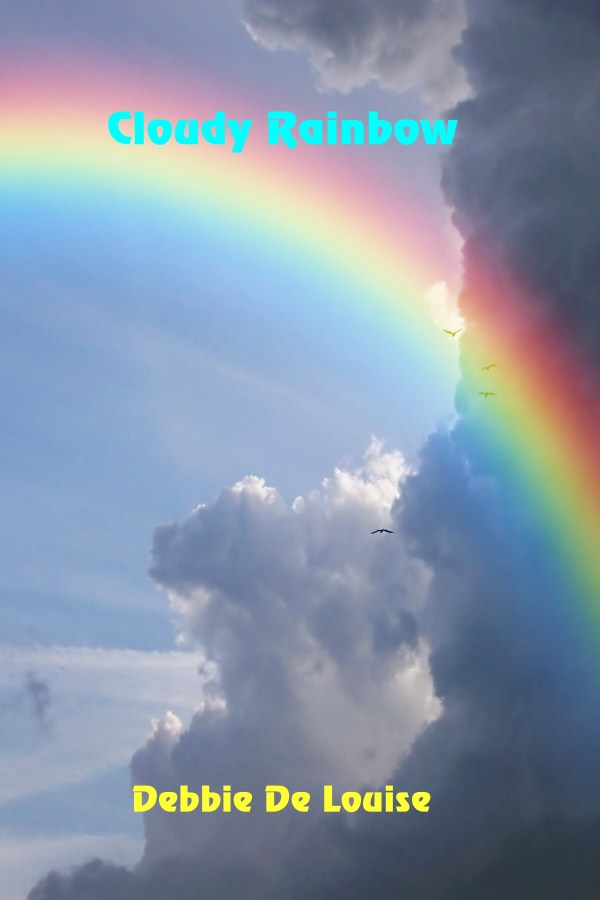
I wrote Cloudy Rainbow, my paranormal romance, in 2007 after my 15-year-old cat passed away. I named the cat character in the book after Floppy and even included some of his real-life adventures in it. Although I’d published articles in pet magazines and a short mystery in an anthology prior to this, I’d never published a full-length book before. Since self-publishing was becoming popular at the time, my husband suggested that I go that route. I invested some money and sent the manuscript to Booklocker.com, a reliable self-publishing company that was referred to me by another author. I worked with this company to produce the book, and it was published in 2008. The library where I work purchased a copy and a few others, but it didn’t sell very well because I had no idea how to market my work and didn’t have much time to do it because I had a young daughter and was working full-time. That would’ve been the end of this book and my writing career had not a library patron who read the book encouraged me to continue writing.

Fast forward to 2015 when I finally took her advice. It was that year that I published the first book of my Cobble Cove mystery series, A Stone’s Throw, with a small publisher. I’ve changed publishers since then and am currently working on the 4th book of this series. My current publisher, Solstice Publishing, reprinted A Stone’s Throw in 2016 and just reprinted Cloudy Rainbow. The reprints, of course, include fresh edits, a new cover, and some updates to the story. I had no idea that, after ten years, my writing had improved so much. While I enjoyed re-reading the plot of my first published novel, I found that it needed a lot of polishing. During the final stages of editing, my mother passed away. I notified Solstice that I wanted to add her to the dedication. She was very proud of my writing and especially of my first book. Also, the book deals with loss. As it helped me get over losing Floppy when I first wrote it, it helped again to ease some of the pain of my mom’s death.

secondlifefloppyCloudy Rainbow will always be a special book to me. Not only does it feature my beloved cat, but it goes back to the time I worked as secretary and Features Editor in college on the C.W. Post Pioneer newspaper. In addition, it includes a virtual world similar to Second Life. I had become involved in Second Life in 2006 to meet fellow librarians around the world who participated in it. After Floppy died, I created and still maintain a virtual pet memorial center in SL called Rainbow Gardens where I display photos of real-life pets that people have lost. Both Floppy and my cat Oliver who died last November are featured there.

Cloudy Rainbow wasn’t the only story I’ve written about loss. The Path to Rainbow Bridge, a short story available only as an eBook, won a Certificate of Excellence from the thepathtorainbowbridgeamazonCat Writers Association this past summer.

Although I’ve made a few changes to Cloudy Rainbow, the blurb remains the same except that I consider it a 10th anniversary edition. I think that some of the themes I approach in the book, although the characters and happenings are fictional, touch on universal questions most of us have about life and death. Without bringing up religious beliefs, I believe a line from the blurb is significant: “When you lose a loved one, whether it’s a relative, friend, or precious pet, you wonder where that special soul has gone and if you will ever see him or her again.”

Thanks to my fellow Solstice author Nicole Luttrell for giving me the opportunity to share the story behind Cloudy Rainbow.

Debbie De Louise is an award-winning author and a reference librarian at a public library on Long Island. She is a member of International Thriller Writers, Sisters-in-Crime, the Long Island Authors Group, and the Cat Writer’s Association. She has a BA in English and an MLS in Library Science from Long Island University. Her novels include the three books of the Cobble Cove cozy mystery series published by Solstice Publishing: A Stone’s Throw, Between a Rock and a Hard Place, and Written in Stone. Debbie has also published a romantic comedy novella featuring a jewel heist caper, When Jack Trumps Ace, a standalone mystery, Reason to Die, and has written articles and short stories for several anthologies of various genres. She lives on Long Island with her husband Anthony; daughter Holly; and Cat Stripey.

If you want to check out Debbie’s books, click here!

eBook & Kindle Unlimited: mybook.to/CR2
Paperback: mybook.to/CRpaper

Social Media Links

Facebook: https://www.facebook.com/debbie.delouise.author/

Twitter: https://twitter.com/Deblibrarian

Goodreads: https://www.goodreads.com/author/show/2750133.Debbie_De_Louise

Amazon Author Page: Author.to/DebbieDeLouise

Website/Blog/Newsletter Sign-Up: https://debbiedelouise.wordpress.com

The Self-Care burden

So, I was reading another blog the other day. Note that I’m not giving you a link. I only give links to blogs I think you should actually read.

This blog was by a woman with a husband, small son, and a work from home job. Good for her, that’s a handful. I wanted to see how she managed her day.

That’s when she told me that she got up at 4:00 AM to practice what she referred to as self-care. I have a problem with her definition of self-care, but we’ll get to it.

She was getting up at that hour so that she could do a crazy number of things including working out, writing in her journal, and a million other things! Someone who loves this woman needs to sit her down and explain to her that self-care isn’t supposed to be another impossibly high bar we set for ourselves. But she’s not the only one I’ve seen doing this crap. The internet is full of people (mostly women), who are bragging about fitting a stupid amount of activities that could be considered self-care in stupid times of their days.

I wish I could cradle your face in my hands while I tell you this; these people are missing the point of self-care. They are not taking care of themselves, they are showing off.

In case you saw one of these people posting pics of their 5:00 AM work out and now feel pressured to do the same, or if you are one of these people pushing yourself to do more and more, please let me give you some pieces of advice.

Be realistic about how much self-care you really need.

My life has dramatically changed recently, so self-care has been essential to me. I actually wrote a list in my bullet journal, to keep myself accountable. I’ll share my list with you. Yours might look similar to mine, or it might look very different. That’s okay, we all need different kinds of care.

  • Make and keep doctor, dentist and therapist appointments.
  • Keep my home in order to my level of comfort.
  • My face care regiment.
  • Ten minutes of yoga in the morning.
  • Drink water every day.
  • Wear clothes that I enjoy and feel comfortable in.
  • Take one day off a week.
  • Journal at night before bed.
  • Honor my craft by writing every day.
  • Read every day.
  • Get enough sleep.

I’m not spending hours with an inner journey journal. I’m not working out for an hour or more a day. I’m not doing a bunch of crap that I don’t really enjoy or find value in because someone told me I need to ‘take care of myself’. I consider what I really need to do to take care of myself and do that.

The next time you think you should do something for self-care, ask yourself this; Will this really take care of me? Or is it just something that seems like I should be doing it?

Set honest boundaries with your work.

One big thing that upset me with the blog that inspired this post was the realization that this woman was working from 9:00 to 7:00. That’s way too much work, Girl! For real, work smarter, not harder.

One thing I didn’t add on my list because it’s not really an actionable item, is setting boundaries with my work. I try not to work a lot of overtime if I can help it. Sometimes I have to, but I really try not to. Overtime is hard for me and takes away time I could be spending with my family or with my writing.

Now, I get that the economy blows and it’s not realistic for anyone to turn away extra money if they can get it. Yes, I work some overtime almost every week and I kind of need to do that right now. But I don’t need to work as much as I have in the past, so I don’t.

Set honest boundaries with your family.

This is, I think, the big issue I have with these crazy self-care hours. Our lost blogger was getting up at 4:00 because she didn’t think she could take the time during normal people hours to take care of herself. Why? Because she’d filled up all of her time from 7:00 in the morning to 10:00 at night with taking care of other people.

This is called being a martyr, and we need to stop it. For one thing, it’s abusive to the people who love us.

Do you think this woman’s husband is going to divorce her if she spends some time working out before dinner? Will her son write nasty things in his autobiography about her if she asks him to have some quiet time in the afternoon so she can write in her journal for twenty minutes?

Do you think she’s ever tried?

That’s the thing of it. So many of us, mostly women, think that we have to commit ourselves to our families without even asking if we can take time for ourselves. No, we shouldn’t ask, we should inform.

Say it with me.

I’m going to stop by the gym before I come home and sneak a workout in.”

I’m heading to the coffee shop to write for an hour. Do you want me to bring you anything?”

Mom’s going to sit on the couch with her book for a while. Here is the basket of toys we take out during that time. Please play with them quietly until this timer goes off.”

And that’s it! Don’t you feel better now? I know I do.

I love how self-care has become so popular. I don’t love how wrong people are getting it. Self-care isn’t some new way to brag about how much we can accomplish in a day. It’s not another burden to put on our shoulders. It’s permission to care for ourselves as well as we care for those that we love. So, take the time to take care of yourself honestly this week. I give you permission to sleep in past 4:00.

Are you subscribed to the PBW Update? Here’s why you should be. You’ll get an extra 2cd7169d-feb1-47e4-965e-72cb38658351post from me about writing or publishing. You’ll get a round up of the most recent PBW posts. You’ll learn about a new indie writer in every issue. And, you’ll be the first to learn about promotional offers and events for Station 86 and Woven. PBW Update issues come out every other Monday.
Click here to sign up.


Science Fiction Sub-Genres, part two

Welcome to part two of Science Fiction sub-genres. If you missed part one, click here to catch up.

Why are there so many science fiction sub-genres? Because they’re pretty different from each other, and everyone’s taste is different. It’s hard to say that a story about virtual reality belongs in the same category as a story about First Contact. While many of these sub-genres can be found blended together, it’s safe to say that any one of them is strong enough alone to tell a good story.

Cyber Punk

Cyberpunk is a glorious blend of cybernetics technology and less than highly evolved people. These are fighters, teched-out, basically.

There are definitely aspects of cyberpunk to Station 86. There are always going to be people using tech that they don’t really understand. There are sure those people around today.

Some examples of cyberpunk would be Blade Runner and Blade Runner 2049, and a new show on Netflix called Altered Carbon.

Dying Earth

Pretty self-explanatory, and scary because it will become a science fact one day, the Dying Earth science fiction subgenre is about the Earth in its last days. It’s not what I’d call happy, except for an episode of Dr. Who that involved watching Earth blow up.

I wouldn’t classify any story that involves a disaster destroying the Earth under this sub-genre, though. These are more stories about an old world, at the end of its natural life.

Some examples of the Dying Earth sub-genre include The Time Machine by HG Wells and The House on the Borderland by William Hope Hodgson.

Dystopia

This is a science fiction subgenre that I think we’re all quite familiar with. Dystopian stories are highly popular these days. (I wonder why.) It’s a story about a less than ideal future, in which our society has broken apart, become a nightmare, or devolved entirely. My favorite book, The Giver is a good example, as is Hunger Games, 1984 and Idiocracy.

One thing that I love about these books is that they always show someone fighting against what the world is like. It’s like the human spirit to fight, to make things better, can never be beaten.

First Contact

First Contact stories are generally about the first-time humans make contact with an alien race. Pretty standard. Station 86, my series, is similar to a first contact story, but I don’t actually classify it as such. It’s more like an ‘a few years after First Contact’ story.

My personal favorite example of the First Contact subgenre is the Star Trek movie, First Contact. It’s easily the best Star Trek movie ever. I will fight someone on this if need be.

Galactic Empire

Again, this is a science fiction subgenre that we’re all pretty familiar with. I bet you head a certain song in your head when you read the words.

A Galactic Empire story is all about a group of worlds that either voluntarily or through war, are all part of the same giant unified political force.

Yes, Star Wars is an example. Another example that most people don’t know about is a series by Issac Asimov called Foundation.

Generation Ship

I’ve never read a Generation Ship subgenre story, but I really want to. I also want to write one.

A generation ship story is about people who are on a spaceship heading somewhere new. They know that they won’t reach their destination, but their children will. What an amazing ideal, a group of people willing to spend their whole lives on a ship so that their children can start a whole new world.

Some examples of Generation Ship stories are Dust and Chill, by Elizabeth Bear Inside Out and Outside In, by Maria V. Snyder

I hope you’ve enjoyed our series of Science Fiction subgenres. Part three is coming up next Friday.

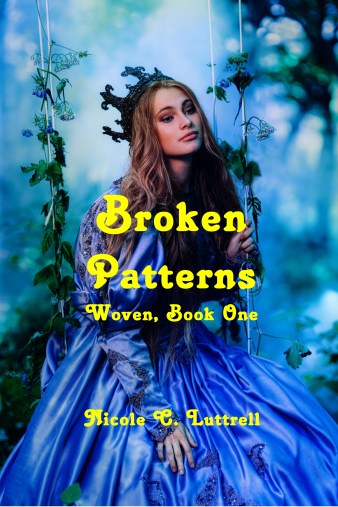
broken-patterns-001In Devon’s world, magical work is as common as turning a pot or fletching an arrow. What isn’t common is a man with thread magic. When Devon finds that he is a seer, weaving prophetic tapestries, his family tries to keep it a secret.

But the family can’t hide Devon’s visions after he predicts a devastating plague in the dragon lands of Coveline. He travels there to help the dragon queen save her people.

Meanwhile, Devon’s sister Lenore joins the Church of Singular Light. As Lenore learns to serve, and falls in love with her city, she discovers a dark underbelly to the church.

Lenore fights for her city, and Devon rushes to find a cure to the plague, while an unseen enemy raises an army to destroy Septa from within.

Get it here now.


I wrote another book! (Shocker)

I’m coming to you today with a bonus post, and that usually means one of two things. Either I’m posting a new short story, or I’m telling you about a new book.

It’s the second one.

On September 14th, I’ll be launching a collection of Paper Beats World posts, lovingly re-edited and updated in a snazzy e-book form. It’s called Deciding To Start, a collection of essays to inspire new writers.

And guess what? The pre-order is already up and ready to go. Here’s your link, if you’d like to secure your e-copy now.

Deciding To Start contains some of the best blog posts from the first two years of writing Paper Beats World, updated with new information and new insights. It covers such topics as inspiration to start writing, advice on the tools you need to get started, how to be a writer while also being a full time human being, and inspiration to keep going.

This project was honestly an emotional one to work on, especially so close to my four year anniversary here on PBW. It’s amazing to look back at how far this little site has come, and how much has changed in all that time.

What a difference four years can make

Writing offensive humor in a not offensive way

I love irreverent humor. Blue humor, offensive jokes, grown-up cartoons, things like that. I’ve already done a review of Rick and Morty, for instance, and I stand by it being a smarter show than most people give it credit for. (I can’t say the same for some of my fellow fans. All I can say is I’m sorry.)

The problem is that when you write a character that embodies this sort of irreverent humor, they can become really awful characters. The Peter Griffin sort that really doesn’t have a personality aside from being offensive. No one likes those characters.

If you want to write something hugely inappropriate with really awful people as main characters, there are some things you should keep in mind, though. Shock value for the sake of it is rarely entertaining. So what keeps your offensive humor from being that? Here are a few things I would suggest.

Be funny

This is the first and probably most important rule about writing offensive humor. It has to be funny. You can’t tell a bad spousal abuse joke and expect people to be okay with that. Now if you tell a funny spousal abuse joke, or make a career out of it like Andrew Dice Clay, you’ll probably be remembered as a legend.

(A side note not. I couldn’t think where else to mention this, but after bringing up The Dice seems natural enough. Being an irreverent comedian works better when you’re not a horrible person. You don’t get to make racist jokes if you’re really a racist. You don’t get to make sexist jokes if you’re actually sexist. Don’t be a jerk and expect people to laugh at your jokes.)

Be smart

Offense comes better from a place of intelligence. If your character comes off as offensive and smart, that’s a fun character. If your character comes off as offensive and stupid, that’s not a fun character. At least not a fun protagonist.

That’s why characters like Rick from Rick and Morty House from House work well. They’re assholes, and hugely offensive. But they’re smart.

Have realistic characters

Another reason why characters like Housework is because their actions are realistic. Even if a lot of the rest of the show is not. (Sometimes, it is Lupus.) It’s the same as any other character. The world may be amazing. The powers the character possess might be completely unrealistic. But they still need to be people. A person who’s an asshole and treats people badly does so for a reason. Normally a really sad one, to be honest. A megalomaniacal character like Rick or House really doesn’t like who he is, so his drug addiction makes perfect sense, as does the way he treats his loved ones. You can see where the pain, where the anger is coming from. They’re not just mean to be mean. There’s a reason why the equation pain plus time equals comedy works.

Have endearing characters

If you’re writing a character that’s going to be really offensive, that can’t be all there is to them. They have to have some endearing features, or your reader is not going to have the patience for their hate, no matter how funny it is.

A good example of this Will McAvoy from Newsroom. He’s a vaguely racist ass who has driven away almost everyone who wanted to work with him. It’s only in the course of the show that we find out why he’s an ass. He lost the woman he loved, lost faith in his country, and in himself. He’s endearing because we understand these losses, and understand why he is the way he is. We also see times of bravery, times of compassion. We see that he’s a good man if a flawed one.

I don’t know that we can say Rick and House are good men. In fact, I’d say, Rick, in particular, is a weak man. He doesn’t care to change, or make the world better. He’s content to amuse himself and do things that he thinks might make him happy.

But it’s that constant need to focus on his own selfish desires that reveal his real pain. We can see that there is some goodness in him when he occasionally helps people for no selfish reason. But it seems that he almost regrets it afterward. It’s almost as though there’s a pain in his past that he never intends to feel again. I think we can all understand that.

In closing, don’t be afraid to write offensive humor. Just don’t let it turn into a poorly written character.

After years of war between Montelair and Septa, the two thrones are united by family. Victor’s nephew, Morgan, is sharing the throne with the last heir of the royal line, Jacob. He and Lenore decide to travel to Montelair with their newborn daughters to help broker peace.

But peace among their own people is harder to achieve. The city is tormented by a starting chains-001terrorist who calls himself The Tinker. He and his group of anarchists plant bombs through the city and call for the death of the new kings from every street corner.
Meanwhile, in Calistar, Sultiana and Devon are marching to war with Kussier. The ancient hatred between the two countries is sprung anew when Sultiana is declared heir to the Calistar throne.

Waiting at the border, though, is a much darker enemy. A force from legend threatens to consume both countries, and possibly the world.

Get it here now!

Science Fiction Sub-Genres, Part One

Last Friday, I told you I was going to talk about different science fiction subgenres. True to my word, I’ll be starting that today.

And by starting I mean that this will be a six-week long series that will give an overview of six sub-genres a week. Because there’s a lot of them.

Why are there so many science fiction sub-genres? Because they’re pretty different from each other, and everyone’s taste is different. It’s hard to say that a story about virtual reality belongs in the same category as a story about First Contact. While many of these sub-genres can be found blended together, it’s safe to say that any one of them is strong enough alone to tell a good story.

Alien invasion

Quite a popular genre for movies, the alien invasion genre is pretty self-explanatory. Aliens have invaded Earth, probably for nefarious purposes. Some examples of this subgenre are probably already in your mind, like Mars Attacks or Independence Day. (Obviously, the quality varies wildly.)

This is not one of my favorites. Generally, the alien race comes off as violent, selfish and often stupid. Now if someone could come up with an alien race that had a legitimate reason to attack, I’d get behind that.

Alt history

Probably one of my favorite science fiction subgenres, alt history is just what it sounds like. What would the world be like if Hitler had gotten into art school? What if Henry Ford had never been born? What if the allies had lost WWII? What if Columbus hadn’t found America? You get the idea.

I have a fascination with history, so of course, I love reading about what could have happened. There are a thousand little lynchpin moments in history. If one simple thing hadn’t happened, everything might have come out differently. It’s the butterfly effect.

How you might ask, does this qualify as science fiction? Wouldn’t this count as historical fiction? Well, maybe. But most alt-history stories include some science fiction element like time travel. That’s why it counts here.

The most recent example I can think of for this genre is Stephen King’s 11.22.63. I haven’t read it yet, but it is on my list.

Parallel universe

This genre is similar to alt history, at least it can be. Parallel universe stories are often a look at what might have happened if -blank-. But many of the stories tend to be more personal than worldwide. They don’t have to be, they just usually are. I’m thinking of an episode of Dr. Who, where Rose and Ten go to an alternate universe where her dad is still alive.

One of the best examples I can think of here is this old school show, Sliders. It’s not the best sci-fi show ever, but it’s pretty decent if you’re looking for something new to watch.

Apocalyptic/post-apocalyptic

This is another science fiction sub-genre that’s been used in movies frequently. It’s the end of the world, and it’s not going quietly. Mankind is dying, being destroyed, being eaten, killing each other horribly. This genre often puts its foot into the horror genre.

Often this genre centers around watching the survivors of the apocalypse try to put their lives in something that resembles order again.

Some good examples of this are The Stand or Mad Max.

AI

Pretty obvious that this one is a favorite of mine. AI, artificial intelligence, is a concept done best by Issac Asimov. It’s all over movies, tv, and books because it’s something that fascinates a lot of people. Everywhere from friendly AI in Rosie the Robot or K9, to the malicious Hal 9000, the thought of AI clearly has our imaginations captured.

And, we just recently started turning this science fiction into science fact! A partial AI named CIMON is heading to the space station soon. He’s going to be able to perform small tasks, talk to the astronauts, and keep them company. How cool is that! Or terrifying, depending on your opinion of AI.

I’ve already mentioned Asimov, who is pretty much the father of this sub-genre. Even if you’ve never read any of his books, you’ve seen his work in movies. Bicentennial Man and I Robot are just two of my personal favorites. And, of course, I wrote a novella called You Can’t Trust The AI. I might have mentioned.

Colonization

This is probably the most exciting sub-genre right now because it might soon be science fact! We’re already ready to send a group of people to Mars. We just won’t be able to get them back.

Colonization is a science fiction subgenre that’s about going to another planet and setting up camp. Obviously, the story ideas abound.

Ironically, one of my favorite stories in this genre is a dark one by Ray Bradbury called Mars is Heaven. A ship full of astronauts land on Mars, only to find everyone who they’ve ever loved who’s passed on there, waiting to greet them. I’ll let you read it to find out the ending.

I hope you’ve enjoyed part one of our science fiction sub-genre series. Part two will be up next Friday. See you then.

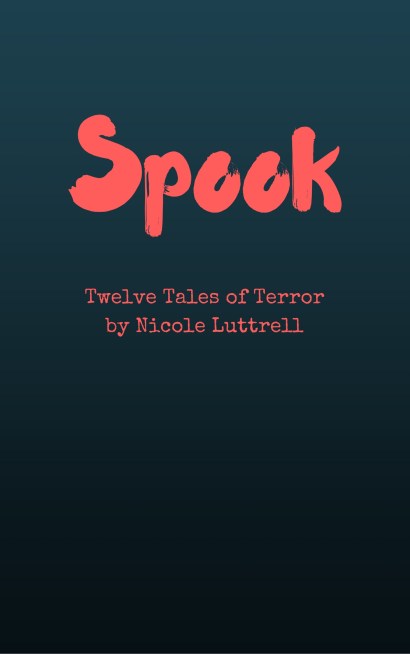
spookEnjoy twelve dark tales from the twisted mind of Nicole C. Luttrell. Meet a girl who has bad dreams, a boy who watches too much tv when alone at night, and a mysterious scratching coming from an old school desk. 

Get it here now!


Compairing Jurassic World and Incredibles II. Are they sexist?

Recently the husband and I did something we’ve been meaning to do for some time now. We signed up for a service called Movie Pass. (Note, this is not sponsored.) It’s cool, you can go see a movie a day for ten dollars a month.

We’ve been seeing a lot of movies.

One night, we’d intended to go see the long-awaited Incredibles 2. But then things happened and we were late to the theater. So, we saw Jurassic World, Fallen Kingdom.

The next morning, my mother in law asked me how the movie was. I started discussing the dinosaurs, the good special effects, the bad special effects. The strong suspension of disbelief that the movie requires to enjoy. Then I said, “There was definitely some sexism going on in the movie, but not enough that it was unwatchable.”

And she said, “Yeah, I’d heard about that.” A moment later, as I was discussing a scene where a character walked across a glass roof in sneakers in the rain, and how she should have slipped, she stopped. “How many movies did you see last night?” she asked.

Just one,” I said, “Jurassic World.”

Oh, I thought you were seeing Incredibles 2,” she replied.

Wait, so what’s this about Incredibles 2 being sexist?”

At the time I hadn’t seen the movie, of course, so I didn’t want to read anything that might cloud my opinion of the movie. But the accusation that it might be sexist worried me. Disney has its reputation, of course.

At this point, I’ve seen both films. And I’ve read some of the arguments for and against the supposed sexism in Incredibles 2. So I thought it would be fun to compare the two movies, based on their gender equality.

The sexism of Jurassic world

Before I go any further, I do want to say that Jurassic World, Fallen Kingdom was a fun movie to watch. If you’re a fan of the series, you’ll like it. I enjoyed watching it, despite the issues I had with it. It wasn’t so sexist that I felt the need to walk out of the theater in a huff.

But, Generally any movie that has the main character calling himself chivalrous because he doesn’t let his girlfriend drive the car is going to irritate me.

But I don’t love that the child character gravitated towards the female lead, not the male. Even though it was him that she saw interacting with baby dinosaurs earlier in the movie, and she didn’t know this woman from Eve.

But, it would be nice to see the female lead be a little less screamy.

But, they didn’t need to make the antagonist so boneheaded sexist. That’s not a good look.

The problem isn’t really that the movie is sexist. It’s that the characters are stereotypes. The sensitive ecologist. The strong male lead with a sensitive side. The feisty, spunky doctor. The cowardly computer tech. It’s lazy, just lazy. But let’s be fair, we’re not seeing these movies for the dazzling characters. We’re seeing it for the badass dinosaurs.

If you’re wondering, the movie did not disappoint! Blue was awesome!

The awesomeness of Incredibles 2

After I watched Incredibles 2, I was really confused by my mother in law’s insistent that there were rumors of sexism. It sure didn’t seem sexist to me.

Actually, it seemed pretty damn awesome and totally non-offensive. I’ll try to avoid spoilers as much as possible.

I loved that Elastagirl was the superhero that was chosen to be the ambassador, to show the world that supers were needed and should be made legal again. I love that it was because she had the fewest number of accidents. I love that Mr. Incredible was frustrated not because his wife was chosen, but because he wasn’t.

It has nothing to do with their gender! She’s chosen because she’s better, he’s mad because he wants to be out there! And yet he still stays home, and becomes a good dad. Sure, he’s exhausted. But what parent who’s used to co-parenting wouldn’t be? How many moms have worn themselves to the bone rather than accept some help? Bob is a great dad, and he proves that.

Neither character is portrayed as not being in their proper gender roles. Just not in the role in their family that they were accustomed to. Bob isn’t fumbling around, setting the kitchen on fire and forgetting to feed the baby. Helen isn’t crying all over, missing her family and unable to cope with the ‘working world’. They are excelling, not failing.

But that wasn’t the point of the movie, and that’s the big thing. It’s a part of their character arch, and it seems like a realistic one. These people seem like they could be real people, except for the super powers.

And that, I think, is the real difference between these two movies. It’s not that one is sexist and one is feminist. It’s that one has well written characters, and one doesn’t. Which I think is the main issue that most sexist movies have. It’s not malicious, it’s just bad character writing.

Sennett, Godfrey and the rest of Station 86 are trying to put their society back in order after scn_0047the Core attack. Then a mysterious ship from a dying station arrives, bringing artificially intelligent robotic, murderous dogs.

Godfrey, Mason and April must get to the hospital safely, while Sennett is trying to protect Marshal’s Joy and Howard. But the AI dogs are nothing compared to the terrors they left behind on their own station.

Read it now!


A WordPress.com Website.

Up ↑