Some thoughts on the Nostalgia Critic

As you might have noticed, I’ve been watching a lot of Nostalgia Critic recently. I’ve shared some of the videos on social media, and I’ll give you a link here in case you want to check him out.

I watch his videos for a lot of reasons. For one thing, I love nerd rage. Actually, I kind of love hearing people yell about stuff. I know, that sounds really dumb. But I do have a valid reason. People don’t yell if they’re not passionate. You have to care about something to get to the point of screaming about it. And in a world where it feels like people just don’t care about anything, I love people who care.

What the Nostalgia Critic cares about is movies and tv shows from when we were kids. (Oh yeah, he and I are a similar age.) He cares about these things enough to look back at them with a critical eye and talk about what worked for these stories. To a much larger extent, he talks about what didn’t work.

And let me tell you, you can learn a lot talking about what doesn’t work in a story. It’s not just because it’s entertaining to hear the man yell (though it really, really is). It’s not just that I feel vindicated when he rips apart Batman and Robin (though it really, really does). It’s that as he picks away at the stories of our childhood, I learn what sort of things fall flat in the eyes of a reader.

Ordinarily, this would be where I’d go over a list of lessons I learned from Nostalgia Critic. But that’s a imageslittle more difficult in this case. Every movie or tv show is different, and each video is a case study in why this particular thing worked or didn’t work. But things that worked for one movie are the kiss of death for another. Things that worked amazingly well for one show made another one stink out loud.

I suppose that’s one lesson that can be derived from Nostalgia Critic. Every story is different, and there are no fast and true rules about what is going to work and what isn’t. The complexities of genres, modern tastes, age ranges and a million other things mean that we can’t possibly say that there’s a formula for good storytelling. If there was, we’d all write such amazing stories that there would be no more need to have a best seller list. That’s why editing and beta reading is so crucial because you really don’t know if a story will work until it’s done.

I know that, as creatives, we tend to look down upon the critics. What have they done, that they can sit in judgment of us? How dare they take the work that we poured our souls into and rip it up with such wild abandon? Have they ever written anything? Have they ever put anything into the world?

In many cases, yes. For one thing, reviews are entertaining if done well. They are themselves a form of creativity, just not the same sort that we work in.

In addition to that, critics perform a service for the average person. They encourage us creators, hopefully, to elevate our work. They point out our flaws not to condemn us, but to help us grow. But they’re not our coaches, our editors or our doting parents. They’re not on our side, they’re on the side of the reader. So, they don’t have to pull their punches and they often don’t. But that doesn’t mean that we can’t learn something from honest criticism.

I highly advise checking out Nostalgia Critic if you get a chance. I can assure you, it’s not a waste of your time.

Yes, I do grasp the irony that I just reviewed a reviewer. It’s kind of like looking into a mirror with another behind you. But I’m okay with that.

41HYCw0DTHLHarold spent most of his son’s life protecting him from the man in the woods, while his neighbors lost child after child. Then, after a deadly car crash, he has to take his sixteen-year-old granddaughter into his home.
Then a reality company starts building a new neighborhood in the heart of the woods, placing hundreds of children in harm’s way.


Virus is now available for pre-order!

These are always my favorite posts to do. For obvious reasons, I’m sure.

So many of you loved Virus, that it was the most read Station 86 book to date. I am so overjoyed that so many of you loved it, and showed up every week to read the next episode. These episodes will remain live until June 27th, at which point they will be pulled. So, here are links to all of them, so that you get a chance to read them before they’re gone.

Episode One, Two, Three, Four, Five, Six, Seven, Eight, Nine, Ten, Eleven, Twelve, Thirteen, Fourteen, Fifteen, Sixteen, Seventeen, Eighteen, Nineteen, Twenty, Twenty-One, Twenty-Two

In addition to Virus being the most popular Station 86 story, it was also the longest by far. Even so, the story isn’t over. There’s another episode waiting to be revealed, in the e-book.

And you can pre-order it now for 99 cents!

The book will officially launch on July 13th. Anyone who pre-orders will pay just a dollar.

Thank you, as always, for reading Station 86. I can’t wait to show you what comes next.

Writing for yourself

As some of you may have guessed, I’m going through some major personal issues right now. I can’t talk about it here yet, but I promise that I will explain someday. Probably in the form of a book.

Because of this, I’ve been writing a lot. That’s not uncommon, I write a lot all the time. That’s kind of my thing, you know? I write books, short stories, and blog posts. I write pretty much every day. And what I write usually goes into the public eye very quickly.

A lot of what I’m writing right now is not for the public eye. A lot of it will never be in the public eye because I didn’t write it for anyone else but me. I’m writing journal entries, poetry, letters, notes. I’m writing just to scream onto the page about what’s going on. I’m writing because I only see my therapist once a week. I’m writing, for the first time in a long time, purely for me.

We don’t do that as writers. At least not once we’re to the point where people are paying us for our writing. Pre-publication everything we write is for ourselves. Once you start getting fans waiting for your next installment it starts being different. Almost all of what we write starts out being just for us but eventually must be edited and shaped for others.

Sometimes we need to step away from that, and write something just for us. Especially if your life is in chaos, or if you’re just trying to deal with a lot of stuff. Because when we write for others when we share our writing with others, we are sharing parts of ourselves. We’re sharing our souls for space in someone else’s heart. Normally I think that’s a pretty good trade.

But sometimes, sometimes we need to just write for ourselves. We need to write in our journal, write bad poetry, write stories that are experimental and not really complete yet. We need to sketch out dialog that isn’t right, and scenes that we would never want to share. Please, write about sex, and anger, and fear. Write the things you don’t want anyone to know, then burn the page you write it on.

Write for the world, because the world needs stories. But write for yourself, because you need to keep something for you.

Today’s the last day to get Starting Chains on sale!

I know it’s the weekend, and I’m sure you’re all busy. So I wanted to make sure that you all got a chance to grab Starting Chains while it’s still on sale. And today’s the last day.

After years of war between Montelair and Septa, the two thrones are united by family. Victor’s nephew, Morgan, is sharing the throne with the last heir of the royal line, Jacob. He and Lenore decide to travel to Montelair with their newborn daughters to help broker peace.

But peace among their own people is harder to achieve. The city is tormented by a terrorist who calls himself The Tinker. He and his group of anarchists plant bombs through the city and call for the death of the new kings from every street corner.

Meanwhile, in Calistar, Sultiana and Devon are marching to war with Kussier. The ancient hatred between the two countries is sprung anew when Sultiana is declared heir to the Calistar throne.

Waiting at the border, though, is a much darker enemy. A force from legend threatens to consume both countries, and possibly the world.

Click here to grab your copy.

Starting Chains is still on sale

Starting Chains is still on sale today, so don’t forget to grab your copy. Here’s a link.

After years of war between Montelair and Septa, the two thrones are united by family. Victor’s nephew, Morgan, is sharing the throne with the last heir of the royal line, Jacob. He and Lenore decide to travel to Montelair with their newborn daughters to help broker peace.

But peace among their own people is harder to achieve. The city is tormented by a terrorist who calls himself The Tinker. He and his group of anarchists plant bombs through the city and call for the death of the new kings from every street corner.

Meanwhile, in Calistar, Sultiana and Devon are marching to war with Kussier. The ancient hatred between the two countries is sprung anew when Sultiana is declared heir to the Calistar throne.

Waiting at the border, though, is a much darker enemy. A force from legend threatens to consume both countries, and possibly the world.


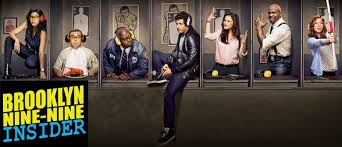
What I learned from Brooklyn 99

Recently I’ve been binge-watching Brooklyn 99 from the beginning. And I honestly love it so much. If you recall, I once said that I want to live in a world where the government is like West Wing and the news is like Newsroom. Let me add to that, that I’d like to live in a world where the police are all like the ones on Brooklyn 99.

Brooklyn 99 is a really great show. It’s funny, heartfelt, and has a great cast of characters. It’s also incredibly progressive. I would consider it a perfect model for anyone wanting to write a modern story that shows what our society could be.

Screw stereotypes

Stereotypes are blown out of the water on this show. The women detectives are just as tough as the men. The gay captain is the most stoic, non-frilly stick up his ass character I’ve ever seen. The sergeant is a hugely massive man who had to be taken out of the field after his daughters were born because he feared dying and leaving them alone. They’re all real people. They all behave as you’d expect a real person to behave.

indexRepresentation matters

With the diverse cast, the show obviously sometimes deals with moral issues that we face. In one episode, the Sargent (played by the amazing Terry Crews) is harassed by a uniformed officer from another precinct, because he’s out walking in the streets of his neighborhood at night. In another episode, Detective Diaz comes out as bisexual to her parents. Captain Holt occasionally brings up the fact that as a black gay man he had to fight to be accepted. These are things that I can’t believe we’re still dealing with in 2018! But since we are still dealing with them, I’m glad to see them dealt with in such great ways.

Funny people are usually endearing

Brooklyn 99 is a comedy. That’s its main goal. And all of the characters are genuinely funny. Gina’s strange, self-centered outlook that somehow manages to manifest in introspection is hilarious. Detective imagesSantiago’s constant type A actions and her adoration of Captain Holt is usually good for a self-deprecating laugh on my part. And really, anything Boyle does is so sad sack wonderful.

We inherently like people who make us laugh, simple as that. The most popular characters in anything are rarely the straight-laced, big muscled hero who saves the day. They’re usually the Xanders, the Chandlers. They’re the funny ones.

A running gag or well-established trope can be used in so many ways

Jake Peralta, one of the main characters, has several repeated phrases. The most popular is probably, “Sure, sure, sure. Cool, cool, cool.” Repeated quickly, and usually with his typical eight years old who just got a pack of pokemon cards grin.

In the episode where Jake is sent to jail for a crime he didn’t commit, he repeats that phrase, “Cool, cool, co-co-cool,” when he hears the verdict. It’s something that he’s said a thousand times, and always with a smile. But at that moment, he looked so afraid, so broken. He obviously didn’t think that this would ever really happen to him. You can see his heartbreak. And that wouldn’t have worked as well if that line hadn’t been so ingrained in the character.

Love is always a great story

The love story between Amy and Jake is a great one. Never once does it feel forced. Never does it become the whole focus of the show. Always is it sweet and endearing? They are strong people on their own and have a healthy relationship together. It’s nice to see an honest, healthy relationship on tv. There’s not enough of that.

But friendship is a better one

Jake and Amy’s love story is great. But even better than that is Jake’s friendship with Gina, who he’s been friends with since they were kids. Or his friendship with Rosa, that began at the police academy. Or his strange friendship with Boyle, who is nearly obsessed with him. The friendships on this show are so real. They’re so real, so wonderfully honest. I love seeing men and women be friends without anything else. I have a lot of male friends, and I know that I sometimes get some backlash from that. People make assumptions when guys and girls are friends. I hate that. It’s good to see more men and women being friends on tv.

Showing real growth from challenges

In the show, several of the characters have gone through life-changing situations. Terry has three children, and it makes him more cautious. Jake is arrested and put in prison for nine months, and it makes him rethink his whole life. It makes him, in the end, a better detective.

It’s wonderful to see the characters change in this way.

If you’re an author, you could do worse than learn the lessons Brooklyn 99 has to teach.

It’s my birthday!

Today is my 32nd birthday. And I’m pretty excited about it. I’ll be going to work, but I’ve literally worked every birthday for all of my adult life. So, it’s all good.

Anyway, the point of posting today is not to tell you about my birthday. It’s actually to give you a present.

Starting Chains is on sale today, for only 99 cents.

Now, it’s going to be on sale for the next two day, but today is the only day it will be just a dollar.

If you haven’t gotten a chance to read Starting Chains yet, today is a great day to grab it. I hope you all get a chance to read it.

On a personal note, to have achieved my life goal by the age of 32 is an incredibly humbling experience. I can’t believe that I’m publishing my third actual book, and a lot of that is thanks to you. So, I hope that you love Starting Chains, because it’s for you.

Thank you.

Some thoughts on taste

Once upon a time, I didn’t think very much of myself. If you can believe it, I used to think I was pretty stupid. I listened to the people around me, and if I didn’t agree with them, I thought I must be the one who was wrong. So, I tried to tailor my opinions to theirs.

Obviously, that’s an unhealthy way to live. It also resulted in me listening to some truly horrific music. (Not even going to lie, I used to listen to ICP.) I read books I didn’t like because, well, that’s what other people were reading. I watched tv shows and movies that were terrible and thought that I was to blame. I honestly thought that I didn’t like things because I wasn’t smart enough to like them. That my tastes were, somehow, inferior to those around me.

Fortunately, I’ve grown beyond that self-loathing mentality. I’ve realized a lot of things about my own personal taste as I’ve developed a sense of self-confidence that I lacked in my youth. And, since I’m turning 32 on Thursday, I’d like to share with you some things I’ve learned about personal taste in my 32 years.

You can recognize the quality of something, and still not like it.

I don’t like a lot of things that are widely popular. The Game of Thrones show, for instance, or This is Us. I’m not saying that these things are bad. From what I understand they’re both quality shows. I just don’t enjoy them. They don’t entertain me, though I can see the value in them. That’s fine. Just because I don’t enjoy something doesn’t mean it’s garbage. I’m happy to leave these good, quality things for the people who do value them.

You can recognize that something is complete trash, and still like it.

On the flip side of that, I do like some things that are total garbage. I’m never going to defend Mulan Rouge. Sorry, can’t do it. It’s a bright, colorful, fun, nonsensical story that by all rights should offend me as a writer. I don’t care. I watch the movie, listen to the soundtrack. Even now that I know what that French line means, I still sing it way out loud.

Sometimes trash is good. Sometimes it’s a release. I’ve also wondered in the past whether a deep-fried Oreo would really kill me. So, perspective.

Just because it’s classic, doesn’t mean it’s good.

I like lots of classic things. House on Haunted Hill, for one. The original movie is amazing, Vincent Price was a sex icon that gets no credit. I like a lot of classical music, like old 60’s and 70’s stuff. I like many classic books and movies. I like more classic tv shows than contemporary ones.

That being said, some classic work is bad. I’m sorry, it’s just bad. I’ve never yet read a Nathanial Hawthorn novel and thought, “Wow, I really enjoyed that.” Sorry, not even The Scarlett Letter.

Here’s the thing. I don’t hate these things because I’m not intellectually capable of grasping it. I don’t need to refine my pallet more. I just don’t care for the damn story. I don’t really care when it was written.

You should never apologize for it.

If I haven’t already pissed you off, this might be the one to do it. I don’t like A Wrinkle in Time or any of the books in that series. I have always hated it. In fact, that was the first book I remember forcing myself through even though I hated every single, awful, repugnant page of it. I hated the main character, hated the world she was forced into, hated every character she ran into along the way.

Every other woman in her early thirties just started hissing at me. And you know what, I’m cool with that. I’ve been having that damn book shoved down my throat by my whole generation, and I’m glad the movie bombed! I will not apologize for hating that book.

On the flip side of that coin, I’m sure that there are people out there who hate my favorite book, The Giver. I’m sure they’re sick to death of hearing about what a brilliant work it is. About how it brought a generation to the realization that freedom was worth anything, and everything. That maybe we need to do more than survive this world. Maybe you hate me right now, and you’re glad that my movie bombed. That’s okay. You shouldn’t have to apologize. We don’t have to agree. It would be nice if we were civil towards each other, but we don’t have to agree.

Your tastes will change as you get older.

This one was kind of a surprise. I guess that was kind of egotistical of me, even when I was so down on myself. I thought for sure that I was going to love slasher movies and Family Guy forever. That didn’t happen. I can’t stand Family Guy anymore (Seth McFarland is a purely ornamental man. Gorgeous but very little substance.) And I really can only tolerate so much in the gruesome horror genre anymore.

It’s okay for your tastes to change as you get older and change. It’s also okay for some things to never change. I will always love Animaniacs and Futurama. Also in The Simpsons. They’re all smarter than people give them credit for. And there’s no shame in being a 32-year-old who still watches cartoons.

Stories exist to be enjoyed

A story has one reason to exist, one driving purpose. That is to entertain. It may do many other things. It might teach you something, change your mind, drive you to tears. It might give you comfort and make you feel like you’re not alone in the world. A story might do any number of things. But it’s main job is to entertain. And if it fails to do that, then that failure belongs to the story. Not the reader.

Now, let’s keep all this in mind with your writing.

When you write a story, some people are going to love it. Some people are going to go nuts for it, and show it to all their friends. Some crazy people are going to make that story their favorite thing in the world.

And some people aren’t going to give a damn about your story. For some people, your story will not be their cup of tea. And that’s fine because everyone has different taste.

So don’t take it so hard.


How far would you go for your art?

Writers are artists. I’m totally biased, but I believe that writing is the most relevant and lasting form of art. Paint fades, clay breaks, paper decomposes, stone is worn down over time. And while a physical book or magazine might not last long, the story is forever. We’re still telling legends told from far before the birth of Christ. In fact, some might say we’re telling the same stories, just with new names and settings. Betrayal, war, heroes, monsters. And of course, the never-ending stories of love. Love never gets old.

Writing, and all the arts, are crucial to our existence. With storytelling, we can do so much. We can capture a moment in time and history that is completely unique. We can help people going through a difficult time. We can share our lives with thousands of people. We can create whole new worlds, and tell honest truths within them. We can live so many more lives beyond our own. We can use our words to inspire others, to help them see the world in a new way they hadn’t before. At very worst, we can write something clever to distract someone on a shitty day, or while they’re in a waiting room.

I assume that you agree with me about the importance of writing. Even if you’re not a writer yourself, I assume that you’re here because you love a good story. And so, given the weight of writing, all writers must eventually ask themselves a question. It might not be so direct, and you might not even realize that the question is being put to you until you’ve already answered it. But sooner or later, one time or a hundred times, you will have to answer it.

How far will you go for your art?

Will you devote your life to writing, like Natalie Goldberg did? Will you remain single and poor, hopping from house to house in a wild, nomadic, bohemian life that’s never certain and always new?

Will you commit yourself to the craft seriously, spending time not only reading and writing but researching?

Will you give up other habits to make the time to write?

Will you give up unhealthy habits so that your mind doesn’t fail you?

Will you live frugally so that you don’t have to work as much and can devote more time to writing?

Will you spend time everyday writing?

These questions can’t be answered by anyone else but you. Because only you know what’s worth it to sacrifice in the name of your art. You know what you’re capable of, and what is really important to you, even if you’ve gotten really good over time at lying to yourself about it. But it’s important to remember this.

If you talk to the people around you, I’m sure that you’ve got more than a few friends who want to be writers. They want to write, but they don’t get anything on the page. Do you know why? Because they don’t want to sacrifice anything for writing. They want to write, but they don’t need to. So, they won’t.

There’s another side to this. There always is. There are people, there have always been people who sacrifice too much for their art. We know their names because they’re usually spattered on the front page. Sometimes their brains are also splattered all over the walls.

Don’t sacrifice your health for your art. I’m sure that’s something of a theme on this site, but that’s because it’s a good piece of advice. Don’t work yourself to death. Don’t let your art drive you to drink or do drugs.

Don’t sacrifice your loved ones for your writing. Writing will never be more important than your kids or your partner. Don’t work through dinner or bring your writing on vacation with you. Especially if you have kids. They’re only going to be little for a small amount of time. Enjoy it.

So, what do you think? Do you have things in your life that you can sacrifice for your writing? What is more important than your writing, and should be kept? Let us know in the comments below.

Seven pieces of short and flash fiction, showcasing the days of seven very different people. DaysAnd Other StoriesYou will find a busy librarian, a lonely man with a guitar and a woman who finds a dream crashing in her brain.

Get it here now for free!

What writers can learn from dark fantasies

Have you ever seen Coraline? I’m sure you know it’s one of my favorite movies. I even did a full breaking apart post about it. It’s really good.

I also really enjoy Hunger Games, Divergent, Number The Stars, and my favorite book, The Giver. I’m sure you might have noticed a theme. These are all horribly dark books written for young adults.

Like, really really dark! I’ve never read a book for adults that is half as dark as the books people write for kids. I think that’s part of why I keep reading young adult fiction.

But why do we do this? Why do we write these dark, horrible things for young adults who are generally emotionally crazy to start with? I’ve given this some thought, and I realized it’s for one really simple reason.

It sells. It sells like crazy, man.

While I don’t think that you should ever write something because it sells well, I don’t think it’s a bad idea to take a look at why so much of this dark work is selling to young adults. Because there are a lot of good reasons why they do sell well.

Kids are actually smarter than we treat them. By ‘we’ I mean parents and teachers. I’m a parent myself, and I can totally tell you that I do this all the time. I assume that my daughter can’t grasp large things, deep things all the time. I assume that I have to slow down and take a knee to explain the world to her. But I’m wrong. She’s fourteen years old, and she surprises me all the time with her incites. She watches the news with me, you understand. And she gets what’s going on in the world a lot better than some adults I know.

But, because we who are responsible for these little fledgling humans tend to treat them like they’re still nine, they will, of course, gravitate towards the things that treat them like they’re smarter than that. Like a dark fantasy book that isn’t afraid to talk about serious topics.

Dark work can also be distracting when you’re dealing with your own emotions. And, to be fair, teenagers are a huge ball of emotions. Greasy, angry, sad, whiny emotions. Okay, I know I sound flippant, and I’m only half joking. Teenagers have never experienced most of the bad issues in life before. We, as adults, are used to being burned. Kids aren’t, so all pain is new. When all of that pain is too much, a good dark fantasy can be distracting.

But here’s the thing, it’s not just kids that love young adult dark fantasy. As I’ve already pointed out, I love dark fantasy. And I’m happy to tell you why.

  • I love dark fantasy characters because they have realistic reactions to life. No one’s ever as happy as a Disney Princess all the damn time. Wednesday Adams is a far more relatable character.
  • The dark fantasy is often good at showing the good part of a bad day. Think about Series of Unfortunate Events. Think about the first book, where they show the Baudelaire siblings reading in their room in the evening. It’s a reminder that even in the darkest time, we can make moments of light for ourselves.
  • Dark fantasies are unpredictable. In other books, you can generally assume that we’ll have a happy ending. Not so with a dark fantasy. Anyone might die.

I think that these are definitely things that writers can learn about any genre. What do you think? Do you like dark fantasies? If so, why?

cropped-daysand-other-stories.jpgSeven pieces of short and flash fiction, showcasing the days of seven very different people. You will find a busy librarian, a lonely man with a guitar and a woman who finds a dream crashing in her brain. And guess what? It’s totally free! Get it here now.
A WordPress.com Website.

Up ↑