Seeming, Episode one

In the year 2099, a company called Galitech launched the first space station meant for recreational use. They shipped up food, sand, sea water, a whole lot of booze and somewhere around a thousand employees. What they created was called Station Center. It floated just beyond the moon and was advertised at the ultimate vacation destination.

Once everyone was convinced that the whole thing wasn’t going to devolve into some terrifying human behavior experiment, the overcrowded Earth started looking skyward. In 2104, what was later called the Summer of The Stations, 99 space stations intended for residential use were launched.

At first, they were populated by the brave and the bored. Celebrities thought it was posh to move off planet. Eventually, moving to space was the equivalent of moving to another country.

In 2117, something happened that mankind had pretty much assumed was an inevitability. We made First Contact. A race of people called the Khloe found a random station, Station 86. The thing that surprised people most was that they weren’t really all that different from us. While it was true that their skin was red and their hair hard and crystal-like, they were a far cry from the ‘alien’ everyone had in mind. Even so, it was a day that no one would forget, least of all the children on the station, including a little girl named Sennett.

The Khloe people weren’t the last to find us. A few years later they were joined by a race called the Ma’sheed. They caused quite a sensation because they glowed. They sent envoys to stations and lost no time becoming friends. Finally, the Toth quietly made contact. A tall and exceptionally calm race, it was sometimes hard to tell them apart from an Earthian. The only real difference was that their nails and eyes were black.

Over time the four races got along with varying degrees of success. Because Earth was too far away, Station 86 became the political outpost for inter humanoid relations.

These are the stories of Station 86

  Godfrey Anders leaned across the counter of his food district booth, scowling at the tablet in his hand. He’d been trying to write this letter for twenty minutes, and so far all he had was ‘Dear Dad’. He took a deep breath and shook his mane of dark curls out of his face, then tried again.

I know we haven’t really talked since Ki and I got married, but…

No, what the hell would that do? It was his dad that wasn’t talking. He backspaced, and tried again.

I miss you, and Ki would love to come meet you.

That was a lie. As much as Ki would love to see Earth, she had no desire to meet a man that she called, ‘that racist asshole.’ No sense starting this out with false expectations.

I‘ve just found out that I’m terminally ill, and…

No, that would just make him think he’d been right all along. It wasn’t bad enough that his only son had run off to space to open a glorified food truck, but then he’d gone and married an alien. In the mind of Michael Anders, a terminal illness was exactly what Godfrey deserved.

He wished people were in the habit of writing letters on paper still. Hitting the delete button wasn’t nearly as satisfying as crumpling up a page when writing became difficult.

Across the aisle from him was a screen, on which the news was playing. With no customers to distract him, Godfrey turned his attention to it.

“The station is all geared up for the homecoming of Head Councilwoman Montgomery this afternoon,” the news anchor said, a large grin on his face. “Down here at level one, security has been tripled due to recent anti-council protests. But that’s not going to stop anyone from having a good time! There are no less than 15 hospitality stands, where citizens can buy drinks, frozen yogurt, klav and a vast collection of other treats.”

“Excuse me,” said an older woman at the other side of his counter. Godfrey turned to her with a smile. She pointed to the sign above his head. “Do you really have fresh fruit from Earth?”

“The seeds are from Earth,” Godfrey said, “and the soil is. But the fruit was grown right here on Station 86, in my own little greenhouse.”

“But it’s real?” the woman asked, “It’s not simulated?”

“Nope, not simulated,” Godfrey said.

The woman raised an eyebrow at him. “How do I know it’s real?” she asked.

Godfrey laughed. He took a yellow apple from a basket next to him and grabbed a small knife. “You can tell by the taste.” He cut a wedge of the apple for the woman. “Try this, and tell me it’s not real.”

The woman took the slice, still giving him a distrustful look. All around them, people were milling around on the market level of the station. It was right in between the lunch and dinner hour, so no one was particularly interested in the food isles. Instead, they passed by, mostly men laden with shopping bags, running errands while the kids were at school.

The woman took a bite of the apple slice. As soon as she did, her eyes lit up. “I haven’t had an apple like this since I was a kid,” she said.

“I told you,” Godfrey said with a chuckle. “Simulators just can’t reproduce that taste.”

The woman started to reply but was interrupted by shouting.

They turned to see a young girl, her hand partway in the pocket of a man’s jacket. Holding her arm was a police officer that Godfrey recognized, Sennett Montgomery.

Godfrey guessed that some might have found Sennett attractive. She kept her long hair set in thousands of small braids, corralled in a metal band. She was tall, with dark brown skin and brown eyes. He, however, was too put off by the amount of tech she wore to find her very attractive at all. She had the three circular circles on her temple that indicated a virtual screen. On her wrist, she wore the receiver, a thick silver band that reached nearly halfway to her elbow.

“Let me go!” the girl cried, as the man moved away, looking disgusted. “I didn’t do anything.”

“Don’t lie to me,” Sennett snapped, giving her arm a shake. The girl wrenched left and right, trying to get out of Sennett’s grip.

Sennett shook her head and pulled the girl along with her. As they passed Godfrey’s stall, the girl thrashed, kicked the front and knocked his tablet to the ground.

“Hey!” Godfrey cried. “Can’t you keep your prisoner’s under control, Officer?”

Sennett scooped the tablet off of the ground, and looked at it, still holding the girl by one hand.

“It’s not bad enough you’ve been poisoning my plants, you’ve got to let pickpockets smash up the front of my stall?” he snapped, “I’d like that back now.”

“You made your complaint about me, it was looked into, and no evidence was found,” Sennett said, “So you can shut up about your greenhouse, I haven’t touched it.”

She took a step, just outside of his outstretched hands. “Well, what’s this?” she asked, “Are you applying to the council?”

She held the tablet up to show him the application form. Apparently, it had opened when the tablet fell.

“That is really none of your business,” Godfrey said, snatching the tablet from her.

“You’re a Foundation Party member, though. Isn’t it the Foundation Party leader that’s trying to overthrow the council?”

“Saul Mai just wants the council to be more transparent,” Godfrey said, “And if you don’t want that too, you’re a fool. No one has any say on who’s selected, the council chooses their own members. No one even has an idea of what happens during their closed-door meetings. I would think the Current Party would have a problem with that, too.”

“So your way to fix that is to be one of the people doing things with no transparency?” Sennett asked, “Yeah, that seems like pretty common Foundation Party doublespeak.”

“Yeah,” the girl said. Godfrey noticed for the first time that she was wearing the four intertwined circles of the Current Party as a pin on her jacket. Godfrey himself had the four overlaying squares of the Foundation Party on his own.

“You’re under arrest, “Sennett said, giving the girl another shake, “You don’t get a say.”

She continued on, dragging the pickpocket along with her.

A few hours later, Godfrey was closing up when his wife, Ki, arrived. She looked tired, still dressed in her uniform from the hospital.

Even tired, Godfrey thought she was the most beautiful woman he’d ever seen. She’d been the first person he’d met on the station, and her red skin had caught his attention right away. Her hair was a brilliant red, hard a stone, and chipped short to her head.

“Hey,” she said, giving him a tired peck on the cheek.

“Hey,” he replied, “Do you still want to go down to level one and see Councilwoman Montgomery come home?”

“Yeah,” Ki said. She pressed a button on the side of the counter, letting loose three scrubbers. They scooted across the counter and the stove range, cleaning all of the surfaces. “It was just a day. David and the new Ma’sheed girl both pulled no-shows. Then, some kid at the college accidentally melted half her lab. No one was seriously hurt, but the ER was full of whiny college kids and freaked out parents.”

“So we’ll stop by a stall with some booze first thing, then,” Godfrey said, pulling a tray of clean dishes from the washer. Soon enough they had the whole shop cleaned up. They pulled the front shutter down and made their way to the transit station.

The transit had fascinated Godfrey when he’d moved there, five years ago. People moved from level to level on a set of train cars that traveled in a corkscrew formation along the outer walls. The clockwise trains went down, the counter-clockwise trains went up.

They obviously weren’t the only ones interested in seeing the head councilwoman’s return home. There was a line for the first train, Godfrey and Ki ended up having to wait for another. A group of college kids was waiting as well.

“Hey, check out the Cherry skin,” one of them called. Her fellows chuckled. Godfrey looked over at them and was saddened to see that they were wearing Foundation pins. “Won’t your parents be ashamed to hear about this,” he called, “when I tell them about it?”

When the kids looked unimpressed, he said, “Kathy, Rodger, I know your moms will have something to say about this.”

Realizing that they’d been recognized, the kids slunk a little farther away, shooting Godfrey dirty looks occasionally.

“Little punks,” he muttered, pulling Ki close. She rolled her eyes and said, “Kids are kids, no matter the planet.”

They boarded the transit and took their seats. He pulled out his tablet and started scanning through the news. “Take a look at this,” he said, pointing out an article to her. “There’s a new poll out that says Saul Mai’s got the highest likability ranking of any Foundation Party leader in the past decade. He’s more popular than most of the Current Party leaders, too. Even that new guy they just voted in, Howard Stoats.”

“Is it normal for Foundation Party leaders to be unpopular?” Ki asked.

“Well, it’s always been the smaller party,” Godfrey said. He sighed, and added, “I know we’re in space, but there’s still a place for tradition, and history. We’re out here to assure that our cultures live on forever, all of us.”

Ki sniffed. “Honey, you know I don’t understand this obsession Earthians have with political parties. It just gives everyone something to fight over.”

“No, it gives the people the numbers we need to get our voices heard,” Godfrey said.

They reached level one, the docking level. Godfrey hadn’t thought it possible that it could be any more crowded than it normally was, but somehow the people of the station had managed it. The hospitality stalls were packed, and any surface that could be sat upon was in use. Kids, clinging to parents or perched on shoulders, shouted everywhere. He was sure that everyone who lived on the station was there, from every planet. He kept a good hold of Ki’s hand, especially when they passed a collection of officers. Their blue uniforms were meant to resemble American police officers on Earth, and they did a horribly good job as far as he was concerned.

“Come on!” Ki cried, pulling him forward.

“I’m coming,” he said, laughing at her excitement. “It’s a big ship, we’re not gonna miss it.”

Ki looked back at him and knocked into someone holding a child. “Oh, sorry,” Ki said.

The woman turned. It was Sennett, now dressed as a civilian in jeans and a hoodie, holding what Godfrey assumed was her daughter, April. She looked very much like her mother, but with a head full of fluffy, dark hair. She was a cute kid, but Godfrey noticed that Sennett had her teched out as well. She wore decorative wrist cuffs and had an earpiece in one ear. Godfrey couldn’t even imagine what a four-year-old needed an earpiece for.

“No problem,” Sennett said. Next to her stood a man who looked to be a couple years younger than her. He was pale, well built, with dark hair that was shaved close to his head. Like Sennett, he wore the three metal dots on his temples. He also wore the Current Party pin on his jacket.

“What are you doing here, Hypocrite?” Godfrey asked, “After bitching about the council?”

“Wanna watch your mouth in front of my kid?,” Sennett said.

“Councilwoman Montgomery’s our mom, Dumbass,” the boy said.

“Mason, could you shut up?” Sennett asked.

“Well, that makes sense,” Godfrey said, “Not only are you a cop, but you’re a cop with connections. That’s why you’re getting away with poisoning my plants.”

“Give it up,” Sennett said, “I’m not doing anything to your damned plants.”

“Well, they’re not dying on their own,” Godfrey replied.

“Oh, why don’t you take you’re damned lame accusations, and-,”

She was interrupted by cheering. A massive screen behind them lit up. The Councilwoman’s ship was nearly home.

Godfrey grinned. He supposed it was nothing major. The head councilwoman was in and out of the station several times throughout the year. But there was always this pomp and circumstance, this celebration when she returned.

The ship was sleek, thin and silver, meant only for short trips between the stations. The screen changed from the exterior view to an image of the Councilwoman. She was older, with gray hair pulled back in a low ponytail. She was smiling at all of them.

“Hi, Grandma!” April cried, next to Godfrey. Councilwoman Montgomery must have heard her because she laughed.

“Hello, everyone,” she said, “It is good to see home again. I’ve got to stop going away so long.”

The crowd let up a cheer.

Then the screen went black. The next moment, it sounded as though several large things hit the side of the station, just outside of the loading docks.

From the front of the room, Godfrey heard yelling. The screen remained black. Several IHP agents, dressed in black suits, began to move towards the docking bay and their ships.

“What is this?” Sennett whispered.

“Everyone, please remain calm,” said a voice over the loudspeaker. “All officers and IHP agents are now on duty. Report to your squad leader or immediate supervisor for orders. All civilians please return to your homes, now.”

From the front of the crowd, someone yelled, “The councilwoman’s ship’s blown up. She’s been killed!”

“Are we under attack?” Ki whispered, pulling Godfrey closer.

“No,” Sennett said. She’d set April on the ground, and was looking at her receiver. “That ship couldn’t have been taken down by anything besides station mounted weaponry. It had to have come from the station.”

© 2026 Nicole Luttrell. All rights reserved.

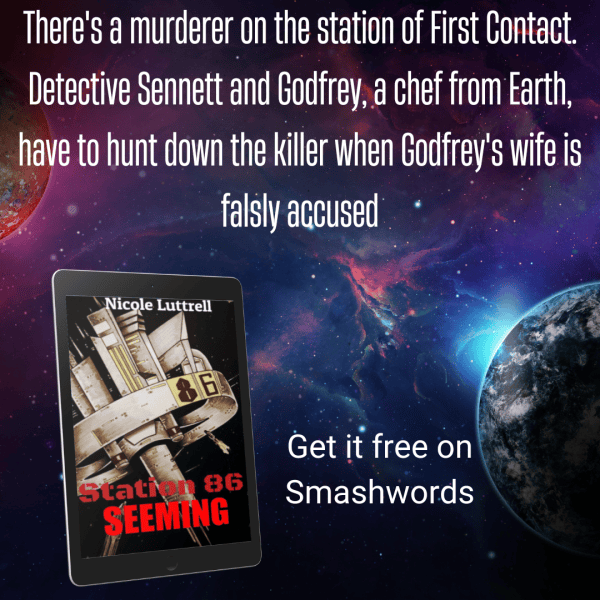
You can download Seeming right now for free on Smashwords.


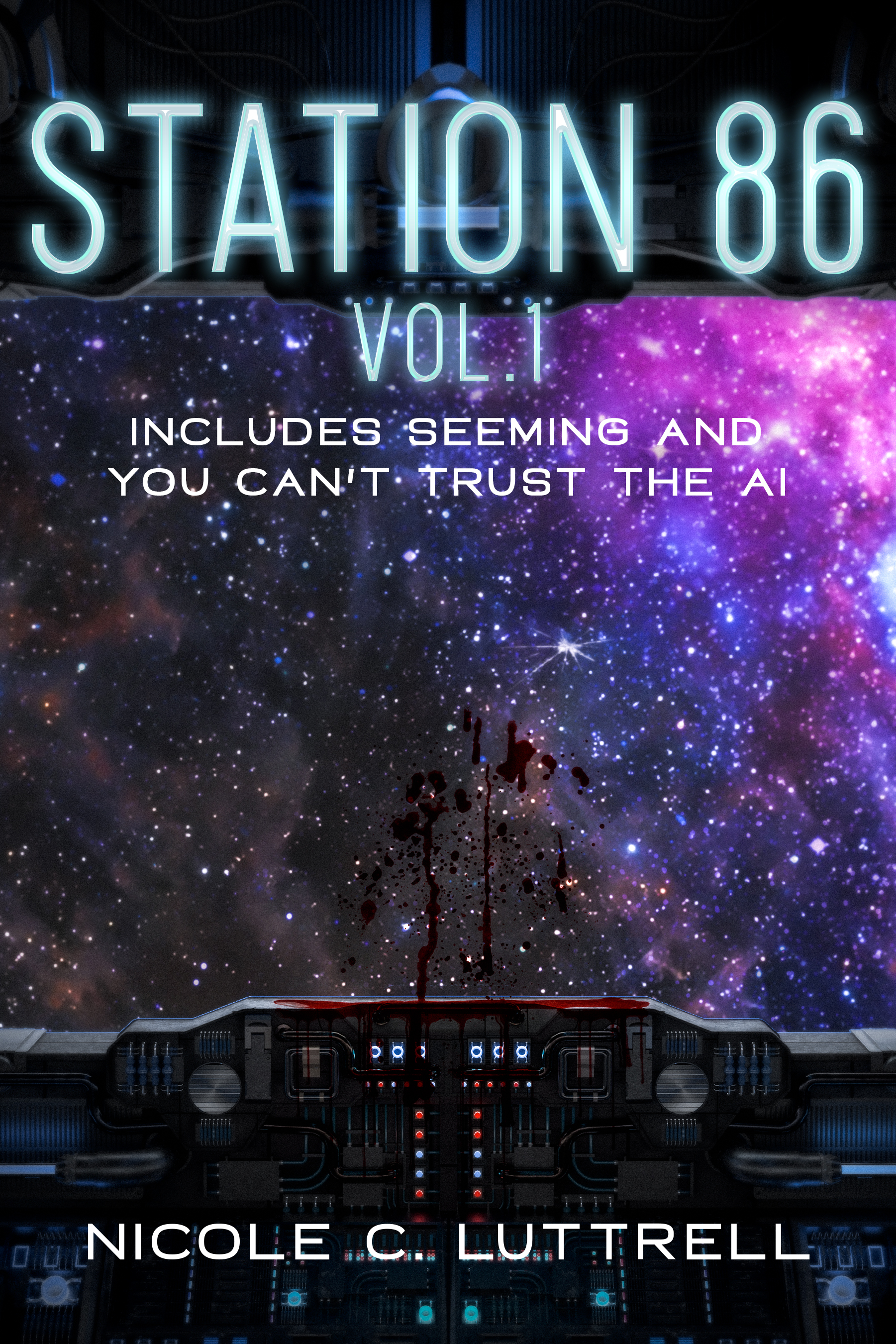
And, get Station 86 Volume One, in paperback for the first time, on October Second.
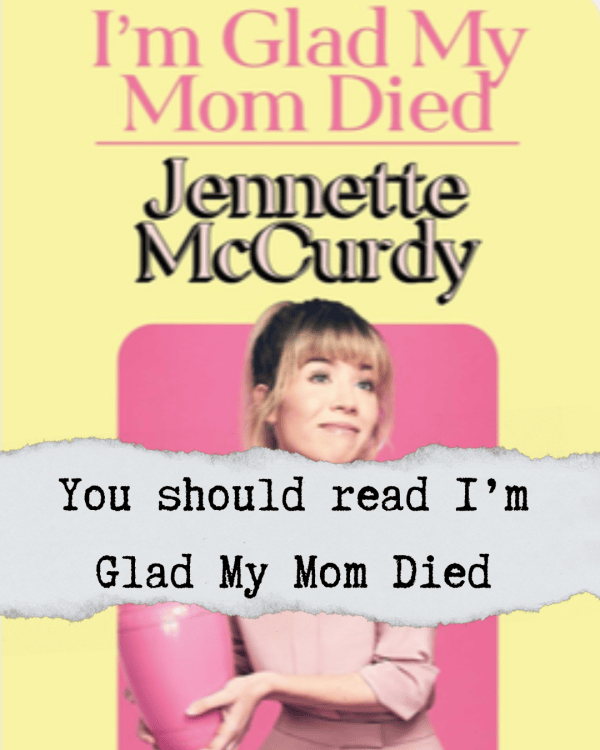
You should read I’m Glad My Mom Died

Usually, when I talk about a book here on Paper Beats World, it isn’t really a book review. It’s a review of what we, as authors, can learn from books. And I love doing that. Trust me, I’m not going to stop doing that.

However, there are books I want to talk about just for the story itself. Or, if I think it’s just a good book that more people need to hear about. So, sometimes I’m going to just talk about books I think you should read, and why I think you should read them.

Today, we’re going to talk about Jennette McCurdy’s memoir, I’m Glad My Mom Died. If you’re not already familiar, McCurdy is best known for her work as Sam on the shows iCarly and Sam and Cat.

Those shows were a fair bit after my time of Nickelodeon watching, though I have a few younger relatives that watched them. Enough that the damned theme song got stuck in my head more than once while listening to this book.

The audio version is read by Jennette, by the way. After listening to it, I think this is the superior way to experience the story. At least, if you want your heart to be ripped the whole way out of your chest.

As you can imagine, the book is about Jenette’s childhood. Or lack thereof, if we’re being honest. It was a dark, lonely, chaotic childhood. After reading it, I’m glad her mom died too.

You should read I’m Glad My Mom Died if-.

If you’re a former Mormon

I don’t know if Jennette’s still a member of the Church of Jesus Christ of Latter-day Saints. But she was raised in the church. In case you don’t remember, I was also raised in the church.

Actually, Jennette’s one of the few people I’ve ever heard of who experienced Mormonism in the same way I did. Let me explain.

Most people who are Mormon are very devout. It’s a high-control religion. You don’t miss church. And church is an all-Sunday event. I went to Church every Sunday with my grandma. I went to Young Women’s group on Wednesdays and Girls’ Camp in the Summer. There were Temple Trips and conferences. It’s a whole thing that everyone in the family is supposed to participate in.

My mother was not involved. She wasn’t a member of Relief Society. She constantly ignored the Word of Wisdom, drinking coffee and smoking. We always had caffeinated soda in the house, which was not allowed before Mitt Romney was caught sipping a Pepsi on the campaign trail. She was, for all intents and purposes, a non-practicing Mormon.

The same can be said of Jennette’s family. They went to church sometimes. They don’t seem to follow the Word of Wisdom. Her mother went frequently and got blessings from Priesthood Holders when she was battling cancer. But her consideration for church waned when she got healthy, and her daughter started her acting career. This leaves Jennette with a sort of religious psychosis that feels very familiar to me. The way she describes the Still Small Voice basically giving her OCD feels very, horrifyingly, familiar.

If your parents had mental illnesses

I don’t want to armchair diagnose anyone, but it’s pretty clear that Jennette’s mom was suffering from some mental issues.

I mean, I think anyone who forces their kids into acting has an issue. But this is something different.

Through the book, Jennette talks about her mom physically threatening her dad with a knife. She talks about her insisting on showering her children well into their teenage years. About how her mom essentially starved herself and still thought she was fat. How their house was a hoarder’s house, with rooms so full of things that they couldn’t even be used, and everyone slept on mats in the living room.

These are things that are hard for a child to understand. Even harder to experience. Why don’t they have a room like their friends? Why can’t they go to school? Why can’t they have a damned shower alone like a normal person?

It’s bleak. And if you lived through that, this book might make you feel less alone.

If you’ve suffered through an eating disorder

This was one of the hardest parts of I’m Glad My Mom Died.

Because her mom was obsessed with her body, and her desire to keep her thin and looking childlike for as long as possible, Jennette started calorie counting at a very young age.

This led to years of different eating disorders. Anorexia turned into Bulimia. I hated hearing this. I hated thinking of the young woman who played such a vibrant, confident character hating herself.

This is another situation that can feel isolating. Even though way too many people suffer from an eating disorder in America. Jennette tries to handle it herself. Then she talks to a therapist. But the first therapist doesn’t work for her. And it takes her a long time to find another one.

There’s a lesson here, though. So long as you’re still breathing, you can keep trying. If you’re currently suffering through an eating disorder, keep trying. Find the help you need. Try again. You’re loved; you deserve to eat and fuel your body. You deserve to stick around.

If you were personally horrified by Quiet On The Set

I mentioned earlier that I didn’t watch iCarly as a child.

I did watch All That, though. And a host of other shows that brightened some dark days.

I was kind of an indoor kid.

Realizing the abuse of the kids involved made me want to puke. It also made me want to do some things to some people in Hollywood that, for legal reasons, I shouldn’t type.

Jennette was part of that. Her co-stars were part of that. No kid should ever have to suffer through that sort of abuse. And yeah, I feel guilty because I was one of millions of kids who watched that show and made money for the abusers.

We aren’t to blame. We were just kids ourselves. But we owe it to these actors to understand what happened and do what we can to make sure it doesn’t happen again. I don’t like parasocial relationships, but I do think we can all do our part. For starters, be nice to child actors on social media and remember that they’re kids.

If your parents ever crushed your dreams, but you got them back.

As I mentioned before, I listened to I’m Glad My Mom Died. I did that for the most part in my kitchen while cleaning up or cooking. And since the weather’s started to cool, some of that time I had my windows open.

So my neighbors got to hear me actively cussing out Jennette’s mom.

As a child, Jennette wrote a screenplay. Maybe it was good, maybe it wasn’t. That doesn’t matter. She was a little kid, and she wrote a little screenplay. That’s great!

When she brought it to her mom, her mom was disappointed. She wanted Jennette to be focusing on her acting career. This line’s going to stick with me. Jennette’s mom told her. “You have a cute little peach butt. I hate to think of you getting a writer’s watermelon butt.”

Bitch, who do you think writes all these shows and movies for actors with their peach butts to be on?

My personal feelings aside, I hate the thought of a child having their dreams shot down by the adults in their lives. Most of the time it’s done out of misguided love. A desire to protect kids from the harsh realities of most creative careers.

And yeah, the reality is harsh. I sure as hell don’t make enough money to live on from my writing.

But that’s not the damned point! The point is that the kid had a passion. And if she’d taken all the time and energy she was committing to acting (which she didn’t want to do) and put that towards writing, she might have more than two books out by now!

That’s honestly the biggest takeaway from I’m Glad My Mom Died. And it’s why I really think you should read it. Jennette went through Hell. But she healed. It took years. It took hard work, and I’m sure it still takes hard work to this day. But she healed, and she got back to writing. She got back to herself. And we can too.

If you haven’t already, you should read I’m Glad My Mom Died. It’s dark, unflinchingly honest, and damned inspiring.

Paper Beats World is a labor of love. You can support us by liking this post, sharing it and commenting. You can also support us on Ko-fi.

Station 86 Volume 1 is coming! You can get your very own copy on October Second.

What I’m reading, Fall 2026

It’s not technically Fall until September twenty-second. But the pumpkin spice has been flowing on social media since the first. So, why not dive into my Fall reading list a little early? After all, I actually finished all the books on my Summer reading list, and early too. Currently, I’m reading Sisters in Hate by Seyward Darby and listening to I’m Glad My Mom Died by Jennette McCurdy. I’ll be reviewing that last one next week, but here’s a spoiler. I’m also glad her mom died.

So, here’s what I plan on reading this Fall. Hopefully with some sort of warm beverage and no one asking for my attention. And you can always follow along with what I’m reading on Goodreads.

Halloween by Silver RavenWolf

Can you believe I’ve never read a Silver RavenWolf book before? This one seemed to be the place to start.

This is a book full of recipes and spells for Halloween. It’s also got history behind certain traditions. I’m super excited to crack into this book and indulge in some crafts, both of the spell and glue stick variety.

Please Remain Seated by Marcus Kliewer

This is only being released in audiobook format. Which is quite fun, I think. This is a collection of short horror stories ranging from the sky to the sea, as the description said. It’s an interesting premise for a short story collection. And after being emotionally devastated by the last two books by this author, I’m super excited.

Mazywood by Tananarive Due

This appears to be a book about Black female rage, set in the present and the past. I am so here for it. Especially after reading (devouring) The Reformatory.

The grandson of a famous Black actress goes to her cabin and is presumably accosted by terrifying ghosts. This book doesn’t come out until the 22nd, and I cannot get my hands on it.

Building 903 by Lois Lowry

You know, the same Lois Lowry who wrote Number The Stars and The Giver, among others. This one is about twins who live in a safe and highly regulated dystopian future where everyone is ruled by tyrannical and faceless leaders, and reading is forbidden.

I don’t like how precient this is. But I hit that pre-order so fast.

The Rednexorcist by ‘Frank Sloane’

Actually, this is a novella by Grady Hendrix. I don’t know why he wanted to use a pen name for this one. Maybe it’s some contractual issue; who’s to say?

This looks like a fun romp through possession and wild ghost battles. I think this is going to be fantastic. Keep an eye out at Weird Wyrlds, where I’ll be reviewing it.

Mary by Nat Cassidy

I got this book in a Blind Date With A Book. And it took me a while to realize that, um, something is off with the cover.

Look close. When you see it, you can’t unsee it.

This book is about a woman reaching menopause, going through a lot of changes. Some of the changes might be homicidal. But you know, who’s going to argue with her?

How To Survive a Horror Novel by Mallory Arnold

This is another Blind Date With a Book surprise. And the copy I got has the cutest etching on the sides!

This book is about a group of horror writers summoned to the mansion of one of their own who recently died. Hijinks and murder ensue. How exciting!

The True Secret of Writing by Natalie Goldberg

You know I have to sneak in a Goldberg book in the Fall. This one started as a seminar that she gave, which I have never gotten to see because I’ve sadly not met her yet.

Yet.

I’m sure I’ll be talking about this book after reading it. I’m sure I’ll be learning a lot. And probably crying. She always makes me cry.

Mary Magdalean Revealed by Meggan Watterson

Did you know that Mary Magdalean had a gospel? And that the Catholic church has known about it for a very long time?

I’ve got a whole thing with Mary. I love Her. I honor Her. And as a Christian Witch, she’s a big part of my practice. Honestly, I’m kind of furious that so many of our female Christian leaders have been hidden from us. I’m willing to bet that this book is going to make me more furious.

11/22/63 by Stephen King

There’s just something about a good thick horror novel that just screams Fall to me. This one is a historical fiction about the tragic assassination of JFK. I’ve seen the mini-series. I’ve never read the book. I’m excited.

Now it’s your turn. What are you reading this Fall? Let us know in the comments.

Paper Beats World is a labor of love. You can support us by liking this post, sharing it and commenting. You can also support us on Ko-fi.

Station 86 Volume 1 is coming! You can get your very own copy on October Second.

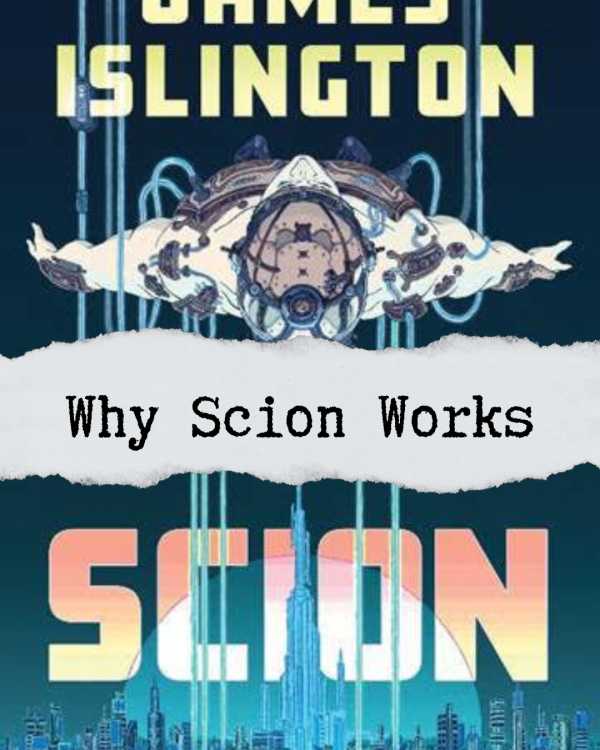
Why Scion Works

Is this post actually going to be on time? Oh my heavens, I don’t know who I am anymore!

Launching on September first, Scion is the latest novel by James Islington. He’s probably best known for his Hierarchy series, and this is his first science fiction book. I received an ARC from Saga Press. And it was a fantastic read.

Our main character is an assassin named Azure. He lives in a dystopian future where people have discovered how to live forever. Of course, that comes at a premium cost. So, rather than outlawing the practice, the people vote to make it legal to assassinate ‘Lifers’.

The allure of crowdfunding the legal assassination of a wealthy asshole is almost enough to make this book not so dystopian after all.

Azure is one such legal assassin. He’s one of the best at what he does, thanks in part to his extensive body modifications. So he’s surprised when he’s assigned instead to protect someone from assassination. He soon learns the reason he was selected for this task. And it’s life-altering.

So let’s break down Scion today, and see why it works.

The first scene is a masterclass

A scene should accomplish something. Maybe it’s to move the story along, give important information, or show us something about a character. The best scenes do multiple things at once. And the first scene in Scion is a perfect example.

We start right in with Azure penetrating the defenses of a target’s magnificent home. He’s face to face with a bioengineered monster and fighting for his life.

This is a great way to get the reader’s attention. It also introduces the reader to some of the advanced tech in this world. On top of that, it introduces us to Azure, his remarkable abilities, and his delightfully sarcastic personality.

Well done, all around.

The world is vast

We only see so much of Azure’s world. In fact, it feels like we’re just looking through a keyhole into a limitless universe. You just can’t see everything there is to see.

There is so much wild technology. So much culture, music, food, drugs, and people! And we just don’t get a lot of details about any of it.

The detail we do get is astounding. It alludes to a deeper, more complex world.

I love when authors do this. It’s something I’m trying to learn. You don’t have to give all the details when you’re worldbuilding. I mean, you can if you want to. Some writers really love that sort of thing. But if you give just enough detail, the reader’s imagination will usually fill in the rest.

The main character was likable.

I liked Azure. He was bitingly sarcastic, professional, and weirdly respectful.

All of this was strange for an assassin. But then, assassinations are legal. So maybe that helps.

I love that he’s kind and respectful, even when murdering someone. I love how well he stands up for his boundaries. He clearly cares about the people in his life, even if distantly. And he always wants to do the right thing.

Even if he’s murdering people.

I think it’s important for a character to have a set of moral standards they adhere to. Even if they aren’t exactly ones we agree to. And Azure has those moral standards. They make sense for the world he lives in and his place in it.

Well done.

The ending!

Finally, I want to talk about the ending, without giving it away. Because it’s interesting.

At the end of the story, Azure is faced with a choice. I think that readers might disagree as to which choice he should make.

I know which choice I would make. But, well, it isn’t as simple as that, is it?

It’s an ending that leaves the reader with questions. But good ones. It also leaves this world open. If Islington chose to write more in this world, I think he easily could. I also think he should. I’d certainly read it.

Overall, Scion was a fast-paced story that invites readers to play along and fill in the blanks themselves. It’s witty and fun. I’d certainly recommend checking it out when it releases on September first.

As though we need another reason to count down the days to September.

Paper Beats World is a labor of love. You can support us by liking this post, sharing it and commenting. You can also support us on Ko-fi.

Station 86 Volume 1 is coming! You can get your very own copy on October Second.

The weight of a woman’s pen

“I’m a writer. I don’t cook and I don’t clean.” Dorothy West.

When I was a kid, my grandmother had a hysterectomy. I don’t mean when I was a teenager. I mean when I was a kid, like ten. And my mother sent me to stay with her for a week during my Summer vacation to take care of her. When my mother had a hysterectomy a few years later, I took care of her, too.

My writing has always come after caring for someone or something. I’ve written while potatoes boiled, at laundromats, while in doctors’ waiting rooms and on the public bus. I’ve gotten up early to sneak in writing before anyone would need me.

I have always had weight on my pen. Weight that many women probably find quite familiar.

This won’t be news to most of you, but women’s aspirations are often put on the back burner. We work our passions while babies nap, while water boils and meatloaves bake. We are often the default caregivers of children, parents, and in-laws. So if we are to write, we’ll do so once everything else is done.

This happens to me all the time. As you might know, my Darling Husband had a stroke about a year and a half ago. He is physically and mentally disabled. He needs care, some days more than others. So writing often comes in stolen moments. I barely wrote the first year after his stroke; I just didn’t have the time or energy.

Men don’t seem to have this problem. Or, I should say, men are less likely to have this problem. Lots of modern men are good at this. If you’re a man and you do an equal share of the housework, make your own doctor’s appointments, take equal care of your kids and elderly relatives, and pick up after your damned self without needing a list, that’s awesome. You’re a competent adult, and we love to see it. I’m kind of assuming that if you’re a man and you’re reading this, you are in fact one of these competent adults because I generally assume my readers are wonderful people and I love you all.

Let me tell you, though, that is not always the case.

One of the most galling things about the division of homecare is hearing some (not all) creative men talk about their partners. And, I hate to say it, but the first one that comes to mind is my man, my hero, Stephen King.

In his book, On Writing, he talks about his wife, Tabitha. And he obviously adores her. He makes it clear that he was only able to write while they had three little kids and they were both working because she was picking up the slack around the house. However, he points out that she had writing aspirations as well.

Well, fuck that! Tabitha King is an author. She’s been a published author since goddamned 1981 when her novel Small World came out. And I only found that out literally five minutes before writing this sentence because I looked it up! She’s published eight novels! On Writing came out in 2000, at which point Tabitha had already published seven of her books. And he sure didn’t mention that!

Stephen wrote novel after novel while working full time and doing a shit ton of coke. She wrote novel after novel while working, raising children, caring for a house, and dealing with her coke-addicted husband. Not to mention being incredibly supportive of his career. Put some respect on her damned name!

Over and over I hear men in the writing field talk about how much they depend on their spouses so they can write. I don’t often hear women say the same thing. Yes, some husbands fit that supporting role. But more often you hear men talk affectionately about how much their wives support them, without sparing a thought for how they can support their wives back.

Even so, the weight on the modern woman’s pen isn’t as heavy as it used to be. Consider Shirley Jackson, one of the greatest horror writers of all time. We all know the sort of marriage she had. Imagine what she might have done if her pen were a little lighter. If she’d had someone to cook dinner and look after the children. What might we have seen from other famous women writers? How many more amazing works would we have if women didn’t have this extra pressure on their time?

This needs to stop. This pressure needs to be removed. We need our pens to be lighter. But if that’s to happen, we women need to start having some real conversations with our partners, and with each other. In that spirit, I want to speak directly to my fellow women right now.

If your partner isn’t sharing in domestic labor, it might be time to have a real conversation with them. That’s going to look different for every couple. But it’s better than doing all the work and growing resentful that your own dreams are being buried under laundry and vacuuming.

We also need to stop posting these dumb, weaponized incompetent videos of men. It just encourages other women to put up with bad behavior because ‘all men are like that’. The fuck they are. My husband is half paralyzed, and he still helps out around the house to the best of his ability. My roommate is twenty-four, and he does equal parts of the housework.

Now, let’s also talk about how we talk to and about ourselves and each other. We do not have to have perfectly clean houses. We don’t have to make meals from scratch every night. We don’t have to have everyone over for holidays, cook, clean, and be perfect hostesses. We can ask for help from our families. We don’t have to take care of everyone. We shouldn’t expect perfection from ourselves. And if you have friends or family members who expect that perfection from you, maybe that’s not your problem. Maybe it’s time to respectfully tell your mom, sister-in-law, or judgy friend to go to hell.

This is something I’ve really struggled with. Especially since my husband’s stroke.

This is about to get real real here, so please be kind.

For the first few months after my husband’s stroke, I barely slept, let alone wrote. He needed almost constant care. He couldn’t sit up, couldn’t feed or clean himself. I didn’t leave the house for more than fifteen minutes for months. I was scared to take a shower with the door closed. I was terrified to leave him alone.

People offered to help. To sit with him. To run errands for me. And I would just say that I was fine. I had it covered. Because I did have the necessary things covered. He was clean, fed, and cared for. The house was put together.

But I wasn’t writing. Hell, I wasn’t reading. I could barely let him out of my sight.

Then, I did something drastic. A friend needed a roommate. I needed help. So we moved in together. I let other people stay with my husband. I let other people cook and clean. We’re talking about hiring a housekeeper. I stopped doing every single thing for my husband, and only stepped in when he actually needed help.

More than all of that, I’ve come to accept that the house might just be a mess. And that’s okay. It’s not a moral failing. Right now as I write this, there’s a massive pile of clothes that need to be folded and put away. There are dishes in my sink. The lawn needs mowed. I’ll get to it, or someone will. My writing comes first.

It’s time to take some weight off our pens and see what we can really do.

Paper Beats World is a labor of love. You can support us by liking this post, sharing it and commenting. You can also support us on Ko-fi.

Station 86 Volume 1 is coming! You can get your very own copy on October Second.

Station 86, the physical book!

Earlier this year, Grady Hendrix announced that he wasn’t coming out with a new book until 2027. As he usually graces us with a book a year, this bothered him. So, he published a novella under a pen name across the pond. That novella is called The Rednexorcist, published under the name Frank Sloane.

Yes, I ordered a copy. Yes, I’ll be reviewing it on Weird Wyrlds. (And by the way, I just reviewed Dead But Dreaming of Electric Sheep by Paul Tremblay. It’s a fun review, and a very fun book.)

I don’t have a novella to publish. I don’t have a novella written right now. And while I could write one, this would only delay the launch of the book I’m writing right now. And since I’m still working on the rough draft, I don’t really care to delay it any more.

Instead, I’m doing this. I’m launching Station 86 in physical form for the first time.

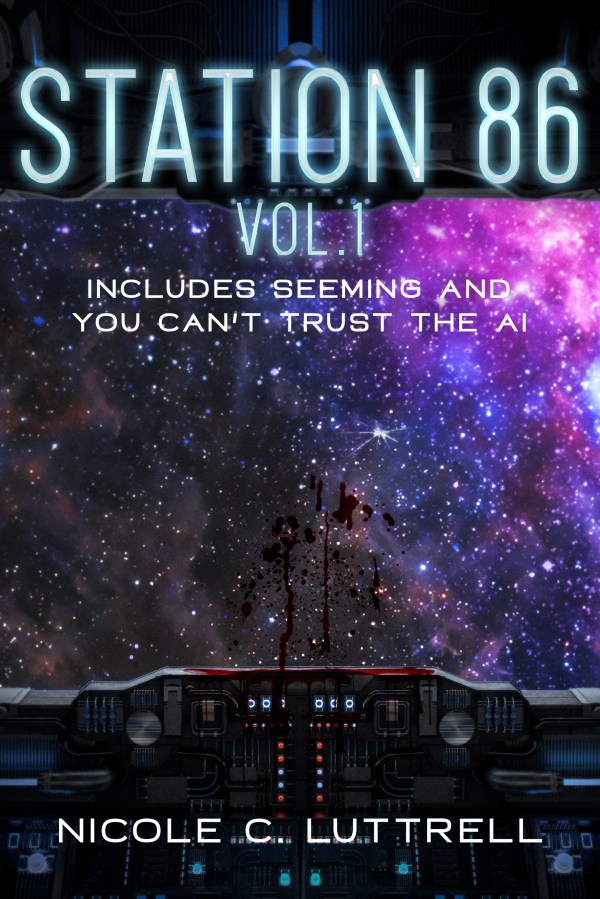
Now, I love a good physical book. My overly burdened bookshelves will tell you that. But Station 86 has always been, except for book five, a collection of novellas. So, of course I didn’t want to ask you all to buy a novella for physical book money. So, I’m putting them together. Seeming and You Can’t Trust The AI are coming out in Volume 1 on October second. Volume 2, which will include Virus and Station Central, will come out in February of 2027.

(Unrelated spoiler: that might not be the only release in 2027. Stay tuned.)

Eventually I hope to release an audiobook version as well. But I might need to get Kickstarter involved with that one, since I will not be using AI and will hire a voice actor.

I want to thank all of you for sticking around while I write new books. And while my posts have been super late. This year has been busy as hell, launching a new site and helping the Darling Husband recover from his stroke. But so far, it’s been a decent ride.

Stay tuned.

Books are books

Books are my favorite thing. I guess that isn’t a huge reveal. I love books. I love reading them, writing them.

Smelling them.

I love having a physical book to read, then display on a shelf like a trophy. Honestly, right now my favorite thing is swinging in my hammock and reading my way through my Summer reading list.

Recently, someone on Instagram said that they love cat people. Because cat people don’t just love their cat to death. They love your cat to death. They love street cats to death. They love all cats to death. That’s how I feel about books, and avid readers. (And cats.) I love everyone who reads. I love all books. But, apparently, this isn’t a universal opinion. I’ve seen far too much infighting among my book peers about things that, honestly, shouldn’t be argued about. So today I want to let you know where I stand in the literary world. I don’t think anything I’m about to say is a hot take. But it’s the internet, after all. Let’s see what happens.

Ebooks are books

My preferred method for reading is a physical book. That being said, I have read e-books and will continue to do so. Sometimes it’s easier. Sometimes the book isn’t available in print yet. Sometimes I don’t want to take several books on vacation. Sometimes the book came out, I forgot to preorder it, and I have to read it right now. Either way is valid. It’s still a book, on screen or on paper. It’s just like preferring mint toothpaste to cinnamon. Your teeth still get clean.

Audiobooks are books

This is another thing I am shocked I have to argue. Listening to an audiobook is still reading a book. I don’t know about you, but I want to read a lot of books. And I have shit to do that requires my hands. So if I can listen to a Grady Hendrix book while doing the dishes, weeding, or formatting a damned paperback, then I’d like to do so.

I’ve seen people putting down audiobook readers online. And it’s got to stop. We don’t all have the time to read as much as we want. Some of us (hi) are reading for work as well as recreation, and we need to get through some pages. And there are people with disabilities for whom physical reading is a challenge. There should be no barriers to enjoying a good story.

Comic books are books

I have always had a rather advanced vocabulary. This started when I read Calvin and Hobbs as a child. This led me to fall in love with comic strips. And I still love them. Snoopy, Cathy, Garfield, Girls With SlingShots, Squid Row. Comics were one of my first passions.

I do not understand why people will look down on comics as being cheap kids’ entertainment. They’re a great introduction to the fact that, hey, reading is supposed to be fun. There are heavy graphic novels, like Maus. There are fantastic adventures, like Bone or Wonderland. These are good stories. They promote literacy and a passion for reading. Also, they’re just fun.

Nonfiction and fiction are books

I read fiction and nonfiction. I do not understand people who read only one or the other. What, you don’t want to learn something? You don’t want to experience a good story? And even if you have a particular preference, why would you enforce that on everyone else?

Honestly, if you find that you read a lot of one or the other, I would encourage you to branch out a bit. My reading list has been really fiction-heavy this year. I need to fit some nonfiction in.

Genre books are books, and so are literary books

This one’s similar to the last two, if we’re being honest.

If you’ve read On Writing, then you know that Stephen King was once asked by a teacher why he wanted to write trash. By trash, she meant a ‘novelized’ version of a movie he’d seen. The answer didn’t come to him then, and he says there’s still a little part of him ashamed of it.

Genre fiction tends to be frowned upon by literary snobs. At the same time, literary fiction tends to be frowned upon by people like me, who believe in telling an entertaining story that damned well goes somewhere.

I kid. Actually, I enjoy writing some literary short pieces, just playing around with words. Evoking emotion, creating art. It’s fun.

But if you don’t think that genre writing can feel like literary writing, you’re not reading the right kind of books.

Books I don’t like are still books

There are lots of people in this world who enjoy some truly terrible books. Just awful. And there’s just no accounting for taste. I have DNF’d books that got glowing five-star reviews. I’ve devoured books that others couldn’t stomach. Honestly, there are whole genres I can’t stand. For instance, I’ll never be a romance girlie. But that doesn’t mean I’m going to talk shit about the romance girlies. Those are still books, and they still give people joy.

So here’s the main point. Books are books. It doesn’t matter how someone is reading. Reading is always worth it. It’s always a good choice.

Live and let read, everyone.

The best books of 2026 so far

It’s July, and the year is half over. The days already grow shorter, the nights (slightly) colder. So it’s a good time to stop, take a beat, and see where we are for 2026.

Because it’s been a hell of a year already, hasn’t it?

2026 has brought with it some surprises. Most of which have been bad, but a few have been good. One thing I didn’t plan for was the influx of new (to me) writers that I would discover. People who were not on my radar or my insta buy list before this year, but are working their way there now.

A lot of my reading this year has been horror. You can read my reviews of many of these books over on Weird Wyrlds. But, for the first time, a book of poetry snuck its way into the top ten.

So let’s get into it. Here are the top ten books I’ve read so far in 2026, rated from 10 to one. As always, I’m not going to go into a ton of detail, because I’ve already reviewed all of these books.

The Fox and The Devil by Kiersten White

This was the sapphic vampire murder mystery love story I didn’t know I needed. But my goodness, reading this book while sipping red wine was one of the highlights of my year.

Rainshadow Orphans by Naomi Ishiguro

This was such a cute book. Okay, it was a cute book about political uprising, dark magic, gruesome murders, and class warfare. But it also had bubble tea, cats, and sun spirits. So, overall a super cute read. Even better, it’s the start of a trilogy. So please join me in waiting for the next one.

The End of the World As We Know It by misc authors

Have you ever read The Stand by Stephen King and thought, man, this book could easily have been 800 pages longer? No, just me? Well, for the first time, King opened up one of his worlds for other authors to play in. This book is a collection of stories in the world of The Stand by some fantastic writers. Go check it out. And avoid the Walking Dude.

Can You Sign My Tentacle by Brandon O’Brien

I heard one of O’Brien’s poems read by the man himself at a Nebula conference. And it was fantastic. I’d never read a whole book of speculative poetry before. But now, I’m hooked.

Year of The Mur by L.D. Lewis

For someone like me who loved The Little Mermaid as a child and now realizes how dumb Ariel was as an adult, this book was fantastic. And, again, it’s the first of two.

The Caretaker by Marcus Kliewer

Imagine being broke. Well, chances are you don’t really have to imagine that. But imagine being offered a house-sitting gig for the weekend for an exorbitant amount of money. But it comes with weird rules.

This book is a textbook example of actual obsessive-compulsive disorder. To say it was unsettling is an understatement.

The October Film Haunt by Michael Wehunt

The past always catches up with us. Part slasher thriller, part paranormal mind fuck, this book had me looking over my damned shoulder.

The Republic of Memory by Mahmud El Sayed

This is a fantastic political story, told from various points of view as a generational ship has to ask whether their living citizens are more important than those in cryostasis. The question is complicated, and so is the book.

I know a place by Nat Cassidy

This was a collection of short stories. And every one was better than the last. One, Laughlines, has stuck with me the most. Ugh, the visuals in that one. It will haunt you in the best way possible.

The Reformatory by Tananarive Due

This is the best book I’ve read all year by far. It’s the kind of book that you read and then have to sit with. I mean, I was bawling.

This is a historical fiction about a twelve-year-old Black boy who’s sent to a reform school after kicking the son of a wealthy landowner. He soon finds out that the school is haunted by boys who never left. The ghosts are fiction. The abuse described in the book is accurate.

Read this one in the Summer heat. It’s a whole experience.

Alright, now it’s your turn. What are the best books you’ve read so far this year? Let us know in the comments.

Paper Beats World is a labor of love. You can support us by liking this post, sharing it and commenting. You can also support us on Ko-fi.

My 2026 Summer reading list

I am really trying so hard to get into Summer this year. I got a pool and a hammock. I made a Summer playlist. I’m making ribs and pasta salad for Litha. I’m really, honestly, super excited to experience the next 73 days.

Yes, I’m counting.

But alright, we’re here. It’s Summer. And since I can’t speed it up, I’m going to do what I do best.

Read. In as many places as possible.

So, of course, I’m starting the season out by sharing my reading list. Some of these are coming out this summer. Some are nostalgic re-reads. Some I just found out about during Nebula Con. All of them should help me enjoy the sunny season.

Dead But Dreaming of Electric Sheep By Paul Tremblay

I know, this one was on my Spring reading list. But that’s because I somehow didn’t realize it launched on June 30, not May 30th. And it still looks awesome! Digging into the morality of bodily autonomy in a dark science fiction novel? Of course, I want to read that.

The Intrigue By Sylvia Moreno-Garcia

I’ll be honest, I didn’t even read the description of this one before I pre-ordered it. That’s because Moreno-Garcia is on my Insta Buy list. And this one is about a Casanova thief who’s apparently going to run into some supernatural trouble. I can’t wait.

Also, I love that her books come out so regularly that they’re basically a Summer staple for me.

Deadly Little Lessons By Danielle Valentine

Another author you’ve probably heard me sing the praises of. I’ve yet to read a book of hers that isn’t fantastic.

This one is about a girl who ends up in a school where most of the students won’t survive the classes. So, fun!

The Reformatory By Tananarive Due

I found out about this book, and the next one on the list, during a Nebula Con panel about horror writing as resistance. I ordered these two books before the panel was even over.

The Reformatory is about a young boy named Robbie who’s put in a correctional facility for doing something that sounds like it needed to be done. Of course, the facility turns out to be terribly haunted.

The Curse of Hester Gardens By Tamika Thompson

The second book purchase, inspired by the panel, The Curse of Hester Gardens, is about a neighborhood haunted by gang violence, drugs, and the unquiet dead. It’s about a mother trying to protect her children, who may have made a terrible decision.

Fright Time Books by various authors

Alright, this one might sound strange. But Fright Time books were a big favorite of mine as a child. I recently did a whole nostalgic review of Shivers over at Weird Wyrlds, and thought it might be fun to do the same for Fright Time.

It’s also just a great reason to revisit some of my horror roots.

Not With A Bang By Temi Oh

This is an arc I’m expecting from Saga Press. It’s a fascinating-sounding book about the end of the world and how people respond to it. I am super excited to get my hands on it and tell you all about it.

SCION By James Islington

Another Saga Press arc, this one is about an assassin who’s never had any qualms about their job, until this most recent one. And, of course, he lives in a world where the rich can literally live forever.

Small detail.

The Children By Melissa Albert

Funny story. This is a late addition to this list, because I literally learned about it while checking Goodreads for book information.

Thanks, Goodreads.

This book is about a woman and her brother who had their childhoods kind of ruined by their mom’s invasive storytelling. Now, there’s something dark and terrible haunting them. The cover doesn’t seem to reflect the horrors that the reviews promise.

I need like five more sets of eyes to read all the books I want to right now. But I also want to hear from you! What are you reading this Summer? Are you loving the Summer weather or counting the days to fall like me? Let me know in the comments.

Paper Beats World is a labor of love. You can support us by liking this post, sharing it and commenting. You can also support us on Ko-fi.

Why We Hexed the Moon works

Do you remember a few years ago, when some young witches on TikTok decided they were going to hex the moon? I remember mostly shaking my head at silly kids doing silly things because they were cooped up during Covid. Being a practicing witch myself and quite fond of the moon, I was mildly irritated. But in the end, I didn’t think the moon really cared that much.

Someone else remembered the moon hexing. That someone was Mollyhall Seeley. And rather than just shaking her head, she asked the question I think more of us should have asked.

What if the hex had actually worked?

We Hexed The Moon launched just a few days ago, on June 9th. I received an arc early from Saga Press. Unfortunately, Spring and Summer being what they are, I didn’t get to it when I meant to. But when I did get there, it was well worth the wait.

We Hexed the Moon is the story of four girls who have just graduated from high school. They’re looking down the barrel of the rest of their lives, and getting ready to go their separate ways come September. During a bored, hazy sleepover, they decide to hex the moon. Not for any reason except for something to do. And the Moon, well, she takes that personally. So she comes down to confront the girls.

Because that’s a normal thing to happen.

So today, let’s break down We Hexed The Moon, and see why it works.

Do you remember when your friends were the only family that mattered? When there were people in your life who were simply yours? Not related by blood, but related in every way that mattered?

Adults move away from that. We get married. We move away from our hometowns. We have kids. Life gets in the way. And suddenly we realize it’s been months or even years since we talked to the people who we used to see every day.

We Hexed The Moon is, before anything else, the story of four girls who are facing that down. Who love each other enough to not want to let go, but are realistic enough to realize they probably won’t have a choice. Hexing the moon is, to these girls, just another memory they’re trying to make together before life tears them apart. And if that isn’t relatable as Hell, I don’t know what is.

Of course, the real inciting incident of the story is when the Moon decides to come down to Earth and not go back. She appears, personified, in Jen’s bedroom.

And she’s funny as hell.

The Moon character is so bitingly sarcastic. She knows everything about everyone, because of course, everyone tells their secrets to the moon.

She also has a touching maternal streak for, honestly, everyone. We see this the most when she’s confronted with the dead body of a young woman who had a drug addiction. She reacts with such tenderness for this person; it’s heartbreaking.

One thing I was a bit unsure of about We Hexed The Moon was the utter lack of punctuation. No one’s dialogue is in parentheses. And sometimes this run-on story structure made it a bit hard to tell who the hell was talking.

However, it also felt more like a story someone was telling you, rather than a book you’re reading. Like you’re sitting in a booth at the diner with Jen, Maycie, Goldie, and Harding, just one of them for just as long as it takes you to finish the story. So while I don’t entirely love the lack of proper sentence structure, it makes sense. Much like Incidents Around The House, it’s hard to see the story being told any other way.

In the end, I feel like this is the sort of book that captures a specific moment. A place in time we all had our own version of. It’s the friends we all had, that we all knew we were going to lose, no matter how much we assured each other that we’d be friends forever, going on one last amazing adventure.

Paper Beats World is a labor of love. You can support us by liking this post, sharing it and commenting. You can also support us on Ko-fi.

A WordPress.com Website.

Up ↑