On May 21st 2026, CBS aired the last episode of their historical late-night talk show, The Late Show. First hosted by David Letterman from 1993 until 2015, the show was taken over by Stephen Colbert from then until, well, last Thursday.
I didn’t watch this historical moment when it aired. I watched it on YouTube earlier today, because I generally stream TV shows the next day instead of watching them when they’re aired. I have work in the morning, after all. Most of us have work in the morning. About the only thing I watch live anymore is sporting events, because it’s impossible to avoid spoilers for something like that, and watching a game isn’t fun if you know who’s going to win.
(Congratulations, by the way, to the PWHL Victoire on winning their first Walter Cup.)
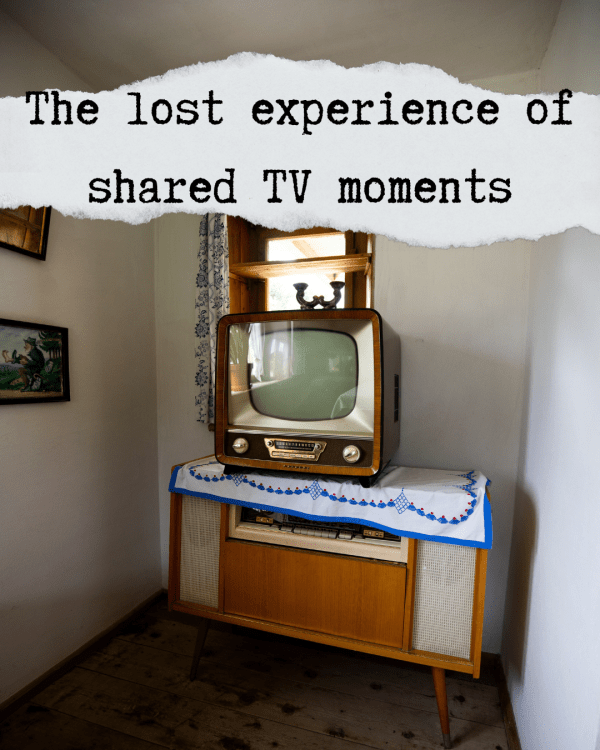
I know that I’m not alone in this. Most people my age and younger don’t watch anything live. And if you are younger than me, born after the time when live TV was the only option and cable was for rich people, that might be hard to comprehend. To watch anything, you had to be at home in front of your TV at a certain time. If you had to go to the bathroom or grab a snack, you had to do it during the commercial break. There was no rewinding or pausing. If you missed something, you missed it until that episode was rerun or you bought it on VHS or DVD. If someone else in the house wanted to watch a different program on a different channel at the same time, you had to either have two TVs or have a fight.
This change in how people watch television is one excuse CBS gave for cancelling The Late Show. It’s not financially viable anymore, they claim. As though somehow they make less money on streaming ad revenu as on cable ad revenue. Come on with that, CBS, who do you think you’re fooling? We all know why you did this, you wretched cowards.
That being said, streaming television is a different experience from watching programs live. As writers, we owe it to ourselves to understand the shifting mediums in which people consume content and stories. First, let’s look at what we’re losing as live TV watching goes by the wayside.
Watching live TV requires us to be present. Not trying to do two things at once. Not scrolling social media. We had to be there when it was on.
There are issues with that, I know. And we’ll get to those in a moment. But it’s hard not to think back nostalgically about a time when, if we wanted to see our favorite show, we had to stop whatever else we were doing.
We had to stop.
Live TV events brought people together in a way that’s hard to explain if you haven’t experienced it. Yes, I remember where I was on September 11th. I remember where I was when I found out Trump was elected. But I also remember good things!
I remember watching the last episode of Friends with my mom, and 52.5 million other people. I remember watching the first Who Shot MR. Burns episode in May of 1995, and having to wait until September to find out. (Yes, I was watching The Simpsons at age nine. Weren’t you?)
This isn’t unique. Actually, the Friends finale audience is laughably small when compared to the number of people who watched the last episode of M.A.S.H in February of 1983. 121.6 million people tuned in for that. I bet if you ask someone who was around during that time, they’ll tell you about watching it.
These touchstone moments are significant. These are moments when massive amounts of people cared so much about a story, about a fictional world full of fictional characters that people poured their creativity and passion into creating, that they all had to see how it ended.
Imagine writing something that was that significant to that many people. And for those of you who hadn’t experienced this, imagine the significance of experiencing a story that so many other people are experiencing at the same time.
All that being said, I don’t want to be the old woman yelling at clouds here. I am more than aware that streaming content is the default now for a reason. As exciting as it is to experience television as a group, it’s far more accessible for far more people. Life is not so busy that we can’t take an hour to enjoy a good story. But that hour we can take is going to be a different hour for all of us. I can’t stay up until 11:00 to watch American Horror Story on a work night. I can’t plan dinner and chores around TV watching. And, if I might put my feminist hat on for a moment, there’s about half the population that doesn’t have the ability to just stop cooking, taking care of babies, and running a household to watch TV when it’s airing.
Life happens. People get sick, have to work late, get busy, get invited on dates, and go on vacations. Life doesn’t just stop, and in fairness, it shouldn’t. Personally, this is one reason why I consider books to be the superior way to consume stories. I might always have time to sit down and watch a show. But I can usually sneak in some reading time or listen to an audiobook.
Speaking of books, I actually love how advanced storytelling has become on television. I’ve always felt that people who look down on television as a storytelling medium are missing the point. Stories are stories. But, television shows that adhere to traditional airing time constraints run into problems. Stories had to fit neatly into twenty-two or forty-five minutes, give time for commercial breaks, and fit into specific season lengths. Shows had to add filler episodes, bottle episodes, and even clip shows. A great example of this is X-Files. You had ‘moster of the week’ episodes, and storyline episodes. And God help you if you missed a storyline episode. You’d better hope they re-run it, or that a friend was good at remembering details.
But with those constraints taken away, storytelling can fit into the size and space it needs. Consider shows like The Boys or Stranger Things. These shows were designed for streaming platforms. The episode lengths vary based on storytelling needs and not advertisers’ schedules. They also do away with filler episodes. Every episode is essential to the plot. And they can do that because it’s almost impossible to miss an episode.
So what’s the takeaway here? Are we losing more than we’re giving up? Well, as nostalgic as I am, I don’t know that we’re losing more than we’re gaining. I think the more ways we can share stories, the better. And while my nostalgic little Millennial heart might pine for a big TV show experience, I think the ability to fit stories into the little peaceful moments we have through our days is incredibly beneficial. Assuming that everyone can watch TV at the same time is assuming that we all have the same sorts of days. And that’s not true now, nor has it ever been. Streaming content evens out the game. Just because we can’t all play at the same time doesn’t mean we shouldn’t all get a chance to play.
But this is all just my opinion. I’d love to hear your thoughts on it. Is there a big TV moment you remember? Let us know in the comments.
Paper Beats World is a labor of love. You can support us by liking this post, sharing it and commenting. You can also support us on Ko-fi.


Recent Comments