If you love stories about ghosts, dragons and aliens, come in.
Author: Nicole Luttrell
I'm a speculative fiction writer. That means I write about dragons, ghosts and spaceships. Sometimes I write about the ghosts of dragons on spaceships.
As a witch, Practical Magic by Alice Hoffman is required reading. I’ve of course seen the movie countless times. But I only recently cracked into the novel.
It was a far different journey than the one I was expecting. I’m not the only person to mention this, but the movie is far different than the book. Normally when this happens, one or the other is more enjoyable. Most of the time, like with the Giver or Hunger Games, the book is better. On rare occasions, like with Forrest Gump, the movie is better. But in the case of Practical Magic, both are great. Just in very, very different ways.
First, let’s discuss what the two have in common. Both are about two women, sisters named Sally and Gillian Owens. After their parents die, they’re raised by their aunts. Gillian, the wild child, runs off as soon as she’s old enough. Sally finds a good man, has two baby girls and is widowed when the girls are still little. Then Gillian brings back trouble, in the form of an abusive boyfriend she accidentally poisoned. When a detective named Hallet arrives, Sally and Gillian try to hide their homicide. But soon Sally finds herself falling in love with him.
The movie, on the off chance you’re one of three women in the world who hasn’t seen it, is a feel-good film about sisterhood. The townswomen have hated the Owens family for generations. But in their time of need, they come together.
The book isn’t that sort. Sally Owens, after being ostracized her entire life, decides to leave. This is after her husband died, and she spent a year in a depressive fog.
The book is a bit more episodic. Yes, Gillian does bring her troubles and her abusive boyfriend to her big sister for help. But then the two bury him in the backyard and go about their lives.
Their lives revolve largely around raising Sally’s daughters.
And this is where the book shines.
Sally and Gillian fight over how to live their lives and, by an extent, how to raise the children. Gillian undermines Sally’s parenting, and Sally in return blows up at her.
The girls bicker like teenagers, fall in love with boys, and are threatened by drunks. It all feels real. It all feels like the lives of girls all over the world right now.
The same can be said for Sally and Gillian. They’re both struggling with the fact that, despite The Aunt’s best intentions, they never felt wanted. Sally handled that by growing up to fast. Gillian handled it by not growing up at all.
In the end, though, The Aunts prove that they love the sisters more than they ever realized. They come to their aid, after years of neglect by both girls, might I add.
I know I keep saying this, but it all feels so real. And through it all, we see notes of magic that feel attainable. It feels, in short, practical.
In short, here’s why Practical Magic works.
It’s honest. That’s it. The book talks honestly about depression. It talks honestly about a woman’s relationship with her parents, her sister, and her daughters. It talks honestly about romantic relationships, both good and bad. It talks about loss, and it doesn’t sugarcoat a damn thing. Sometimes Sally and Gillian are just fucking mean to each other. Sometimes they do stupid things. Sometimes Sally isn’t a good mother. Sometimes the girls are also fucking mean to each other. And I love that none of them are right all the time, none of them are wrong all the time. They are, only and entirely, family.
I loved this book, and I’ll be reading it again soon. I hope that if you haven’t read Practical Magic, you do soon. Because it works.
Paper Beats World is a labor of love. If you’d like to support this blog, you can do so on Ko-fi.
Note: I’m going to be going into one big spoiler for the latest season of Stranger Things in this post. If you haven’t seen it yet and you plan to, maybe click away and read this later.
This title is inspired by an issue of Transmetropolitan. In it, the main character was talking about a boy his assistant was dating. He said the boy wasn’t planning to stick around. He was here to go.
There are times when writing that we’ve got to kill someone. Not for real, hopefully, but on the page. Maybe this doesn’t have to happen in all books, but it happens in all my books.
In speculative fiction, not everyone’s getting out alive.
In some cases, you might want to write a character that you know you’re going to kill off. Maybe to bring the team together, like in Avengers. Maybe to clear the way to a throne, like in Tamora Pierce’s Tricker’s Queen. Maybe just to make sure that the battle costs something, like in the latest season of Stranger Things.
Knowing that you’re writing someone that isn’t going to make it to the last page is kind of a bummer. So if you’re going to do it, wring everything out of that death that you can.
What a here-to-go character isn’t
When I talk about a here-to-go character, I’m not talking about people like Snape. These are not characters who have been a part of the main cast and die in the last book. We expect to lose some of the main cast at the end of a series. I’m talking more about characters like Eddie or Bob.
I’m also not talking about red shirts. A red shirt is a nameless extra character, usually, one who goes along with some of our beloved main characters on a dangerous mission. They might also be considered cannon fodder for a writer. Someone’s gotta die when we’re facing a rock demon, and it’s not gonna be this MC that I spent three months writing journal entries for to get into their head.
What we’re looking for is something in between. Someone who has a name, a background. This should be a fully fleshed-out character. You want your readers to have an attachment to this person. You want them to feel like this person has been around since the start, even though they haven’t.
You want this character to fit right into the group. You want them to feel like they could be an addition to the long-lasting cast.
There are several ways to do this, depending on what sort of story you’re writing. In our example, Stranger Things, they involved Eddie in the main cast’s favorite pastime, D&D. Bob was a friend of Joyce’s in school. They fit right in.
Have two (or more) characters in this role
In season three of Stranger Things, two characters felt like here-to-go characters. There was Bob, who did eventually go. But there was also Robin. And Robin could have gone as well. She was new, but we were able to form an attachment to her right away.
By having two new characters, one to stay and one to go, your audience isn’t sure which is which. And that builds up the tension.
It’s never a good idea for your audience to know who’s going to die. If you’re writing speculative fiction, they have to assume someone’s going to die. But they shouldn’t be able to tell who.
If we don’t care that this character died, he might as well not have been there.
This is probably the most painful part. When you write a here-to-go character, you have to write them with as much care as you would the main character. Remember, you want to write every character as though they’re the MC of their own story.
You want your audience to care about the characters. I liked Eddie. I liked Bob. They were good friends. They were brave. They were funny.
Their lives and deaths changed our main cast. And that’s the point of these here-to-go characters. They aren’t here for a long time, but they’re here for an influential time.
Camp Nano is more than halfway done, and this is the first post I’m doing about it. What is this, who even am I?
So I was talking with some fellow writers during a writing date a few weeks ago. I, all bright eyes and ready for some writer bonding, asked if anyone else was doing Camp Nano.
The response I got, almost universally, is that more people would like to do Nanowrimo if it wasn’t in November.
Which is understandable. For those of us in the states, November is the start of the holiday season. Decorating, baking, traveling, shopping, and family time quickly eat up your month. If you’re a student, this might be the end of your semester, which means finals. Finals, I understand, eat up your month and your mental stability.
July holds many of the same obstacles. It’s peak vacation time. Kids are out of school. There’s not a ton of time free if you’re a parent.
Then, of course, there’s always the change life’s just going to hit you in the teeth. House fires, divorces, job losses, health issues. Any of these and lots more I didn’t mention might come up. Or, you know, something good might happen like a big move or a marriage or a baby. Life is going to keep right on life-ing around you, and it doesn’t give a damn about your plans to write 50,000 words in a month.
It also doesn’t give a damn if you have a blog post to write. Case in point, this post should have been up at six this morning. Best laid plans and all.
Some people say that this is kind of the point of Nanowrimo. If you can write a novel during November, with all the festivities and finals, then you can do it anytime.
But maybe you don’t need to amp the difficulty level up to eleven.
Then I have good news for you. You can do Nanowrimo any month of the year.
I’ll grant that doing Nanowrimo outside of November does lack the cool winner prizes. But I’ve honestly never heard of a writer doing Nanowrimo for the half-off Dabble subscription. (Not bashing Dabble. It’s my preferred writer software.)
So let’s set that aside.
To do Nanowrimo yourself, consider what it is about the contest that appeals to you. Make a list of all the reasons you’d like to do Nanowrimo.
There’s the writing community. The challenge of getting in 50,000 words in a single month. The video game-like joy of watching your word count go up on a scoreboard.
Whatever it is, consider how you can replicate it. If you love getting together with your writing peers, get together! Post your daily word counts and cheer each other on. If it’s that sweet chart that shows you how much you’ve written in a month, I have wonderful news for you. The Nanowrimo website is always there, and you can set up a monthly word count goal anytime you want.
And if you ever need a cheerleader, hit me up on Twitter or Instagram. I’m always happy to be in your writing corner.
There are so many barriers to writing a novel. What month it is shouldn’t be one of them. Take your life into your own hands, and do Nanowrimo whenever is best for you.
If you’d like to support this website, you can buy me a cup of coffee on Ko-fi.
Some of you who’ve been around a long time know that July 20th is an important day for me. It’s the anniversary of the day I came up with the idea of Woven.
Nine years, ten books, and two podcasts later, I’m still here. Still going strong. And it’s honestly kind of baffling.
I’ve gone into detail before about how this book saved my life. How the universe came together to bring me to the place of being a writer. So I’m not going to get super mushy today. At least not on here. In real life, I’m sobbing. Because I can’t believe I’ve been a professional writer for nine whole years.
Honestly, I am not the same person I was nine years ago. I hope you’re not the same because that would be kind of sad.
I wanted to do a bonus post today, sharing nine things I’ve learned in the last nine years. Then, I realized that I wrote an advice post a few weeks ago when Quiet Apocalypse came out.
Then, I realized that all of the advice in that post was about being a writer. It’s not craft advice. And after all, it’s all about the craft. I didn’t offer bread to the birds in Diamond Park and pray to be good at marketing. I prayed to be a writer.
So today here are the nine most important pieces of writing advice I’ve learned in the last nine years.
Use cheap notebooks
Listen to me on this one. I love beautiful notebooks, expensive notebooks. I bought two Archer and Olive notebooks for my 2022 bullet journals, and those puppies ain’t cheap. I just bought a real leather-covered book for my Book of Shadows, and clearly, that was some money. But when I’m doing freewriting or rough drafts, I use cheap college-ruled notebooks as one would use in school.
The first reason is that I fill a freewriting notebook every two months and my rough drafts usually encompass up to five notebooks, and that would be money. But the more important reason for this is that it allows me to write shit.
And you’ve got to have the freedom to write shit. Especially when you’re working on your rough draft. You’ve got to sit down, look at the page, and say, “I’m going to fill you. And because my only goal today is to fill you, most of what I fill you with is going to be pure, unfiltered garbage.”
That is not happening in a twenty-dollar notebook. That book will stand up and walk off your desk.
If you’re worried you went too far, write it anyway
I have written some things that frankly, scared me. I’ve written about gruesome murders, rapes, and tortures. I’ve written about people doing things that horrify me. I’ve killed characters who didn’t deserve to die. I even wrote about a dog being ripped apart.
It was fucking hard to do that. But I didn’t do it for shock value. I did it because it fit in the story. Because while I was writing, I felt like this is what needed to happen. And those scenes, hard as they are to write or even really think about, make for a richer story. And yes, it might upset some people. But that’s the next thing we’re going to talk about.
Don’t worry that you’re going to piss people off
I’m in the process of writing a nonfiction book that’s going to piss people off. I talk about politics a lot on this website, and sometimes people don’t like that. Sometimes when things happen to me, I write about them in fictional settings. Some of those things are messed up, and I’m going to write about them anyway.
And I’ll never, ever apologize.
My stories are mine. Your stories are yours. If you want to write about your life, write about it. You don’t need permission to talk about anything that happens to you.
Writing exercises are crucial
I do writing exercises every day. Some days I’m bored by it. Some days I write some of the best shit I have ever written. Every day I come to the page. Because you can’t do something every day and not get good at it.
It also helps with writer’s block. If you’re just used to doing writing exercises every day, the blank page just doesn’t hold a lot of fear for you.
90 percent of writing books are bullshit
I love every single book Natalie Goldberg has ever written. I have worn out multiple copies of Stephen King’s On Writing. And I have a copy of Elements of Style that came to me in such a serendipitous way that God sent it to me.
I have never read any other writing book that was worth my time. If you have any book recommendations for me, leave them in the comments. But most of them are shit. Sorry.
This isn’t to say that a good writing book isn’t worth twice its weight in gold. Good writing books are worth wading through bad writing books to find them. Just don’t feel like you’ve got to take everything in one of those books as gospel.
Be honest while telling lies
I write about dragons, ghosts, and spaceships. That’s my catchphrase. I don’t write about things that happened.
But I also do.
I write about people dying at political rallies.
I write about postpartum depression.
I write about real things I’m really afraid of or things that have happened in the guise of fiction.
And it’s not always on purpose. My husband is an actor in AA, and he’s frequently found my work familiar in ways that I didn’t even realize. “Oh, this character is like our asshole landlady. Oh, I remember when this happened to you. I know the horrific political thing you’re referencing here.”
And half the time I hadn’t realized that’s what I was writing about until he pointed it out.
Do you have to make your fiction a political statement? No, of course not. But the truth will come out of your fiction if you care about anything at all.
Make friends with other writers
My writing life blossomed when I started making other writer friends. Yes, it’s great to have someone to network with. Yes, it’s great to have people to swap beta reads with. But the best thing about having writing friends is having someone who speaks your language. The best thing is finding your tribe.
Finding people who get the weird shit we do. Who understands why we can agonize over one word for days and then write 4,000 words in an hour. Who gets what it feels like to launch a book to lukewarm applause, and how awful/awesome that is. Because yes, no one seemed to care, but it’s also the best thing you’ve ever done.
It’s great to have people who can hold you accountable, with who you can pitch ideas, and who you can cry over rejection letters.
Find your writing tribe.
You can learn from literally everybody
I have become a better writer by listening to advice from other artists. Not just writers. Poets, visual artists, photographers, and stand-up comedians. Everyone who creates has something to teach us.
Actually, everyone has someone to teach us. I heard the best advice from the CEO of Hooters in a podcast once.
Read autobiographies from creative people. Watch interviews, and listen to podcasts. Learn from creative people, writers or not.
Write for you first
Finally, this is something I learned from Quiet Apocalypse. I’ve mentioned this before, but this book is the most selfish book I’ve ever written.
I love haunted house books, so I wanted to write one. I am a witch, so I wanted to write a main character who’s a witch. I love demonic stories, so I wrote about demons. I wrote the story that I wanted to read. And it is my favorite book I’ve ever written.
I think other people would agree. But even if no one else read it, I still had a blast writing it. Hell, I might sit down and read it myself someday.
I would love to know if you’re a long-time fan who read and loved Woven. I’d love to know which one of my books you’ve read or want to read. Let me know in the comments so I can cry out of gratitude.
Paper Beats World is a labor of love. If you found something of value in this post, please consider buying me a cup of coffee on Ko-fi.
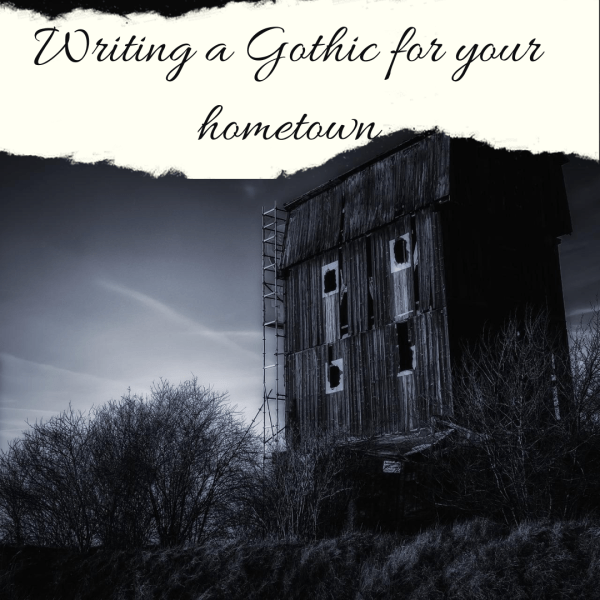
I am in love with a good, dark gothic story. The kind of story that’s as much about the setting as the serial killer.
You might think of a Southern Gothic, with massive plantations, kudzu and overt racism all crisping in the unending heat. Or maybe a Midwestern Gothic, with cornfields big enough to swallow you whole, scarecrows that move around and have a taste for flesh, and snowstorms that are out for blood. Or Mexican Gothic, which is one of my favorite horror novels in the last few years and encompassed the feel of an eerie small town perfectly.
It’s easy to think that to write a Gothic you’ve got to write them about one of these twisted places. But I have bad news. Unless you live in one of these places, your Gothic is going to lack the soul that a native writer can bring to it.
But fear not! Whether you live in a small town in the south or smack in the middle of LA, you can write a gothic story about where you live. And we’re going to talk about how today, with the help of three questions.
Where are your town’s shadows?
When you’re a kid, the world seems scary in a different way. There are parts of our town we don’t want to go to. Stores that don’t pass our vibe check. Houses we don’t ride our bikes in front of.
No one knows those stories better than someone who lived them. I can tell you about standing in the middle of Ames while my mother looked through discount clothes racks, my heart about to burst out of my chest because I was sure I’d seen a person in a Mickey Mouse foam costume watching me. There wasn’t any promotion that day, he was just there. Watching me. I can tell that story.
So, what are the scary places in your town?
What is your town known for?
My hometown is known for jeeps. We’re the place jeeps were invented. We’re also a steel town, with a steel mill that still exists and employees hundreds of people.
Alright, it might be hard to write a story about a scary jeep. But I can work with a steel mill. That used to be an inherently scary field to be in.
It’s better now, but those wounds run deep.
There are other wounds in my town. Fires that took lives, businesses, homes, and memories. Wars sent men back broken to walk our streets like the living dead.
There are wounds in your town. I can tell you that without ever knowing where you live. Because there are wounds everywhere. Write from those wounds.
What legends already exist in your town?
Every town has legends. Cryptids, famous mass murderers. Unsolved crimes that are truly chilling.
A woman in my town was once strung up between two trees and gutted.
There have been so many fires on Main Street without a whole lot of explanation.
There’s a glass factory that everyone agrees is haunted. I have pieces of glass from it.
Then there’s the Butler Gargoyle.
Surely your town has stories. Things that outsiders might not know, but you’ve heard since you were a teenager.
Draw on these tales for inspiration.
There is no place in this world where you can’t write a Gothic story from. It just takes an understanding of your town and a little (twisted) imagination.
I’ve loved true crime since I was a little girl. I can’t imagine I’m the only one who got hooked watching Unsolved Mysteries with Robert Stack. My great-grandma and I used to watch it together. I still think of her any time I hear that theme song.
Recently I’ve found a reason for guilt over my enjoyment, though. The latest Scream movie pointed out that there’s a darker side to these stories. These are real stories. People died. Families were left shattered. The very last thing I’d ever want to do is belittle someone’s loss. The second to last thing I’d want to do is make a killer into a celebrity.
It’s not like mentally ill people need another excuse to kill innocent people.
Are we just encouraging killers to think of themselves as rock stars? Are we dehumanizing victims for the sake of entertainment?
I’ve spent some time thinking about this. This world’s in a bad enough place right now, I don’t need to make things worse with some insensitive little tale.
And after some consideration, I don’t think True Crime does much harm. Dare I even say it might do some good? If, of course, it’s done right.
The good true crime podcasters don’t glorify the killers
On my podcast, Off The Bone, we don’t glorify killers. We tend to mock them. Most serial killers, by the way, wet the bed way longer than anyone else.
The killer is never the good guy, and the victim is never the punchline. To talk about True Crime in any other way is disrespectful and dangerous.
We say their names
So many True Crime stories are unsolved. That’s part of the fascination, at least for me. We don’t know who the Somerton Man was, so we can’t let his family know what happened to him. Same for the Lady of The Dunes (Though Stephen King’s son might have helped solve that one.)
We’re all going to die someday. And most of us hope to be remembered by our loved ones. We want friends and family to share stories about us. And we don’t want a bunch of question marks hanging over our coffins.
When we talk about unsolved murders, there’s a chance that someone might recognize the victim. That maybe, by saying their names, someone who loves them might hear.
And even if they don’t, we remember them.
I remember Bella in the witch elm.
I remember the Lady of The Dunes.
I remember the Somerton Man.
And I’ll be you do too.
If you have any information regarding this case.
Remember how each episode of Unsolved Mysteries ended?
“If you have any information regarding this case, please call us.”
Well, people did call them. And because of that show, at least 260 cold cases were solved.
Crowdsourcing mysteries gets results. And in the age of the internet, we’re even better at it.
Because of consistent attention, the Keddie Cabin murder case was reopened. And as I mentioned earlier, Owen King might have helped solve the Lady of The Dunes mystery. He recognized an extra from Jaws who just might be her.
True Crime done badly isn’t moral. But True Crime done well might actually solve crimes. And even if you’re not one of those who helps solve a cold case, you still enjoyed a damn good story.
And that’s worth something. I hope that when I go, I leave a good story behind.
It’s July first, so it must be time to check in with our goals for 2022 and see how we’re doing.
My goal progress has been a mixed bag so far. Some goals have been slam dunks. Some are lagging. And some got dropped altogether.
Let’s see where we are, and check-in with our progress together.
Step one- How it started
What were your goals at the start of the year? I had nine specific goals.
Read the entire bible
Read 42 books
Take 24 Masterclasses
Build our emergency fund
Plan a covid safe vacation
Get the husband’s health on track
Join SFWA
Attend a con
Make progress on my novels
I want you to write your goals down just like I did, without any judgment about how far you’ve gotten, or not gotten. Any progress is fine. No progress is also fine.
We all tend to apply magical thinking in January, don’t we? We think this is going to be the year we do all the things. Nothing’s going to stand in our way in January. We’re going to be our very best selves every single day, and so is everyone else.
And in July, that same magic feels like it’s working against us. We tend to forget the two weeks we were sick, the unexpected expense, and the emergency that we had to deal with.
Life is just never going to go to plan. Sometimes we can compensate. Sometimes we can’t.
Step two- How it’s going
Now is the time to look at where we are with each of our goals. If we reached a goal, or are on track, that’s freaking awesome! If we’re not, now is the time to consider why we’re not.
Do we need to work on time management?
Do we need to focus on better habits with our spending?
Or is this just a goal that no longer applies to us?
Some of my goals, like taking 24 masterclasses, are going away. Masterclass is expensive, and going to Nebula con was more important.
Some of my goals needed a new tactic. Reading the bible every day just was not happening. Until I found a bible in a year podcast. Now, I can listen to the daily readings while I’m cleaning the kitchen. Win/win!
So, at this stage, you want to take these steps.
1. Decide if any of your goals are no longer a priority to you. Drop those right off your list.
2. Take anything off your list that you’ve accomplished. Yay, you!
Here’s what I had left after that.
-Read the entire bible (Currently eleven days into the bible in a year podcast I found)
-Read 42 books (21 down, 21 to go)
-Get the husband’s health on track (this is a work in progress)
-Join SFWA (Still a work in progress)
-Make progress on my novels (Got one book out, making progress for some exciting content for you guys in 2023!)
Step three- Where’s it going from here.
Finally, it’s time to make some realistic goals for the second half of 2022. Make sure you’re considering things like holidays. I don’t know about you, but my second half of the year is always less productive than the first.
Another thing I like to do is add some not vital projects to my list. They’re not my top priorities, but they’re on the list of things it would be awesome to finish before the end of the year.
Right now, my list looks like this.
Join SFWA
Get a literary agent
Make progress on the bible in a year podcast.
Finish 42 books
Study tarot cards, one card each week
Achieve Camp Nano goal
Study cartomancy
Celebrate each holiday and sabbat to its fullest
Create a go-bag in case of emergencies
Build my fuck off fund
Achieve Nanowrimo goal
Finish the scripts for the second draft of AA.
Redo my laundry room
Redo my holiday supply closet
This list has three things on it. Goals that I plan to make progress on but may not finish. Goals that are super important to me that I will finish before the end of the year. And finally, projects that enrich my life and will make me happy to complete.
And please, if you take nothing else from this post, take this away.
Your goals should be there to make you happy.
All of my goals are designed to make me happy. All of your goals should be designed to make you happy.
I hope your midyear check-in goes well, everyone. We’ve got six more months to go in 2022. Let’s see what we can accomplish together.
Paper Beats World is a labor of love. If you want to support this blog, you can do so on Ko-fi.
I’m coming to you with an extra post this morning, and I’m sure you can imagine what the topic’s going to be.
That’s right, I’m discussing the death of Roe V. Wade.
I didn’t post anything about it over the weekend because honestly, I was just in a down place. I was angry. I’m still angry. I was scared. I’m still scared.
I’m not scared because I think I might have an unwanted pregnancy. I’m scared because a part of my body, that God gave to me, doesn’t belong to me anymore.
Politicians get to vote on whether or not I get to make a medical decision for myself. And don’t get it twisted, an abortion is a medical decision.
It’s also a financial decision, a family decision. A personal decision. It’s not, under any circumstances, a community decision.
I have two messages today. The first is for anyone who wanted Roe V. Wade to be overturned.
Most of you know that I was raised in the Church of Jesus Christ of Latter-Day Saints. Most of you also know that I’m now a Unitarian Universalist. But many lessons from my LDS upbringing have stuck with me. For instance, young LDS members are taught that when you chose the first step of a road, you also chose the last.
If you chose to force a person to have a baby when they don’t want to, you’re choosing to let people die unnecessarily in childbirth. You’re choosing to force people to bring children into this world that they are unable or unwilling to care for. You’re choosing to put unwanted babies into an already bloated adoption and foster care system. You’re choosing to increase child poverty. You’re choosing to lower women’s ability to attend college. You’re choosing to lower women’s ability to join the workforce.
But, you might say, they chose to have sex.
So what? So because they made one decision about their bodies, they don’t get to make any more? It is absolutely none of your business. Your life will not be affected by anyone else having an abortion.
Your life might be affected by someone’s lack of ability to get an abortion.
If you, like me, support abortion rights, here’s what I have to say to you. The fight is not over yet. We can still vote, we can still protest.
We can still donate to protect local clinics.
We can, and absolutely should, start getting involved in our local politics right now. Because at least for now, your right to make medical decisions about your body rests in the hands of your local representatives. Get to know who they are, and get involved.
I’m in Pennsylvania. For now, my rights are safe. But it’s really scary to think that my ability to make medical decisions for myself can be voted on.
On a personal note, I’m 36 years old. If I were to get pregnant, I’m at a higher risk of complications just because of my age. 36 isn’t old, but it’s old enough to start thinking about things like this. If I were to get pregnant, I would be having some serious discussions with my doctor about any risks involved. I’d be talking with the darling husband, about how a baby would affect us. Whether I could safely carry.
Those would be hard, heavy talks. And they would be between me, my husband, and my doctor.
And absolutely not one other person. This time last week, every person in America could say that. Today, maybe half of us can.
It’s almost July, which is crazy for two reasons. I can’t believe the year is almost over. I also can’t believe we’re still here as a species.
While this year so far has been a struggle, at least my reading game’s been on point. So let’s take a moment to check out the top ten books I’ve read in 2022, so far. These are done in ascending order, but every single book on here is a must-read as far as I’m concerned.
Shattered Bonds
By Dorothy Roberts
I read this book, and man was I in tears over it. It’s about our current situation as a country with Children Services. In particular, it’s about how Children Services seems to be specifically designed to rip apart families of color and poor families.
It’s not an easy read. But it’s such an important one. Honestly, the only reason it’s number ten on the list is that it’s not what I’d call an enjoyable read. I didn’t have fun reading it. I did kill two highlighters making angry notes in the margins.
City Magic
By Christopher Penczak
Since the launch of Quiet Apocalypse, I’ve been a bit more open about this specific aspect of myself. And, I think I’ve always been pretty clear that I’m only really happy living in an urban environment. This book was a must-read for me.
It’s a bit outdated, especially the parts about technology. But the vast majority was super useful and incredibly uplifting. If you have even a passing interest in witchcraft and city living, read this book.
(Side note, do you guys want me to talk more about my witchcraft journey? Let me know if you do.)
How to be a Christian Witch
By Valerie Love
The whole concept of being a witch and still loving Jesus might seem weird until you start looking into it. Then it’s the most natural thing in the world and you start to realize that no one is more witchy than an old Catholic grandma. (Don’t say that to her, though, she’ll hit you with her broom.)
Reading this book was like getting a hug and having tea with Valerie. And I adored every moment.
Again, if you have even a passing interest in witchcraft and also happen to be a Christian, consider checking this out.
End of Watch
By Stephen King
This was the final book in the trilogy that started with Mr. Mercedes. And it was, let me tell you, awesome. The epic story of a retired detective and a psycho with a grudge was just spectacular. It was for sure an example of a book being too short, even though it was a brick-sized hardcover.
The Lottery
By Shirley Jackson
I finally got the nerve to read the whole short story collection that contained Jackson’s epic short, The Lottery. And I have to tell you, it was an experience.
If you want to be just soaked in 50’s vibes, while occasionally getting the shit scared out of you, you’ll love every second of this book. I spent most of my time reading this interrupting whatever the darling husband was reading because I just had to share passages with him.
I was expecting a collection of spooky little tales. I got a whole lot more.
Savage Bounty
By Matt Wallace
Normally trilogies suffer from a book two slump. I sometimes refer to this as a bridge book. You need to read it to get to book three, but it’s not super thrilling.
Wallace managed to avoid that.
This is the sequel to Savage Legion, which made it onto my list last year. It continues the story of a group of people, fighting a battle for the soul of their country. And let me tell you, I loved every page.
Days of Blood and Starlight
By Laini Taylor
This is another book two in a trilogy. And I’ll be honest, it was a bit of a slouch compared to book one.
But only if we’re comparing it to book one.
I’m going to talk more about this series since book one is the next one on the list, so let me just say that this is an epic fantasy set in modern times. And it is such a surprising and lovable journey.
Daughter of Smoke and Bone
By Laini Taylor
Book one in the series, Daughter of Smoke and Bone is the story of a girl between worlds. Raised by demons, living in the world of men, loved by an angel. She’s a part of a war she doesn’t know anything about. Until she gets pulled in. Then, she’s a real big part of it.
I have yet to pick up a Laini Taylor book that I didn’t dive into. And the saga of Karou is no different.
This is How You Lose the Time War
By Amal El-Mohtar and Max Gladstone
If you haven’t read this, you need to right now.
It’s the story of two time travelers, each trying to change the timeline for the good of their side. As they go through history, making small and big changes, they start leaving each other notes.
Enemies to lovers are nothing new. But the writing, storytelling, and just overall vibe of this book are.
The notes are teasing, at first. Then they become something more.
The next person who tells me genre fiction can’t be literary, I’m throwing a copy of this book at them.
Hard.
The Graveyard Book
By Neil Gaiman
If there ever comes a day when I don’t include a Gaiman book either I’ve run out of them or been body-snatched.
The Graveyard Book is technically a children’s book, but you won’t catch me giving a damn. It’s the story of a boy named Bode (short for Nobody) who’s raised by a collection of spirits in a graveyard. As he grows, he discovers that he’s being hunted by a mysterious cabal of men who call themselves Jack.
It was such a good read. And the illustrations were amazing. I loved every second of it.
So that’s it for my list. Will any of these books still be on my end-of-year list? It’s certainly possible. Or maybe my second half of the year will blow everything out of the water. We’ll have to see.
What about you? What are the best books you’ve read so far? Let us know in the comments so we can all share in the reading goodness.
Paper Beats World is a labor of love. If you would like to support this site, you can do so on Ko-fi.
This post is later than normal, sorry about that. I’ve found it hard recently to sit down and write. And trust me, it’s got nothing to do with the weather. I’m not really a Summer kind of gal.
Rather, I’m having trouble focusing on my writing with the current state of the country. Women fighting for the rights to our bodies. Families living hand to mouth. Basic supplies are gone from our store shelves. Children were slaughtered in their classrooms. Veterans dying in the street. Yellowstone is being ripped apart by floods caused by climate change. Police still killing black people with little to no repercussions. Trans children and gay teachers are treated like predators and pedophiles.
Oh, and Flint Michigan still doesn’t have clean water.
If Aaron Burr was watching the afterbirth of a nation, we’re watching it have a head-on collision where the airbags failed.
And through all of this, we’re all dealing with our own struggles.
So what in the fuck am I doing writing stories? What the fuck do I think I’m doing, talking about American Horror Story, writing about true crime stories and ghost hunters? It doesn’t matter, none of this matters!
I’m pretty sure it was Matt Wallace on Ditch Diggers who said that it felt like he was standing outside a burning house, yelling at the people coming out, “Hey, you want to buy a book?”
Never in my life have I felt farther from my dream of being a full-time writer. The economy has a huge impact on creative fields, it always has. And it’s a one-two punch. People don’t have the money to buy as many books, so there’s less money coming in. And everything is more expensive, so the dollars we do get aren’t going half so far.
It’s always been hard to be a writer, but now it’s even worse.
And now is when we need writers the most.
Not just writers. We need musicians, visual artists, and creators of every kind. We need art more than ever in times like this.
We need artists to talk about what they’re seeing. To give different perspectives. To show the true horrors and not let any of us forget. We need to document the horrors, write down the names, and remember those who have been lost to us. Like those who have come before us, we can hold the feckless politicians accountable. We can use words and music and paint and photos to inspire people. We can let people know they’re not going through this alone. We can be the hand on the shoulder of someone who feels isolated.
Artists are the eyes upon those in power.
Artists hold the names of the lost in our collective memory.
Artists give words to the grief and boiling fury of a nation.
Like the receiver of memories, we have to suffer through the horrors and indulge in the joys of our past to guide people into a better future.
Some of us aren’t going to be able to do that. I can’t fight this fight all day, every day. I’ll never make it. So I’m also going to create silly things. The stories and podcasts and poems that have nothing to do with the horrors we’re facing. And I hope you do, too.
Because as much as we need the record keepers and fighters, we need the stories too.
We need things that distract us. That makes us laugh and smile and just forget about everything wrong for a bit. While I’m not one to turn off the news, I am one to take a break from the news and watch the latest Are You Scared. (Shane, Ryan and Stephen started a company in the middle of a pandemic. Clearly, they’re not scared of anything.)
I’ve carried books to ER waiting rooms. Played video games when I was having an anxiety attack. Watched my favorite movies when I’ve felt alone. Listened to music when there was no other way I could find my way out of the darkness.
I thought that was great on the last season of Stranger Things, by the way. Metaphorically, we’ve all been where Max was, lost in a dark place where no one can reach us, only to have music light our way back.
Which brings me to my final point.
My favorite stories include ordinary people finding that they have extraordinary strength within them. A strength that allows them to defeat the bad guys, save their loved ones and find peace in their world. While not everything turns out perfect, things get better. There’s a happy ending.
The Baudelaire find their safe place.
The House Next Door comes down.
The Owens sisters break the curse.
Coraline saves her parents.
And in reading their stories, we fight with them. We learn that we can lose but then win again.
So please, don’t stop creating. If you’ve always wanted to create but haven’t started yet, start now.




 Paper Beats World
Recent Comments